en
enVotre panier est vide.


What, exactly, is a mantra? The term comes from Sanskrit and is often defined as an “instrument of thought”: a syllable, word or sacred phrase used in traditions including Hinduism and Buddhism, but by no means limited to them. Mantras belong to a far wider human history of sound, repetition and inner focus, appearing across spiritual and philosophical practices in many parts of the world.
That breadth is part of what makes them so intriguing. For all our technological sophistication, we still understand only part of how the brain shapes perception, attention, memory and conscious states. Against that backdrop, the mantra sits at an interesting crossroads between ancient practice and modern curiosity: repeated sound, sometimes joined with breath or gesture, is often associated with shifts in mental state, emotional regulation and concentration. Traditions such as the Chinese therapeutic sound practices of Qi Gong suggest that the effects of vibration and repetition have been observed for centuries, even if contemporary science is still cautious about explaining them in full.
In short: what is the meaning of a mantra?
A mantra is a sound, word or phrase repeated to steady attention, deepen meditation and shape inner state. Its meaning can be linguistic, symbolic, vibratory or devotional depending on the tradition and the person practising.
- Repetition gives the mind a stable anchor.
- Sound can support breath, rhythm and presence.
- Meaning may come from language, intention or sacred context.
- A grounded practice respects the tradition behind the mantra.
For a related listening practice, read Sacred Music and Soul Breathing. For a free contemplative sound cue, receive the Sacred Frequency Session.
This is also why the subject deserves both openness and discernment. A mantra is not simply a fashionable meditation accessory, nor is it something to approach uncritically. It may be sought for calm, protection, invocation or sustained attention, and its repetitive structure helps explain why certain sounds can linger in the mind with remarkable force. Yet, as with any serious contemplative practice, the quality of guidance matters. Reading about mantras can be illuminating; experiencing them with knowledgeable teachers is often where their meaning becomes clearer.
What a Mantra Really Is
A sacred formula found far beyond Buddhism
What exactly is a mantra? According to the Larousse dictionary, the word comes from Sanskrit and means an “instrument of thought”. In Hinduism and Buddhism, it refers to a sacred syllable or phrase believed to carry spiritual power, and its use is especially developed in tantric traditions. Yet, contrary to a common assumption, mantras do not belong to Buddhism alone. Variations of this practice appear across many religious and philosophical traditions around the world, which already suggests that the mantra answers a very old and very human need: to focus the mind through sound, rhythm and repetition.
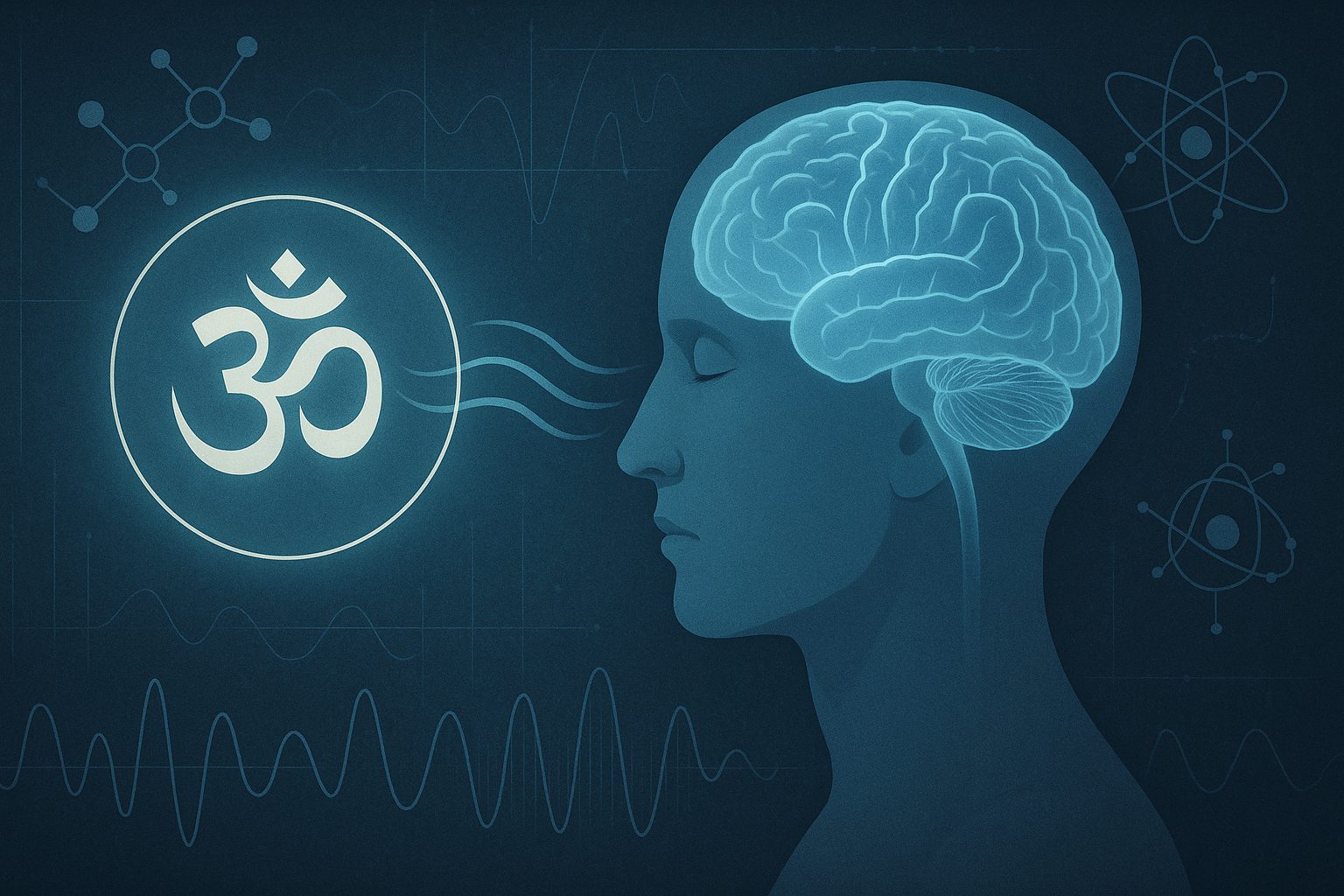
Even in an age of advanced technology, this remains difficult to explain in strictly scientific terms. Humanity has walked on the moon and continues to explore the universe, the oceans, particles, molecules and atoms, yet the precise mechanisms behind mantra practice are still not fully understood. That is not entirely surprising. The brain itself still holds many unanswered questions about perception, consciousness and memory. In that context, a mantra can be understood as an ancient formula made up of words, sounds and sometimes gestures, used to protect or steady the mind and to encourage particular states of awareness.
Rather than reducing it to mysticism or dismissing it outright, it is more accurate to say that mantra practice sits at the meeting point between lived experience, attention and the still partly unexplained workings of the human mind.
- a syllable or phrase repeated aloud or silently
- a support for attention and mental regulation
- a practice found in several traditions, not one alone
Sound, vibration and the mind’s tendency to resonate
Traditional approaches often hold that the repeated syllables of a mantra generate vibratory effects, and that sound combined with breath or gesture may help produce the emotional or mental state being sought. This idea is not unique to Indian traditions. In China, the therapeutic value of vibration has long been recognised in practices such as the Qi Gong of the six healing sounds, Liu Zi Jue, attributed to Zhang Zi in the 4th century BC. As described by lamaindechine.com, the principle is to pronounce specific sounds and use the breath alongside appropriate movements in order to rebalance the body’s main organs energetically.
More recent American studies have also explored the effects of sound on the human body, including changes in levels of interleukins in the blood. As futura-sciences.com explains, interleukins are natural proteins produced by the immune system that act as messengers between immune cells and are also used in certain cancer treatments. None of this proves every traditional claim, but it does suggest that sound may influence the body in ways that deserve careful attention.
A mantra may consist of one syllable, several words or a short formula repeated in a loop. Some traditions even suggest that its structure follows precise mathematical principles. The broader idea is that everything in the universe vibrates at a certain frequency, and that repeating a mantra may induce a form of resonance in both body and mind. Whether one interprets that literally or metaphorically, the comparison with a catchy tune is helpful. Once a phrase has been repeated enough times, it can return to the mind almost automatically, much like the opening beats of Queen’s We Will Rock You or, more unexpectedly, the chorus of Ça fait rire les oiseaux by La Compagnie Créole.
That song was even identified as especially persistent in a study by Andréane McNally-Gagnon at BRAMS, the International Laboratory for Brain, Music and Sound Research at the University of Montreal, where she has studied so-called “earworms” for several years. In that sense, a mantra may work like a deliberately chosen mental refrain: read, repeated silently or chanted, it can become a compact form of meditation. Psycho-ressources.com describes it as a few words capable of renewing themselves in the mind and settling into physiological and unconscious functioning. His Holiness the Dalai Lama has likewise said that reciting the well-known mantra Om mani padme hum is highly beneficial.
Still, because the brain remains so mysterious, and because books on mantras vary greatly in quality, it is wise to approach the practice with discernment and, ideally, with guidance from teachers worthy of trust. As psychiatrist Christophe André puts it, “Happiness is possible, and it is better to go and meet it than to listen to its story.”
Why Sound and Repetition Matter
How repeated sound may shape mental states
We live in an age of extraordinary technology. Human beings have walked on the moon and continue to explore both deep space and the depths of the oceans. Yet, for all our progress in studying particles, molecules and atoms, the precise scientific function of mantras remains difficult to define with certainty. That is hardly surprising. The brain still holds many unanswered questions about perception, consciousness and memory. In that context, a mantra can be understood as an ancient formula made up of particular words, sounds and sometimes gestures, traditionally used to protect the mind and to encourage specific states of awareness.
The repeated articulation of each syllable is thought to generate vibratory effects, while the combination of sound, breath and movement may help bring about the emotional or psychological state being sought.

This idea is not limited to Indian traditions. Chinese practices have long recognised the therapeutic value of sound and vibration, notably in the Qi Gong of the six healing sounds, Liu Zi Jue, attributed to Zhang Zi in the 4th century BC. As explained by lamaindechine.com, the principle of this Qi Gong is to pronounce sounds and use the breath alongside appropriate gestures in order to rebalance the body’s main organs on an energetic level. More recent American studies have also explored the effects of sound on the human body, including changes in interleukin levels measured in the blood.
As futura-sciences.com notes, interleukins are natural proteins produced by the immune system, acting as messengers between immune cells, especially white blood cells, and are also used in the treatment of certain cancers. None of this proves every traditional claim made about mantras, but it does suggest that sound, rhythm and repetition may have more influence on the body and mind than modern habits sometimes assume.
From resonance to the ‘earworm’ effect
What is striking is that our ancestors seem to have understood, long before modern neuroscience, the remarkable potential of sounds, gestures and vibration for meditation, protection and invocation. In that sense, mantras may also be seen as a way of channelling what we would now call attentional overload. Whether made up of one syllable or several words repeated in a loop, a mantra has often been described as resting on mathematical principles of rhythm and recurrence. If everything in the universe vibrates at a certain frequency, then reciting a mantra may help induce a form of resonance in both body and mind.
Once that resonance is established, the phrase can return spontaneously to awareness, much like a tune that lodges itself in the memory.
Related offer
Meditation - Relaxation set
All the Mental Waves® know-how in a single pack for quick and easy access to meditation and...
View productThat comparison helps explain why repetition matters. We all know the experience of a melody that stays in the head without invitation: the opening beats of Queen’s We Will Rock You, or, more unexpectedly, the chorus of La Compagnie Créole’s Ça fait rire les oiseaux, identified as an especially persistent tune in research by Andréane McNally-Gagnon, a doctoral researcher at BRAMS, the International Laboratory for Brain, Music and Sound Research in the Department of Psychology at the University of Montreal. She has studied these so-called ‘earworms’ for several years.
In a similar spirit, psycho-ressources.com describes the mantra as something that can be read, repeated silently or sung, becoming a compact form of meditation: a few words that renew themselves in the mind and gradually register in physiological and unconscious functioning. This language should be approached with caution, especially when it speaks of influencing cells or DNA, but the broader point remains meaningful: repeated sound can become a stable mental anchor. It is no surprise, then, that His Holiness the Dalai Lama has spoken of the benefits of reciting the famous mantra Om mani padme hum.
- Repetition can help stabilise attention.
- Rhythm and sound may support relaxation and mental regulation.
- A mantra can become a familiar internal cue, much like a memorable melody.
Practising Mantras with Care
What a mantra may do in practice
How, then, does a mantra work in lived experience? One explanation, cited by psycho-ressources.com, is that simply reading it, repeating it silently or chanting it aloud may allow its resonant quality to act on several levels at once. In that sense, a mantra can be understood as a compact form of meditation: a few words that return again and again, like a small inner melody, gradually settling into physiological rhythms and less conscious mental processes. This is also why repetition matters so much. Once a phrase has been repeated often enough, it can continue to echo in the mind, not unlike a familiar refrain that stays with us long after the music has stopped.
The comparison is surprisingly concrete. We all know how the opening beats of “We Will Rock You” by Queen can lodge themselves in attention, or how the chorus of “Ça fait rire les oiseaux” by La Compagnie Créole can return involuntarily. That mental persistence has been studied through the phenomenon of the “earworm”, notably by Andréane McNally-Gagnon at BRAMS, the International Laboratory for Brain, Music and Sound Research at the Université de Montréal. A mantra is not the same thing as a catchy pop hook, of course, but the parallel helps to illustrate a key point: repeated sound can shape attention, occupy mental space and contribute to a particular state of mind.
This may help explain why mantras are often sought for meditation, protection or invocation, and why traditions have long linked sound, gesture and breath with emotional and psychic regulation.
- read silently
- repeat mentally
- chant aloud
Benefit, mystery and the need for discernment
Many traditions go further in the value they attribute to mantras. His Holiness the Dalai Lama, for example, has emphasised the benefits of reciting the well-known mantra “Om mani padme hum”. At the same time, it is worth keeping a balanced perspective. The brain remains an extraordinary organ, made largely of water and fat, weighing around 1,300 grams, and still holding countless unanswered questions about perception, consciousness and memory. For that reason, it is wiser to speak in careful terms: mantra practice may support attention, calm or inner steadiness, but its full mechanisms are not yet completely understood in scientific terms.
That is precisely why discernment matters. There is no shortage of books and teachings on mantras, and as with any field, the quality varies. Before beginning seriously, it is sensible to seek an immersive experience with teachers who are genuinely trustworthy and well grounded in their tradition. Direct experience remains essential. As the psychiatrist Christophe André puts it, “Happiness is possible, and it is better to go out and meet it than to listen to someone else describe it.” In other words, a mantra is not only something to define or analyse; it is also something to approach with care, curiosity and personal practice.
How to Practise With a Mantra Without Forcing It
Start by choosing a short phrase or traditional sound that you can repeat comfortably. The goal is not volume or intensity. It is continuity of attention.
Let the mantra follow the breath. It may be spoken aloud, whispered or repeated silently. Each option changes the texture of practice, so the best choice is the one that supports presence without strain.
When attention wanders, return to the sound. That return is not a correction of failure; it is the movement that trains focus.
Common Misunderstandings About Mantra Practice
The first misunderstanding is that a mantra has to feel intense to be effective. In practice, the opposite is often true. A mantra works through steadiness. The repetition becomes familiar enough that the mind can rest on it without turning it into another object of effort.
The second misunderstanding is that meaning has to be either literal or mystical. A mantra can carry several layers at once: sound, rhythm, intention, cultural memory and personal association. Some practitioners need to understand the words clearly. Others are moved first by the sonic quality and only later by the meaning.
Related offer
OM Meditation
This music is based on the particular frequency of the sacred chant OM. Listening to this program, the term...
View productThe third misunderstanding is treating sacred language as a decorative tool. Many mantras come from living traditions, so respect matters. A grounded practice asks where the sound comes from, how it has been used, and whether the practitioner is approaching it with humility rather than consumption.
Why Repetition Can Change Attention
Repetition gives the mind fewer decisions to make. Instead of chasing every thought, attention returns to the same sound again and again. That simplicity can be quietly powerful because it reduces the need to negotiate with each passing mental event.
Over time, the mantra may become less like a phrase being repeated and more like a rhythm being inhabited. Breath, sound and attention begin to move together. This is why mantra practice can feel both active and restful: the voice or inner voice continues, while the mind has less to manage.
The Mental Waves Mantra Practice Framework
The Mental Waves frame is to approach mantra through sound, respect and embodied attention.
- Listen: feel the sound before trying to interpret it.
- Repeat: let rhythm carry attention gently.
- Respect: avoid stripping sacred phrases from their context.
- Integrate: notice how the practice changes breath and focus.
For brain-state background, continue with Brainwave Frequencies and Meditation. For research context, read Meditation and the Brain.
Editorial note from Mental Waves
This article is educational. Mantra practice can support meditation and focus, but sacred sounds deserve cultural respect and personal practice should stay realistic and grounded.
Conclusion
A mantra emerges here not as a magical shortcut, but as a disciplined meeting point between sound, repetition, attention and inner state. Across traditions, its role seems less about proving a doctrine than about shaping experience: steadying the mind, orienting perception and, in some cases, supporting a felt sense of regulation. That balance matters: there are intriguing links between vibration, repetition and the body, yet much about consciousness and the brain still resists simple explanation.
Perhaps that is why the most sensible approach remains both open and discerning. A mantra may help create conditions for calm, focus or meditation, but it deserves to be practised with care, context and trustworthy guidance rather than projection or overstatement. Between ancestral insight and modern inquiry, it reminds us that some forms of knowledge are not only analysed, but also quietly experienced.
Frequently Asked Questions About Mantra Meaning
What is a mantra?
A mantra is a repeated sound, word or phrase used to support attention, meditation or spiritual practice.
What does mantra mean?
The meaning can be linguistic, symbolic, vibratory or devotional depending on the mantra and tradition.
Do mantras need translation?
Not always. Some practices emphasize sound and rhythm as much as literal meaning.
How should a mantra be repeated?
It can be spoken aloud, whispered or repeated silently with steady attention.
Can a mantra help focus?
Yes, repetition can give attention a simple anchor during meditation.
Are mantras religious?
Many come from sacred traditions, though some people also use secular phrases as focus cues.
How should someone choose a mantra?
Choose one that feels respectful, simple and supportive rather than chasing intensity.
Why does sound matter in mantra?
Sound connects breath, rhythm and attention, which can change the felt quality of practice.
What is the main takeaway?
A mantra is most powerful when repetition, sound and intention become a steady practice.