en
enVotre panier est vide.


Since antiquity, philosophers have been drawn to the idea that the heavens move in harmony, giving rise to a kind of cosmic music often described as the music of the spheres. In this tradition, celestial bodies were thought to carry their own tones, shaped by proportion and motion. Few names are more closely tied to that vision than Pythagoras, whose famous insight linked the vibration of strings to the orbit of the spheres. For more than two millennia, that way of thinking left a deep mark on the imagination of scholars and mystics alike, each trying in their own era to relate the stars to musical notes.
What gives this idea its lasting force is that it never belonged to poetry alone. From the beginning, it stood at the meeting point of sound, number and order: the sense that music might reveal something fundamental about the structure of the universe. That older vision still carries a particular resonance today, not simply as a historical curiosity, but as a reminder that vibration has long been understood as both a physical reality and a sacred language.
In short: what connects sound, frequency and vibration?
Sound is vibration organised through frequency, and Pythagoras made that relationship visible by showing that musical harmony follows numerical proportion. The article matters because it connects three levels at once: the physical movement of sound, the mathematical ratios behind harmony and the symbolic language used by sacred frequency traditions.
- Sound is the lived experience: what the ear, body and attention receive.
- Frequency is the measurable repetition of vibration, expressed in hertz.
- Vibration is the underlying movement that can become tone, rhythm, resonance or pattern.
- Harmony appears when relationships between vibrations feel ordered, balanced or meaningful.
For a Mental Waves entry point into this universe, continue with the 128 Hz sacred frequency guide or receive the free Sacred Frequency Session.
The Mental Waves Frequency-to-Harmony Framework
The useful way to read this topic is not to accept every sacred frequency claim literally. It is to move through five levels of interpretation, from what can be measured to what can be experienced.
- Start with vibration: every tone begins as movement through a medium.
- Notice proportion: musical intervals become meaningful when their relationships are ordered.
- Listen through the body: resonance can affect breath, attention, posture and emotional tone.
- Separate symbol from proof: sacred language can guide ritual without replacing scientific evidence.
- Close with intention: a sound session becomes deeper when it has a beginning, a focus and a quiet ending.
How Pythagoras Turned Sound into Number
The legend of the forge and the search for harmony
According to tradition, Pythagoras first began to grasp the hidden order of sound while walking past a forge. He was struck by the way the hammers ringing against the anvil seemed to produce different yet somehow related tones. From that moment came the idea that harmony was not random, but governed by proportion. Whether the story is literal or symbolic, it captures something essential about his approach: he listened closely, then looked for the pattern beneath what he heard.
Some accounts suggest that, rather than relying on the forge alone, he may also have worked with a monochord — a simple ancient instrument used to study the relationship between string length and pitch. That matters, because it shifts the story from myth to method. Instead of treating music as pure inspiration, Pythagoras approached it as something that could be observed, tested and understood.
- The forge represents the first intuition that sound follows order.
- The monochord represents the practical study of that order.
Why musical intervals became a mathematical discovery
From these observations came one of Pythagoras’s most enduring insights: consonance — the pleasing way certain notes sound together — depends on numerical relationships. He recognised that the pitch of a note changes according to the length of the string producing it. In other words, sound could be measured. Simple ratios created stable, harmonious intervals, and this laid the groundwork for understanding how musical notes relate to one another.
That was a profound shift. Music was no longer only an art of feeling or performance; it also became a field of structure and proportion. By linking intervals to number, Pythagoras opened a path that would shape both musical theory and the wider idea that mathematics lies beneath the visible and audible world. The bond between music and mathematics, still central today, begins here.
When Number, Form and Harmony Become One
Why the Pythagoreans saw geometry as something sacred
For Pythagoras and his followers, numbers were not just tools for measuring the world. They were woven into its very structure, linking sound, form and what they understood as divine order. This is why they gave special importance to the pentagram, a figure whose diagonals divide one another according to the golden ratio. To them, this was more than an elegant shape. It was a visible sign that harmony could be expressed through proportion, and that beauty itself might rest on numerical relationships.
That same idea carried far beyond geometry. The golden ratio came to be associated with balance and natural beauty, not only in mathematical thought but also in ancient architecture and even in the way people imagined musical harmony. What mattered was the underlying intuition: that certain proportions feel right because they echo patterns already present in the fabric of nature.
- Number as a principle of order
- Geometry as its visible expression
- Harmony as the human experience of that order
The Fibonacci spiral and the patterns repeated in nature
One of the clearest examples of this sacred geometry is the Fibonacci spiral, a mathematical pattern often linked to the golden ratio. It appears in places that have fascinated observers for centuries: shells, plants and even the broad structure of galaxies. Its appeal lies in the sense that it unfolds naturally, repeating itself without seeming forced, as though growth itself were following a quiet inner rhythm.
Seen in that light, the spiral becomes more than a mathematical curiosity. It suggests a world in which form is not random, but shaped by recurring relationships that can be recognised across very different scales. For the Pythagorean imagination, this was precisely the point: numbers were not separate from life or nature, but one of the ways the hidden harmony of the universe revealed itself.
When Pythagoras Made Music a Language of Number
Music as a science of harmony
For Pythagoras, music was never just an art to be enjoyed. He saw it as a science: a way of revealing the mathematical laws that shape the universe itself. By experimenting with stretched strings, he observed that dividing a string into different lengths produced notes that sounded naturally harmonious together. Simple numerical ratios, such as 2:1 for the octave, became the foundation of musical intervals and, in time, of the scale systems still recognised today.
What mattered in these experiments was not only the sound, but the pattern behind it. Pythagoras understood that harmony could be measured, and that beauty in music was not random. It arose from clear relationships between numbers. That insight helped establish one of the most enduring ideas in Western thought: that music and mathematics are not separate fields, but two ways of describing the same underlying order.
- 2:1 creates the octave
- String length determines pitch
- Harmony follows numerical proportion
The Pythagoreans and the search for hidden order
These discoveries were not kept as isolated observations. They were shared within the circle of the Pythagoreans, a secretive community of thinkers who brought together mathematics, music and mysticism. In that restricted setting, sound was treated as more than a practical phenomenon. It became a clue to a deeper structure running through life, nature and the cosmos.
This helps explain why Pythagoras has remained such a powerful figure in the history of ideas. His teaching suggested that when a note rings true, it does so because it reflects a wider order already present in the world. For the Pythagoreans, to study music was therefore also to study reality itself — not only with the ear, but with the mind.
How the Golden Ratio Shaped Ideas of Beauty
From temples to cathedrals, a shared search for proportion
The golden ratio has long been linked with ideas of balance, beauty and harmony, and its influence can be traced through architecture, art and even music. In classical Greek architecture, it is often associated with the design of the Parthenon, where proportion was treated not as decoration but as a way of expressing order. The same ideal appears again in the Middle Ages, in buildings such as Notre-Dame Cathedral, where carefully judged relationships between height, width and structure were seen as part of a deeper visual harmony.
What makes this idea so enduring is that it suggests beauty is not entirely subjective. For many thinkers and artists, certain proportions seem to create a natural sense of rightness, as though form itself can carry a quiet intelligence. In that sense, the golden ratio became more than a mathematical curiosity: it offered a way of understanding why some spaces feel immediately coherent and why certain compositions continue to move us across centuries.
- Parthenon: linked with classical ideals of proportion
- Notre-Dame: often cited as an example of harmonious medieval design
Why artists and musicians saw it as a law of harmony
During the Renaissance, artists such as Leonardo da Vinci drew on the golden ratio to build images that felt poised and unified. In works like The Last Supper, this geometric logic is often associated with the arrangement of forms within the scene, helping create a composition that feels both stable and alive. The appeal of the ratio lay in its ability to bring structure without stiffness, giving the eye something it recognises as harmonious even before the mind begins to analyse it.
The same principle was also extended to music, where proportion has always mattered. Within this way of thinking, harmony is not only heard but measured: beauty emerges when relationships between parts feel balanced and naturally ordered. That is why the golden ratio came to symbolise something larger than aesthetics alone. It suggested that the patterns governing a beautiful building, a powerful painting or a pleasing musical phrase might all belong to the same underlying order.
Why Music Feels Like a Natural Order We Already Recognise
Why harmony feels instinctive
Every musical note is, at its core, a vibration. In the Pythagorean view, sounds that follow harmonious numerical relationships — including those associated with the golden ratio — tend to produce patterns the human ear experiences as balanced and pleasing. Even without any formal musical training, most of us can sense when a note is out of place. A false note jars because it breaks an order we seem to recognise almost instinctively, as though our minds respond to the mathematical relationships within sound before we ever learn to name them.
This is part of what has kept the link between music, number and the wider universe so compelling for so long. Harmony does not feel random. It feels discovered. The idea behind this tradition is that certain combinations of tones resonate with something deeper than taste alone, revealing an underlying structure that connects vibration, proportion and perception.

Music as something that shapes the inner life
The beneficial effects of music on the human mind have long been observed, and not only in modern discussions of wellbeing. Plato gave the idea a striking moral and spiritual dimension when he wrote: « La musique est une loi morale. Elle donne une âme à l'univers, des ailes à l’esprit, une envolée à l’imagination, du charme et de la gaieté à la vie et à tout ce qui existe ». His words capture a belief that has endured across centuries: music does more than entertain us; it can alter our inner state.
Related offer
Sacred frequency 963 Hz
963Hz : INNER LIGHT Reveal the power of your perfect nature... STRENGTH - ELEVATION - FULL AWARENESS
View productWhen music is understood as being in tune with the laws of nature, it becomes more than organised sound. It can soothe, elevate and restore. In that sense, music is not simply heard but felt, with the power to soothe, transform and inspire. That enduring belief helps explain why so many traditions have treated sound not just as art, but as a force capable of bringing the human being back into harmony.
- It can calm the mind
- It can awaken the imagination
- It can restore a sense of inner balance
How Sound Therapy Connects Vibration, Relaxation and Inner Balance
Why sound baths feel immersive rather than simply musical
Sound baths are designed as immersive experiences in which vibration is felt as much as heard. Instruments such as gongs and crystal bowls produce sustained, layered tones that can alter the listener’s state of awareness and encourage a deep sense of calm. Rather than functioning like an ordinary piece of music, these sessions surround the body with resonant sound, inviting relaxation and a temporary softening of mental tension.
In this setting, each sound is understood to have its own particular effect. Some tones seem to settle the nervous system, while others create a broader feeling of spaciousness or release. Within the logic of sound therapy, these vibrations are believed to help rebalance the body’s energies, guiding the listener towards a quieter, more restorative inner state.
- Gongs create broad, enveloping waves of sound
- Crystal bowls produce clear, sustained harmonic tones
- The aim is deep relaxation rather than passive listening
Pythagoras and the idea that harmony can heal
The roots of this way of thinking are often traced back to Pythagoras, remembered not only as a mathematician but also as a thinker who saw sound as a force capable of restoring order. He believed that every being and every object possessed its own vibration, and that music could help bring the body and mind back into harmony when that balance had been disturbed. In his view, sound was never merely decorative; it reflected the deeper patterns that shape life itself.
That belief still echoes through modern sound therapy. Pythagoras’s work on musical intervals showed that harmonious notes follow precise relationships, and those discoveries helped establish the enduring link between sound, number and wellbeing. For practitioners today, this legacy supports the idea that carefully chosen, harmonious frequencies may do more than please the ear: they may also soothe, restore and heal.
Pythagoras’s Legacy in Sacred Number and Hidden Order
A way of seeing the universe through number
The legacy of Pythagoras reaches far beyond music alone. By bringing together mathematics, harmony and mysticism, he shaped a way of thinking that continued to influence generations of philosophers, seekers and scholars long after his own time. At the heart of his teaching was a simple but far-reaching conviction: that numbers do not merely describe the world, but reveal something essential about the structure of the universe itself.
That idea became foundational for later traditions such as numerology and sacred geometry. In both, number is treated not as a cold abstraction, but as a key to meaning, proportion and relationship. The enduring appeal of these traditions lies in the same intuition that animated the Pythagoreans: that reality is not random, and that mathematics offers a way of perceiving the hidden coherence linking sound, form, movement and life.
Why these ideas still endure
What gives Pythagoras’s thought its lasting power is the sense that everything is connected. In this view, mathematics becomes more than a practical tool; it becomes a language through which the patterns of existence can be read. Whether expressed through musical intervals, geometric forms or symbolic systems of number, the same principle returns again and again: order, beauty and meaning are woven together.
Seen in that light, the so-called sacred sciences are less about superstition than about a search for underlying relationships. They suggest that each aspect of reality can be approached through proportion and pattern, and that numbers offer one of the clearest ways to grasp those links. This is the deeper inheritance of Pythagoras: not only a theory of harmony, but a vision of the world as an interconnected whole that can, at least in part, be understood through mathematics.
- Numerology seeks meaning in the symbolic quality of numbers.
- Sacred geometry looks for universal order in form and proportion.
- Both reflect the Pythagorean belief that mathematics reveals hidden structure.
When Sound Takes Visible Form
Cymatics and the geometry of vibration
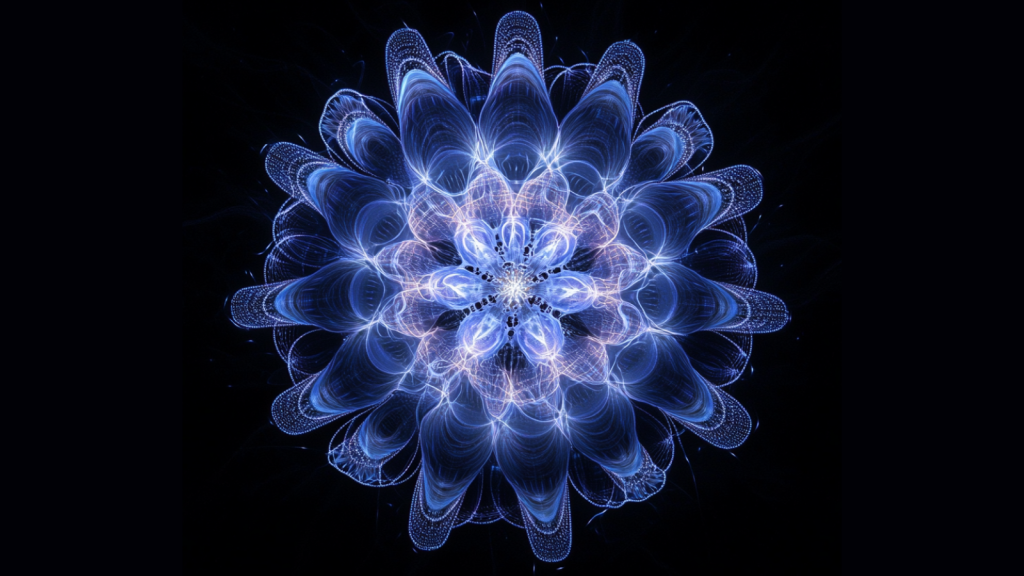
Cymatics is the study of visible vibration, and it offers a striking way of understanding how sound can shape matter. When sound waves are transmitted through a surface such as a plate covered with sand, the particles do not move randomly. They gather into precise geometric patterns, sometimes resembling snowflakes, flowers or finely ordered mandalas. What makes this so compelling is that the sound is no longer something we only hear; it becomes something we can almost read with the eyes.
Seen in this way, cymatics gives a concrete form to an older intuition running through this article: that vibration is not abstract, but active. Each frequency appears to produce its own structure, its own visual signature, as though every sound carries an internal order. The patterns may look delicate, but they point to a powerful idea — that sound leaves a real imprint on the physical world, shaping matter according to the nature of the vibration itself.
- Sound is translated into visible movement
- Different frequencies create different geometric forms
- The resulting patterns suggest that vibration has structure
Why these patterns still fascinate us
The enduring appeal of cymatics lies in the fact that it makes an invisible process suddenly tangible. We know that sound affects us emotionally and physically, yet cymatic patterns offer a rare visual reminder that vibration can organise as well as disturb. Rather than presenting sound as something fleeting, they suggest that it has form, rhythm and consequence.
That is why cymatics continues to resonate so strongly in conversations about frequencies, resonance and healing. It does more than decorate the idea that sound matters; it gives it a visible language. By showing that each vibration can generate a distinct geometric pattern, cymatics reinforces the sense that sound has a unique relationship with the material world — one that is ordered, expressive and far more influential than it first appears.
Frequency, Healing and the Contested Legacy of Dr Rife
A radical idea about vibration and disease
In the 20th century, inventor Royal Raymond Rife became one of the most frequently cited figures in discussions about healing through vibration. His work centred on the idea that micro-organisms possess their own natural frequencies, and that carefully targeted vibrations could affect them in precise ways. According to this view, certain frequencies were capable of destroying pathogens while limiting unwanted effects on surrounding living tissue, suggesting that sound or vibration might be used not only to soothe the body, but to intervene more directly in illness itself.
Within the broader history of ideas linking frequency and health, Rife’s research is often presented as a striking extension of an older intuition: that the body, like music, may respond to harmony and disruption in measurable ways. Whether approached as scientific experimentation, visionary invention or a controversial chapter in alternative healing, his name remains closely tied to the belief that vibration can act on life at a fundamental level.
Related offer
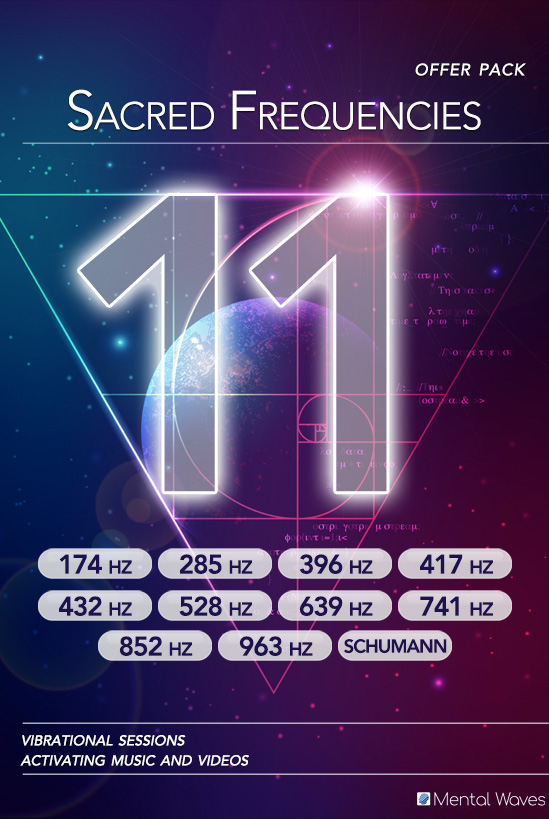
11 Sacred Frequencies + Climax Bundle
Sacred Frequencies Pack including 10 videos and 11x 20-minute tracks of activating music.
View product- natural frequencies of micro-organisms
- targeted vibrations aimed at pathogens
- the claim of preserving healthy tissue
Why his story still endures
Rife’s reputation rests largely on the claim that, in 1934, he reported results with a frequency-based device. In accounts sympathetic to his work, this moment is presented as evidence that healing through vibration was not merely theoretical, but practical and effective. Yet despite these reported successes, his research was not embraced by the scientific mainstream and was largely set aside. That tension between promise and rejection is a large part of why his story still carries such force.
For many people drawn to the healing potential of sound, Rife represents more than a disputed inventor. He stands for the possibility that important knowledge about frequencies, health and the body may have been overlooked or dismissed too quickly. His legacy continues to inspire those who believe that sound and vibration hold genuine therapeutic value, and his name still appears whenever the conversation turns to the deeper relationship between frequency, healing and human wellbeing.
What Energy, Frequency and Vibration Ultimately Point Towards
A thread running from Pythagoras to Tesla
As Nikola Tesla famously put it, “If you want to find the secrets of the universe, think in terms of energy, frequency and vibration.” That line resonates so strongly because it gathers the article’s central intuition into a single idea: sound is not merely something we hear, but a way of understanding order, relationship and influence. From Pythagoras and his search for musical ratios to later figures such as Royal Raymond Rife, the same underlying question keeps returning: could vibration be one of the hidden principles through which life, matter and harmony are organised?
Why this idea still endures
Whether we approach it through music, mathematics, sacred geometry or healing practices, the deeper suggestion remains the same: to understand vibration is to look more closely at how the world holds together. In that sense, the legacy of thinkers like Pythagoras and Rife is not simply historical. It continues to inspire people who believe that frequencies may play a meaningful role in both healing and a wider sense of universal harmony.
Even where interpretations differ, the enduring appeal of these ideas is easy to understand. They offer a vision of reality in which nothing is entirely separate: sound, number, form and consciousness all seem to echo one another. And perhaps that is why the language of energy, frequency and vibration still feels so compelling today — it speaks to the hope that beneath apparent disorder, there is a deeper pattern waiting to be heard.
How to read sacred frequency claims with discernment
The history of sound, number and vibration is rich, but not every claim belongs to the same category. Some ideas are mathematical, some are symbolic, some are experiential and some require stronger scientific evidence before they can be stated with confidence.
| Claim type | Useful reading | Guardrail |
|---|---|---|
| Musical ratio | Can be studied through pitch, interval and proportion. | Keep it measurable when discussing acoustics. |
| Sacred geometry | Can help express order, beauty and symbolic harmony. | Do not turn symbolism into proof. |
| Sound ritual | Can support attention, relaxation and contemplative listening. | Keep effects personal and non-absolute. |
| Health claim | Requires evidence, replication and clinical context. | Use cautious language and avoid promises. |
Where to continue inside Mental Waves
This article naturally connects with the 11 Sacred Frequencies Pack, Sacred Frequency 432 Hz and Sacred Frequency 963 Hz. These are best approached as intentional listening experiences: sound, attention and ritual, not automatic outcomes.
Editorial note from Mental Waves
This article explores the symbolic, historical and experiential language of frequency. Mental Waves approaches sacred sound as a listening practice and a contemplative support. It should not be read as clinical guidance or as proof that a frequency can replace qualified care.
Conclusion
What remains, after the symbols, the ratios and the grand claims, is a simple but enduring intuition: sound is never just sound. In this tradition, it becomes a way of thinking about order, relationship and the hidden structure of life itself. Pythagoras gave that intuition a language of number; later thinkers extended it into geometry, beauty, resonance and healing. Some of these ideas sit comfortably beside observation, others remain more speculative, but together they express the same human impulse — to feel that harmony is not an ornament of the world, but one of its organising principles.
That is perhaps why these themes still hold their power. They speak both to the mind that looks for pattern and to the part of us that responds before explanation arrives: the body settling into a tone, the ear recognising balance, the imagination sensing meaning in vibration. Whether approached as philosophy, symbolic wisdom or lived practice, the deeper invitation is not to accept every claim uncritically, but to listen more carefully to the ways rhythm, proportion and resonance shape experience. Sometimes, understanding begins there.
Frequently asked questions about sound, frequency and vibration
What connects sound, frequency and vibration?
Sound is the experience we hear, vibration is the movement that creates it and frequency measures how often that movement repeats. Harmony appears when vibrations relate to one another in ordered, meaningful proportions.
Why is Pythagoras important for sound and harmony?
Pythagoras is important because he linked musical harmony with number. By studying string length and pitch, he helped show that pleasing intervals can follow simple ratios rather than random preference.
What does the music of the spheres mean?
The music of the spheres is the ancient idea that cosmic order can be understood through harmony and proportion. It is best read as a symbolic and philosophical image rather than a literal claim that planets make audible music.
How does sacred geometry fit into this topic?
Sacred geometry gives visual form to the same search for proportion. Patterns such as the pentagram, golden ratio and Fibonacci spiral express the idea that beauty and order may repeat across different scales of nature.
What is cymatics?
Cymatics is the study of visible vibration. When sound moves through a surface covered with fine particles, those particles can form geometric patterns, making vibration easier to see and understand.
Are sacred frequencies scientifically proven?
Some acoustic and neurological effects of sound are studied scientifically, but many sacred frequency claims remain symbolic or experiential. A responsible approach separates measurable sound, personal experience and spiritual interpretation.
How can I use this in a listening practice?
Choose one sound, set a clear intention, lower distractions and listen through the body rather than only through analysis. Notice breath, attention and emotional tone, then close with a minute of silence.
Which Mental Waves path fits this topic?
The Sacred Frequency Session and the 128 Hz guide are the cleanest entry points. Product pathways such as 432 Hz, 963 Hz and the 11 Sacred Frequencies Pack also fit this frequency and vibration cluster.
Should frequency claims be taken literally?
Some claims can be measured, some are symbolic and some are personal listening reports. The safest approach is to stay curious without turning sacred language into certainty or clinical proof.