en
enVotre panier est vide.


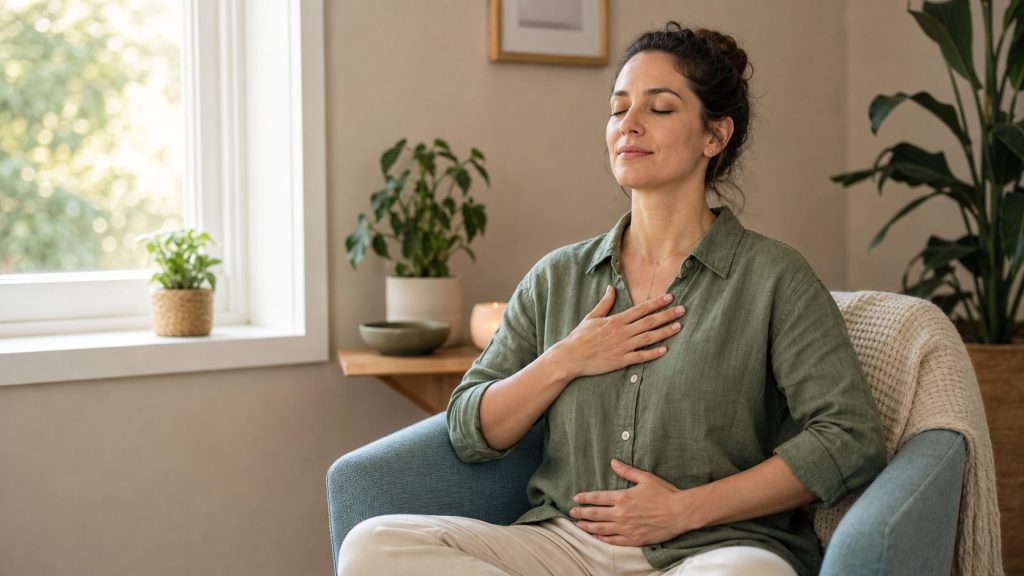
We are often told that a positive outlook can change the texture of everyday life: it can steady us, soothe us and help us feel more fully ourselves. What is discussed far less often is the practical side of it — how to become more positive in a way that feels real, rather than forced. One surprisingly overlooked route lies in something far more basic and immediate than most people imagine: the breath.
Used well, breathing can do more than calm the body for a moment. In the approach known as positive breathing, deep or controlled breathing is paired with positive suggestion to encourage relaxation, inner peace and a gentler mental state. Popularised by Dr Jean-Loup Dervaux in his 2008 book Adopt Positive Breathing!, this method is presented as a way of loosening unhelpful habits and supporting both wellbeing and personal growth. More broadly, a number of breathing exercises drawn from meditation, dynamic relaxation and sophrology can help shift the mind away from stress and towards a more constructive daily outlook.
Positive breathing as a path to inner calm
What positive breathing is really meant to do
For anyone who has not come across it before, positive breathing is presented as a simple but beneficial practice aimed at helping you reach a deeper sense of inner peace. It combines deep or controlled breathing with positive suggestions, so it works on two levels at once: the body gradually settles, and the mind is gently steered in a more constructive direction. That is why it is often linked not only with everyday well-being, but also with personal development.
In short: how can breathing support a positive mindset?
Breathing can support a positive mindset by calming the body first, then giving the mind a steadier place from which to choose better thoughts and actions. The practice works best when it is repeated gently rather than forced.
- Slow breathing can reduce inner pressure.
- Positive suggestions work better when the body is calmer.
- Short daily practice is more useful than rare intensity.
- Breath can become a practical reset between stress and choice.
For a structured breathing rhythm, read Cardiac Coherence. For a quick support cue, try the free Mental Reset Session.
This approach was notably advocated by Dr Jean-Loup Dervaux in his 2008 book Adoptez la respiration positive !. In that perspective, positive breathing can help a person loosen the grip of unhelpful habits and move towards greater inner calm. It is also presented as a way of supporting health and helping the body protect itself more effectively against certain illnesses. In other words, it is not just about feeling better for a few minutes: practised properly, it is meant to encourage a more positive way of living overall.
- deep or controlled breathing
- mental relaxation
- positive suggestions directed towards the subconscious
How to practise it in a simple, grounded way
In practical terms, positive breathing begins very simply. Settle yourself comfortably in a quiet place where you are unlikely to be disturbed. Close your eyes, then breathe in and out slowly, deeply and without forcing anything. The first aim is not to “perform” well, but to let the breath become steadier and softer so that the whole body can begin to relax. As you breathe, try to let your thoughts settle rather than chasing each one in turn, until you reach a calmer, more receptive state.
Once that sense of relaxation is there, the second part of the practice can begin: introducing positive thoughts or suggestions for your subconscious to absorb. These can be simple, reassuring phrases, spoken silently or softly to yourself, as long as they remain sincere and calming. The idea is that the breath creates the right inner conditions, and the positive suggestions then help orient your mind in a healthier direction. Used in this way, positive breathing becomes both a relaxation technique and a gentle tool for inner change.
Using Breathwork to Build a More Positive State of Mind
Why breathing can shift your inner state
Beyond positive breathing itself, other breathing methods can also help you become more positive in a very practical way. When you learn to use your breath deliberately, you often begin by calming what is happening inside: the mental agitation softens, the body loosens, and your attention becomes less trapped by stress. From there, it becomes easier to open yourself to a more positive frame of mind, not by forcing optimism, but by creating the inner conditions that make it possible.
That is why these exercises are so often linked to practices such as meditation, dynamic relaxation and sophrology. They do not ask you to deny what you feel. Instead, they give you a concrete way to settle yourself, release tension and make a little more room for steadiness, clarity and emotional balance. Used regularly, breathing becomes less of an automatic reflex and more of a tool you can rely on when you want to regain calm and move away from negativity.
- to calm inner tension
- to loosen the grip of stress
- to make space for a more positive mindset
A simple shoulder-pumping exercise to release stress
One practical exercise recommended for becoming more positive begins in a standing position, with your feet hip-width apart, your body upright and lengthened, and your shoulders relaxed. Close your eyes and bring in a little imagination. Picture a large bag on each side of you, then mentally place all your worries, pressure and stress into them. In other words, transfer everything negative in your life into those bags, and imagine yourself holding them with your fists closed, ready to shake off what has been weighing you down.
Then inhale through your nose and lift your shoulders towards your ears. Hold the breath and raise your shoulders quickly in a pumping motion, as if you were shaking the bags in your hands. When you can no longer comfortably hold your breath, exhale through your mouth and let your shoulders drop. Bring your arms back down alongside your body, return to your normal breathing, and take a moment to notice what has changed in your body and mind. The point is not speed or performance, but sensation: observe the effect of the exercise, then repeat it as many times as you feel necessary.
- Stand tall with feet hip-width apart
- Imagine placing your stress into two heavy bags
- Inhale, lift and pump the shoulders while holding the breath
- Exhale through the mouth, release and observe the sensations
Breathing Techniques to Settle the Mind and Restore Balance
Square breathing to calm stress and steady the body
You can also turn to square breathing, sometimes described here as vertical breathing, when you need to regain a calmer, more positive state. The exercise can be done either standing or seated. Place one hand on your stomach and the other behind your back, then breathe in slowly to a count of three, noticing your abdomen expand beneath your hand. Hold the breath for three counts, then exhale gently through the mouth. As you breathe out, you should feel the hand on your stomach move back towards the one behind you. Hold again for three counts, then begin the cycle once more: inhale for three, hold for three, exhale for three, hold for three.
After repeating the sequence a few times, let your breathing return to normal and simply observe what has changed in your body. This kind of measured breathing can be especially helpful during periods of stress or anxiety, because it encourages the whole system to slow down. Practised regularly, it may also help to ease physical tension and even support a reduction in blood pressure. The point is not to force the breath, but to let the counting and the movement of the abdomen gently bring you back to a steadier inner rhythm.
- Inhale for 3
- Hold for 3
- Exhale for 3
- Hold for 3
Abdominal breathing and a simple movement to create a bubble of calm
Calming abdominal breathing is another useful technique when you want to feel more grounded and serene. Stand upright and place a hand on your stomach. Breathe in while counting to four in your head, and feel the abdomen gently rise. Then breathe out to a count of six and repeat the exercise several times. The slightly longer exhalation helps the mind loosen its grip, so it often leaves you feeling more relaxed and mentally lighter afterwards.
If you want to go a step further, you can also create your own bubble of serenity through breath and movement. Stand tall, paying attention to the vertical alignment of your body. Take a deep breath in, then rotate your waist from side to side while letting your arms swing with the movement, keeping the air briefly in your lungs before exhaling through the mouth and bringing your arms back down alongside the body. This simple exercise can help you feel as though you are reclaiming your space, both physically and mentally. It is a gentle way of restoring your sense of calm when the outside world feels too intrusive.
Creating a Bubble of Calm and Clearing Negative Energy
A simple movement to reclaim your space
To create your own bubble of calm, stay standing and keep the body upright, as though gently lengthening through the spine. Take a full in-breath, then rotate from the waist while letting the arms swing from side to side, keeping the air in your lungs for a moment before exhaling slowly through the mouth and bringing the arms back down alongside the body. The movement is simple, but it can be surprisingly grounding when your mind feels crowded or tense.
This exercise can be used whenever you need to recover a sense of personal space and settle yourself again. It combines breath, posture and movement in a way that helps you feel more centred, as if you were redrawing the boundaries of your inner space rather than letting stress spill into everything.
Related offer
Vibrational Cardiac Coherence
At last, an easy and enjoyable way to practice cardiac coherence without visual indicators, screens or stopwatches......
View product- Stand tall and relaxed
- Inhale deeply, then rotate the waist with the arms swinging
- Exhale through the mouth and let the arms fall back to the sides
A visualisation exercise to push away what weighs you down
A form of energetic clearing can also help you let go of what feels negative or oppressive. Begin standing up. Inhale deeply while placing both hands on the forehead, press lightly, then breathe out through the mouth while imagining that you are pushing negativity away from your life with your hands, until the arms are fully extended in front of you. Then inhale again and place the hands between the breasts. Exhale through the mouth, opening the arms forwards as though clearing the space in front of you.
Repeat the same pattern once more with the hands on the navel, and then again with the hands just above the pubic area, each time breathing out and pushing the hands forwards with the arms fully stretched.
Through this combination of breathing and visualisation, you symbolically clear out what has been building up inside, easing both body and mind of the bad energies that seem to press in on them. These breathing exercises are worth repeating every day if you want to cultivate a more positive state of mind. The morning, just after waking, is often the best time to practise them: it helps you meet the day in a steadier mood and move through it with a more positive outlook.
- Forehead
- Centre of the chest
- Navel, then just above the pubic area
Making Breathwork a Morning Habit That Lifts Your Mood
Why repetition matters more than intensity
These breathing exercises only really reveal their value when they are practised regularly. Used once in a while, they may bring a brief sense of relief; repeated each day, they can gradually help you become more positive in a steadier, more natural way. The idea is not to perform them perfectly, but to return to them often enough for the body and mind to recognise the movement towards calm. Over time, this repeated pause can make it easier to let go of tension, settle anxious thoughts and create a more open inner state.
The most helpful moment is often first thing in the morning, just after waking. At that point, the day has not yet gathered speed, and a few minutes of conscious breathing can change the tone of what follows. Whether you choose positive breathing, square breathing, abdominal breathing, the shoulder-pumping release, the bubble of serenity or the visualisation used to clear away negative energy, the principle remains the same: begin the day by making space inside yourself. That simple ritual can help you welcome the morning in a better mood and move through the day with a more positive frame of mind.
- Practise daily rather than occasionally
- Favour the morning, after waking
- Choose one or two exercises you can repeat easily

Building a simple ritual you can actually keep
To make these practices part of everyday life, it helps to keep them simple and grounded. Stand comfortably, breathe without forcing, and pay attention to the sensations each exercise leaves behind. After a round of breathing, notice what has changed: perhaps your shoulders have dropped, your thoughts feel less crowded, or your body seems lighter. That moment of observation matters, because it helps you feel the concrete effect of the exercise rather than treating it as an abstract wellbeing routine.
You do not need a complicated protocol. What matters is consistency and intention. Repeat the exercise that suits your state that day, and if necessary do it several times until the body begins to release what it is holding. Practised in this spirit, these techniques become more than isolated relaxation tools: they turn into a daily way of clearing out stress, easing mental overload and giving yourself a calmer, more constructive starting point. Little by little, that is how breathing can support a more positive outlook in everyday life.

A Three-Moment Breathing Routine for the Day
Breathing for a positive mindset becomes easier when it is attached to ordinary moments. Instead of waiting until stress is high, the practice can be placed at three simple points: morning, transition and evening.
Related offer
Mental Dynamism and Good Mood
The action of our audio recording affects the limbic system, where our emotional keyboard is located. The...
View productIn the morning, use the breath to set direction. During the day, use it to interrupt tension before it becomes automatic. In the evening, use it to let the body know that effort can soften.
- Morning: take five slow breaths and choose one calm intention.
- Transition: pause between tasks before answering or deciding.
- Evening: lengthen the exhale and release the day from the shoulders.
- Anytime: return to the body when thoughts become too crowded.
This rhythm keeps the practice realistic. A short breath reset repeated often is usually easier to maintain than a long routine that only happens when life is already calm.
The Mental Waves Breath Reset Framework
The Mental Waves frame is to let breathing become a bridge. You are not pretending everything is fine; you are giving the nervous system a calmer rhythm so the mind can stop reacting automatically.
- Exhale: begin by lengthening the out-breath slightly.
- Settle: feel the body before adding positive suggestion.
- Choose: use one clear phrase or image instead of many.
- Repeat: practise at the same moment each day if possible.
If emotional tension is heavy, continue with How to Free Yourself from Stress. If imagery helps you shift state, read Creative Visualization and 11 Elements That Can Lower Your Vibration.
Editorial note from Mental Waves
This article is educational. Breathwork can support calm and mindset, but intense anxiety, trauma symptoms, dizziness or breathing difficulty should be approached with appropriate professional guidance.
Conclusion
Becoming more positive is not really about forcing cheerful thoughts over everything that feels heavy. It is often something quieter than that: learning to calm the body, soften mental agitation and create enough inner space for a different state of mind to emerge. In that sense, breath is less an instant solution than a practical doorway — simple, accessible and surprisingly effective when it is used with care and regularity.
What runs through all of these exercises is the same idea: a steadier breath can help you release tension, regain a sense of balance and meet the day with a little more clarity. Whether the approach is structured, visual or more intuitive, the value lies in repetition rather than intensity. A few minutes each morning may not transform everything at once, but they can gradually change the tone of your inner life. Sometimes that is where a more positive daily life truly begins.
{
"@context": "https://schema.org",
"@type": "FAQPage",
"mainEntity": [
{
"@type": "Question",
"name": "What is positive breathing?",
"acceptedAnswer": {
"@type": "Answer",
"text": "Positive breathing combines calmer breathing with constructive mental cues, so the body and mind shift together."
}
},
{
"@type": "Question",
"name": "How can breathing help mindset?",
"acceptedAnswer": {
"@type": "Answer",
"text": "It can reduce bodily tension, which makes it easier to choose steadier thoughts instead of reacting from stress."
}
},
{
"@type": "Question",
"name": "How do you practise simply?",
"acceptedAnswer": {
"@type": "Answer",
"text": "Sit or stand comfortably, slow the exhale, breathe into the abdomen and repeat one clear positive cue."
}
},
{
"@type": "Question",
"name": "What is square breathing?",
"acceptedAnswer": {
"@type": "Answer",
"text": "Square breathing uses equal counts for inhale, hold, exhale and hold, creating a simple rhythm for attention."
}
},
{
"@type": "Question",
"name": "What is abdominal breathing?",
"acceptedAnswer": {
"@type": "Answer",
"text": "Abdominal breathing invites the belly to move with the breath, helping the body shift away from upper-chest tension."
}
},
{
"@type": "Question",
"name": "When is the best time to practise?",
"acceptedAnswer": {
"@type": "Answer",
"text": "Morning is useful because it sets a tone, but short resets during the day can also help."
}
},
{
"@type": "Question",
"name": "Does this force positivity?",
"acceptedAnswer": {
"@type": "Answer",
"text": "No. The aim is not denial, but creating enough calm for a more constructive response to become possible."
}
},
{
"@type": "Question",
"name": "Can it help stress?",
"acceptedAnswer": {
"@type": "Answer",
"text": "It may help reduce inner pressure when practised gently and regularly, especially with realistic expectations."
}
},
{
"@type": "Question",
"name": "What is the main takeaway?",
"acceptedAnswer": {
"@type": "Answer",
"text": "Breathing for a positive mindset starts with the body: settle the rhythm, then guide attention toward steadier choices."
}
}
]
}
Frequently Asked Questions About Breathing for a Positive Mindset
What is positive breathing?
Positive breathing combines calmer breathing with constructive mental cues, so the body and mind shift together.
How can breathing help mindset?
It can reduce bodily tension, which makes it easier to choose steadier thoughts instead of reacting from stress.
How do you practise simply?
Sit or stand comfortably, slow the exhale, breathe into the abdomen and repeat one clear positive cue.
What is square breathing?
Square breathing uses equal counts for inhale, hold, exhale and hold, creating a simple rhythm for attention.
What is abdominal breathing?
Abdominal breathing invites the belly to move with the breath, helping the body shift away from upper-chest tension.
When is the best time to practise?
Morning is useful because it sets a tone, but short resets during the day can also help.
Does this force positivity?
No. The aim is not denial, but creating enough calm for a more constructive response to become possible.
Can it help stress?
It may help reduce inner pressure when practised gently and regularly, especially with realistic expectations.
What is the main takeaway?
Breathing for a positive mindset starts with the body: settle the rhythm, then guide attention toward steadier choices.