en
enVotre panier est vide.



Creative visualisation is often mistaken for wishful thinking, when in practice it is closer to a form of deliberate mental rehearsal. Athletes have used it for years, picturing a race, a movement or a finish line in precise detail to sharpen attention, strengthen confidence and prepare for performance. The same principle can be applied far beyond sport: not as a magical shortcut, but as a structured way of linking imagination with action.
In short: creative visualization
Creative visualization works best as mental rehearsal: calm the body, define one clear goal, picture the process vividly and repeat briefly enough to support action.
Use this article as a practical map: keep what helps attention become steadier, question anything that sounds absolute, and connect the idea back to repeatable daily practice.
That said, visualisation does not come naturally to everyone, and it can feel frustratingly vague if the method is unclear. Much depends on understanding what creative visualisation actually involves, why the brain responds to vivid mental imagery, and how to practise it in a way that feels concrete rather than abstract. This guide explores the techniques, examples and practical foundations that can help you use visualisation more skilfully, with results grounded in real life rather than fantasy.
Why Creative Visualization Can Influence Real-World Performance
Your brain rehearses imagined experience in ways that resemble the real thing
Creative visualization is not simply wishful thinking. At its core, it is a form of structured mental rehearsal in which you imagine an experience so vividly that the brain responds in ways that resemble actual perception and action. When you picture a scene in detail, many of the same neural networks involved in lived experience can become active. Brain-imaging research also suggests that mental images and perceptual images can share similar neural representations, including at the level of the primary visual cortex. In practical terms, the brain does not always treat a richly imagined scenario as entirely separate from reality, which helps explain why visualisation may sharpen focus, confidence and readiness.

This is often described through the principle of functional equivalence. When you mentally rehearse an action, you activate an internal representation similar to the one used when you perform that action for real. In other words, thoughts can generate some of the same mental instructions as behaviour itself, which is why athletes, performers and speakers often use visualisation before high-pressure moments. Rather than replacing action, this kind of imagery may help prepare the mind for action by making the desired response feel more familiar and more accessible.
- It engages perception as well as imagination.
- It can prime attention, planning and behavioural readiness.
- It works best as rehearsal, not as a substitute for effort.
Mental rehearsal can strengthen learning, motivation and follow-through
Creative visualization may also influence the brain systems involved in movement, learning and motivation. Simply thinking about your body performing an action can activate the motor cortex, while mental imagery is associated with processes such as motor control, attention, perception, planning and memory. It can also stimulate regions involved in movement rehearsal, including the putamen in the forebrain, which may help prime both brain and body for what comes next. With repetition, this process is linked to neuroplasticity: the brain’s ability to form and strengthen new neural connections. Repeated mental rehearsal may therefore support learning by reinforcing pathways associated with the imagined action.
Some accounts also suggest that visualising success is associated with dopamine and other reward-related neurochemicals, which may contribute to motivation, positive expectation and self-belief.
The practical results are one reason the method remains so widely used. In one study, participants who mentally exercised by visualising muscle contractions increased muscle strength by 35%, with the greatest gain, 40%, appearing four weeks after training had ended. Another study found finger abduction strength rose by 53% in the physical exercise group, while mental contractions alone still produced a 35% increase. Importantly, process visualisation often appears more effective than outcome visualisation. Students who imagined themselves studying diligently scored 8 points higher than controls and 6 points higher than those who only pictured getting an A.
The difference was behavioural as much as mental: the process-focused group started earlier and studied for longer because they had mentally rehearsed the steps required, not just the reward at the end.
Core Techniques That Make Creative Visualisation More Effective
Start by calming the body and defining the goal clearly
Effective creative visualisation usually begins with preparation. Before you try to picture any outcome, it helps to settle your nervous system so physical discomfort or mental restlessness does not keep pulling your attention away. Sit or recline in a position that feels comfortable and sustainable, then close your eyes and breathe from your belly, letting it rise and fall with each breath. A few slower, deeper breaths can help you shift into a more relaxed mental state, where imagery often feels easier to access and hold.
Once you are settled, the next step is to give your mind something precise to work with. Vague intentions such as “exercise more” are harder to rehearse mentally than a concrete aim like “I will go for a 30-minute jog every morning”. Framing your intention in the present or near-present tense, using phrases such as “I am” or “I will”, can make the image feel more immediate and actionable. Writing the intention down also helps: it turns an abstract wish into something more tangible, and may support follow-through by giving you a clear point of reference.
- Get physically comfortable
- Use a few slow belly breaths
- Choose one specific intention
Make the image vivid, emotional and flexible
Once the goal is clear, the quality of the image matters. Creative visualisation tends to become more convincing when you engage more than sight alone. Bringing in sound, smell, touch and even taste can strengthen the mental impression. If a golfer is mentally rehearsing a perfect shot, for instance, it helps to feel the grip of the club and hear the swish through the air. The richer the sensory detail, the more real the scene may feel to the brain. Emotion also plays a central role here. Feelings such as joy, pride and excitement can deepen the connection to what you are rehearsing, while simple affirmations like “I am capable” may reinforce self-belief.
It can also help to visualise from the end point: imagine yourself already in the moment of success, fully experiencing what it feels like to have arrived there. This may help align your emotions and behaviour with the direction you want to move in. At the same time, it is useful to practise a degree of detachment. In other words, stay committed to the intention without becoming rigid about exactly how or when it must happen. That balance often makes the practice steadier and less anxious, leaving you more open to opportunities and less likely to be driven by frustration or overcontrol.
- Use all five senses where possible
- Add genuine emotion to the scene
- Picture the end result, then let go of rigid timing
Building a Simple Visualisation Routine You Can Actually Keep
Create a setting that helps your mind settle
A regular practice becomes much easier when it has a clear place and moment attached to it. Setting aside a specific spot for creative visualisation can act as a mental cue, signalling that it is time to slow down, focus and shift into a calmer internal state. Over time, the brain begins to associate that environment with attention and relaxation, which may make it easier to enter the practice without so much effort each time. Just as importantly, a dedicated space serves as a visible reminder that this is something you intend to return to consistently, rather than only when motivation happens to be high.
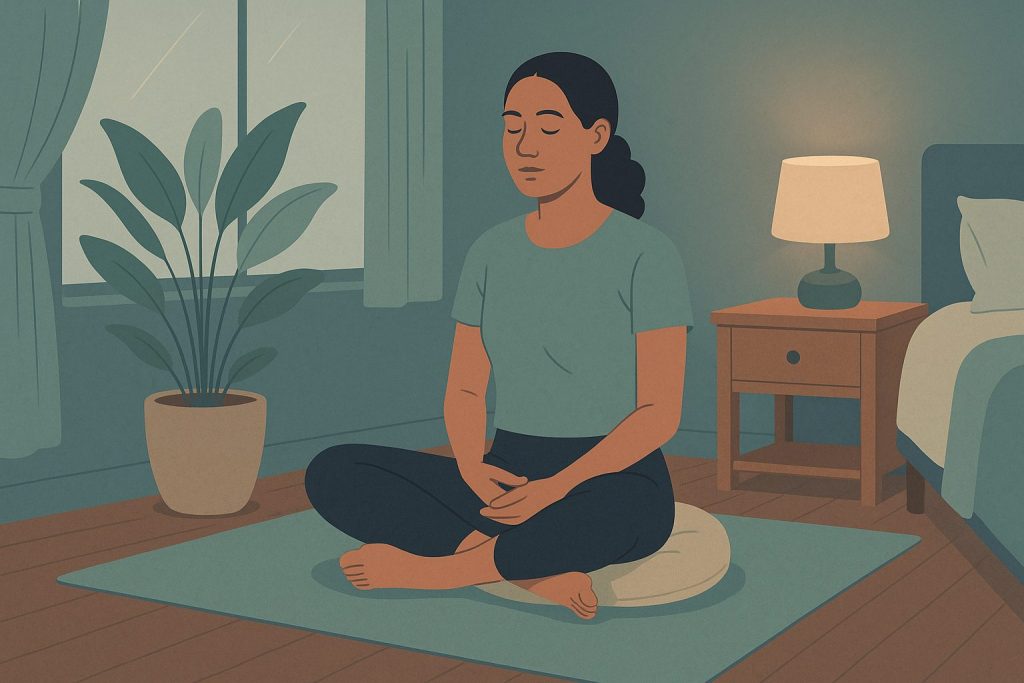
The space itself does not need to be elaborate. A quiet corner of your bedroom, a place in the living room, or simply a comfortable chair can work perfectly well, provided you can sit or recline without interruption for around 10 minutes. What matters most is ease and accessibility. If the setup feels inconvenient, it becomes easier to postpone. Many people also find that practising either in the morning or at night fits naturally with the body’s rhythm. These quieter transition points in the day are often associated with more receptive mental states, and they can help you begin the day with clearer attention or end it with a steadier mind.
- Choose a place with minimal interruptions
- Keep it simple and comfortable
- Use a time you can repeat easily, such as morning or before sleep
Keep sessions short and make repetition non-negotiable
When people begin visualising, they often assume longer sessions must be more effective. In practice, short, focused sessions usually work better than long ones that drift into passive daydreaming. Guidance varies slightly: some sources suggest 5 to 10 minutes, many recommend around 5 minutes a day, and others advise keeping it to 3 to 5 minutes or even no more than 4 minutes at a time to protect concentration. A practical middle ground is to aim for one brief session in the morning and one at night, for roughly 10 minutes in total across the day.
The deeper principle is consistency. Repetition helps reinforce the neural pathways associated with the actions, emotions and outcomes you are rehearsing, which is why a small daily practice often does more than an intense burst followed by weeks of nothing. Start modestly if needed and let the routine become stable before trying to expand it. Even one minute every day for a year can be more useful than a month of ambitious effort that quickly fades. If it helps, track your sessions in a notebook or app. That simple act can add accountability and turn visualisation from a vague intention into a reliable habit.
- Aim for 3 to 5 focused minutes per session
- Practise once or twice daily rather than occasionally for longer
- Track sessions to support consistency
Where Creative Visualisation Becomes Practical
Using mental rehearsal for work, performance and physical goals
Creative visualisation is often most useful when applied to situations that demand focus under pressure. In professional settings, people use it to prepare for presentations, interviews and other high-stakes moments by mentally rehearsing the scene in advance. You might picture yourself speaking with clarity, feeling grounded in your body, and noticing the audience respond with interest and understanding. The aim is not to fantasise passively, but to familiarise your brain with the posture, attention and emotional steadiness you want to bring into the real event. A well-known example is Jim Carrey, who wrote himself a cheque for $10 million for acting services, dated Thanksgiving 1995, and carried it in his wallet while visualising that amount each day.
Shortly before that date, he was paid exactly $10 million for his role in Dumb and Dumber.
The same principle can support health and fitness goals, especially when visualisation is paired with real-world action. Athletes have long used mental imagery to rehearse movement, timing and confidence. Sally Gunnell, who held four major track titles at the same time, reportedly visualised herself crossing the finishing line in first place thousands of times. For body-related goals such as weight loss, the imagery can be more everyday and sensory: imagine how your clothes fit, how your body moves with greater ease, and the extra energy you feel during ordinary activities. Used this way, visualisation may help reinforce motivation and make the desired behaviour feel more concrete and attainable.
- Work presentations and professional milestones
- Sport, fitness and body-based goals
- Performance situations that benefit from calm repetition
Applying visualisation to relationships, money and resilience
Creative visualisation can also be applied to areas that are less visible than sport or career progress, but just as important in daily life. In relationships, mental rehearsal may help you regulate your reactions before a difficult conversation happens. Rather than waiting until emotions take over, you can picture yourself listening carefully, speaking gently and responding with patience. This kind of preparation can make constructive communication feel more natural when the moment arrives, because you have already practised the tone and behaviour you want to embody. The same practical logic applies to financial goals.
Creating a detailed mental image of the exact amount in your savings account, or imagining the relief of becoming debt-free, can give abstract money goals a clearer emotional reality. Vision boards can support this process by keeping those aims visible and influencing everyday decisions.
Visualisation is equally valuable when the goal is not a specific achievement, but the ability to face difficulty with more confidence. Blind Paralympic athlete Lex Gillette has described visualising the long jump environment and the sound of the crowd so vividly that these inner images are enough to get him out of bed with excitement each morning. That example captures something essential: visualisation can help build an inner sense of readiness before a challenge appears. By mentally rehearsing obstacles and your response to them, you are not pretending problems will disappear. You are training attention, emotional regulation and self-belief so that when pressure does arrive, your mind is less likely to feel caught off guard.
- Rehearsing calm, respectful communication
- Making financial goals feel specific and actionable
- Preparing mentally for setbacks and pressure
The Mental Waves Visualization-to-Action Framework
The Mental Waves frame keeps creative visualization grounded: an image becomes useful when it changes attention, posture and follow-through. The goal is not to escape into a perfect imagined future, but to rehearse the inner state and outer behaviour you want to bring into reality.
- Reset first: lower mental noise before building the image.
- Picture the process: rehearse the steps, not only the reward.
- Make it embodied: include breath, posture, sound, touch and emotion.
- Act immediately: finish with one small action so the mind and behaviour stay connected.
For a fuller ritual around this idea, pair visualisation with the Mental Reset sound rituals.
The Mental Waves Mental Rehearsal Framework
The Mental Waves frame is to make visualisation practical. The point is not to imagine a perfect future so intensely that action disappears, but to rehearse the state and behaviour that make action more likely.
Keep sessions brief, sensory and process-focused. See the next step, feel the emotional tone, then return to one concrete action that confirms the direction.
If your attention is scattered before visualisation, begin with the free Mental Reset session and then rehearse one clear next step.
Editorial note from Mental Waves
This article presents creative visualization as reflective mental rehearsal. It does not promise that imagination alone controls outcomes or replaces skill, planning, practice or support.
Conclusion
Creative visualisation is most useful when it is treated as a form of mental rehearsal rather than wishful thinking. The value lies in the combination: a calmer nervous system, a clearer intention, a more vivid inner image, and repeated practice that gently shapes attention and behaviour over time. In that sense, it may help bridge the gap between what you want and what you are actually prepared to do.
Just as importantly, the article’s nuance matters: visualisation is not a promise, and it does not replace effort, skill or real-world adjustment. What it can do is support focus, confidence and follow-through, especially when you rehearse the process as carefully as the outcome and stay flexible about how progress unfolds. Used well, it becomes less about escaping reality and more about meeting it with a steadier mind.
A few minutes, practised consistently, can change the quality of your attention — and that is often where real results begin.
Frequently Asked Questions About Creative Visualization
What is creative visualization?
Creative visualization is a deliberate mental rehearsal method. You imagine an action, goal or situation in enough detail that your mind can practise attention, emotion and behaviour before the real moment.
How is creative visualization different from daydreaming?
Daydreaming usually drifts. Creative visualization has an intention, a structure and a link to action. You are not simply imagining a pleasant future; you are rehearsing the state and steps that support it.
Should you visualize the process or the result?
Both can help, but process visualization is often more practical. Rehearsing the steps makes behaviour clearer, while picturing only the final result can become passive if it is not connected to action.
How long should a visualization session last?
Short sessions are usually enough. Three to five focused minutes can be more useful than a long session that turns vague. Consistency matters more than duration.
When is the best time to practise?
Morning and evening often work well because they are natural transition points. You can also use visualization before a specific event, presentation, conversation or training session.
Why use sound before visualization?
A simple sound cue can help settle attention and mark the start of the practice. This makes the mind less scattered before you begin building the image.
What if I cannot see clear mental images?
Visualization does not have to be visual only. You can rehearse sensations, words, posture, movement, sound or the feeling of acting calmly. The aim is mental rehearsal, not a perfect inner movie.
Can creative visualization replace action?
No. It supports action by making the desired behaviour more familiar. The practice is most useful when it ends with one concrete step you can actually take.
What is the main takeaway?
Creative visualization is strongest when it is calm, specific and practical. Rehearse the process, feel it in the body, repeat briefly and then act.