en
enVotre panier est vide.


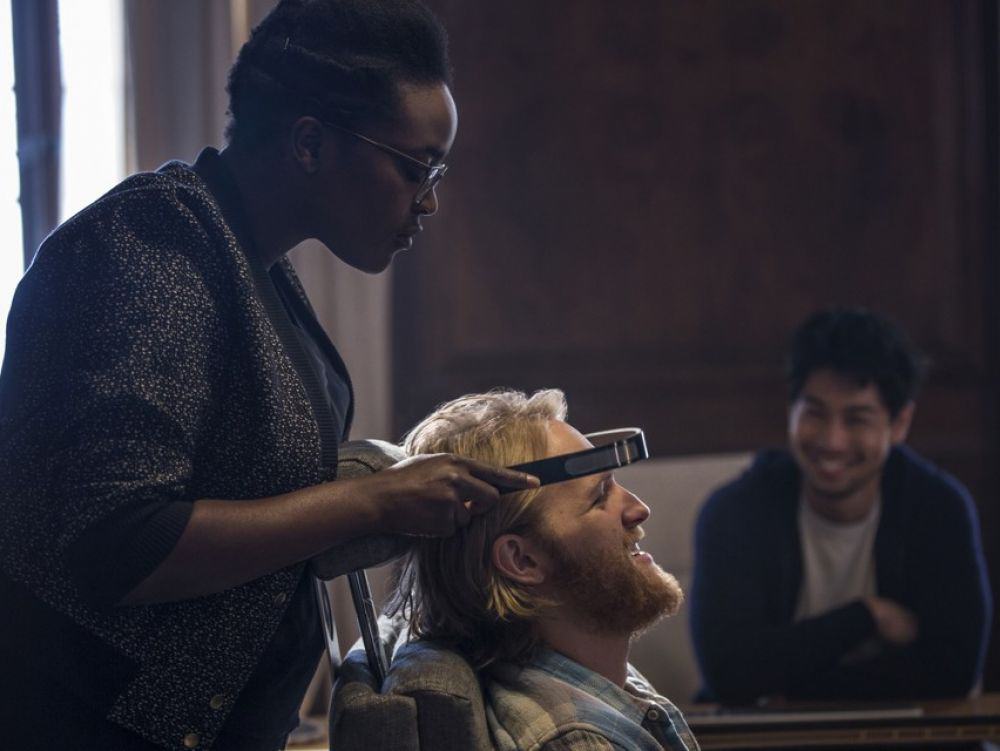
Black Mirror has rarely been more unsettling than in “Playtest”, the second episode of its third series, released on Netflix in October 2016. The premise is simple and deeply unnerving: a video game no longer contents itself with frightening the player through images and sound, but draws directly on their own phobias through a chip implanted at the back of the neck and linked to the nervous system. The real disturbance lies in that collapsing boundary between lived perception and manufactured fiction.
That is what gives the episode its force. Through Cooper, who agrees to test the game as much out of financial need as curiosity, Black Mirror turns a familiar gaming fantasy into something far darker: an experience shaped by the player’s most intimate fears. The atmosphere evokes survival horror, with clear echoes of Resident Evil, yet the episode’s deeper question is more ambitious than a simple technological nightmare. Is the series imagining where interactive entertainment might one day lead, or warning us about the desire to make fiction feel indistinguishable from reality?
In short: what does Black Mirror Playtest show about fear?
Black Mirror Playtest imagines a game that adapts to a player's deepest fears, turning phobias and stress responses into the engine of the experience. Real technology is far more limited, but physiological computing already explores how games can react to attention, emotion and body signals.
- The episode dramatizes fear as personalized gameplay.
- Current games can react to signals, not fully read the mind.
- Immersion becomes risky when feedback overwhelms consent.
- Fear-based design needs psychological and ethical limits.
For the biology of fear, read How the Brain Manages Fear. For a guided reset after intense stimulation, try the free Mental Reset Session.
When Playtest Turns Fear Into Gameplay
A game wired directly into Cooper’s deepest fears
In Black Mirror, Playtest follows Cooper, the episode’s daring protagonist, as he agrees to test an experimental video game that connects to his nervous system through a chip implanted at the back of his neck. The principle is simple and deeply unsettling: the game does not merely show him frightening images, it draws on his own mental landscape. By linking the system to the player’s neural activity, the experience appears to blur the line between what is simulated and what feels real.
That is what gives the episode its force. The device is designed to bring the player’s most intimate fears into the game itself, as though the scenario were feeding on hidden phobias rather than following a fixed script. In that sense, Playtest goes beyond the usual promise of immersion. It suggests a form of interactive horror in which the game adapts to the person playing it, using their own inner vulnerabilities as raw material.
A horror setting shaped by curiosity, need and the mind itself
The world of Playtest recalls the atmosphere of Resident Evil, but with an even darker relationship to reality. The horror does not come only from the setting: it emerges from Cooper’s own psyche, from the blackest corners of his phobias. As he begins the trial, the episode draws us into both a recognisable video-game universe and the most protected recesses of his mind. The result is not just a haunted environment, but a personalised one, shaped by what he fears most.
Cooper submits to the test partly out of curiosity and partly out of financial necessity, as he is short of money. That detail matters, because it grounds the episode in something human and believable. He is not simply chasing thrills; he is also taking a risk because he needs to. From that moment on, the game becomes more than entertainment: it turns into an intrusion into perception itself, where virtual imagery and private fear begin to merge in ways that are increasingly difficult to separate.
- A neural chip linked to the player’s system
- A horror universe reminiscent of Resident Evil
- A game experience shaped by the player’s own phobias
Why Playtest Still Belongs to Science Fiction
A game can react to fear without taking over the mind
In Black Mirror, Playtest seems able to make the player see, feel and fully experience their deepest fears from the inside. That is precisely what makes the episode so unsettling. Yet this does not mean that a game can already hack the brain in the literal sense, seize control of thought, or dictate a player’s movements. According to Anatole Lécuyer, research director at Inria and a recognised specialist in virtual reality and brain-computer interfaces, we are still a long way from that kind of neurological domination.
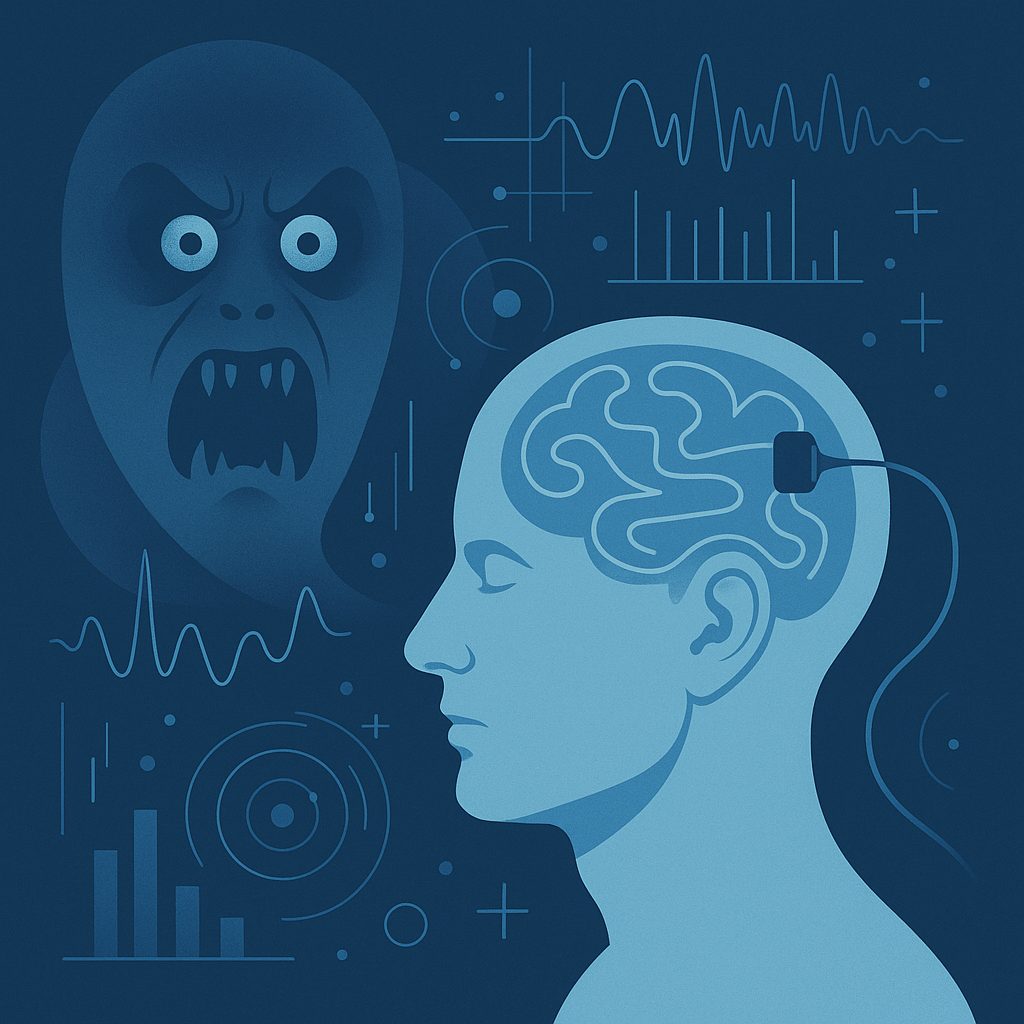
The distinction matters. A highly immersive system may intensify perception, amplify emotion and blur the boundary between what is simulated and what feels real, but that is not the same as controlling the nervous system. Today’s games can influence attention and shape experience through design, sound, image and interaction. They do not, however, directly command the player’s mind in the way Playtest imagines.
- Immersion can heighten fear and presence
- Measurement can detect certain bodily signals
- Control of thoughts and actions remains out of reach
What current technology actually does
What exists in practice is far more limited, even if it is already impressive. Contemporary systems mainly try to improve the interaction between player and game by reading aspects of the player’s physiological state. In other words, they can sometimes register signals associated with stress, arousal or engagement, then adjust the experience accordingly. This field, often referred to as physiological computing, is concerned less with taking over the brain than with interpreting bodily responses linked to perception and emotion.
So while the fantasy of a game feeding directly on our phobias makes for brilliant television, the real technologies remain at the stage of sensing rather than ruling. They may capture fragments of what a player is feeling, but they do not yet decode the full richness of inner experience, let alone override it. That gap between reaction and control is exactly where Playtest becomes fiction rather than forecast.
How Physiological Computing Brings Games Closer to the Player
A game that responds to the body, not just the controller
One of the ambitions behind today’s video game technologies is to narrow the gap between fiction and lived experience, and perhaps one day to blur it almost completely. As Anatole Lécuyer explains, developers are increasingly trying to make games react not only to button presses or on-screen choices, but also to the player’s physiological state. In practical terms, that means a game may adapt according to signs linked to attention, tension or emotional arousal, rather than relying solely on conventional inputs.
This is what is often referred to as physiological computing: systems designed to interpret bodily signals so that the experience becomes more responsive and more finely tuned to the person playing. The aim is not to read thoughts, but to detect measurable cues that can suggest how a player is experiencing a scene, a challenge or a virtual environment.
- skin conductance
- breathing rate
- heart rate
From finger tracking to emotional feedback
Some of these advances concern movement itself. At Magic Leap, for instance, technologies capable of tracking finger movements have been developed to make interaction more precise and more natural. That kind of refinement matters because it changes the quality of immersion: the game no longer feels limited to a distant interface, but begins to respond to subtler gestures and forms of engagement.
Other companies are working on tools that measure bodily responses in order to estimate what the player may be feeling in relation to the game. By analysing signals such as skin response, breathing or heart rhythm, they hope to better anticipate stress, excitement or discomfort, and to understand more clearly how the player perceives the content. This remains a cautious science rather than a perfect decoding of emotion, but it already shows how games can be shaped by the body as much as by the screen.
How Games Are Learning to Read Stress, Focus and Emotion
When a player’s state begins to shape the scenario
Inria has explored physiological computing in very concrete ways, especially by looking at how stress can be woven into a game’s scenario. Using electrodermal sensors or heart-rate data, researchers have tested systems in which the game does not simply respond to button presses, but also to the player’s bodily state. As Anatole Lécuyer explains, one example is OpenViBE2, a project developed with Ubisoft that opened up new design ideas based on the player’s condition in the moment.

The principle is simple, even if the technology remains delicate: if the player appears calm or sufficiently relaxed, the game may offer a small advantage. In a tennis game, for instance, that could mean being rewarded with an ace. The same logic appears in a Star Wars-inspired experience, where the player can lift a spaceship and feel like a Jedi if the system detects enough concentration or relaxation. In other words, the game begins to adapt not only to performance, but to attention, regulation and physiological signals associated with the way the experience is being lived.
- electrodermal activity
- heart rate
- states linked to concentration or relaxation
From horror to romance, with clear limits
These ideas are not limited to action games. Physiological computing can also influence more intimate or emotionally coded genres. Oshiete Your Heart, for example, attempts to steer the development of relationships by analysing the player’s feelings through sensory data. Nevermind, created by Flying Mollusk, uses the opposite approach: the more stressed the player becomes, the more difficult the game grows. Affectiva, meanwhile, reflects another line of research, with cameras designed to interpret facial expressions and infer aspects of the player’s emotional response.
All of this points towards the same ambition: bringing emotion and playability closer together. Yet the limits remain significant. As Anatole Lécuyer notes, current systems may capture signals associated with stress or anxiety, but they are still far from decoding the full richness of human feeling. A raised heart rate, a change in skin conductance or a tense expression can suggest something important about perception and arousal, but they do not provide a complete reading of inner experience. That is precisely why these technologies are intriguing, while still remaining a long way from the kind of total emotional access imagined by Black Mirror.
Related offer
Overcoming stage fright
Session permettant de soulager l'anxiété et la timidité, de mieux réussir à parler en public ou d'animer une…
View productWhen Games Begin to Connect With the Brain
A direct link remains limited and highly specialised
Technological progress has also raised the possibility of a more direct connection between video games and the brain. For now, though, that link remains very modest. What researchers can capture is not a player’s thoughts in the science-fiction sense, but certain electrical signals through a brain-computer interface and neurological headsets such as EEG systems. In other words, the machine can register fragments of brain activity, yet this is still a long way from the kind of seamless mental interaction imagined in Black Mirror.
That is why this approach is still rare in gaming itself. At present, it is used mainly in medical or therapeutic contexts rather than mainstream entertainment. Anatole Lécuyer points out that these tools open up real possibilities, but within clear limits: they can support interaction, attention monitoring or regulation, yet they do not amount to a game taking command of the player’s mind or body.
- EEG headsets can record certain patterns of brain activity.
- Brain-computer interfaces create a direct, but still limited, link between person and machine.
- These systems remain far from true neural “hacking”.
From attention training to therapeutic exposure
This is also where the most concrete applications appear. Mensia Technologies, an Inria start-up, has been developing neuro-adaptive tools designed to support attention training for children. The idea, as presented in the original project, was to combine an electrode headset with a tablet so that brain waves associated with attention could be stimulated through play. According to Anatole Lécuyer, this kind of system may support a more playful form of care at home, without requiring constant trips to the doctor.
The same logic extends to certain therapeutic games aimed at intense fears. Some are based on virtual exposure to anxiety-provoking elements, introduced gradually rather than all at once. Sensors are then used to help regulate the pace of exposure and keep the experience under control. Here again, the goal is not to blur reality and fiction for spectacle, but to use immersive technology in a measured way that may help people work with fear more safely and progressively.
- attention support through neuro-adaptive play
- home-based use via headset and tablet
- gradual virtual exposure for anxiety-related fears
Why Playtest Still Outruns Real-World Virtual Reality
Immersion has advanced, but it still breaks at the edges
Returning to this second episode of Black Mirror, the kind of realistic interaction between game and player imagined in Playtest remains far beyond what is currently possible, even if a player’s phobias or stress responses can sometimes be detected and used. Today’s virtual reality headsets can create a strong sense of presence, but they still impose a clear separation from the outside world. As soon as the headset goes on, the player loses sight of their surroundings and, to some extent, their own body as well. That gap matters: however convincing the illusion may feel, the experience is still mediated by equipment with very visible limits.
That does not mean progress has been minor. Anatole Lécuyer points to the remarkable development of these technologies, including PlayStation VR and other immersive headsets, which can already draw players deeply into a virtual environment despite their many shortcomings. To reduce this sense of disconnection, some laboratories are working on 3D body modelling so that players can be accompanied by a more coherent bodily presence inside the simulation. Even so, Playtest remains far more sophisticated than anything available today. Real technology may be edging closer to a confrontation between the real and the virtual, but it has not crossed that threshold.
- Current VR can intensify immersion, but not erase mediation.
- Headsets still cut players off from their environment and bodily cues.
- 3D body modelling is being explored to make presence feel more continuous.
From entering virtual reality to belonging to fiction
The deeper ambition, however, goes beyond better headsets. As the philosopher Mathieu Tricot suggests, many technophile researchers are now moving towards a form of virtual reality based on a direct connection to the brain, without the familiar intermediaries of screens, controllers, keyboards or mice. For now, that remains more of a horizon than an achieved reality. Yet the direction is revealing: the goal is no longer simply to display a fictional world more convincingly, but to make access to that world feel immediate, almost internal.
In that sense, the dream has shifted since the 1980s. Back then, the challenge was to build virtual reality itself; today, the aim is closer to belonging to fiction, to entering the imaginary so fully that the boundary with ordinary perception begins to blur. That is the deeper fascination behind Playtest. The episode imagines what happens when developers no longer want us merely to play within a fictional universe, but to experience it as if it were real. Bringing down the barrier between reality and virtuality remains, for many creators and researchers, a kind of ultimate ambition.
When Fiction Starts to Spill Into Reality
A game built from the player’s own fears
In Playtest, the game does not simply present a fictional world for the player to explore. It draws directly on the player’s phobias in order to shape the experience itself, which is precisely what makes the episode so unsettling. The usual boundary between reality and fiction begins to blur: the game no longer feels like a separate, contained space, but like an extension of the player’s own inner life. In that sense, the fiction stops being something observed from a distance and starts behaving like reality.
This is the deeper unease at the heart of the episode. Rather than asking the player to enter an imaginary universe and learn its rules, Playtest brings that universe into the player’s most intimate mental space. Fear is no longer just a theme or an atmosphere; it becomes the mechanism that drives the game forward. What Black Mirror imagines here is not simply a more immersive form of entertainment, but a system capable of turning subjective experience into gameplay.
Why that prospect is both fascinating and troubling
For the philosopher Mathieu Tricot, this kind of development is deeply disorientating. In his view, the episode seems to push towards a almost “delirious” realisation of fiction, and that is not necessarily something to celebrate. The issue is not only technological sophistication. It is the possibility that fiction might cease to be a space we visit temporarily and become something imposed on lived experience itself.
That shift marks a broader change in how games are imagined. In the past, we played in order to immerse ourselves in an invented world, to test it, master it and then step back out of it. Here, the ambition appears different: no longer simply to enter fiction, but to import fiction into reality. That is what gives Playtest its lasting force within Black Mirror: it turns a familiar fantasy of total immersion into a more disturbing question about how far we really want that collapse between the virtual and the real to go.
- Entering an imaginary world is one thing.
- Letting that world overwrite reality is quite another.
What Playtest Gets Right About Fear and Technology
The episode exaggerates the technology, but it understands something real: fear becomes more powerful when it feels personal. A generic monster can be frightening; a threat shaped around memory, phobia and uncertainty can feel far more invasive.

Related offer
Anxiety reducer
This session uses Alpha and Beta wave stimulation to relax, alleviate...
View productThat is why physiological computing deserves careful framing. A system that responds to heart rate, attention or stress can make play more adaptive, but it can also blur the line between challenge and manipulation. The more intimate the signal, the more important consent becomes.
For horror design, this raises a useful question: is the game helping the player explore fear, or simply extracting a stronger reaction? That difference matters for entertainment, therapeutic exposure and any future interface that adapts to emotion.
The Mental Waves Fear-Tech Discernment Framework
The Mental Waves frame is to read fear-based technology through nervous-system awareness and consent.
- Signal: identify what the system actually measures.
- Consent: make sure the player understands and can stop.
- Intensity: avoid turning overload into a design goal.
- Recovery: give the body a way back after stimulation.
For a calmer immersive technology angle, continue with Virtual Reality Meditation. For brain-state background, read Brainwave Frequencies and Meditation.
Editorial note from Mental Waves
This article is educational and cultural. It does not diagnose phobias or recommend fear exposure without support. People with panic, trauma or severe anxiety should approach intense media carefully and seek qualified help when needed.
Conclusion
Playtest works because it sits in a space that is both technically informed and philosophically unsettling. The episode imagines a game that feeds on fear so intimately that perception itself becomes unstable, yet the reality described here is more measured: today’s systems may register stress, attention or certain physiological signals, but they do not simply seize the mind. That gap matters. It is where science remains rigorous, and where fiction keeps its power to disturb.
What emerges, then, is not a simple opposition between fantasy and reality, but a more delicate shift in how games are designed and experienced. The ambition is no longer only to represent an imaginary world, but to make that world respond to the player’s body, state of mind and, perhaps one day, aspects of brain activity with greater finesse. That can open useful paths in therapy or attention training, while also raising a more troubling question: what happens when immersion stops being a frame and starts to feel like an intrusion into the self?
Black Mirror does not predict the future so much as sharpen a tension already present in our technologies: the desire to make fiction feel real, without fully knowing what may be lost when the boundary begins to blur.
Frequently Asked Questions About Black Mirror Playtest
What is Black Mirror Playtest about?
It is about an experimental horror game that adapts to the player's fears and blurs reality with simulation.
Can real games read fear?
Some systems can respond to body signals, but they cannot fully read a person's mind or fears.
What is physiological computing?
It is technology that uses body signals such as heart rate, gaze, muscle activity or brain signals to adapt an experience.
Why is Playtest so disturbing?
It makes fear personal, unpredictable and difficult to separate from reality.
Is the Playtest technology real?
No. The episode goes far beyond current technology, though some adaptive and biometric systems exist.
Can immersive media affect anxiety?
Yes. Intense media can heighten arousal for some people, especially when fear feels personal.
What ethical limits matter for fear-based games?
Consent, intensity control, transparency and recovery time all matter.
What should readers explore next?
Readers can explore fear neuroscience, virtual reality, physiological computing and brain-state research.
What is the main takeaway?
Playtest is fiction, but it raises real questions about adaptive technology, fear and consent.