en
enVotre panier est vide.



Sleep problems are now among the complaints GPs hear most often, and they rarely arrive on their own. Stress, anxiety and insomnia tend to feed one another, while everyday surroundings can quietly make matters worse. Some studies even suggest that people living in towns and cities are more affected than those in the countryside. But the answer is not simply to uproot your life and head for greener fields. In many cases, sleep can be improved by addressing the conditions that disturb it in the first place.
In short: insomnia sleep better
Insomnia is easier to approach when sleep is treated as a rhythm to support, not a state to force through willpower.
Use this article as a practical map: keep what helps attention become steadier, question anything that sounds absolute, and connect the idea back to repeatable daily practice.
Before turning to clinical care, it is often worth looking closely at the practical details that shape a night’s rest. The air in the bedroom, light and noise levels, the evening meal, late exercise, and the use of alcohol, tobacco or coffee can all undermine sleep quality more than we realise. These are not minor details or old-fashioned advice; they are immediate, concrete levers that can help you begin to regain more restorative sleep.
That first step matters because insomnia often feels larger and more mysterious than it really is. When nights have been difficult for a while, people can start to believe they have somehow lost the ability to sleep altogether. In practice, the body is usually reacting to a combination of tension, habit, overstimulation and environment. A room that is too warm, a mind that is still working long after the day has ended, a glass too many in the evening, a late burst of exercise that leaves the system alert rather than calm: these things may seem ordinary, yet they can be enough to keep sleep just out of reach.
It is also worth saying that trying harder to sleep rarely helps. The more sleep becomes a nightly test, the more pressure gathers around bedtime. A gentler approach is often more effective: making the bedroom feel breathable and quiet, dimming light early, eating in a way that does not leave the body labouring through the night, and reducing stimulants that quietly linger in the system. None of this is miraculous, but together these adjustments can begin to restore the conditions in which sleep is more likely to return.
Recognising insomnia and understanding its different forms
Insomnia is not only about failing to fall asleep
In the popular imagination, insomnia means lying awake all night and not sleeping at all. In reality, the picture is broader than that. Any persistent disturbance in sleep can fall under insomnia: difficulty falling asleep, repeated waking during the night, waking too early, or sleep that feels too light and unrefreshing. It affects adults far more often than children, and women are especially concerned. Nearly a third of adults say they experience occasional insomnia, yet only around 11% are dealing with what could be described as a genuine, established insomnia disorder.
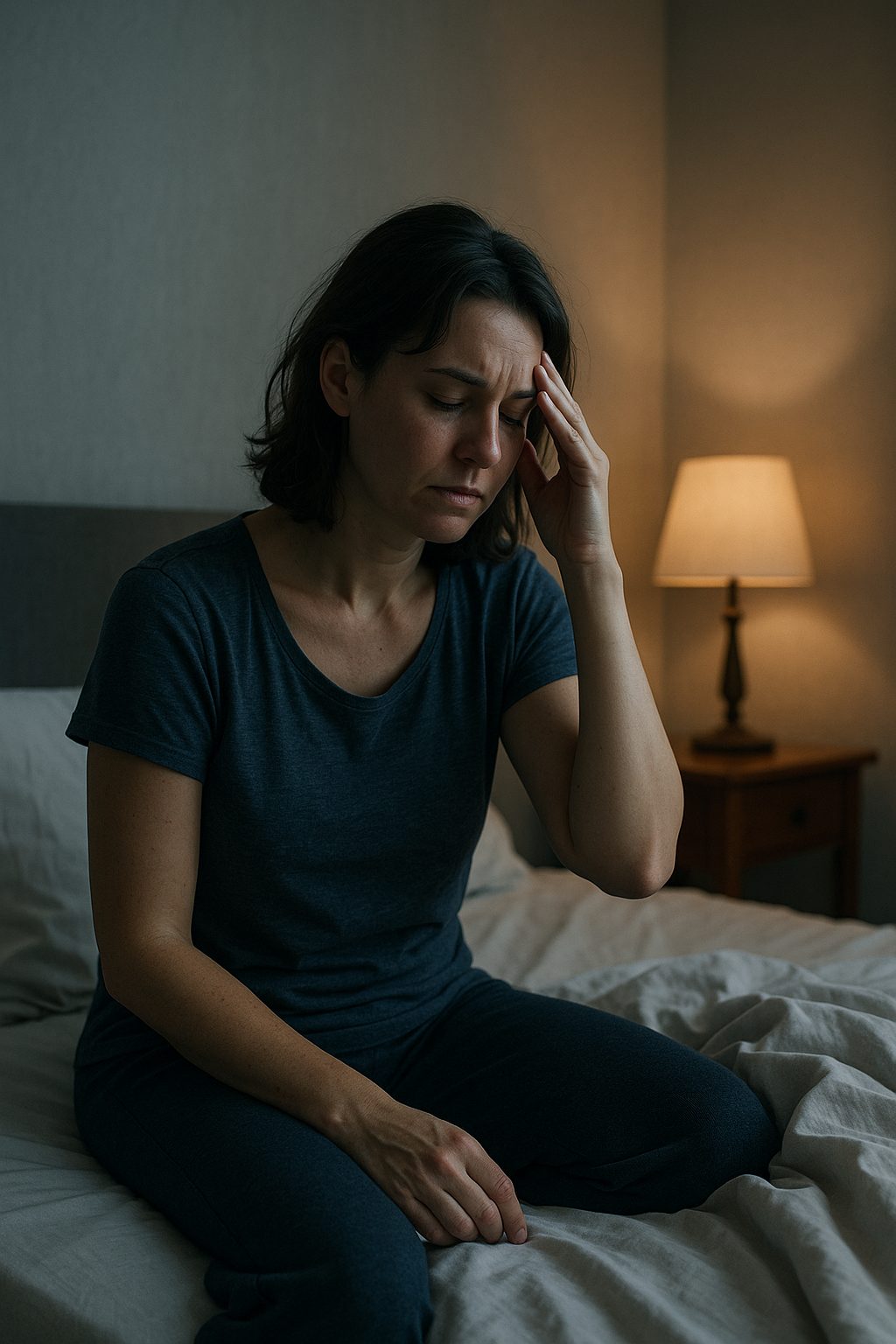
To judge how serious insomnia is, clinicians distinguish between different types rather than treating every bad night as the same problem. The spectrum runs from minor, short-lived sleep disruption to severe, chronic insomnia, with very rare extreme cases carrying grave consequences. Some insomnia is described as idiopathic, meaning no clear triggering or contributing cause can be identified. At the other end, there is withdrawal-related insomnia, which can appear when someone stops a regular use of alcohol or drugs. This distinction matters, because the cause often shapes the right response.
- Difficulty falling asleep
- Frequent waking during the night
- Waking too early
- Sleep that does not feel restorative
For many people, the most confusing part is that they may still be sleeping some of the night and yet feel profoundly unwell the next day. That too can be insomnia. Sleep is not only a question of quantity; continuity and depth matter just as much. A person who drifts in and out of shallow sleep, wakes tense at 4 a.m., or rises feeling as though the night has done nothing for them may be dealing with a very real sleep disorder, even if they were not awake from dusk till dawn.
There is also a difference between a rough patch and a pattern. A few disturbed nights after bad news, travel or a demanding week are part of ordinary life. Insomnia becomes more concerning when the problem repeats, when dread of bedtime begins to set in, or when fatigue starts to shape mood, concentration and daily functioning. That is often the point at which it helps to stop minimising the problem and start observing it properly.
Temporary insomnia is common, but recurring insomnia needs attention
The most common form is adjustment insomnia. Almost everyone has been through it at some point. It often appears after a change in working hours, a house move, a journey, or jet lag. In other words, when life shifts suddenly, sleep often does too. The reassuring part is that this kind of insomnia usually settles without treatment, once the body clock has had time to regain its balance and the internal rhythm resets naturally.
That said, not all insomnia fades on its own. More regular forms, such as psychophysiological insomnia, are a different matter and usually call for proper medical support. When sleep difficulties become frequent, entrenched or distressing, it is no longer just a passing inconvenience. It becomes something that deserves to be assessed seriously, so that the problem is not allowed to install itself over time.
- Changes in work schedules
- Moving house
- Travel
- Jet lag
Adjustment insomnia often has a recognisable story behind it. A person starts a new job with earlier mornings, returns from a long-haul flight, moves into an unfamiliar home, or goes through a period of emotional upheaval. The body has not failed; it is simply trying to catch up with a reality that has changed faster than its internal clock can manage. In these moments, reassurance is useful. Not every bout of insomnia is the beginning of a chronic problem.
Recurring insomnia is different because it can become self-sustaining. After several bad nights, people often begin to monitor themselves too closely: checking the clock, calculating how little sleep remains, fearing the next day before it has even begun. This state of vigilance is one of the cruellest aspects of insomnia. The bed, which ought to signal rest, starts to signal effort and disappointment instead. Once that association takes hold, support is often needed to break the cycle.
It is also sensible to pay attention to what may be sitting behind persistent insomnia. Sometimes the cause is psychological, sometimes behavioural, and sometimes medical. Pain, hormonal changes, depression, anxiety disorders, breathing disturbances during sleep, medication side effects or substance withdrawal can all interfere with rest. That is another reason recurring insomnia should not be treated as a character flaw or a simple lack of resilience. It may be a symptom, and symptoms deserve to be understood rather than endured in silence.
When Insomnia Starts to Affect Your Health
The body does not shrug off chronic sleep loss
Insomnia is not just an uncomfortable night-time experience. When sleep deprivation becomes frequent or long-lasting, it can gradually affect the body in very concrete ways. Chronic lack of sleep is recognised as a major factor in cardiovascular problems, including high blood pressure and even heart attacks. Over time, the whole circulatory system can come under strain, which is why repeated insomnia should never be dismissed as a minor inconvenience.
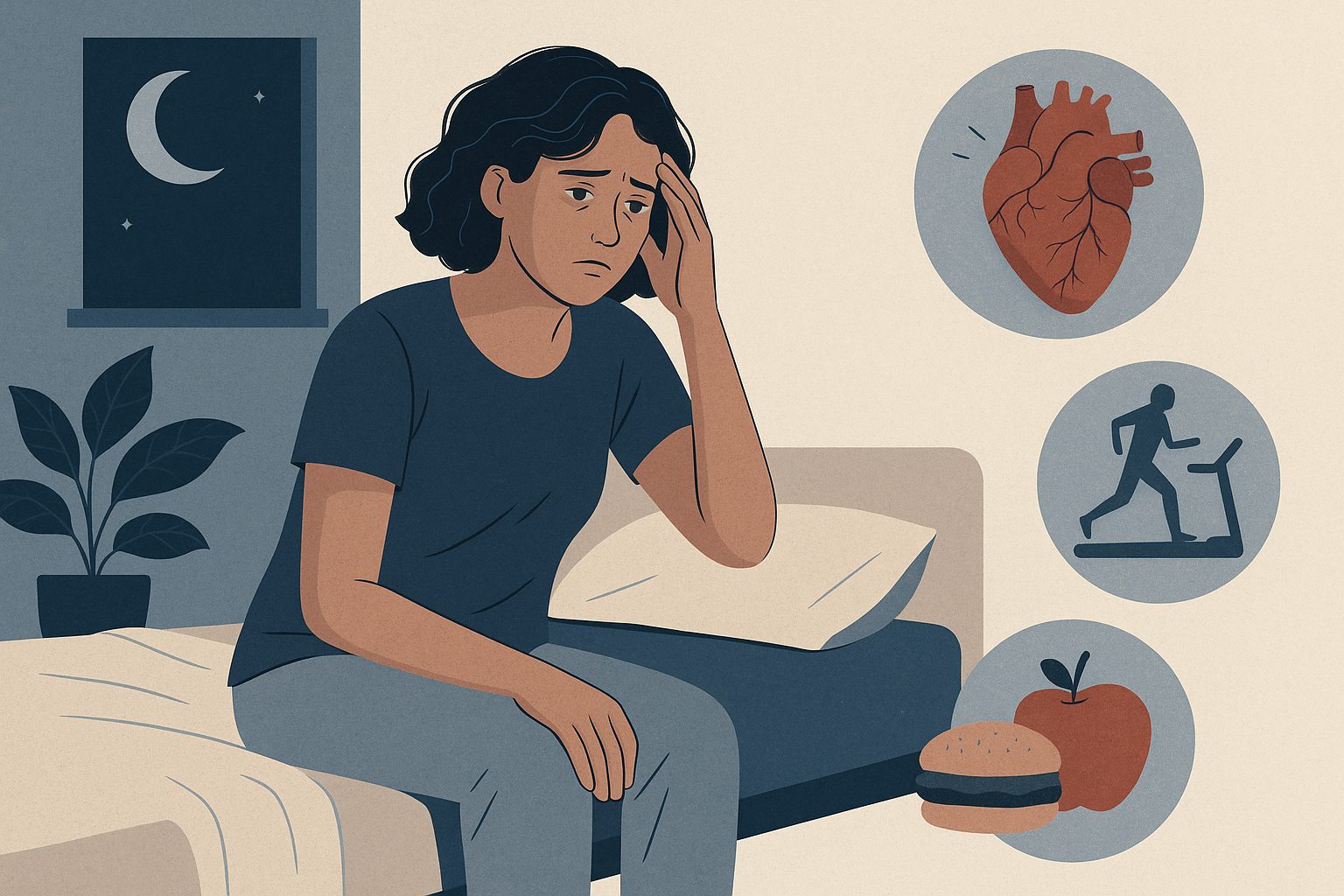
The effects are rarely limited to the night itself. Sleep disorders often lead, little by little, to a poorer overall routine: meals drift to irregular hours, eating habits become less balanced, and the risk of weight gain or obesity increases. What begins as difficulty sleeping can end up unsettling the body’s wider rhythms as well, making everyday health harder to maintain.
- Higher cardiovascular strain
- Disrupted daily habits
- Greater risk of poor diet and obesity
Anyone who has lived through a run of bad nights knows how quickly the body starts to feel unlike itself. Appetite changes. Cravings become harder to resist. The nervous system seems to sit closer to the surface. Small frustrations feel larger, and ordinary tasks require more effort than they should. Over time, this state of depletion can affect concentration, memory, reaction time and even immune resilience. The body keeps going, of course, but it does so less gracefully and at greater cost.
There is also a cumulative quality to sleep loss that people often underestimate. One poor night may be manageable; several weeks of fragmented sleep are another matter entirely. The strain is not always dramatic, but it is persistent. Blood pressure may creep upwards, recovery from stress becomes slower, and the body loses some of its natural flexibility. This is why chronic insomnia deserves respect. It is not indulgent to take it seriously; it is sensible.
The emotional and social impact should not be underestimated
Regular insomnia also affects how a person feels and functions during the day. Social life can suffer, confidence may begin to fall, and stress often becomes more intense. Irritability, anger and low mood can settle in, and in some cases insomnia may contribute to depression. This is one reason persistent sleep problems can become a vicious circle: poor sleep weakens emotional balance, and emotional strain in turn makes sleep even harder to recover.
Related offer
Hyperactive Insomniac
Session for hyperactive people suffering from insomnia. This audio program offers a progression of frequencies up to resonance...
View productWhen insomnia returns regularly, it deserves proper assessment by medical professionals who specialise in sleep disorders. There are many specialist centres in France, and early care can make a real difference. In fact, when a sleep disorder is identified and managed early, it can be resolved in around 60% of cases. That is a strong argument for seeking help before the problem becomes deeply entrenched.
The emotional cost of insomnia is often more private than the physical one. People may still go to work, answer messages, keep appointments and appear outwardly functional, while inwardly feeling frayed, brittle and strangely alone. Nights spent awake can create a particular kind of isolation. The rest of the household sleeps, the street falls quiet, and the mind begins to circle around worries it would handle more calmly in daylight. After enough repetition, this can erode confidence in a very intimate way.
Relationships can suffer too, not always dramatically, but through accumulation. Tiredness shortens patience. Invitations are declined because the person is too exhausted to be good company. Partners may struggle with different sleep patterns, and resentment can creep in where tenderness is needed. None of this means insomnia inevitably ruins emotional life, but it does mean the problem reaches further than the bedroom. Recognising that can be a relief in itself. If you feel less like yourself after months of poor sleep, that is not weakness; it is a human response to prolonged depletion.
Seeking help early is often wiser than waiting for a breaking point. A specialist assessment can clarify whether the issue is primarily behavioural, psychological or linked to another health condition. It can also prevent the common mistake of normalising chronic exhaustion simply because it has become familiar. People adapt to a surprising amount, but adaptation is not the same as wellbeing.
Living Better With Chronic Insomnia
Why recurring insomnia needs a broader approach
The most disabling and harmful forms of insomnia are the ones that return again and again. When poor sleep becomes regular, it can wear down both physical health and emotional balance, which is why chronic insomnia should never be brushed aside as a minor inconvenience. Even now, medicine can sometimes seem at a loss in the face of persistent sleep problems, and some treatments do not bring the relief people hope for.
What specialists do broadly agree on, however, is the central role of stress in both triggering and maintaining chronic insomnia. That matters, because it means treatment is rarely just about waiting to feel tired enough to sleep. Alongside any care or medication prescribed by your doctor, it is often helpful to introduce a relaxation method that supports the body at the very moment sleep is supposed to begin.
- Recurring insomnia is usually more serious than occasional bad nights.
- Stress often helps to sustain the cycle of chronic sleep disturbance.
- Medical support and practical self-help are often most effective together.
A broader approach is important because chronic insomnia is rarely caused by one thing alone. It may begin with stress, but then be maintained by habits that develop in response to that stress: going to bed earlier in the hope of catching more sleep, lying awake for long periods, sleeping in late after a bad night, relying on alcohol to switch off, or becoming anxious about every sign of tiredness. These reactions are understandable, yet they can unintentionally keep the cycle going.
That is why recovery often asks for patience as much as technique. People understandably want a quick fix after weeks or months of exhaustion, but sleep tends to return more reliably when pressure is reduced rather than intensified. A useful treatment plan usually combines medical judgement with practical changes, emotional regulation and a calmer relationship with bedtime itself. In other words, the aim is not to force sleep, but to stop constantly frightening the nervous system away from it.
For some, this may include structured support such as cognitive behavioural approaches for insomnia, careful review of medication, or treatment of an underlying condition. For others, the turning point comes from restoring consistency: getting up at a regular time, reducing evening stimulation, and no longer treating the night as a battleground. The exact route varies, but the principle remains the same: chronic insomnia responds best when the whole pattern is addressed, not just the symptom of being awake.
Choosing a relaxation method that truly suits bedtime
That said, not every relaxation technique is equally well suited to insomnia. Some approaches that are too physical, including certain forms of yoga, may have the opposite effect for some people and keep the body too alert at bedtime, making it harder to drift off. For someone struggling to fall asleep, the most useful method is often one that can be practised in bed, quietly, just before sleep, without effort or stimulation.
From that point of view, sound therapy can be especially well matched to chronic insomnia. It fits naturally into the bedtime window, asks very little of the person using it, and can help create the conditions for sleep rather than forcing it. Mental-Waves presents itself as a leading specialist in this method, and the sound programmes available on the site are described as being effective even for severe or long-standing insomnia.
- Choose a method that does not overstimulate you.
- Favour something simple enough to use while lying in bed.
- Use relaxation as a support to sleep, not as a performance to achieve.
The key is suitability, not fashion. A method may be excellent in itself and still be wrong for the final minutes before sleep. If it asks too much concentration, too much movement or too much self-monitoring, it can leave the mind more engaged than soothed. Bedtime relaxation works best when it feels almost permissive: a way of letting the body stand down, rather than another task to complete correctly.
Sound can be helpful here because it gives the mind something gentle to rest against. For people whose thoughts become louder in the dark, a carefully designed audio environment may soften the sense of inner effort and reduce the feeling of being alone with wakefulness. It does not compel sleep, and that is precisely part of its value. The nervous system often settles more readily when it is accompanied rather than pushed.
Whatever method is chosen, it helps to approach it with modest expectations. Relaxation is not a test of whether you are doing sleep properly. Some nights it will help more than others. The point is not to manufacture a perfect result on command, but to create a more favourable state in which sleep has a chance to emerge naturally. That shift in attitude can itself be deeply relieving for people who have spent too long trying to wrestle rest into submission.
Related offer
Sleep induction
Set against a natural backdrop, this session guides your brain into a state of sleep...
View productThe Mental Waves Sleep Regulation Framework
The Mental Waves frame is to work with sleep indirectly. Instead of commanding the mind to shut down, reduce arousal, simplify the evening and give the body repeated cues that the day is ending.
The most useful changes are usually modest: stable timing, less stimulation, calmer breathing, softer self-talk and a clear boundary between rest and problem-solving.
For a calmer transition before bed, try the free Mental Reset session earlier in the evening and let it mark the shift out of mental overdrive.
Editorial note from Mental Waves
This article avoids promising a cure for insomnia. Persistent or severe sleep problems deserve professional guidance, especially when they affect daily functioning or health.
Conclusion
Insomnia is rarely one simple thing. Sometimes it follows a change in routine and settles again on its own; sometimes it lingers, feeds on stress, and begins to shape the whole texture of daily life. That is why it helps to hold two ideas together at once: some sleep disturbances can be eased by practical changes, while more persistent insomnia deserves proper medical attention rather than resignation or self-blame.
What matters, in the end, is not chasing a perfect night at any cost, but understanding what your sleeplessness is telling you. The bedroom environment, evening habits and nervous tension all play their part, yet chronic insomnia can also carry real physical, emotional and social consequences if it is left to settle in. A calmer bedtime approach may support recovery, but it should sit alongside clear-eyed observation and, when needed, specialist care. Sleep often returns more gradually than we would like, but it does return.
There is something quietly reassuring in remembering that insomnia, however consuming it feels at 3 a.m., is not the whole story of your body. Sleep can become disrupted, delayed, fragmented and stubborn, but that does not mean it is gone for good. Often, what is needed is not panic or perfection, but steadier conditions, better understanding and the right kind of support at the right moment.
If your sleep has been poor for a short while, begin with the obvious and the practical. If it has been poor for months, do not carry it alone out of habit. Both responses are valid, and both can be wise. The important thing is to stop treating insomnia as something you must simply endure. With attention, patience and appropriate help, even long-standing sleep difficulties can begin to loosen their grip.
Frequently Asked Questions About Coping With Insomnia
What counts as insomnia in practice?
Insomnia includes more than being unable to fall asleep at all. It can also mean waking repeatedly during the night, waking too early, or sleeping in a way that feels light and unrefreshing. In short, any persistent disturbance that affects the quality or continuity of sleep can fall within insomnia.
Is occasional poor sleep the same as a real insomnia disorder?
Occasional poor sleep is common and does not always amount to an established insomnia disorder. Nearly a third of adults report occasional insomnia, but only around 11% face a more genuine, ongoing form. The difference lies in how frequent, persistent and disruptive the sleep problem becomes over time.
Who is most affected by insomnia?
Adults are affected far more often than children, and women are especially concerned. Sleep difficulties can happen at any stage of life, but they are not evenly distributed. This makes it important to take recurring symptoms seriously rather than dismissing them as a normal part of a busy period.
What is adjustment insomnia and does it go away on its own?
Adjustment insomnia is the most common form and often appears after a change such as new working hours, moving house, travel or jet lag. It usually settles without treatment once the body clock regains its balance. This kind of insomnia is often temporary, even if it feels very disruptive at the time.
When should insomnia be assessed by a doctor or sleep specialist?
Medical assessment becomes important when insomnia returns regularly or starts to feel entrenched and distressing. More persistent forms, such as psychophysiological insomnia, usually need proper support rather than waiting for them to pass. Early care matters, because sleep disorders managed promptly can be resolved in around 60% of cases.
Which everyday factors can make insomnia worse?
Bedroom conditions and evening habits can have a direct effect on sleep quality. Poor air in the room, too much light, noise, a heavy evening meal, exercise late in the day, and the use of alcohol, tobacco or coffee can all work against restful sleep. These are practical factors that can often be adjusted straight away.
What are the health risks of chronic insomnia?
Chronic sleep loss can gradually affect both physical and mental health. It is linked to cardiovascular problems such as high blood pressure and heart attacks, and it can also disrupt eating habits, encourage weight gain and unsettle daily routines. Over time, insomnia can become much more than a night-time inconvenience.
Can insomnia affect mood and social life as well as sleep?
Regular insomnia can undermine confidence, increase stress and lead to irritability, anger and low mood. Social life may suffer as tiredness and emotional strain build up. In some cases, the problem can contribute to depression, creating a cycle in which poor sleep and emotional distress keep reinforcing one another.
What kind of relaxation method is best suited to chronic insomnia?
A bedtime relaxation method works best when it can be used quietly in bed, just before sleep, without effort or stimulation. Approaches that are too physical, including some forms of yoga, may keep the body too alert for some people. Sound therapy is presented as especially suited to this moment because it can be used passively at bedtime.