en
enVotre panier est vide.



When everyday life is saturated with urban noise, mental overload and that low, persistent tension that never quite leaves the body, zen music is often sought out as a simple way to create a calmer inner climate. Used during moments of rest, meditation or quiet recovery, it may help ease the sense of pressure that builds up across the day, while supporting attention, emotional regulation and a more settled state of mind.
In short: zen music
Zen music can support deep relaxation when it is used as a simple auditory environment for slowing down, breathing and letting attention soften.
Use this article as a practical map: keep what helps attention become steadier, question anything that sounds absolute, and connect the idea back to repeatable daily practice.
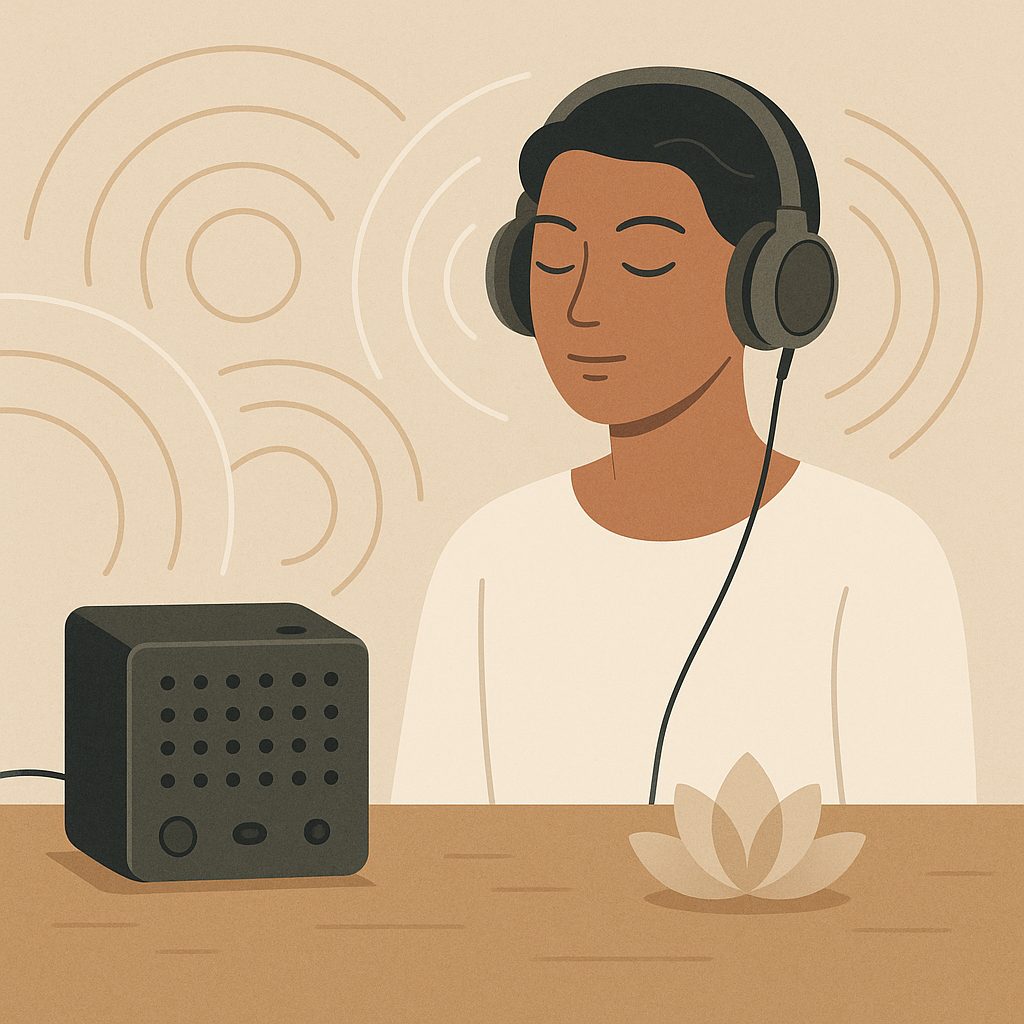
Here, zen music is approached not simply as background ambience, but as a listening experience shaped through carefully composed sound and technologies such as binaural or isochronic tones. The idea is not to promise miracles, but to explore how certain frequencies and sound structures may interact with perception and brain activity, encouraging relaxation and a deeper sense of release. In practical terms, that can be remarkably accessible: a pair of headphones, an MP3 player, and a little protected time to let the mind slow down.
In a culture of constant alerts, fragmented attention and sensory overstimulation, this kind of listening can also serve another function: it creates a deliberate boundary around experience. Rather than adding more information, it reduces cognitive clutter. That reduction is often precisely what people need when they feel mentally dispersed, physically tense or unable to disengage from the demands of the day.
How Zen Music Supports Deep Relaxation
A calmer mental state, supported by sound
Most people have felt the soothing effect of ambient music, but zen music is often sought out for something more specific: creating the conditions for deep relaxation. With your eyes closed, lying down or sitting comfortably, you can simply let the sound carry your attention. Certain auditory rhythms and frequencies are associated with changes in perception and mental state, which helps explain why this kind of listening may encourage the whole body to unwind. Rather than forcing calm, it can gently guide you towards it.

When the music is well suited to the moment, the sensation can spread through the body from head to toe, with a progressive feeling of release in the muscles and a quieter inner atmosphere. Many people also describe a freer flow of thought, sometimes accompanied by vivid, colourful mental imagery. In that state, tension may feel less dominant, discomfort can seem to recede, and the mind may drift into a soft, dreamlike reverie. This form of letting go is often one of the most valued effects of zen music, precisely because it can bring a little more ease into everyday life.
From a psychological point of view, part of this effect may come from the way repetitive, non-intrusive sound can stabilise attention. When the mind is no longer pulled in several directions at once, internal noise often becomes less compelling. Breathing may slow naturally, muscular guarding may soften, and the listener can enter a state that feels less effortful and more receptive. This does not mean that every session will be profound, but it helps explain why even simple listening can sometimes feel disproportionately restorative.
It is also worth distinguishing relaxation from passivity. Deep relaxation is not merely a collapse into drowsiness; it can involve a clear but softened form of awareness in which the body is less defended and the mind less agitated. That state is often sought in meditation, recovery practices and stress management because it may support a more balanced relationship between alertness and rest.
- deep physical relaxation
- lighter mental tension
- more fluid visualisation and inner imagery
Making space for short, regular listening sessions
It is worth setting aside a few moments in your schedule for listening to zen music and nothing else. These sessions do not need to be long to feel worthwhile. Even brief periods of focused listening may help restore a sense of mental quiet, support concentration at work, and make anxious feelings feel more manageable. The value lies less in performance than in regularity: giving the brain and body a clear pause from noise, pressure and constant stimulation.
Over time, this simple habit can subtly change the way you relate to everyday difficulties. Problems do not disappear, of course, but they may feel less overwhelming when approached from a calmer and more regulated state. In that sense, zen music can contribute not only to relaxation in the moment, but also to greater confidence, steadiness and clarity in daily life.
For many listeners, consistency matters more than duration. Ten or fifteen minutes at the same point each day may be more useful than occasional long sessions undertaken only when stress has already become excessive. A short listening ritual before sleep, after work, or before a demanding task can help the nervous system recognise a familiar transition from activation to recovery.
There is also a practical advantage in keeping the method simple. A quiet room is helpful, but not always essential; what matters more is reducing interruption and allowing attention to settle. Headphones can improve immersion, especially when binaural elements are involved, yet the broader principle remains straightforward: regular exposure to a calm, structured auditory environment may support self-regulation in a way that is both accessible and sustainable.
How Sound Technology Shapes the Zen Listening Experience
Composed soundscapes designed for focused listening
These soundscapes are created without lyrics or subliminal messages, so the listening experience remains clear, uncluttered and centred on sound alone. The recordings are built from specifically composed audio textures, then combined with binaural or isochronic tones to create a form of zen music that can be adapted to different intentions and states of mind. In practice, people often seek out this kind of listening support for moments linked to insomnia, stress, motivation, energy, wellbeing, meditation, stage fright, inner travel, dreaming or broader personal development.

Related offer
Meditation - Relaxation set
All the Mental Waves® know-how in a single pack for quick and easy access to meditation and...
View productThe aim is not to overwhelm the listener, but to provide a simple auditory environment that may help the brain and attention settle more easily. Because there are no words to follow, many people find it easier to let go, stay with the experience and use the music according to what they need in the moment. That is why it can accompany a wide range of situations, from winding down at the end of the day to creating a more supportive atmosphere for meditation or mental refocusing.
Wordless composition matters for another reason as well: language tends to recruit analysis, memory and anticipation. Lyrics can be beautiful, but they also direct interpretation and keep part of the mind engaged in semantic processing. By contrast, non-verbal soundscapes often leave more room for open attention, bodily awareness and subtle shifts in mood. This can make them especially suitable for practices in which the goal is not stimulation, but release.
The design of the soundscape also influences how the experience unfolds over time. Slow harmonic movement, stable textures and restrained dynamic changes can reduce the sense of interruption that more dramatic music may create. For listeners who are already overstimulated, that continuity is often important. It allows the auditory field to remain present without becoming demanding, which may support a more continuous descent into calm.
- no lyrics or subliminal messaging
- composed sound textures blended with binaural or isochronic tones
- listening uses ranging from stress and sleep to meditation and motivation
Binaural and isochronic tones: the principles behind the method
Binaural beats, first described by Heinrich Wilhelm Dove in 1839, are perceived by the brain under specific listening conditions rather than as a simple external sound source. In this context, they are used because their frequency relationships are often discussed alongside brainwave activity and states of calm attention. Alongside them, isochronic tones offer another sound-based approach. In both cases, the underlying idea is that carefully structured rhythmic stimulation may help influence mental state, support relaxation and make entry into meditation feel more accessible for some listeners.
There is no need to commit to long, repetitive sessions before noticing whether the experience suits you. Some people report an effect from the first listen, while others prefer to explore gradually and compare categories according to their needs. If you are curious, you can explore our recordings and choose a category that matches what you are looking for, whether that is better sleep, relief from persistent discomfort, support with addictive habits, or a more stable inner balance. Available in MP3 format, these recordings offer a simple way to begin. More broadly, they are intended to accompany personal development by helping you cultivate a calmer, more regulated relationship with your environment.
It is useful, however, to keep the mechanism in perspective. Research into auditory entrainment, EEG rhythms and state-dependent listening is promising in some areas, but it does not justify exaggerated claims. Not every listener responds in the same way, and the effects are shaped by context, expectation, fatigue level, listening posture and the broader emotional state in which the session begins. In other words, the technology may support the experience, but it does not replace the conditions that make relaxation possible.
Binaural and isochronic methods also differ in practice. Binaural beats generally require headphones because the effect depends on presenting slightly different frequencies to each ear, allowing the brain to register the difference as a perceptual phenomenon. Isochronic tones, by contrast, rely on distinct rhythmic pulses and do not depend in the same way on separate signals to each ear. Some listeners prefer one method over the other, not because one is universally superior, but because subjective comfort and responsiveness vary considerably.
For that reason, the most sensible approach is exploratory rather than dogmatic. Listen attentively, notice how your body and concentration respond, and choose the category or sound profile that best matches the state you want to cultivate. Used in this measured way, sound technology becomes less a promise of transformation than a practical tool for shaping attention, easing mental load and supporting restorative states.
The Mental Waves Zen Listening Framework
The Mental Waves frame is to keep zen listening simple. The point is not to chase a perfect state, but to create enough quiet for the body and mind to stop bracing.

Related offer
Zen Creek
Calm, serene atmospheres where the song of water reminds us of the source of life. The birds...
View productUse zen music as a short ritual: choose one track, lower distractions, relax the jaw and shoulders, then let the sound mark the shift into slower attention.
For a brief guided transition before deeper listening, begin with the free Mental Reset session and then return to quiet sound.
Editorial note from Mental Waves
This article describes zen music as a supportive relaxation aid, not as medical or psychological care. Seek qualified support for persistent distress or severe symptoms.
Conclusion
Used with a little regularity, zen music is less a miracle solution than a practical way of shaping the conditions for calm. Its value lies in that meeting point between subjective experience and sound design: a quieter field of attention, a body that may release some tension, and a mental state more available for rest, meditation or simple pause. For many people, that is already significant.
The technological dimension matters too, but it is best understood with balance. Binaural and isochronic elements are often explored for the way they may influence perception and support relaxation, not as guarantees, but as tools within a carefully composed listening experience. In that sense, zen music can be approached as a discreet form of mental regulation: accessible, sensory and often surprisingly effective when matched to the right moment. Sometimes, a calmer mind begins with something as simple as listening well.
What makes the practice valuable is not only the sound itself, but the quality of attention it invites. In a daily environment dominated by speed, interruption and cognitive fragmentation, choosing to listen in a slower, more deliberate way can become a meaningful act of self-care. Zen music does not need to do everything to be useful; if it helps create a little more space, steadiness and inner quiet, it has already fulfilled an important role.
Frequently Asked Questions About Zen Music
What is meant by zen music in this context?
Zen music here refers to wordless soundscapes designed to support relaxation, meditation and mental calm. These recordings combine specifically composed sounds with binaural or isochronic tones, creating a listening experience centred on soothing the mind and helping the body unwind.
How can zen music help with stress and everyday tension?
Zen music can help create the conditions for deep relaxation by encouraging the body to loosen and the mind to settle. Used during quiet moments, it may ease the sense of pressure built up by urban noise, daily stress and anxious thoughts, while supporting a calmer inner state.
What might you feel while listening to zen music?
Many people experience a gradual sense of release from head to toe, along with lighter mental tension and a softer, dreamlike state. Thoughts may feel freer, visualisation can become more vivid, and discomfort or tension may seem less dominant during the listening session.
Do zen music sessions need to be long to be useful?
No, even short sessions can be worthwhile. Setting aside a few protected moments for focused listening may help restore tranquillity, improve concentration and make anxious feelings easier to manage, without needing long or repetitive practice.
What is the difference between binaural and isochronic tones?
Binaural and isochronic tones are two sound-based methods used to shape the listening experience. Binaural beats were first described by Heinrich Wilhelm Dove in 1839 and are perceived by the brain under specific conditions, while isochronic tones offer another form of rhythmic auditory stimulation.
Why does zen music avoid lyrics and subliminal messages?
A wordless format keeps the listening experience clear and uncluttered, making it easier to focus on sound alone. Without lyrics to follow or subliminal messaging, attention can settle more naturally, which supports relaxation, meditation and a stronger sense of letting go.
Can zen music be used for more than relaxation?
Yes, it is also used for meditation, sleep support, motivation, energy, wellbeing, stage fright, dreaming and broader personal development. Different categories are intended to suit different needs, so the listening experience can be matched to the situation.
How quickly can the effects of zen music be noticed?
Some listeners notice an effect from the first session, especially in the form of mental quiet or physical release. Others may prefer to explore gradually, but there is no suggestion that long, repeated sessions are always necessary before the experience feels meaningful.
What do you need to listen to this kind of zen music properly?
A simple setup is enough: MP3 recordings, a player and headphones. That makes the practice easy to fit into daily life, whether the aim is to unwind, meditate, improve sleep or create a calmer mental space during a busy period.