en
enVotre panier est vide.


For parents and teachers alike, adolescence can feel difficult to read: a shifting mix of defiance, impulsive reactions, anxiety, restlessness and a very real need for independence. That uncertainty unfolds against a wider social backdrop in which violence appears in many forms — physical, verbal, psychological, domestic, institutional or public — and leaves its mark on attention, stress levels and emotional regulation. If violence is, as the philosopher Yves Michaud suggested, both everywhere and nowhere, then any serious response has to be equally broad, drawing on education, psychology, medicine and social observation rather than relying on punishment alone.
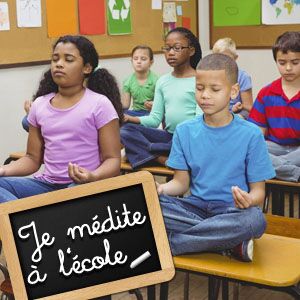
It is in that context that one school in Baltimore offers a striking example. Working with the non-profit Holistic Life Foundation, Robert W. Coleman Elementary School created a meditation room designed not to stigmatise so-called difficult pupils, but to help them regain calm. Instead of defaulting to detention or exclusion, children spend twenty minutes with a meditation specialist: first talking through what happened, then moving into breathing and meditation exercises before returning to class. The space is also open to pupils dealing with anxiety, stress, stomach aches or headaches. The central idea is simple but significant: when a child is overwhelmed, the first need may not be punishment, but support that helps restore balance, attention and self-control.
In short: can school meditation replace punishment?
School meditation can sometimes offer a calmer alternative to punishment by helping students pause, breathe and regain self-regulation. It works best as part of a caring educational culture, not as a discipline trick or a way to ignore deeper needs.
- Meditation can create a pause before reaction.
- Breathing gives students a concrete regulation tool.
- Context and adult support matter more than the technique alone.
- Children should never be shamed into calm.
For a short guided reset, try the free Mental Reset Session. For a related school topic, read Reduce Stress at School.
The reported results gave this experiment particular weight: the school had apparently gone nearly a year without a single suspension, while some pupils seemed to carry these regulation tools into everyday life. The broader question raised here is not whether meditation can solve every educational difficulty, but whether schools should take more seriously approaches that support wellbeing, cognitive understanding and respect for individual differences. In that sense, the Baltimore initiative sits within a wider reflection on education, one that also includes neuroscience and a growing interest in how children learn, cope with stress and build confidence.
Can Meditation Help Schools Tackle Violence and Stress?
Why schools are looking for calmer responses to difficult behaviour
For parents and teachers alike, adolescent behaviour can be difficult to read. Young people often want independence while still needing reassurance, and that tension can show up as indifference, provocation, impulsive reactions, anxiety, hyperactivity or an apparent lack of motivation. In that context, helping children regain a sense of calm is not straightforward, especially when they are also growing up amid many forms of violence and social pressure. As the philosopher Yves Michaud observed, “violence is everywhere and nowhere”. It appears in plural forms — political, criminal, domestic, workplace, school-based, street-level, collective or individual — and it can be physical, sexual, verbal, psychological, written, visual or even auditory.
Faced with something so diffuse, it makes sense to draw on the perspectives of sociologists, psychologists, criminologists, doctors, teachers and police officers, as V. Bedin and J.-F. Dortier suggest in Violence(s) et société aujourd'hui.

No society, civilisation, culture or social class is untouched by these tensions, as history repeatedly shows. Attempts to contain violence through authoritarian systems or, at the other extreme, through idealistic movements have hardly resolved the problem. That leaves a pressing set of questions: is the world becoming more violent, or does hyper-mediatisation and new technology — the internet, text messages, video, television and the daily press — simply make violence more visible? And what can schools do in the face of rising distress, conflict and even suicide? Rather than cursing the darkness, some educators are trying to light a candle.
In Baltimore, the non-profit Holistic Life Foundation has offered one possible answer: bringing meditation into school as a practical tool for emotional regulation rather than punishment.
From a psychological point of view, this shift matters because difficult behaviour is not always a sign of deliberate opposition. It may also reflect overload: heightened arousal, poor impulse control, chronic stress, sleep disruption or a limited capacity to name what is being felt. In children and adolescents, these states can narrow attention and reduce access to reflective thinking. A calmer educational response does not excuse harmful behaviour, but it may create the conditions in which responsibility becomes easier to understand and enact.
This is one reason why schools are increasingly interested in approaches that support self-regulation. Breathing practices, short periods of guided attention and structured moments of verbal reflection may help pupils move from reactivity towards a more settled state. The aim is not to turn classrooms into therapy rooms, nor to present meditation as a universal remedy, but to recognise that learning depends partly on the ability to regulate stress, sustain attention and recover after emotional disruption.
- Violence affects pupils in many forms, not only physical aggression.
- Stress, anxiety and impulsivity can shape behaviour in the classroom.
- Schools may benefit from responses that support regulation, not only discipline.
The Baltimore experiment: replacing punishment with a meditation room
Working with the Holistic Life Foundation, Robert W. Coleman Elementary School in Baltimore created a meditation room designed not to punish “difficult” pupils, but to help them settle. According to reports relayed by BoredPanda.com, citing Joana Pimenta and Daily Geek Show, teachers chose not to rely solely on detention or exclusion when a child became too disruptive. Instead, pupils could be sent to this dedicated space for around 20 minutes with a meditation specialist. The first five minutes were used to talk through why they had been sent there; the remaining quarter of an hour focused on breathing exercises and meditation. Once the child had calmed down, they could return to class.
The principle is simple but important: the aim is not humiliation, but a return to a more stable mental state in which attention, self-control and dialogue may become possible again.
The initiative was not reserved for disruptive children alone. Pupils dealing with anxiety, stress, stomach aches or headaches could also use the room to ease their discomfort. Reported outcomes were striking: the school had apparently gone nearly a year without recording a single suspension, and the children involved seemed to use what they had learned in everyday life beyond the session itself. This does not prove that meditation is a miracle solution, but it does suggest that structured breathing and guided attention may help children manage stress and reduce escalation. For teachers and parents, the lesson is equally valuable: conflict is not always best addressed through force or exclusion.
Sometimes, helping a child regulate their inner state is the more effective first step.
What makes this model especially interesting is its practical simplicity. The intervention is brief, clearly structured and embedded within the school day rather than added as an optional extra for a small minority. That matters because children in distress often need support at the moment of dysregulation, not several hours later when the emotional charge has already hardened into shame, resentment or disengagement. A short pause, if well guided, may interrupt that cycle.
There is also a symbolic dimension. A school that creates a room for calming down sends a different message from one that relies only on exclusion. It suggests that behaviour is something to understand as well as correct, and that the institution has a role in teaching regulation rather than merely demanding it. For some pupils, especially those who struggle to feel safe or understood, that distinction may influence how authority itself is perceived.
- 5 minutes to discuss the incident.
- 15 minutes of breathing and meditation.
- Support was also offered for anxiety, stress and physical discomfort.
How Meditation and Neuroscience Are Reshaping Pupil Wellbeing
A calmer response to stress, anxiety and difficult behaviour
This initiative is not only for pupils seen as disruptive. At Robert W. Coleman Elementary School in Baltimore, children dealing with anxiety, stress, stomach aches or headaches can also go to the meditation room to settle themselves. According to reports relayed by BoredPanda.com, with sources including Joana Pimenta and Daily Geek Show, the results were striking: the school reportedly recorded no suspensions for nearly a year, and many children appeared to use the breathing and meditation techniques they had learned in everyday life. That point matters.
The value of such an approach is not simply that it calms a tense moment in school, but that it may help pupils build forms of emotional regulation they can draw on beyond the classroom.
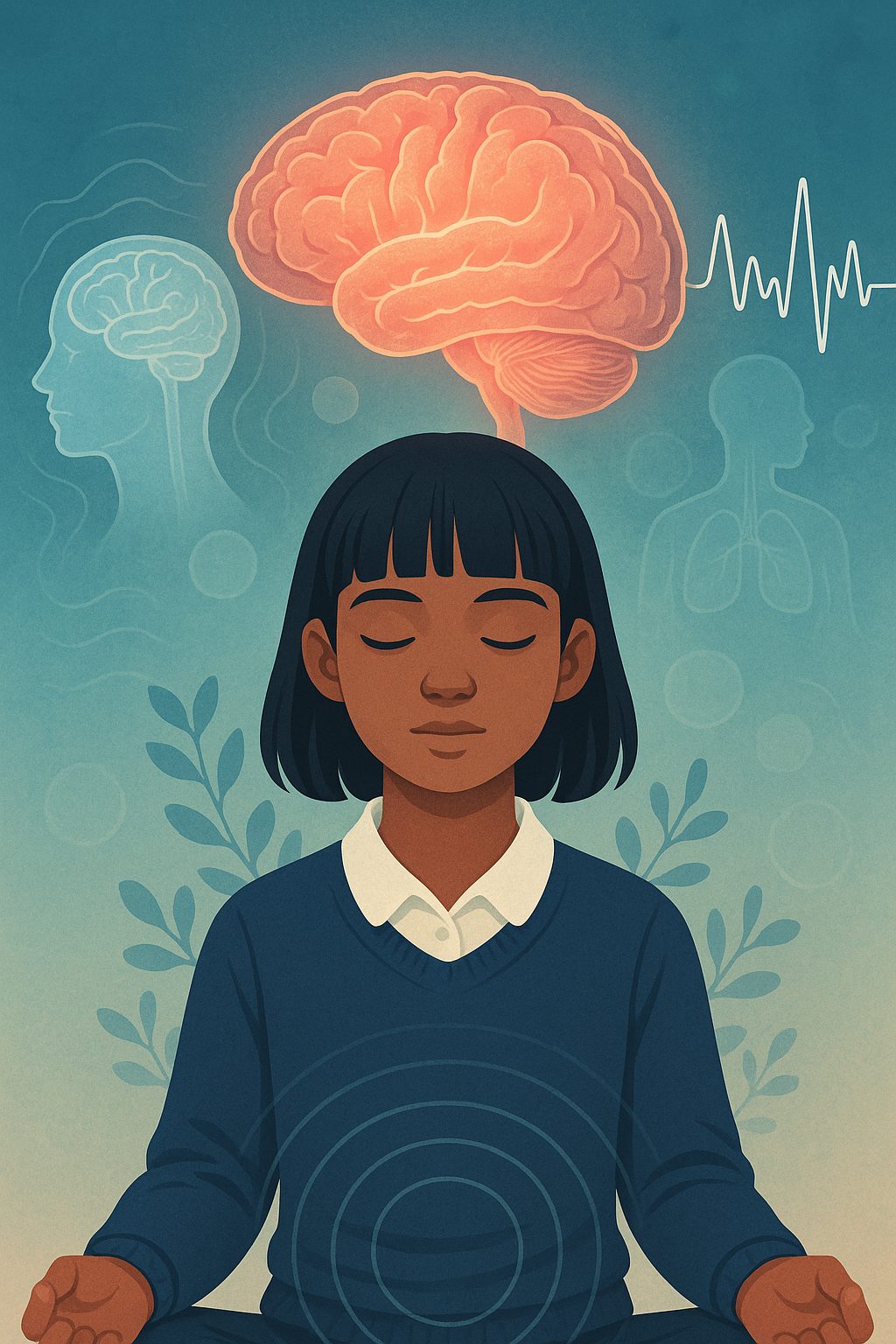
Seen in that light, meditation may offer teachers and parents a more constructive way to respond to conflict and distress. Rather than relying only on punishment, it can help children recognise what is happening in their body and attention, then return to a steadier mental state. In France, some schools have placed nature at the heart of teaching and have reported similarly positive effects, which suggests that school environments designed around regulation, attention and wellbeing may support behaviour just as much as discipline alone.
Related offer
Meditation - Relaxation set
All the Mental Waves® know-how in a single pack for quick and easy access to meditation and...
View productThe Baltimore example therefore stands as a simple but powerful reminder: with modest resources and a degree of educational courage, schools can sometimes reduce violence not by hardening their response, but by helping children regain calm.
From the perspective of cognition, this is plausible. When stress rises sharply, attention tends to narrow and behaviour can become more automatic. A child who feels cornered may react before they can think clearly about consequences. Slow breathing, guided stillness and a brief conversation about what happened may help reduce that immediate physiological pressure. In practical terms, this can make it easier for the pupil to listen, reflect and re-enter the classroom without carrying the same level of agitation.
It is also worth noting that many children do not spontaneously acquire these skills. Adults often assume that self-control develops naturally, yet regulation is partly learned through repeated co-regulation with others: being helped to pause, identify internal states and choose a more adaptive response. In that sense, a meditation room can be understood less as a retreat from discipline than as a place where one of the foundations of discipline is actively taught.
- support for anxious as well as disruptive pupils
- breathing and meditation as tools for self-regulation
- skills that may carry over into daily life
What neuroscience can add to educational success
This example also opens onto a broader question: how can neuroscience help schools support learning more intelligently? A growing number of educators, including the well-known neuroscientist John Medina, argue that insights from cognitive science deserve a more central place in school timetables. Research on brain plasticity has steadily reinforced the idea that difficulties in learning are not fixed verdicts on a child’s intelligence. Yet too many pupils still receive standardised teaching in a system that often overlooks cognitive diversity and the reality of individual learning profiles. In France, this debate is sharpened by persistent concerns about educational inequality, including the country’s poor ranking in a Unicef report on school inequalities across OECD nations.
Faced with a lack of motivation, repeated misunderstanding in subjects such as mathematics, science, history or French, and the quiet resignation of pupils who come to believe they are simply “not clever”, schools too often label failure before examining its deeper causes.
That is precisely why neuroscience may be such a valuable ally. As Pascale Toscani, author of Apprendre avec les neurosciences : Rien ne se joue avant 6 ans, argues, the real challenge is to renew education by combining scientific rigour with an understanding of complexity.
Hervé Sérieyx makes the same point in his preface when he writes: “Le monde qui vient suppose que nous sachions transmettre à ceux qui arrivent et vont nous remplacer, nous citoyens aujourd'hui adultes, la passion d'apprendre, de comprendre et d'inventer un univers dont nous ignorons encore ce qu'il sera.” In practical terms, pupil success and the professional fulfilment of teachers and educators may depend on opening schools to approaches that are increasingly explored and, in some cases, scientifically supported: meditation, cognitive science, Taiji Qigong, nature-based learning, survival skills, martial arts, and preventive or personal protection practices. These approaches can help make learning, stress, motivation and respect for difference more understandable for both pupils and adults.
Taken together, they suggest that meditation and neuroscience may contribute to a more humane and effective school system—one that respects each child’s uniqueness instead of forcing everyone into the same mould.
Used carefully, neuroscience does not tell teachers exactly how to teach every lesson, nor does it replace pedagogy. What it can do is clarify certain constraints and possibilities. Attention is limited. Memory depends on repetition, meaning and retrieval. Stress can interfere with working memory and flexible reasoning. Sleep, movement and emotional safety all influence learning conditions. None of this is revolutionary in a philosophical sense, but it gives empirical support to what many experienced teachers already observe in practice.
It also helps challenge the damaging belief that some pupils are simply incapable. Brain plasticity does not mean that every child will learn in the same way or at the same speed, but it does mean that development remains open. Progress is shaped by context, feedback, practice and expectation. When schools understand this, they may become less inclined to confuse temporary difficulty with permanent limitation. That shift alone can alter a pupil’s relationship with effort, failure and self-worth.
Meditation enters this discussion not as a fashionable add-on, but as one possible support for the mental conditions under which learning occurs. Practices that train attention and emotional regulation may help some pupils notice distraction more quickly, recover from frustration and remain present for longer periods. The evidence should be treated with nuance, and outcomes will vary according to age, implementation and context. Even so, the underlying educational intuition is sound: a child learns not only with the intellect, but with the whole regulatory system that supports concentration, motivation and resilience.
- brain plasticity challenges fixed ideas about intelligence
- cognitive science can clarify motivation and misunderstanding
- respect for individual differences is central to lasting change
What Makes School Meditation Responsible?
A responsible meditation program does not ask children to suppress emotion. It helps them notice what is happening inside and gives them a safe way to settle before returning to learning or conversation.
That requires adults who understand the difference between regulation and obedience. Calm is not valuable because it makes a classroom easier to manage; it is valuable because it gives a child more room to choose, repair and participate.
Related offer
OM Meditation
This music is based on the particular frequency of the sacred chant OM. Listening to this program, the term...
View productThe practice should also be adapted. Some children respond well to quiet breathing. Others need movement, drawing, sensory tools or a trusted adult before stillness is possible.
The Mental Waves School Calm Framework
The Mental Waves frame is to use school meditation as emotional education, not punishment in disguise.
- Pause: create a non-shaming moment between action and response.
- Breathe: offer a simple body-based anchor.
- Name: help the student identify feelings without blame.
- Repair: return to relationship, responsibility and learning.
For research context, continue with Meditation and the Brain. For a practical breath anchor, read Breathing Techniques.
Editorial note from Mental Waves
This article is educational. School meditation should be adapted to children, trauma awareness and local educational guidance. It does not replace professional support when a child is in persistent distress.
Conclusion
The Baltimore example does not suggest that meditation is a instant solution, nor that discipline no longer matters. What it does show, more modestly and more usefully, is that a school can choose regulation over reflex punishment. When a child is helped to pause, breathe and name what is happening internally, the response shifts from exclusion to understanding. In that sense, meditation may support attention, emotional balance and a safer classroom climate, especially when stress and impulsivity are part of the picture.
The wider point is just as important: education cannot be reduced to uniform rules applied to very different minds. The article rightly links meditation with a broader rethinking of learning, one that takes cognition, motivation and individual differences seriously without pretending that one method will solve everything. If schools are willing to combine human insight with measured scientific curiosity, they may open more intelligent paths for both wellbeing and achievement. Sometimes, a quieter response is also the more demanding one.
That may be the deepest lesson of the Baltimore initiative. A child in difficulty does not always need a harsher signal; sometimes they need a framework that helps them recover enough clarity to respond differently next time. Schools remain places of instruction, but they are also environments in which habits of attention, self-perception and social behaviour are formed day after day. If meditation is used with care, realism and proper guidance, it may contribute to that work in a meaningful way.
Replacing punishment with meditation should therefore not be understood as softness, but as a more deliberate educational choice. It asks adults to look beyond the visible incident and consider the mental state beneath it. In an era marked by overstimulation, anxiety and fragmented attention, that choice may prove not only compassionate, but intellectually serious.
Frequently Asked Questions About School Meditation
What is school meditation?
School meditation is a short guided practice that helps students pause, breathe and return attention to the present.
Can meditation replace punishment?
It can offer a calmer response in some situations, but it should not erase responsibility or needed support.
Why use meditation with children?
It may help children practise attention, breathing and emotional regulation in a concrete way.
Is school meditation safe?
It should be gentle, optional where appropriate and adapted to age, context and individual needs.
Does calm mean obedience?
No. The aim should be regulation and learning, not forcing children to hide emotion.
How long should school meditation last?
Short practices of a few minutes are usually more realistic than long silent sessions.
What if a child cannot sit still?
Movement, drawing or sensory grounding may be better starting points than stillness.
Can meditation reduce school stress?
It may support stress regulation, especially when combined with supportive routines and relationships.
What is the main takeaway?
School meditation is strongest when it becomes a caring pause for regulation, not punishment by another name.