en
enVotre panier est vide.



If you have tried to stop smoking more than once and still found yourself pulled back in, that does not mean you have failed. It often means the methods you were offered relied too heavily on willpower alone, or kept the brain tied to the same patterns of dependence. This article explores a different approach: an audio programme built around isochronic tones and calming music, designed to support the brain’s own regulation processes rather than simply asking you to resist cravings by force.
In short: quit smoking audio support
Quitting smoking is easier to approach when sound is used as a calm support for cravings and attention, not as a promise of effortless change.
Use this article as a practical map: keep what helps attention become steadier, question anything that sounds absolute, and connect the idea back to repeatable daily practice.
The method presented here is rooted in research on brainwave activity, particularly Alpha and Theta states, which are often associated with relaxation, attention and shifts in mental state. The idea is not to make grand medical promises, but to suggest that a carefully designed listening session may help reduce the urge to smoke, change how the cigarette is perceived, and make the process feel less combative. For people who have already tried patches, nicotine gum, e-cigarettes or other conventional routes without lasting success, that possibility can feel less like a miracle promise than a more intelligent place to begin.
Why many stop-smoking methods fail, and what this audio approach aims to change
When willpower and nicotine substitutes are not enough
If you want to stop smoking and feel you have already tried everything without lasting success, you are far from alone. The original text points to a familiar reality: with conventional methods, only a small minority of smokers manage to quit for good. One reason often given is that many approaches rely almost entirely on willpower, or on substitute products that keep the brain tied to the same cycle of dependence. Patches, nicotine gum, electronic cigarettes and similar tools may help some people, but they do not always change the deeper association between smoking, relief, habit and reward.
That is the gap this programme is designed to address. Rather than asking you to fight every craving by force, it is presented as an audio method built around recent research into isochronic tones and the brain’s role in regulating addictions and dependencies. The idea is not to overwhelm the body with more chemicals, but to work with mental state, attention and regulation. In that sense, the method is framed as a way of supporting the brain’s own capacity to loosen the hold of nicotine, especially for people who have repeatedly found that effort alone was not enough.
- Less reliance on sheer willpower
- No special installation or equipment required
- An approach centred on brain state rather than nicotine replacement

How the programme is meant to be used
The programme combines isochronic sounds with soft, calming music, chosen to encourage a specific mental state without being presented as dangerous or restrictive. More precisely, it is said to support increases in certain Alpha and Theta brainwave patterns — frequencies often associated in EEG research with relaxation, inward attention and shifts in perception. In the original promise of the programme, this state may help reduce the urge to smoke and gradually weaken the sense that cigarettes are a source of pleasure. The aim is simple: to help the brain stop treating nicotine as something desirable, so that smoking begins to lose its appeal rather than feeling like a constant deprivation.
The practical side is deliberately straightforward. A session lasts 35 minutes, and there is no special set-up: you can listen through hi-fi speakers or with headphones on your preferred MP3 player while getting on with something else. According to user feedback mentioned in the source text, some people report beneficial effects from the first listen and say they had stopped smoking by the third. That kind of response will naturally vary from one person to another, but the intended benefit is clear: a rapid, gentle shift in craving, potentially followed by financial savings, better breathing and a healthier life for you and those around you. To explore the programme, you can access it here: Stop addictions and dependencies.
- 35 minutes per listening session
- Can be played on speakers or with headphones
- Designed to fit easily into everyday life
A different approach: supporting the brain rather than fighting cravings
Why this method is presented as an alternative to classic stop-smoking aids
If you want to stop smoking and feel you have already tried everything without lasting success, you are far from alone. The original promise behind this programme starts from a familiar observation: many conventional methods rely heavily on willpower, or on substitute products that keep the ritual or the nicotine link alive. That can leave people feeling as though they are constantly resisting the urge to smoke rather than genuinely moving beyond it. In that context, this audio approach is presented as a different route, one designed to work with the brain’s own regulatory capacities instead of asking you to battle cravings through effort alone.
The programme is based on research commonly associated with isochronic tones and the way certain sound patterns may influence mental state. More specifically, it is built around carefully targeted Alpha and Theta brainwave ranges, frequencies often associated with relaxation, inward attention and shifts in perception. The idea is not that sound performs a miracle, but that it may help place the brain in a state that is more favourable to reducing the pull of addictive habits. In this framework, smoking is approached less as a simple lack of discipline and more as a conditioned dependence involving attention, reward and repeated neural association.
- Less emphasis on sheer willpower
- No nicotine-based substitution within the programme itself
- A focus on brain state, regulation and craving reduction
How the listening experience is meant to help break the smoking reflex
According to the programme’s design, the audio combines isochronic tones with soft, calming music so that listening remains simple and accessible. It does not require any special installation: it can be played through hi-fi speakers or listened to with headphones on an MP3 player while you get on with something else. The recommended session lasts 35 minutes, and the method is presented as gentle, with no particular contraindications stated in the original text. The intended effect is to help the brain reduce the sense of desire linked to cigarettes, so that abstaining feels less like deprivation and more like a gradual shift in response.
The section also insists on the speed with which some users say they notice a change: beneficial effects from the first listen, and in some cases stopping completely by the third. That should be read as user feedback rather than a promised outcome, but it reflects the central claim of the method: that the brain can begin to stop identifying cigarettes as a source of pleasure. The text contrasts this with patches, nicotine gum, e-cigarettes and other stop-smoking aids, arguing that many continue to maintain dependence either through nicotine itself or through the familiar taste and sensory cues of smoking.
By comparison, this programme aims to weaken the attraction at its source, so that smoking may begin to feel less appealing, even unpleasant, while health and finances both stand to benefit. Access the programme: Stop addictions and dependencies.
- 35-minute listening sessions
- Usable on speakers or with headphones
- Designed to fit easily into everyday life
- Intended to reduce the pleasure association linked to cigarettes
Why this listening method may feel different from conventional stop-smoking aids
Working with the brain rather than relying on force
If you have tried to stop smoking before without lasting success, you are far from alone. The original text points out that only a small minority of smokers manage to quit through conventional methods alone, and that frustration matters: many approaches depend heavily on willpower, repeated self-control or nicotine-based substitutes, which can leave the underlying dependency pattern largely untouched. The idea behind this programme is different. Rather than asking you to fight every craving head-on, it is presented as an audio method designed to support the brain’s own regulatory capacities.
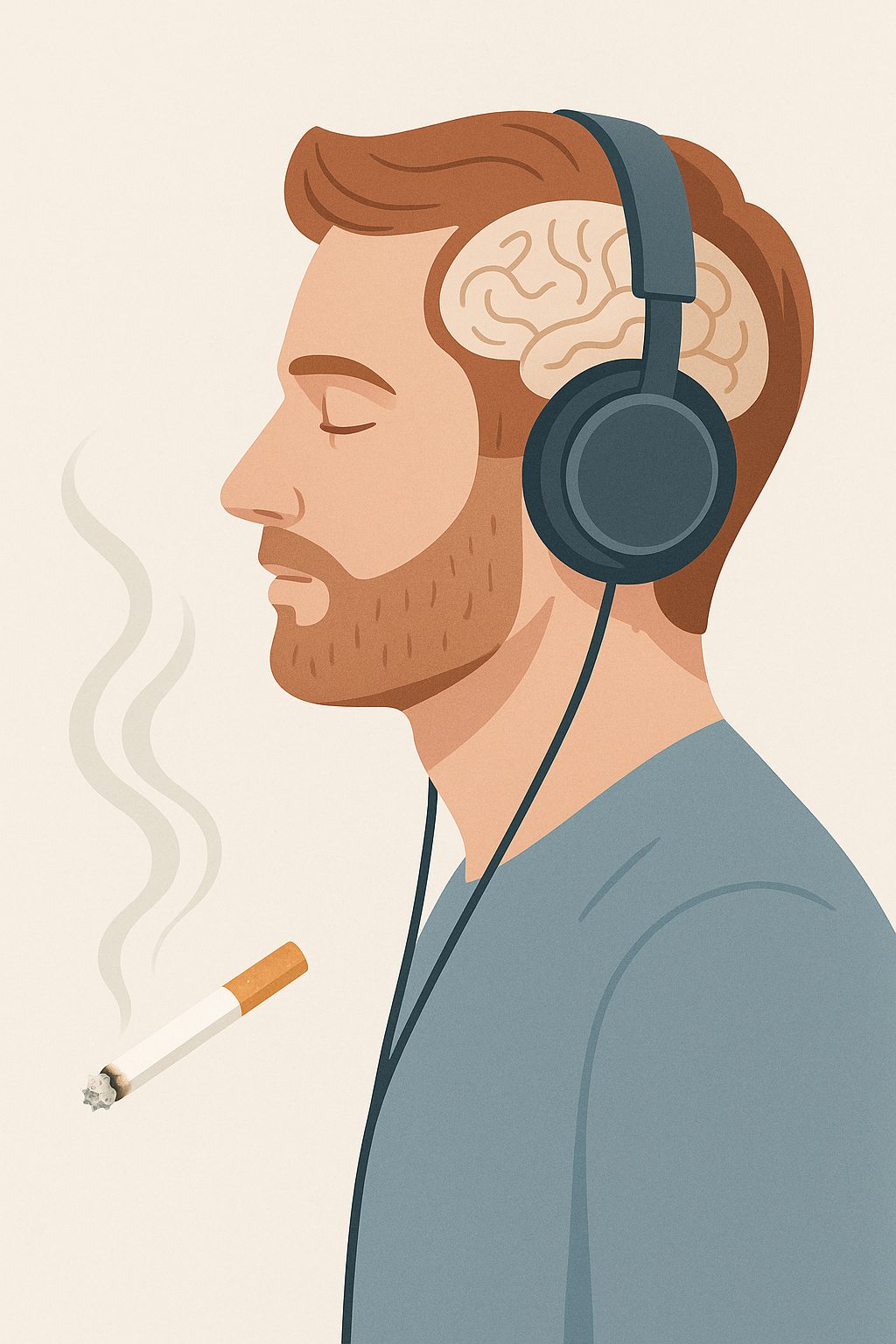
More specifically, the programme is based on research commonly associated with isochronic tones and with the role of brain states in addictive behaviour. It uses carefully calibrated Alpha and Theta frequencies, combined with soft, calming music, to encourage a particular mental state linked to relaxation, reduced inner tension and a shift in attention. In that sense, the aim is not to overwhelm the mind, but to help it move away from the automatic reward loop associated with cigarettes. The claim is that, by supporting this change gently, the urge to smoke may become easier to manage and the cigarette may gradually lose some of its appeal.
- less emphasis on brute willpower
- no special installation required
- listening designed to fit into everyday life
A practical format designed for rapid, everyday use
The section also insists on the simplicity of use. A single session lasts around 35 minutes, and no special equipment is needed beyond ordinary speakers or headphones. You can listen on a hi-fi system or through an MP3 player while getting on with something else, which makes the method easy to integrate into daily life. This practical aspect matters, because stop-smoking support is often abandoned when it feels complicated, restrictive or too demanding to maintain.

Related offer
Anxiety reducer
This session uses Alpha and Beta wave stimulation to relax, alleviate...
View productThe original wording highlights very fast feedback from users, with some reporting beneficial effects from the first listening session and complete cessation by the third. That should be read with appropriate caution, as individual responses can vary, but it reflects the intended promise of the programme: to help the brain stop treating smoking as a source of pleasure and to weaken the learned attraction to nicotine more quickly than many people expect. The text also contrasts this with products that still contain nicotine, or imitate the taste and ritual of smoking, potentially prolonging dependence instead of loosening it.
In that perspective, the programme is presented as a gentler route towards disengagement from the cigarette habit, with possible benefits not only for health but also for daily life, finances and the people around you. Access the programme here: Stop addictions and dependencies.
- around 35 minutes per session
- usable with speakers or headphones
- intended to fit easily into a normal routine
A practical audio method designed to break the smoking reflex
Why this approach may appeal after other methods have failed
If you have tried to stop smoking before without lasting success, you are far from alone. The original argument behind this programme is that many conventional approaches rely heavily on willpower, or on substitute products that can keep the brain focused on nicotine and the smoking ritual itself. That helps explain why so many people feel trapped in the same cycle: they are trying to quit, but their attention, habits and reward patterns are still organised around the cigarette.
This audio programme is presented as a different route. Rather than asking you to fight every craving head-on, it is designed to work through the brain’s own regulatory mechanisms. It draws on research commonly associated with isochronic tones and with the way certain mental states are linked to Alpha and Theta brainwave activity on EEG. In that sense, the aim is not to force abstinence through tension, but to create a calmer internal state that may help reduce the urge to smoke and loosen the association between nicotine and pleasure.
- Less emphasis on brute willpower
- No need to reproduce the nicotine habit
- A focus on mental state, regulation and craving reduction
Simple to use, with effects intended to build quickly
In practical terms, the method is deliberately straightforward. The session lasts around 35 minutes and combines isochronic sounds with soft, soothing music intended to guide the brain towards a specific state of relaxation and receptivity. It does not require any special installation: it can be played through home speakers or listened to with headphones on an MP3 player while you go about something else. According to the original presentation, some users report beneficial effects from the first listen and say they had stopped smoking altogether by the third session.
The broader promise is that, over repeated listening, the brain may begin to stop treating cigarettes as a source of reward and instead detach from them more naturally. The text even suggests that smoking itself can start to feel unpleasant rather than desirable. That remains an individual experience rather than a promised medical outcome, but the intended logic is clear: if the craving weakens quickly, stopping may feel less like a daily battle. In that case, a short listening routine could help you save money, protect your health and move away from a dependence that also affects those around you. If you want to explore the programme directly, you can access it here: Stop addictions and dependencies.
- Approx. 35 minutes per session
- Usable on speakers or with headphones
- Designed to fit easily into everyday life
A gentler way to disengage from the smoking habit
Why this approach may help when other methods have not
If you want to stop smoking and feel you have already tried everything without lasting success, you are far from alone. The original promise of this programme is built around a familiar frustration: many conventional methods rely heavily on willpower, or on substitute products that keep the brain focused on nicotine and the ritual of smoking. The text also points to a striking figure often cited in this context: only 3% of smokers who try to quit through classic methods succeed. Whether or not that number varies depending on the study, the underlying idea remains clear: for many people, stopping is not simply a matter of trying harder.
This is where the audio programme presents itself differently. Rather than asking you to fight every craving head-on, it is designed to work with the brain’s own regulatory capacities. It draws on research around isochronic tones and on the role of specific mental states in addiction support. More precisely, it aims to encourage certain Alpha and Theta brainwave patterns, frequencies often associated with relaxation, reduced mental tension and a shift in habitual perception. In that sense, the method is presented not as a chemical substitute, but as a way of helping the brain gradually stop treating the cigarette as a source of reward.
- It does not depend solely on willpower.
- It is presented as a non-chemical approach.
- It aims to reduce the urge by changing the brain’s response to smoking cues.
Simple listening, rapid use and a different relationship with cigarettes
According to the source text, the programme combines isochronic sounds with soft, calming music chosen to guide the brain into a specific state, without danger or known contraindications in normal use. The intended effect is straightforward: to help quieten the urge to smoke so that going without cigarettes may feel less effortful. This is also why the format is kept deliberately simple. No special installation is required. You can listen through hi-fi speakers or with headphones on an MP3 player while getting on with something else, and the recommended session lasts just 35 minutes.
The section also insists on the speed with which some users say they notice a change: beneficial effects from the first listen, and in some cases stopping completely by the third. That should be read as user feedback rather than a promised outcome, but it reflects the central claim of the method: that it may help the brain detach more quickly from the pleasure association linked to smoking. The text contrasts this with patches, nicotine gum, e-cigarettes and other aids that may prolong dependence by maintaining nicotine intake, or even by preserving the taste and sensory familiarity of cigarettes.

Related offer
STOP Addictions and Dependencies
This session helps to reduce temptation among addicts (alcohol, tobacco, nicotine, drugs...). It is based on...
View productHere, the goal is different: to help the brain stop liking the cigarette altogether, so that smoking becomes less appealing, even unpleasant, while health and daily life begin to improve. In practical terms, 35 minutes of listening is presented as a small investment compared with the money spent on cigarettes and the wider cost to your health and your family’s wellbeing. Access the programme: Stop addictions and dependencies.
- 35 minutes per session
- Listen on speakers or with headphones
- Designed for use alongside everyday activities
The Mental Waves Craving Regulation Framework
The Mental Waves frame is to work with the nervous system instead of fighting every craving head-on. Sound can create a pause, reduce mental noise and make the next choice a little clearer.
Use audio as one support among others: remove triggers where possible, plan replacement rituals, ask for help when dependence is strong, and repeat the reset before the craving becomes urgent.
When a craving feels noisy, begin with the free Mental Reset session as a short non-medical pause before choosing your next action.
Editorial note from Mental Waves
This article offers general support for habit change and is not a tobacco-cessation treatment. Nicotine dependence, withdrawal symptoms or health concerns should be discussed with a qualified health professional.
Conclusion
In the end, the central idea is not that stopping smoking becomes magical or effortless in an absolute sense, but that the process may feel less confrontational when it works with attention, relaxation and the brain’s own regulatory mechanisms rather than relying only on force of will. That is the real nuance here: for some people, the difficulty is not a lack of motivation, but a deeply conditioned loop between nicotine, reward, habit and perception. An audio approach built around specific sound patterns is presented as a way to help loosen that loop, gently shifting the cigarette away from automatic appeal.
This also explains why the method may resonate most with people who feel they have already “tried everything”. Its promise is not simply speed, but a different route: practical, easy to integrate into daily life, and aimed at changing the inner experience of craving rather than merely suppressing it. Used with realism and discernment, that makes it less a battle against oneself and more a process of reconditioning. Sometimes, that change in relationship is where real freedom begins.
Frequently Asked Questions About Stopping Smoking with This Audio Method
What makes this stop-smoking approach different from patches, nicotine gum or e-cigarettes?
It is presented as a brain-based audio method rather than a nicotine substitute. Instead of maintaining the link with nicotine or the smoking ritual, it uses isochronic tones and calming music to support a mental state that may reduce cravings and weaken the sense that cigarettes are rewarding.
How is the audio programme supposed to help reduce the urge to smoke?
It works by combining isochronic sounds with soft music designed to encourage specific Alpha and Theta brainwave patterns. The intended effect is to help the brain move away from the automatic pleasure association linked to cigarettes, so that the urge to smoke may feel less intense and less constant.
How long does one listening session take?
A single session lasts 35 minutes. The format is meant to be simple enough to fit into everyday life, without requiring a long routine or a complicated set-up.
Do you need any special equipment to use the programme?
No special installation is required. It can be played through hi-fi speakers or listened to with headphones on an MP3 player, which makes it easy to use at home while getting on with something else.
Is this method meant to rely on willpower?
It is presented as an alternative to methods that depend mainly on willpower. The idea is to support the brain’s own regulation processes so that stopping smoking feels less like a constant fight against cravings.
How quickly are results said to appear?
Some users are said to notice beneficial effects from the first listening session, and some report having stopped smoking by the third. These are presented as user experiences rather than promised results, so individual responses may differ.
Why does this approach criticise some conventional stop-smoking aids?
It argues that many aids either contain nicotine or preserve familiar smoking cues, which may keep the brain tied to dependence. In contrast, this method aims to change how the cigarette is perceived, rather than simply replacing one form of reinforcement with another.
Is the listening programme described as safe to use?
It is described as gentle and as having no particular danger or contraindications in normal use. The listening experience is built around calming music and sound patterns intended to guide the brain into a specific state without a complex or restrictive process.
What change in smoking behaviour is the programme trying to create?
It aims to help the brain stop seeing cigarettes as a source of pleasure. The intended shift is not only fewer cravings, but a gradual loss of attraction to smoking, with the possibility that cigarettes may start to feel unappealing rather than desirable.