en
enVotre panier est vide.


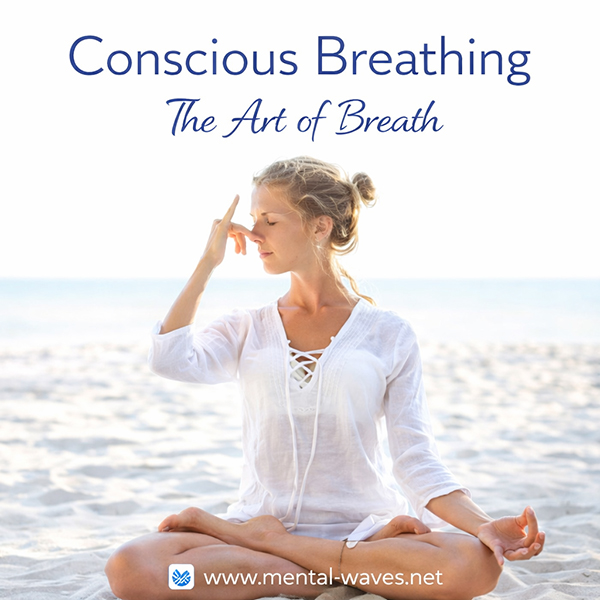
From our first cry to our last breath, life is marked by inhaling and exhaling — yet most of us give our breathing very little thought until stress begins to distort it. In a world that often keeps us tense, hurried and overstimulated, breathing tends to drift away from its natural abdominal pattern and rise into the chest instead. Over time, that shift matters. As the source text reminds us, recent scientific findings suggest that people who breathe more quickly tend to live less long than those whose breathing is slower. In many ways, we live as we breathe.
In short: breathing techniques for wellbeing
Breathing techniques for wellbeing become useful when they are simple enough to practise under pressure and gentle enough to repeat every day.
Use this article as a practical map: keep what helps attention become steadier, question anything that sounds absolute, and connect the idea back to repeatable daily practice.
And the truth is, most people only notice their breath when it has already become strained: during a sleepless night, before difficult news, in the minutes leading up to a presentation, or after one stress too many. Until then, breathing remains almost invisible, quietly adapting itself to our habits, our posture, our worries and the pace we impose on ourselves. That discretion is part of its mystery. The breath is always there, always working, yet it reflects us with startling honesty.
That is why the renewed interest in deep, regular breathing techniques — whether rooted in Western practice or traditions such as yoga and Qigong — feels less like a trend than a return to something essential. Conscious, voluntary breathing can help calm the sensory, cognitive and physical disturbances linked to poor emotional regulation, while also supporting the body’s wider balance and resilience. Just as our inner life shapes the breath, the breath in turn shapes our inner life. Before any technique can truly help, though, there is a first step that cannot be skipped: learning to notice how we breathe, and relearning how to inhale and exhale well.
That first step sounds simple, but in practice it asks for something many of us have lost: a little patience, a little honesty, and the willingness to observe ourselves without immediately trying to perform. Good breathing is not theatrical. It is not about making the chest swell impressively or forcing the lungs to work harder than necessary. More often, it is about undoing excess — softening the shoulders, releasing the jaw, allowing the abdomen to move again, and letting the breath become less defensive.
When Stress Pulls Breathing Away from Its Natural Rhythm
From abdominal breathing to shallow chest breathing
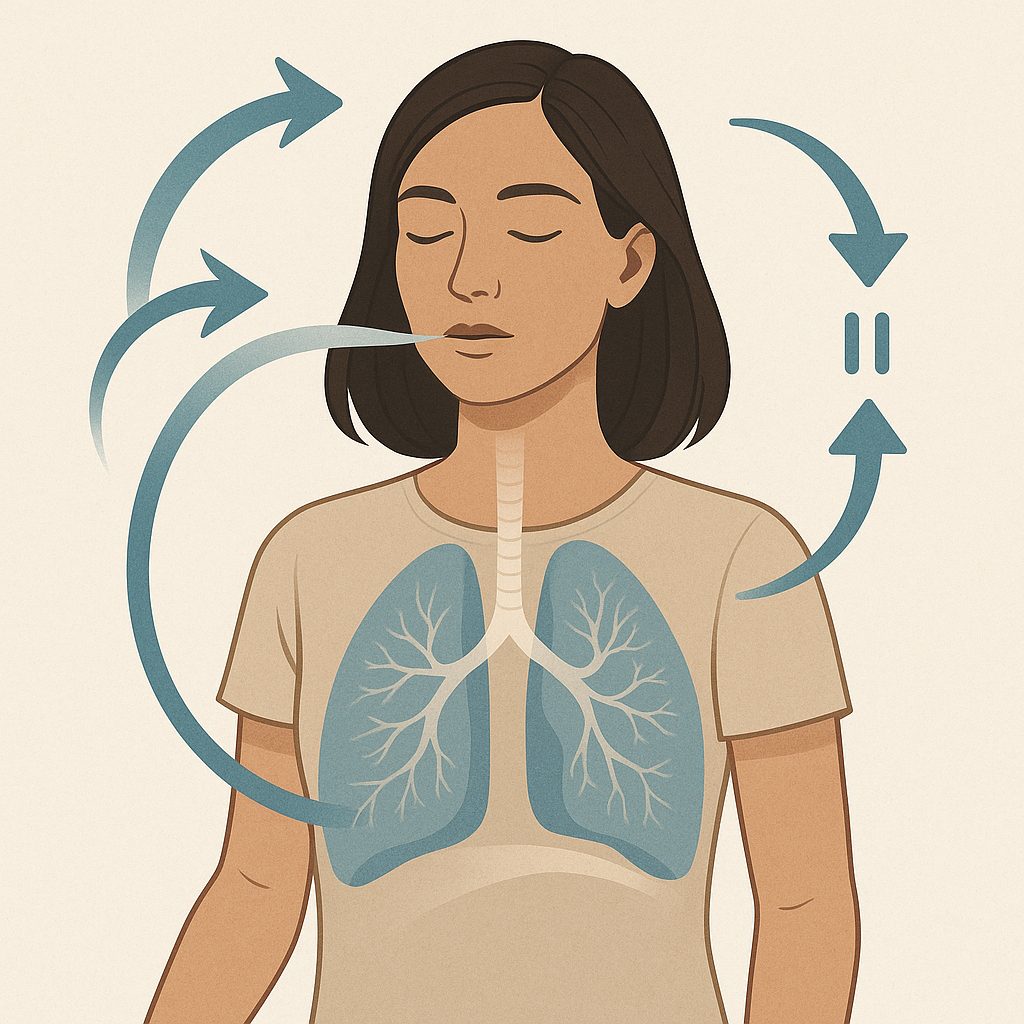
In a world that is often over-controlled, over-stimulating and quietly stressful, many of us end up breathing badly without even noticing. From our first cry to our last breath, life is marked by inhalation and exhalation, yet stress gradually distorts this most basic rhythm. The natural breathing pattern of a newborn is abdominal: the belly rises and falls freely, the breath is deep, regular and unforced. Over time, however, many adults drift towards a higher, more thoracic form of breathing. The result is a shallower breath, poorer lung filling and a body that remains on alert far more than it should.
As some scientific observations suggest, those who breathe more quickly may also wear themselves out more quickly; in that sense, we live very much as we breathe.

You can often see this shift in ordinary life. Someone sits at a desk for hours, shoulders slightly raised, jaw set, eyes fixed on a screen, and the breath becomes short without their realising it. Another person hurries from one obligation to the next and lives almost entirely in the upper chest. Neither is choosing to breathe badly; the body is simply adapting to pressure, posture and repetition. The problem is that what begins as adaptation can become a habit, and habit can begin to feel normal even when it is quietly exhausting.
That is why deep, regular breathing techniques, whether drawn from Western approaches or traditions such as yoga and Qigong, are being rediscovered with fresh interest. Their purpose is simple: to slow the rate, increase the amplitude of the breath and restore a more stable internal rhythm. This matters not only for physical comfort, but also for emotional balance. We now know that our psychological state influences the way we breathe, and that the reverse is equally true: breathing directly affects mental life. A more conscious breath can reduce sensory, cognitive and motor disturbances linked to poor emotional regulation, while also supporting bodily and psychological functions, strengthening resilience and helping to protect long-term health.
There is something quietly reassuring in that reciprocity. We cannot always reason ourselves out of tension in the moment, and we cannot always change the external situation at once. But the breath offers a direct path back into the body. It gives us a lever that is both humble and immediate. When the breath slows, the whole internal atmosphere often changes with it: thoughts lose a little of their urgency, muscular tension eases, and the sense of being cornered begins to loosen.
- Lower level: the diaphragm
- Middle level: the thorax
- Upper level: the scapular area
Why conscious breathing helps to steady the nervous system
The first step is awareness: recognising the different ways we breathe, and learning how to inhale and exhale properly through the nose and mouth depending on the exercise. Most breathing schools describe three levels of respiration, but the diaphragm remains central when the aim is to calm the effects of stress. Voluntary, conscious and controlled breathing is especially useful when stress triggers spontaneous hyperventilation. By slowing the breath and giving it structure, it helps regulate capnia, or PaCO2, the partial pressure of carbon dioxide in arterial blood, and can prevent the spiral that leads to panic.
Alongside diaphragmatic work, brief breath retentions can help raise the level of dissolved CO2 in the blood, which is one reason these methods can feel so stabilising.
This is also why breathing practices can feel surprisingly powerful even when they look almost too modest to matter. A few measured breaths do not seem dramatic from the outside, yet internally they can interrupt a cascade. They create a pause between stimulus and reaction. For someone on the edge of panic, that pause can be invaluable. For someone simply worn thin by accumulated stress, it can be the beginning of a return to steadiness.
The basic cycle remains the same throughout: a slow inhalation, followed by a breath hold with the belly expanded, then a slow exhalation, followed by a pause with the abdomen gently hollowed. This is the foundation for the practical exercises that follow in the next section, including tactical breathing such as 3333 or 4444, often used before a stressful event such as a presentation, an exam, an interview or any high-pressure situation faced by professionals in security, education, administration or healthcare. The point is not to force the body, but to retrain it: to replace reflexive, shallow breathing with a steadier pattern that can soften the negative effects of stress before they gather momentum.
It is worth approaching these methods with a certain gentleness. Controlled breathing should feel deliberate, not punishing. If the counts are too long, they can be shortened. If a breath hold creates discomfort, it should be eased. The aim is regulation, not performance. A well-practised breath is not the one that looks most impressive, but the one that leaves the body feeling more settled, more available and less at war with itself.
- Slow inhalation
- Breath retention with the belly expanded
- Slow exhalation, then a brief pause with the belly drawn in
Breathing Techniques for Focus, Action and Recovery
Simple breathing patterns to steady yourself before and during pressure
These exercises all follow the same underlying principle: a slow, conscious and controlled breath, with a gentle pause after the inhale and, where appropriate, after the exhale. In practice, that means a slow in-breath with the belly expanding, a brief retention of air, then a slow out-breath, followed by a short pause with the belly drawn in. Used well, this kind of voluntary breathing can help limit the effects of stress, which so often triggers spontaneous hyperventilation. It also helps regulate capnia, or PaCO2, the partial pressure of carbon dioxide in arterial blood, and can prevent the sense of panic from spiralling.
Alongside diaphragmatic work, these short breath holds help raise the level of dissolved CO2 in the blood.
Related offer
Anxiety reducer
This session uses Alpha and Beta wave stimulation to relax, alleviate...
View productWhat makes these patterns so useful is their practicality. They are not reserved for retreats, therapy rooms or ideal conditions. They can be used in a corridor before speaking, in a parked car before an appointment, at a desk before opening a difficult email, or in the few seconds before stepping into a room where something important is about to happen. Breathwork becomes truly valuable when it can accompany real life rather than sit apart from it.
For situations you need to anticipate, the tactical breathing pattern 3333 or 4444 is especially effective: before a presentation, an exam, an interview, or in high-pressure roles such as security, education, administration or healthcare. The method is simple: repeat a full breathing cycle three times, with 3 seconds of nasal inhalation, 3 seconds of breath retention, 3 seconds of mouth exhalation and 3 seconds of breath retention again. Just before action, the pre-action breathing pattern 331 can be used as a complement: over 3 breaths, take one deep full breath for 3 seconds, hold for 3 seconds, then exhale through the mouth in 1 second.
During the action itself, the 2242 pattern offers a more operational rhythm: inhale through the nose for 2 seconds, hold for 2, exhale through the mouth for 4, then hold again for 2.
Each rhythm has its own character. Equal-count breathing such as 3333 or 4444 tends to create balance and composure. The shorter 331 pattern has a sharper, more mobilising quality, useful when you need to gather yourself quickly. The 2242 rhythm, with its longer exhale, helps maintain control without dulling alertness. In that sense, these are not abstract formulas but tools, and like any good tool they become more effective when matched to the moment.
- 3333 or 4444: inhale, hold, exhale, hold for equal counts
- 331: a short pre-action reset just before you begin
- 2242: a steadier rhythm to maintain control while acting
Using the breath to return to calm and support long-term wellbeing
After a confrontation, a heated exchange, an assault, a difficult negotiation or simply a draining day, the body needs help to come back down. That is where post-action, soothing breathing comes in: the 2310/15/20 pattern, or longer if comfortable. The technique consists of 4 full breathing cycles: a quick 2-second inhale, a 3-second breath hold, then a long mouth exhalation lasting 10 to 15 seconds, or more. As you breathe out, imagine you are blowing out candles on a cake, with the lips slightly pursed.
It can also help to pair the exhale with a mental image that suits you, such as the sea, nature or a colour, and to link that image to a word or phrase associated with wellbeing. That simple association often makes the return to calm more tangible.
Anyone who has lived through an intense moment knows that the event itself is not always the end of it. The body often keeps going long afterwards. The conversation is over, the meeting has finished, the danger has passed, and yet the heart still races and the mind keeps replaying what happened. A long exhale is one of the clearest signals we can give the nervous system that the immediate threat has eased. It is a way of helping the body believe what the situation may already be telling it.
It is never too late to learn to breathe better. As the therapist Alain Marillac writes in Dynamique du souffle, “... Our daily life affects our breathing behaviour in a thousand and one ways... The first step is therefore to become aware of your breathing.” If you have breathing difficulties, consult your doctor. Otherwise, a daily breathing practice can make a real difference, including cardiac coherence, built around the 365 method: 3 times a day, with an inhale/exhale cycle of around 6 seconds, for 5 minutes. This helps increase oxygen circulation through the body and provides “a regular massage of the abdominal organs and the solar plexus, which promotes neuromuscular relaxation”.
Professor Mounier-Vehier, President of the French Federation of Cardiology and head of vascular medicine and hypertension at Lille University Hospital, notes “the beneficial effect on stress, blood pressure and heart rate, lasting three to six hours”. Relaxation with music, including on Mental Waves, when centred on controlled breathing, may also help lower blood pressure. As La Dépêche reports, Australian researchers from the University of Melbourne and Macquarie University highlighted activity between the neurons that govern breathing and blood pressure during the development of hypertension, a major cardiovascular risk factor affecting 30% of the world’s population.
The researchers explain this through the link between breathing and blood pressure via the parasympathetic nervous system, which sends nerve signals to the heart and blood vessels. In France, cardiovascular disease is responsible for around 150,000 deaths each year, or 28% of all deaths. The art of breathing really can become one of our most reliable allies for health; what matters now is putting these exercises into practice.
Regularity matters more than intensity here. Five calm minutes practised faithfully will usually do more than an occasional heroic effort. Over time, the body learns through repetition. It begins to recognise the path back to calm more quickly. What first feels like an exercise gradually becomes a reflex of self-regulation, available not only in moments of crisis but in the quieter, subtler pressures of everyday life.
There is also something deeply civilising about learning to breathe well. It changes the quality of our presence. We listen differently when we are not braced. We speak differently when we are not breathless. We recover more cleanly from strain when we know how to come back to ourselves. Breathwork may begin as a technique, but at its best it becomes a way of inhabiting life with a little more steadiness and a little less internal noise.
Related offer
Vibrational Cardiac Coherence
At last, an easy and enjoyable way to practice cardiac coherence without visual indicators, screens or stopwatches......
View product- 2310/15/20: 2 seconds in, 3 seconds hold, 10 to 15 seconds or more out
- 365 cardiac coherence: 3 times a day, 6-second breathing cycle, 5 minutes
The Mental Waves Breath Regulation Framework
The Mental Waves frame is to treat breathing as a regulation cue, not a performance contest. A useful breath practice should make the body easier to inhabit and the next action easier to choose.
Begin with one pattern, one short session and one real-life context. Practise when things are calm, then let the same rhythm support you before speaking, acting, recovering or returning to focus.
If your breathing is already tense before practice, begin with the free Mental Reset session as a short transition into calmer attention.
Editorial note from Mental Waves
This article offers general breathing and self-regulation guidance. Breathing difficulty, chest pain, cardiovascular symptoms or persistent panic should be discussed with a qualified health professional.
Conclusion
Breathing well is not a standalone medical answer, and the article never pretends otherwise. What it does suggest, more usefully, is that the breath sits at a quiet crossroads between body and mind: stress disturbs it, and a steadier, more conscious rhythm can in turn help steady us. That is the real strength of breathwork — not perfection, but a practical way to regain a little space, clarity and physiological balance when life starts to tighten.
Whether the aim is to prepare for pressure, stay composed in the middle of it, or come back down afterwards, these techniques matter because they are simple enough to be used in real life. The deeper lesson is perhaps even simpler: learning to notice how we breathe is already a form of care. Practised regularly, and with medical advice where breathing difficulties exist, the art of breathing becomes less a technique than a discipline of presence. Sometimes, the most powerful reset begins with a slower exhale.
And perhaps that is why the breath has remained so central across traditions, therapies and lived experience alike. It is intimate without being obscure, accessible without being trivial. We carry it everywhere, yet we rarely meet it fully. To return to it consciously is not to add one more demand to an already crowded life; it is to rediscover a resource that has been with us from the beginning.
Frequently Asked Questions About Breathwork and Wellbeing
Why does stress so often change the way people breathe?
Stress tends to pull breathing away from its natural abdominal pattern and up into the chest. That makes the breath shallower and less efficient, and over time it can leave the body in a more constant state of alert. The result is often faster, poorer-quality breathing that no longer follows the calmer rhythm seen in newborns.
What is meant by abdominal breathing in this context?
Abdominal breathing means the breath is led by the diaphragm, with the belly rising on the inhale and softening on the exhale. It is presented as the more natural pattern, unlike upper chest breathing, which is linked here to stress and reduced lung filling. The aim is not force, but a deeper and steadier breath.
How can conscious breathing help with emotional balance?
Conscious breathing can help calm sensory, cognitive and physical disturbances linked to poor emotional regulation. The relationship works both ways: mental state affects breathing, and breathing affects mental state. Slowing and structuring the breath can therefore support a steadier inner state and reduce the build-up that can lead to panic.
What are the three levels of breathing mentioned in yoga and Qigong traditions?
The three levels are the lower level at the diaphragm, the middle level at the thorax, and the upper or scapular level. These distinctions are used in many breathing schools to help people notice where their breath is happening. When the goal is calm and control, the diaphragmatic level is given particular importance.
What is the basic cycle of voluntary breathing described here?
The cycle begins with a slow inhale, followed by a breath hold with the belly expanded. It then moves into a slow exhale, followed by a pause with the abdomen gently drawn in. This same structure underpins the different exercises, whether the aim is preparation, action or recovery after stress.
How does tactical breathing 3333 or 4444 work?
Tactical breathing uses equal counts for each phase of the cycle: inhale, hold, exhale, hold. In the 3333 version, each phase lasts 3 seconds; in the 4444 version, each lasts 4 seconds. It is suggested for situations such as presentations, exams, interviews and other high-pressure moments where composure matters.
What is the difference between pre-action breathing 331 and breathing during action 2242?
Pre-action breathing 331 is a short reset used just before doing something demanding: a deep 3-second inhale, a 3-second hold, then a 1-second mouth exhale. The 2242 pattern is designed for use during action itself, with 2 seconds in through the nose, 2 seconds hold, 4 seconds out through the mouth, then 2 seconds hold.
How is the post-action breathing technique meant to bring you back to calm?
Post-action breathing uses a quick 2-second inhale, a 3-second hold, then a long mouth exhale lasting 10 to 15 seconds or more, repeated over 4 cycles. The long exhale is central to the calming effect. Slightly pursed lips and a simple mental image, such as the sea or nature, can make the return to calm easier.
What is the 365 cardiac coherence method?
The 365 method means practising 3 times a day, using a breathing cycle of about 6 seconds, for 5 minutes each time. It is presented as a daily breathing exercise that helps oxygen circulate more effectively and supports neuromuscular relaxation. Professor Mounier-Vehier notes beneficial effects on stress, blood pressure and heart rate lasting three to six hours.