en
enVotre panier est vide.



Whether we think of the brain as the seat of the self or as an extraordinarily complex biological system, one fact remains: it continues to reveal new layers of how we perceive, focus and regulate our inner state. In recent decades, neuroscience — and in particular the study of brain waves — has opened up a more precise understanding of these shifting rhythms. Within that context, isochronic tones and binaural beats have attracted growing interest for the way they may influence mental state, relaxation and cognitive performance.
In short: brain waves synchronisation
Brain waves are patterns of electrical activity that can shift with attention, sleep, stress and sensory stimulation, but they should not be reduced to simple personality labels.
Use this article as a practical map: keep what helps attention become steadier, question anything that sounds absolute, and connect the idea back to repeatable daily practice.
The central idea is both simple and intriguing: the brain does not function at a single fixed pace, but moves through different frequencies associated with wakefulness, rest and sleep. If certain sound patterns can encourage the brain to adjust towards a calmer rhythm, that may help explain why they are often sought for relaxation, learning and emotional regulation. Not as a miracle solution, but as part of a broader and increasingly studied relationship between sound, attention and the brain’s own capacity for synchronisation.
Understanding Brain Rhythms and the Search for Balance
From Hans Berger’s EEG to the map of brainwave states
In 1929, the German neurologist Hans Berger published research that would change the way we understand the brain. By inventing the electroencephalogram, or EEG, he made it possible to measure and record brain activity rather than merely speculate about it. That breakthrough opened the door to a more precise reading of mental states, and researchers soon began classifying brain activity into broad frequency bands. Among the best known are delta and theta, which are mainly associated with sleep, while the waking brain tends to move between alpha and beta rhythms.
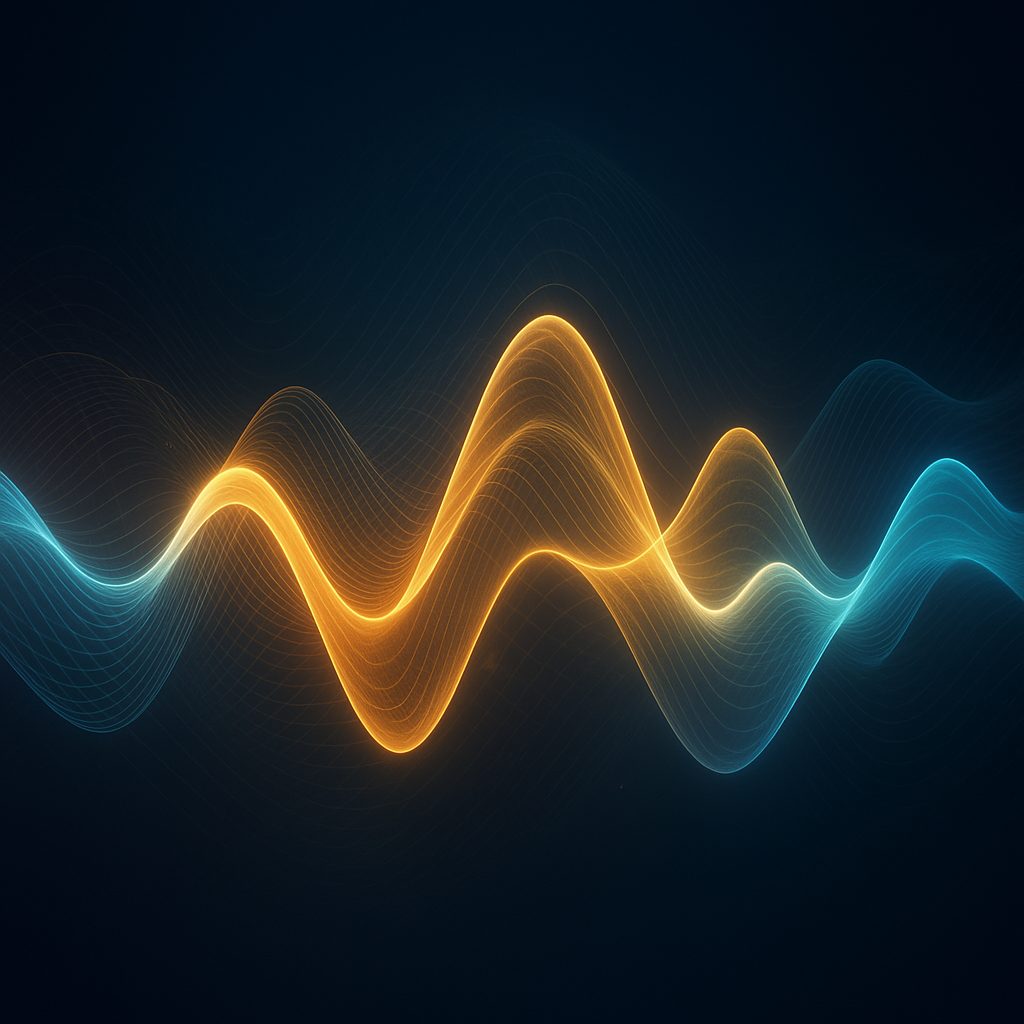
In practical terms, alpha waves generally fall between 8.5 and 12 Hz, whereas beta activity sits above 12 Hz. Beta is closely linked with most of daytime life: concentration, effort, alertness, work, decision-making and, at times, stress. Alpha, by contrast, is associated with a calmer state of awareness, often when the eyes are closed and the body is still. This contrast raises a useful question: is the dominance of beta really suited to the constant stimulation of modern life? Perhaps not entirely, especially if we consider that the alpha rhythm is often associated with relaxation and may also support learning.
It is worth adding that these categories are not rigid compartments. The brain does not simply switch from one isolated mode to another; rather, several rhythms may coexist, with one becoming more prominent depending on task demands, sensory input, fatigue, emotional tone and environmental context. EEG therefore offers a useful map, but not a simplistic portrait. What it captures is a dynamic pattern of oscillatory activity that reflects how the brain coordinates information across different regions.
That nuance matters when discussing mental states. A person may feel outwardly calm while still showing considerable cognitive activity, just as someone may appear alert while internally struggling with overload or scattered attention. Brainwave language is helpful because it gives us a framework for describing these shifts, yet it should always be understood as a way of interpreting tendencies rather than assigning absolute labels to experience.
- Delta and theta are mainly linked with sleep.
- Alpha is associated with calm, settled wakefulness.
- Beta dominates active daytime attention and mental effort.
Why alpha matters in a fast-moving world
The value of these distinctions is not merely theoretical. They help explain why different mental states feel so different from one another, and why some are more restorative than others. A mind that remains locked in high alert for too long may struggle to recover properly, even when the body is technically at rest. By contrast, alpha is often sought as a more balanced state: attentive without being tense, calm without drifting into sleep. That is one reason it is so often discussed in relation to relaxation, emotional regulation and mental clarity.
This does not mean beta is undesirable; on the contrary, it is essential for daily functioning. But when it becomes too dominant, especially in an overstimulating environment, it may leave little room for the quieter forms of attention that support integration, recovery and ease. Seen in that light, interest in alpha is not a rejection of activity, but a search for better regulation. The aim is not to stop the brain working, but to help it find a rhythm that is more sustainable, more adaptable and, in many situations, more conducive to well-being.
Many people recognise this distinction in lived experience long before they encounter the scientific vocabulary. There is a familiar difference between focused effort that feels clear and manageable, and effort that feels strained, brittle or mentally noisy. Alpha is often discussed because it appears to sit near that threshold where awareness remains present, but internal pressure softens. In practical terms, this may be why it is frequently associated with reflective thinking, gentle concentration, early meditation practice and the transition into rest.
In a culture shaped by notifications, multitasking and prolonged screen exposure, the ability to return to a calmer baseline may be especially valuable. This does not imply that modern life is inherently pathological, but it does suggest that many nervous systems spend long periods in states of sustained activation. Methods that may support a shift towards alpha are therefore often valued not for producing something exotic, but for restoring a degree of mental spaciousness that daily routines can easily erode.
How Binaural and Isochronic Sounds Guide the Brain
Why alpha states are often sought after
When the brain produces alpha waves, the two hemispheres are often described as working in a more coordinated way. This state is commonly associated with a calmer form of wakefulness: the body is still, the eyes may be closed, and the nervous system begins to settle. In practical terms, that relaxation may support emotional regulation, help ease anxious tension, and create conditions that are more favourable for memory and creative thinking.
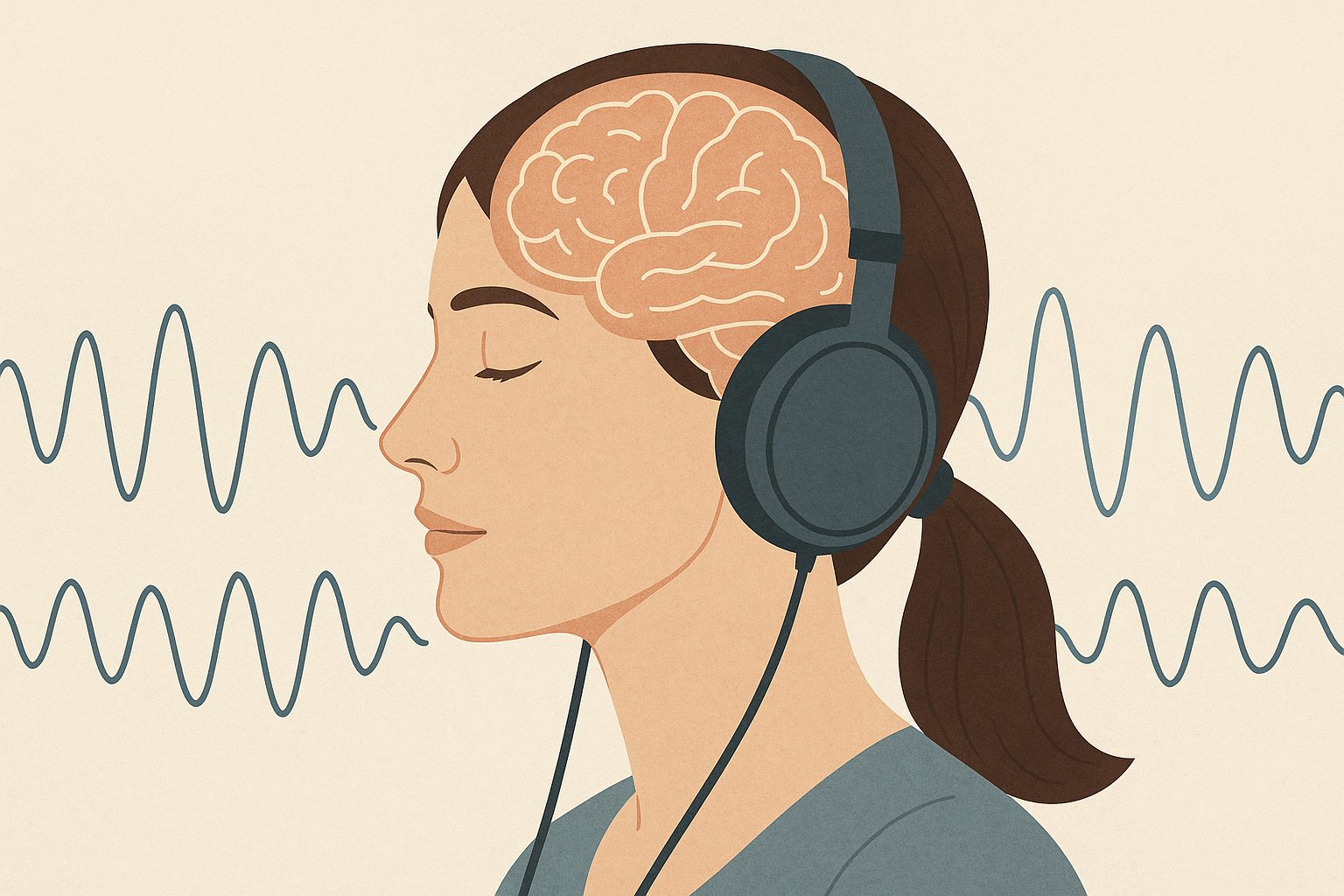
This is why binaural and isochronic sounds are often used as tools for mental adjustment. In just a few minutes, listening can encourage the brain to move towards an alpha-dominant rhythm. The principle is simple: rather than forcing concentration, the sound provides a steady sensory cue that the brain may begin to follow, making relaxation feel more accessible.
Part of the appeal lies in the fact that sound reaches us in a direct and embodied way. Unlike techniques that depend heavily on deliberate effort, auditory stimulation can shape the background conditions of attention without requiring constant mental control. For someone who finds it difficult to switch off through willpower alone, a carefully structured sound pattern may offer a more approachable route into calm. It does not replace self-regulation, but it may make self-regulation easier to access.
There is also a practical distinction between feeling relaxed and entering a state that is measurably more organised. People often use the word “relaxation” loosely, yet from a neurophysiological perspective the quality of that state matters. A person may stop moving while remaining internally agitated. Alpha-focused listening is often sought because it may support not only subjective calm, but a more coherent pattern of attention in which the mind is less fragmented and less reactive.
The difference between binaural and isochronic stimulation
With binaural beats, each ear receives a slightly different frequency through headphones. If the right ear hears 200 Hz and the left ear 210 Hz, the brain registers the gap between the two signals, in this case 10 Hz. That difference corresponds to the alpha range, which is why this type of listening is often used when a calm, attentive state is the goal. The effect relies on separate signals reaching each ear, so headphones are an essential part of the method.
Related offer
Alpha states of consciousness
Easily reach the state of Alpha Brain Rhythm to reduce anxiety and stress, soothe pain, enter...
View productIsochronic tones work differently. Here, the sound is delivered as a clear, regular pulse at the target frequency itself, so the brain follows the external rhythm more directly. Because the pulses are of equal intensity, headphones are not always necessary. This can make isochronic stimulation feel simpler to use, with less perceptual effort required. In both cases, the aim is similar: to offer the brain a precise auditory rhythm that may help it settle into a more relaxed and balanced state.
Although these two methods are often grouped together, the listening experience can feel quite different. Binaural beats are usually subtler, sometimes perceived more as an internal auditory effect than as an obvious pulse. Isochronic tones, by contrast, tend to sound more explicit and rhythmic. Some listeners prefer the gentler quality of binaural stimulation, while others respond better to the clearer structure of isochronic pulses. Preference may depend on sensitivity, context and the kind of mental state being sought.
It is also sensible to distinguish between the acoustic signal itself and the broader listening environment. Volume, duration, background noise, posture, fatigue and expectation can all influence the outcome. A carefully chosen track heard in a quiet setting with a settled body is not equivalent to the same track played casually while multitasking. In other words, entrainment is not merely about frequency; it is also about conditions that allow the nervous system to respond.
- Binaural beats use two slightly different tones, one in each ear.
- Isochronic tones use a single repeated pulse at a chosen frequency.
- Headphones are needed for binaural beats, but not always for isochronic tones.
Where Brainwave Entrainment May Be Most Useful
From therapeutic settings to everyday mental support
Isochronic sounds have already been explored in university settings, including with groups of students, and they are also used in some hospital contexts for therapeutic purposes. In that broader landscape, they are often associated with support for memory, mental recovery and, more cautiously, aspects of physiological regulation such as stress-related immune balance. As a gentle, non-invasive approach, this kind of auditory stimulation is often sought for concerns as varied as insomnia, emotional tension or support during lifestyle changes such as stopping smoking.
That said, it is important to keep a balanced view. These sounds are not limited to people facing a specific difficulty, nor should they be treated as a miracle solution. Their interest also lies in something simpler: helping the brain move towards a calmer, more regulated state, often linked with alpha activity. For many people, that shift may support relaxation, steadier attention and a more settled inner rhythm in the middle of an overstimulating daily life.
In therapeutic or supportive settings, the most credible use of these methods is often as an adjunct rather than a substitute. They may complement relaxation training, meditation, breathwork, sleep hygiene or psychological care by making certain states easier to enter. This is an important distinction, because it places auditory entrainment within a realistic framework: not as a stand-alone remedy, but as one tool among others for influencing arousal, attention and perceived mental load.
For everyday use, their value may be even more straightforward. A short listening session before study, after work, or during the transition into sleep can function as a deliberate change of pace. In that sense, the method may help mark a boundary between modes of functioning: from effort to recovery, from agitation to composure, or from scattered attention to more settled focus. Such transitions are often underestimated, yet they play a central role in how resilient and mentally clear we feel over time.
- often explored for relaxation and sleep support
- sometimes used alongside therapeutic care
- also sought for concentration and mental recovery
A tool for artists, meditators and working minds alike
The appeal of isochronic stimulation goes well beyond clinical or academic use. Anyone wishing to develop their cognitive abilities may find it worthwhile, precisely because a brain trained to access alpha states more easily is often associated with better learning conditions, emotional regulation and creative availability. Whether someone is an artist looking for fluidity, a meditator seeking depth, or an office worker trying to regain clarity after hours of sustained beta-driven effort, the underlying aim remains the same: to restore a more harmonious mental tempo.
This is why the future applications of isochronic sounds remain open and intriguing. Research and practice are still evolving, and it would be premature to claim that all their effects are fully understood. Even so, the direction is promising: these sound-based methods may continue to find a place wherever people are looking for a more balanced relationship between performance, recovery and wellbeing. Until then, the essential point is a simple one: choosing the right rhythm matters.
For creative work, this may mean using sound to reduce internal friction rather than to intensify effort. Many artists and writers are not looking for raw stimulation, but for a state in which ideas can connect more freely and attention becomes less self-interrupting. For contemplative practice, the role is slightly different: the sound may serve as a scaffold that supports stillness until the mind becomes less compelled by distraction. In professional settings, meanwhile, the benefit may lie in recovering clarity after prolonged cognitive strain rather than in pushing productivity ever further.
What unites these uses is not a single outcome, but a shared principle of regulation. Different people seek different states, yet many are trying to solve the same underlying problem: how to move the brain out of unhelpful rigidity and into a mode that is better matched to the task at hand. In that respect, brainwave-oriented listening is less about enhancement in the narrow sense and more about flexibility, timing and the intelligent use of mental energy.

Related offer
10 States of Consciousness - Infinity Elementary Pack
Elementary Infinity - The 10 States of Consciousness A unique sound box designed to explore the 5 states of...
View productThe Mental Waves Brain Rhythm Framework
The Mental Waves frame is to use brain-wave language as a map of states, not as a rigid identity. A rhythm can suggest alertness, relaxation or sleep tendency, but real experience is richer than a single frequency band.
When sound or meditation influences state, observe the whole response: breathing, attention, mood, fatigue and recovery. That gives a more useful picture than chasing one perfect frequency.
For a gentle sound-based practice, receive the free 128 Hz sacred frequency session and notice how your state changes without forcing an interpretation.
Editorial note from Mental Waves
This article explains brain-wave concepts for education and self-observation. EEG interpretation, neurological symptoms or mental-health concerns belong with qualified professionals.
Conclusion
What emerges, then, is not the promise of a miraculous shortcut, but a more grounded idea: the brain is rhythmic, adaptable and responsive to carefully designed auditory stimulation. In that light, binaural and isochronic sounds are best understood as tools of regulation rather than transformation — approaches that may help the mind shift from sustained beta-driven activation towards the calmer, more receptive states often associated with alpha activity.
This nuance matters. The value of these methods lies less in grand claims than in their potential to support attention, relaxation and mental balance in a world that rarely slows down on its own. Used with discernment, they may offer a simple way to work with the brain’s natural dynamics rather than against them. Sometimes, a better state of mind begins with a better rhythm.
That is perhaps the most useful way to understand brainwave adjustment and synchronisation: not as a dramatic intervention, but as a refined form of support. Sound cannot do the whole work of rest, reflection or recovery for us. Yet it may help create the conditions in which those processes become more available. For many people, that alone is meaningful.
Frequently Asked Questions About Brainwave Adjustment and Synchronisation
What does brainwave adjustment and synchronisation mean?
It refers to helping the brain move towards a particular rhythm through sound. The brain naturally shifts between different frequencies linked with wakefulness, calm and sleep. Binaural beats and isochronic tones are used to provide a steady auditory pattern that may encourage the brain to settle into a more balanced state, especially within the alpha range.
What is the difference between alpha and beta brainwaves?
Alpha waves sit roughly between 8.5 and 12 Hz and are linked with a calm, settled form of wakefulness, often with the eyes closed and the body still. Beta waves are above 12 Hz and dominate much of daytime life, including concentration, effort, alertness and stress. Both are normal, but they correspond to very different mental states.
Why is the alpha rhythm often seen as beneficial?
Alpha is associated with a calmer state in which the nervous system begins to relax. This more settled rhythm is linked with relaxation and learning, and it is also presented as supportive of emotional regulation. When the brain moves into alpha, conditions may become more favourable for memory and creative thinking as well.
How do binaural beats work in practice?
Binaural beats work by sending two slightly different frequencies to each ear through headphones. If one ear hears 200 Hz and the other 210 Hz, the brain registers the 10 Hz difference. That gap falls within the alpha range, which is why this method is often used to encourage a calm but attentive mental state.
How are isochronic tones different from binaural beats?
Isochronic tones use a single, regular pulse at the target frequency rather than two separate tones. Because the brain follows the external rhythm more directly, the listening process is described as requiring less effort. Unlike binaural beats, they do not always require headphones, since the sound is delivered at equal intensity rather than split between the ears.
Do you need headphones for these sound methods?
Headphones are essential for binaural beats because each ear must receive a different frequency. Isochronic tones are different, as they use evenly pulsed sound and do not necessarily require a headset. That makes isochronic listening simpler in some situations, while both methods still aim to guide the brain towards a chosen rhythm.
What effects are linked with listening to alpha-focused sounds?
A calmer nervous system is one of the main effects linked with alpha-focused listening. This state is associated with reduced anxious tension, better emotional management, and improved conditions for memory and creativity. The broader aim is not to force the brain, but to help it shift away from constant high alert towards a steadier and more restorative rhythm.
In what situations are isochronic sounds commonly used?
They are used in a range of settings, from university studies involving students to some hospital contexts for therapeutic purposes. They are also mentioned in connection with insomnia, nervous disorders and support during smoking cessation. Beyond specific difficulties, they are used more generally by people who want to improve relaxation, learning or mental clarity.
Are these sounds only for people with stress or sleep problems?
No, they are not limited to people facing a particular problem. They are also used by people who want to develop their mental abilities or regain a better internal balance. Artists, meditators and office workers are all given as examples of people who may benefit from easier access to a calmer alpha state.