en
enVotre panier est vide.


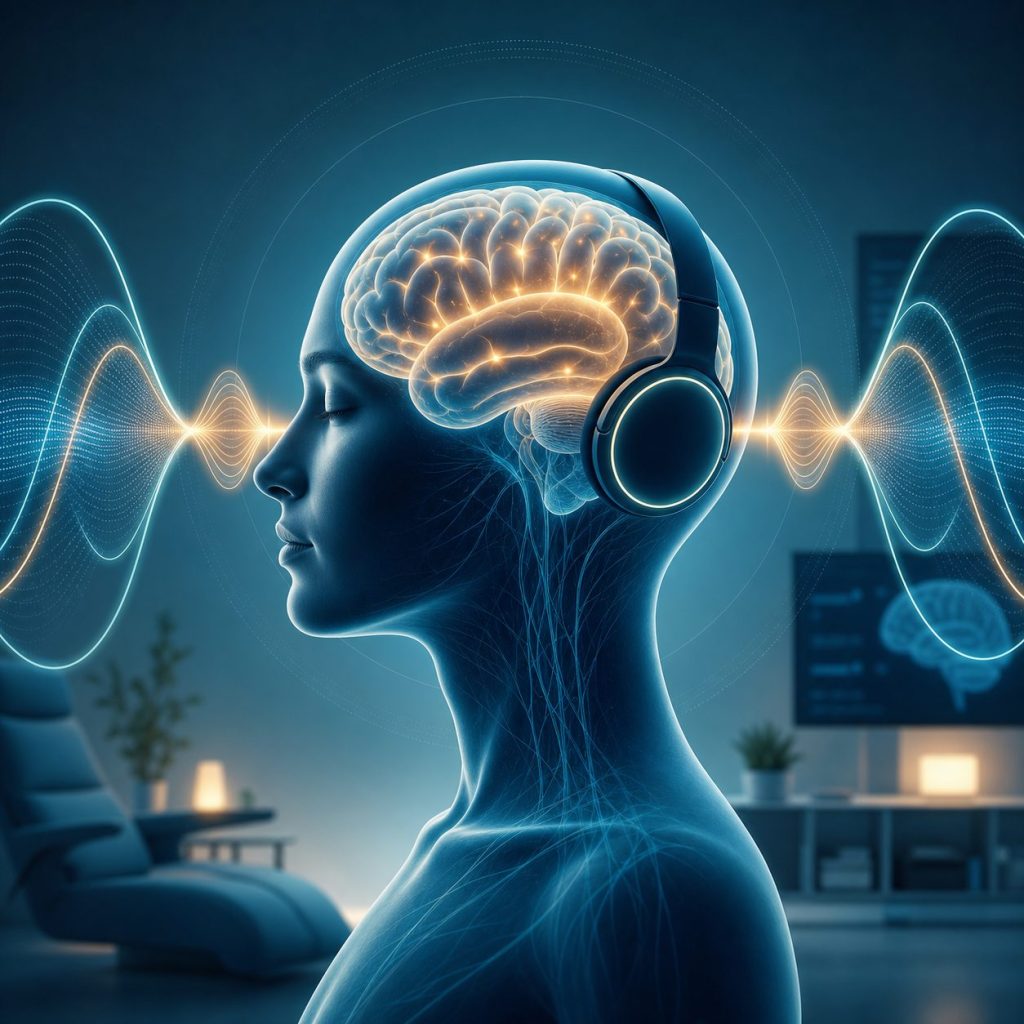
Tips and practices
Explanations
Science & Neuroscience
neurofeedback
neuropsychology
binaural sounds
Away from attention deficit disorder and developmental disorders, it is in psychopathology and behavioural medicine that binaural sounds have arguably been studied most closely. Early work linked very low frequency differences, around 1 to 4 Hz, with delta activity associated with sleep and dream-like states. From there, the clinical interest widened: a small but notable body of research has explored their place in surgery, anaesthesia and pain regulation, including studies reporting lower pre-operative anxiety and, in some cases, a reduced need for anaesthetic compared with neutral sounds.
In short: binaural sounds in medicine
Binaural sounds have been explored in clinical contexts, but they are best understood as supportive auditory tools, not stand-alone treatments.
Use this article as a practical map: keep what helps attention become steadier, question anything that sounds absolute, and connect the idea back to repeatable daily practice.
This early clinical literature is heterogeneous, and its methods are not always comparable from one study to another. Even so, it established an important line of enquiry: whether a simple auditory manipulation, delivered through stereo listening, might influence arousal, autonomic regulation and the subjective experience of distress. That question remains relevant because many medical and psychiatric settings involve states of heightened vigilance, anticipatory anxiety or dysregulated attention in which small shifts in physiological tone may matter.
The picture that emerges is neither simplistic nor uniform, but it is clinically intriguing. Research cited here also points to physiological changes observed with alpha-frequency binaural stimulation, including shifts in heart rate, blood pressure, perceived pain and certain neurochemical markers. Other studies, particularly in patients with alcohol dependence and associated depressive symptoms, suggest that training based on slow alpha and theta rhythms may support emotional regulation, mental imagery and longer-term therapeutic work. Taken together, these findings help explain why binaural sounds continue to attract interest not only as a tool for relaxation, but as a possible support within broader medical and psychotherapeutic settings.
It is worth reading these findings with appropriate caution. Reported effects may reflect a combination of auditory entrainment, expectancy, context, attentional focusing and the general impact of resting quietly with structured sensory input. Yet this does not make the observations trivial. In clinical practice, interventions that help a person settle, attend differently or tolerate internal experience more effectively can still be meaningful, even when the underlying mechanism is likely to be multifactorial rather than singular.
Robert Monroe, Hemi-Sync and the idea of hemispheric synchronisation
How Robert Monroe helped structure research into binaural sound
Robert Monroe, founder of the Monroe Institute of Applied Sciences in Virginia, carried out further work on these auditory phenomena and explored how particular combinations of tones and frequencies might produce distinct effects in human listeners. His contribution is often cited because it helped move the subject from a general observation about binaural perception towards more structured attempts to identify repeatable patterns of response.
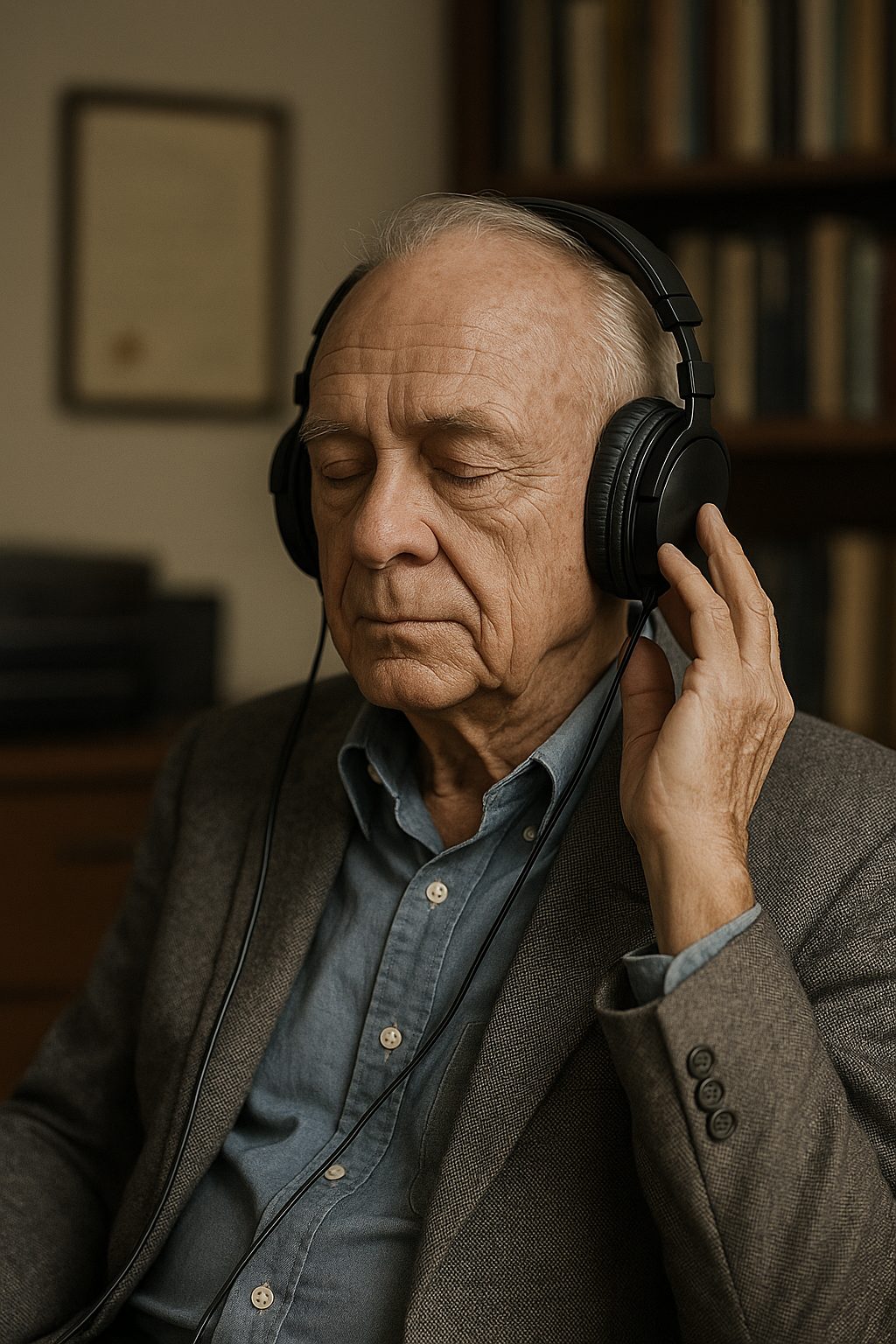
Among the many frequency combinations that could theoretically be reproduced, Monroe and his team selected fifty-three that they considered especially beneficial for brain functioning, and the process was patented in 1975. He then developed a series of tapes and CDs based on these combinations, marketed under the name Hemi-Sync, short for hemispheric synchronisation. In practical terms, this work helped popularise the idea that carefully designed binaural stimulation might be used not only for subjective relaxation, but also to influence attention, mental state and the overall organisation of brain activity.
Historically, Monroe’s work occupies an unusual position between exploratory research, applied audio design and public dissemination. For that reason, it has had a cultural influence that extends beyond the strict boundaries of laboratory science. Even where later researchers take a more cautious view of the claims, his work helped define a vocabulary for discussing frequency pairing, altered states, attentional modulation and the possibility that auditory patterning may shape conscious experience in subtle but measurable ways.
- Exploration of specific tone and frequency pairings
- Selection of 53 combinations judged especially positive
- Patent filed in 1975 and later developed into the Hemi-Sync series
What later auditory research suggests about binaural stimulation
A later study by Schwarz, an ENT physician, and Taylor (2005) compared the human auditory system’s responses to monaural and binaural sounds. Their findings suggest that binaural sounds can generate evoked potentials even when they are not consciously perceived in the usual way. This is an important nuance: the sound experience may remain subtle, while measurable auditory processing is still taking place.
The authors also reported that these sounds appear to stimulate each cerebral hemisphere alternately and very rapidly. This observation is consistent with the broader hypothesis, often discussed in relation to binaural beats, that alternating auditory input may contribute to inter-hemispheric coordination. It does not prove a universal therapeutic effect, but it does offer a plausible physiological basis for why these sounds are often explored in contexts involving attention, regulation and shifts in mental state.
From a neuroscientific perspective, the key point is not that hemispheric synchronisation should be treated as a complete explanation, but that binaural stimulation may engage timing-sensitive auditory pathways in ways that influence ongoing brain dynamics. EEG findings in this field are often interpreted as signs of entrainment or resonance rather than direct control. In other words, the brain is not simply forced into a state; rather, certain rhythmic conditions may make some states more likely, more stable or easier to access for a period of time.
This distinction matters clinically. A patient who feels calmer, less scattered or more able to sustain inward attention during listening may be benefiting from a supportive shift in arousal and perceptual organisation, even if the exact neural mechanism remains only partly understood. Such a view is both scientifically modest and therapeutically useful.
How Binaural Sounds May Fit Into Psychotherapeutic Practice
A simple tool that may support therapeutic work
Listening to binaural sounds requires very little equipment: in practice, a standard audio player and stereo headphones are enough. That simplicity means they could, at least in principle, be integrated quite easily into a face-to-face psychotherapy setting, provided the volume is adjusted so that it supports the session without interfering with conversation. In this context, binaural stimulation is not presented as a stand-alone treatment, but rather as a possible aid within the therapeutic frame.

Used in that way, it may be relevant for several aims already familiar in clinical work: promoting relaxation, helping to reduce anxiety, supporting the processing of emotions, facilitating the emergence of memories, and encouraging freer associations. It may also function as a kind of sensory medium that makes verbalisation and psychological elaboration easier for some patients. The interest here lies less in a dramatic effect than in the possibility of gently modifying the patient’s mental state in a way that may make therapeutic work more accessible.
For some individuals, especially those who struggle with excessive cognitive agitation or difficulty settling into introspection, a structured auditory background may provide a useful anchor. It can create a more contained attentional field, reducing the sense of internal dispersion without demanding effortful concentration. In that sense, binaural listening may be understood as a regulatory support: not a remedy in itself, but a way of helping the patient remain within a tolerable window of emotional and cognitive engagement.

Related offer
8 States of Consciousness - Deep Infinity Pack
Deep Infinity - 8 States of Consciousness This rare audio pack invites you to plunge into the heart...
View product- relaxation and reduction of anxious tension
- support for emotional processing
- facilitation of memories and associations
- help with verbalisation and elaboration
Links with EMDR and alternating bilateral stimulation
As noted earlier, one of the hypotheses associated with binaural listening is that it may encourage a form of inter-hemispheric synchronisation. This is one reason the comparison with EMDR (Eye Movement Desensitisation and Reprocessing), developed by Francine Shapiro (2001), is clinically interesting. EMDR is widely used in the treatment of psychological trauma and relies on rapid alternating stimulation, classically by asking the patient to follow a moving object such as a pen with the eyes. A commonly proposed explanation for its effects is that this bilateral stimulation may facilitate emotional processing.
The same general principle has also been explored through other forms of alternating stimulation: for example, tapping alternately on each thigh or arm, or using a sound perceived alternately in one ear and then the other. From that perspective, it seems reasonable to consider whether binaural sounds could be incorporated into psychotherapy for indications similar to those of an EMDR protocol. This does not mean the two methods are identical, nor that binaural stimulation can simply replace established trauma treatments. It does, however, suggest a credible therapeutic avenue in which auditory stimulation may help create the conditions for regulation, recall and emotional integration.
The comparison is best understood at the level of process rather than equivalence. EMDR is a structured, protocol-based therapy with a defined clinical framework, whereas binaural stimulation is an auditory technique that may be inserted into different therapeutic models. Its value, if confirmed in practice, may lie in supporting bilateral attentional engagement, reducing defensive overactivation and helping emotionally charged material become more thinkable without overwhelming the patient.
That possibility is especially relevant in trauma-related work, where the clinician often seeks a balance between access and containment. If binaural listening helps some patients remain present while approaching difficult memories or affects, it may serve as a useful adjunct. Any such use, however, should remain clinically supervised and tailored to the person’s tolerance, history and current level of stability.
Brigitte Forgeot’s Research Profile and Clinical Outlook
What the study set out to examine
Brigitte Forgeot’s research begins from a clear physiological premise: binaural sounds are created when two slightly different frequencies are presented separately to each ear through stereo headphones. Building on Oster’s 1973 observations, the study recalls that this listening condition may induce cortical activity whose frequency corresponds to the gap between the two sounds heard. It also draws on the idea that the cerebral hemispheres tend to synchronise during binaural listening, which provides the theoretical basis for exploring possible effects on attention, memory, mood, anxiety and emotional processing.
The aim was not to make sweeping claims, but to test these effects in a structured way in healthy adults. More specifically, the research focused on binaural stimulation designed to induce alpha waves, in order to examine whether this type of auditory entrainment might influence both cognitive performance and clinically relevant subjective states. This framing is important, because it places lived experience — such as feeling calmer, more focused or emotionally clearer — alongside measurable neuropsychological and psychological indicators.
This is a valuable methodological choice. Studies in this area can easily become too dependent either on subjective reports alone or on narrow physiological measures detached from experience. By combining both domains, the research acknowledges that clinically meaningful change often appears at the intersection of performance, self-perception and emotional regulation. In other words, a shift in attention or anxiety is most relevant when it can be observed both in how a person functions and in how that person experiences their own mental state.
- Attention
- Memory
- Mood and anxiety
- Emotional processing
Methodology, findings and possible applications
The methodology combined computer-based tasks with standardised neuropsychological testing and clinical rating scales. Participants completed recognised measures including the Stroop, TMT, D2, digit spans, and verbal and visual memory subtests from the MEM III, alongside scales commonly used in clinical psychology such as the HAD, STAI, Crist relaxation scale, BVAQ and TMMS. The study also examined the effects of repeated training with the same alpha-inducing binaural sounds over a ten-week period, with particular attention to changes in mood and the handling of emotions over time.
The reported results suggest that binaural sounds whose frequency difference corresponds to the alpha range may have a noticeable effect on certain components of attentional and memory functioning. At a clinical level, the findings also point towards possible effects on anxiety and emotional processing. These results remain appropriately cautious, but they open up meaningful clinical perspectives. Forgeot therefore suggests potential applications in areas such as ADHD, anxious and depressive disorders, PTSD, cognitive remediation and neuropsychological rehabilitation, where support for regulation, concentration and emotional integration is often sought.
Alpha-range stimulation is of particular interest because alpha activity is often associated with a state that is neither drowsy nor overactivated: a form of relaxed wakefulness in which internal noise may lessen while attentional availability improves. In practical terms, this may help explain why some participants report feeling both calmer and more mentally organised after listening. Such a state could be relevant in rehabilitation contexts, where excessive anxiety, fatigue or distractibility often interfere with cognitive performance.
At the same time, these applications should be approached as hypotheses for careful development rather than settled indications. The likely effects of binaural stimulation may depend on baseline anxiety, sensory sensitivity, listening conditions, duration of exposure and the broader therapeutic context. This is precisely why structured protocols and replication matter. A promising tool becomes clinically useful only when its effects can be described with enough precision to guide practice responsibly.

Related offer
10 States of Consciousness - Infinity Elementary Pack
Elementary Infinity - The 10 States of Consciousness A unique sound box designed to explore the 5 states of...
View product- Computerised cognitive tasks
- Standard neuropsychological tests
- Clinical scales for anxiety, relaxation and emotion
- Ten-week alpha-wave training follow-up
The Mental Waves Binaural Listening Framework
The Mental Waves frame is to approach binaural sounds as a listening support. Their value is not in replacing clinical work, but in helping attention, arousal and emotional tolerance become easier to observe.
Responsible use begins with modest claims: clear headphones, comfortable volume, short sessions, and a realistic understanding that sound is part of a wider context.
For a gentle introduction to sound-based inner regulation, try the free 128 Hz sacred frequency session before exploring more technical binaural material.
Editorial note from Mental Waves
This article keeps the clinical research cautious. Binaural sounds may support regulation and attention, but they are not presented as a replacement for diagnosis, psychotherapy or medical care.
Conclusion
What emerges from this body of work is not a miracle technique, but a plausible and clinically interesting tool. Depending on the frequency difference used, binaural sounds are associated with shifts in relaxation, alertness, attention, memory and emotional regulation, and some studies suggest possible value in settings as varied as pre-operative anxiety, pain management and psychotherapeutic support. The most useful reading is therefore a balanced one: these effects should neither be dismissed outright nor treated as settled medical certainty.
In practice, the real interest of binaural stimulation may lie in its simplicity and in the way it can support a broader therapeutic framework rather than replace one. Whether the aim is to ease anxiety, encourage a calmer mental state, or help create conditions more favourable to cognitive and emotional processing, the method appears promising precisely because it sits at the meeting point of subjective experience and measurable neurophysiological hypotheses. Used with rigour and restraint, it opens a serious line of enquiry.
For clinicians and researchers alike, the most productive stance is likely to be one of disciplined curiosity. Binaural sounds may support regulation, attention and emotional access in some contexts, but their effects need to be specified, bounded and tested against alternatives. When approached in that spirit, they belong neither to the realm of exaggerated promise nor to that of casual dismissal, but to a growing field of careful investigation into how patterned sound may influence the mind and brain.
Frequently Asked Questions About Binaural Sounds in Medicine and Psychopathology
What are binaural sounds in a clinical context?
Binaural sounds are created when two slightly different frequencies are presented separately to each ear through stereo headphones. This frequency difference can induce a brain wave matching the gap between the two sounds, and listening is also linked with a tendency towards hemispheric synchronisation.
Which frequency differences are linked with delta, theta, alpha and beta effects?
Very low differences of 1 to 4 Hz are associated with delta activity and states linked to sleep and waking dream-like experiences. Differences of 4 to 8 Hz are linked with theta, 8 to 13 Hz with alpha, and 16 to 24 Hz with beta activity.
How have binaural sounds been studied in surgery and anaesthesia?
Research in anaesthesia has explored both pre-operative anxiety and anaesthetic requirements during minor surgery. One study reported a significant reduction in the dose of anaesthetic needed compared with neutral sounds, while another found lower pre-operative anxiety measured with the Spielberger STAI scale.
What effects were reported for alpha-frequency binaural stimulation on the body?
Alpha-frequency stimulation was reported by Cox (1996) to reduce blood pressure and heart rate by 4 to 10 per cent and to lower perceived pain by around 50 per cent on average. The same work also noted changes in melatonin, beta-endorphins, serotonin and noradrenaline.
Why are alpha binaural sounds often linked with relaxation and anxiety reduction?
Alpha-range binaural sounds, usually 8 to 13 Hz, are associated with a relaxed state, improved mood and reduced anxiety. EEG recordings have shown alpha production even with the eyes open, and one proposed explanation is that alpha activity supports synchronisation between the cerebral hemispheres.
What role have alpha and theta training played in studies of alcohol dependence?
Alpha and theta training has been studied in patients with alcohol dependence, including those with depressive symptoms. Peniston and Saxby used 20 sessions of 40 minutes and reported significant reductions in depression and several personality subscales, with a 21-month follow-up showing no return to alcohol use in that group.
How are theta and beta binaural sounds said to affect attention and learning?
Theta-range sounds, from 4 to 8 Hz, are linked with deep relaxation, meditation, creativity and a more relaxed form of concentration that may support learning. Beta-range sounds, from 16 to 24 Hz, are associated with increased alertness, concentration and improved memory performance.
What is the connection between binaural sounds and EMDR-style psychotherapy?
Binaural sounds are of interest in psychotherapy because they may support alternating stimulation of the hemispheres, a principle also discussed in EMDR. This makes them relevant for work on emotional processing, anxiety, memories, associations and verbalisation, although they are presented as a possible support rather than a replacement for established trauma treatment.
What did Brigitte Forgeot’s research examine, and what did it find?
Brigitte Forgeot’s research examined alpha-inducing binaural sounds in healthy adults using computerised tasks, neuropsychological tests and clinical scales such as the STAI, HAD, BVAQ and TMMS. The findings suggested notable effects on some aspects of attention and memory, as well as on anxiety and emotional processing.