en
enVotre panier est vide.



The idea belongs more readily to crime drama than to everyday life: reading the brain in order to identify criminal intent. Yet a study published on 13 March in Proceedings of the National Academy of Sciences (PNAS) suggests that this prospect is no longer purely fictional. Researchers at the Salk Institute for Biological Studies reported work on an artificial intelligence system designed to distinguish, from patterns of brain activity, whether a person appears to be acting with deliberate criminal intent.
That does not mean a machine can now declare a suspect guilty or innocent. The findings remain tightly bound to an experimental setting, and the distinction matters. What the study points to is a possible scientific route towards detecting differences in neural activity linked to knowingly breaking the law, rather than merely taking a risk without full awareness of wrongdoing. It is an arresting development, but one that still sits firmly within the realm of cautious interpretation rather than courtroom certainty.
In short: can AI detect criminal intent from brain activity?
AI may identify experimental brain-activity patterns linked with knowledge, uncertainty or decision context, but it cannot reliably prove criminal intent on its own. Brain data needs careful interpretation, legal safeguards and ethical limits before anyone frames it as evidence about responsibility.
- Brain scans can reveal patterns, not moral truth.
- AI classification depends on training data and context.
- Legal intent is more complex than a neural signal.
- Neurotechnology needs strong safeguards against overreach.
For EEG background, read Brainwave Frequencies and Meditation. For a free contemplative sound cue, receive the Sacred Frequency Session.
Part of the fascination comes from a simple but powerful question: can the brain reveal something about intention before words, excuses or later recollections begin to reshape the story? In cognitive neuroscience, intention is not treated as a mystical force but as a set of processes involving attention, evaluation, anticipation of consequences and decision-making under uncertainty. If those processes leave measurable traces in brain activity, then AI may help detect patterns that are too subtle or too complex for a human observer to identify unaided.
Even so, the leap from laboratory signal to legal meaning is enormous. A neural pattern may be associated with conflict, risk, awareness or emotional arousal without amounting to proof of criminal purpose in the legal sense. That is why this kind of research is best understood as an early attempt to map the brain states that may accompany conscious wrongdoing, not as a technology capable of reading minds in any literal or infallible way.
What This Research Really Suggests — and What It Still Cannot Prove
A brain scan can detect patterns, not deliver a verdict
To reach this conclusion, the researchers relied on brain scans taken with fMRI, a technique that measures changes in brain activity and then feeds those results into an artificial intelligence system for analysis. In other words, the tool does not “see” guilt in any absolute sense: it identifies neural patterns associated with a given mental state during a specific task. That is an important distinction, because however striking the findings may seem, this kind of technology is not currently capable of declaring whether a suspect is guilty or innocent.
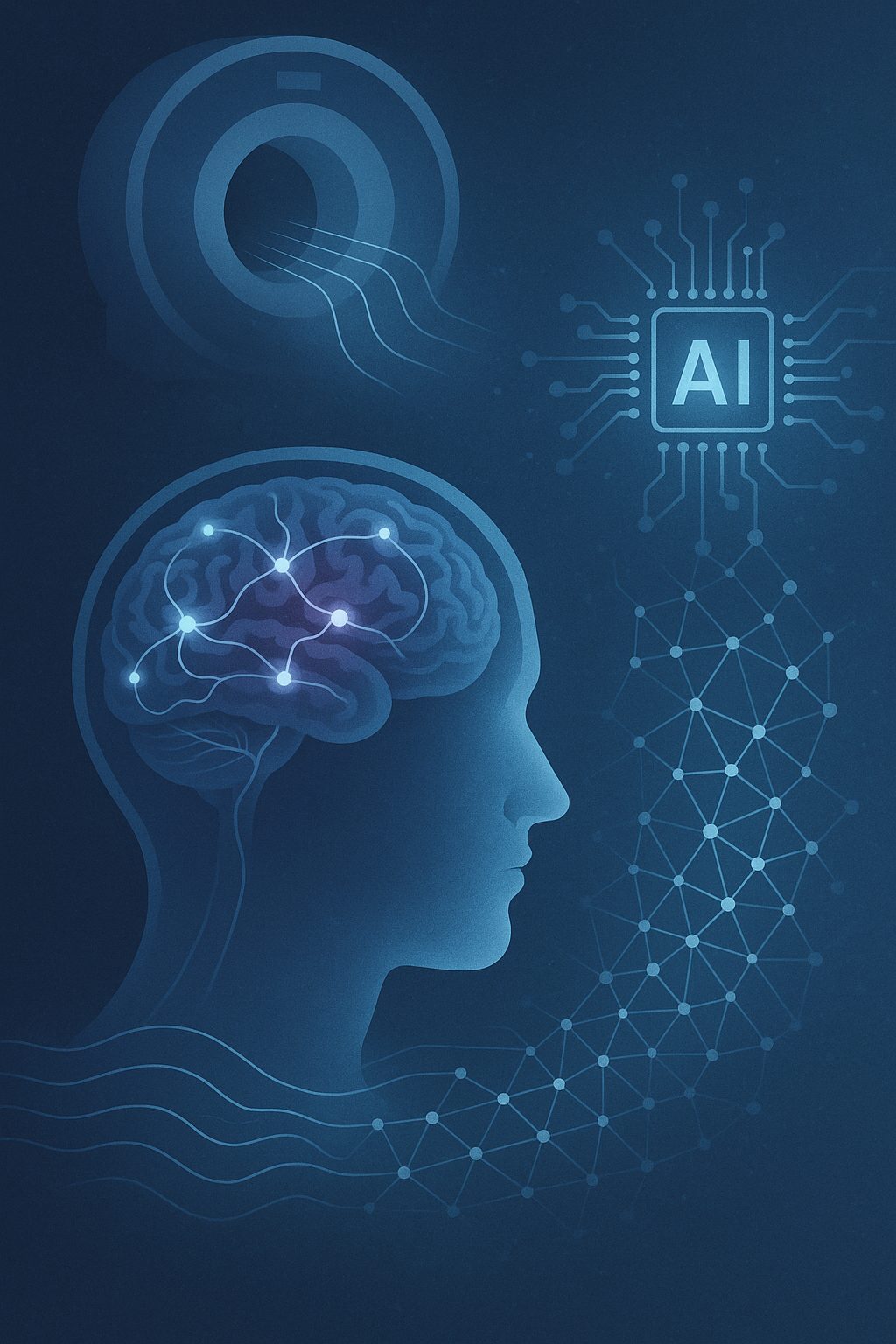
The study therefore points to a possibility rather than a ready-made judicial tool. It suggests that, under controlled conditions, AI may be able to distinguish between different forms of intention by analysing brain activity in real time. But that remains very far from a courtroom standard of proof, where context, evidence, behaviour and legal responsibility all have to be weighed together.
- fMRI measures brain activity rather than thoughts in a literal sense
- AI analyses patterns in the data instead of issuing a legal judgement
- The results come from an experimental setting, not a real criminal investigation
This distinction is essential because fMRI does not record neurons firing directly in the way an EEG records electrical rhythms at the scalp. Instead, it tracks changes in blood oxygenation that are associated with neural activity. That makes it a powerful research tool for identifying broad patterns across brain networks, but also a relatively indirect measure of what the brain is doing from one second to the next. Any interpretation must therefore remain probabilistic rather than absolute.
Artificial intelligence adds another layer of complexity. Machine-learning systems can be highly effective at classifying patterns once they have been trained on a defined dataset, yet their performance depends heavily on the quality of that dataset and on the conditions under which the model was built. A system that performs well in a tightly controlled experiment may not generalise cleanly to the messier reality of human behaviour outside the scanner, where stress, fatigue, fear, medication, trauma history and individual differences all shape brain activity.
Why the findings remain highly limited for real-life cases
Several conditions would still need to be met before such an approach could be treated as reliable. First, the experiment would have to be replicated on a much larger scale, involving thousands of participants, to test whether the same patterns appear consistently and with enough accuracy. Without that broader validation, the results remain intriguing but preliminary.
There is also a major practical obstacle: the neural scan would need to be carried out at the very moment the act was being committed. In this study, the participants were responding to fictional crimes in an experimental scenario, not committing real offences. That limitation is crucial. Quite apart from the ethical issues, it is hard to imagine a person willingly undergoing a live brain scan while breaking the law. For now, then, the research opens a scientific question more than it offers an immediately usable method.
There is a further conceptual problem. Real criminal acts are rarely simple, isolated decisions. They may involve panic, coercion, intoxication, impulsivity, confusion, social pressure or incomplete knowledge of events. In legal settings, intention is often inferred from a chain of actions and circumstances rather than from a single internal state. A brain scan, even if technically impressive, would capture only one layer of that much larger picture.
False positives and false negatives would also matter enormously. If a system wrongly classified a person as acting with criminal intent, the consequences could be severe. Equally, if it failed to detect deliberate intent where it was present, the technology would offer false reassurance. In medicine and neuroscience alike, a tool is only as useful as its reliability across varied populations, and that threshold is especially demanding when liberty, punishment and public trust are at stake.
For that reason, many neuroscientists and legal scholars would argue that the most responsible reading of this work is modest. It may help illuminate how the brain responds to knowingly unlawful choices under controlled conditions. It does not yet show that intention can be extracted cleanly from brain activity in the unpredictable texture of real life.
How the Experiment Was Designed to Detect Criminal Intent
A border-crossing simulation built around uncertainty and risk
To reach these conclusions, the researchers observed the brain activity of 40 participants taking part in a computer-based scenario. In the task, each person had to cross a border while carrying a suitcase described as containing a “high-value shipment”. That suitcase had to be transported from one country to another under different conditions, as reported by L’Express. The key variable was what each participant knew: some did not know what the bag contained, while others were aware that it held illegal goods, contraband or drugs.

The experiment was therefore designed to separate mere risk-taking from a more clearly conscious decision to break the law. The situation also included the possibility of customs checks at the border, which introduced pressure and uncertainty into the task. Throughout this risky scenario, the participants’ brain activity was recorded in real time, then examined and compared with the help of artificial intelligence.
- 40 participants took part in the test
- All faced the same border-crossing task
- What changed was their knowledge of the suitcase contents
That design is more subtle than it may first appear. The researchers were not simply asking whether people felt stressed. They were trying to isolate a difference between two nearby mental states: knowingly engaging in an illegal act, and entering a risky situation without full certainty that one is doing something unlawful. In cognitive terms, that means distinguishing conscious rule-breaking from ambiguity, which is a far more demanding task than separating calm from fear.
The border-crossing scenario also matters because it creates a believable structure of anticipation. Participants had to weigh possible reward against possible detection, while maintaining attention and making decisions under uncertainty. Those ingredients are relevant because intention is often associated with prospective thinking: imagining outcomes, evaluating consequences and deciding whether to proceed despite risk. A well-designed simulation can therefore reveal something meaningful about decision processes, even if it remains a simplified model of reality.
What the AI identified in the brain scans
According to the study, the AI was able to detect with a notable degree of accuracy patterns of activity in certain brain regions depending on the situation each participant experienced. In practical terms, it appeared to distinguish between people who knowingly broke the law and those who were simply exposed to danger or uncertainty without being sure they were doing anything illegal. The neuronal activity of the first group was reported to be more intense than that of the second.

Related offer
10 States of Consciousness - Infinity Elementary Pack
Elementary Infinity - The 10 States of Consciousness A unique sound box designed to explore the 5 states of...
View productThat distinction is central to the study’s interest, but it also points to its limits. These results were obtained because the brain was being analysed at the very moment the fictional offence was unfolding inside the experiment. That is not something current real-world criminal investigations can realistically reproduce. Even so, the researchers suggest that this approach could be refined further, which is why the technique continues to attract attention despite its very clear practical constraints.
When reports describe “more intense” activity, that should not be understood as a simple moral signal lighting up in the brain. More plausibly, the difference may reflect a combination of heightened cognitive control, conflict monitoring, emotional salience, anticipation of punishment and conscious awareness of transgression. Several brain systems may contribute at once, and the AI is detecting a pattern across them rather than a single isolated marker of guilt.
This is one reason why careful language matters. A classifier may separate two groups within a study without proving that it has discovered a universal neural signature of criminality. Human brains are dynamic, context-sensitive and deeply individual. What appears as a reliable pattern in one task may shift when the stakes, the social setting or the emotional meaning of the act changes.
Still, the result is scientifically interesting because it suggests that deliberate wrongdoing may recruit a somewhat different configuration of brain activity from uncertain risk-taking. If that finding holds up, it may contribute to a more refined understanding of how conscious intention is represented in the brain during morally and legally significant decisions.
What This Could Mean for Past Crimes and Sentencing
Before such a tool could be trusted
For any technique of this kind to be taken seriously, its reliability would first need to be established far more rigorously. That would mean repeating the study on a much larger scale to confirm that the brain regions identified are genuinely linked to criminal intention or to the act itself, rather than to stress, uncertainty or some other mental state. Researchers would also need a much deeper understanding of how these areas of the brain become active, and whether the same patterns appear across different kinds of offences rather than only in one highly specific experimental scenario.
In other words, the findings are intriguing, but they remain preliminary. Before anyone could imagine using such a system in a legal setting, science would need to show not only that the signal is real, but also that it is consistent, reproducible and meaningfully connected to behaviour in the real world. Without that level of verification, any claim about detecting criminal intent would remain far too fragile.
- Replication across many more participants
- Clearer mapping of the brain regions involved
- Testing across different types of crime and context
Trust would also depend on transparency. Courts and defence teams would need to understand how a model reached its conclusion, what its error rates were, and whether it had been independently validated. A system that cannot explain its own classifications in a meaningful way would sit uneasily within a justice process that is supposed to be open to challenge, scrutiny and appeal.
There are ethical concerns as well. Brain data are unusually intimate because they relate to attention, memory, emotion and internal processing. Even if a technology could one day support legal assessment, societies would still have to decide where to draw the line between legitimate investigation and unacceptable intrusion into mental privacy. That debate is not secondary to the science; it is part of what determines whether the science can ever be used responsibly.
A possible role in reconstructing intent
If these results were eventually confirmed, one possible application would be to examine whether the brain reacts in a similar way when a person is brought back to the scene of a crime committed in the past. The underlying idea is that certain patterns of brain activity might reappear when someone mentally reconnects with an earlier act. That possibility remains speculative, but it helps explain why this line of research attracts attention: it is not only about what someone is doing in the present moment, but also about whether traces of intention might still be detectable later on.
The same logic could, in theory, influence how a defendant’s actions are interpreted at sentencing. If a method like this ever became sufficiently precise, it might be used to distinguish between a deliberate act driven by clear criminal intent and a death caused accidentally, without premeditation. The principle is familiar to the justice system already: someone who kills intentionally should not be judged in exactly the same way, or receive the same punishment, as someone whose actions led to death without planning or deliberate malice. The report should still be treated as context, not proof.
Yet memory is not a stable recording. Recollection is reconstructive, shaped by time, emotion, suggestion and repeated retelling. A person returning to a crime scene may show brain activity linked to fear, shame, recognition, trauma or defensive attention, none of which automatically proves authorship or intent. Any attempt to use neural responses to revisit past acts would therefore face the same interpretative challenge as the original study, only in a more complicated form.
Sentencing raises similarly delicate questions. In principle, a more precise understanding of intention could support fairer distinctions between impulsive acts, reckless behaviour and premeditated harm. In practice, however, there is a risk that brain-based evidence could be given more authority than it deserves simply because it appears technical or objective. Neuroscience can inform judgement, but it cannot replace moral, legal and social reasoning about responsibility.
Why Neurotechnology Needs Ethical Guardrails
Research on AI and brain activity is fascinating because it sits at the intersection of neuroscience, law and personal freedom. That is also what makes it risky. A signal recorded in an experiment does not automatically become a reliable tool for courts, policing or sentencing.
The first guardrail is context. What a participant knows in a laboratory task is not the same as what a person intended in a real-life situation. The second guardrail is uncertainty. Brain data can be noisy, and AI systems can classify patterns without understanding their human meaning.

Related offer
Alpha states of consciousness
Easily reach the state of Alpha Brain Rhythm to reduce anxiety and stress, soothe pain, enter...
View productThe third guardrail is consent. Technologies that look inside attention, recognition or error detection should never be treated as neutral simply because they appear technical. They involve privacy, dignity and the possibility of serious misuse.
A careful reader should therefore hold two ideas together: the research is genuinely interesting, and its social use would require a much higher level of evidence than a controlled experiment can provide in real life.
The Mental Waves Neuroethics Framework
The Mental Waves frame is to keep curiosity about brain technology tied to humility and human rights.
- Measure: identify what the signal actually shows.
- Limit: avoid turning a pattern into a verdict.
- Protect: keep consent, privacy and legal safeguards central.
- Interpret: connect brain data with context rather than isolating it.
For a related brain-computer interface topic, continue with Neural Interface and Robot Errors. For another sensitive neuroscience case, read Brain Activity After Cardiac Arrest.
Editorial note from Mental Waves
This article is educational. It does not make legal, forensic or medical claims. AI and brain-activity research should be interpreted cautiously and never used to replace due process, expert review or human rights protections.
Conclusion
What emerges here is not a machine that can unmask guilt on command, but a more limited and more interesting possibility: under tightly controlled conditions, patterns of brain activity may help distinguish deliberate intent from uncertainty or risk-taking. That is a meaningful scientific signal, yet it remains far from a courtroom-ready tool. The study was small, based on a fictional scenario, and depended on real-time scanning in a way that current justice systems could not realistically reproduce.
That tension is precisely what makes the subject worth taking seriously. If future research confirms these findings across larger and more varied groups, such methods may one day contribute to a more nuanced understanding of intention, memory and responsibility. But they would still need to be handled with exceptional care, because reading brain activity is not the same as reading truth. The promise is real, but so are the limits.
For now, the most valuable contribution of this research may be conceptual rather than judicial. It encourages a more precise conversation about what intention is, how it may be reflected in brain activity, and where the boundaries lie between neuroscience, artificial intelligence and the law. That is a serious and worthwhile line of inquiry, provided it remains grounded in evidence, methodological caution and respect for the complexity of human behaviour.
Frequently Asked Questions About AI and Brain Activity
Can AI detect criminal intent from brain activity?
Not reliably on its own. AI may classify experimental patterns, but intent is a legal and human question that needs context.
What can brain signals show?
They may show attention, recognition, error response or decision-related patterns, depending on the study design.
Can a brain scan prove guilt?
No. A scan cannot replace evidence, due process or legal interpretation.
Why is AI risky in justice settings?
It can create a false sense of certainty if technical patterns are treated as direct proof of intent.
What ethical issues matter most?
Consent, privacy, bias, error rates and the danger of overinterpretation are central concerns.
Is this mind reading?
No. Current systems classify limited signals in controlled contexts; they do not read thoughts in a broad sense.
What research would be needed?
Larger studies, transparent methods, independent validation and clear legal standards would be needed before any practical use.
How does this connect to brainwaves?
The topic often involves EEG and patterns of brain activity, which require careful interpretation.
What is the main takeaway?
AI and brain activity research is intriguing, but criminal intent cannot be reduced to an algorithmic brain pattern.