en
enVotre panier est vide.


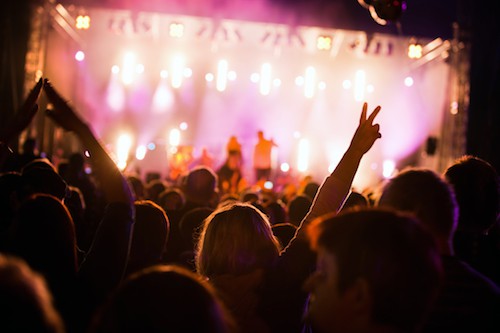
Most of us have had the odd sensation of reacting at exactly the same moment as someone else: the same thought, the same gesture, the same shift in attention. In everyday life, that kind of overlap is usually dismissed as coincidence. In a concert setting, however, the experience can feel far more striking. Between the crowd, the volume, the performers on stage and the pull of rhythm, a live performance creates the conditions for a shared state of attention in which spectators may begin to respond as though they are on the same wavelength.
That idea is not simply poetic. Research discussed by the Cognitive Neuroscience Society in Canada suggests that, during concerts, certain patterns of brain activity may become aligned across members of an audience. The key factor appears to be rhythm, which helps synchronise not only movement and visible reactions, but also aspects of perception and mental timing. This does not mean “mind fusion” in any mystical sense; rather, it points to a measurable form of collective synchronisation that may also help explain why music is so closely associated with social bonding, coordinated action and, in some contexts, promising avenues for supporting people with language or motor difficulties.
In short: why do concert audiences feel in sync?
Concert audiences feel in sync because rhythm gives many people the same timing structure at the same moment. A shared pulse can align movement, attention, anticipation and emotional peaks, especially when the performance is loud, immersive and socially charged.
- Rhythm creates a common temporal frame for clapping, swaying, singing and reacting.
- Shared attention makes people anticipate musical changes at similar moments.
- The live setting adds social cues from the crowd, performers, lights and space.
- The result is synchronisation, not telepathy or literal mind fusion.
After a powerful concert or group sound experience, the Free 10-Minute Mental Reset Session can help create a calmer landing. For deeper exploration of states of consciousness, the related Infinity products include 10 States of Consciousness, 18 States of Consciousness and 8 States of Consciousness.
The Mental Waves Shared Rhythm Framework
At Mental Waves, this phenomenon is best understood through five layers. Each layer adds a little more collective alignment, until the concert stops feeling like separate listeners in one room and starts feeling like one shared field of attention.
- Pulse: the beat gives bodies a common timing reference.
- Attention: listeners track the same performer, groove or musical transition.
- Movement: clapping, dancing, swaying and singing make synchrony visible.
- Emotion: crescendos and familiar moments create shared anticipation.
- Afterglow: the nervous system needs time to return from collective intensity to individual quiet.
This framework keeps the idea grounded. A concert can feel almost magical, but the mechanism does not need to be mystical. Shared rhythm is already powerful enough.
How rhythm brings concertgoers into sync
A shared musical experience can align attention and reactions
Our brain activity shifts constantly in response to what we do, feel and perceive. In everyday life, this remains largely individual. Yet during a powerful and unusual shared experience, such as a live concert, something more collective may emerge. The combination of the crowd, the volume, the musicians on stage and the music itself creates a highly stimulating environment that draws people’s attention in the same direction at the same time.
In that setting, spectators often seem to react almost simultaneously. A study presented by the Cognitive Neuroscience Society in Canada suggests that, during concerts, patterns of brain activity can become more closely aligned across the audience. This does not mean thoughts are literally being transmitted from one person to another. Rather, the same rhythmic and sensory cues appear to guide people towards a similar mental state, making their gestures, timing and immediate reactions more likely to converge.
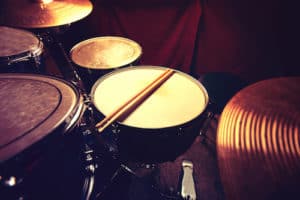
Rhythm acts as the main driver of synchronisation
The key factor here is rhythm. A steady beat gives the brain a common temporal structure to follow, which may help explain why people clap, sway, sing or move together so naturally. When many listeners are exposed to the same pulse, their attention and motor responses can become coordinated, especially when the music is immersive and emotionally engaging. This is one reason live music can feel so unifying: it does not simply entertain, it can organise collective behaviour in real time.
This effect is often even more visible when people dance together. Group dancing to music provides a clear example of synchronisation in action, as bodies and reactions begin to match the beat and, often, one another. In that sense, the concert setting offers more than a pleasant sensory experience. It becomes a moment in which rhythm may help bring spectators onto the same wavelength, both mentally and physically.
- shared beat
- aligned attention
- synchronised gestures and reactions
What This Shared Musical State Could Be Used For
A better understanding of social connection
Studying the mental synchronisation of several people exposed to the same musical event may first help us understand how social interaction is strengthened. In a concert setting, listeners are not simply hearing the same sounds at once. They are also adjusting their attention, reactions and body movements to a common rhythm. This shared timing can make responses feel more fluid and more immediate, especially when the music naturally invites people to move together.
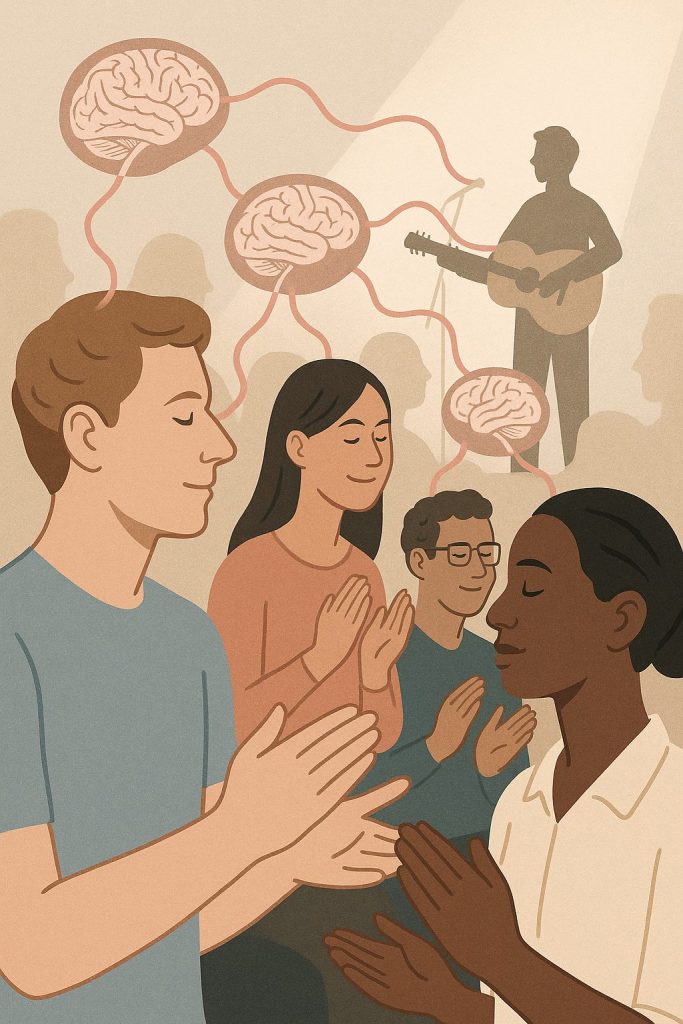
That is why music is often associated with sharper timing, greater precision and even a more spontaneous form of improvisation within a group. When the piece, the rhythm and the collective atmosphere all come together, these abilities can appear more coordinated from one person to the next. Rather than suggesting any mysterious fusion of minds, this points more plausibly to a temporary alignment of perception, attention and action during a powerful shared experience.
- more coordinated timing
- clearer shared reactions
- stronger group interaction
Possible therapeutic avenues
This line of research may also open up useful clinical perspectives. If music can help bring timing, attention and movement into better alignment, it could contribute to new approaches in care, particularly for people living with certain disorders. The idea is not that music would replace treatment, but that it may support it by creating conditions that encourage engagement, coordination and more stable responses.
In that context, people affected by language or motor difficulties could potentially benefit from this kind of work. A shared musical framework may help initiate positive responses at the beginning of treatment, especially when rhythm is used carefully and consistently. These possibilities still call for caution, but they suggest that the synchronising effects observed during musical experiences may have value well beyond the concert hall.
- support for social engagement
- potential help with motor regulation
- possible benefits for language-related difficulties
What actually synchronises in a concert crowd?
The phrase “same wavelength” can sound vague, so it helps to separate the layers. A concert can synchronise visible action, hidden attention and emotional timing without implying that everyone has the same inner experience.
| Layer | What aligns | Example |
|---|---|---|
| Motor timing | Movement follows the same pulse. | Clapping, swaying, nodding or dancing together. |
| Attention | Listeners track the same cue. | The crowd anticipates a drop, chorus or silence. |
| Emotion | Peaks arrive at similar moments. | A crescendo creates a shared lift or release. |
| Social feedback | People respond to one another’s responses. | Applause grows because others are joining it. |
This layered view is useful because it avoids two mistakes. The first is reducing the concert to mechanics only. The second is exaggerating the effect into a supernatural claim. A live audience can be deeply connected while still being made of separate people with different memories, bodies and emotions.
Related offer
8 States of Consciousness - Deep Infinity Pack
Deep Infinity - 8 States of Consciousness This rare audio pack invites you to plunge into the heart...
View productWhy not everyone synchronises in the same way
People differ in musical familiarity, hearing, movement habits, attention, fatigue, sensory sensitivity and emotional history. Someone who loves the song may anticipate every transition, while another person may simply absorb the atmosphere. Both are part of the same crowd, but they are not having identical experiences.
This is why synchronisation should be understood as partial alignment. The beat, stage and social field pull people toward common timing, but each person still filters the event through their own nervous system. That nuance makes the phenomenon more credible, not less powerful.
What the performer contributes to audience synchrony
The audience does not synchronise only with a beat. It also synchronises with the performer’s timing, gestures, pauses and emotional cues. A drummer can pull the room into pulse. A singer can hold silence just long enough for thousands of people to wait together. A conductor, DJ or guitarist can signal a shift before the sound fully changes.
This is one reason live music is different from a recording. The performer is not just producing sound; they are shaping anticipation. The crowd reads the body, posture, breath and timing of the people on stage. Those cues make the next moment feel shared before it has even arrived.
In a strong concert, synchronisation often moves both ways. The performer feels the crowd responding and may stretch a phrase, repeat a chorus, intensify a rhythm or leave more space. The audience then responds again. This loop can make a live performance feel alive in a way that is difficult to reproduce alone.
How to use the insight after a powerful concert
After an intense show, the body may still be carrying the crowd’s rhythm. That can feel energising, but it can also make sleep, quiet conversation or ordinary focus feel strange for a while. The nervous system needs a transition out of collective arousal.
A simple landing ritual helps. Lower the volume gradually, drink water, step away from bright screens and give yourself a few minutes of quieter sound or silence. If you use the Mental Reset Session, treat it as a bridge back to your own rhythm rather than as another high-intensity stimulus.
This matters because shared rhythm is powerful precisely because it carries you beyond your usual boundaries. Returning gently helps integrate the experience instead of ending it abruptly.
Why this matters for understanding social connection
Concert synchronisation shows that connection is not only verbal. People can feel linked through timing before they explain anything to one another. A beat, a chorus or a shared silence can organise attention faster than conversation.
This does not make music a shortcut to deep relationship, but it helps explain why musical gatherings can feel meaningful even among strangers. The group is temporarily doing something together: waiting, moving, anticipating and releasing at the same time.
That shared timing may be one reason music appears so often in rituals, ceremonies, protests, celebrations and spiritual gatherings. Rhythm gives a group a body. Melody gives it emotional colour. Silence gives it a place to listen.
Related offer
10 States of Consciousness - Infinity Elementary Pack
Elementary Infinity - The 10 States of Consciousness A unique sound box designed to explore the 5 states of...
View productFor Mental Waves, the practical lesson is simple: sound can organise attention before words do. A solo ritual uses sound to gather one person. A concert uses sound to gather many people. Both rely on the same basic movement from scattered input toward a clearer rhythm.
You can notice this in three moments: before the concert, when anticipation spreads through the room; during the concert, when bodies begin moving together; and after the concert, when people often leave with the same pulse still running inside them. This is ordinary experience, but it is also a useful doorway into neuroacoustics. It gives everyday listeners a simple way to understand a complex field.
Why rhythm is stronger in a live crowd than alone
Listening alone can still move the body, but a concert adds social feedback. You see other people anticipating the chorus, clapping into the same pulse and reacting to the same break. Those cues make timing more contagious.
Research on guitarists has shown cortical phase synchronisation when people coordinate musical performance together, and work on rhythmic applause has modelled how clapping crowds shift in and out of synchrony. These are not identical to every concert audience, but they help explain why shared rhythm can organise groups so quickly.
Sources and further reading
- Brains swinging in concert: cortical phase synchronization while playing guitar, BMC Neuroscience.
- The sound of many hands clapping, Neda et al.
- Music and Health: What You Need To Know, NCCIH.
Editorial note from Mental Waves
This article describes synchronisation as a research-informed social and neuroacoustic phenomenon. It does not claim telepathy, mind fusion or a clinical effect. Any therapeutic applications of rhythm should be handled with appropriate professional context.
Conclusion
What emerges here is not a mystical “fusion of minds”, but something both more grounded and, in its own way, more striking: a shared musical setting can bring people into a similar state of attention, timing and response. In a concert, rhythm does more than organise sound. It can help align perception and movement across a crowd, suggesting that our brain activity is often more socially responsive than we imagine.
That nuance matters. The value of this kind of synchronisation lies not in sensational claims, but in what it may reveal about human connection, collective experience and regulation through sound. It also helps explain why music is being explored so seriously in relation to interaction, motor coordination and certain language difficulties, with the necessary scientific caution. Sometimes, a concert is not just heard; it is shared at the level of attention itself.
Frequently asked questions about concert audience brain synchronisation
What is concert audience brain synchronisation?
It refers to the way many listeners can align in attention, timing, movement and emotional response during a live musical event. It is a form of shared coordination, not a literal merging of minds.
Why does rhythm matter so much?
Rhythm gives the crowd a common pulse. When many people hear the same beat at the same time, clapping, swaying, dancing and anticipation can begin to line up naturally.
Is this the same as mind-reading?
No. The effect does not imply telepathy or direct thought transfer. It is better understood as shared timing and attention created by common sensory cues.
Why do concerts feel different from listening alone?
Concerts add crowd energy, visual cues, performer presence, volume and shared anticipation. These extra signals make rhythm more social and synchronisation more visible.
Does clapping show synchronisation?
Yes. Rhythmic applause is a clear example of group timing. People often shift toward a shared pulse, then drift apart again as individual timing and crowd dynamics change.
Can dancing strengthen the effect?
Dancing makes synchronisation physical. When bodies move to the same pulse, shared timing becomes easier to feel and easier for others to join.
What does research on musicians show?
Studies of coordinated musicians suggest that brain activity can align during shared performance. Audience research is more complex, but musician studies help explain why shared musical timing matters.
Can this have therapeutic uses?
Possibly, especially in work involving timing, movement, communication or social connection. The article should frame this as a research direction, not as a standalone therapy.
How can I settle after an intense concert?
Give yourself a quieter landing: water, low light, fewer notifications and a short calming sound ritual. The Mental Reset Session can help shift from group intensity back to individual calm.