en
enVotre panier est vide.



Fear is often described as a reflex, but the reality is more subtle: it is a state the brain detects, amplifies and, in some cases, learns to regulate. Researchers in Lausanne have looked closely at what happens in the brain when fear takes hold, offering a clearer view of the mechanisms involved rather than treating fear as a vague emotional surge. Their work helps us understand how the brain shifts from alarm to control, and why that process matters so much in lived experience.
What makes this research especially compelling is that it does not stop at identifying the brain regions linked to fear. It also explores the role of oxytocin in reducing fear responses, opening up careful but promising perspectives for the study of phobias and anxiety. Without overstating what these findings mean for humans, the research suggests that fear is not simply something that happens to us: it may also be shaped by internal regulation, and perhaps even by the calming influence of social support.
Seen in this way, fear is not merely an emotional event. It is also a rapid reorganisation of attention, bodily readiness and decision-making. Heart rate may rise, muscles may tense and perception may narrow towards what seems most relevant for survival. These changes can feel overwhelming from the inside, yet they are often part of a coordinated attempt by the brain to prioritise protection before reflection.
In short: how does the brain manage fear?
The brain manages fear by detecting threat quickly, mobilising the body and then gradually restoring control when safety signals become stronger. The amygdala, related fear circuits, oxytocin and social support all play a role in this regulation.
- Fear begins as a rapid protective alarm.
- The body may freeze before it can act clearly.
- Regulation depends on safety, context and connection.
- Supportive practices can help the nervous system settle.
For a practical reset cue, try the free Mental Reset Session. For wider stress context, read How to Free Yourself from Stress.
This distinction matters because many people interpret fear as a personal failure of control. Neuroscience suggests something more nuanced. The first wave of fear is often fast, automatic and only partly conscious, whereas the return to calm depends on regulatory networks that may take a little longer to engage. That delay can help explain why a person may know intellectually that they are safe while still feeling physiologically alarmed.
How the brain detects fear and regains control
The brain areas that react when fear appears
Fear is closely studied in neuroscience because it reveals, in a very concrete way, how the brain detects danger and shifts the body into a defensive state. According to Ron Stoop, head of the anxiety and fear unit at the psychiatric neuroscience centre of the Centre hospitalier universitaire vaudois (CHUV), two brain structures are especially involved when we are confronted with fear: the amygdala and the bed nucleus of the stria terminalis. These regions become active when a threatening situation is perceived, helping the brain move rapidly from simple sensory perception to an alarm response.
The amygdala is a brain nucleus shaped rather like an almond and located behind the temples. It receives signals from our senses — hearing, smell, touch, sight and taste — and helps assess whether those signals may indicate danger. When the brain interprets a situation as threatening, this system can trigger the intense, almost stunned feeling that often accompanies fear, the moment when we may feel briefly overwhelmed or unable to react clearly.
The bed nucleus of the stria terminalis is often discussed alongside the amygdala because the two do not appear to contribute in exactly the same way. In broad terms, the amygdala is frequently associated with rapid responses to immediate threat, while the bed nucleus of the stria terminalis is more often linked to sustained apprehension or anticipatory anxiety. In everyday life, this may correspond to the difference between jumping at a sudden noise and remaining tense for hours when danger feels possible but uncertain.
That distinction is useful because fear is not a single uniform state. Sometimes it is brief and sharp; at other times it is diffuse, prolonged and mentally consuming. The brain seems to recruit partly overlapping systems for these different forms of alarm, which may help explain why some experiences feel like a sudden shock whereas others resemble a lingering state of vigilance.
- It gathers information from the senses.
- It helps detect possible danger quickly.
- It contributes to the immediate shock response linked to fear.
Importantly, the amygdala does not work in isolation. Sensory information reaches the brain through multiple pathways, some faster and less detailed, others slower and more precise. This means the brain may begin preparing a defensive response before conscious interpretation is fully formed. Such speed is useful in genuinely dangerous situations, but it also helps explain why fear can sometimes be triggered by ambiguous cues, memories or misread signals.

Why we do not stay frozen indefinitely
That first reaction, however, is not the whole story. The brain also has regulatory mechanisms that may help us move beyond the initial shock. In this second phase, cortical structures can send a signal back to the amygdala. In the account given by Ron Stoop, this signal can reduce or switch off the amygdala’s activity, which is a crucial step in the return of more deliberate thought.
Once this regulation begins, we may recover our ability to decide what to do next: step back, run away, call for help or choose another way out of the situation. In other words, fear does not only involve an automatic alarm system; it also involves the brain’s capacity to regulate that alarm so that action becomes possible again. This distinction helps explain why a frightening event can first leave us feeling powerless, then, moments later, allow us to think and respond more effectively.
From a cognitive point of view, this return of control often involves attention becoming less captive to the threat. Instead of being locked onto the alarming stimulus, the mind may begin to widen its field again, taking in context, alternatives and consequences. That shift is subtle but important. It marks the difference between pure reaction and the recovery of judgement.
Freezing itself should not be misunderstood as passivity or weakness. It is a recognised defensive response, just as fight or flight are. In some circumstances, remaining still may briefly reduce detection or buy time for the brain to assess what is happening. The problem arises when this state persists beyond the immediate need, or when the alarm system is activated too easily by cues that are not truly dangerous.
This is one reason fear learning is such an important topic in neuroscience. The brain does not merely react to present danger; it also stores associations between situations, sensations and outcomes. If a particular place, sound or image has previously been linked with threat, later exposure may reactivate the same circuitry even when the original danger is absent. Regulation therefore involves not only calming the present response, but also updating what the brain expects from the world.
In clinical contexts, this has obvious relevance for phobias and certain anxiety disorders. A person may understand that a stimulus is objectively safe, yet their nervous system may still behave as though danger were imminent. The gap between conscious knowledge and automatic response is not imaginary. It reflects the fact that different levels of brain processing do not always update at the same speed.
How oxytocin may help the brain dial down fear
A natural system that can soften the fear response
According to Ron Stoop, the brain does not only trigger fear; it also contains regulatory systems that can lower its intensity when needed. Oxytocin appears to be one of them. Produced by the brain, this hormone is associated not only with attachment and social bonding, but also with the way fear is modulated. In this context, it may inhibit activity in the amygdala, the structure heavily involved in detecting threat and setting off the alarm response.

Related offer
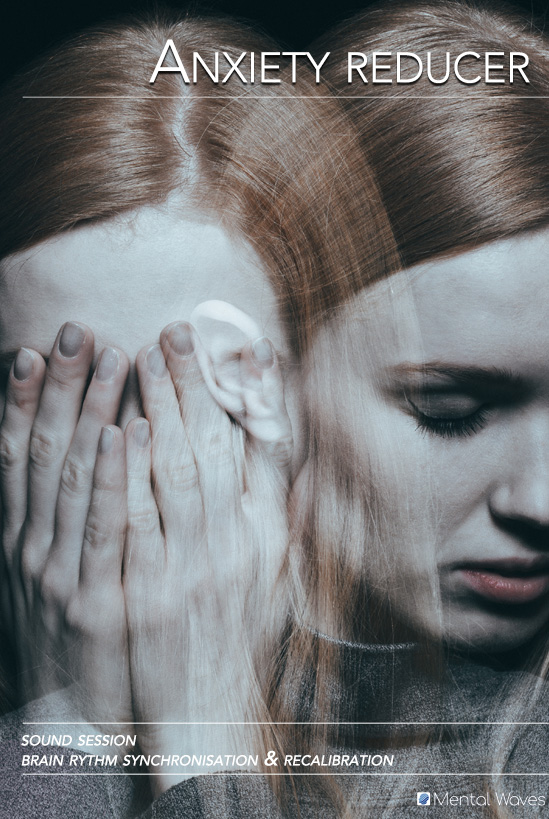
Anxiety reducer
This session uses Alpha and Beta wave stimulation to relax, alleviate...
View productThat point matters because it suggests that fear is not a fixed state. The brain can, under certain conditions, shift from alarm towards regulation. Oxytocin seems to take part in that transition, which is why researchers are interested in it when trying to understand how intense fear might be reduced, and why this line of work could eventually inform approaches to certain phobias.
- It is produced by the brain.
- It is linked to attachment and social connection.
- It may help inhibit the amygdala’s fear response.
Oxytocin is sometimes presented too simply in popular culture, as though it were merely a “bonding hormone”. In reality, its effects depend on context, brain state and the wider social environment. In fear research, the interest lies less in a sentimental interpretation and more in its possible role as a modulator of neural activity. That is a more rigorous and more useful way to think about it.
If oxytocin does help dampen certain fear responses, this does not mean it erases threat perception altogether. A healthy brain still needs to detect danger accurately. The more plausible interpretation is that oxytocin may contribute to recalibrating the intensity of the response, especially when safety cues or social reassurance are present. In that sense, it may support regulation rather than blunt awareness.
This is also why the findings should be handled with care. A mechanism observed in experimental conditions does not automatically translate into a straightforward treatment. Human fear is shaped by memory, language, expectation, social meaning and conscious anticipation, all of which make it more complex than a laboratory model. Even so, identifying a biological pathway that may soften fear remains scientifically valuable.
What the rat experiment suggests about fear and social support
To explore the role of oxytocin in fear, researchers in Lausanne carried out an experiment on rats. Their aim was to trigger the release of the animals’ own oxytocin and see whether this would reduce fear. To do this, they genetically modified the cells that secrete oxytocin so that they would respond to blue light. The researchers then stimulated those cells with a blue laser, making it easier for the rodents’ brains to release oxytocin. Rats that had been frozen by fear regained their composure within seconds, and the fear response was rapidly interrupted. The experiment therefore suggests that once oxytocin is released, fear can be reduced.
Following this work, the Lausanne team also began testing another idea: whether a frightened rat might cope better when placed alongside a calm animal that has not learned the same fearful reaction. If a similar principle were ever confirmed in humans, it would support a measured but important idea: social support may help us overcome fear, at least in part because it is associated with the release of oxytocin. That does not mean fear disappears automatically, but it does point to a plausible biological link between reassurance, connection and emotional regulation.
The social dimension is especially interesting because it connects laboratory neuroscience with ordinary human experience. Many people know intuitively that fear can change in the presence of a calm, trusted other person. A reassuring voice, steady eye contact or simply not being alone may alter how threatening a situation feels. Research on oxytocin offers one possible pathway through which this effect could be partly mediated, without claiming that social comfort can solve every form of fear.
At the same time, caution is essential when moving from rats to humans. Animal studies are valuable because they allow precise experimental control, but human emotional life is more layered. Our fears are shaped not only by immediate stimuli, but also by autobiographical memory, symbolic meaning, anticipation and self-awareness. For that reason, the rat findings should be seen as informative rather than definitive.
Even so, they support an important principle: fear regulation may be influenced by context, not only by the threatening cue itself. The presence of safety signals, familiar relationships or a calm social environment may change how the brain interprets and manages alarm. This idea is highly relevant to therapeutic settings, where trust, predictability and gradual exposure are often central to helping a person update fearful expectations.
In practical terms, this does not mean that one hormone or one social interaction can simply switch fear off. Rather, it suggests that the brain remains responsive to signals of safety as well as signals of danger. That balance may be one of the keys to understanding why some people recover from frightening experiences more easily than others, and why supportive environments can matter so much in emotional regulation.
Fear, Anxiety and the Need for Safety Cues
Fear and anxiety overlap, but they are not exactly the same experience. Fear often responds to something immediate, while anxiety can remain active when the threat is uncertain, imagined or still being anticipated.
Understanding how the brain manages fear therefore means looking at both the first alarm and the slower signals that tell the body it can begin to stand down.
Related offer
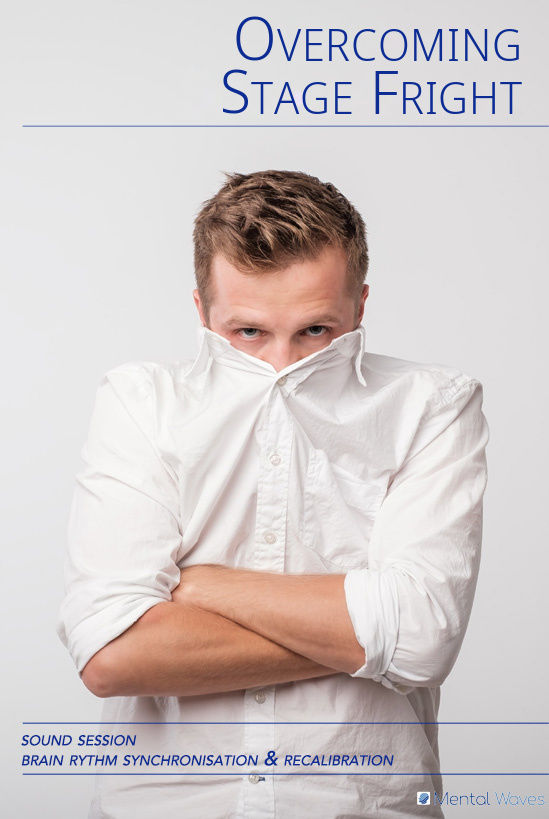
Overcoming stage fright
Session permettant de soulager l'anxiété et la timidité, de mieux réussir à parler en public ou d'animer une…
View productThis distinction helps explain why reassurance alone is not always enough. The body may need repeated safety cues before the alarm system accepts that the situation has changed. These cues can be physical, relational or environmental.
- A slower exhale tells the body that action is not urgent.
- A stable posture gives the brain orientation.
- A safe person can help the nervous system co-regulate.
- A clear next step can reduce helplessness.
The Mental Waves Fear Regulation Framework
The Mental Waves frame is to treat fear as information from the nervous system, not as a personal failure. The question is not how to erase fear, but how to move from alarm to orientation.
- Name: identify that the body is in a fear response.
- Ground: use breath, posture and sensory contact to return to the present.
- Connect: seek safe relational cues when fear is hard to regulate alone.
- Repair: make space afterward for emotion, meaning and recovery.
For a breathing-based support, continue with Cardiac Coherence. For emotional integration, read Making Peace with Emotions.
Editorial note from Mental Waves
This article is educational. Fear, panic, trauma and anxiety disorders can require qualified support, especially when symptoms are intense, persistent or linked to danger.
Conclusion
What emerges here is a more precise view of fear: not as a vague loss of control, but as a dynamic process of brain regulation. Certain structures react rapidly to perceived danger, while cortical networks may then help restore judgement and action. That balance matters, because it reminds us that fear is not simply weakness or irrationality; it is also a protective response that the brain is constantly trying to calibrate.
The work on oxytocin adds an important nuance. It suggests that the fear response may, in some conditions, be softened by internal regulatory systems and perhaps also by social presence, without reducing a complex human experience to a single hormone or a simple switch. In that sense, these findings do not erase the reality of fear, but they do show that the brain may be more adaptable than it first appears. Even in moments of alarm, regulation remains possible.
More broadly, this research encourages a more intelligent understanding of what fear feels like from the inside. The sensation of being overwhelmed may reflect a temporary dominance of fast defensive systems, not the disappearance of reason altogether. As regulatory networks come back online, perception can become less narrowed, thought can become more flexible and action can become more deliberate. That sequence is often deeply human, and often misunderstood.
For anyone interested in phobias, anxiety or emotional resilience, the central message is both modest and hopeful. The brain’s fear systems are powerful, but they are not static. They can learn, adapt and, under the right conditions, be guided towards greater regulation. That does not make fear trivial. It simply means that the nervous system contains more possibilities for recovery than the first moment of panic might suggest.
{
"@context": "https://schema.org",
"@type": "FAQPage",
"mainEntity": [
{
"@type": "Question",
"name": "Which brain areas are involved in fear?",
"acceptedAnswer": {
"@type": "Answer",
"text": "The amygdala and related circuits help detect threat and organise the first alarm response."
}
},
{
"@type": "Question",
"name": "Why can fear make someone freeze?",
"acceptedAnswer": {
"@type": "Answer",
"text": "Freezing can happen when the alarm response overwhelms immediate action and the brain is still assessing danger."
}
},
{
"@type": "Question",
"name": "How does the brain regain control?",
"acceptedAnswer": {
"@type": "Answer",
"text": "Control returns as safety signals, context and regulation systems become stronger than the first alarm."
}
},
{
"@type": "Question",
"name": "What role may oxytocin play?",
"acceptedAnswer": {
"@type": "Answer",
"text": "Oxytocin is linked with social bonding and may help soften fear responses in certain contexts."
}
},
{
"@type": "Question",
"name": "What did the animal research suggest?",
"acceptedAnswer": {
"@type": "Answer",
"text": "It suggested that social and biological signals can influence how fear is regulated, but human conclusions need caution."
}
},
{
"@type": "Question",
"name": "Can social support help fear?",
"acceptedAnswer": {
"@type": "Answer",
"text": "Yes. Safe connection can give the nervous system cues that reduce isolation and support regulation."
}
},
{
"@type": "Question",
"name": "Does regulation erase fear?",
"acceptedAnswer": {
"@type": "Answer",
"text": "No. Regulation helps fear become more manageable; it does not mean fear disappears forever."
}
},
{
"@type": "Question",
"name": "What simple practice may help?",
"acceptedAnswer": {
"@type": "Answer",
"text": "Slow breathing, naming the feeling and orienting to the room can help the body return to the present."
}
},
{
"@type": "Question",
"name": "What is the main takeaway?",
"acceptedAnswer": {
"@type": "Answer",
"text": "Fear is a protective alarm that can be regulated through safety, connection, breath and careful understanding."
}
}
]
}
Frequently Asked Questions About How the Brain Manages Fear
Which brain areas are involved in fear?
The amygdala and related circuits help detect threat and organise the first alarm response.
Why can fear make someone freeze?
Freezing can happen when the alarm response overwhelms immediate action and the brain is still assessing danger.
How does the brain regain control?
Control returns as safety signals, context and regulation systems become stronger than the first alarm.
What role may oxytocin play?
Oxytocin is linked with social bonding and may help soften fear responses in certain contexts.
What did the animal research suggest?
It suggested that social and biological signals can influence how fear is regulated, but human conclusions need caution.
Can social support help fear?
Yes. Safe connection can give the nervous system cues that reduce isolation and support regulation.
Does regulation erase fear?
No. Regulation helps fear become more manageable; it does not mean fear disappears forever.
What simple practice may help?
Slow breathing, naming the feeling and orienting to the room can help the body return to the present.
What is the main takeaway?
Fear is a protective alarm that can be regulated through safety, connection, breath and careful understanding.