en
enVotre panier est vide.



At a time of technological upheaval and shifting values, returning to what is essential feels less like a luxury than a necessity on the path to self-fulfilment. Knowledge may belong to truth, even if no one can ever claim to possess truth in full. That is precisely why it must still be passed on: to resist the dangerous pull of herd thinking, and the forms of manipulation, mystification and disinformation so often shaped by political, military, religious, commercial or advertising interests. When appearances are constantly managed for us, consciousness becomes a form of resistance. Without it, access to the deeper, less visible dimensions of human experience is easily obscured.
There is also something quietly corrosive about a culture that trains people to react before they have truly perceived. We are encouraged to consume opinions, identities and fears at speed, as though inner life were an inconvenience. Yet the human being does not deepen through acceleration. Discernment needs silence, distance and a willingness to question what is presented as obvious. That is often where awakening begins: not in grand revelation, but in the sober refusal to let one’s mind be entirely furnished by others.
Yet beyond everything that can be measured, analysed and dissected, the text points towards another side of reality: the realm of spirit, intuition and inner awareness. The “awakeners of consciousness” — whether artists, philosophers, martial arts masters, writers or spiritual guides — do not hand over ready-made certainties. They invite us to look inward, to know ourselves more honestly, and through that effort to understand the world with greater depth. There is humility in that journey, echoed in the thought that the more one seeks, the more one realises how little one truly knows.
In short: what are awakeners of consciousness?
Awakeners of consciousness are people, ideas or experiences that help us see more clearly, live with more humility and return to what feels essential. The article frames awakening as discernment rather than superiority.
- They invite lucidity instead of automatic opinion.
- They question appearances without rejecting the world.
- They ask technology to be guided by inner maturity.
- They bring attention back to being, not only seeming.
For a practical inner practice, read Creative Visualization. For a contemplative sound cue, receive the free Sacred Frequency Session.
It is this movement from seeming to being, from the visible surface to what Japanese masters call ura, that opens the way to a fuller, more grounded human potential.
What such figures awaken is not blind belief, but a finer quality of attention. They remind us that intuition is not the enemy of intelligence, and that inner experience, when tested by honesty and patience, can become a serious source of orientation. In that sense, awakening consciousness is less about escaping the world than about inhabiting it more truthfully.
Why Returning to What Matters Has Never Been More Urgent
Truth, humility and the inner work of awakening
At a time of technological upheaval and shifting values, returning to what is essential feels less like a luxury and more like a necessity on the path of self-fulfilment. Knowledge belongs to truth, even if no one can claim to possess truth in its entirety; after all, even a stopped clock is right twice a day. Yet truth still has to be passed on, especially when society drifts towards gregariousness and what might be called social “sheep-like” conformity, so often encouraged for political, military, religious, advertising or commercial ends.
Mystification, manipulation, lies and disinformation do more than confuse public debate: they also block access to the hidden passages of the mind and to that invisible side of life where the teachings of great Masters, skilled craftspeople and spiritual guides have long pointed.
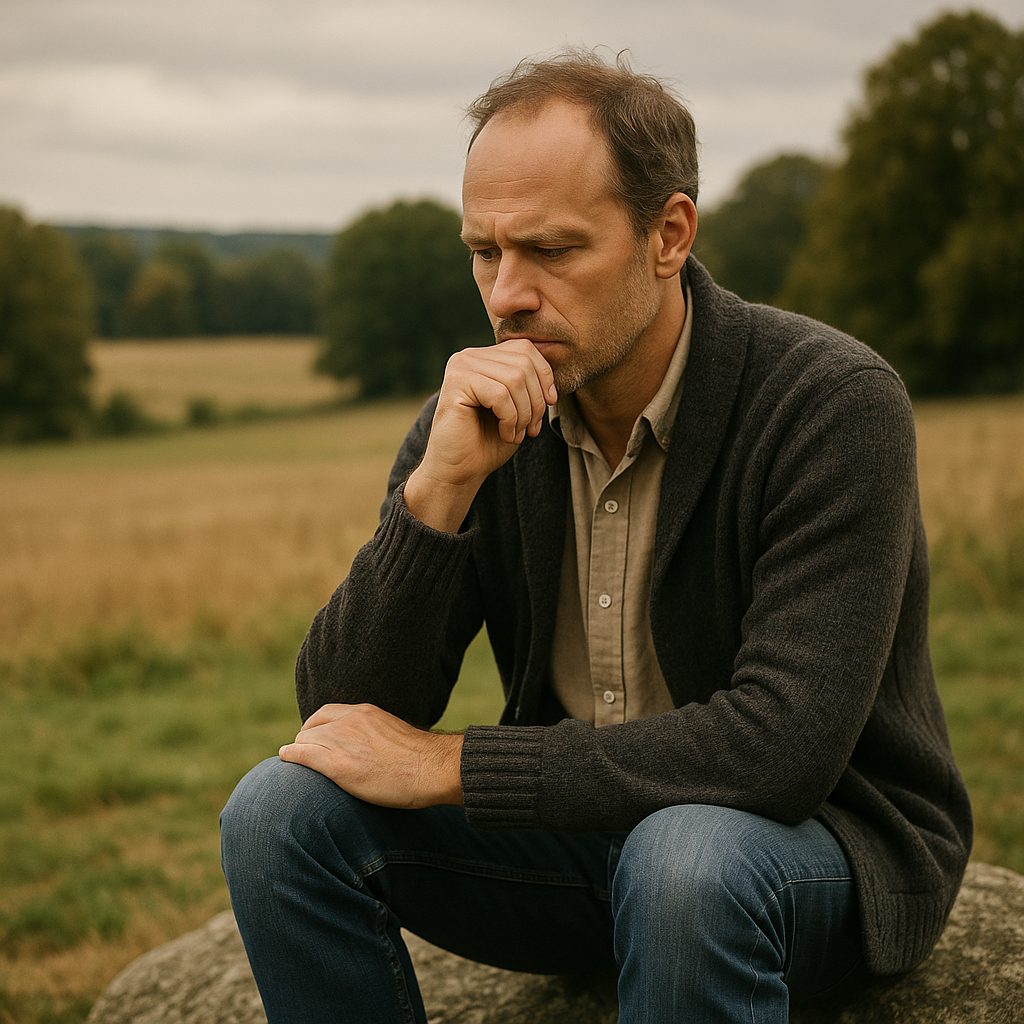
For all our obsession with analysing, measuring and dissecting everything, there remains another, more harmonious realm that cannot be reduced to data alone: the realm of spirit, consciousness and intuition, or felt perception. Each of us must trace our own path if we are to climb the visible side of the pyramid and understand what our life is asking of us. The role of the awakeners of consciousness — musicians, philosophers, martial arts Masters, artists, spiritual guides and writers — is not to think for us, but to help us look within. That inward movement teaches us to know ourselves better, to read the world more clearly and, in time, to pass on what truly matters.
Jean Gabin captured this beautifully in 1974 in his version of “But Now I Know”: “All my youth, I wanted to say I KNOW… the more I searched, the less I knew… Now I know, I know that one never knows.” The old Chinese saying carries the same wisdom: we are born gardeners and die apprentice gardeners. To grasp those few words is already to take a first step towards what Japanese Masters call URA, the hidden side, as opposed to OMOTE, the visible one.
Humility, in this sense, is not weakness or vagueness. It is a disciplined way of standing before reality without trying to dominate it prematurely. People who have genuinely matured in any demanding field — art, healing, philosophy, martial practice, craftsmanship — often share this quality. They know that surface confidence can hide inner poverty, while quiet attention can reveal unsuspected depth. That is why the work of awakening consciousness is inseparable from character. It asks not merely what we know, but what in us is capable of receiving truth without distorting it.
- Past Masters offer foundations
- Present-day science brings fresh insight
- The future depends on how we think and act now
Held together, these three movements form a demanding balance. Tradition without present intelligence becomes rigid. Science without memory becomes arrogant. Concern for the future without inner grounding becomes anxious and easily manipulated. The point is not to choose one against the others, but to let them correct and enrich one another.
From seeming to being
So how do we move towards that richer, less visible world? By leaning on the work of the Masters of the past and the scientific research of the present, so that we can think and act with the future in mind. That is the equation proposed here. It is what allows us to leave the shore of appearing and step onto the shore of being, where the human potential so often underestimated can begin to unfold. In martial arts circles, old Masters put it bluntly: Westerners too often “judge the tiger by the colour of its skin while forgetting the importance of the bones”.
In other words, we are easily distracted by surfaces, labels and display, while the deeper structure — character, discipline, consciousness, inner truth — is what really gives strength.
This movement from seeming to being is rarely dramatic. More often, it is made of repeated corrections: noticing where one performs instead of lives, where one imitates instead of understands, where one seeks approval instead of alignment. The visible world rewards display very quickly; being asks for slower work. It asks for coherence between speech and action, between values and habits, between what one shows and what one actually serves when no one is watching.
This is precisely why awakening consciousness matters. We are living through a period of profound mutation, and the rapid spread of automation is only one example of what is at stake. The DARPA develops warrior robots for the American army. In Japan, an artificial intelligence has even stood in municipal elections — yes, a machine. In the United States, the Food and Drug Administration has authorised, for the first time, an AI system to make a diagnosis without a doctor supervising it. In China, an AI specialist reportedly married his humanoid robot, while machines there now teach Tai chi chuan, as if science fiction had quietly merged with reality.
Meanwhile, a French inventor has created “a robot that repairs itself like an injured animal”. Faced with such developments, figures such as Bill Gates, the late Stephen Hawking and Elon Musk have all called for responsible oversight, with Musk warning that artificial intelligence represents “a fundamental, existential risk for humanity”. Are such voices whistleblowers or awakeners of consciousness? The line is thin. A whistleblower alerts us to a serious malfunction when normal channels fail; an awakener, more like a master craftsperson, shares knowledge in a way that helps us reveal ourselves to ourselves.
What unsettles many people is not technology alone, but the possibility that our inner development may lag dangerously behind our technical power. We can now build systems of astonishing complexity while remaining confused about what a human being is for, what dignity requires, or what should never be delegated. That gap is not merely philosophical. It shapes education, medicine, politics, work and even intimacy. If consciousness does not mature alongside innovation, efficiency may end up replacing wisdom as the highest value.
Why Awakening Consciousness Matters in the Age of Artificial Intelligence
When technological progress outpaces inner discernment
We are living through a period of upheaval on every level, and the unchecked rise of automation offers a striking example of what is at stake. DARPA is developing combat robots for the American army. In Japan, an artificial intelligence system has even stood in municipal elections — yes, a machine. In the United States, the Food and Drug Administration has reportedly authorised, for the first time, an AI to make a diagnosis without a doctor’s supervision. In China, an AI specialist is said to have married his humanoid robot, while machines there now teach Tai chi chuan, as though science fiction had quietly stepped into ordinary life.
Elsewhere, a French inventor has created a robot capable of repairing itself like an injured animal. Faced with such developments, many well-known figures have called for responsible oversight, among them Bill Gates, the late Stephen Hawking and Elon Musk, who warned that artificial intelligence represents “a fundamental existential risk for humanity”.
Related offer
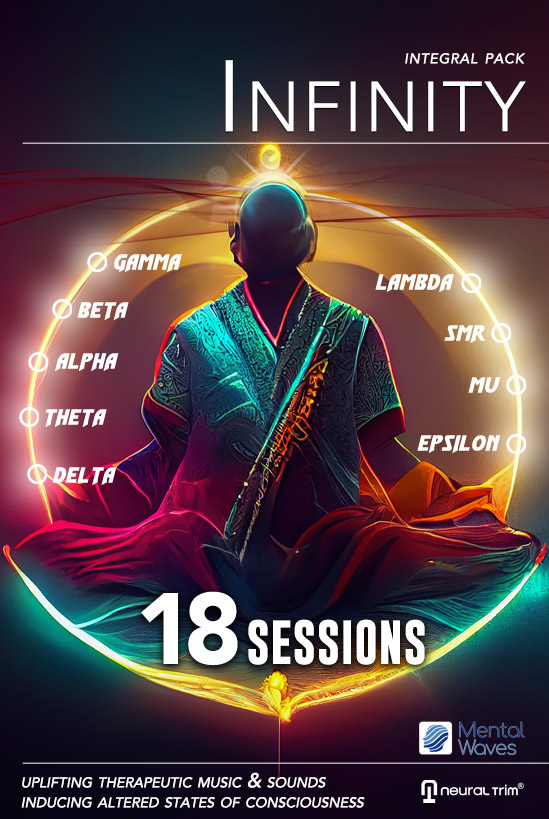
18 States of Consciousness - Integral Infinity Pack
Integral Infinity - The 18 States of Consciousness A unique sound box designed to explore all the...
View product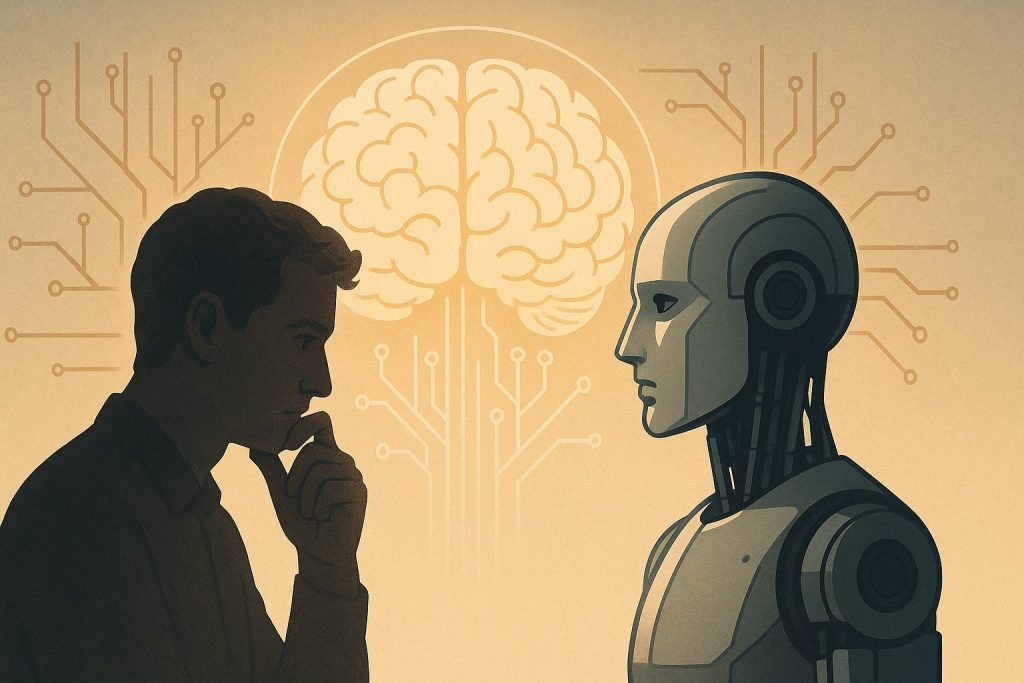
These examples can sound sensational, yet their deeper significance lies elsewhere. They reveal how quickly the boundaries of the imaginable are shifting. What yesterday seemed absurd, symbolic or purely speculative can become normalised with startling speed. Once that happens, societies often adapt outwardly before they have reflected inwardly. We learn how to use a tool long before we have asked what kind of life its widespread use will quietly produce.
So who brings us such warnings: a whistleblower or an awakener of consciousness? The line between the two is thin. A whistleblower is the one who notices a serious malfunction and realises that the usual channels for exposing it no longer work. An awakener of consciousness goes further. Like a master craftsman passing on a living tradition, they share what they know in order to help others reveal themselves to themselves. That is why their role matters so much. While they call us back to what is essential, other so-called experts — sometimes, knowingly or not, relaying misinformation — still labour to prove that truth itself is mistaken. In such a climate, awakening consciousness is not a luxury.
It is a form of inner vigilance.
Inner vigilance does not mean permanent suspicion or theatrical alarm. It means learning to recognise when fascination is clouding judgement, when convenience is replacing responsibility, and when novelty is being mistaken for progress. A mature consciousness does not reject invention; it asks better questions of it. Who benefits? What is weakened? What becomes easier, and what becomes harder to preserve? Those are not secondary questions. They are the beginning of wisdom in a technological age.
- Technological power is accelerating.
- Ethical reflection is struggling to keep pace.
- Without discernment, progress can become disorientation.
That final point deserves to be taken seriously. Disorientation is not always dramatic. Sometimes it appears as fatigue, passivity, dependence on systems one no longer understands, or the gradual loss of confidence in one’s own perception. A society can become highly advanced and inwardly fragile at the same time. That is one reason the work of awakening consciousness remains so relevant: it restores an inner axis where external change is relentless.
Why returning to what restores us is an act of lucidity
That is where the deeper paradox appears. Is it not absurd to play an active part in our own illnesses, yet remain mere spectators when it comes to healing? Is it not incoherent to cultivate our disorders and ask others to remove them, when so many paths already point us towards a better way of living? Science has its place, as do conventional, traditional and ethnic medicines. So do sound-based approaches such as therapeutic music, and energetic arts such as tai chi chuan, Qigong and yoga. The awakeners of consciousness do not ask us to reject knowledge; they ask us to stop living at a distance from ourselves.
Their message is simple, but demanding: return to what is essential, and take part in your own transformation.
There is a quiet dignity in that invitation. It does not promise instant solutions or easy transcendence. It asks for participation. To sleep better, breathe more deeply, move with awareness, eat with some intelligence, listen to the body before it has to shout, and cultivate forms of attention that restore rather than scatter us — these are modest acts, but they are not trivial. They mark the difference between living as a passive consumer of remedies and living as someone who gradually becomes answerable for their own balance.
The same tension appears at the level of society. Consider the countries often ranked among the best places to live — Denmark, Sweden and Norway — which have also been cited, including in a Forbes study, among those with the highest suicide rates. This so-called Scandinavian paradox has been linked by some to the Law of Jante, a cultural code of conduct meant to regulate behaviour and, in theory, support social balance. Yet if such a code is applied too unconsciously, might it work against the natural law of individuality and personal development? Might it trap people in the mould of social conformism — this “sheep-like” mentality — and prevent them from surpassing themselves or offering the best of who they are?
These are not marginal questions. They are part of a real debate raised by awakeners of consciousness, and they remind us that common sense often intuits what experience later confirms. As Napoleon Bonaparte observed, “From spirit to common sense is farther than one thinks.”
Every society, however refined it may appear, carries its own forms of pressure, silence and invisible obedience. Material comfort does not automatically produce inner freedom. Social order does not ensure meaning. One can live in a country admired by the world and still feel inwardly exiled from oneself. That is why the call to awaken consciousness cannot be reduced to private wellbeing alone. It also concerns the subtle ways a culture rewards conformity, punishes singularity, and teaches people to mistrust the very depth that could make them fully alive.
How to Recognise a Real Awakening Signal
A useful awakener of consciousness does not flatter the ego. It does not simply make a person feel special or different from others. It usually asks for more honesty, more responsibility and a quieter relationship with truth.
Related offer
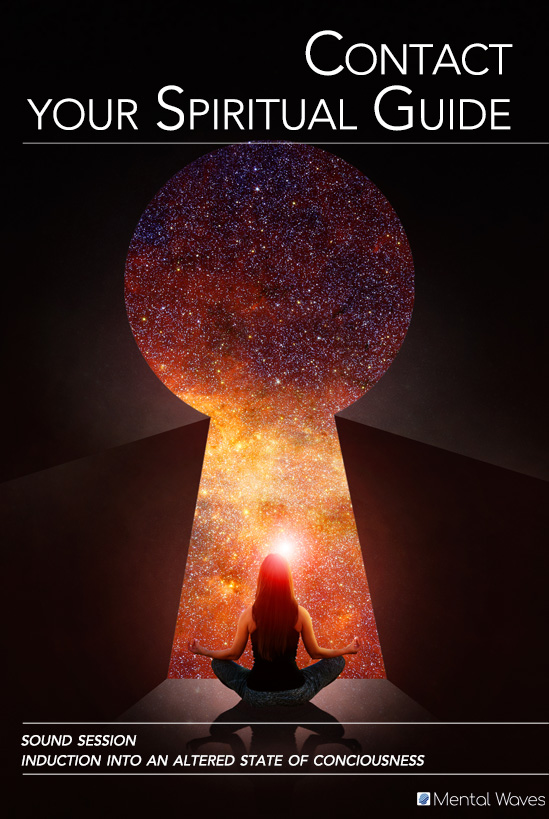
Contact your Spiritual Guide
Brain training program to enable you to contact your spirit guide... The spirit guide is a disembodied entity...
View productThat distinction matters because the language of awakening can easily become decorative. A real signal tends to simplify rather than inflate. It brings the person back to what they can actually see, change, forgive or practise.
- It increases humility rather than superiority.
- It clarifies action rather than multiplying vague ideas.
- It makes the body feel more present, not more dissociated.
- It can be tested in ordinary relationships and choices.
In that sense, awakening is not escape from daily life. It is the ability to meet daily life with a little more presence, truth and discernment than before.
The Mental Waves Discernment Framework
The Mental Waves frame is to make awakening practical. A clearer consciousness is not a posture; it is a way of meeting information, emotion and change without losing the inner axis.
- Notice: observe the impulse to react, display or judge.
- Question: ask whether a belief brings clarity or confusion.
- Listen inwardly: include the body, the subconscious and intuition without abandoning reason.
- Act simply: return to one concrete choice that is more aligned.
For a deeper sound-based reflection, continue with Sound, Frequency and Vibration. For the hidden layers of perception, read Our Subconscious.
Editorial note from Mental Waves
This article is reflective and philosophical. Awakening consciousness should not become a claim of superiority, a rejection of science or a promise of instant transformation.
Conclusion
What emerges here is not a rejection of science, progress or modern life, but a call for discernment. The article holds two truths together: we need knowledge, and we also need the humility to admit that no one possesses truth in full. That is precisely where the “awakener of consciousness” matters — not as a guru above others, but as someone who helps us look more honestly at ourselves, question the forces that shape us, and move, little by little, from appearance towards being.
Set against technological acceleration, social conformity and the noise of manipulation, that inner work becomes less of a luxury and more of a necessity. The deeper point is subtle: awakening consciousness is not about withdrawing from the world, but about meeting it with clearer judgement, steadier intuition and a stronger sense of what should not be surrendered. If this first part leaves us with anything, it is the sense that real progress begins where borrowed certainties end.
Perhaps that is the most demanding lesson of all. To awaken consciousness is not to become superior to others, but less easily deceived by oneself. It is to recover an inner measure in a time that constantly pushes towards excess, imitation and noise. The path is neither fashionable nor comfortable, yet it remains one of the few that can reconcile lucidity with humanity. And that, in unsettled times, is no small thing.
Frequently Asked Questions About Awakeners of Consciousness
What are awakeners of consciousness?
They are people, ideas or events that invite clearer awareness, deeper discernment and a return to what feels essential.
Does awakening mean superiority?
No. In this article, awakening is linked with humility, lucidity and responsibility rather than status.
Why is technology mentioned?
Technology can advance faster than inner maturity, making discernment and ethical awareness more important.
What is the difference between seeming and being?
Seeming is the image we project; being is the quieter alignment between values, attention and action.
How does inner work fit?
Inner work helps a person notice reactions, question illusions and act from a more grounded place.
Why mention the subconscious?
The subconscious influences perception and behaviour, so awakening also means listening to hidden patterns carefully.
Is this a religious article?
No. It is a philosophical and reflective article about clarity, humility and conscious living.
How can someone practise this simply?
Pause before reacting, question appearances, listen inwardly and choose one more honest action.
What is the main takeaway?
Awakeners of consciousness remind us that progress needs inner clarity, not only knowledge, speed or technology.