en
enVotre panier est vide.


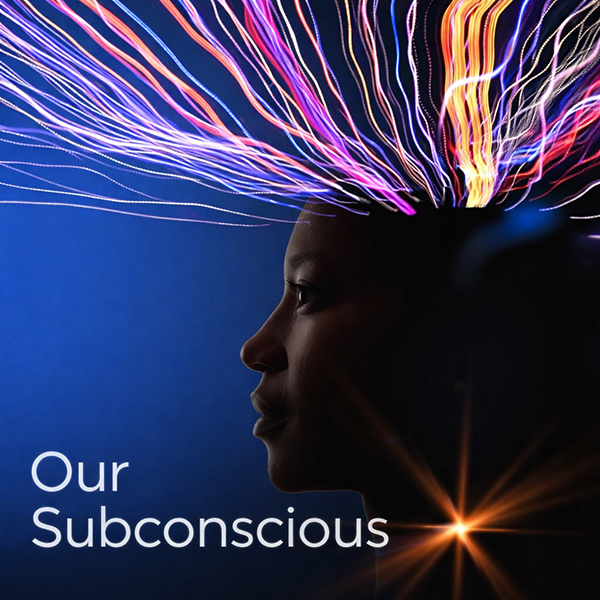
From William James onwards, some of the most influential voices in psychology have returned to the same unsettling and hopeful idea: that our inner life is not fixed, and that by learning to guide our thoughts we may also reshape the course of our existence. Yet the subconscious still resists easy explanation. It sits just beyond immediate awareness, holding instinct, memory, sensation and buried patterns of response, while the brain itself remains, in many respects, one of the least fully understood territories we inhabit.
That tension between mystery and possibility runs through every serious attempt to speak about the subconscious. Researchers continue to probe the mechanics of thought, memory and mental resilience; writers such as Dr Joseph Murphy have argued that a change in thinking can unlock confidence, steadier relationships and a deeper sense of wellbeing; and other perspectives, from psychoanalysis to more contested theories, suggest that much of what shapes us lies outside conscious control. What emerges is not a single master key, but the sense that access to this deeper layer of mind may come through disciplined inner work, introspection and practices that quieten the surface of thought enough for something more instinctive, and perhaps more truthful, to be heard.
In short: what is our subconscious?
Our subconscious can be understood as the layer of mental life that influences habits, associations, emotional reactions and automatic responses outside full conscious control. It is not a magic switch, but it can be explored through attention, reflection and repeated practice.
- It may shape reactions before we can explain them.
- It is linked with memory, habit and emotional association.
- Inner work needs patience rather than dramatic promises.
- Music, meditation and journaling can support self-observation.
For a research-oriented companion article, read Scientific Research on the Subconscious. For a free contemplative sound cue, receive the Sacred Frequency Session.
Unlocking the hidden power of the subconscious
A hidden force that still resists easy explanation
Dr William James, often regarded as one of the fathers of modern psychology, was among the first scientists to insist that every human being could move towards inner happiness, serenity and a deeper sense of wellbeing. His conviction was strikingly simple: by learning to master our own thoughts, we can begin to direct our lives more consciously. That naturally leads to a more difficult question: is there really a key to the subconscious? And if so, what opens that door? What are the mechanisms that hold our knowledge, our senses, our instincts and the countless impressions that shape how we feel and act?
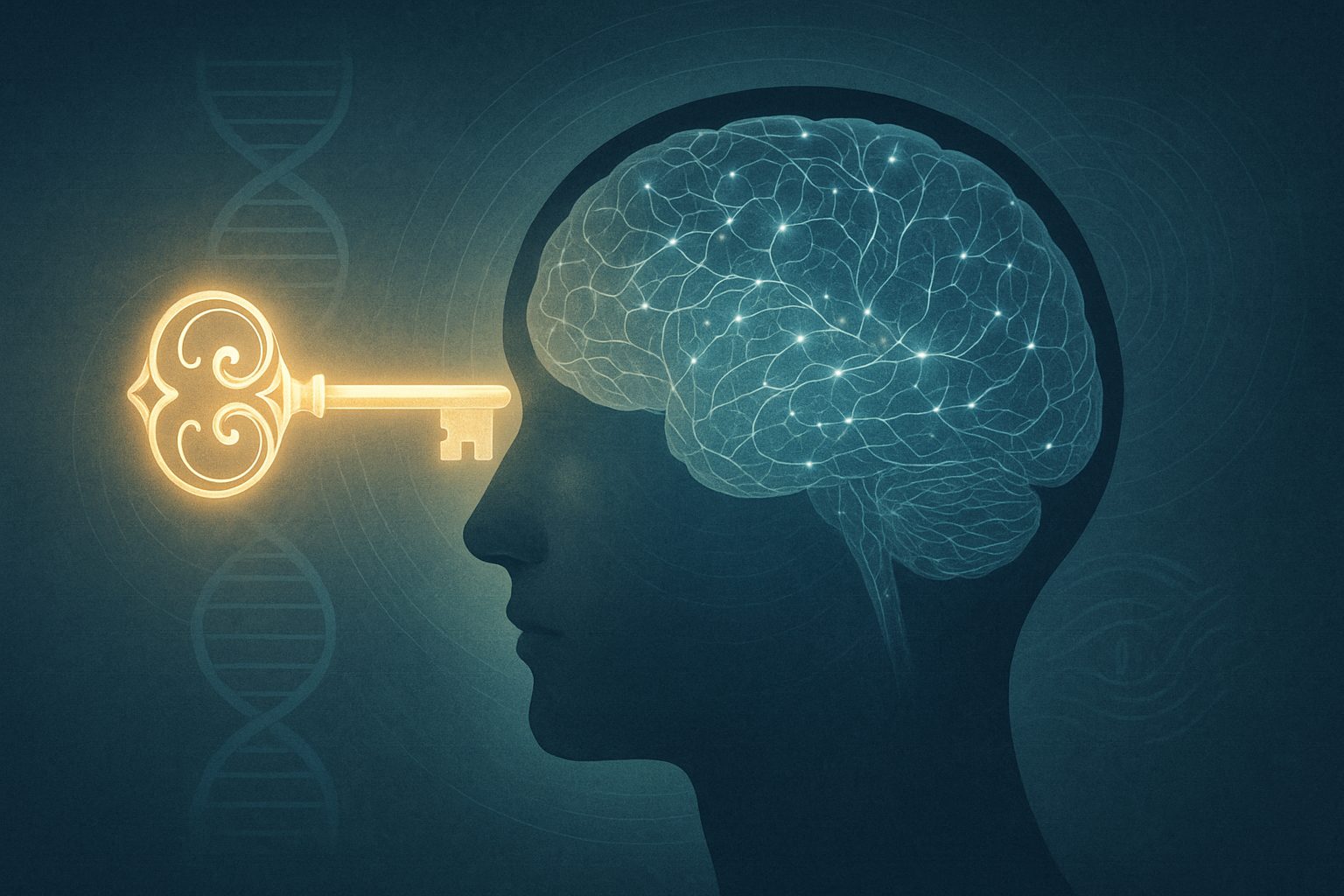
There is something enduringly compelling in that question because most people, if they are honest, have already felt the subconscious at work long before they ever tried to define it. It appears in the sudden unease we cannot quite explain, in the old memory stirred by a smell, in the instinctive trust or distrust that arrives before reason has caught up. We often discover its presence not through theory, but through those small moments in which the mind seems to know more than it can yet say.
Our brain remains, in many ways, an unexplored world. Researchers continue trying to decode the processes behind thought, memory and the dysfunctions linked to many illnesses, while also attempting to understand the deeper workings of mental strength and the hidden layers of the mind. As Morgan Freeman observed in the documentary The Mysteries of the Subconscious from the series Through the Wormhole, the brain is still far from having revealed all its secrets. How do we carry out complex tasks without consciously thinking them through? What exactly is the instinct that seems to guide us?
In The Power of Your Subconscious Mind, Dr Joseph Murphy offers one influential answer: by changing the way we think, we may release extraordinary mental resources, build confidence, improve our relationships, progress professionally and financially, let go of harmful habits, and even support our health and overall wellbeing. In that sense, the dynamics of the mind can become a real stepping stone, helping us move past the subconscious obstacles that stand between us and the success many people long for and feel they deserve.
Even so, it is wise to read such promises with both openness and discernment. The subconscious is not a vending machine for success, nor a magical chamber that yields everything we ask of it on demand. More often, it seems to respond to repetition, emotional tone, attention and habit. What we rehearse inwardly, day after day, can gradually become the atmosphere in which we live. That is precisely why thought matters so much: not because every thought instantly becomes reality, but because repeated inner patterns quietly shape perception, behaviour and choice.
- autosuggestion
- visualisation
- meditation
- music and movement practices such as Qigong, yoga and tai chi
These practices are often spoken of as gateways because they soften the dominance of surface-level mental chatter. They do not all work in the same way, and they do not suit everyone equally, but they share a common effect: they create conditions in which deeper material can rise without being immediately drowned out by noise, haste or self-defence. For some, that opening comes through stillness; for others, through rhythm, breath, posture or sound.
Between theory, intuition and inner work
In psychology, the subconscious is often described as the set of unconscious phenomena that exist at the edge of awareness. Even here, caution is needed: much remains hypothetical. Some theories suggest a link between the subconscious and the brain’s right hemisphere, while conscious reasoning is more often associated with the left. In psychoanalytic terms, as noted by the site inexplique-endebat.com, the subconscious includes everything outside immediate awareness: the forgotten material that tends to return to consciousness and can influence human behaviour. Other, more controversial hypotheses go further.
Rupert Sheldrake, for example, drawing on work touching on development, animal and plant behaviour, metaphysics, telepathy and extrasensory perception, proposed that the brain may function like an antenna, receiving information from an external vital field, much as a television receives and decodes signals into sound and images. He even suggested a natural field, perhaps close to a collective unconscious, containing information from all living organisms. Hypnosis experiments, in this view, hint at a kind of information bank accessible in principle through the subconscious. Whether that idea proves valid or not, it remains one of the more provocative attempts to explain how we navigate reality.
What makes this territory so difficult is that the subconscious sits at the meeting point of several languages at once. Science tries to measure it, psychoanalysis tries to interpret it, contemplative traditions try to experience it directly, and ordinary life keeps reminding us of it in ways that are often intimate rather than dramatic. A dream that lingers all morning, a repeated pattern in relationships, a fear that seems older than the present moment: these are not proofs in a laboratory sense, but they are part of the texture of lived experience.
While science continues to test, question and refine such ideas, older traditions have long approached the subconscious through symbol, introspection and disciplined practice. Jean De La Bosschère wrote that in the subconscious of the ancients, where myths were born, plants and flowers could be seen as no more than the outward appearance the gods chose to reveal. Chinese masters, in a more practical register, taught their students to work by “peeling the onion”: layer by layer, patiently, honestly. That image still speaks powerfully today. To reach the deeper mind, one must often accept a process of introspection, and even learn to unlearn.
This is how buried stress patterns and negative emotional imprints may begin to loosen their hold, allowing more space for what is constructive, calming and life-giving. As confidence grows, tensions and conflicts may ease, and a person may feel more able to take initiative in both personal and professional life. If instinct is the intelligence of the subconscious, then music, as Louis Geoffroy suggested, may well be one of its truest languages. But whatever path you choose, one principle remains essential: you must stay the master on board, the one who recognises your own physical and psychological blocks, and the one who conducts the score of your life through the mastery of your own thoughts.
That, perhaps, is where the real key lies.
There is a quiet maturity in that image of peeling the onion. It suggests that self-knowledge is rarely sudden. We do not usually arrive at the deeper layers of mind through force, but through patience, honesty and a willingness to sit with what first feels uncomfortable. Sometimes the subconscious protects us by hiding what we are not yet ready to face. At other times, it keeps repeating a lesson until we are finally willing to hear it.
Finding your own way into the subconscious
The practices often seen as gateways
Dr Joseph Murphy offers one of the most influential popular answers in The Power of Your Subconscious Mind. His central idea is simple: when you change the way you think, you may begin to unlock the mind’s hidden resources. In his view, this inner shift can strengthen self-confidence, improve relationships, support professional and financial success, help loosen harmful habits and even contribute to better health and wellbeing. Put more plainly, the mind’s inner dynamics can become a stepping stone, helping us move past the subconscious obstacles that stand between us and the kind of success many people hope for.
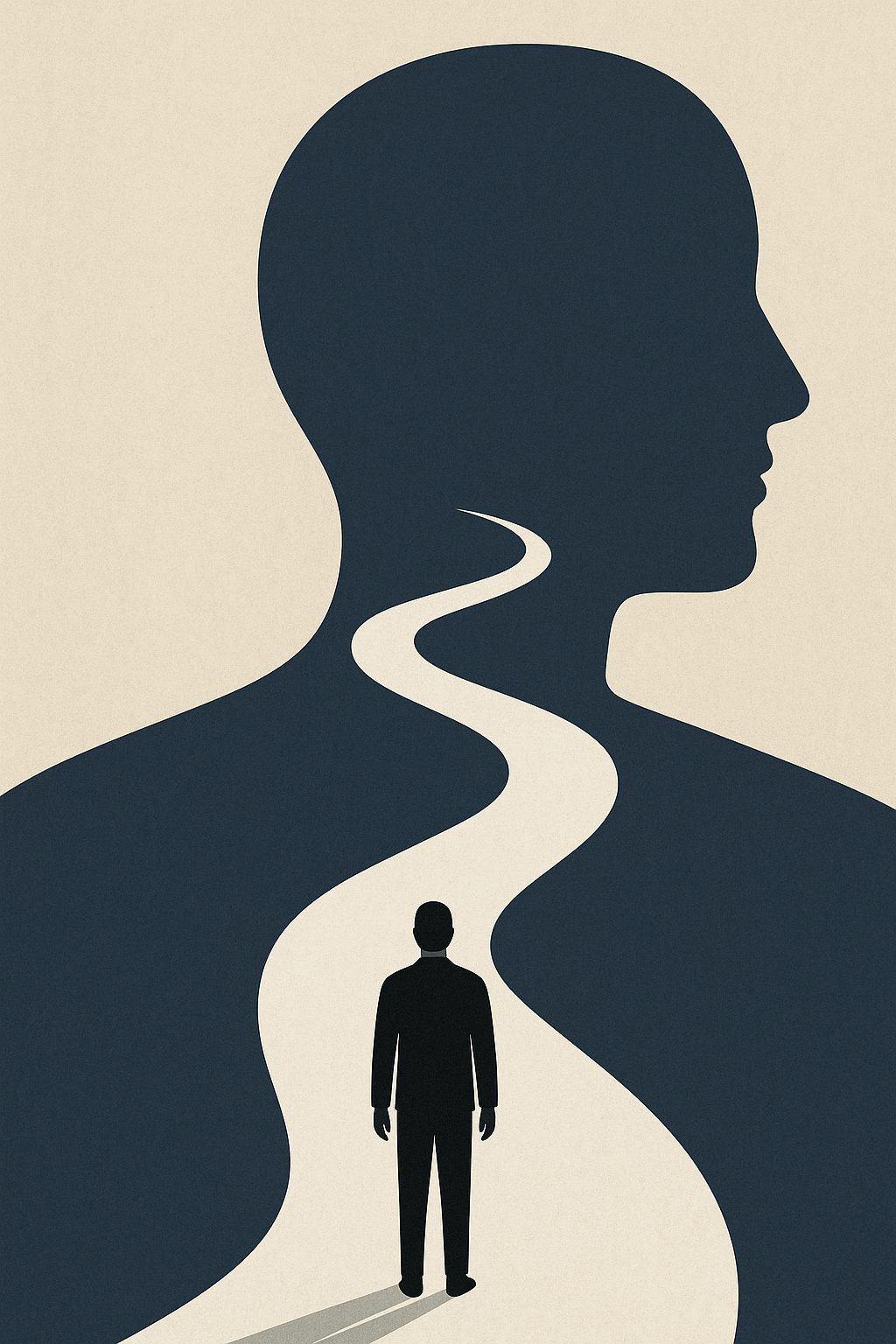
Part of the appeal of Murphy’s approach is that it speaks to something many people recognise from experience: the mind is suggestible. It absorbs tone, repetition and expectation. If a person spends years inwardly rehearsing failure, humiliation or fear, those patterns can become strangely familiar, even when they are painful. By contrast, a more constructive inner dialogue can begin to alter posture, confidence and behaviour in ways that are subtle at first, then cumulative. The shift may not be spectacular, but it can be real.
Is autosuggestion the key that opens that inner door? Perhaps in part, but the text also suggests that there is no single route. For many people, access to the subconscious seems to come through a range of practices that quieten the surface mind and make deeper patterns easier to sense. Among the most often cited are music, Qigong, yoga, tai chi, meditation and visualisation. Each, in its own way, can create a state of attention in which what first feels inaccessible becomes a little more available, a little less mysterious.
Meditation, for instance, can reveal how restless the conscious mind really is, and how much of our inner life runs on repetition. Visualisation can give form to intentions that otherwise remain vague. Music can bypass argument altogether and reach feeling directly. Movement practices such as tai chi, yoga and Qigong often help people notice that the subconscious is not only mental in the narrow sense; it is also carried in the body, in tension, breath, posture and reflex. Sometimes what has not been spoken is still being held physically.
- Autosuggestion
- Meditation and visualisation
- Music, Qigong, yoga and tai chi
What matters is less the prestige of the method than the quality of attention brought to it. A practice becomes meaningful when it is done with consistency and sincerity, not merely as another technique to consume. The subconscious tends to reveal itself gradually. It responds less to impatience than to steadiness.
Inner work, discernment and personal responsibility
That said, the subconscious remains difficult to define with certainty. In psychology, it is often described as the set of unconscious phenomena that exist on the margins of conscious awareness. Some theories suggest a link between the subconscious and the brain’s right hemisphere, while conscious thought is associated with the left, though such conclusions are usually presented with caution. In psychoanalytic terms, as noted by the site inexplique-endebat.com, the subconscious includes what lies outside immediate awareness: the forgotten material that tends to return to consciousness and can influence human behaviour. Other, more controversial hypotheses go further.
Rupert Sheldrake, for example, has proposed that the brain may function like an antenna, receiving information from an external vital field, even a form of collective unconscious. Drawing on research into development, animal and plant behaviour, metaphysics, telepathy and extrasensory perception, he suggests that hypnosis experiments hint at a kind of information bank accessible in principle through the subconscious. Whether or not the future confirms such ideas, they reflect the same enduring intuition: that the mind may be connected to more than we consciously grasp.
Still, discernment matters. The fact that the subconscious is elusive does not mean every claim made in its name is equally sound. It is easy to project fantasies onto what we do not yet understand. A mature approach keeps room for wonder without abandoning judgement. It allows for mystery, but not gullibility. That balance is especially important when people are vulnerable, searching for relief, meaning or change.
In the meantime, the more grounded path remains introspection. Jean De La Bosschère wrote that in the subconscious of the ancients, where myths were born, plants and flowers were seen as more than mere appearances. In a different register, Chinese masters taught their students to work by “peeling the onion” layer by layer. The image is apt. To approach the subconscious, one must be willing to look inward, to learn and also to unlearn. This inner work may help defuse old stress-laden memories, redirect attention towards what is positive in life and restore a better sense of self. It can also encourage greater initiative, both personal and professional, while easing tension and conflict.
Yet one warning matters above all: to keep the conscious and subconscious in balance, you must remain the only true master on board, the one able to recognise your own physical and psychological blocks, the one conducting the score of your life through the mastery of your own thoughts. If instinct is the intelligence of the subconscious, then, as Louis Geoffroy suggested, music may well be its truest language. And by discovering your own key to that inner world, you may come closer to the deeper form of happiness to which every human being aspires.
That responsibility is not a burden in the harsh sense; it is a form of dignity. However powerful the subconscious may be, it is still part of your life, not a force that excuses you from it. To listen inwardly is not to surrender judgement, but to refine it. The aim is not to become ruled by hidden impulses, but to know them well enough that they no longer rule from the shadows.
Five Ways the Subconscious May Shape Daily Life
It is useful to approach the subconscious through ordinary examples rather than grand claims. Much of its influence appears in small, repeated patterns.
- Habits: repeated actions can become automatic before we consciously choose them.
- Emotion: old associations can color a situation before analysis begins.
- Attention: the mind often selects what feels familiar, threatening or rewarding.
- Body response: tension, avoidance or ease can appear before clear thought.
- Inner language: repeated self-talk can shape expectation and motivation.
The point is not to blame everything on the subconscious. It is to create enough awareness to notice patterns earlier and respond with more freedom.
The Mental Waves Subconscious Awareness Framework
The Mental Waves frame is to explore the subconscious through calm attention, sound, repetition and grounded reflection.
- Notice: identify a recurring reaction without judging it immediately.
- Name: describe the feeling, image, memory or belief that appears.
- Listen: use silence, breath or sound to observe the pattern more gently.
- Reframe: choose one small response that supports the direction you want.
For brain and meditation context, continue with Meditation and the Brain. For EEG background, read Brainwave Frequencies and Meditation.
Editorial note from Mental Waves
This article is educational. Subconscious exploration can support reflection, but trauma, severe distress, compulsive patterns or mental health concerns deserve qualified professional support.
Conclusion
What emerges, in the end, is not a neat formula but a more demanding truth: the subconscious seems to sit somewhere between what science can cautiously describe, what experience can genuinely reveal, and what still escapes us. That is precisely why it deserves both curiosity and restraint. There may be no single key, only a gradual deepening of attention through thought, practice, introspection and the quiet discipline of learning to notice what moves beneath the surface.
The article’s deeper point is less about mastering a hidden power than about entering into a more honest relationship with oneself. Whether that path runs through meditation, movement, music, visualisation or simple inner observation, the essential thing is to remain lucid, grounded and personally responsible. The subconscious may influence us in ways we do not fully grasp, but it does not absolve us of the task of steering our own lives. Sometimes the most meaningful discoveries begin there.
Perhaps that is the most useful way to hold the subject: neither reducing it to a slogan nor inflating it into myth. The subconscious is powerful partly because it is woven into ordinary life. It shapes habits, colours perception, stores emotional residue and sometimes offers intuitions before the conscious mind has found its words. To approach it well is not to chase the extraordinary at all costs, but to become more attentive to what has quietly been shaping us all along.
Frequently Asked Questions About Our Subconscious
What is our subconscious?
It is the layer of mental life associated with habits, associations, emotional reactions and automatic responses outside full conscious control.
Does the subconscious control everything?
No. It may influence patterns, but conscious choice, environment, support and practice also matter.
How does the subconscious shape habits?
Repeated actions and associations can become automatic, making them easier to repeat without deliberate thought.
Can meditation help explore the subconscious?
Meditation can create enough quiet attention to notice reactions, images and patterns more clearly.
Can music affect the subconscious?
Music can evoke memory, emotion and body response, which may make inner patterns easier to observe.
Is the subconscious a scientific concept?
Different fields define unconscious and subconscious processes differently, so careful language matters.
How can someone start subconscious work?
Start by noticing one recurring pattern, naming it simply and choosing one small response.
Can subconscious work replace therapy?
No. It can support reflection, but it does not replace qualified mental health care.
What is the main takeaway?
The subconscious is best approached with curiosity, repetition and grounded discernment rather than instant promises.