en
enVotre panier est vide.


Music is never just a sequence of notes. Every pitch is also a vibration, and the way an instrument is tuned can subtly shape how sound is perceived by the ear, the nervous system and the mind. Within that conversation, 432 Hz has come to occupy a distinctive place: for many listeners and musicians, it is associated with a sound that feels gentler, more balanced and closer to a natural sense of resonance than the modern 440 Hz standard.
That appeal sits at the crossroads of history, listening experience and scientific curiosity. Supporters of 432 Hz often describe it as more organic and calming, while researchers and sound practitioners continue to examine how different tunings may influence perception, attention and states of relaxation. Without turning a musical preference into a medical certainty, it is worth looking carefully at why this tuning has inspired such lasting interest, and why it is so often presented as a meaningful alternative to 440 Hz.
In short: what is 432 Hz tuning?
432 Hz tuning means setting the reference pitch A4 to 432 cycles per second instead of the modern 440 Hz standard. The difference is small in measurement, but many listeners describe 432 Hz music as softer, warmer or easier to settle into. That does not make every claim about 432 Hz scientifically settled; it makes the tuning worth exploring with clear ears and realistic expectations.
- 432 Hz is slightly lower than 440 Hz.
- Its appeal is often linked to relaxation, sacred frequency culture and natural proportion.
- The strongest evidence is still mixed, so personal listening should not be turned into universal certainty.
- For a Mental Waves frequency path, explore Sacred Frequency 432 Hz or receive the free Sacred Frequency Session.
The Mental Waves 432 Hz Listening Framework
Use this framework when comparing 432 Hz and 440 Hz. It keeps the experience practical without forcing the conclusion in advance.
- Match the recording: compare the same piece when possible, not two different musical moods.
- Lower expectation: listen before reading claims, so suggestion does not decide the result for you.
- Notice the body: track breath, jaw, shoulders and attention rather than only liking or disliking the sound.
- Repeat on different days: one listening session is a clue, not a conclusion.
- Choose by purpose: use 432 Hz if it supports the state you want to cultivate.
This makes 432 Hz a practical listening experiment rather than a belief test. A useful session can be short: choose one track, sit quietly, listen once without analysis, then note whether the tuning changes softness, focus, breath or emotional texture for you.
Why 432 Hz Is Often Seen as a More Natural Tuning
A frequency many listeners associate with natural balance
One of the main reasons 432 Hz is so highly regarded is that it is often described as being in closer harmony with nature and the human body. Supporters of this tuning point to mathematical proportions found throughout the natural world, including the golden ratio (1.618), which appears in forms ranging from shell spirals to rotating galaxies. Within this view, 432 Hz is not seen simply as a technical setting, but as part of a wider pattern of order, proportion and balance that many people intuitively experience as more coherent.
By contrast, 440 Hz is generally presented as a modern standard adopted for practical reasons, above all to make large-scale instrument tuning easier and more uniform. In the 432 Hz perspective, that standard is considered more arbitrary, whereas 432 Hz is thought to resonate more naturally with the frequencies of the Earth and the body. Some studies and listening reports suggest that music tuned this way may feel gentler on the ear and may support a calmer, more regulated state of attention, with an effect many people describe as soothing, centring and emotionally balanced.
From acoustic perception to the body’s felt response
The appeal of 432 Hz also rests on the idea that sound is never heard only by the ears. Vibrations are experienced through the whole body, shaping perception, mood and mental state. For that reason, advocates argue that a tuning felt to be more aligned with natural resonant patterns may contribute to a more fluid listening experience. Rather than sounding merely lower than 440 Hz, it is often described as rounder, softer and more organic, qualities that can influence how the nervous system responds to music.
This does not mean every claim should be treated as established fact. Still, the enduring interest in 432 Hz reflects a real question: why do some tunings seem to affect us differently? In that context, 432 Hz is often sought not only for its musical colour, but for the sense of ease it may encourage in the body and mind. That combination of acoustic perception, embodied resonance and emotional regulation helps explain why so many listeners regard it as a more natural and harmonious alternative to 440 Hz.
- Often associated with natural proportion and balance
- Perceived by many listeners as gentler and more calming
- Frequently contrasted with the practical standard of 440 Hz
How 432 Hz Can Change the Listening Experience
A sound many listeners describe as calmer and more balanced
When music is played at 432 Hz, many listeners describe a distinct sense of calm, serenity and inner balance. Compared with the modern 440 Hz standard, it is often experienced as softer, rounder and somehow easier to absorb. For some, the difference feels subtle; for others, it seems to reach something deeper in attention and emotion, as though the music settles more naturally into the body. Musicians who choose to tune their instruments this way often say their pieces take on a different quality: richer in tone, fuller in presence and, above all, more harmonious to the ear.
This does not mean every listener will react in exactly the same way, but the recurring reports are striking. In practice, 432 Hz is often sought for moments of relaxation, contemplation or focused listening because it may support a more regulated mental state. Rather than sounding merely lower, it is frequently perceived as more organic and less tense, which helps explain why some people feel more emotionally connected to music tuned in this way.
- greater calm and ease while listening
- a sense of tonal warmth and fullness
- deeper emotional resonance
Why the body’s response is part of the discussion
The idea that 432 Hz feels more “in harmony” with the body is not presented only as a poetic impression. Some acoustic observations suggest that certain sound relationships may encourage a more natural sense of resonance in the body, particularly in relation to water, which makes up roughly 70% of the human organism. Within this perspective, 432 Hz is often described as promoting a more coherent vibratory response, which may help explain why listeners associate it with wellbeing, ease and a more settled form of concentration.
These interpretations should be approached with care, but they remain central to why 432 Hz continues to attract interest. The claim is not that it acts as a clinical care, but that it may help reduce stress and support focus in some listening contexts. This is precisely why the tuning is so often discussed not only in musical terms, but also in relation to relaxation, attention and the overall quality of the listening experience.
What the Great Composers and Modern Orchestras Suggest About 432 Hz
Verdi, Mozart and the idea of a more natural tuning
Supporters of 432 Hz often point to the musical legacy of figures such as Mozart and Verdi. In this view, it is no coincidence that these composers are associated with a tuning many listeners describe as more balanced and more in keeping with the natural character of sound. Verdi, in particular, argued that this pitch should serve as a reference standard, because he believed it was more closely aligned with nature and with the human sensibility that music is meant to reach.
Whether one approaches the subject historically, artistically or through listening experience, the underlying idea remains the same: 432 Hz is often valued not simply as a technical alternative, but as a way of restoring a certain musical coherence. For those who favour it, this tuning can bring a sense of depth and clarity that they find less evident in performances set to 440 Hz.
Why some performers hear a difference in practice
This preference is not limited to historical references. Modern orchestras and musicians who have experimented with 432 Hz frequently describe a subtle yet meaningful shift in the sound. Rather than claiming a dramatic transformation, they tend to speak of a more rounded tone, a richer texture and a listening experience that feels gentler on the ear.
That distinction matters because tuning is not only a matter of measurement; it also shapes perception, emotional response and the overall sense of musical presence. In practice, some performers feel that works played at 432 Hz gain a little more warmth and fluidity, while some listeners report that the music feels fuller and easier to absorb. These observations remain partly subjective, but they help explain why 432 Hz continues to attract interest among musicians seeking a more organic and harmonious sound.
- greater tonal roundness
- richer perceived texture
- a gentler, more comfortable listening experience
What Science Says About 432 Hz and Resonance
How vibration research is often used in the 432 Hz debate
From a scientific point of view, supporters of 432 Hz often point to a growing body of work suggesting that different tunings may influence the way sound is perceived and felt in the body. In this context, 432 Hz is frequently described as producing a more coherent and harmonious vibratory response than 440 Hz. Some experiments on sound vibration also suggest that water molecules may respond differently depending on the frequencies to which they are exposed, which is one reason this subject attracts attention: the human body is made up of roughly 70% water, so the idea of resonance naturally raises questions about relaxation, regulation and overall sensory experience.
That does not mean science has settled the matter in absolute terms. However, the underlying hypothesis remains clear: if certain frequencies interact with the body in a more orderly or soothing way, they may help explain why some listeners report a calmer mental state, reduced tension or improved concentration when listening to music tuned to 432 Hz. In that sense, the discussion around 432 Hz sits at the meeting point between acoustic observation, bodily perception and the broader science of resonance.
- Acoustic response: how the ear and nervous system register a tuning
- Bodily resonance: the idea that vibration may influence physical sensation
- Perceived effect: calm, coherence and ease of listening reported by some listeners
Water, pattern formation and the work associated with Masaru Emoto
One of the most frequently cited references in this area is Dr Masaru Emoto, known for his work on the effects of sound and intention on water crystals. In accounts linked to 432 Hz, his observations are often used to support the idea that certain frequencies can generate more ordered geometric forms when applied to water, whereas 440 Hz is described as producing patterns that appear less coherent or more irregular. Within the 432 Hz narrative, this contrast is taken as a visual expression of a broader principle: some vibrations may be more naturally aligned with the body’s own resonant patterns.
These claims should be approached with care, but they remain influential because they offer a concrete image for an otherwise abstract subject. For many readers and listeners, the appeal lies in the possibility that sound is not only heard by the ear, but also registered more subtly through the body and attention. This is why 432 Hz continues to be explored not just as a tuning preference, but as a frequency often associated with a more balanced internal response, especially in contexts such as relaxation, meditation and sound-based wellbeing practices.
Related offer
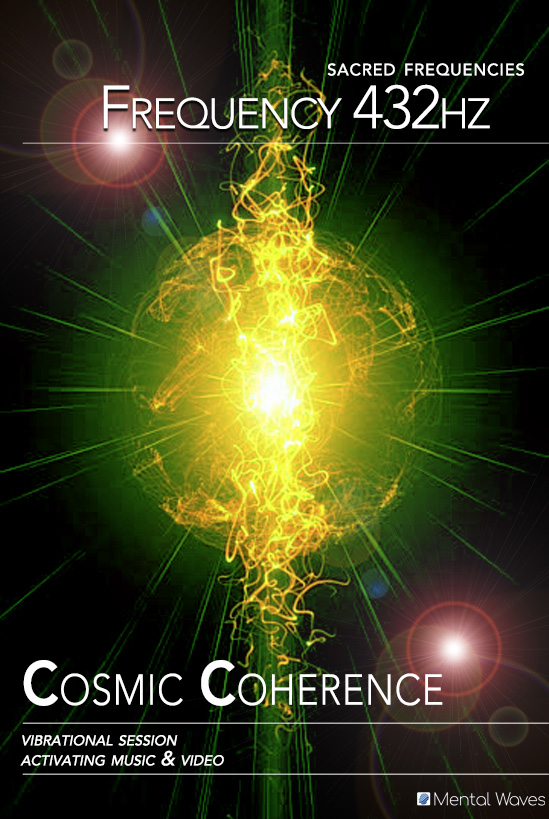
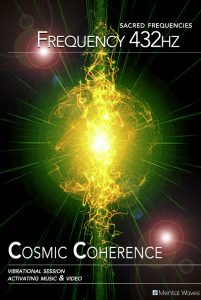
Sacred frequency 432 Hz
432Hz : COSMIC COHERENCE Enter into perfect resonance with the universe... COHERENCE - UNITY - ENERGY - BLISS
View productWhy Some Listeners Prefer 432 Hz to the 440 Hz Standard
A tuning many people experience as softer and more regulating
For those who favour it, 432 Hz changes the way music is felt as much as the way it is heard. The idea is not simply that the pitch is different, but that the overall listening experience may seem more settled, organic and emotionally coherent. Supporters of this tuning often say it creates a deeper sense of connection between the music, the body and the surrounding environment. In that perspective, 432 Hz is often sought for relaxation, meditation and inner regulation, because it is perceived as encouraging a more harmonious relationship between sound and lived experience.
This preference is also linked to the belief that 432 Hz aligns more naturally with patterns found in nature and with the body’s own resonant behaviour. While such claims should be approached with care, they help explain why many listeners describe music tuned this way as calmer, rounder and less mentally fatiguing. Rather than presenting 432 Hz as a universal therapeutic tool, it is more accurate to say that some people experience it as a tuning that may support ease, attention and a sense of balance.
- often described as more organic
- commonly associated with relaxation and meditation
- perceived by some listeners as gentler on attention and mood
How 432 Hz is contrasted with the modern 440 Hz reference
By contrast, 440 Hz became the modern reference point largely through standardisation, especially from the mid-20th century onwards, rather than because of any proven benefit for the body or mind. That historical role matters in this debate. For advocates of 432 Hz, the issue is not that 440 Hz is inherently harmful, but that it was adopted for practical consistency across instruments and ensembles, not because it was considered the most natural or the most soothing tuning for human perception.
That is why the comparison is often framed in experiential terms. Although 440 Hz remains the dominant standard worldwide, some listeners and musicians find it slightly tenser or more discordant in feel, whereas 432 Hz is more often described as warmer, more fluid and more calming. In this view, choosing 432 Hz is less about rejecting musical convention than about seeking a sound that feels more in tune with the body, the emotions and the atmosphere music can create.
How 432 Hz Is Linked to Meditation, Inner Calm and Energetic Balance
Why this tuning is often used in contemplative practice
Beyond its acoustic and physiological effects, 432 Hz is often described as a spiritually significant tuning. It is frequently associated with meditation, deep relaxation and a felt sense of connection with oneself and the wider world. In that context, listeners do not usually speak only about sound quality; they also describe a shift in attention, breathing and inner state. This helps explain why 432 Hz is regularly chosen for contemplative music, sound-based relaxation and practices designed to support mental quietness.
This idea is not presented only as a modern trend. The broader principle of using sound to influence inner balance appears in many older healing and ritual traditions, long before the modern tuning fork existed. Within today’s language, 432 Hz is often sought for its ability to encourage calm, reduce perceived stress and support a more centred state of mind. Some people also connect it with the Earth’s natural rhythms, particularly the Schumann resonance, seeing this as one reason the tuning can feel grounding and emotionally regulating.
From spiritual symbolism to lived experience
For many listeners, the appeal of 432 Hz lies in the way it seems to bridge subjective experience and a broader idea of harmony. When music is tuned this way, it is often experienced as softer, more enveloping and more conducive to introspection. That does not prove a universal effect, but it does help explain why the frequency is so often used in meditation sessions, restorative practices and sound-healing settings. In these contexts, the goal is not simply to hear music differently, but to use it as a support for relaxation, emotional regulation and a quieter mental state.
Seen from this perspective, tuning to 432 Hz becomes more than a technical choice. It represents a musical approach that aims to bring the listener into a gentler relationship with body, mind and environment. For those who value the spiritual or energetic dimension of sound, this tuning is often regarded as a practical way to elevate the mind, foster inner peace and encourage a sense of alignment that feels both personal and deeply natural.
- Meditation and mindfulness practices
- Sound-healing and relaxation sessions
- Music intended to support grounding and inner calm
Choosing 432 Hz with Clarity and Perspective
Why some listeners and musicians actively seek it out
The appeal of 432 Hz is not simply that it offers a different reference point from 440 Hz. For many musicians and listeners, it represents a broader way of approaching sound: one that aims to feel more aligned with the body, with perception and with a sense of natural balance. In practice, people who prefer this tuning often describe the listening experience as softer, more spacious and more regulating. It is also frequently chosen in contexts linked to relaxation, meditation and inward attention, where subtle differences in tone, tension and emotional response may matter more than technical standardisation alone.
That does not mean 432 Hz should be treated as a universal solution or a medical claim. A more careful conclusion is that it may support a calmer listening state for some people, and may help certain listeners feel more settled or receptive. If you are looking for music that feels gentler, more balanced and more in tune with the kind of sound environment often sought for rest or contemplation, it can be worth exploring it for yourself. You can, for example, listen to the music available on the Mental Waves website, composed by Alex MICHEL, and notice your own response in terms of relaxation, attention and overall felt experience.
- often chosen for a softer, more rounded listening experience
- commonly associated with relaxation, meditation and inner calm
- best approached through direct listening rather than assumption alone

Resources often cited in the 432 Hz discussion
For readers who want to go further, a number of sources are regularly cited in discussions comparing 432 Hz with the 440 Hz standard. They cover historical, scientific and therapeutic angles, and together they reflect the range of questions that continue to surround this tuning: physiological response, anxiety, heart rate variability, mindfulness, sound healing and altered states of consciousness.
Among the references mentioned most often are Exploring the Effects of Music Tuned to 432 Hz on the Human Body (Journal of Evidence-Based Integrative Medicine, 2018), The Influence of 432 Hz Music on the Perception of Anxiety (International Journal of Medical Research & Health Sciences, 2016), Impact of Music Frequencies on the Human Energy Field (European Journal of Integrative Medicine, 2017), and 432 Hz and the Heartbeat: A Study on Music and Heart Rate Variability (Journal of Clinical and Diagnostic Research, 2015).
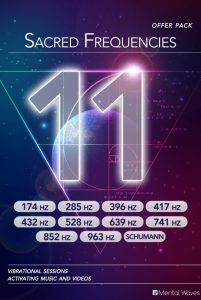
Related offer
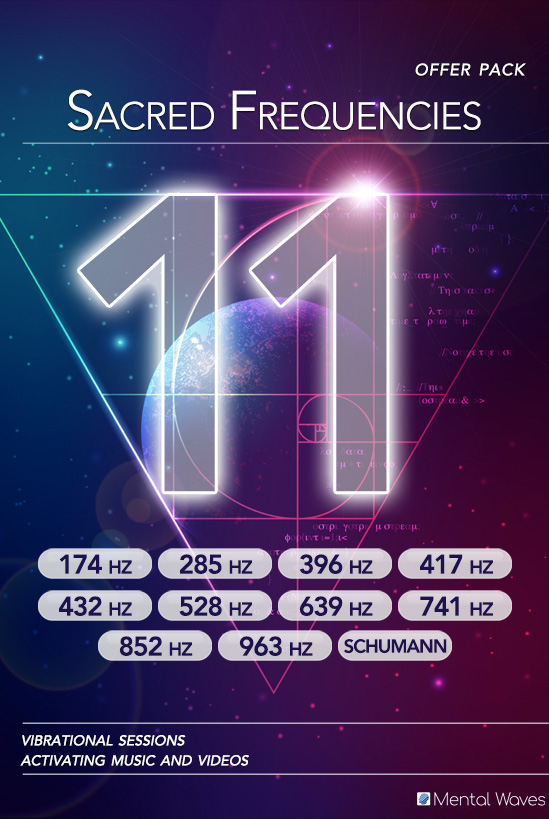
11 Sacred Frequencies + Climax Bundle
Sacred Frequencies Pack including 10 videos and 11x 20-minute tracks of activating music.
View productOther frequently referenced materials include Richard Huisken’s book The Therapeutic Effects of Music Tuned to 432 Hz (2014), An Exploration of the Effects of 432 Hz Music on Meditation and Mindfulness (Mindfulness Journal, 2019), the online article The Ancient Solfeggio Frequencies and Their Role in Sound Healing (Sound Healing Center, 2020), and the conference presentation Music Therapy and Sound Healing: The Science Behind 432 Hz at the International Sound Therapy Conference (2017).
To these can be added the doctoral thesis The Effects of Different Musical Tunings on Human Consciousness (University of Vienna, 2018), the Gaia documentary The Healing Power of 432 Hz: Myth or Reality? (2019), and Alex MICHEL’s Mental Waves talks, including How to Be in Vibrational Harmony, available at https://www.mental-waves.com. Taken together, these resources do not close the debate, but they do offer a useful starting point for anyone who wants to explore the subject with both curiosity and discernment.
- research articles on physiological and emotional response
- books, conferences and documentaries on therapeutic use
- Mental Waves resources for a more experiential approach
432 Hz vs 440 Hz: a practical comparison
The debate is easier to understand when history, sound quality and personal response are separated. The modern 440 Hz standard offers consistency. The 432 Hz preference offers a different listening colour and a symbolic link with harmony.
| Question | 432 Hz | 440 Hz |
|---|---|---|
| Reference pitch | A4 tuned to 432 cycles per second. | A4 tuned to 440 cycles per second. |
| Common perception | Often described as warmer or more relaxed. | Often experienced as familiar and standard. |
| Best use | Contemplative listening, sound ritual, personal exploration. | Ensemble consistency, mainstream performance and compatibility. |
| Main guardrail | Do not overstate personal response as universal science. | Do not assume standard means superior for every listener. |
How to test 432 Hz for yourself
Choose a quiet moment, use comfortable volume and listen to one track without multitasking. Then write down what changed, if anything: breath, mood, mental tension, clarity, body sensation or emotional tone. The most useful result is not whether 432 Hz wins a debate, but whether it reliably helps you enter the state you want.
Inside Mental Waves, this article connects naturally with Sacred Frequency 432 Hz, the 11 Sacred Frequencies Pack and the 128 Hz guide.
Editorial note from Mental Waves
This article frames 432 Hz as a tuning, a listening experience and a symbolic frequency tradition. It does not claim that a tuning can replace clinical care or create identical effects for every listener.
Conclusion
In the end, 432 Hz sits at an unusual crossroads: part musical preference, part historical debate, part field of interpretation shaped by listening, expectation and embodied experience. What gives the subject its staying power is not a single definitive proof, but the fact that many people describe a genuinely different quality of attention and regulation when they listen to music tuned this way. That does not make every claim around 432 Hz equally robust, yet it does help explain why the conversation continues across music, wellbeing and contemplative practice.
A balanced view is perhaps the most useful one. For some, 432 Hz may simply sound softer, rounder or easier to settle into; for others, the difference may feel subtle or even negligible. Either way, the value of the subject lies less in ideology than in careful listening: noticing how tuning can shape perception, emotional tone and the state of mind a piece of music may support. Sometimes a small shift in frequency changes the whole texture of experience.
Frequently asked questions about 432 Hz tuning
What is 432 Hz tuning?
432 Hz tuning means setting the reference pitch A4 to 432 cycles per second rather than 440 Hz. This slightly lowers the pitch of the music and can change how the whole piece feels.
Is 432 Hz better than 440 Hz?
Not universally. Some listeners prefer 432 Hz because it feels warmer or calmer, while others notice little difference. It is better to treat 432 Hz as a listening preference and ritual tool rather than as a proven superior standard.
Why do people call 432 Hz natural?
Supporters often connect 432 Hz with natural proportion, sacred geometry and resonance. These associations are meaningful in symbolic and experiential traditions, but they should not all be read as settled scientific facts.
Can 432 Hz support meditation?
It can support meditation for some listeners if the sound feels gentle, steady and easy to follow. The benefit usually comes from the whole listening frame: intention, volume, room, attention and repetition.
Does 432 Hz have proven health effects?
The evidence around specific health effects is limited and mixed. 432 Hz may feel relaxing to some people, but it should not be presented as a clinical intervention or a fixed result.
How can I compare 432 Hz and 440 Hz fairly?
Use the same music if possible, keep the same volume, listen without multitasking and repeat the comparison on different days. Notice your body and attention, not only whether the sound seems pleasant.
Why is Verdi mentioned in the 432 Hz debate?
Verdi is often mentioned because he supported a lower reference pitch than the modern 440 Hz standard. His name gives the debate historical interest, although it does not settle the modern scientific question.
Which Mental Waves session fits 432 Hz?
Sacred Frequency 432 Hz is the most direct product path. The 11 Sacred Frequencies Pack and the free Sacred Frequency Session also fit readers who want to explore frequency listening more broadly.
Should I use 432 Hz every day?
Use it if it genuinely supports your practice. A short, consistent listening ritual is often more useful than forcing a frequency because of a claim. Stop or change the sound if it feels irritating or overstimulating.