en
enVotre panier est vide.



Modern physics has profoundly altered the way we understand reality. At the quantum scale, the universe is no longer seen as a solid assembly of separate objects, but as a dynamic fabric of waves, interactions and condensed energy. In that perspective, matter appears less as the starting point than as one expression of a deeper vibratory order. The human being, too, can be approached as a living field of frequencies before being considered only in chemical, biological or mechanical terms.
In short: vibratory human
The vibratory human is a symbolic and experiential way to describe how sound, rhythm, environment and inner state can shape our sense of balance.
Use this article as a practical map: keep what helps attention become steadier, question anything that sounds absolute, and connect the idea back to repeatable daily practice.
This view invites a more attentive reading of health, perception and our relationship with the environment. The body emits across a broad spectrum, from infrared to what are described here as biophotons, and remains in balance when these exchanges circulate harmoniously between inner regulation and the outside world. From that standpoint, it is reasonable to question how prolonged exposure to artificial signals may affect us over time, while also recognising that certain frequencies, used with care, may support calm, regulation and wellbeing. Sound is especially compelling in this context: we know from experience that music does not leave the brain, the emotions or the body untouched, and this makes acoustic frequencies a particularly rich path for exploration.
What makes this perspective interesting is not the promise of a single grand explanation, but the possibility of linking subjective experience with measurable phenomena. Human beings are constantly exchanging energy and information with their surroundings through light, temperature, sound, touch and electromagnetic exposure. Even when the language of vibration is used broadly, it points towards a serious intuition: the organism is not closed in on itself, but continuously modulated by rhythms, signals and patterns that shape attention, mood and physiological regulation.
The Human Body as a Field of Vibrations
From matter to energy: a different way of understanding the body
Quantum physics has profoundly changed the way we think about reality. Rather than presenting the universe as something made only of solid, separate objects, it suggests a world structured by waves, interactions and vibrations, in which what we call matter appears as a particular form of organisation. Particles can be understood as condensations of energy, linked by fundamental forces — weak and strong interactions, electromagnetism and gravitation. From these energetic foundations emerge atoms, molecules, cells and, ultimately, human beings. In that sense, the body may be viewed not only as chemical, biological and physical, but first as an organised energetic system.

This perspective also helps explain why the human body is often described as radiating across a broad spectrum of frequencies. It emits infrared radiation, which can be detected by night-vision devices, and it is also associated with the emission of photons known in this context as biophotons — tiny particles of light produced by living organisms. Seen in this way, the human being is not an isolated object but a living ensemble of waves, continually crossed by, nourished by and informed by multiple forms of vibration. Health, in this framework, is linked to the harmonious circulation of these energies within the body — in other words, to a dynamic balance between inner regulation and the external environment.
It is worth adding that this energetic description does not cancel the biological one. On the contrary, it may be read as another level of description of the same organism. Cells communicate through chemical messengers, electrical gradients and oscillatory activity; the nervous system itself depends on rhythmic signalling; and the brain can be studied through patterns of synchronisation visible in EEG recordings. In that sense, speaking of the body as vibratory is most credible when it remains connected to observable processes rather than detached from them.
- Energy condenses into particles
- Particles form atoms, molecules and cells
- The body can be seen as a structured field of interacting frequencies
Why balance matters in a vibratory environment
When this circulation remains fluid, the organism tends to preserve its equilibrium. Conversely, any blockage or disruption in that internal flow may be associated with physical disturbance and, over time, with deeper imbalance. If the human being vibrates across a wide field of frequencies, it is reasonable to ask how artificial vibrations from the outside world may affect that balance. Their impact may depend on several factors, including frequency, intensity and duration of exposure. This is why questions continue to be raised about the long-term effects of repeated exposure to screens, mobile phones, relay antennas, electrical fields, Wi-Fi and 5G. The full picture is still unfolding, and caution remains part of a serious discussion.
At the same time, not all external waves are approached in the same way. Some frequencies, when used appropriately, may have beneficial, soothing or supportive effects on the body and mind. Research is ongoing in several laboratories into light, electromagnetic fields and scalar waves, among other areas. This does not justify simplistic conclusions, but it does support a broader view of the body as a sensitive, responsive system whose state may be influenced by its vibratory environment. That idea forms the basis for later discussions in this article, particularly around sound and its potential role in regulation, perception and mental state.
Balance here should not be understood as a fixed or fragile perfection. In physiology, regulation is dynamic: the body is constantly adjusting heart rate, breathing, muscle tone, hormonal activity and attentional state in response to changing conditions. A vibratory environment may therefore be thought of less as a mystical backdrop than as one of the many contexts within which adaptation takes place. The question is not whether the organism is influenced, but which influences are meaningful, under what conditions, and for whom.
- Possible effects depend on frequency, intensity and exposure time
- Some external signals may disturb balance
- Others may help support calm and regulation
How External Frequencies Can Disturb or Restore Balance
When the environment interferes with the body’s natural equilibrium
If the human being functions across a broad field of waves and frequencies, it follows that artificial vibrations from the outside world may also influence that balance. Their effects are not presented here as a certainty in every case, but as a question worth taking seriously. Much depends on the frequency involved, its intensity and the length of exposure. In that light, it is reasonable to reflect on the possible long-term impact of screens, mobile phones, relay antennas, electrical fields, Wi-Fi, 5G and similar sources that now form part of everyday life.
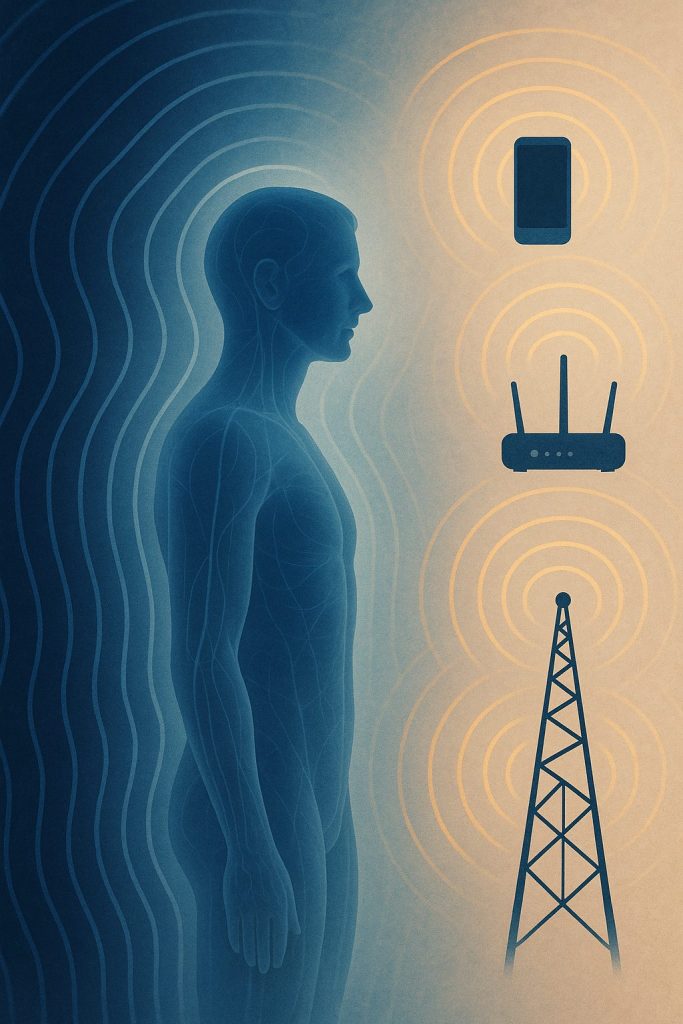
The central idea is simple: when the body is already immersed in a dense vibratory environment, additional external signals may create forms of disturbance or strain, especially when exposure is repeated and prolonged. The full consequences are still being explored, and time will tell more clearly what should concern us and what should not. Even so, this perspective invites a more attentive relationship with our surroundings, particularly where modern technologies expose us continuously to frequencies that previous generations did not encounter in the same way.
It is also important to distinguish between direct physical effects and indirect effects mediated by behaviour. For example, screens may influence wellbeing not only through emitted light or electromagnetic exposure, but through cognitive overstimulation, sleep disruption, fragmented attention and reduced recovery time. In practice, the body often responds to a whole environment rather than to one isolated variable. A rigorous approach therefore keeps both dimensions in view: the properties of the signal itself and the way it alters habits, arousal and mental load.
- frequency
- intensity
- duration of exposure
Why some frequencies may soothe, support or regulate
The picture is not only one of disruption. Some waves, when used at appropriate frequencies, may have beneficial, calming or supportive effects on both body and mind. Research in several laboratories is exploring these possibilities through light, electromagnetic fields and other vibratory approaches. Without overstating what is currently established, this line of enquiry reflects a broader idea already familiar in lived experience: not all frequencies affect us in the same way, and some may help the organism return to a more settled state.
Related offer
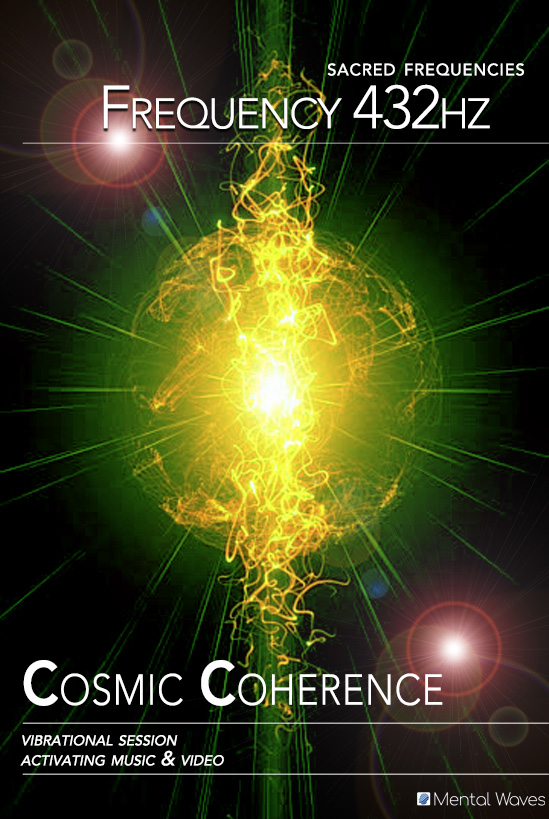
Sacred frequency 432 Hz
432Hz : COSMIC COHERENCE Enter into perfect resonance with the universe... COHERENCE - UNITY - ENERGY - BLISS
View productSound waves offer a particularly rich field of study because of the sheer range of frequencies they make available, even within the audible spectrum alone. Most people have felt the contrast immediately: a classical concert does not affect us in the same way as an old rock-and-roll track. Certain sound frequencies are thought to interact with rhythms close to those of our brain activity, while the body, its organs, and even our emotions and feelings may be understood as vibrating at specific frequencies.
In that sense, sound may help stimulate a particular organ, encourage a feeling such as calm or peace, support the body as a whole, or orient the mind towards more elevated states of attention and reflection. It is, in this view, a remarkable tool and a genuine gateway into our inner life. This is also why the work carried out by Mental Waves is presented as notably forward-looking.
In contemporary terms, these soothing effects may be related to entrainment, expectation, emotional association and autonomic regulation. Repetition, tempo, harmonic density and timbre can all influence how safe, alert or settled a person feels. This does not mean every frequency has a precise universal effect, but it does suggest that carefully designed sensory environments may support relaxation, concentration or emotional decompression in ways that are both experientially obvious and increasingly studied.
- light
- electromagnetic fields
- sound frequencies
Sound as a Gateway to the Body, Emotions and Mind
Why sound remains such a promising field of exploration
Among the different forms of vibration now being studied, sound waves occupy a particularly interesting place. Research is ongoing in several laboratories into the effects of light, electromagnetic fields and other forms of energetic stimulation, and sound adds another important path of enquiry. Its value lies partly in the sheer breadth of frequencies it offers, including not only those we can hear, but also ranges beyond ordinary auditory perception. This gives sound a unique richness as a practical medium for influencing experience, attention and states of regulation.
Most people have felt this directly, even without any technical knowledge. The effect of music is clearly not the same when listening to a classical concert as when hearing old rock and roll. The body, the emotions and the mind do not respond in an identical way. This lived contrast is one reason sound is so compelling: it provides an immediate, perceptible bridge between vibration and human experience, and suggests that certain frequencies may help to calm, stimulate or reorient our internal state.
Sound also has a privileged route into the nervous system because it unfolds in time. Rhythm can guide breathing, pulse and motor readiness; melody can shape anticipation; and repetition can stabilise attention. For that reason, acoustic stimulation is often used not only for pleasure, but for meditation, relaxation, focus and emotional processing. It is one of the rare domains in which subjective report, behavioural change and measurable physiological response can sometimes be observed together.
- Sound offers a very wide range of usable frequencies.
- Its effects are often felt directly through mood, attention and bodily response.
- It is therefore a concrete and accessible way to explore vibratory influence.
How frequencies may interact with organs, emotions and mental states
The idea developed here is that some sound waves act on frequencies close to those associated with our brain activity, while other frequencies may resonate more specifically with different aspects of the organism. In this perspective, each organ, the body as a whole, and even our feelings and emotions may be understood as vibrating at particular frequencies. That does not mean every effect is simple or fully established, but it does help explain why certain sounds are often sought for relaxation, emotional soothing or mental clarity.
Some frequencies may therefore support a particular organ, encourage a feeling such as calm or peace, influence the body more globally, or help the mind move towards more elevated and reflective states. Used in this way, sound becomes more than entertainment. It can be approached as a doorway into our inner life, a subtle tool for working with perception, emotional balance and mental state. In that sense, the work carried out by Mental Waves stands out as both remarkable and notably forward-looking, in line with the perspective presented here by Luc Bodin.
From a scientific point of view, the most plausible account is often one of interaction rather than one-to-one correspondence. A sound may alter breathing, which changes autonomic tone; it may shift attention, which changes perceived stress; it may evoke memory, which changes emotional state; and these changes together may influence how the body feels. This layered model is less spectacular than simplistic claims, but it is far more consistent with what is known about consciousness, regulation and embodied experience.
The Mental Waves Vibratory Awareness Framework
The Mental Waves frame is to use vibratory language as a way to notice sensitivity, resonance and regulation without making absolute claims about the body.

Related offer
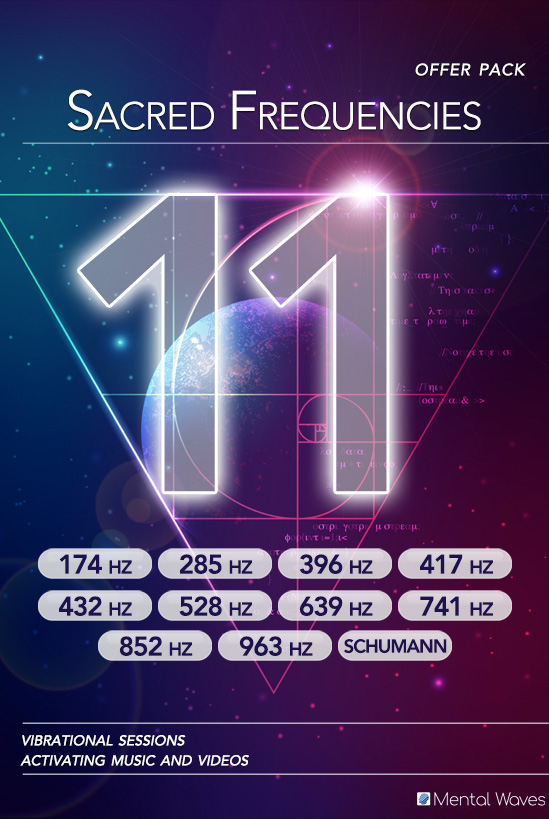
11 Sacred Frequencies + Climax Bundle
Sacred Frequencies Pack including 10 videos and 11x 20-minute tracks of activating music.
View productAsk what a sound, place or rhythm does to attention, posture, breath and emotional tone. That keeps the idea practical instead of turning it into vague certainty.
For a simple sound ritual that supports vibratory awareness, receive the free 128 Hz sacred frequency session and observe what changes in your state.
Editorial note from Mental Waves
This article is reflective and educational. It uses frequency and vibration as wellbeing language, not as a diagnostic system or substitute for medical or psychological care.
Conclusion
Seen in this light, the “vibratory human” is not a slogan but a way of describing a body that is constantly in exchange with its environment. The central idea is not that every effect is already proven, nor that every frequency should be treated as therapeutic, but that our physiology, perception and mental state are shaped by patterns of interaction that deserve careful attention. This is where the article keeps its balance: it invites curiosity without abandoning rigour, and it recognises that harmony may matter just as much as intensity.
That is also why sound remains such a compelling field of exploration. We already know, through lived experience as much as observation, that different sonic environments can alter attention, relaxation, emotional tone and inner rhythm. From there, the most credible position is a measured one: certain frequencies may help support regulation, calm or mental settling, while the broader scientific picture is still evolving. Between sensitivity, research and practice, a more nuanced understanding of the human being begins to emerge — less mechanical, more relational, and perhaps more attentive to what the body is already telling us.
Ultimately, the value of this perspective lies in the quality of attention it encourages. To think of the human being as vibratory is to remember that we are responsive creatures: shaped by atmosphere, rhythm, contact, sound and environment as much as by abstract ideas. When approached with discernment, this framework may enrich both personal practice and scientific curiosity, opening a space in which experience, physiology and careful exploration can meet without confusion.
Frequently Asked Questions About the Vibratory Human
What does the idea of the ‘vibratory human’ mean here?
It means seeing the human being first as an organised field of energies, waves and frequencies rather than only as a physical body. In this view, matter is one expression of a deeper vibratory reality, and the body is constantly interacting with internal and external forms of vibration.
Why is quantum physics mentioned in relation to the human body?
It is used to support the idea that reality is not made only of solid objects, but also of waves, interactions and condensed energy. From that perspective, atoms, molecules, cells and human beings emerge from energetic foundations, which leads to a broader way of understanding the body.
What kinds of frequencies does the human body emit?
The body is described as emitting across a broad spectrum, including infrared radiation and biophotons. Infrared can be detected by night-vision devices, while biophotons are presented as tiny particles of light emitted by living organisms.
How is health linked to vibrations and energy flow?
Health is linked to harmonious circulation within the body’s energetic exchanges. When there is balance between inner regulation and the outside world, the organism is seen as remaining in equilibrium. When that circulation is blocked or disturbed, physical troubles may appear and deeper imbalance may develop over time.
Can artificial frequencies from modern technology disturb the body?
They may do, and the concern raised is mainly about long-term exposure. Screens, mobile phones, relay antennas, electrical fields, Wi-Fi and 5G are mentioned as sources worth questioning. Their possible impact is presented as depending on frequency, intensity and duration of exposure rather than as a settled certainty.
Are all external waves seen as harmful?
No, some are presented as potentially beneficial when used at appropriate frequencies. Certain waves may have soothing, supportive or even curative effects on the body and mind. Research is said to be ongoing in areas such as light, electromagnetic fields and scalar waves.
Why is sound given such an important place in this approach?
Sound stands out because it offers a very wide range of frequencies, even within the audible spectrum alone. It also has effects people can recognise directly in experience, since different kinds of music can clearly influence mood, attention, bodily response and emotional tone in different ways.
How might sound frequencies affect the brain, organs and emotions?
Some sound waves are described as acting on frequencies close to those of brain activity, while organs, emotions and feelings are also presented as vibrating at specific frequencies. In that framework, certain sounds may support calm, stimulate a particular organ, influence the whole body or help the mind move towards a more reflective state.
What role does Mental Waves play in this perspective?
Mental Waves is presented as doing notably forward-looking work in the field of vibratory and sound-based exploration. The emphasis is on its interest in frequencies as a way of engaging with the body, emotions and mind, especially through sound as a gateway into inner experience.