en
enVotre panier est vide.


People often come to meditation looking for something very simple: a little more calm, a little less pressure, a way to feel more settled in themselves. The difficulty is that the practice can quickly seem more complicated than it needs to be. In reality, meditation often becomes easier when you stop trying to do it perfectly and begin with a few clear, accessible points of entry that can fit into ordinary daily life.
Breath, muscular release, visualisation and posture can all help create that shift towards steadiness and presence. None of these approaches asks you to force an experience or adopt an ideal method from the outset. The point is gentler than that: to notice what helps you settle more naturally, so that meditation feels less like an effort and more like something you can genuinely return to.
In short: what are easy ways to meditate?
Easy ways to meditate include following the breath, relaxing the body, using a simple visualization, releasing physical tension and practising balance with attention. The best method is the one that feels simple enough to repeat without strain.
- Breath meditation gives the mind one clear anchor.
- Body relaxation reduces tension before stillness.
- Visualization can make attention softer and more vivid.
- Balance practices help meditation feel embodied.
For a guided reset before practice, try the free Mental Reset Session. For breath basics, read Breathing Techniques.
That matters more than many people realise. When meditation is approached as something you must master straight away, it often becomes tense before it has even begun. When it is approached as a small, repeatable gesture of attention, it tends to open up in a much more human way.
Starting with the breath to make meditation feel easier
Breathing as the simplest way into practice
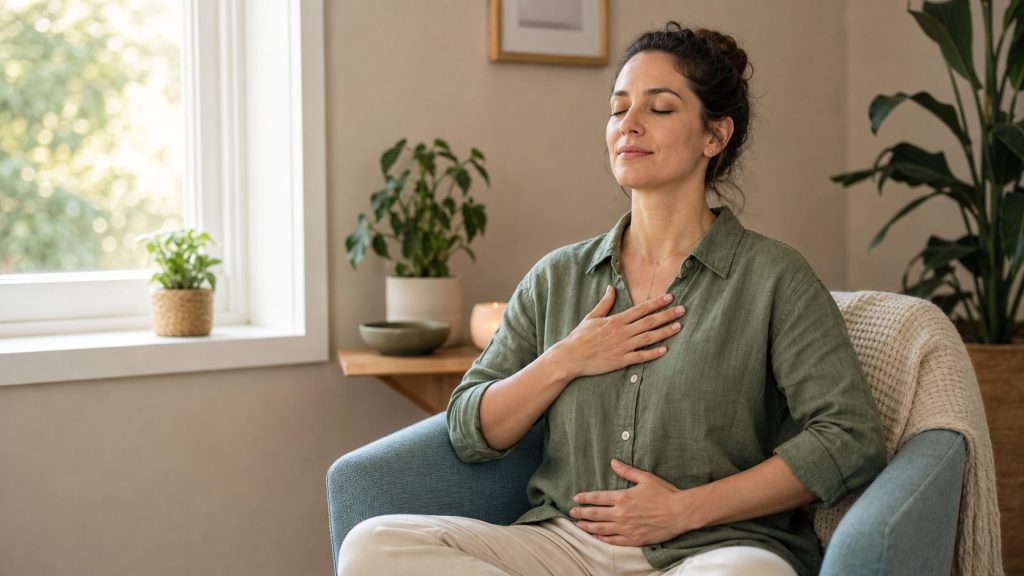
The breath is one of the easiest anchors to return to when you want to meditate. Before trying to do it ‘properly’, it helps to come back to something already there: breathe in, breathe out, then notice. For many beginners, the breath is the most natural way to slow down, soften inner tension and settle into a real sense of presence.
To begin, keep it very simple and allow yourself just five minutes. Sit somewhere quiet, on a chair, on the floor or on a cushion, depending on what feels most comfortable for you. Keep your back upright without becoming stiff, close your eyes if that helps, and place one hand on your stomach so you can feel the rhythm of your breathing more clearly.
If five minutes feels longer than expected, that is perfectly normal. For someone unused to stillness, even a short pause can reveal how busy the mind and body have been. The point is not to make those minutes feel empty, but to let them become a small space in which you notice what is already happening.
- Choose a peaceful place
- Settle into a stable, comfortable posture
- Start with a short session
Staying with the breath without overcomplicating it
Once you are settled, take a few deeper breaths and let your attention rest on the air moving in and out. The aim is not to control or force the breath, but to stay fully attentive to this very simple sensation. Each time your mind comes back to the breath, the practice becomes a little steadier and more effective.
What matters most here is regularity. By repeating the exercise, you gradually learn to calm mental restlessness and meditate with less effort. And if your attention drifts, simply guide it back to the breath without irritation or pressure. That gentle return, again and again, is not a failure of the practice; it is where much of its value lies.
It can help to choose one precise point of attention: the nostrils, the rise and fall of the chest, or the movement of the lower belly beneath your hand. A clear anchor gives the mind less room to scatter. Over time, this simplicity becomes surprisingly reassuring, especially on days when concentration feels thin and your thoughts seem determined to go elsewhere.
Relaxing the body to settle into meditation more easily
Start by softening the breath and noticing where you are holding tension
Progressive muscle relaxation is a simple, effective way to prepare the mind for meditation. Before trying to empty your thoughts, begin by slowing your breathing. That first shift often helps the body release some of the pressure it has been carrying, which makes it easier to settle.
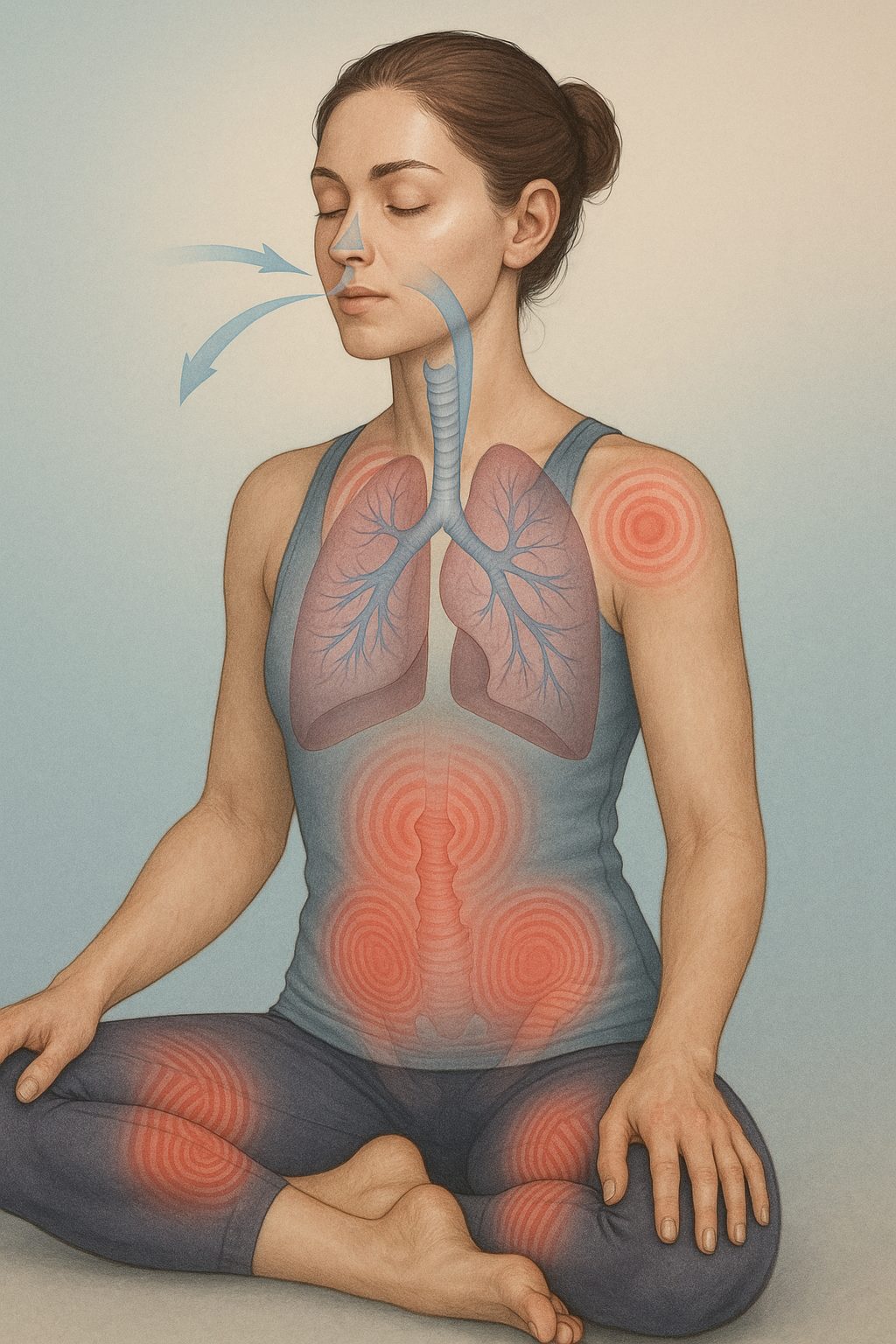
Then bring your attention to the areas that feel tight and tense them deliberately for a few moments before letting go. The point is not to strain, but to feel more clearly the contrast between tension and release. That awareness alone can make meditation feel more natural, steadier and less forced.
Many people discover, often with some surprise, how much effort they are holding in the jaw, shoulders or stomach without noticing it. Bringing attention to these places can feel almost like turning down background noise. Once the body is less braced, the mind usually has less to fight against.
- Slow the rhythm of your breathing
- Notice the main areas of tension
- Tense briefly, then release
Work through the body one area at a time
You can continue by moving gradually through several parts of the body: shoulders, abdominals, arms, thighs and calves. Lift the shoulders slightly, tighten the stomach, extend the arms, stretch the calves, then let each area soften again. Moving through the body in this way creates a deeper, more tangible sense of relaxation.
To refine the exercise, pair a fuller in-breath with a slower out-breath as you release each contraction. Practised for just a few minutes, this sequence helps loosen the muscles, gather your attention and create an inner state that is far more supportive of meditation.
There is no need to move through the whole body in a rigid order every time. Some days, releasing the shoulders and face is enough to change the quality of your attention. On other days, the legs or lower back may need more care. The practice works best when it remains attentive rather than mechanical.
- Shoulders and arms
- Abdominals and thighs
- Calves and final release
Using visualisation to settle the mind more gently
Create the right conditions before you begin
Visualisation can be a very simple way into meditation when your mind refuses to settle. Rather than trying to empty your thoughts by force, you give your attention something calm and reassuring to rest on: an inner image that naturally invites the body and mind to slow down.
To begin, sit or lie somewhere quiet where you are unlikely to be interrupted. Let your body soften, close your eyes if that feels comfortable, and choose an image that is clear, pleasant and soothing. The more stable your posture and the more peaceful your surroundings, the easier it becomes to stay with the exercise without strain.
The image itself does not need to be elaborate. A shoreline, a quiet garden, a familiar room filled with afternoon light, even the memory of rain against a window can be enough. What matters is that it gives you a sense of safety and ease, rather than stimulating the mind further.
- Choose a calm, quiet place
- Settle into a comfortable position
- Close your eyes for a few minutes
Bring the scene to life without letting your attention drift
Once the image is there, try not just to see it but to experience it more fully. Imagine the physical sensations, the smells and the sounds that belong to it. This makes the scene feel more vivid and gives your attention a steadier anchor, which often helps the feeling of relaxation deepen.
You can repeat the exercise as often as you need, simply returning to the same image whenever your mind starts to wander. There is no need to force concentration. What matters is keeping a gentle inner thread. By coming back to that mental scene again and again, you give the mind less room to scatter and allow this form of meditation to do its work more naturally.
For some people, visualisation works especially well because it gives the mind a place to rest rather than an instruction to stop. If you tend to think in pictures, atmospheres or memories, this approach can feel less austere than breath meditation and more immediately welcoming.
Releasing Pelvic Tension to Settle More Quickly
A short body-based reset before meditation
Muscular drainage is a very simple way to help the body let go before or even during a meditation session. Its real strength is how easy it is to use: in just one to three minutes, it can ease the physical tension that so often stops you from settling properly. If sitting still feels difficult because your body is still holding the day’s strain, this kind of brief release can make the transition into calm much more natural.
To practise it, lie on the floor in a comfortable position. There is nothing to achieve here and nothing to force. The aim is simply to repeat a gentle movement that encourages the muscles to soften little by little. As the body unwinds, the mind often follows, which makes it easier to move towards a steadier, more focused state.
This can be particularly helpful if meditation tends to feel blocked before it has really started. Sometimes the obstacle is not a noisy mind so much as a body that has not yet realised it is allowed to stop. A brief physical reset can bridge that gap surprisingly well.
Related offer
OM Meditation
This music is based on the particular frequency of the sacred chant OM. Listening to this program, the term...
View product- Keep it brief: 1 to 3 minutes is enough
- Lie down comfortably on the floor
- Focus on gentle release rather than effort
How to mobilise the pelvis without strain
Bend both knees, then gently press the sacrum — the bone at the base of the pelvis — towards the pubis. Next, bring the knees slightly forwards and tilt the pelvis so that the pubis moves towards the navel. The movement is small and discreet, but it works deeply through the pelvic area and lower back, where tension often gathers without you quite noticing it.
Repeat this rocking motion several times, without pushing, and stay attentive to what you feel. As the movement becomes smoother, the muscles begin to release and a clearer sense of relaxation can settle in. Practised this way, it may also support better circulation, while preparing the body for a meditation that feels more stable, grounded and easier to sustain.
Small movements often ask for more attention than dramatic ones. If you slow down enough, you may notice the lower back softening, the breath becoming less shallow, or the abdomen releasing some of its habitual holding. Those subtle changes are often exactly what make stillness easier afterwards.
Using balance postures to steady your attention
Why balance can make meditation feel more grounded
Balance postures can be a surprisingly helpful way into a steadier meditative state. Because they ask for both physical control and mental attention, they naturally strengthen your sense of grounding, presence and inner stability. When practised calmly and with care, they do not just work the body; they also help you gather your attention and settle more fully into the present moment.
The reason is quite simple: when your body is looking for its point of support, the mind has less room to scatter. That search for balance draws your attention back to what is happening here and now, often in a very direct way. It can be especially effective if you begin once your mind is already a little calmer, so the posture becomes a support for concentration rather than another source of effort.
There is also something quietly clarifying about balance work. It asks for steadiness, but it also exposes excess tension immediately. If you grip too hard, you wobble. If you collapse, you wobble. In that sense, balance teaches the same lesson as meditation itself: presence is often found somewhere between force and passivity.
- steady the attention
- strengthen physical grounding
- encourage a calmer sense of presence
Prepare the body so the posture supports rather than strains
Before you begin, take a few moments to stretch the body, especially the back, so you can move into the posture with more ease. This simple preparation makes the position more comfortable and helps reduce unnecessary tension from the outset. There is no need to push or perform here; the aim is simply to create a stable base from which the posture can feel supportive rather than demanding.
It also helps to engage the arms and shoulders gently, just enough to support the posture without becoming rigid. Once you are in place, let the breath accompany the movement and settle into a form of active relaxation. Very often, the real benefit comes from that subtle balance between tone and softness: enough engagement to stay upright, enough release to remain at ease.
If balance postures are new to you, it is wise to stay close to a wall or chair at first. That does not lessen the practice; it often makes it more intelligent. Feeling safe allows you to pay attention more finely, and that finer attention is what turns a physical posture into a meditative one.
How to Choose the Right Meditation Method Today
The easiest meditation method depends on the state you are starting from. If the mind is racing, breath gives it a simple rhythm. If the body feels tense, relaxation is a better entry point. If attention feels dull, visualization can add enough imagery to keep the practice alive.
If sitting still feels difficult, begin with balance or gentle posture work. Meditation does not have to begin with perfect stillness. Sometimes the body needs a short bridge before the mind can settle.
A useful rule is to practise below your resistance level. Five minutes done with care is better than twenty minutes spent fighting the whole experience.
A Simple 10-Minute Meditation Routine
Start with one minute of posture. Sit with both feet on the floor or with the pelvis supported on a cushion. Let the shoulders drop and notice whether the face, jaw or hands are holding unnecessary tension.
Use the next three minutes for breathing. Count four easy breaths, then stop counting and feel the natural movement of inhale and exhale. If attention wanders, return to the next breath rather than restarting the session.
Spend two minutes relaxing the body. Move attention from the forehead to the jaw, shoulders, chest, belly and legs. The goal is not to force relaxation; it is to notice where the body is asking for softness.
Use two minutes for visualization or a simple word. Imagine a calm place, a soft light or repeat a phrase such as “I return”. Keep it simple enough that the image supports attention instead of becoming a story.
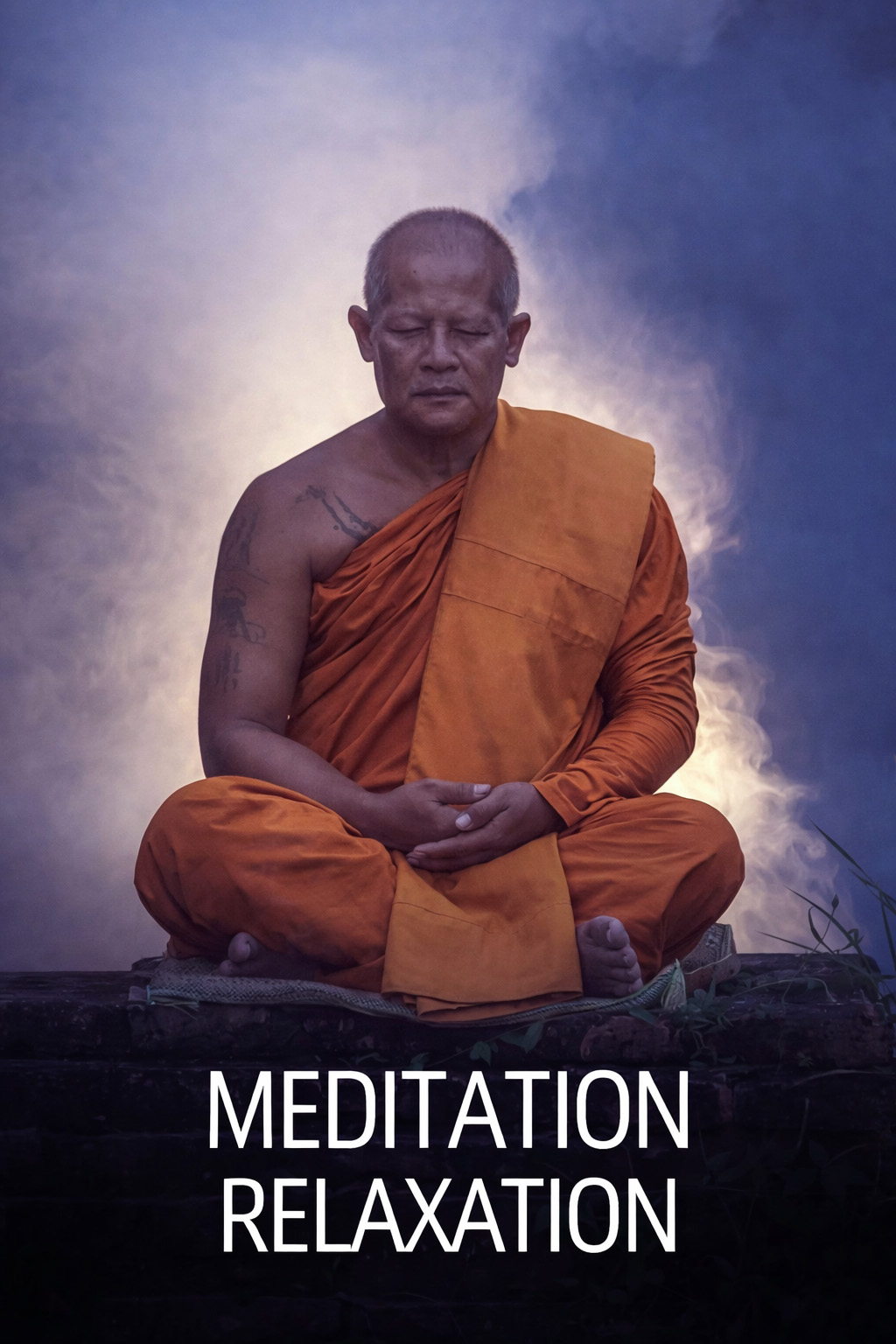
Related offer
Meditation - Relaxation set
All the Mental Waves® know-how in a single pack for quick and easy access to meditation and...
View productFinish with two minutes of quiet presence. Let the technique fade and notice the effect. Before standing up, choose one small action that carries the practice into the next part of the day.
Common Beginner Mistakes to Avoid
The first mistake is expecting the mind to become empty. Meditation usually begins with noticing how busy the mind is. That is not failure; it is the first honest observation.
The second mistake is choosing a method that does not match the moment. A tired body may need relaxation before breath focus. A restless body may need balance or movement before sitting. A worried mind may need a clear phrase before silence.
The third mistake is judging the session too quickly. Some practices feel messy while they are happening and helpful only afterward. A calmer breath, a softer jaw or one less impulsive reaction can be enough progress.
The Mental Waves Easy Meditation Framework
The Mental Waves frame is to make meditation repeatable before making it ambitious.
- Choose: pick one simple anchor for the session.
- Settle: soften the body before asking the mind to focus.
- Return: come back gently whenever attention wanders.
- Close: end with one calm action instead of rushing away.
For neuroscience context, continue with Meditation and the Brain. For environment support, read Meditation Space at Home.
Editorial note from Mental Waves
This article is educational. Meditation can support daily calm and attention, but persistent distress, trauma symptoms or mental health concerns deserve qualified support.
Conclusion
In the end, meditating more easily is rarely about finding a perfect method. It is more often about noticing what helps you arrive: a steadier breath, a body that has softened, an image that gathers the mind, or a posture that gives you just enough support to stay present. What matters is not doing everything, but choosing one simple entry point and returning to it without strain.
That is the quiet thread running through all five approaches: they make meditation feel less like a test and more like a practice you can actually live with. A few minutes, done regularly and without pressure, can be enough to change the tone of a day. Sometimes ease begins there.
And perhaps that is the most useful thing to remember: ease is not laziness, and simplicity is not a lesser form of practice. Very often, it is the doorway through which a real practice becomes possible. When you stop asking meditation to be impressive, it can finally become intimate, steady and genuinely restorative.
Frequently Asked Questions About Easy Ways to Meditate
What is the easiest way to meditate?
The easiest way is often to follow the breath for a few minutes and return gently when attention wanders.
How long should a beginner meditate?
Five to ten minutes can be enough when the practice is consistent and comfortable.
What posture works best?
A stable, comfortable posture works best, whether sitting on a chair, cushion or the floor.
What if the mind wanders?
Wandering is normal. Notice it and return to the chosen anchor without judging yourself.
Can visualization help meditation?
Yes. A simple image can give attention a gentle structure when the mind feels busy.
Why relax the body first?
Physical relaxation can make stillness easier and reduce the feeling of forcing meditation.
Can balance postures support meditation?
Yes. Balance can make attention more embodied and grounded for some people.
Should meditation be practised every day?
Daily practice can help, but short realistic sessions matter more than perfection.
What is the main takeaway?
Meditation becomes easier when the method matches your state and stays simple enough to repeat.