en
enVotre panier est vide.


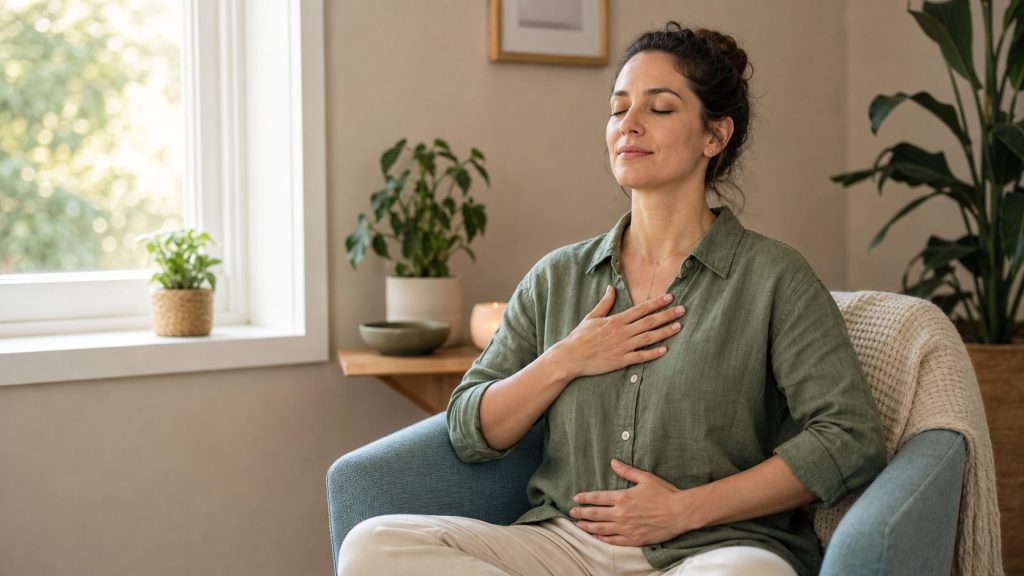
There is a particular strain to modern life: the sense that we should always be coping better, achieving more, holding everything together without faltering. For many people, that pressure does not stay on the surface. It settles into stress, anxiety, low confidence, poor self-esteem and, at times, something heavier still. It is hardly surprising, then, that so many turn towards practical ways of working on their inner life rather than simply enduring it.
In short: self-hypnosis principles
Self-hypnosis works best as a repeated attention practice that combines relaxation, suggestion and concrete behaviour.
Use this article as a practical map: keep what helps attention become steadier, question anything that sounds absolute, and connect the idea back to repeatable daily practice.
What makes this search so personal is that suffering rarely announces itself dramatically at first. More often, it arrives quietly: a body that never quite relaxes, a mind that rehearses the same fears, a growing sense of being cut off from one’s own steadiness. When that happens, methods that offer a more intimate form of inner work can feel less like a luxury and more like a necessity.
Self-hypnosis sits within that search as a method that is both accessible and deeply personal. Derived from hypnosis practised with a therapist, it aims to help a person enter an altered state of consciousness and reach parts of the mind that are usually out of view in ordinary waking life. The appeal is obvious: it can be practised at home, without specialist equipment or advanced knowledge, and without placing yourself in the hands of someone else. For anyone looking to change entrenched patterns from the inside, that combination of autonomy and psychological depth gives self-hypnosis its particular force.
It also carries a quieter promise that many people find reassuring: the possibility of changing without having to perform that change for anyone else. There is something valuable in being able to sit with yourself, in private, and begin that work at your own pace.
What Self-Hypnosis Is and Why It Appeals
A way to work on yourself without leaving home
Many people are looking for a greater sense of control over their lives, especially when daily pressure starts to wear them down. The constant push to perform, compare and keep up can quietly feed stress, anxiety, low confidence, poor self-esteem and, in some cases, depression. It is hardly surprising that so many psychological methods have emerged in response. Among them, self-hypnosis stands out for a simple reason: it can be practised at home, without special equipment and without advanced prior knowledge.
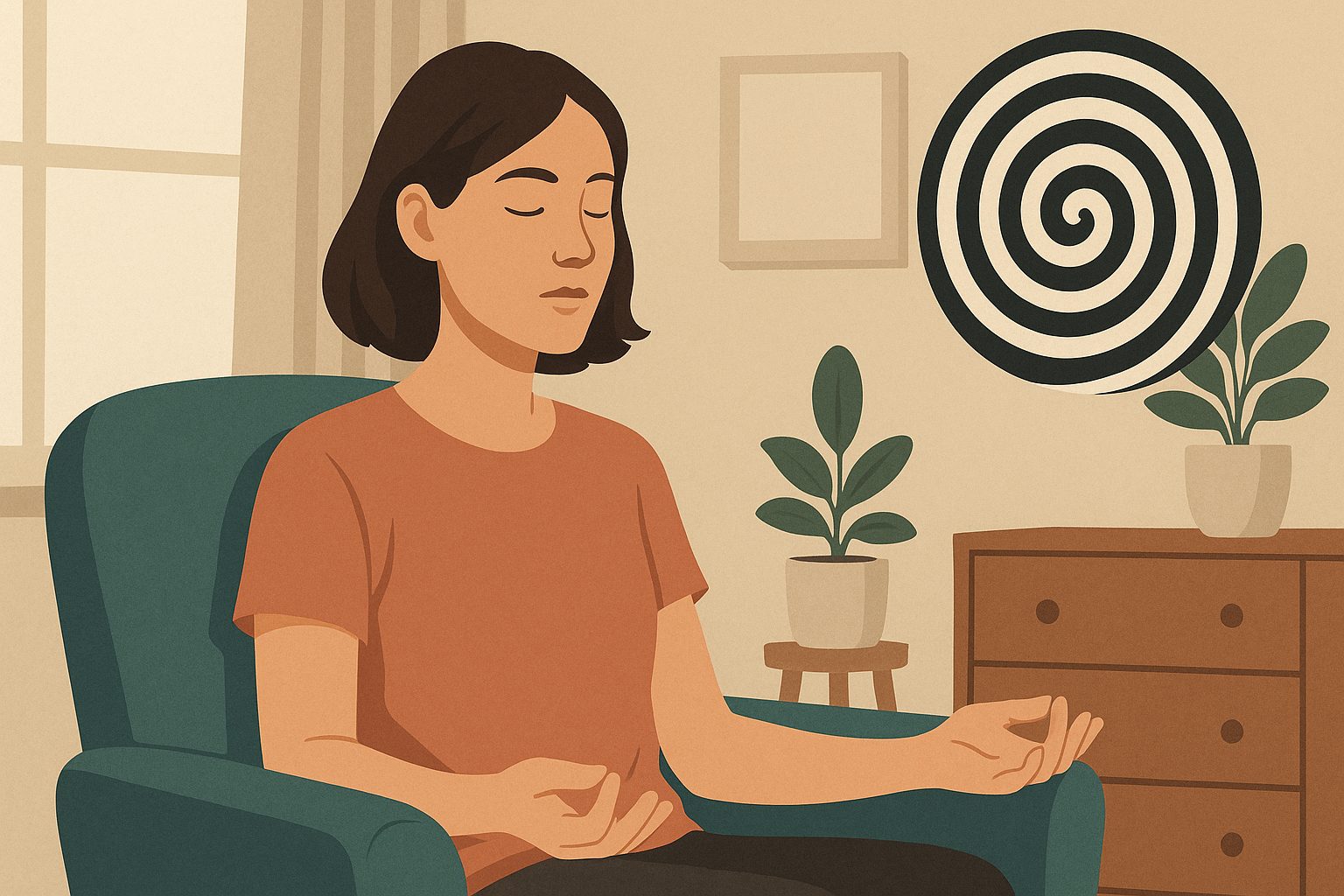
Self-hypnosis is derived from traditional hypnosis, which is usually practised in a therapist’s office with a trained specialist. The aim is to enter a form of trance, often described as an altered state of consciousness. In that state, a person is thought to gain more direct access to the unconscious mind, which remains largely out of reach in ordinary waking life. From this perspective, many psychological difficulties are rooted in unresolved unconscious conflicts: phobias such as fear of heights, fear of dying or fear of vomiting, but also anxiety, spasmophilia and chronic depression. Hypnosis is therefore used to loosen these inner knots.
Self-hypnosis appeals because it offers a way to begin that work alone, without the cost of repeated appointments and without having to place yourself in the hands of an outside practitioner.
That does not mean the experience is mysterious in the theatrical sense people sometimes imagine. In practice, many describe it as a state of concentrated inward attention: the outside world recedes a little, the usual mental chatter softens, and suggestions can be received with less resistance. You are not absent, and you are not asleep. If anything, you are often more aware of certain inner movements than you are in ordinary life.
This is one reason the method appeals to people who dislike the idea of surrendering themselves to a dramatic or overly medical process. Self-hypnosis can feel gentler than that. It asks for willingness, consistency and honesty, but not spectacle. For many, that makes it easier to trust.
- It can be practised at home
- It does not require specialist equipment
- It offers a more independent approach than in-office hypnosis
Why so many people are drawn to it
The attraction of self-hypnosis is not only practical; it is also deeply personal. People rarely turn to it out of idle curiosity. More often, they are trying to ease something that has become difficult to live with: a lack of confidence affecting their relationships or social life, persistent phobias that limit everyday freedom, or chronic stress and anguish that seem to gnaw away in the background. In that sense, self-hypnosis is often seen less as a trend than as a tool for regaining some inner room to breathe.
It also feels reassuring because it removes one of the major drawbacks associated with hypnosis in a clinical setting: dependence on the person guiding the session. Traditional hypnosis can be effective, but it may be expensive, and not every practitioner is trustworthy. The original concern remains valid: when you hand access to your inner world to someone else, there is always a risk of suggestion being misused, whether through false memories or other forms of manipulation, as media reports have occasionally highlighted. Self-hypnosis keeps the benefits of the approach while reducing that exposure. For many people, that balance between autonomy, accessibility and psychological support is precisely what makes it so appealing.
There is another reason people stay with it once they begin: the practice can restore a sense of participation in one’s own change. When someone has been anxious for a long time, or trapped in the same emotional loops, helplessness often becomes part of the problem. A method that allows you to take an active role, session by session, can begin to loosen that helplessness even before deeper changes fully emerge.
That said, the appeal of self-hypnosis is strongest when it is approached with maturity rather than fantasy. It is not about controlling every thought or erasing difficulty overnight. It is about creating conditions in which the mind becomes more receptive to change, and then returning to that process often enough for something real to shift.
How to Practise Self-Hypnosis Safely and Effectively
Creating the right conditions for a session
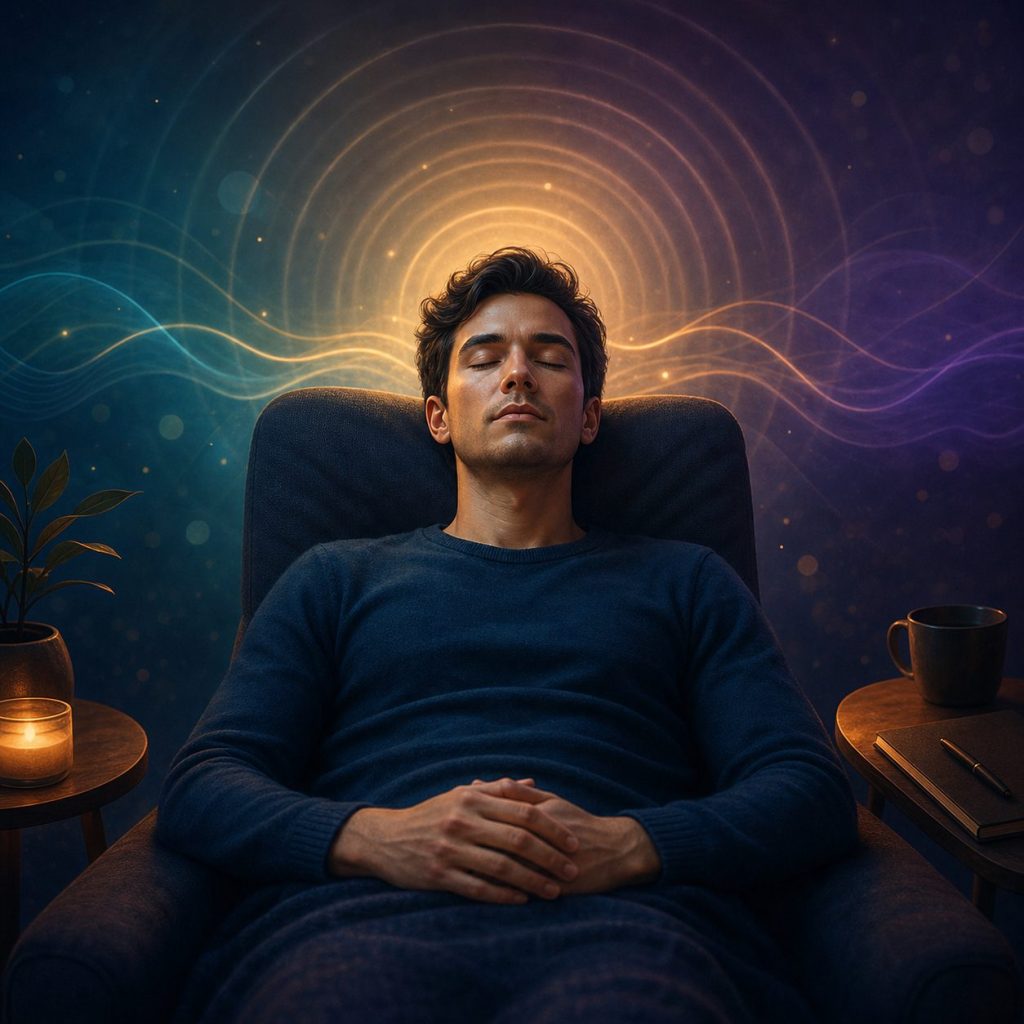
To enter the altered state of consciousness that makes self-hypnosis possible, you need to begin from a place of real calm. The aim is not to force anything, but to settle the mind enough to make contact with what usually remains out of reach in ordinary waking life. That is why the first few attempts can feel uncertain or ineffective. This is perfectly normal. Like any inner practice, self-hypnosis often becomes easier with repetition, especially when you use relaxation methods that help the body and mind let go more quickly.
Related offer
Video 3D Theta Meditation
3D audio & video meditation THETA Visual and audio stimulation to bring you gradually, pleasantly and gently...
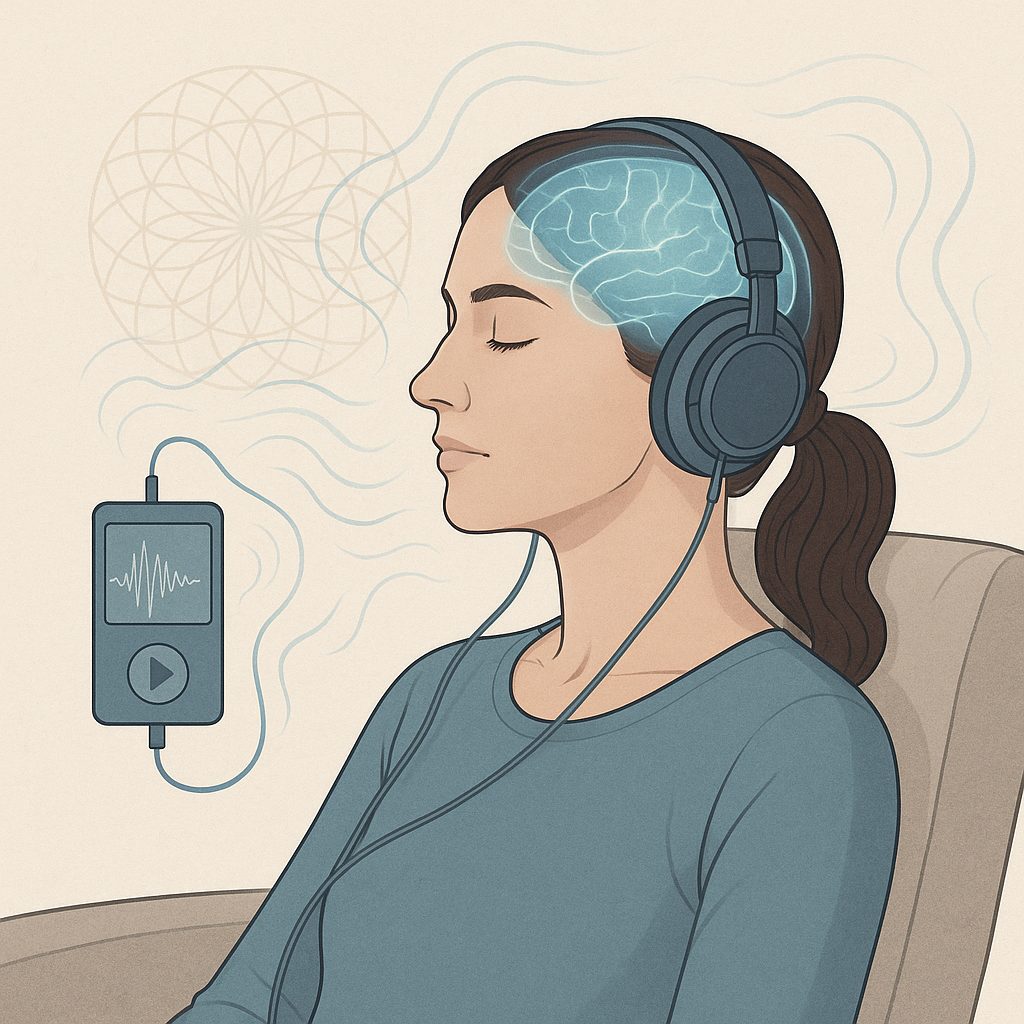
View productIn that spirit, some people find it helpful to use guided sound support before or during a session. A stable audio environment can make it easier to settle, breathe and move gradually toward a more receptive inner state, especially when you are still learning how to practise self-hypnosis on your own. Until the dedicated Mental Waves self-hypnosis resources are fully adapted in English, this should remain a practice suggestion rather than a product recommendation.
The setting matters more than people sometimes realise. A session tends to go better when you are not trying to squeeze it into a restless moment between obligations. A quiet room, a comfortable position, dimmer light, a phone switched off, and the simple decision not to rush can make a marked difference. Self-hypnosis responds well to ritual. Repeating the same conditions each time teaches the mind to recognise what is about to happen.
It also helps to begin with a clear but simple intention. Not a long list of demands, and not a desperate plea for instant transformation, but one steady direction: to calm anxiety, to soften a fear response, to strengthen confidence, to sleep more easily. The more precise and realistic the intention, the easier it becomes for the session to feel grounded rather than vague.
Many people benefit from using a short sequence each time: first settling the body through breathing, then narrowing attention, then introducing a few carefully chosen suggestions. Those suggestions work best when they are phrased positively and credibly. The mind responds more readily to “I am learning to feel safer and steadier” than to harsh commands or statements that feel obviously untrue.
- Choose a quiet moment when you will not be interrupted
- Allow yourself time to relax before expecting results
- Use sound support if it helps you enter the session more easily
What self-hypnosis can help with, and why patience matters
People usually turn to self-hypnosis because something in their inner life is weighing them down. It may be a lack of confidence that affects relationships and social life, a phobia that limits everyday freedom, or ongoing stress and anxiety that gradually wear you out. Self-hypnosis can have a positive effect on all of these difficulties, but rarely in a single session. Some subconscious conflicts have been there for years, and they do not always loosen at the first attempt. Progress can be gradual, with each session helping to untie something that has been held in place for a long time.
Used in that way, self-hypnosis becomes a personal tool for steady inner work. The original image of a battle is not entirely wrong: each session can feel like one step in a longer struggle to regain balance. Even so, the practice itself is not considered dangerous when approached sensibly. The text contrasts this with hypnosis carried out by another person, where the risks come from handing influence over to someone external, especially if they are untrustworthy or manipulative. Self-hypnosis keeps that process in your own hands, which is precisely why many people see it as a safer way to benefit from hypnosis while avoiding the possible drawbacks of a questionable therapist.
Using Mental-Waves sound therapy just before a session may also help condition the mind and prepare it more effectively for trance.
Patience matters here because inner change is rarely linear. Some sessions feel deep and clarifying; others feel flat, distracted or inconclusive. That does not necessarily mean nothing is happening. Often, the value lies in repetition itself. The nervous system learns through familiarity, and the unconscious tends to respond to what is repeated with calm conviction rather than what is demanded in a burst of urgency.
It is also worth saying that self-hypnosis is not only for moments of crisis. Practised regularly, it can become a way of maintaining psychological balance before difficulties become overwhelming. A person who uses it to settle stress early, reinforce self-trust or interrupt spiralling thoughts may find that it supports everyday resilience, not just recovery after things have gone too far.
Still, discernment is essential. If someone is dealing with severe depression, trauma, dissociation or any condition that leaves them feeling unsafe in their own mind, self-hypnosis should not be treated as a substitute for proper professional support. It can be a useful complement in some cases, but depth of suffering deserves depth of care. Used wisely, self-hypnosis is a support for change, not a denial of complexity.

Related offer
Theta Deep Meditation (binaural sounds)
Deep meditation. This session is so deep that it can induce sleep. You may also experience visualizations...
View product- Lack of confidence
- Phobias
- Chronic stress and anxiety
- Long-standing emotional tension
The Mental Waves Self-Hypnosis Practice Framework
The Mental Waves frame is to make self-hypnosis ordinary enough to repeat. A calm state, one precise suggestion and one practical next step are stronger than dramatic promises.
Change becomes more realistic when suggestion and behaviour support each other. Use the session to orient attention, then choose a small action that confirms the new direction.
Before using a suggestion, you can begin with the free Mental Reset session to settle attention and reduce inner noise.
Editorial note from Mental Waves
This article presents self-hypnosis as a personal-development practice. It does not replace psychotherapy, medical care or professional support where those are needed.
Conclusion
At its best, self-hypnosis is less about taking control by force and more about creating the right inner conditions for change. That is part of its appeal: it offers a private, accessible way to work with stress, fear, low confidence or long-standing emotional patterns, without turning the process into a performance. But the article also keeps a useful sense of proportion. Self-hypnosis is not a magic shortcut, and its effects are rarely immediate; it asks for calm, repetition and a little patience with yourself.
What remains valuable, then, is the balance it proposes: a practice that can be both simple and serious, supportive without being spectacular, and safer precisely because it keeps you at the centre of the experience. Used with care, and with the understanding that deeper difficulties may take time to shift, self-hypnosis can become a steady way of reconnecting with parts of yourself that ordinary mental noise tends to drown out. Sometimes, change begins there.
And perhaps that is the most realistic promise it offers. Not a new life delivered all at once, but a different relationship with your own mind: less frightened by it, less ruled by old reflexes, more able to influence the tone of your inner world. For many people, that is not a small change at all. It is the beginning of feeling at home in themselves again.
{
"@context": "https://schema.org",
"@type": "FAQPage",
"mainEntity": [
{
"@type": "Question",
"name": "What is self-hypnosis in practical terms?",
"acceptedAnswer": {
"@type": "Answer",
"text": "Self-hypnosis is a way of guiding yourself into a trance-like state, often described as an altered state of consciousness. In that state, the mind is meant to become more open to the unconscious, which is usually less accessible in ordinary waking life. It is practised alone, at home, without needing specialist equipment or advanced training."
}
},
{
"@type": "Question",
"name": "How is self-hypnosis different from hypnosis with a therapist?",
"acceptedAnswer": {
"@type": "Answer",
"text": "Self-hypnosis is done on your own, whereas traditional hypnosis is usually carried out in a therapist’s office with a practitioner. The main difference is that self-hypnosis keeps the process in your own hands. It also avoids the cost of repeated sessions and reduces the risks linked to relying on an outside person."
}
},
{
"@type": "Question",
"name": "What kinds of difficulties can self-hypnosis be used for?",
"acceptedAnswer": {
"@type": "Answer",
"text": "Self-hypnosis is presented as a way to work on psychological difficulties such as stress, anxiety, low confidence, poor self-esteem, certain phobias and even chronic depression. Examples of phobias mentioned include fear of heights, fear of dying and fear of vomiting. It is used to help loosen deeper inner conflicts linked to these problems."
}
},
{
"@type": "Question",
"name": "Why do the first attempts at self-hypnosis often feel ineffective?",
"acceptedAnswer": {
"@type": "Answer",
"text": "Early attempts can feel unconvincing because reaching the right altered state of consciousness takes calm and practice. It is not always easy to settle into that state straight away. A relaxed frame of mind matters, and repetition helps. The process may become easier over time, especially if you use relaxation methods before the session."
}
},
{
"@type": "Question",
"name": "What conditions help you practise self-hypnosis more effectively?",
"acceptedAnswer": {
"@type": "Answer",
"text": "A calm, settled state is important because self-hypnosis depends on entering a deep enough level of relaxation to make contact with the unconscious. It helps to choose a quiet moment, avoid interruptions and give yourself time to unwind rather than forcing results. The aim is to create the right mental conditions for trance, not to rush into it."
}
},
{
"@type": "Question",
"name": "Can sound sessions be used during self-hypnosis?",
"acceptedAnswer": {
"@type": "Answer",
"text": "Sound sessions can be used a few minutes before or during practice to help prepare the mind for trance. Mental-Waves offers audio sessions for this purpose, with the idea of supporting the brain mechanisms involved in the hypnotic state. They are presented as a way to make self-hypnosis easier to enter, particularly at the beginning."
}
},
{
"@type": "Question",
"name": "How long does it take for self-hypnosis to have an effect?",
"acceptedAnswer": {
"@type": "Answer",
"text": "Progress may take time because some subconscious conflicts have been present for years and may not shift in a single session. Self-hypnosis is described as a gradual process rather than an instant fix. Each session can help move things forward, but patience is important when dealing with long-standing stress, fear or emotional tension."
}
},
{
"@type": "Question",
"name": "Is self-hypnosis dangerous?",
"acceptedAnswer": {
"@type": "Answer",
"text": "Self-hypnosis is not presented as dangerous in itself, provided it is approached sensibly and with basic care. The greater concern raised is with hypnosis led by another person, where suggestion can be misused. Risks mentioned include false memories and manipulation by an untrustworthy practitioner, which self-hypnosis helps to avoid."
}
},
{
"@type": "Question",
"name": "Why might someone choose self-hypnosis instead of seeing a practitioner?",
"acceptedAnswer": {
"@type": "Answer",
"text": "Self-hypnosis can appeal because it is accessible, private and more independent. It can be practised at home, does not require specialist equipment and avoids handing control of the session to someone else. For people who want to work on stress, phobias or low confidence without the cost or uncertainty of a practitioner, that autonomy can matter a great deal."
}
}
]
}
Frequently Asked Questions About Self-Hypnosis
What is self-hypnosis in practical terms?
Self-hypnosis is a way of guiding yourself into a trance-like state, often described as an altered state of consciousness. In that state, the mind is meant to become more open to the unconscious, which is usually less accessible in ordinary waking life. It is practised alone, at home, without needing specialist equipment or advanced training.
How is self-hypnosis different from hypnosis with a therapist?
Self-hypnosis is done on your own, whereas traditional hypnosis is usually carried out in a therapist’s office with a practitioner. The main difference is that self-hypnosis keeps the process in your own hands. It also avoids the cost of repeated sessions and reduces the risks linked to relying on an outside person.
What kinds of difficulties can self-hypnosis be used for?
Self-hypnosis is presented as a way to work on psychological difficulties such as stress, anxiety, low confidence, poor self-esteem, certain phobias and even chronic depression. Examples of phobias mentioned include fear of heights, fear of dying and fear of vomiting. It is used to help loosen deeper inner conflicts linked to these problems.
Why do the first attempts at self-hypnosis often feel ineffective?
Early attempts can feel unconvincing because reaching the right altered state of consciousness takes calm and practice. It is not always easy to settle into that state straight away. A relaxed frame of mind matters, and repetition helps. The process may become easier over time, especially if you use relaxation methods before the session.
What conditions help you practise self-hypnosis more effectively?
A calm, settled state is important because self-hypnosis depends on entering a deep enough level of relaxation to make contact with the unconscious. It helps to choose a quiet moment, avoid interruptions and give yourself time to unwind rather than forcing results. The aim is to create the right mental conditions for trance, not to rush into it.
Can sound sessions be used during self-hypnosis?
Sound sessions can be used a few minutes before or during practice to help prepare the mind for trance. Mental-Waves offers audio sessions for this purpose, with the idea of supporting the brain mechanisms involved in the hypnotic state. They are presented as a way to make self-hypnosis easier to enter, particularly at the beginning.
How long does it take for self-hypnosis to have an effect?
Progress may take time because some subconscious conflicts have been present for years and may not shift in a single session. Self-hypnosis is described as a gradual process rather than an instant fix. Each session can help move things forward, but patience is important when dealing with long-standing stress, fear or emotional tension.
Is self-hypnosis dangerous?
Self-hypnosis is not presented as dangerous in itself, provided it is approached sensibly and with basic care. The greater concern raised is with hypnosis led by another person, where suggestion can be misused. Risks mentioned include false memories and manipulation by an untrustworthy practitioner, which self-hypnosis helps to avoid.
Why might someone choose self-hypnosis instead of seeing a practitioner?
Self-hypnosis can appeal because it is accessible, private and more independent. It can be practised at home, does not require specialist equipment and avoids handing control of the session to someone else. For people who want to work on stress, phobias or low confidence without the cost or uncertainty of a practitioner, that autonomy can matter a great deal.