en
enVotre panier est vide.



Whatever the genre, music has long been recognised for its ability to affect the mind, mood and behaviour. That influence is not simply anecdotal. A major review of the evidence found that music therapy can be beneficial for people living with schizophrenia, whether it involves making music actively or listening to it in a more receptive way.
That matters because music therapy is not treated here as a vague idea of comfort, but as a therapeutic approach in its own right: one that can support communication, ease distress and help patients feel more able to reconnect with themselves and with others. The picture that emerges is measured rather than simplistic, but it is clear enough to deserve attention, especially when this kind of care is used alongside conventional treatment and over time.
In short: can music therapy help people with schizophrenia?
Music therapy may help some people living with schizophrenia when it is delivered by trained professionals and used alongside standard psychiatric care. Research suggests possible benefits for mental state, negative symptoms, communication and quality of life, but results are not uniform and the approach should stay firmly supportive.
- Music therapy is structured care, not simply playing relaxing music in the background.
- Active sessions may involve voice, rhythm, instruments or songwriting.
- Receptive sessions may involve guided listening and reflection with a therapist.
- It should not replace medication, psychotherapy, crisis support or coordinated clinical care.
For general relaxation outside clinical treatment, the Free 10-Minute Mental Reset Session can offer a gentle sound-led pause. Mental Waves products such as Sound Therapy with Tibetan Bowls, Magical Whale Song and Anxiety Reducer should be presented as wellness supports only, not schizophrenia interventions.
The Mental Waves Care-Safe Music Framework
When a topic touches schizophrenia, the first principle is safety. Sound can be meaningful, but the context matters more than the track. A person living with psychosis, distress or sensory sensitivity may respond very differently from one day to the next, so any sound practice must remain flexible, consent-based and connected to real care.
- Keep clinical care central: music can support a plan, but it should not replace prescribed treatment or professional follow-up.
- Prefer therapist-led work: structured music therapy is different from casual listening.
- Start with low intensity: use moderate volume, simple textures and short sessions.
- Watch the response: stop if sound increases agitation, fear, confusion or sensory overload.
- Use music for connection: the most useful outcome may be expression, trust and communication rather than symptom chasing.
This framework keeps the article grounded. It allows us to honour the promise of music therapy without making the kind of exaggerated claim that can be harmful in mental health content.
What Music Therapy Really Involves
A therapeutic use of music, not simple background listening
Music therapy is the therapeutic use of music to support a person’s wellbeing and recovery. Used properly, it can help maintain, restore or improve physical, mental and emotional health. In that sense, it is not just about enjoying a song or feeling briefly soothed by a melody. It is a structured form of care, guided by a trained professional and used with a clear therapeutic purpose.
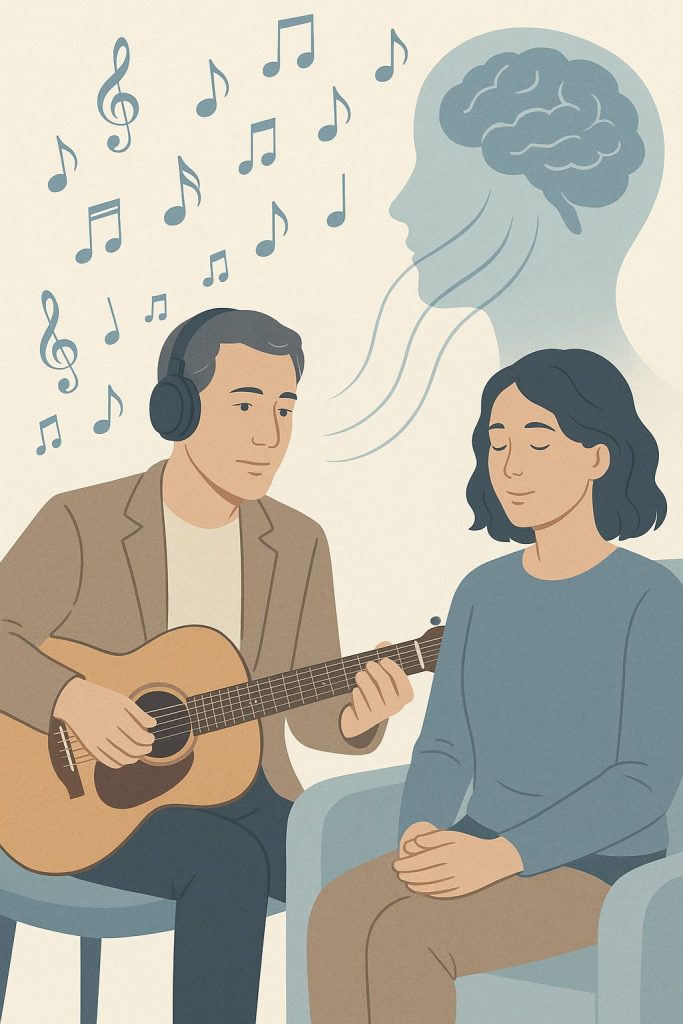
Like other forms of therapy, its aim is to help the patient communicate. Through sound-based stimulation, it seeks to create a state that feels calmer, safer and more comforting. That shift can make it easier for someone to open up, both inwardly and in their relationships with others. Over time, a person supported by a music therapist may also regain confidence and feel better able to cope with suffering, anxiety and depression. In practice, music therapy generally takes two main forms: active and passive.
- to encourage communication
- to create a more soothing emotional state
- to support confidence and emotional resilience
The difference between active and passive music therapy
In active music therapy, patients take part directly. They may do vocal exercises, work with rhythm, or even compose songs themselves. The point is not musical performance, but self-expression. For some people, putting feelings into words is difficult; using voice, rhythm or simple musical creation can offer another route into what they are experiencing.
In passive, or receptive, music therapy, the patient listens rather than performs. Even this more discreet form of therapy can be meaningful. Listening to music in a therapeutic setting may help a person regulate attention, improve concentration, and gain better control over memory and emotions. The two approaches are different, but they share the same goal: helping the patient reconnect with themselves in a way that feels manageable and supportive.
Why Music Therapy Can Support People Living With Schizophrenia
What the Cochrane review actually found
A review published by the Cochrane Group suggested that music therapy can have a real place in the care of people living with schizophrenia. To reach that conclusion, researchers examined a very large body of work on the effects of music therapy sessions in patients with this condition. Although around 180 pieces of research were initially identified, only 18 studies, carried out between 2010 and 2015, were ultimately considered reliable enough to be included.
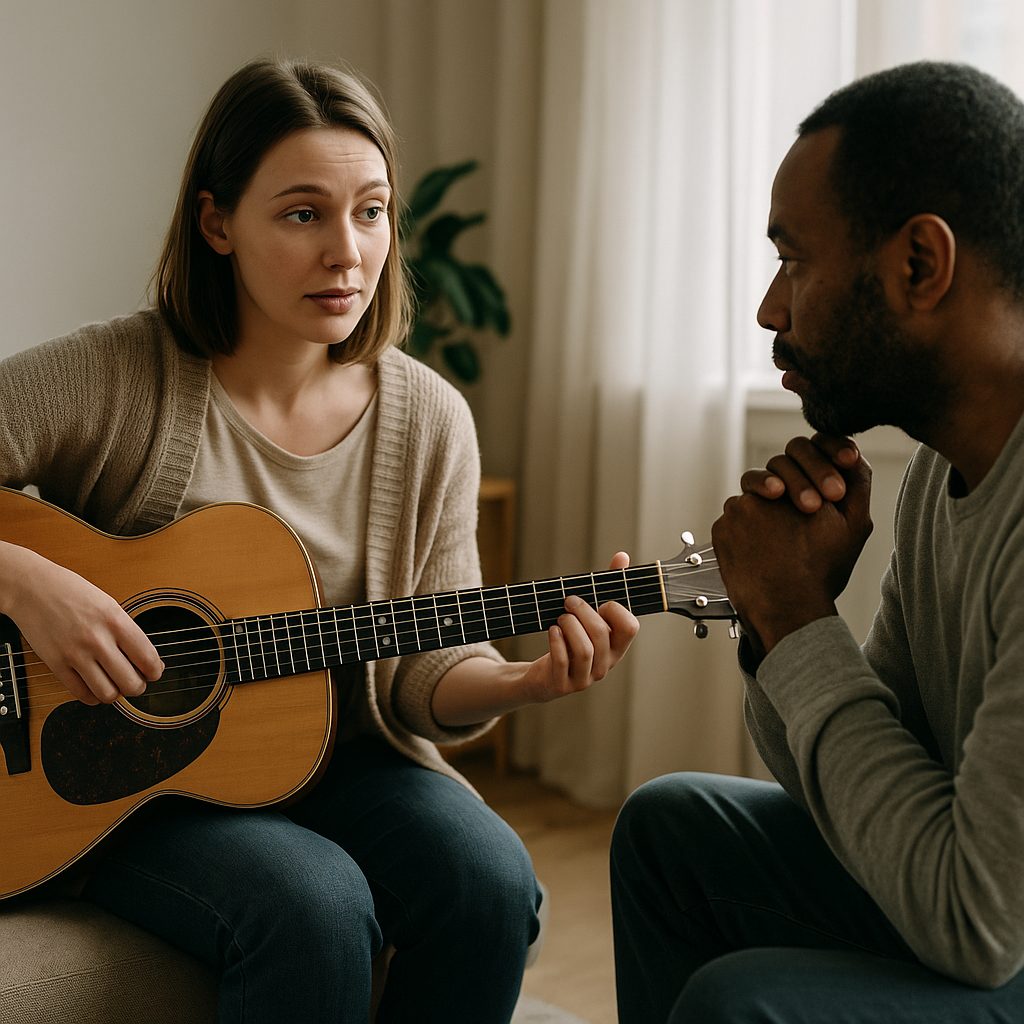
Those 18 studies involved around 1,200 people with schizophrenia, with programmes ranging from 7 to 240 sessions. The researchers looked at both main forms of music therapy already described earlier in the article: active sessions, in which participants took part in vocal or rhythmic exercises, and receptive sessions, based on listening to music. That matters, because it shows the benefits were not tied to one narrow method alone, but observed across different therapeutic uses of music.
- 18 studies retained from an initial pool of around 180
- About 1,200 participants included
- Programmes ranged from 7 to 240 sessions
- Both active and receptive music therapy were assessed
Benefits, limits and the conditions for real progress
Across these studies, the results pointed to an improvement in mental health when music was either practised or listened to as part of therapy. Researchers also reported a reduction in certain so-called negative symptoms, including blunted emotional response, reduced speech and loss of pleasure. The original findings are not entirely straightforward, however, and some results were less conclusive than others. In other words, music therapy appears promising, but not every effect was observed with the same consistency in every study.
The researchers therefore stressed an essential point: music therapy should be used alongside conventional drug treatment, not as a replacement for it. They also highlighted two practical conditions for seeing meaningful results: sessions need to be regular, and they need to continue over time. In practice, the benefit seems stronger when therapy is sustained, with a programme extending to at least 20 sessions rather than being limited to a few isolated appointments.
What a music therapy session may look like
A professional music therapy session usually begins with assessment rather than performance. The therapist observes how the person responds to sound, silence, rhythm, voice, choice and social contact. The aim is to find a musical doorway that feels safe enough to use.
Related offer
Sound Therapy with Tibetan Bowls
Discover the ancestral power of Tibetan bowls. It's been proven that singing them helps regenerate and restore serenity and well-being...
View productSome sessions may involve simple percussion, humming, vocal imitation, songwriting, improvisation or listening to a selected piece and discussing what it evokes. The value is not musical talent. The value is expression, regulation and relationship inside a structured therapeutic frame.
| Session element | Possible purpose | Safety note |
|---|---|---|
| Rhythm work | Supports timing, attention and shared action. | Keep the rhythm simple if stimulation is difficult. |
| Voice or humming | Can give expression when words are hard to access. | Never pressure someone to sing or perform. |
| Guided listening | Creates a contained space for reflection and emotion. | Stop if the music increases fear, agitation or confusion. |
| Song creation | Helps organise experience into a communicable form. | The therapist should pace the process carefully. |
When music may not be the right support
Music is not automatically calming. For some people, certain sounds can feel intrusive, emotionally loaded or overwhelming. In schizophrenia care, this matters because sensory intensity, fatigue, paranoia or distress can change how music is received.
For that reason, any music-based support should remain optional and adjustable. If the person becomes more agitated, withdrawn, frightened or overloaded, the sound should stop. Silence, conversation, grounding or professional support may be more appropriate in that moment.
How families can talk about music without adding pressure
Families often want to help, and music can feel like a gentle place to begin. The safest question is not “What music will help?” but “Would music feel okay right now?” That wording leaves choice with the person and avoids turning sound into another expectation.
It can also help to ask practical questions: What volume feels comfortable? Are headphones too intense? Is silence better today? Would a familiar track feel safer than something new? These small details matter because they respect the person’s sensory experience instead of assuming a universal response.
If a clinical team is involved, families can mention music preferences, strong reactions and calming cues during appointments. This does not turn home listening into therapy, but it may give professionals useful context about communication, emotion and sensory comfort.
Music therapy is not the same as ordinary listening
This distinction is essential. Ordinary listening can be comforting, but music therapy includes assessment, relationship, pacing and adaptation by a trained professional. The therapist chooses or shapes the musical activity according to the person’s state, goals and responses.
For the same reason, the evidence cannot be transferred directly to any playlist. A playlist may support mood or routine, but it does not provide clinical observation, therapeutic timing or a shared process. For schizophrenia-related care, that professional frame is part of what makes the intervention meaningful, especially when symptoms, medication effects, sleep and social stress are changing over time. It also helps protect the person from unwanted intensity. In this area, gentleness and structure matter as much as musical beauty.
Signals that the sound practice should pause
A music practice should pause if it increases agitation, fear, suspiciousness, confusion, sensory overload, withdrawal or distress. It should also pause if the person says no, changes their mind or seems unable to disengage from the sound comfortably.
In those moments, the best support may be quieter and simpler: reduce noise, lower light, offer water, return to a familiar routine or contact appropriate support. The guiding principle is dignity. Music is useful only when it helps the person feel safer, more connected or more able to express themselves.
How to read the evidence with the right level of caution
NIMH describes schizophrenia as a serious mental illness that affects how a person thinks, feels and behaves, and emphasizes that treatment can help people engage in school, work, independence and relationships. That context is essential: music therapy belongs inside a broader care picture.
Related offer
Anxiety reducer
This session uses Alpha and Beta wave stimulation to relax, alleviate...
View productThe Cochrane review on music therapy for people with schizophrenia and schizophrenia-like disorders concluded that music therapy added to standard care may improve global state, mental state, social functioning and quality of life, while the certainty and consistency of findings vary. The practical signal is encouraging, but it does not justify replacing established care.
Practical boundaries for families and listeners
If a person with schizophrenia enjoys music, the safest starting point is not intensity. It is choice, predictability and consent. Use moderate volume, avoid confrontational or emotionally destabilising tracks, and keep the session short enough that the person can stop easily.
Families should also avoid turning music into pressure. A song that feels beautiful to one person may feel intrusive to another. The question is not whether the track is objectively calming, but whether the person feels more connected, safer or better able to communicate after listening.
Sources and further reading
- Schizophrenia, National Institute of Mental Health.
- Music therapy for people with schizophrenia and schizophrenia-like disorders, Cochrane Database of Systematic Reviews, DOI 10.1002/14651858.CD004025.pub4.
- Music and Health: What You Need To Know, NCCIH.
Editorial note from Mental Waves
This article is educational and wellness-oriented. It is not a crisis resource, diagnostic guide or substitute for psychiatric care. Anyone experiencing psychosis, severe distress, medication concerns or safety risks should contact qualified mental health services or emergency support.
Conclusion
What emerges, then, is not the idea of music as a miracle solution, but something both more modest and more meaningful: music therapy can offer real support to people living with schizophrenia, especially when it is practised regularly and alongside conventional treatment. Whether it involves making music or simply listening with therapeutic intent, its value seems to lie in the way it can reopen channels of expression, soothe distress and, in some cases, soften the weight of certain negative symptoms.
That nuance matters. The evidence points to benefits, but not to a universal or standalone solution, and the quality and continuity of the sessions appear to make a genuine difference. Seen in that light, music is not just a pleasant addition to care; it can become a structured, humane way of helping someone feel a little more connected to themselves and to others. Sometimes, that is already a significant step.
Frequently asked questions about music therapy for schizophrenia
What is music therapy for schizophrenia?
It is the structured use of music by a trained therapist to support communication, expression, regulation and connection in people living with schizophrenia or related conditions. It is different from casual listening.
Can music therapy help schizophrenia symptoms?
Research suggests it may help some people, especially as an addition to standard care. Possible benefits include mental state, negative symptoms, social functioning and quality of life, but effects vary between studies and individuals.
Does music therapy replace medication or psychiatric care?
No. Music therapy should be used as a supportive approach alongside appropriate clinical care. It should not replace medication, psychotherapy, crisis planning or professional follow-up.
What is the difference between active and receptive music therapy?
Active music therapy involves participating through voice, rhythm, instruments or creation. Receptive music therapy focuses on listening and reflection. Both can be structured by a therapist according to the person’s needs.
How many music therapy sessions are usually needed?
Studies have used very different programme lengths, from a few sessions to many months. The evidence suggests that regularity and continuity matter more than a single isolated listening session.
Can families use music at home to support someone?
They can use music gently if the person wants it, but home listening is not the same as clinical music therapy. Keep volume moderate, respect preferences and stop if the music increases distress or agitation.
What kind of music is safest to start with?
Start with music the person already finds comfortable, predictable and non-intrusive. Avoid loud, chaotic, emotionally intense or unwanted sound, especially when the person is tired, overstimulated or distressed.
Are Mental Waves products schizophrenia treatments?
No. Mental Waves products can be framed only as general wellness or relaxation supports. They are not designed to manage psychosis, replace professional care or make clinical promises.
When should someone seek urgent help?
Seek urgent support if there is risk of harm, severe distress, worsening psychosis, suicidal thoughts, medication concerns or inability to function safely. Sound practices should never delay real clinical help.