en
enVotre panier est vide.



Music has long been associated with healing, not only because it moves us emotionally, but because it seems to reach parts of the mind that ordinary thought cannot always touch. In the approach attributed to Charles Baudouin and relayed in Dr Joseph Murphy’s The Power of Your Subconscious Mind, that healing potential is linked to the subconscious: the idea is that a carefully chosen phrase, repeated in a gentle, almost lullaby-like way, can help impress a desired outcome more deeply on the mind.
This rests on a broader view of the subconscious as a powerful inner mechanism, one that absorbs far more than we notice and responds to the messages we give it. In that sense, music is not treated here as simple background comfort, but as a means of softening resistance, encouraging a drowsy, receptive state, and helping a suggestion settle more fully. The result is a method that brings together repetition, imagination and sound in a way that is both strikingly simple and historically rooted in an older tradition of mental healing.
There is something quietly compelling about that image of a phrase repeated like a lullaby. Most of us know, from experience rather than theory, that the mind does not always change through force. It often changes through atmosphere, rhythm and repetition. A thought spoken harshly can bounce off us; the same thought, carried gently and repeated over time, can begin to feel believable, familiar and inwardly real.
In short: what is a mental healing technique with music?
A mental healing technique with music is a structured way of combining calm attention, repeated suggestion and sound so the subconscious can receive a clearer inner message. In this article, the idea is treated as a wellbeing practice, not as a medical cure.
- The phrase should be simple and affirmative.
- Music can help the mind enter a more receptive state.
- Repetition matters more than intensity.
- The method should remain realistic and supportive.
For more on the hidden layers of mind, read Our Subconscious. For a sound-based contemplative cue, receive the free Sacred Frequency Session.
That is part of what gives this method its enduring appeal. It does not ask for heroic effort. It asks for steadiness, for a little patience, and for the willingness to notice that the inner life is shaped not only by dramatic moments, but by what we quietly rehearse day after day.
Charles Baudouin’s method and the hidden work of the subconscious
A simple suggestion technique designed to sink in deeply
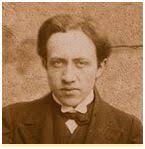
Charles Baudouin, a psychotherapist, psychoanalyst and research director at the Nouvelle École de Nancy, developed a method intended to impress a precise idea upon the subconscious. The principle is simple in appearance: without forcing anything, you allow yourself to drift into a drowsy, half-awake state, then introduce the idea you want to plant there. In this approach, the mind is not pushed or strained; it is gently prepared to receive a message more fully.
Baudoin’s method also gives an important place to rhythm and musicality. As he explained, “A very simple way of achieving the impregnation of the subconscious is to condense the idea that is to be the object of the suggestion, to sum it up in a short phrase that can be easily engraved in the memory, and to repeat it many times like a lullaby.” That image matters. The phrase must be brief, memorable and repeated softly, almost as if it were being sung to the deeper mind. In other words, the subconscious is not reached through argument, but through repetition, simplicity and a calm, receptive state.
What makes this especially interesting is that it respects the way the mind naturally loosens at the edges when we are tired, resting or just about to fall asleep. In those moments, the usual inner resistance often softens. We are less busy defending ourselves, less inclined to analyse every word, and more open to suggestion in the broadest sense of the term. Baudoin’s method makes use of that threshold state rather than fighting against it.
There is also a practical wisdom in reducing a desire to one short sentence. Many people sabotage themselves by inwardly speaking in paragraphs: they want something, then question it, then explain why it may not happen, then try to correct the whole thing. A concise phrase cuts through that noise. It gives the mind one clear direction instead of several competing ones.
- enter a natural state of drowsiness
- reduce the idea to a short, clear phrase
- repeat it gently, like a lullaby
Why clarity matters when speaking to the subconscious
The logic behind this technique rests on a particular view of the subconscious. We are often only partly aware of what we say and think, while much of our behaviour unfolds almost automatically throughout the day. Yet consciousness still plays a decisive role, because it is through conscious intention that we direct what we want. The subconscious, in turn, is presented here as the part of the mind that influences how we act and helps bring about the results we keep feeding it. The text even suggests that, for an active person living in a large city, it may register thousands of messages a day, storing what has been seen, heard or perceived since conception.
That is why Baudoin’s perspective insists on precision, vigilance and positive formulation. The subconscious is described as a faithful executor rather than a reasoning judge: it does not sort good from bad, nor does it correct our vague or contradictory instructions. It follows the dominant message, especially the most recent one, and tends to reproduce what it has been given. So if you repeatedly nourish it with fear, self-doubt or negative expectations about a place, a situation or yourself, those patterns may return again and again. If, on the other hand, you become lucid about your thoughts and give the subconscious a clear, steady and constructive direction, you begin to use its power more deliberately.
That is the real foundation of Baudoin’s method.
Whether one takes this literally or more symbolically, the underlying point is hard to dismiss: repeated inner language has consequences. The phrases we use with ourselves are not neutral. Over time, they become emotional habits. They shape posture, expectation, confidence and even the choices we notice ourselves making. A person who constantly rehearses failure often begins to move through life as though disappointment were already arranged in advance.
Clarity matters because the mind responds badly to mixed signals. If one part of you says, “I am ready”, while another keeps whispering, “This will never work”, the deeper impression is often confusion rather than progress. That is why so many suggestion-based methods place such emphasis on simple wording. A clear sentence is not magic, but it can become a stable point around which the rest of the mind gradually reorganises itself.
- be careful what you repeatedly tell yourself
- formulate the message clearly and positively
- avoid feeding the mind fear or contradiction
How to Guide the Subconscious More Effectively
Protect the direction of your inner message
To guide your subconscious more effectively, the first step is not to let other people’s opinions pull you away from what you truly want. If you keep changing direction because of outside influence, you weaken the message you are sending inward. In this approach, the subconscious responds best to consistency: when you give it the same intention again and again, it begins to work in that direction and can help bring about situations, choices or encounters that support your aim.
That is why the subconscious can become a powerful ally. But it only does so if you learn to give it a clear orientation and then allow it to guide you, rather than constantly interrupting it with doubt or contradiction. In practical terms, that means staying faithful to your desire, keeping your inner language steady, and avoiding the habit of mentally undoing what you have just asked for.
This does not mean becoming rigid or deaf to reality. It means learning the difference between thoughtful adjustment and chronic inner wavering. Many people never give an intention enough time to take root because they uproot it themselves every few hours. They decide, then retreat; hope, then mock their own hope; ask inwardly for one thing, then spend the rest of the day rehearsing its opposite. The subconscious, in this view, cannot work cleanly with that kind of interference.
There is a quieter discipline involved here: protecting the tone of your inner life. Not every opinion deserves entry. Not every fear deserves repetition. If you are trying to establish a new direction within yourself, it helps to become more selective about what you mentally entertain, especially in moments when you are tired, emotionally open or easily influenced.
- Do not let outside opinions redirect your desire.
- Repeat the same inner message with consistency.
- Avoid contradicting your own intention.
Use images, certainty and the language of completion
To make this inner work more effective, use images and visualisation in daily life. Think about the right actions to take, then picture their outcome as clearly as you can. The idea here is simple: the subconscious responds more readily when it receives a vivid impression rather than a vague wish. For the same reason, it is better to focus on the result you want than on every step in between. In other words, ask for the finished outcome, not the entire method.

Related offer
Sound Therapy with Tibetan Bowls
Discover the ancestral power of Tibetan bowls. It's been proven that singing them helps regenerate and restore serenity and well-being...
View productJust as importantly, try not to feed the process with doubt. Trust your subconscious to do its work. When you address it, speak in the present tense or as though the desired result has already been achieved, because that is the form it is said to understand best. So rather than dwelling on what is missing, place your attention on what is already taking shape inwardly. This combination of clear imagery, confidence and precise wording is presented here as one of the most practical ways to work with the subconscious rather than against it.
Visualisation tends to work best when it is concrete rather than theatrical. You do not need to create an elaborate fantasy. Often a simple, believable image is stronger: seeing yourself calm in a situation that usually unsettles you, hearing your own voice speak with ease, sensing the relief of having already crossed a difficult threshold. The point is not to escape reality, but to give the mind a new pattern to recognise.
The language of completion matters for a similar reason. A mind that is always saying “one day”, “perhaps”, or “if only” remains emotionally tied to absence. By contrast, language that suggests arrival or fulfilment can create a different inner posture altogether. It shifts the feeling from longing to quiet expectancy. That shift may seem subtle, but inwardly it can be decisive.
- Visualise the action and its positive result.
- Ask for the end result, not every intermediate detail.
- Use the present tense or the language of something already accomplished.
- Replace doubt with trust and steadiness.
When Music Meets the Subconscious
Why music reaches us so deeply
As we have seen, music has real power, and the subconscious is powerful too. Brought together, they can become a remarkably effective pairing. Music and sound affect far more than simple mood: they can alter our inner state, stir emotion and even reshape the way the imagination responds. In that sense, music does not only touch one part of us. It can act on the physical, emotional and mental levels at the same time, which helps explain why its effects can feel so immediate and so difficult to put fully into words.
When we listen, the brain produces a kind of neuronal symphony. Sound is processed across the brain, and its influence extends well beyond conscious thought. Music can work on the unconscious without asking our permission first, while also interacting with our wider cognitive functions. That is why certain pieces can suddenly revive memories, soften negative patterns or help ease forms of suffering that have marked us deeply. Science and medicine continue to take an interest in this power, but on a human level many people already recognise it instinctively: some music calms, some opens, and some seems to reach places ordinary language cannot.
Anyone who has ever been unexpectedly moved by a melody already knows this in a very direct way. A piece of music can return us to a forgotten room in our life within seconds. It can steady the breath, loosen grief, awaken courage or make us feel less alone in something we had not yet managed to name. That is not a small effect. It suggests that music does not merely decorate experience; it can reorganise it from within.
Part of its power lies in the fact that music bypasses the need to explain. We do not have to agree with it intellectually before it affects us. Rhythm enters the body, tone colours emotion, repetition creates familiarity, and harmony can produce a sense of order where inwardly there has been strain. This is one reason music can be such a natural companion to suggestion work: it prepares the whole person, not just the thinking mind.
- It can influence emotion and inner state
- It can stimulate imagination and memory
- It can affect the body, mind and emotional life together

Charles Baudouin’s musical suggestion technique
Charles Baudouin proposed a healing technique based on music, and its principle is simple: sing a short phrase repeatedly, almost like a lullaby, so that the subconscious can absorb it more easily. The idea is not repetition for its own sake. Here, repetition supports mental integration; singing adds an emotional dimension; and the lullaby-like form creates a reassuring, containing atmosphere. In other words, the method works not only through the words themselves, but through the way they are carried by rhythm, voice and gentle familiarity.
This is also why the practice can encourage letting go. A phrase sung softly and repeatedly tends to quieten inner resistance, ease tension and create a sense of safety. In that calmer state, fears, doubts and old suffering may begin to loosen their grip. Combined with the broader effects of music on the subconscious, Baudoin’s approach is presented as a path towards healing for those who apply it with care and consistency. If you now understand a little better how music and the subconscious can work together, the next step is a practical one: to try the method for yourself and see what begins to shift.
The voice itself plays a more intimate role than we sometimes realise. Hearing your own voice carry a phrase of reassurance or direction can be profoundly different from merely thinking the words. The body feels it. The chest, throat and breath become part of the process. That embodied quality may help explain why sung suggestion can feel more convincing, more soothing and more emotionally integrated than silent repetition alone.
It also helps to keep the phrase simple and believable. Something too grand or too far removed from your present state may create inner resistance. A gentler formulation often goes further: a sentence that calms, steadies or opens a door rather than trying to force a total transformation overnight. In practice, healing often begins in these modest but sincere shifts. A little more ease. A little less fear. A little more trust in what the mind can learn when it is approached with patience rather than pressure.
- Repetition helps the message sink in mentally
- Singing supports emotional integration
- The lullaby effect creates reassurance and calm
How to Make the Suggestion Clearer
The strength of this method depends less on dramatic wording than on clarity. A suggestion that is too vague, negative or complicated gives the mind too many directions at once. A simple sentence can be easier to repeat, remember and feel.

Related offer
Magical whale song - therapeutic frequencies
Scientists as a whole report that auditory «contact» with whale song induces a...
View productThe sentence should describe the direction you want to embody. It should avoid fighting language and focus instead on the state or action you want to nourish. Music then becomes the atmosphere in which the message can settle.
- Use present-tense wording when it feels natural.
- Keep the sentence short enough to repeat easily.
- Choose music that calms rather than overstimulates.
- Repeat gently, without forcing belief.
The Mental Waves Sound Suggestion Framework
The Mental Waves frame is to treat musical suggestion as a ritual of orientation. The point is not to control the subconscious, but to give it a repeated, coherent signal.
- Settle: choose a calm state before repeating the phrase.
- Phrase: make the inner message clear and nonviolent.
- Sound: let music support attention and receptivity.
- Repeat: return to the practice consistently and lightly.
For the wider field of sound and wellbeing, continue with Sound, Frequency and Vibration. For mental imagery, read Creative Visualisation.
Editorial note from Mental Waves
This article discusses autosuggestion and music as wellbeing supports. It should not be read as a promise of cure, diagnosis or replacement for clinical care.
Conclusion
What emerges here is not a promise of instant transformation, but a more subtle idea: the mind responds to what it is repeatedly given, especially when that message is simple, emotionally charged and offered in a state of relative calm. In that sense, Baudouin’s method sits at the meeting point of intention and receptivity. The subconscious is presented less as a mystical force than as a part of us that absorbs, reproduces and amplifies what we impress upon it — for better or worse.
Music matters because it can carry a suggestion past resistance and into feeling. A repeated phrase, sung like a lullaby, does more than state a wish: it gives it rhythm, softness and emotional weight. That is where the article keeps its balance. Healing is not reduced to a trick, nor is music treated as magic; rather, both become tools for orienting the inner life with more care, more precision and perhaps a little more trust. Sometimes, a quieter message goes further.
Perhaps that is the most valuable thing to retain from this approach. We are always impressing something upon ourselves, whether consciously or not. The question is not whether suggestion exists in our lives, but whether we take any care with it. The words we repeat, the sounds we live with, the emotional tone we rehearse inwardly: all of these leave traces.
To use music and suggestion well is therefore less about controlling the mind than about befriending it. It is a way of working with its rhythms instead of against them. And for many people, that gentler way in may be precisely what allows change to begin.
Frequently Asked Questions About Mental Healing Technique with Music
What is a mental healing technique with music?
It is a wellbeing practice that combines repeated suggestion, calm attention and music to support inner orientation.
Who was Charles Baudouin?
Charles Baudouin was a psychologist associated with autosuggestion and the influence of repeated inner phrases.
Why use a calm or drowsy state?
A calmer state may make the mind less defensive and more receptive to a repeated phrase.
How should the suggestion be worded?
It should be short, clear, affirmative and focused on the direction you want to support.
Why does music matter?
Music can create an emotional and rhythmic atmosphere that helps attention settle around the phrase.
Does this cure illness?
No. It is presented as a wellbeing and inner-work support, not as clinical care.
How often should it be repeated?
Short regular practice is usually more useful than rare intense repetition.
Can visualisation help this method?
Yes, simple imagery can make the suggestion more concrete and emotionally meaningful.
What is the main takeaway?
Music can support autosuggestion when the message is clear, gentle, repeated and grounded in realistic intention.