en
enVotre panier est vide.



Sophrology for weight loss is best understood as a support for behaviour change, not as a shortcut around biology. It cannot replace nutrition, movement, sleep or medical care. What it may do is help you work with the part of weight management that is often ignored: stress, body awareness, emotional eating, self-talk and the repeated moments where a choice becomes automatic.
In short: losing weight with sophrology
Losing weight with sophrology is less about forcing the body and more about changing stress, attention and behaviour around food with patience.
Use this article as a practical map: keep what helps attention become steadier, question anything that sounds absolute, and connect the idea back to repeatable daily practice.
The Mental Waves angle is simple. When the nervous system is overloaded, food can become a fast way to soothe tension, reward exhaustion or escape discomfort. A guided sound and sophrology practice gives attention another place to land. It creates a short pause, a calmer internal tone and a more conscious relationship with the next action.
The Mental Waves Sophrology Weight-Management Framework
At Mental Waves, the goal is not to make weight loss feel more severe. The goal is to make self-regulation more accessible. A sound-led sophrology practice can become a small daily threshold between stress and reaction, between craving and choice, between self-criticism and steadier action.
- Settle: pause for one to three minutes before eating, planning food or starting a listening session.
- Sense: notice physical hunger, emotional urgency, body tension and the pace of breathing.
- Name: identify the state clearly, such as fatigue, stress, boredom, frustration or real hunger.
- Reframe: use a calm affirmation that supports the next action without denial or pressure.
- Choose: take one concrete step, such as drinking water, preparing a balanced meal or walking briefly.
- Repeat: return to the same cue daily so the nervous system learns the pathway.
This framework also connects with the wider Mental Waves view of sound. Rhythm, repetition and listening can help create a more stable container for attention. The sound does not do the work for you, but it can make the work feel less scattered and less lonely. That matters because many people already know what would help; they need a calmer way to return to it.
Why stress and emotions make weight management harder
Eating can become a nervous-system response
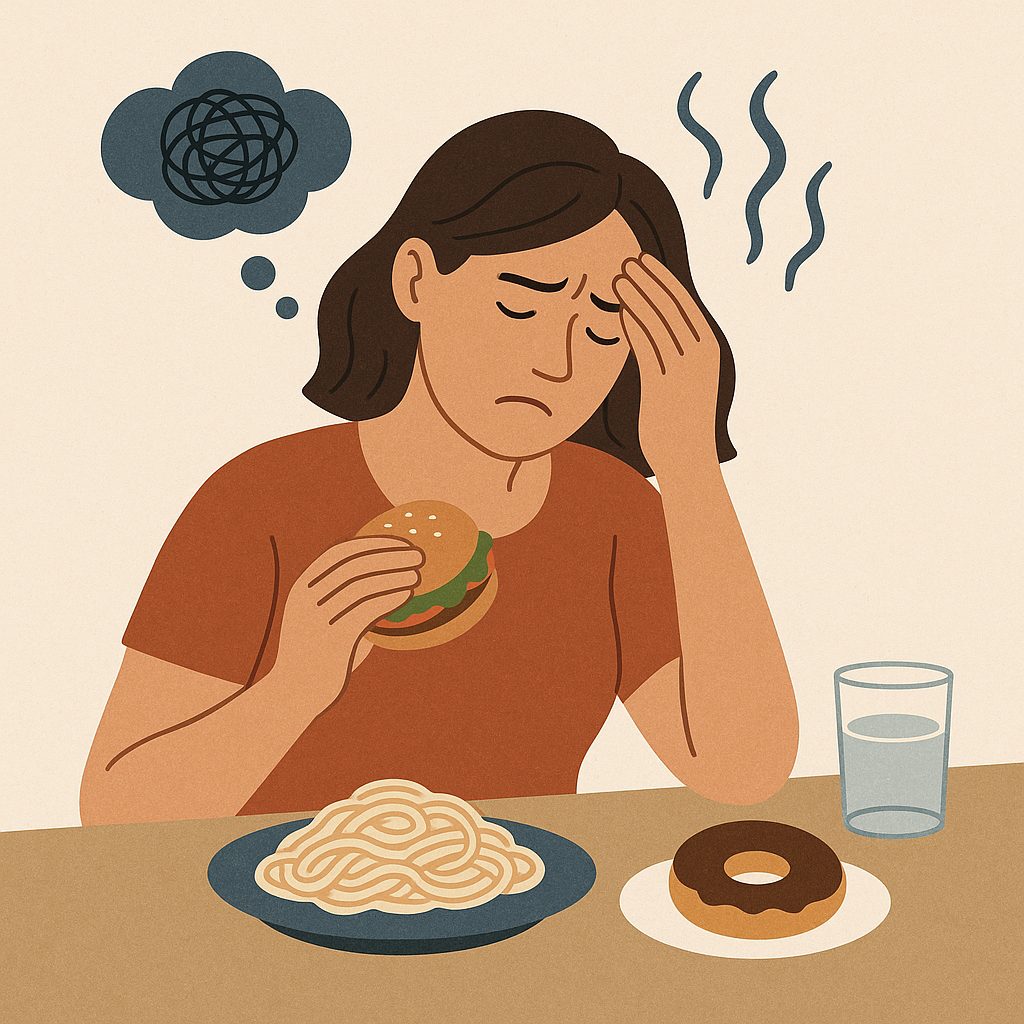
For many people, eating is not only a nutritional event. It is also a way to manage pressure. A difficult message, a long workday, a conflict or a wave of fatigue can activate the search for fast relief. Food is available, concrete and emotionally familiar, so it can become the first response even when physical hunger is not the main signal.
That does not mean the person lacks willpower. It means the behaviour has become part of a regulation loop. The body feels tension, the mind seeks relief, food provides a short reward, then guilt or discouragement may appear. Sophrology is useful here because it gives the loop a different interruption point.
Public health guidance from the CDC on losing weight frames healthy weight management as a lifestyle pattern that includes eating, physical activity, sleep and stress management. That broader view is important: a calmer practice can support the system, but it should not be isolated from the basics.

The hormone story needs careful language
Weight articles often mention insulin, leptin and cortisol. These hormones are relevant to metabolism, hunger and stress, but an audio session does not control them in a simple mechanical way. A safer explanation is that stress, sleep, eating patterns, physical activity and medical factors all influence the wider regulation environment.
This distinction protects the article from exaggerated claims. Sophrology may help by reducing stress reactivity and improving awareness, not by promising direct hormonal control. When the body feels less threatened and the mind is less reactive, healthy choices may become easier to repeat.
How sophrology changes the relationship with eating
It creates a pause before automatic behaviour
The most valuable moment in behaviour change is often very small. It is the second before reaching for food without thinking, the breath before eating quickly, or the pause before saying, "I have failed again." Sophrology trains this small interval by combining breathing, relaxation, mental imagery and suggestion.
That pause is not passive. It gives the person time to ask better questions. Am I hungry, tense, tired or trying to soothe something? What would support me for the next ten minutes? What is one action that does not turn this moment into a battle?
For readers who want a broader reset ritual, the article Mental Reset: 7 Powerful Sound Rituals to Clear a Crowded Mind extends the same principle beyond food: reduce input, return to sound, then choose the next clean action.
It softens self-talk around the body
Self-talk matters because behaviour is rarely built on information alone. A person can know what to eat and still feel trapped by shame, urgency or fatigue. Sophrology uses positive affirmations to replace harsh internal scripts with cues that are more stable and actionable.
A good affirmation does not pretend that everything is already solved. It gives the mind a direction. "I can pause before reacting" is more useful than "I will never crave food again." "I can return to my next choice" is more realistic than "I must be perfect today."
Where sound, affirmations and brainwave language fit
The original article mentions Alpha, Beta and Gamma states. It is fine to use those terms, but the wording should stay precise. Brainwave language can describe the inspiration behind a sound design, yet everyday listening does not place every listener into a specific EEG state.
A more credible claim is that rhythmic sound can act as an attentional anchor. It gives the mind something steady to follow while the body settles. This is consistent with the Mental Waves approach to psychoacoustic listening and with broader explanations in How Sound Affects the Body and Brain.
The NCCIH overview of relaxation techniques describes practices such as breathing exercises, guided imagery, progressive relaxation and autogenic training as ways to bring about the relaxation response. Sophrology sits close to that family of practices because it uses body awareness, imagery and autosuggestion.
How to use sophrology in real eating moments
Before a meal
The best time to practise is not always during a crisis. Before a meal, sophrology can help you enter the moment with more sensory awareness. A short pause gives the body time to register posture, breath, hunger level and emotional tone before the first bite.
Related offer
Anxiety reducer
This session uses Alpha and Beta wave stimulation to relax, alleviate...
View productThis does not need to become ceremonial. You can simply sit down, breathe slowly twice and ask, "What does my body actually need right now?" That question changes the rhythm. It brings attention out of automatic speed and back into contact with the present meal.
For some people, this small pause reduces the tendency to eat as if the day were still chasing them. For others, it makes the meal more satisfying because attention is finally available. Either way, the point is not restriction. The point is presence.
During a craving
A craving can feel urgent because it compresses time. The mind says, "Now." Sophrology lengthens that moment. Breathing, naming and listening help you discover whether the craving is physical hunger, emotional pressure, fatigue, habit or the need for a break.
The first goal is not to make the craving disappear. It is to stop being carried by it without any space. You can place one hand on the abdomen, breathe comfortably and name the driver: "This is stress," "This is tiredness," or "This is real hunger." Naming reduces confusion.
If the body needs food, eat with attention. If the body needs rest, a walk, water, contact or a listening pause, choose that. Sophrology becomes useful because it gives you more than one possible response. That is often where freedom begins.
After a setback
Setbacks are part of any behaviour-change process. The real risk is not one difficult meal or one evening of emotional eating. The risk is the story that follows: "I ruined everything," "I have no discipline," or "I might as well stop trying." That story can restart the cycle.
Sophrology can be used after a setback to lower the emotional charge and return to the next choice. A simple practice is to breathe, release the shoulders and say, "This moment is information, not identity." The sentence is deliberately practical. It separates the event from the person.
From there, the next action should be small. Drink water. Prepare the next meal normally. Go for a short walk. Listen to a calming session. Contact a professional if the pattern feels intense or repetitive. Recovery is built through return, not self-punishment.
A simple daily sophrology practice for weight-management support
The practice below is intentionally modest. It is not a diet plan and it does not replace medical advice. It is a repeatable regulation sequence you can use before a meal, during a craving, after work or before a Mental Waves listening session.
- Stop for one minute: sit or stand still and let the shoulders drop.
- Breathe slowly: use comfortable breathing without forcing the inhale or exhale.
- Scan the body: notice the stomach, jaw, chest, hands and overall tension level.
- Name the driver: identify hunger, stress, tiredness, boredom, sadness or habit.
- Use one affirmation: choose a practical sentence such as, "I can pause and choose."
- Choose one action: drink water, prepare food, move briefly, listen to a session or ask for support.
- Close cleanly: do not judge the result; simply repeat the practice the next time.
For people who already enjoy breath-based regulation, cardiac coherence breathing can also be a useful companion practice. It gives the body a simple rhythm before making decisions, especially when stress is high.
When to use extra support
Sophrology is a wellness support. It is not enough when weight, eating or emotional distress are medically complex. If you have diabetes, cardiovascular concerns, obesity-related health risks, a history of eating disorders, binge episodes, depression, trauma symptoms or intense anxiety, work with qualified professionals.
The NIDDK guidance on treatment for overweight and obesity explains that health care professionals often begin with lifestyle changes and may add tailored programs, medication or surgery where appropriate. That medical context matters, because a sound practice should support care rather than replace it.
Safety also applies to relaxation practices. The NCCIH notes that relaxation techniques are generally considered safe for healthy people, but some people report increased anxiety or intrusive thoughts, and certain conditions may require caution. If a practice makes you feel worse, stop and seek appropriate guidance.
Sources and further reading
- Steps for Losing Weight, CDC, updated January 17, 2025.
- Treatment for Overweight and Obesity, NIDDK, last reviewed May 2023.
- Choosing a Safe and Successful Weight-loss Program, NIDDK.
- Relaxation Techniques: What You Need To Know, NCCIH.
The Mental Waves Regulation Before Change Framework
The Mental Waves frame is to regulate the state before trying to change the behaviour. Food choices, motivation and body image often become harder when stress is running the whole system.
Sophrology can support change when it helps someone breathe, notice sensations, interrupt automatic habits and return to one realistic next step.
If stress eating or mental overload is part of the pattern, begin with the free Mental Reset session before choosing one practical next step.
Editorial note from Mental Waves
This article is educational and does not offer a weight-loss prescription. Eating disorders, metabolic conditions, medication, pregnancy or significant weight concerns require qualified medical guidance.
Conclusion
Losing weight is rarely only a matter of knowing what to do. For many people, the harder part is repeating useful choices while stress, fatigue, cravings and self-criticism keep pulling attention elsewhere. Sophrology can be valuable because it works close to that daily reality.
Its strength is not force. Its strength is creating a calmer internal space where the next choice can become visible. Pausing, breathing, listening, naming the state and choosing one practical action may sound simple, but simple practices are often the ones that survive ordinary life.
Used with safe nutrition, movement, sleep and professional support when needed, sophrology may help weight management feel less like punishment and more like self-regulation. That shift is subtle, but it is often where sustainable change begins.
Frequently asked questions about sophrology and weight loss
Can sophrology really help with weight loss?
Sophrology may help indirectly by supporting stress regulation, body awareness and a calmer pause before automatic eating. It should be treated as a supportive practice, not as a direct fat-loss method or a replacement for safe nutrition, movement, sleep and medical guidance when needed.
Is sophrology a diet?
No. Sophrology does not tell you what to eat or create a calorie plan. It works more on the inner conditions that influence behaviour, such as stress, attention, self-talk, breathing and the ability to notice hunger or emotional urgency before reacting.
Why does stress affect eating habits?
Stress can make eating more reactive because the nervous system looks for fast relief. Food may briefly soothe tension or reward a difficult day, but the effect is usually temporary. A regulation practice can help create a pause between the feeling and the behaviour.
How do positive affirmations help?
Positive affirmations are not magic phrases. They are repeated cues that may help change the inner language attached to food, body image and consistency. They work best when used in a relaxed state and paired with realistic daily actions.
Where do isochronic sounds fit into this approach?
Isochronic sounds can give the listening session a steady rhythmic structure. In a Mental Waves context, sound acts as an attentional anchor that may support relaxation, focus and repetition. The effect should be framed as supportive rather than promised.
How often should I practise?
A realistic rhythm is better than an ambitious one. Start with one short daily listening or breathing practice, then add a second session if it feels sustainable. Consistency matters more than intensity because habits usually change through repetition.
What results can I expect?
The first results may be psychological rather than visible: fewer stress-driven urges, a clearer pause before snacking, less guilt after setbacks or a calmer relationship with eating. Weight changes, if they occur, depend on the wider lifestyle context.
Can sophrology replace professional care?
No. If you have obesity-related health concerns, diabetes, an eating disorder, intense anxiety, depression, trauma symptoms or persistent distress around food, use sophrology only as a complement and seek qualified medical or mental health support.
Which Mental Waves session fits this article best?
For a broad first step, the Free 10-Minute Mental Reset Session is the safest bridge because it supports a calmer transition state. If anxiety is the main driver, the Anxiety reducer session is also relevant as a related Mental Waves product.