en
enVotre panier est vide.



Music, sound and vibration can shape the way we feel more deeply than we often realise. Far beyond simple background noise, they are closely tied to perception, attention and bodily regulation, which is why they have long attracted interest in both therapeutic practice and personal development. Used with care, certain sounds may support wellbeing; used poorly, they may just as easily unsettle the body and mind.
In short: health impact of sound and vibration
Sound and vibration can shape wellbeing in helpful or disruptive ways, but the health impact depends on intensity, context, duration and the listener.
Use this article as a practical map: keep what helps attention become steadier, question anything that sounds absolute, and connect the idea back to repeatable daily practice.
This is not only a modern fascination. The idea that sound can influence health has a long historical lineage and continues to be explored through contemporary research, particularly around frequency, rhythm and their effects on mental state. What matters here is nuance: not every vibration is beneficial, and not every piece of music affects us in the same way. Listening, in that sense, is not neutral. It can be thought of as a form of sound hygiene, one that deserves the same discernment we bring to the rest of what we allow into our lives.
How Music, Sound and Rhythm Can Shape Wellbeing
Sound as a tool for health and self-regulation
Music, sound and vibration can have a real influence on how we feel, both physically and mentally. This idea is now explored not only through lived experience, but also through historical observation and scientific research into perception, regulation and altered states of attention. When used carefully in medicine, wellbeing practices or personal development, sound may help support relaxation, improve comfort and encourage a more balanced inner state. In that sense, it is often approached as a way of bringing the body and mind into better alignment with their environment.
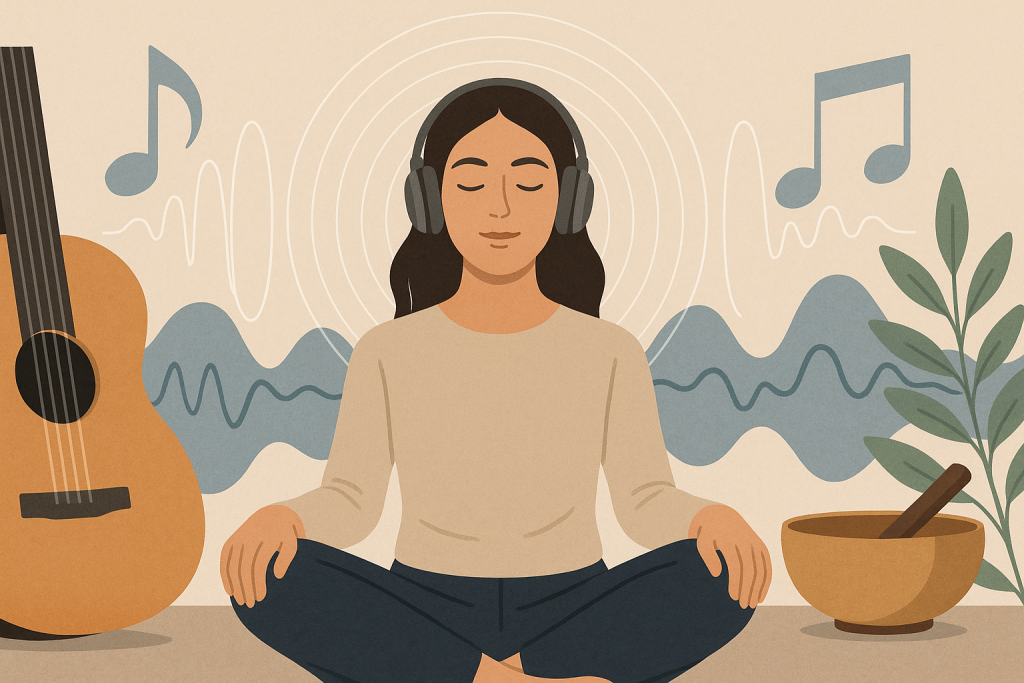
Some frequencies are considered especially beneficial for the body and consciousness, particularly low frequencies just above the infrasound range. These lower bands have long attracted interest in therapeutic settings, where they are used in ways that may produce meaningful effects on the nervous system and bodily perception. This is also why therapeutic music continues to develop: not because every sound supports repair, but because certain sonic structures may genuinely help. At the same time, the opposite is also true. Sound and music can be supportive when used well, yet unsettling when misused.
That is why the idea of sound hygiene matters: learning to choose what we listen to with the same care we bring to other aspects of health.
- Sound may support relaxation and self-regulation
- Low frequencies are often explored for therapeutic use
- Not all music has the same effect on the body or mind
Why rhythm matters as much as melody
A vibration is never static: it unfolds through rhythm, whether simple, compound or polyrhythmic. A slow pulse and a rapid one do not affect perception in the same way, and rhythms built in 2, 3, 4, 7, 16 or even 128 beats each carry their own frequency patterns. Their amplitude can also vary, shift and fluctuate, creating an almost endless range of possible effects. This rhythmic dimension is not limited to music. The wider universe is structured by cycles, and the human body is too, from internal biological rhythms to the constant molecular movement of water that appears still on the surface. Rhythm, in other words, is one of the most basic expressions of vibration.
This is why certain rhythms may feel harmonious, while others can disturb our internal balance. Some sounds and musical styles may create discomfort, tension or a sense that the body is no longer responding naturally. The source text insists that the issue is not always the genre itself, but the rhythm, the waveforms, the frequencies and the beat patterns involved. In that view, styles such as Hard Rock, Heavy Metal and Techno are described as potentially disruptive, and even some pieces by Beethoven are presented as less suitable, despite his stature in classical music.
By contrast, African or Japanese drumming, works by Mozart and Bach, and even styles such as blues or rock and roll are cited as producing rhythms that are not considered harmful. Whether or not one agrees with every example, the underlying point remains useful: choosing music is a little like choosing food. Since music is everywhere, including in cinema where it intensifies sadness, fear or anxiety, it makes sense to ask what kind of sonic environment we are feeding the brain and body each day. In that spirit, some listeners seek out therapeutic vibrational frequencies such as the Sacred Solfeggio.
How Rhythm Interacts with the Body and Mind
Living systems are shaped by rhythm
The range of possible rhythms is virtually endless. A vibration may be simple, layered or polyrythmic; it may unfold slowly or rapidly, in 2, 3, 4, 7, 16 or 128 beats, with changing amplitude, accents and fluctuations. In that sense, rhythm is not a decorative feature added to sound: it is one of the ways vibration takes form. This is also why rhythm can feel so immediate to the body. We do not only hear it; we often register it through attention, tension, breathing and overall state.

More broadly, the world itself is organised through cycles and recurring patterns. Our bodies follow internal rhythms of their own, and even water, which appears still, is in constant motion at the molecular level. Without turning this into a mystical claim, the underlying idea is simple: living systems are rhythmic systems. That helps explain why certain sounds may feel regulating, while others may feel intrusive or destabilising. Sound interacts with perception through time, repetition and pulse, and that temporal structure can influence how we experience calm, alertness or discomfort.

Related offer
Ancestral Sacred Songs
Free your Senses and Vibrate to the Magical Rhythms of Sacred Harmonic Chants. Welcome to an extraordinary Spiritual Journey...
View product- Rhythm can be simple, compound or polyrythmic
- Tempo, beat pattern and amplitude all shape perception
- The body itself operates through internal cycles and regulation
When musical rhythm feels supportive or disruptive
Because we have our own internal balance, some musical patterns may disturb that harmony rather than support it. The original point here is not only about genre, but about the rhythm itself: certain sounds can leave us uneasy, alter the way the body reacts, and sometimes be associated with discomfort, tension or a more diffuse sense of malaise. We are not always consciously aware of these effects, yet many people recognise them in practice. In this view, so-called harmful rhythms are not necessarily loud because of volume alone, but because their pulse, frequency profile, beat structure or overall form feels discordant for the listener.
This is why the distinction cannot be reduced to labels such as “classical” or “modern”. The text notes that styles often criticised for their aggressive rhythmic patterns, such as Hard Rock, Heavy Metal or Techno, may be experienced as inappropriate for the body, yet some pieces by Beethoven are also presented as unsettling, while works by Mozart and Bach are described as more supportive. It also cites African or Japanese drum traditions as examples of rhythms that may feel non-toxic, alongside blues and rock and roll.
Whether one agrees with every example or not, the central idea remains coherent: what matters most is the rhythmic organisation itself — the frequencies, beats and waveforms produced — and the way they are received by the nervous system. That is also why choosing music carefully matters, much as we choose food with care, and why therapeutic vibrational frequencies are often sought by people looking for a more supportive listening environment.
- Potentially disruptive examples mentioned: Hard Rock, Heavy Metal, Techno, and some pieces by Beethoven
- Examples presented as more supportive: African and Japanese drumming, Mozart, Bach, blues and rock and roll
Choosing Music That Supports Rather Than Disrupts
Why one piece may feel nourishing and another unsettling
Other styles, such as blues or rock and roll, are also presented here as producing rhythms that are not harmful to health. At first glance, that may seem surprising. Why might certain pieces by Beethoven feel less appropriate in this perspective, while works by Mozart are often experienced as more supportive? The distinction is not simply a matter of genre, reputation or cultural prestige. In the logic of this article, it comes back to the rhythm itself, the form of the waves it generates, its frequencies and its beats. In other words, two pieces of music may both be admired artistically, yet still affect the body and mind in very different ways.
This idea deserves a measured reading. People do not all respond to music in exactly the same way, and no single rule can account for every listening experience. Even so, it is reasonable to observe that musical structure can influence perception, attention and bodily regulation. Some rhythmic patterns may feel steadying, while others may create tension, agitation or discomfort. That naturally raises an important question: could there be a reliable way of assessing this potential nuisance, so that listeners can make more informed choices about what they expose themselves to?
- Rhythm and beat pattern
- Waveform and frequency profile
- The way the body subjectively responds
Treating music as part of your sensory hygiene
Just as we try to choose food that supports the body, it also makes sense to choose music with care. Our sound diet follows a similar principle: what we listen to can shape mood, tension levels and overall mental state. If certain discordant rhythms are associated with unease or discomfort, it is worth asking why we would keep returning to them without reflection. Music is everywhere, woven into daily life, public spaces and personal routines, so its effects are not trivial. It can soothe, focus and regulate, but it can also overstimulate or intensify difficult emotional states depending on how it is used.
The world of cinema offers a clear example. Music is used deliberately to heighten sadness in drama, fear in horror, or anxiety in thrillers. That alone shows how powerfully sound can steer emotional experience. For that reason, choosing music is not only a matter of taste; it can also be part of a broader form of sensory and emotional self-care. If you would like to explore this approach further, Mental Waves offers music built around therapeutic vibrational frequencies, including the Sacred Solfeggio. Alex MICHEL
- Choose music according to the state you want to support
- Notice whether a track calms, drains or agitates you
- Remember that repeated exposure can shape emotional tone
The Mental Waves Sound Health Discernment Framework
The Mental Waves frame is to separate supportive listening from overstatement. Sound can influence attention, emotion and bodily regulation, but the effect depends on the person and the setting.

Related offer
Magical whale song - therapeutic frequencies
Scientists as a whole report that auditory «contact» with whale song induces a...
View productA grounded practice asks four questions: is the volume comfortable, is the sound structured, is the context safe, and does the listener feel clearer or more overloaded afterward?
If you want a gentle way to explore sound as a listening ritual, receive the free 128 Hz sacred frequency session and observe your state without turning sound into a medical promise.
Editorial note from Mental Waves
This article is educational. Sound and vibration may support wellbeing practices, but they do not replace medical diagnosis, hearing protection, mental-health care or treatment for symptoms.
Conclusion
What emerges, then, is not a simple claim that sound is either “good” or “bad”, but a more careful idea: the body and mind respond to rhythm, frequency and intensity in ways that can feel regulating or disruptive. Music may support relaxation, attention and emotional balance in some contexts, while in others it may heighten tension, fatigue or unease. That is why the notion of sound hygiene matters. Like food, what we take in through the senses can shape our internal state, sometimes subtly, sometimes quite powerfully.
A balanced view also asks for humility. Personal experience matters, but so does discernment: not every strong sensation is therapeutic, and not every preference is neutral for wellbeing. Listening with more awareness — to how a piece affects breathing, concentration, mood or nervous system regulation — may be a more useful guide than genre labels alone. In that sense, choosing music becomes less about rules and more about relationship. Sound does not merely fill space; it can help organise the way we feel within it. For a deeper explanation of the physical and perceptual mechanisms, read our guide to body resonance of sound.
{
"@context": "https://schema.org",
"@type": "FAQPage",
"mainEntity": [
{
"@type": "Question",
"name": "How can sound and vibration affect health?",
"acceptedAnswer": {
"@type": "Answer",
"text": "Sound and vibration can influence both physical and mental state by shaping perception, attention and bodily regulation. Certain sounds may support relaxation, comfort and a more balanced inner state, while others may create tension, discomfort or unease. Their effect depends on how they are used and on the rhythm, frequency and intensity involved."
}
},
{
"@type": "Question",
"name": "Are some frequencies considered more beneficial than others?",
"acceptedAnswer": {
"@type": "Answer",
"text": "Yes, lower frequencies just above the infrasound range are presented as especially beneficial for the body and consciousness. These low frequencies are also described as being used in medical contexts, where they may produce meaningful effects. The key point is that not every frequency works in the same way."
}
},
{
"@type": "Question",
"name": "What is meant by therapeutic music?",
"acceptedAnswer": {
"@type": "Answer",
"text": "Therapeutic music refers to the use of sound structures, frequencies and rhythms in ways intended to support wellbeing. It is based on the idea that certain sonic patterns may help the nervous system and encourage a calmer, more regulated state. At the same time, music is not automatically beneficial simply because it is soothing or labelled as therapeutic."
}
},
{
"@type": "Question",
"name": "Why does rhythm matter so much in the way music affects the body?",
"acceptedAnswer": {
"@type": "Answer",
"text": "Rhythm matters because vibration takes shape through pulse, timing and repetition. Slow and fast rhythms, simple and polyrhythmic patterns, and changes in amplitude can all affect perception differently. Since the body itself follows internal rhythms, some musical patterns may feel harmonious, while others may interfere with that balance."
}
},
{
"@type": "Question",
"name": "Can music be harmful as well as helpful?",
"acceptedAnswer": {
"@type": "Answer",
"text": "Yes, music can be unsettling when it is poorly used or when its rhythms feel discordant for the listener. It may contribute to discomfort, tension, pain or a broader sense of malaise, even when the effect is not immediately obvious. This is why the idea of sound hygiene is treated as important."
}
},
{
"@type": "Question",
"name": "Which kinds of music are described as potentially disruptive?",
"acceptedAnswer": {
"@type": "Answer",
"text": "Hard Rock, Heavy Metal and Techno are given as examples of styles with rhythms that may be inappropriate for the body and mind. Some pieces by Beethoven are also described in that way, despite his standing in classical music. The distinction is not based on prestige or genre alone, but on rhythm, beat patterns, frequencies and waveforms."
}
},
{
"@type": "Question",
"name": "Which musical styles are presented as less harmful or more supportive?",
"acceptedAnswer": {
"@type": "Answer",
"text": "African and Japanese drumming, works by Mozart and Bach, and styles such as blues and rock and roll are cited as producing rhythms that are not considered harmful. The suggestion is that these forms may feel more compatible with the body's internal balance. The emphasis remains on rhythmic structure rather than labels alone."
}
},
{
"@type": "Question",
"name": "What does sound hygiene mean in everyday life?",
"acceptedAnswer": {
"@type": "Answer",
"text": "Sound hygiene means choosing what you listen to with the same care you would give to food or other aspects of health. It involves noticing whether music calms, drains or agitates you, and recognising that repeated exposure can shape mood and bodily state. Listening is treated as something that can nourish or disturb."
}
},
{
"@type": "Question",
"name": "Why is music compared with food in this discussion?",
"acceptedAnswer": {
"@type": "Answer",
"text": "Music is compared with food because both are seen as forms of intake that can affect wellbeing over time. Just as people try to choose food that supports the body, it makes sense to choose a sound environment that supports emotional and physical balance. The comparison highlights the idea of a daily sound diet."
}
}
]
}
Frequently Asked Questions About the Health Effects of Sound and Vibration
How can sound and vibration affect health?
Sound and vibration can influence both physical and mental state by shaping perception, attention and bodily regulation. Certain sounds may support relaxation, comfort and a more balanced inner state, while others may create tension, discomfort or unease. Their effect depends on how they are used and on the rhythm, frequency and intensity involved.
Are some frequencies considered more beneficial than others?
Yes, lower frequencies just above the infrasound range are presented as especially beneficial for the body and consciousness. These low frequencies are also described as being used in medical contexts, where they may produce meaningful effects. The key point is that not every frequency works in the same way.
What is meant by therapeutic music?
Therapeutic music refers to the use of sound structures, frequencies and rhythms in ways intended to support wellbeing. It is based on the idea that certain sonic patterns may help the nervous system and encourage a calmer, more regulated state. At the same time, music is not automatically beneficial simply because it is soothing or labelled as therapeutic.
Why does rhythm matter so much in the way music affects the body?
Rhythm matters because vibration takes shape through pulse, timing and repetition. Slow and fast rhythms, simple and polyrhythmic patterns, and changes in amplitude can all affect perception differently. Since the body itself follows internal rhythms, some musical patterns may feel harmonious, while others may interfere with that balance.
Can music be harmful as well as helpful?
Yes, music can be unsettling when it is poorly used or when its rhythms feel discordant for the listener. It may contribute to discomfort, tension, pain or a broader sense of malaise, even when the effect is not immediately obvious. This is why the idea of sound hygiene is treated as important.
Which kinds of music are described as potentially disruptive?
Hard Rock, Heavy Metal and Techno are given as examples of styles with rhythms that may be inappropriate for the body and mind. Some pieces by Beethoven are also described in that way, despite his standing in classical music. The distinction is not based on prestige or genre alone, but on rhythm, beat patterns, frequencies and waveforms.
Which musical styles are presented as less harmful or more supportive?
African and Japanese drumming, works by Mozart and Bach, and styles such as blues and rock and roll are cited as producing rhythms that are not considered harmful. The suggestion is that these forms may feel more compatible with the body's internal balance. The emphasis remains on rhythmic structure rather than labels alone.
What does sound hygiene mean in everyday life?
Sound hygiene means choosing what you listen to with the same care you would give to food or other aspects of health. It involves noticing whether music calms, drains or agitates you, and recognising that repeated exposure can shape mood and bodily state. Listening is treated as something that can nourish or disturb.
Why is music compared with food in this discussion?
Music is compared with food because both are seen as forms of intake that can affect wellbeing over time. Just as people try to choose food that supports the body, it makes sense to choose a sound environment that supports emotional and physical balance. The comparison highlights the idea of a daily sound diet.