en
enVotre panier est vide.


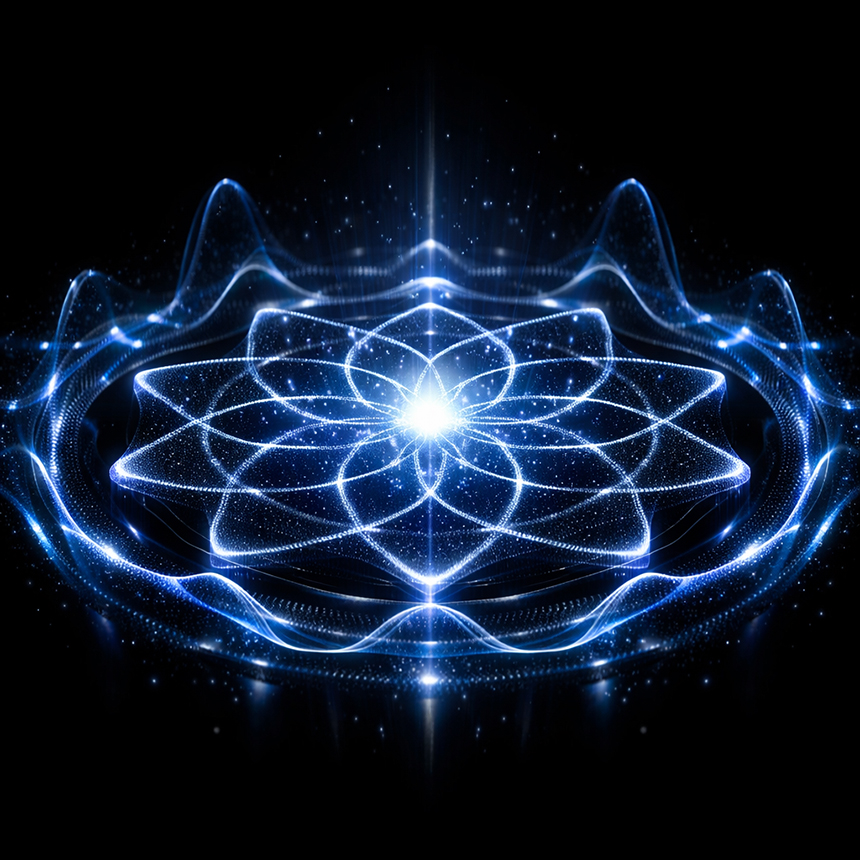
Cymatics is often presented as a marginal field, yet the idea behind it is strikingly concrete: sound frequencies can organise and alter physical matter within a given medium. That principle is already familiar in demonstrations involving water, air or sand, where vibration makes hidden structures visible. What gives the subject its medical intrigue is the claim that these effects may not stop at inert matter, but could also have relevance for the living body. This is where cymatics moves from curiosity to serious therapeutic question.
In short: cymatics sound vibration
Cymatics makes sound visible, but its most useful role is to invite careful curiosity about vibration, patterns and research rather than replace conventional medicine.
Use this article as a practical map: keep what helps attention become steadier, question anything that sounds absolute, and connect the idea back to repeatable daily practice.
The subject deserves both openness and restraint. Across long-standing healing traditions, animal behaviour and more recent experimental work, sound and vibration have repeatedly been explored as forces that may influence biological processes. The article does not argue for abandoning conventional medicine, nor does it treat every result as settled fact; rather, it examines why cymatics continues to attract attention in areas as sensitive as brain recovery, cognitive function and even cancer research. In that sense, cymatics appears less as a miracle answer than as a promising alternative line of enquiry that medicine may not yet have fully explored.
It is also worth distinguishing cymatics itself from the broader family of sound-based interventions. Strictly speaking, cymatics concerns the visible effects of vibration on matter, whereas therapeutic applications involve a further step: asking whether patterned sound may influence physiology, perception or regulation in clinically meaningful ways. That distinction matters because it helps keep the discussion rigorous. A visually compelling pattern in sand or water is not, by itself, proof of medical efficacy, but it does provide a useful model for thinking about how frequency can structure a medium.
For that reason, the most serious interest in this field tends to arise not from spectacle, but from convergence. When observations from physics, biology, rehabilitation and lived therapeutic experience begin to point in related directions, even cautiously, the subject becomes harder to dismiss outright. The challenge is then to separate what is measurable, what is plausible and what still remains speculative.
Why Sound Healing Is Rooted in Nature and Ancient Practice
An idea that reaches far beyond modern wellness
Cymatics is often presented as a modern alternative approach, yet the underlying intuition is far older. Across cultures and eras, sages, healers and researchers have treated sound waves as more than a simple sensory phenomenon. The central idea is that vibration can interact with living systems and physical matter in meaningful ways. That does not mean every claim should be accepted uncritically, but it does explain why sound-based practices have endured for so long in both observation and care traditions.
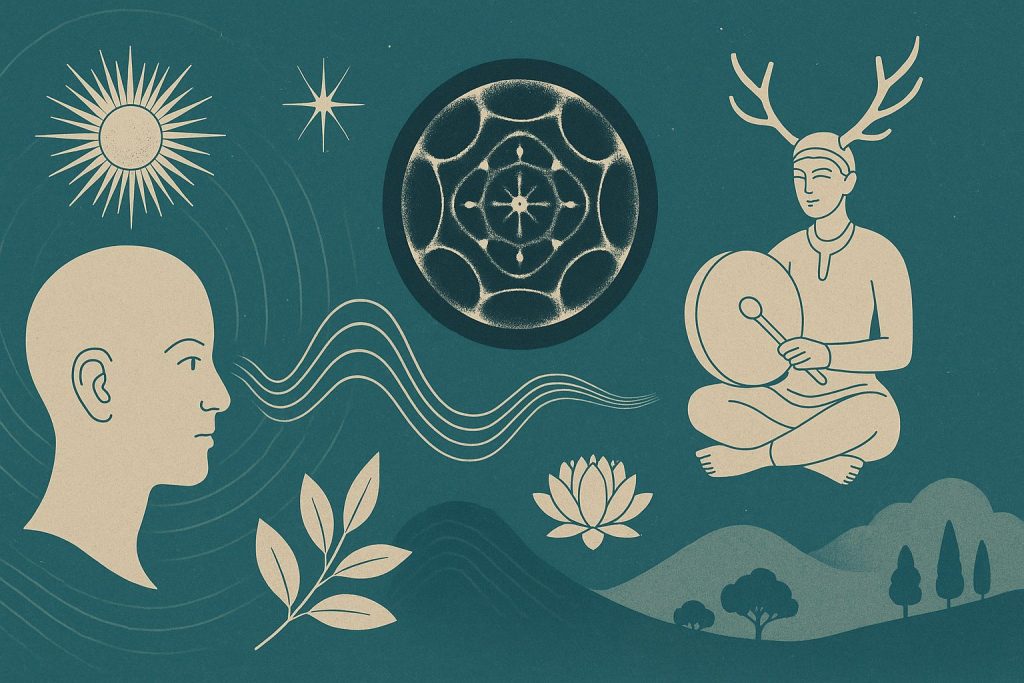
This continuity also matters because it places cymatics within a broader natural context. Long before contemporary therapeutic language emerged, people had already noticed that rhythm, resonance and repeated acoustic stimulation could influence states of body and mind. In that sense, sound healing is not only a cultural inheritance; it is part of a much older enquiry into how vibration may shape behaviour, perception and biological response.
Ancient use, of course, is not the same as scientific validation. Yet historical persistence can still be informative. Practices tend to survive across generations when they produce effects that are felt, observed or considered meaningful within a community. In the case of sound, those effects often concern calming, entrainment, attention, emotional release or altered states of consciousness, all of which are now being revisited through more modern frameworks in psychology and neuroscience.
There is also a practical reason why sound has remained central in so many traditions: it is immediate, embodied and relational. Unlike many interventions, sound can be delivered through the voice, through rhythm, through communal participation or through carefully structured listening. That makes it especially relevant in contexts where healing is not only biochemical, but also cognitive, emotional and social.
- Sound is experienced physically as well as audibly.
- Vibration has long been observed in both healing traditions and natural systems.
- Cymatics builds on this idea by examining how frequency can organise matter in a given medium.
What the animal world suggests about vibration and development
The animal kingdom offers a striking example of how mechanical and acoustic signalling may influence development. In wasps, antennal drumming has been observed as a way of affecting caste development and the phenotype of larvae. A 2011 study helped show that this process was not simply secondary to nutrition. In other words, the difference between a larva developing towards a worker form rather than a reproductive female could also be shaped by a mechanical signal, not only by feeding conditions.
The study suggested that this drumming-like antennal signal generated acoustic effects capable of acting epigenetically on broods initially destined for gynecological reproduction, ultimately orienting them towards worker characteristics. This is an important example because it does not prove human therapeutic outcomes by itself, but it does reinforce a broader principle: vibration is not trivial in living systems. In some contexts, it may participate in regulation, development and biological expression in ways that are more profound than they first appear.
Examples from the animal world are valuable precisely because they reduce the temptation to treat sound-based influence as a purely human projection. Across species, organisms respond to vibration for navigation, mating, defence, coordination and developmental signalling. The biological relevance of vibration is therefore not exotic; it is already woven into life. What remains under investigation is how far that relevance can be translated into therapeutic use for humans without overstating the evidence.
This is where careful scientific language becomes essential. To say that vibration can influence development in some organisms is not to say that any frequency can heal any disease. Rather, it suggests that living systems are sensitive to patterned mechanical input, and that this sensitivity may, under certain conditions, be harnessed in a targeted and beneficial way. That is a much more modest claim, but also a more credible one.
How Sound and Vibration Are Being Applied in Therapeutic Care
A therapeutic tradition that extends well beyond modern wellness
Long before sound entered clinical discussion, many healing traditions were already using rhythm, voice and vibration as practical tools of care. From earlier ritual practices to the present day, shamans have used sound to heal certain forms of distress and illness, not as a decorative element but as a central part of the therapeutic act. This historical continuity matters because it shows that sound-based care is not simply a recent trend: it belongs to a much older intuition that the body and mind may respond to patterned vibration.
In that sense, sound, frequency and vibration are often regarded as powerful influences on living systems. The underlying idea is that they may affect the organisation of cells and the way the organism regulates itself. Used carefully, they are therefore explored as approaches that may support a patient’s healing process, particularly in cases involving brain degeneration, psychological suffering or broader mental and emotional imbalance. This does not mean sound replaces conventional treatment, but it helps explain why it continues to attract interest as a serious complementary pathway.
In contemporary settings, this interest often takes more structured forms. Sound-based care may involve guided listening, therapeutic music, rhythmic entrainment, vocal toning, vibroacoustic stimulation or carefully designed neuro-acoustic environments. Although these methods differ, they share a common premise: that the nervous system is responsive to patterned sensory input, and that this responsiveness may be used to support regulation, recovery or symptom relief.
One reason these approaches remain attractive is that they can address dimensions of illness that are difficult to reach through medication alone. A patient may be medically stabilised and yet still struggle with agitation, low mood, cognitive fatigue, fragmented attention or a sense of disconnection from their own body. In such cases, sound may function less as a remedy than as a medium through which the person regains coherence, orientation and a more tolerable internal state.
- voice and chanting
- rhythm and percussion
- repetitive vibratory patterns
Why these approaches remain relevant in therapeutic settings
What keeps these practices relevant is the possibility that sound may act on several levels at once: perception, attention, emotional regulation and, potentially, certain biological processes. A patient does not only hear a sound; they also feel rhythm in the body, respond to repetition and often enter a different mental state through resonance and focused listening. This is one reason sound-based methods are frequently sought in contexts where recovery involves more than symptoms alone, especially when cognition, mood or inner stability have been affected.
Within this perspective, sound and vibration are not presented as miracle remedies, but as therapeutic tools that may help create conditions more favourable to healing. Their role is often to support regulation, reduce internal strain and encourage a more coherent response in the nervous system. That is precisely why they continue to be discussed in relation to degenerative brain conditions, as well as psychological and mental health difficulties: not because every claim has been settled, but because the clinical and experiential observations remain significant enough to deserve careful attention.
There are plausible mechanisms for this relevance, even if they do not yet amount to a complete explanatory model. Rhythm can help organise attention over time. Melody may recruit memory and emotional salience. Repetition can reduce cognitive load and support predictability, which is often calming for an overstressed nervous system. Low-frequency vibration may also be felt somatically, which can alter bodily awareness and contribute to a sense of grounding. None of this proves broad therapeutic efficacy, but it does explain why patients and clinicians alike continue to explore these methods.
In mental health contexts especially, the value of sound-based approaches may lie in their ability to work indirectly. Rather than asking a person to explain everything verbally, sound can modulate arousal, support concentration and create a safer route into experience. This is particularly relevant where trauma, anxiety or neurological fatigue make direct cognitive effort difficult. The intervention is then not merely aesthetic; it becomes a way of shaping the conditions under which the mind can function more effectively.
What Music Therapy Reveals About Brain Recovery
Why music can support recovery after stroke or brain injury
The brain is one of the areas in which sound-based approaches have drawn particular interest. In 2011, a Finnish study on music-based cognitive therapy suggested that patients recovering from a stroke may regain certain functions more quickly when music is part of the rehabilitation process. The idea is not that sound replaces medical care, but that it may support recovery by engaging attention, memory, rhythm and emotional regulation at the same time.
Related offer
Sacred frequency 963 Hz
963Hz : INNER LIGHT Reveal the power of your perfect nature... STRENGTH - ELEVATION - FULL AWARENESS
View productThe same line of observation has also been applied to speech recovery after stroke or traumatic brain injury. In some cases, patients appeared to recover spoken language more readily through singing than through conventional speech practice alone, a phenomenon sometimes referred to as the “Kenny Rogers effect”. This remains a specialised area, but it points to something important: musical structure may help the injured brain access pathways that ordinary speech can no longer reach as easily.
From a neuroscientific perspective, this is plausible because music is not processed in a single isolated centre. It recruits distributed networks involving timing, auditory perception, motor planning, memory, affect and expectation. After injury, that wider network may provide alternative routes for function, especially when language on its own has become effortful or inaccessible. Singing, in particular, combines breath, rhythm, articulation and melody in a way that can scaffold speech production rather than simply demanding it.
There is also a motivational dimension that should not be underestimated. Rehabilitation is often repetitive, tiring and emotionally difficult. Music can increase engagement, sustain effort and reduce the sense of mechanical training. When a patient feels more involved, more emotionally connected and less defeated by the task, the quality of practice may improve. In rehabilitation, that change in participation can matter almost as much as the technique itself.
- stroke rehabilitation
- speech recovery after brain injury
- attention and cognitive engagement through rhythm
What early findings suggest in neurodegenerative conditions
Interest in sound and rhythm does not stop with stroke rehabilitation. Three years later, the Journal of Huntington’s Disease reported preliminary findings involving patients with Huntington’s disease, a severe and irreversible neurodegenerative condition. According to that early study, drumming was associated with encouraging changes, including cognitive improvement and an improvement in the microstructure of callosal white matter.
These results should be read with appropriate caution, especially in the context of a progressive illness. Even so, they help explain why music therapy and rhythmic stimulation continue to attract serious attention in neuroscience and therapeutic care. Rather than presenting sound as a miracle promise, this research suggests that carefully structured auditory experience may help stimulate brain networks involved in coordination, cognition and functional adaptation.
In neurodegenerative conditions, even modest gains can be meaningful. Improvements in timing, attention, initiation or emotional steadiness may not reverse disease progression, but they can still affect quality of life in tangible ways. A patient who is better able to focus, coordinate movement or remain engaged in a task may experience greater autonomy and less frustration. For families and carers, these changes can also alter the daily burden of care.
Rhythmic interventions are of particular interest because the brain appears highly responsive to temporal structure. External rhythm can sometimes support internal timing, helping movement and cognition become more organised. This does not imply a universal solution, but it does suggest that sound may serve as a form of external scaffolding for neural systems under strain. That possibility is one reason the field continues to merit disciplined research rather than casual dismissal.
Why Cymatics Continues to Attract Interest in Cancer Research
Early experiments and the search for therapeutic frequencies
Among the most debated areas of cymatics is its possible relevance to cancer research. The earliest line of experimentation mentioned here goes back to Royal Rife, shortly after what he described as the identification of the human cancer virus. Rife reported that, at a specific electromagnetic energy frequency, a large proportion of that viral activity appeared to diminish. Whether one views these claims with caution or curiosity, they helped shape a lasting idea: that carefully targeted frequencies might interact with diseased tissue in ways conventional models had not fully explored.
Professor Anthony Holland later pursued this line of enquiry further, motivated by the hope of finding a gentler approach to cancer care, particularly for children, and one that might avoid the burden of chemotherapy. Drawing on the therapeutic device developed by Dr James Bare, Holland and his team reported that they had identified a precise harmonic sound frequency capable of disrupting cancer cells in a manner often compared to the shattering of crystal glass: the 11th harmonic. Experimental work on pancreatic cancer and leukaemia has already been described as encouraging. That said, much more research is still needed before such an approach could be considered suitable in clinical care.
At this stage, it is best understood not as a proven treatment, but as a promising and closely watched avenue of investigation.
The appeal of this line of research is easy to understand. Oncology remains an area in which treatment can be life-saving yet physically and psychologically demanding. Any approach that might one day reduce collateral damage, improve selectivity or complement existing care naturally attracts attention. The scientific difficulty, however, lies in moving from laboratory observation to reliable clinical application. Cancer is not a single disease, tissues differ in their mechanical properties, and what affects isolated cells in vitro may behave very differently in a living organism.
For that reason, the most responsible reading of these experiments is neither dismissal nor premature enthusiasm. Frequency-based approaches may reveal useful biophysical vulnerabilities, but they must be tested with the same standards applied to any serious medical intervention: reproducibility, safety, mechanism, dosage, selectivity and clinical outcome. Without that framework, promising observations remain hypotheses rather than treatments.
- Royal Rife linked frequency exposure to a reduction in observed viral activity.
- Anthony Holland and his team focused on the 11th harmonic.
- Early experiments cited pancreatic cancer and leukaemia.
Cellular observations, the human voice and recent exploratory work
Another important example comes from the work of the biologist Helene Grimal and the composer Fabien Maman, who in 1981 spent a year and a half studying the effects of sound on the human cell. Their collaboration remains part of the wider conversation around how vibration may influence cellular organisation. More recently, Alex Michel of Mental Waves, a researcher and composer specialising in sound and vibrational medicine, has explored several frequencies through different bio-acoustic and neuro-acoustic techniques. His observations have focused on a range of musical instruments as well as the human voice, suggesting that sound may affect living structures in ways that deserve closer attention.
Within these observations, the voice is presented as especially striking. According to the account given here, singing at a specific pitch for around 20 minutes may alter, and even destroy, the overall structure of cancer cells, leading to a form of self-destruction. These effects were reported in experiments involving two women who agreed to take part. Such results should clearly be approached with scientific caution, especially given the limited scale of the observations, but they remain part of the exploratory evidence that keeps this field alive.
For readers wishing to explore this work further, the following references were shared: Musique Neuro-Méditative avec des motifs de Chladny & Cymatics (https://youtu.be/e9C-p1AOTAk) and Cymatics & Lumière Hypnagogique (https://youtu.be/jEwnR3ynOKo).
Related offer
Sacred frequency 432 Hz
432Hz : COSMIC COHERENCE Enter into perfect resonance with the universe... COHERENCE - UNITY - ENERGY - BLISS
View productThe emphasis on the human voice is noteworthy because the voice is not merely an external acoustic tool; it is also a biological act. It involves breath regulation, muscular coordination, resonance in bodily cavities and direct engagement of attention and emotion. In therapeutic contexts, this makes vocal work especially interesting, since it combines acoustic output with changes in autonomic state. Even where cellular claims remain preliminary, the voice may still have meaningful effects on stress regulation, mood and perceived agency.
At the same time, extraordinary claims require proportionate evidence. Reports based on very small numbers, informal observation or non-standardised conditions can be valuable as starting points, but they cannot settle the matter. If the voice does have measurable effects on cellular behaviour, the next step would require tightly controlled replication, clear methodology and independent verification. That is the threshold at which an intriguing possibility begins to enter the realm of serious biomedical knowledge.
The Mental Waves Cymatics Discernment Framework
The Mental Waves frame is to appreciate cymatics as a bridge between perception and pattern. It can make vibration visible, but visible patterns are not the same thing as medical proof.
Use cymatics as an invitation to observe resonance, coherence and structure while keeping health claims modest, evidence-aware and complementary to qualified care.
If visible sound makes you curious about listening practice, receive the free 128 Hz sacred frequency session as a simple sound-based point of exploration.
Editorial note from Mental Waves
This article discusses cymatics as education, culture and research interest. It does not present cymatics as medical proof, a clinical protocol or a replacement for professional care.
Conclusion
Cymatics sits at an unusual crossroads: part observable physics, part therapeutic hypothesis, part lived human experience. What emerges from these examples is not a simple case for replacing conventional medicine, but a more nuanced idea: that sound, rhythm and vibration may influence biological and mental processes in ways that deserve serious attention. In neurological care especially, the link between music, attention, speech recovery and regulation already points towards a field that is more concrete than it first appears.
At the same time, the most ambitious claims, particularly around cancer, call for restraint as much as curiosity. Early findings, exploratory trials and cellular observations may be promising, but they are not the same thing as settled clinical proof. The real value of cymatics may lie precisely here: not in grand certainty, but in opening a disciplined space between perception, physiology and care, where new therapeutic tools might gradually take shape. That possibility alone is worth taking seriously.
Seen in this light, cymatics is best approached neither as fringe spectacle nor as established doctrine. It is a developing field that invites careful observation, methodological seriousness and intellectual humility. Where the evidence is stronger, particularly in music-based rehabilitation and regulation of mental state, the therapeutic relevance is already difficult to ignore. Where the evidence is weaker, the task is not to believe more, but to investigate better.
If medicine is to remain genuinely open-minded, it must be able to examine unconventional ideas without surrendering its standards. Cymatics may ultimately prove limited in some areas and valuable in others. Either outcome would be useful. What matters is that the question is explored with enough rigour to distinguish symbolic appeal from measurable effect, and enough imagination to recognise that healing may sometimes begin in forms that conventional frameworks were slow to notice.
Frequently asked questions about cymatics and sound-based therapy
What is cymatics in medical terms?
Cymatics refers to the study of how sound frequencies and vibrations can organise or alter physical matter within a given medium. In a medical context, it is explored as a way of understanding whether those same vibratory effects might also influence living tissues, cells and certain healing processes.
Why is cymatics described as an alternative rather than a replacement for conventional medicine?
It is presented as an alternative line of enquiry because the field raises therapeutic possibilities without being established as a full substitute for standard care. The most balanced view is that sound and vibration may support healing in some contexts, while many claims still require stronger clinical confirmation.
How does the article link sound therapy to nature and animal behaviour?
One example comes from wasps, where antennal drumming has been linked to changes in larval development and caste formation. A 2011 study suggested that this mechanical and acoustic signalling could act epigenetically, showing that vibration may play a meaningful role in biological regulation beyond human therapeutic practice.
What kinds of health problems are discussed in relation to sound and vibration?
The main areas mentioned are brain recovery, neurodegenerative illness, psychological and mental difficulties, and exploratory cancer research. Sound, rhythm and vibration are described as possible influences on cognition, speech recovery, emotional regulation and, more controversially, certain cellular processes.
What does the Finnish study suggest about music therapy after stroke?
The study suggests that patients recovering from a stroke may regain certain functions more quickly when music-based cognitive therapy is included in rehabilitation. It also points to improved speech recovery after stroke or traumatic brain injury, with singing sometimes helping patients recover language more readily than speech practice alone.
What is the 'Kenny Rogers effect' mentioned in relation to brain injury?
It refers to the observation that some patients recover speech more effectively through singing than through ordinary speaking exercises after a stroke or traumatic brain injury. The idea is that melody and rhythm may help the brain access pathways that are harder to reach through speech alone.
What were the findings mentioned for Huntington’s disease?
A preliminary study reported in the Journal of Huntington’s Disease linked drumming with cognitive improvement and better microstructure in callosal white matter. These findings are early and should be treated cautiously, but they help explain why rhythmic stimulation continues to attract interest in neuroscience.
What does the article claim about cymatics and cancer research?
It highlights several exploratory lines of work rather than settled treatment results. Royal Rife is mentioned for linking a specific electromagnetic frequency to reduced viral activity, while Professor Anthony Holland and his team focused on the 11th harmonic, which they reported could disrupt cancer cells in experimental settings.
What is said about the human voice and cancer cells?
The account describes observations suggesting that singing at a specific pitch for about 20 minutes may alter or destroy the structure of cancer cells. It also notes that these observations were based on a very limited experiment involving two women, so the claims remain highly preliminary and require caution.