en
enVotre panier est vide.



Some life events may leave a deeper mark on the brain than we tend to imagine. Beyond the immediate emotional shock, experiences such as bereavement, divorce, serious illness or ongoing personal conflict are increasingly associated with changes that can make the brain appear older than a person’s actual age. It is not simply major trauma that matters, but the cumulative weight of stressful events and the way they shape the body’s stress response over time.
This question has drawn the attention of researchers at the University of California San Diego School of Medicine, who examined brain ageing in men aged 57 to 66. Their findings, published in Neurobiology of Aging, suggest that stressful events experienced earlier in adult life may be linked to accelerated brain ageing, particularly when they involve strained relationships, loss or separation. The broader picture is equally important: chronic stress does not affect attention, mood and mental regulation in isolation, but may also contribute to wider cellular and immune changes throughout the body.
What makes this topic especially important is that stress is often treated as something subjective or temporary, when in fact repeated exposure may be reflected in measurable biological patterns. The brain is not separate from the rest of the body’s regulatory systems. It depends on sleep, immune balance, vascular health, hormonal signalling and emotional recovery, all of which can be disrupted when stress becomes a long-term condition rather than a passing response.
In short: what are the key findings on stressful life events and brain ageing?
The key finding is that repeated or intense stressful life events may be associated with signs of faster brain ageing, especially when stress becomes chronic. The practical lesson is not to fear every difficult event, but to take recovery, emotional regulation and support seriously.
- Stressful events can add biological and emotional load.
- Chronic stress may affect sleep, hormones, inflammation and attention.
- Recovery practices can help the body leave survival mode.
- The evidence needs nuance because association is not destiny.
This article focuses on applied takeaways. For a more research-focused companion, read Brain Ageing and Stressful Events.
Stressful life events may be linked to faster brain ageing
What the study found in older men
Researchers at the University of California San Diego School of Medicine, working in psychiatry and the genetics of ageing, examined brain ageing in 359 men aged 57 to 66. Their findings, published in Neurobiology of Aging, suggest that stressful events in everyday life may be associated with earlier brain ageing. To explore this, the team asked participants on two occasions, five years apart, to list the events that had affected them most during the previous two years. They then used MRI scans to assess the brain’s neurological and anatomical condition, focusing in particular on cortical volume and thickness.
Using these measurements, the researchers estimated the apparent age of each participant’s brain. They observed that experiencing negative events in one’s forties or fifties was associated with a brain that appeared older than expected for the person’s actual age. On average, each negative event was linked to an increase of 0.37 years in estimated brain age — in other words, roughly a third of a year older. This does not prove that stress alone directly causes brain ageing, but it does point to a measurable relationship between lived experience and the brain’s structural ageing.
That distinction is important. In this kind of research, an “older” brain does not mean that the person suddenly develops dementia or loses cognitive ability overnight. It refers to structural features that, on average, resemble those more commonly seen in older brains. Such findings are best understood as indicators of increased biological wear rather than as a diagnosis in themselves.
The use of MRI also matters because it allows researchers to move beyond self-report alone. While personal accounts of stress remain essential, imaging offers a way to examine whether repeated life strain is associated with visible differences in brain structure. In that sense, the study contributes to a growing effort to connect subjective experience with objective markers of ageing, without reducing one to the other.

The events most strongly associated with change
The study also suggests that not all stressors weigh on the brain in quite the same way. The events most strongly associated with faster brain ageing were interpersonal experiences: conflict, the death of a loved one or friend, romantic break-ups and divorce. These are the kinds of experiences that can deeply affect attention, emotional regulation and day-to-day mental balance, especially when they are prolonged or unresolved.
The researchers also included other major life strains, such as financial difficulties, serious illness and miscarriage. Taken together, these findings reinforce a simple but important idea: the brain does not respond only to dramatic physical danger. It may also be affected by repeated emotional shocks and sustained psychological strain across adult life. In this study, that pattern was observed in men only, which means the results still need to be explored further in women before broader conclusions can be drawn.
Interpersonal stress may be especially potent because it often combines several burdens at once. It can involve grief, uncertainty, rumination, disrupted sleep, social withdrawal and a persistent sense of threat or instability. Unlike a brief external challenge, relationship conflict or loss may continue to occupy attention for weeks or months, repeatedly activating stress-related systems and making recovery more difficult.
Financial hardship and illness can have a similar effect for different reasons. They may reduce a person’s sense of control, increase vigilance and place continuous demands on planning, coping and emotional regulation. From a cognitive perspective, this kind of prolonged strain can narrow attention towards immediate problems, leaving fewer resources for rest, reflection and restoration.
- conflict and relationship breakdown
- bereavement and loss of a friend or loved one
- financial hardship, serious illness and miscarriage
How Stress Can Affect the Body Far Beyond the Mind
A measurable link between stress and brain ageing
Researchers at the University of California San Diego School of Medicine highlight a meaningful association between stress and the ageing of brain-related molecules. In other words, stressful experiences do not only affect mood in the moment: they may also be linked to biological changes that reflect a brain ageing more quickly than expected. This does not mean that every difficult period causes lasting damage, but it does suggest that repeated or chronic stress deserves to be taken seriously.
The study points in the same direction as a broader body of research: stressful events can affect the whole body, not just our thoughts or emotions. When stress becomes persistent, it may contribute to wear and tear at a cellular level, including in systems involved in brain health, recovery and day-to-day regulation. That is why the effects of stress are often described as both psychological and physical, with the two dimensions closely intertwined.
One useful way to understand this is through the idea of cumulative physiological load. The body is designed to adapt to challenge, but adaptation has a cost when the challenge is constant. Repeated activation of stress pathways may alter inflammatory activity, sleep quality, metabolic balance and cardiovascular function, all of which can indirectly influence the brain’s long-term condition.
This helps explain why stress is increasingly studied not only in psychiatry or psychology, but also in ageing research, immunology and neuroscience. The question is no longer simply whether stress feels unpleasant. It is whether prolonged exposure may gradually shift the body’s baseline state in ways that make repair, regulation and resilience harder to sustain.
- brain-related molecular ageing
- cellular strain in the body
- disruption of normal regulation
Why chronic stress matters for overall health
According to the researchers, chronic stress can damage the body’s cells and weaken the immune system. Over time, this may reduce the body’s ability to maintain balance, repair itself efficiently and respond well to everyday pressures. Seen from this angle, stressful life events are not minor disturbances: they may have consequences for overall health, especially when they accumulate or remain unresolved for long periods.
It is also important to keep the limits of the evidence in mind. For now, these findings were observed in men, and the researchers hope to repeat the work in women in order to confirm whether the same patterns hold true more broadly. That caution matters. The results are compelling, but they should be understood as an important scientific signal rather than a final conclusion that applies identically to everyone.
Chronic stress may also affect behaviour in ways that reinforce its biological effects. People under sustained pressure often sleep less well, move less, eat more irregularly and find it harder to recover mentally after demanding days. These changes are understandable responses, but they can create a feedback loop in which stress both arises from and contributes to poorer overall regulation.
For that reason, the health impact of stress is rarely attributable to a single mechanism. It is better understood as a network effect, involving hormones, immunity, behaviour, mood, attention and recovery. This broader view is more realistic and more useful than imagining stress as a purely emotional problem detached from the body.
Understanding Stress and Why It Becomes Harmful
Stress is a normal reaction, but modern triggers are often emotional
Stress is generally understood as an automatic response of the body. It is an unconscious reaction designed to help us respond to danger. In the past, that danger was often physical and immediate. Today, however, stress is more often triggered by emotionally destabilising situations: tension at home, pressure at work, family responsibilities, social demands or the simple feeling of having too much to manage at once. In that sense, stress is no longer limited to exceptional threats; it can arise from ordinary life itself.
Whatever the trigger, the body can still react as though it must defend itself. Stress hormones are released even when the situation is not life-threatening, and this can affect attention, emotional regulation and overall mental balance. The sources of stress are therefore wide-ranging, and the brain does not always distinguish well between a major danger and a repeated emotional strain. This helps explain why modern life, with its obligations, relationships and constant demands, can place the nervous system under persistent pressure.
In practical terms, this means that the body may mobilise for a difficult email, a family argument or a period of uncertainty in ways that are biologically similar to more concrete threats. The response is adaptive in the short term: it sharpens vigilance and prepares action. The difficulty begins when the mind remains on alert long after the event itself has passed, or when one stressor is quickly replaced by another.
Related offer
Anti-depression, anti-depression
Help for nervous, seasonal or depressive breakdowns. A revolutionary new 100% solution that is non-chemical, effective and has no...
View productFrom the perspective of cognition, prolonged stress can narrow focus towards what feels urgent while making reflection, memory and emotional flexibility harder to maintain. Many people recognise this subjectively as feeling mentally “stuck”, more reactive or less able to switch off. These experiences are not signs of weakness; they are often the lived expression of a nervous system under sustained load.
- family life and responsibilities
- social and professional pressure
- emotionally unsettling events

The most damaging stress is often the stress that lingers
Mental stress can gradually spill over into the whole body. Fear is one of its main sources: fear for oneself, fear for someone else, or fear of losing a loved one through death or even a romantic separation. Difficult professional or social relationships can also be stressful, as can failure, frustration and the many constraints of daily life. Physical pain, overwork and lack of sleep add to this burden. Taken together, these experiences create a background of ongoing tension that the body may struggle to regulate properly.
It is often this chronic, repeated stress that appears most harmful. When stress becomes constant, it may weaken immunity and affect health, resilience and even longevity. It is also associated with broader physical changes, including weight gain, reduced skin elasticity and accelerated ageing in the body as well as the brain. Some research also links prolonged stress with serious health problems, including stroke and cancer. This does not mean every stressful period leads to illness, but it does underline an important point: stress is not only a mental experience. When it persists, it can influence the body deeply and may contribute to faster overall ageing.
The key issue is often not intensity alone, but duration and recovery. A demanding period followed by rest, support and emotional processing is very different from a state in which tension becomes the background setting of daily life. The body can tolerate challenge far better when it is also given opportunities to return to baseline.
This is why unresolved stress can feel deceptively normal. People may adapt to poor sleep, irritability, muscular tension or constant mental preoccupation without realising how much effort their system is expending. Over time, however, that adaptation may come at a cost, especially if it reduces the capacity for calm attention, restorative sleep and emotional regulation.
- fear and bereavement
- relationship and workplace difficulties
- overwork, pain and lack of sleep
- repeated frustration and daily constraints
How Stress and Ageing Become Closely Linked
What chronic stress may change in the body and brain
Studies on stress suggest that it may weaken the immune system, which in turn is associated with earlier ageing. Researchers also point to epigenetic changes linked to stress, as well as inflammatory processes that can affect the body more broadly. Work by Johnson et al. in 2010 even suggested that stress may accelerate brain ageing. At a cellular level, this process may also involve telomeres — the protective ends of our DNA — which tend to shorten more quickly under prolonged stress.
The effects are not limited to the brain alone. Stress may also contribute to reduced elasticity in the skin, arteries and supporting tissues, which can make physical ageing more visible. Even the liver may be affected, as stress is associated with reduced blood flow to this organ and, potentially, with earlier wear over time. Taken together, these observations support a careful but important idea: persistent mental stress can have consequences well beyond mood, reaching into the body’s regulation, resilience and long-term health.
Epigenetic changes are especially relevant because they suggest that stress may influence how certain genes are expressed without altering the genes themselves. This does not mean stress rewrites biology in a simple or deterministic way, but it does indicate that lived experience can interact with biological systems at a surprisingly deep level. Inflammation, hormonal signalling and cellular maintenance may all be part of that picture.
Telomeres are often discussed in ageing research because they help protect chromosomes during cell division. When they shorten more rapidly, this is generally taken as a sign of increased cellular ageing. Stress is only one factor among many, but the association has attracted attention because it offers a plausible route by which long-term psychological strain may become biologically embedded.
- weaker immune defences
- greater inflammation
- faster cellular ageing through telomere shortening
Why recognising stress early matters
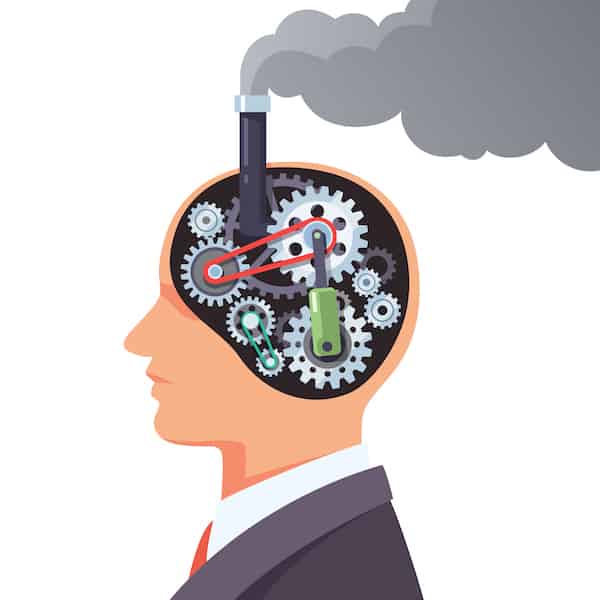
Mental stress is often considered especially damaging because it can settle into daily life and remain active for long periods, affecting both the body and the brain. If you often feel oppressed, tense, irritable or unusually reactive, it may be worth assessing your stress level. The same applies if, after a difficult period, you seem less resistant to pressure or illness — for example, if you catch colds or flu more easily than usual. These signs do not prove anything on their own, but they can indicate that stress is no longer a brief response and is becoming harder for the body to regulate.
That is why it is important to identify stress and try to relieve it before it becomes chronic. Stress itself cannot be eliminated completely, nor should it be: in situations of real danger, it activates a protective defence mechanism that helps us respond quickly. The problem arises when this response is triggered too often, or never fully switches off. In that form, ongoing stress is more likely to be linked with both faster brain ageing and broader physical ageing. For practical stress support, you can also read How to Free Yourself from Stress.
Early recognition matters because stress is easier to regulate before it becomes habitual. Small signs such as restless sleep, reduced concentration, emotional volatility, persistent fatigue or a sense of cognitive overload may seem ordinary, yet they can indicate that recovery is no longer keeping pace with demand. Paying attention to these signals may help prevent a temporary strain from becoming a chronic state.
Support does not need to begin with dramatic intervention. In many cases, the first step is simply to acknowledge that the nervous system is under pressure and to create conditions that favour recovery: more regular sleep, fewer competing demands, social support, movement, moments of mental quiet and, where needed, professional help. These measures do not erase life events, but they may reduce the extent to which stress remains biologically active.

Related offer
Mental and Physical Recovery
This session uses waves with extremely precise frequencies that target healing and recovery. Guidance...
View productThe Mental Waves Stress Load Framework
The Mental Waves frame is to look at stress as accumulated load. One event can be painful, but the bigger issue is often the absence of recovery after the event.
- Event: what happened and how intense was it?
- Meaning: what did the event change in your sense of safety, identity or future?
- Load: how long did the body stay activated afterward?
- Recovery: what helped you return to rhythm, connection and sleep?
Use the free Mental Reset Session as a short recovery cue. For emotional processing, read Making Peace with Emotions and How to Free Yourself from Stress.
Why This Page Should Be the Practical Companion
Because another article already explains the research signal, this page should own the practical interpretation: how stress becomes load, why recovery matters and what a reader can do after a difficult period. That distinction protects both pages from repeating the same promise.
The useful question is not only whether stress can affect the brain. It is what kind of life gives the brain enough cues of safety after stress. That includes sleep, movement, social connection, emotional expression and rituals that bring the system back to the present.
Editorial note from Mental Waves
This article is educational. Severe stress, trauma, cognitive symptoms, depression or burnout deserve qualified support. Recovery practices can support regulation, but they do not replace care when care is needed.
Conclusion
What emerges here is not the idea that every difficult experience leaves the brain permanently diminished, but that repeated or unresolved stress may be associated with a faster form of ageing, especially when it becomes part of daily life rather than a short-lived response to danger. The study discussed offers a useful signal rather than a final verdict: it points to a measurable link, while also reminding us that the evidence presented here was limited to men in a specific age group.
That nuance matters. Stress is not an abnormal failure of the mind, but a protective mechanism that can become costly when it remains switched on for too long. Seen in that light, emotional strain, conflict, grief, financial pressure or exhaustion are not “just in the head”; they can shape attention, regulation, immunity and, over time, the body’s wider balance. The real issue is often chronicity: not stress itself, but stress with no real pause.
Perhaps the most useful takeaway is a practical one: noticing stress early, and taking it seriously before it hardens into a constant mental state, may matter more than we tend to admit. The brain does not age in isolation.
It ages within a living system that is constantly responding to experience. For that reason, the significance of stressful events lies not only in what happened, but in how long the body and mind remain organised around the aftermath. Scientific caution is still needed, but the direction of the evidence is clear enough to justify attention: protecting mental regulation and recovery may also be part of protecting the ageing brain.
Frequently Asked Questions About Stressful Life Events and Brain Ageing
What is the key finding about stressful life events and brain ageing?
Research suggests stressful life events may be associated with signs of faster brain ageing, especially when stress is repeated or poorly recovered from.
Does stress always mean faster brain ageing?
No. The research points to a possible association, not a certain outcome for every person.
Why does chronic stress matter?
Chronic stress can keep the body activated, disrupt sleep and add load to systems involved in mood, memory and recovery.
Which events may be most demanding?
Bereavement, relationship disruption, loss, conflict and repeated emotional strain may be especially demanding because they can stay active for a long time.
How can recovery be supported?
Recovery can be supported through sleep rhythm, emotional expression, gentle movement, social connection, breath, sound and practical stress reduction.
How is this page different from the companion article?
This page focuses on practical takeaways. The companion article focuses more on the research finding and its limits.
Can a sound reset help after stress?
A sound reset can help mark a transition out of rumination and into regulation, especially when used consistently.
When should someone seek support?
Seek support if stress is persistent, affects sleep, memory, mood, work, relationships or safety, or feels impossible to manage alone.
What is the main takeaway?
Difficult events matter, but recovery matters too. The goal is to reduce accumulated load and help the body return to safety.