en
enVotre panier est vide.


Our lives are shaped, in large part, by the brain: attention, memory, perception, decision-making and the way we respond to the world all depend on it. That is why the promise of “training your brain” to succeed can sound so persuasive. Yet the idea deserves a more careful reading. The brain is not simply a machine to push harder and harder; it is a living organ whose performance depends as much on regulation and recovery as on stimulation.
So should we believe those who claim that brain training leads to success in life? Up to a point, perhaps — but not in the simplistic way such claims are often presented. Certain habits may help support cognitive function, especially those linked to memory, attention and mental engagement. At the same time, overuse, poor sleep, constant screen exposure, addictive substances and an unbalanced diet are all associated with poorer brain health. In other words, looking after the brain may contribute to better functioning, but only if training is understood in a broader, more realistic sense.
It is also worth separating two ideas that are often blurred together in popular discourse: improving a specific mental skill, and guaranteeing success in life. The first is plausible in limited, practical ways. The second is far more uncertain, because success depends on social context, education, opportunity, emotional regulation, physical health, relationships and simple chance as much as on raw cognitive efficiency. A serious discussion of brain training therefore has to remain modest. It may support certain aspects of mental functioning, but it cannot reasonably be treated as a universal formula.
In short: what brain training actually helps success?
Brain training helps success when it improves attention, memory, emotional regulation, sleep habits, learning strategy and the ability to recover after stress. It is less useful when it becomes another pressure system that keeps the mind tense.
- Train attention by reducing avoidable distractions.
- Train memory with retrieval, repetition and meaning.
- Train resilience through rest, breath and emotional regulation.
- Train consistency by making practice small enough to repeat.
For a practical pause before mental work, try the free Mental Reset Session. For research context, read Meditation and the Brain.
That distinction matters because the language used around “success neuroscience” can sometimes sound more definitive than the evidence allows. There is a difference between saying that regular mental engagement may help maintain attention and memory, and claiming that a person can train their brain into a superior destiny. The more credible view is less dramatic, but more useful: the brain responds to habits, rhythms and environments over time, and those influences can either support or undermine how well we think, learn and adapt.
Memory work as a practical way to keep the brain engaged
Why mental activity still matters
The brain remains one of the most complex and least fully understood parts of the human body, yet it shapes virtually every area of life: perception, attention, decision-making, emotion and learning. That is why the idea of “training” it is so appealing. Still, a useful approach is not about pushing it relentlessly. The brain needs stimulation, but it also needs recovery and relaxation. In that sense, looking after it means keeping it active without treating it like a machine that should perform at full intensity all the time.
One of the clearest ways to do that is through memory work. Making an effort to remember, recall and reconnect information may help keep cognitive functions engaged, and is often associated with better mental maintenance over time. Some forms of memory exercise are also thought to help slow certain aspects of cognitive decline. When we deliberately try to remember something, we mobilise important brain processes rather than leaving them inactive. So yes, training the brain can make sense, but in practice it begins with simple, regular mental effort rather than grand promises about instant success.
What makes memory work valuable is not only repetition, but active retrieval. Trying to bring something back to mind without immediately relying on prompts, search engines or notes places a different demand on attention and recall. That effort may help consolidate learning more effectively than passive rereading alone. In everyday life, this can mean recalling a conversation before checking a message thread, mentally retracing a route before opening a map, or summarising what one has read before looking back at the page.
There is also a broader psychological benefit to this kind of practice. Memory effort can strengthen a person’s sense of mental presence. Instead of moving through information in a distracted, fragmented way, one becomes more deliberate about what is noticed, encoded and retained. That does not turn the brain into an infallible instrument, but it may contribute to a more stable relationship with attention and learning over time.
- recalling names, places or events
- revisiting learned information without prompts
- using attention-based memory exercises

Why smell and music leave such a strong trace
Memory does not appear out of nowhere. It depends on a process of encoding: the way an experience is registered, organised and stored by the brain. This helps explain why some memories feel faint while others return with striking clarity. Among the most powerful are often memories linked to smell and music. A scent can suddenly bring back a place, a person or a moment with unusual precision; a melody can revive an emotional state almost instantly. These sensory pathways seem to leave particularly strong traces in the mind.
For that reason, a thoughtful form of brain training may include becoming more aware of olfaction and music in everyday life. Paying closer attention to a fragrance, a familiar song or the emotional atmosphere attached to them can support memory by strengthening the quality of encoding. This is not a miracle method, and it should not be treated as one. But it does reflect an important idea: the brain often responds best not only to effort, but also to rich, embodied experience. In other words, caring for memory is not just about repetition; it is also about how deeply we notice what we live through.
This helps explain why emotionally coloured experiences are often remembered more vividly than neutral ones. When perception, feeling and attention converge, the trace left by an event may become more durable. Smell and music are especially interesting in this respect because they often bypass the more verbal, analytical route by which we try to remember things deliberately. They can reactivate a whole atmosphere rather than a bare fact, which is one reason they are so often linked to autobiographical memory.
In practical terms, this suggests that memory may be supported by making experience more meaningful rather than merely more intense. Listening carefully instead of passively hearing, noticing a scent rather than ignoring it, or linking information to a concrete sensory context can all enrich encoding. Such habits are modest, but they fit a more scientifically credible understanding of mental training: not a dramatic upgrade of the self, but a refinement of how attention meets experience.
- smells often trigger vivid autobiographical memories
- music can reactivate emotion and recall
Rest Matters as Much as Mental Training
Why the brain also needs downtime
Training the brain may be useful, but letting it rest is just as important. This is one of the limits often forgotten in overly ambitious promises about “optimising” the mind. The brain is not designed to remain under constant stimulation. It also needs quieter phases of regulation, relaxation and mental wandering. Far from being wasted time, these moments may help preserve attention, support emotional balance and maintain healthier overall brain function.
Sleep is especially important here. Even while we are asleep, the brain remains highly active, and that activity is closely associated with recovery, memory processing and cognitive regulation. In practical terms, anyone hoping to keep their mind sharp should not focus only on exercises, methods or performance routines. A healthy brain also depends on the ability to slow down, drift, pause and step back from continuous demands.
Downtime matters partly because sustained attention has limits. When the mind is asked to remain alert without interruption, performance often becomes less reliable: concentration fragments, irritability rises, and errors become more likely. Rest is therefore not the opposite of mental efficiency; it is one of its conditions. This is true not only for intellectual work, but also for emotional regulation, since a tired brain generally finds it harder to manage stress, frustration and impulsive reactions.
There is also value in periods when the mind appears to wander. These quieter states are sometimes dismissed as unproductive, yet they may support integration, reflection and a looser form of internal processing. Not every useful mental operation happens under deliberate effort. Some of our clearest insights emerge after stepping away from a task, not while forcing it. That is another reason why a balanced view of brain care must include pauses, not merely drills.
- mental rest during the day
- good-quality sleep at night
- regular moments without constant stimulation
Sleep, screen breaks and a healthier mental rhythm
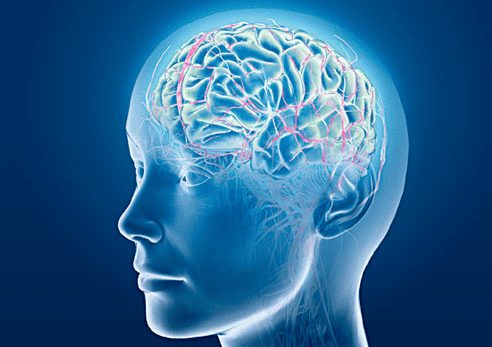
That is why the quality of sleep matters so much. It is not simply a matter of sleeping for long enough, but of allowing the brain to move through genuinely restorative phases. In the same way, regularly disconnecting from phone and computer screens can be beneficial. Constant exposure to notifications, light and fragmented attention may make it harder for the mind to settle. By contrast, periods away from screens can help the brain regain a more stable rhythm.
Related offer
Attention focuser - helps concentration
This sound program has been designed specifically for people who want to focus their attention and their...
View productSeen in this light, looking after the brain is not only about making it work harder. It is also about respecting its natural alternation between effort and recovery. Letting the mind wander from time to time, protecting sleep, and creating space away from digital overstimulation are simple habits, but they can contribute to a healthier mental state over the long term.
Screen exposure is not harmful in some absolute sense, but its cumulative effects can become problematic when it fills every pause in the day. If each quiet moment is replaced by scrolling, checking or reacting, the brain has fewer opportunities to downshift. This may keep arousal levels unnecessarily high and make it more difficult to transition into rest, especially in the evening. The issue is therefore not technology itself, but the absence of boundaries around it.
A healthier rhythm often depends on ordinary choices: reducing late-night screen use, preserving intervals of silence or low stimulation, and allowing attention to settle on one thing at a time. These habits may sound less glamorous than commercial brain-training programmes, yet they are often more consistent with what is known about cognitive regulation. The brain tends to function best within a rhythm, not under permanent acceleration.
What Can Undermine Brain Health Despite ‘Training’
More stimulation is not always better
It is tempting to think that if mental training is good, more of it must be better. In reality, overloading the brain can be counterproductive. Like the rest of the body, the brain benefits from challenge, but it also needs regulation, recovery and variation. Pushing it constantly, without enough rest, may lead not to sharper attention but to fatigue, poorer concentration and a more fragile mental balance. In that sense, the promise of training the brain to succeed in life should always be treated with caution: stimulation can help, but excess can also wear the system down.
Sleep is one of the clearest examples. Poor sleep, often worsened by the constant presence of phone and computer screens, is associated with poorer brain health. When rest is disrupted, attention, memory and overall cognitive functioning may suffer. So yes, training the brain can produce useful effects, but only when it is paired with good-quality sleep, genuine downtime and a rhythm that allows the mind to recover rather than remain permanently switched on.
There is a broader lesson here about the culture of optimisation. Many people are encouraged to treat every mental weakness as something to be corrected through more effort, more tools and more stimulation. Yet the brain does not always improve under pressure. Sometimes what looks like poor performance is simply overload: too many inputs, too little sleep, too little recovery, and too much expectation. In such cases, adding another exercise may not solve the problem at all.
This is why credible advice about brain health tends to sound less spectacular than marketing language. It emphasises consistency over intensity, and balance over maximalism. A person may benefit more from regular sleep, focused work periods and manageable cognitive demands than from any aggressive attempt to “hack” the mind. The brain is adaptive, but it is not infinitely elastic.
- Too much mental strain can become harmful
- Screen-heavy habits can damage sleep quality
- Recovery is part of cognitive performance
Lifestyle habits that can weaken memory and performance
Other behaviours can also work against the very brain performance people are trying to improve. The use, and especially the abuse, of addictive substances may damage the brain over time. Obesity, one of the most widespread health issues of our century, is also associated with significant effects on memory. In the same vein, American scientists have pointed out that eating too much fat and sugar may harm intellectual functioning. This does not mean that one food determines a person’s destiny, but it does suggest that the brain is deeply affected by the body’s wider physiological state.
Many studies also indicate that diet influences school performance, which reinforces a simple but important idea: brain training on its own is not enough. If it is to support better results, it needs to sit alongside rest, very good sleep and sound nutrition. The broader lesson is a balanced one. You can work on memory and mental agility, but you should also avoid habits that overstimulate, exhaust or gradually impair the brain. Otherwise, the very organ you are trying to strengthen may become less reliable.
It is important to understand these factors as interacting rather than isolated. Poor diet may affect energy regulation; poor sleep may reduce self-control; chronic stress may increase reliance on screens or substances; and all of these can influence attention, mood and memory together. Brain health is therefore not a narrow technical issue. It is embedded in daily life, in routines, in the body’s metabolic state, and in the quality of recovery a person is able to obtain.
That is also why simplistic promises can be misleading. A person cannot compensate indefinitely for sleep deprivation, nutritional imbalance or substance misuse by doing a few cognitive exercises. Mental performance emerges from a whole system. If that system is strained, the benefits of training may remain limited. By contrast, when lifestyle supports the brain rather than working against it, even modest mental practices may become more effective and more sustainable.
- Addictive substances can impair brain health
- Obesity is linked to memory difficulties
- Excess fat and sugar may affect intellectual performance
- Diet can influence school results
Why Success Needs Recovery as Much as Effort
The brain does not perform better simply because it is pushed harder. Focus, creativity and memory depend on cycles: effort, rest, sleep, movement, nutrition, emotional safety and meaningful repetition.
This is why the best brain training is not only a set of exercises. It is also a way of arranging daily life so the mind has the conditions it needs to learn, adapt and decide clearly.
- Use short focus blocks instead of endless mental force.
- Protect sleep because memory consolidation depends on it.
- Move the body to support energy and cognitive flexibility.
- Reduce stress before asking the mind to perform.
The Mental Waves Practical Brain Training Framework
The Mental Waves frame is to train the brain through rhythm, not pressure. Success becomes more sustainable when the mind can focus, release, recover and return without turning every task into an emergency.
- Focus: choose one task and one clear next action.
- Encode: connect new information to meaning, image or movement.
- Recover: use breath, silence or short breaks to reset the system.
- Repeat: let small daily practice do more than dramatic effort.
For the rhythm of sleep and alertness, continue with Circadian Rhythms and the Body Clock. For sleep support, read Natural Sleep Aids.
Editorial note from Mental Waves
This article is educational and practical. Cognitive training can support daily performance, but persistent attention, memory, mood or sleep problems deserve appropriate professional evaluation.
Conclusion
The most sensible answer is neither blind belief nor outright dismissal. Yes, certain habits may help the brain stay engaged — memory work, attention to sensory experience, better sleep, fewer screens, a more supportive diet — but that is very different from claiming that a few “brain training” methods can ensure success in life. Cognitive performance is only one part of the picture, and even that depends as much on regulation, recovery and daily hygiene as on stimulation itself.
What this article ultimately suggests is a more balanced view: the brain may benefit from being challenged, but it also needs rest, rhythm and protection from excess. Success cannot be reduced to a mental workout, and the language of performance can become misleading when it ignores fatigue, lifestyle and the limits of what neuroscience can honestly promise. Looking after the brain is worthwhile — just not as a miracle formula.
A more mature way to think about the issue is this: caring for the brain may improve the conditions under which a person learns, decides, concentrates and adapts. That matters, and it should not be dismissed. But it remains only one dimension of a successful life. Character, opportunity, social support, emotional resilience and material circumstances all play their part. Brain training, in the serious sense of the term, may support functioning; it does not abolish complexity.
So should we believe those who propose training the brain in order to succeed? Only if their claims remain measured. If they mean that memory, attention, sleep, sensory awareness and healthy routines can contribute to better mental functioning, then the idea has merit. If they suggest that the brain can be pushed into promised success through a simplified method, scepticism is the wiser response.
Frequently Asked Questions About Brain Training for Success
What is brain training for success?
It is the practice of improving attention, memory, learning habits, emotional regulation and recovery so daily performance becomes more stable.
Does brain training work?
Some targeted habits can help, especially when they are connected to real tasks, sleep, stress management and repeated practice.
What trains attention?
Reducing distractions, using short focus blocks, meditating and working on one task at a time can all train attention.
What trains memory?
Retrieval practice, spaced repetition, meaningful associations and teaching the idea to someone else can strengthen memory.
Why does sleep matter for success?
Sleep supports memory consolidation, emotional regulation and the ability to think clearly the next day.
Can stress reduce performance?
Yes. Excess stress can narrow attention, disrupt sleep and make learning harder.
Are brain games enough?
Brain games may be useful for specific skills, but real-life success also depends on habits, context, rest and emotional steadiness.
How can someone start?
Start with one focus block, one sleep improvement and one short daily review rather than changing everything at once.
What is the main takeaway?
Brain training works best when it combines focused practice with recovery, sleep, movement and realistic repetition.