en
enVotre panier est vide.


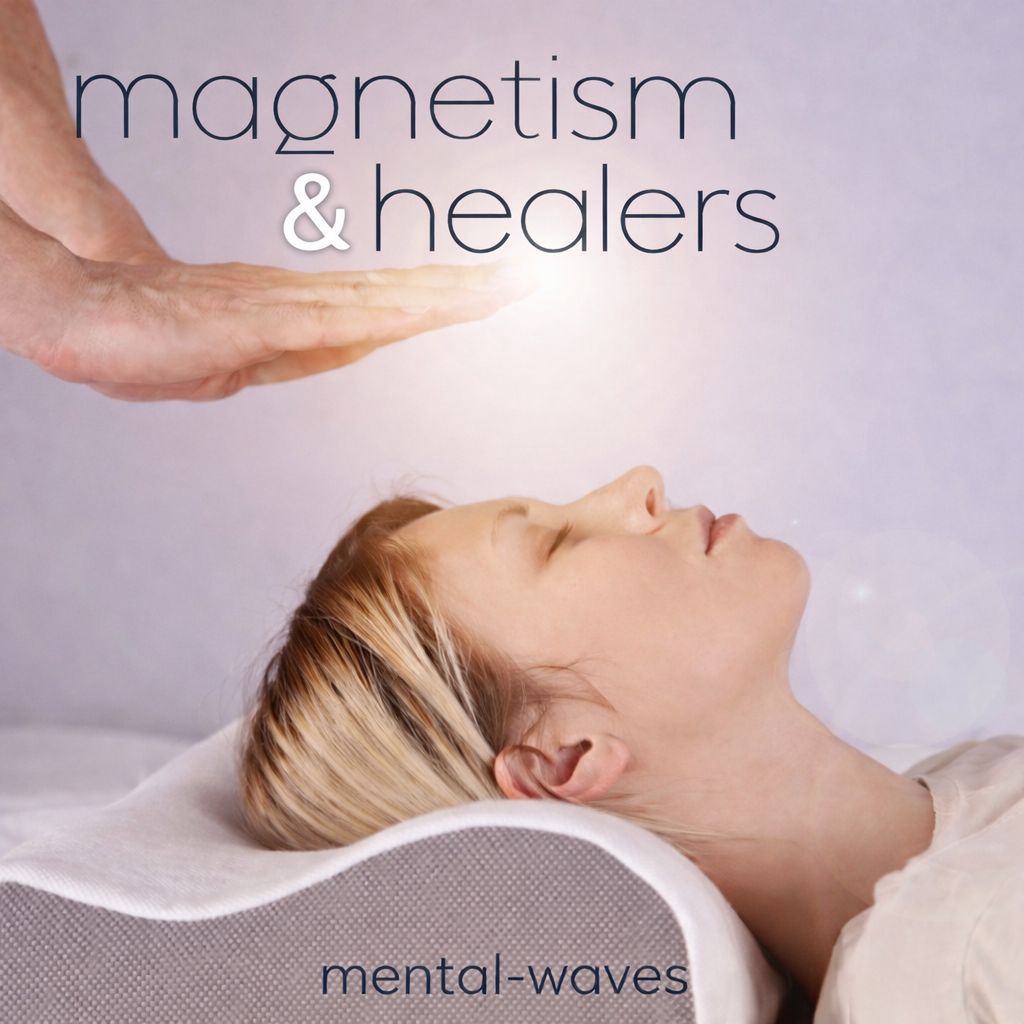
Ever since Oersted and the physicists who followed him helped establish the link between electricity and magnetic fields, magnetism in the material world has belonged to recognised science. What remains far more contested is healing magnetism — and the people said to practise it. Yet this is hardly a modern curiosity. The tradition reaches back deep into antiquity, with references traced to ancient Egypt, and it runs through a long human history of healers, shamans, rural practitioners and even monarchs whose “royal touch” was once treated as a form of remedy.
That long thread eventually meets the modern era with Franz Anton Mesmer, still widely regarded as the central figure in modern magnetism, and with later names such as the Marquis de Puységur and Professor Yves Rocard, who sought to examine the phenomenon more closely. The difficulty, then as now, is not simply whether magnetisers exist, but how to speak about them without drifting into mysticism on one side or reflex dismissal on the other. Between sincere practitioners and outright charlatans, between sceptical protocols and reports of use alongside conventional care, the subject continues to resist easy conclusions — which is precisely why it deserves a measured, rational and historically grounded look.
A Long History of Healing Magnetism
From ancient healing rites to royal hands
The physical link between electricity and magnetism has long been established through the work of figures such as Oersted, Ampère, Faraday, Sturgeon, Maxwell, Tesla, Ewing, Curie and Poulsen. The magnetic properties of metals, whether attractive or repulsive, are no mystery. What still stirs debate, however, is healing magnetism and the people said to practise it. According to accounts traced back to around 1600 BC, this idea is far older than modern science. In the 19th century, the Egyptologist Ebers discovered a papyrus at Luxor whose hieroglyphs referred to the benefits of curative magnetism, suggesting that such practices were already part of ancient healing traditions.
In short: what are magnetism and magnetizers?
Magnetism, in this wellbeing context, refers to traditions where a practitioner uses presence, hands, intention or subtle sensitivity to support another person. Magnetizers are people who practise this approach, but the subject needs careful language because experience, belief and evidence do not always speak the same way.
- Some people describe magnetism as energetic support.
- Others understand it through relaxation, attention and expectation.
- The historical tradition is rich, but claims should stay measured.
- It should remain complementary and never replace necessary care.
For a wider inner context, read What Is Spirituality?. For a free subtle listening cue, receive the Sacred Frequency Session.
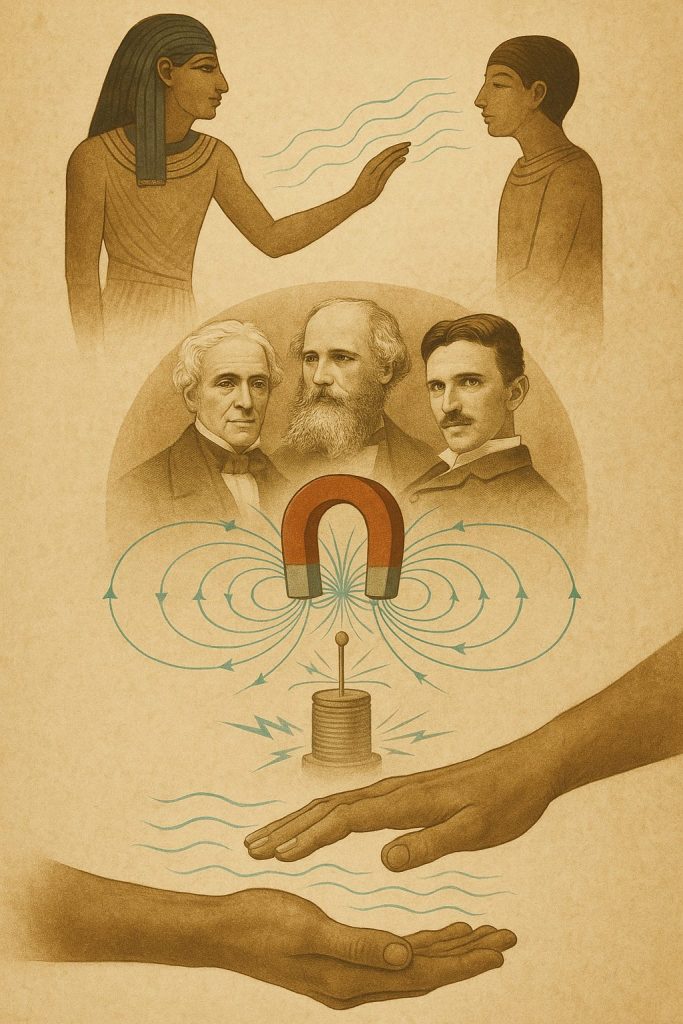
From there, the thread runs through much of human history. Testimonies appear across cultures and continents: among Aboriginal peoples, shamans, rural healers and ordinary villagers, but also in the courts of Europe. In France and England, kings were once expected to lay on their so-called “royal hands” on the very day of their coronation, a gesture associated with the power to heal. Whether one thinks of Jesus Christ or the Roman emperor Vespasian, many historical figures have been linked to this curative use of touch. Whatever explanation one prefers, the belief that certain hands could relieve suffering is clearly not a recent invention.
- Ancient references linked to the Ebers papyrus discovered at Luxor
- Healing traditions reported among shamans, villagers and Aboriginal peoples
- The “royal hands” of French and English monarchs
Mesmer and the birth of modern magnetism
If healing magnetism has ancient roots, its modern form is usually traced to Franz Anton Mesmer (1734–1815), the Western physician often regarded as the father of modern magnetism. There is a certain irony in that: a practice often pushed to the margins was shaped, in part, by a doctor. Mesmer inspired many disciples, among them the Marquis Armand de Puységur (1751–1825), who observed during a magnetic session the reality and possibilities of hypnotic sleep, a state that can sometimes arise in curative magnetism. Puységur then carried out numerous experiments, not only on people but even on the plants in his garden and almost everything that came to hand.
After Mesmer and Puységur, the subject continued to attract serious attention. Deleuze, Charles Lafontaine, Hector Durville, Gaston Durville, Doctor Encausse (1865–1916), Paul-Clément Jabot (1865–1962) and Professor Yves Rocard, former director at the CEA, all contributed in different ways to the study of magnetism. Rocard’s work, supported by more advanced technology, is often cited in favour of magnetisers. He argued that they possess a remarkable quantity of ferro-magnetite in the hands and a concentration of silicon in the brain, adding that a magnetiser’s fingers can produce a noticeable weakening of the local terrestrial magnetic field of around 0.15 mG.
Even so, the question remains open: if human beings are all biologically distinct, are some people simply more predisposed than others? In other words, might what is called a “gift” reflect a particular physical disposition rather than something mystical?
Science, Scepticism and the Question of Human Magnetism
From laboratory physics to the idea of a healing force
Since the work of Oersted (1777–1851) on electric current and the magnetic field it produces, the links between electricity and magnetism have no longer belonged to the realm of mystery. Ampère, Faraday, Sturgeon, Maxwell, Tesla, Ewing, Curie and Poulsen all helped to establish the magnetic properties of metals, including their attractive and repulsive forces. Yet healing magnetism remains a very different matter, and one that still provokes debate. Over time, it has been examined by physicians, engineers and researchers from many backgrounds, from Deleuze, Charles Lafontaine, Hector Durville and Gaston Durville, who worked on the so-called “Kirlian effect”, to Dr Encausse, Paul-Clément Jabot and Professor Yves Rocard, former director at the CEA.
Their work did not settle the question once and for all, but it did keep it firmly in view.
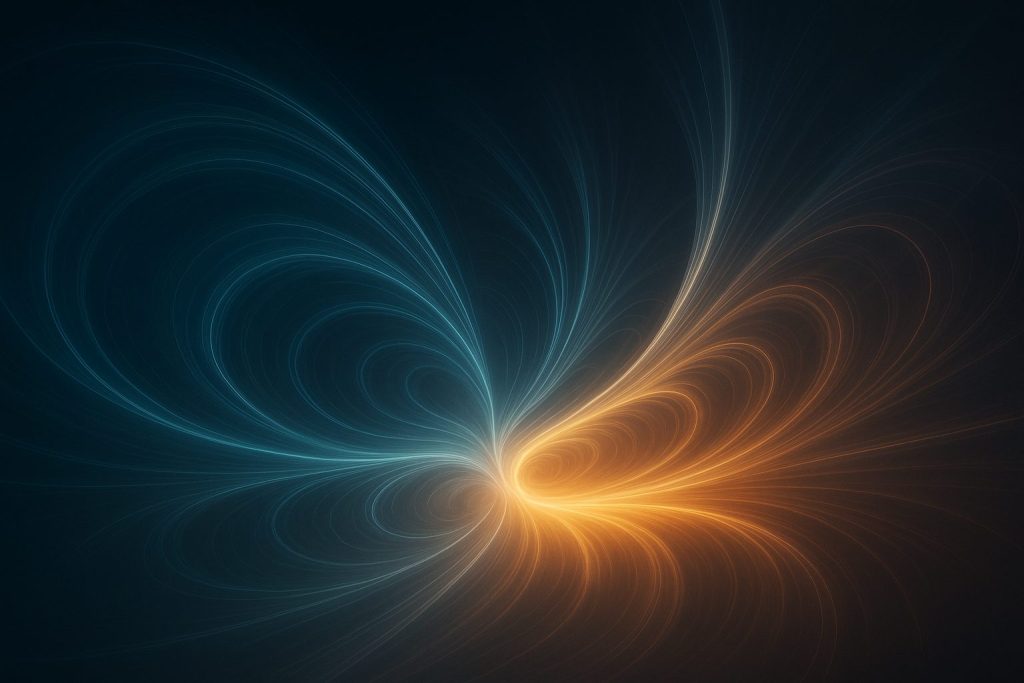
With the help of more advanced technology, Yves Rocard argued that magnetisers showed distinctive physical traits. In his view, they possessed a remarkable quantity of ferro-magnetite in the hands and a concentration of silicon in the brain. He even claimed that a magnetiser’s fingers could produce a measurable weakening of the local terrestrial magnetic field, of around 0.15 mG (milliGauss). Such claims naturally raise a larger question: are some people, by virtue of different genetic dispositions, more naturally inclined towards this kind of sensitivity than others? In other words, might there be a genuine physical predisposition behind what many simply call a gift?
The question remains open, but it helps explain why the subject continues to sit uneasily between observation, hypothesis and belief.
Related offer
Developing extrasensory perception
Develop your extrasensory perceptions with our powerful method based on synchronization and rhythm training...
View product- Established physics explains electromagnetic phenomena at the atomic and molecular scale.
- Healing magnetism, however, remains far more difficult to define and measure.
- That gap is precisely where both serious inquiry and confusion tend to arise.
Between scepticism, medical caution and practical use
That uncertainty also explains why the field attracts both sincere investigation and deep suspicion. The Observatoire zététique, a French sceptical association founded in 2003 and a member of the European Council of Skeptical Organisations, carried out experimental protocols on two magnetisers without obtaining positive results. Even so, supporters of magnetism argue that contemporary findings from biologists, physicists and chemists should not be dismissed out of hand. What matters here is keeping a rational footing. Too many people still attribute their supposed powers to cosmic forces, divine intervention, divination or the occult, when a more grounded approach is needed.
As the saying goes, no one holds the whole truth; even a stopped clock is right twice a day. At the same time, one point deserves to be stated plainly: charlatans and gurus have done real damage in the world of alternative medicine, and they should be called out without hesitation.
For that reason, the most sensible position is neither blind belief nor automatic dismissal. Some emergency departments have reportedly called on magnetisers, particularly for severe burns, in order to support conventional treatment and improve outcomes. Burns caused by radiotherapy are often cited in this context. Science may still struggle to explain the mechanisms involved, but that has not prevented a cautious dialogue from emerging in some settings.
Dr Michel Gouiric of the Castanet-Tolosan medical centre put it simply: “If the patient can gain an improvement in their condition as a complement, and without interference with clinical care, why deprive them of this aid?” Audrey Mouge, author of Le Mystère des guérisseurs (Éditions de la Martinière), notes that while all living beings emit electromagnetic waves, the hands of healers and meditation masters are said to emit low-frequency magnetic fields a thousand times stronger, fields reputed to relieve pain and echoed in devices already used by some physiotherapists.
Martine Betti-Cusso, writing in Le Figaro Santé in 2013, also mentioned hypotheses involving quantum physics and biophotons present in our DNA, while acknowledging that the mystery remains unsolved. If someone chooses magnetism for relief, it should never replace diagnosis or treatment from conventional medicine. It is wiser to seek information from bodies such as GNOMA, SNAMAP or the FIMECF, and to remember that in France magnetism is still not recognised by the Académie de médecine. Nor should patients blame their GP, who is not permitted officially to refer them to a magnetiser under Article R. 4127-39 of the Public Health Code.
- Use magnetism, if at all, only as a complement to medical care.
- Be wary of pseudo-science and practitioners making grand promises.
- Check recognised organisations before consulting anyone.
Why Magnetic Healing Still Divides Medicine
Between scientific caution and clinical openness
How, then, should magnetism be defined? The question matters, because too many people still explain it through cosmic forces, divine intervention, divination or the occult, when a more rational approach is needed. At the atomic and molecular scale, electromagnetism is a recognised reality; beyond that, however, certainty becomes far less straightforward. As the English proverb reminds us, no one holds the whole truth, and even a stopped clock is right twice a day. That is precisely why the subject continues to divide opinion. On one side, there is understandable scepticism; on the other, a refusal to dismiss experiences and observations simply because science has not yet explained every mechanism involved.
What deserves criticism is not careful doubt, but the confusion created by charlatans and gurus who contaminate the field of alternative medicine. At the same time, it would be just as unhelpful for conventional medicine to reject so-called “wave-based” therapies outright when practices such as hypnosis and Qigong have already found a place in hospitals. Human wellbeing is rarely served by rigid camps. It depends far more on cooperation between practitioners than on divisions that leave no room for approaches linked to Mesmerism, despite the support it received from figures such as the psychiatrist Henri Ellenberger.
- Rational caution is necessary when claims go beyond evidence.
- Blanket dismissal can be just as limiting when patients report real relief.
- The real danger often lies in pseudo-science and manipulation, not in honest complementary practice.
How to Approach Magnetism Without Losing Discernment
Magnetism is often discussed in a language of energy, hands, sensitivity and presence. That language can be meaningful for people who feel supported by the practice. At the same time, responsible discussion should avoid turning personal experience into universal proof.
A balanced approach can respect what people report while keeping health decisions grounded. The question is not whether every experience must be dismissed or believed immediately. The question is how to hold experience, caution and care together.
Related offer
Contact your Spiritual Guide
Brain training program to enable you to contact your spirit guide... The spirit guide is a disembodied entity...
View product- Notice whether the session helps you feel calmer or more present.
- Be wary of anyone who promises certainty or replaces medical advice.
- Keep consent, boundaries and comfort central.
- Use the experience as support, not as authority over your body.
The Mental Waves Magnetism Discernment Framework
The Mental Waves frame is to keep subtle practices gentle, voluntary and grounded. Magnetism can be approached as a space of presence and attention without needing exaggerated claims.
- Clarify: ask what the practitioner claims and what they do not claim.
- Consent: keep touch, distance and boundaries explicit.
- Observe: notice sensations, emotions and expectations without forcing meaning.
- Integrate: return to practical care, rest and daily support.
For the body and vibration side, continue with Body Resonance of Sound. For the symbolic foundation of frequency, read Sound, Frequency and Vibration.
Editorial note from Mental Waves
This article is educational and reflective. Magnetism may be explored as a complementary wellbeing practice, but health concerns should be discussed with qualified professionals and urgent symptoms require appropriate care.
Conclusion
What remains, in the end, is not a neat verdict but a tension worth keeping intact. Healing magnetism sits at the crossroads of long cultural memory, scattered clinical use, scientific curiosity and very real scepticism. That is precisely why it resists easy dismissal as much as easy belief. Its place, if it has one, is as a complementary practice approached with discernment: neither wrapped in mysticism, nor waved through without scrutiny, nor confused with a substitute for diagnosis, treatment or medical follow-up.
Perhaps the most sensible position is also the most demanding one: to stay open without becoming gullible, and cautious without becoming contemptuous. There may still be much that science cannot fully explain here, but that uncertainty is not a licence for charlatanism, and it should not prevent honest dialogue between practitioners and conventional medicine when patient welfare remains the first concern. In matters of healing, humility is often the clearest form of intelligence.
Frequently Asked Questions About Magnetism and Magnetizers
What is magnetism in wellbeing?
It is a tradition in which presence, hands, intention or subtle sensitivity are used as supportive practices.
What is a magnetizer?
A magnetizer is a person who practises magnetism, often through hands, attention and a claimed energetic sensitivity.
Is magnetism scientifically proven?
Many claims around magnetism remain debated, so it is best approached as complementary and experiential rather than as settled science.
Can people feel effects during a session?
Some people report warmth, calm, tingling or emotional release, but interpretations vary.
Should magnetism replace medical care?
No. It should not replace diagnosis, treatment planning or urgent care from qualified professionals.
What makes a session responsible?
Clear boundaries, consent, modest claims and respect for professional care are essential.
Why does the history of magnetism matter?
Its history shows how ideas about energy, attention and healing practices have evolved over time.
How can someone evaluate a practitioner?
Look for humility, transparency, ethical boundaries and no pressure to abandon medical advice.
What is the main takeaway?
Magnetism is best approached with openness and discernment: meaningful for some, but complementary and carefully framed.