en
enVotre panier est vide.


What do we really mean by spirituality? The question sounds simple, yet the word itself has never had a single, fixed meaning. Derived from the ecclesiastical Latin spiritualitas, it is a relatively recent term whose scope has shifted over time. As the scholar Aimé Solignac observed, spirituality has successively carried religious, philosophical and even legal meanings, though it is the religious sense that ultimately came to dominate. That history matters, because it reminds us that spirituality is not a neat concept but a living one, shaped by culture, language and the way each era understands the inner life.
Today, spirituality is often approached independently of belief in God and more as a search for liberation, presence and self-realisation. In practice, it may be sought through introspection, through attention to sensation and perception, or through experiences that quieten the ego and deepen contact with the present moment: in nature, music, reading, meditation, yoga or contemplative practice. From a contemporary point of view, this inward turn is often associated with shifts in attention, emotional regulation and states of consciousness, without reducing the experience to a purely technical process.
Yet the article also raises an essential tension: if spirituality is bound up with freedom from rigid mental patterns, what are we to make of doctrines that prescribe exactly what must be believed? Between inherited traditions and personal experience, spirituality appears less as a formula than as a demanding path towards a more generous, attentive way of being in the world.
In short: what is spirituality?
Spirituality is the search for meaning, connection, presence and inner growth through lived experience. It may include religion, meditation, nature, service, sound, silence or personal reflection, but it is not limited to one doctrine.
- Spirituality asks how life can be lived with more depth.
- It can be religious, non-religious or somewhere between the two.
- It often involves practice rather than belief alone.
- It becomes healthier when it stays grounded in daily life.
For a related subtle practice, read Magnetism and Magnetizers. For a free contemplative sound cue, receive the Sacred Frequency Session.
The Many Meanings of Spirituality
A word with shifting meanings
What do we really mean by spiritual development, spirituality, or even a spiritual person? These are not trivial questions. The term itself is relatively recent in its modern use, deriving from the ecclesiastical Latin spiritualitas, as noted by Le Petit Robert. Its meaning has never been entirely fixed. Depending on the period and the context, spirituality has carried different implications and a different scope. Father Aimé Solignac, philosopher, librarian and one of the principal contributors to the twenty-volume Dictionnaire de spiritualité (Beauchesne, 1969–1994), observed that the concept has successively taken three main meanings over the centuries: a religious one, a philosophical one, and a legal one defined in opposition to the temporal.
He added that the philosophical sense now survives mainly in established expressions such as the spirituality of the soul, while the legal sense had largely disappeared by the end of the sixteenth century. By contrast, the religious meaning became dominant.
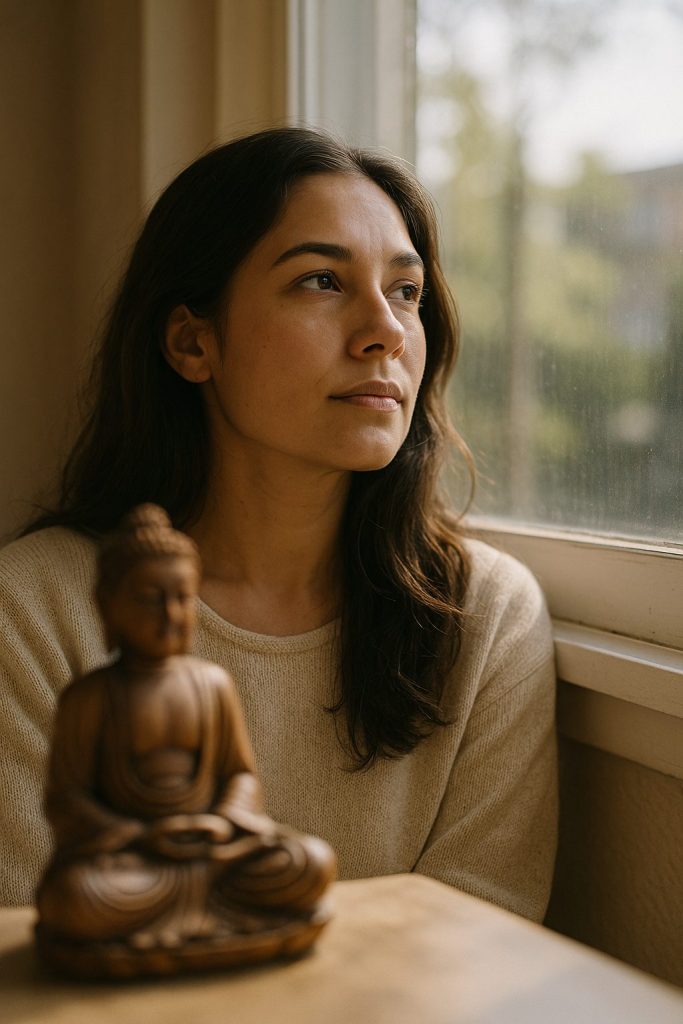
Today, however, spirituality is often understood more independently of belief in God. It commonly refers to a search for inner freedom, self-realisation and a loosening of the ego’s hold. In practice, this search can take many forms. It may involve introspection, that attentive observation of one’s own sensations, emotions and inner states. It may also arise through contact with nature, immersion in music, reading, painting or time spent in a place of worship. Disciplines such as tai chi chuan, yoga, Zen, meditation, qigong, chanting, sculpture or the use of mantras are often sought because they can help a person shift attention away from constant external stimulation and towards the present moment.
In that sense, spirituality is less a single doctrine than a way of perceiving and inhabiting experience. Yet this also raises an important question: if spirituality is about becoming freer from the grip of past and future, what should we make of systems that impose ready-made truths and dictate exactly what one must believe or reject?
This broadening of meaning helps explain why the word can sometimes generate confusion. For some, spirituality still refers primarily to a relationship with the sacred within an established religious framework. For others, it points to a more personal exploration of meaning, consciousness and ethical orientation, sometimes without any formal creed at all. These uses are not identical, but neither are they entirely separate. They often overlap around a common concern: how human beings make sense of inner life, suffering, transcendence, value and belonging.
It is also worth distinguishing spirituality from neighbouring terms that are often used loosely. It is not simply emotion, although it may involve powerful feeling. It is not identical to morality, although it may influence conduct. Nor is it reducible to unusual experiences or altered states, even if such states can sometimes accompany it. In a more rigorous sense, spirituality concerns the way a person relates to self, others, time, meaning and what they take to be greater than the isolated ego.
- religious meaning
- philosophical meaning
- legal meaning opposed to the temporal
From inner attention to a broader way of being
The Chinese proverb “10,000 monks, 10,000 religions” captures the deeply personal dimension of spiritual life, and that idea now sits alongside modern reflections on human uniqueness, including John Medina’s 12 Brain Rules. If many traditions and practices offer keys for opening the door to spirituality beyond a purely material view of life, the deeper task is to relearn how to learn: to refine attention, elevate the quality of consciousness and become more receptive to other layers of experience. For many people, this is associated with a felt sense of calm, fullness and peace with oneself and one’s surroundings. But such states do not simply come from adopting a label.
They often require the ego to quieten, self-centredness to soften, and a greater willingness to share, exchange and accept difference. As Willigis Jäger, the Benedictine monk and Zen master who led the School of Inner Life in Germany, wrote: “The spiritual path that does not lead to everyday life and to our fellow human beings is a mistaken path.” His point is essential: spirituality is not an escape from reality, but a different way of meeting it.
Whether the tools are modern, New Age or traditional, they are often valued because they may help reconnect body and mind, regulate stress, and reshape perception. Spiritual practice can involve learning to breathe more deeply, move with greater ease, and observe emotions rather than being ruled by them. The breath matters here because it is closely linked to mental and emotional regulation; as Lao Tzu put it, “A man’s life is nothing but a gathering of breath.” The psychotherapist K. G. Dürckheim likewise saw these moments of union with the present and the surrounding world as one of life’s true aims, because in such experiences we come into contact with our “essential being”.
This path also asks for discipline. As Willigis Jäger warned, the conscious ego can behave like a monarch, locked in perpetual conflict with our deeper self; while it remains supreme, peace is not possible. Dan Millman’s Sacred Journey of the Peaceful Warrior expresses a similar intuition through the character Mama Chia, who says that archetypes exist in the deepest corners of the human being. In a culture of instant gratification, spirituality is therefore not a quick fix but a path one must genuinely choose to walk. Before seeing the light, one must attend to the darkness.
Those who make the effort to inhabit the present through an inward journey may begin, in James Barrie’s words, to understand why “God gave us memory so that we might have roses in December”.
From a contemporary psychological perspective, this movement can also be described in terms of attentional training and self-regulation. When a person repeatedly returns to the breath, to bodily sensation or to a contemplative object, they may gradually become less captive to automatic rumination and reactive thought. That does not prove any single metaphysical doctrine, but it does help explain why spiritual disciplines are so often experienced as stabilising, clarifying or quietly transformative. The subjective language of peace, depth or connectedness may correspond, at least in part, to changes in how attention is organised and how inner experience is interpreted.
At its best, then, spirituality widens rather than narrows a person’s relation to life. It may encourage humility before what cannot be fully controlled, patience with ambiguity, and a more careful listening to one’s own motives. It can also foster a sense that meaning is not only something to be thought about abstractly, but something to be practised through presence, conduct and the quality of one’s relationships.
A Personal Path to Presence and Inner Growth
Practices that turn attention inward
Today, spirituality is often understood independently of belief in a personal God. It is more commonly described as a search for inner freedom and self-realisation, often through a loosening of the ego’s grip. In practice, this can take many forms. For some, it begins with introspection: a deliberate attention to one’s sensations, emotions and inner states. For others, it emerges in contact with beauty and absorption — in nature, music, reading, painting or even a place of worship. Disciplines such as tai chi chuan, yoga, Zen, meditation, Qigong, chanting, sculpture and the use of mantras are often valued because they may help quieten mental noise, stabilise attention and deepen the feeling of being fully present.

Related offer
Developing your Clairvoyance
Our audio brain training program «Developing your Clairvoyance» will bring your brain to a Delta state in low...
View productSeen in this light, spirituality is less a fixed doctrine than a lived experience of presence. It invites a person to turn attention away from constant external stimulation and become an observer of their own inner world, while fully inhabiting the present moment. This also raises an important question: if spirituality means being liberated from the weight of past and future, what are we to make of systems that impose ready-made truths and dictate, in advance, what must be believed and what must be rejected? The old Chinese proverb, “10,000 monks, 10,000 religions”, still resonates here.
It also sits surprisingly well beside modern reflections on human uniqueness, including John Medina’s 12 Brain Rules, which remind us that each mind perceives, learns and responds in its own way.
Many of these practices work, at least in part, by changing the quality of attention. Slow movement disciplines can anchor awareness in posture, balance and proprioception. Meditation may train the capacity to notice thoughts without immediately identifying with them. Chanting or repetitive prayer can narrow the field of distraction and create a rhythmic support for concentration. Time in nature may reduce cognitive overload and restore a more spacious mode of perception. None of this exhausts the meaning practitioners give to such activities, but it offers a plausible account of why they are often experienced as inwardly significant.
Importantly, turning attention inward is not the same as withdrawing from reality. Healthy introspection does not mean endless self-analysis or narcissistic preoccupation. Rather, it may involve a more lucid contact with one’s own patterns: fear, desire, defensiveness, hope, grief and aspiration. In that sense, spiritual practice can become a disciplined form of self-observation that supports discernment rather than fantasy.
- Nature, music and art can support states of absorption and calm attention.
- Practices such as meditation, yoga and Qigong are often sought for regulation and inner focus.
- Spirituality, in this sense, is experienced personally rather than received as a rigid formula.
From ego reduction to a more generous way of living
If many traditions and modern approaches offer keys for opening the door to spirituality, the deeper task is to learn how to learn again: to refine consciousness, become more receptive, and notice dimensions of experience that usually remain in the background. People often seek spirituality for the sense of wellbeing, fullness and peace it may foster. Yet this movement inward is not meant to end in self-absorption. It asks the ego to step back, encourages us to move beyond selfish reflexes, and may support greater openness, sharing and acceptance of difference.
That is why Willigis Jäger wrote, “The spiritual path that does not lead to everyday life and to our fellow human beings is a mistaken path.” As a Benedictine monk and Zen master who led the School of Inner Life in Germany, he defended the right to look differently at revealed truths.
Whether the tools are modern, New Age or traditional, they are often used to reconnect us with the present and to shift our perception of an over-sanitised society. Spiritual development may help us breathe more freely, regulate stress, observe our emotions with greater clarity and soften the limits of the isolated self — in short, to think like a peaceful warrior and act with the composure of a sage. The breath matters here because it is closely linked to emotional state and physiological regulation; as Lao Tzu put it, “A man’s life is nothing but a gathering of breath.” The German psychotherapist K. G.
Dürckheim saw these moments of union with the present world as one of life’s aims, because in such experiences we come into contact with our “essential being”. In the same spirit, practical guidance remains simple: nourish awareness, contemplate, commune with nature or with a chosen discipline, and breathe deeply enough to reconnect body and mind. This may sharpen perception, reveal the emotional mechanisms behind fear and doubt, and help us become less enslaved by our thoughts. As Willigis Jäger warned, the ego can behave like a monarch; while it retains supremacy, peace remains out of reach.
Dan Millman’s The Sacred Journey of the Peaceful Warrior expresses a similar intuition through Mama Chia, who says that archetypes exist in the deepest corners of the human being. But in an age of instant gratification, spirituality still requires commitment: before seeing the light, one must attend to the darkness. Those willing to inhabit the present through this inward journey may begin, in James Barrie’s beautiful phrase, to understand why “God gave us memories so that we might have roses in December”.
The idea of reducing the ego should also be handled carefully. It does not mean erasing personality, suppressing healthy boundaries or becoming passive. More plausibly, it refers to loosening the dominance of self-referential thinking: the constant need to defend an image, control outcomes or interpret everything through personal importance. When that grip softens, people may find more room for empathy, patience and perspective. In psychological terms, one might say that spirituality can support a shift from compulsive self-concern towards a more integrated and relational mode of being.
This is why many spiritual traditions insist that inner work must show itself in ordinary conduct. A person who meditates, prays or contemplates but remains harsh, closed or indifferent has perhaps touched a technique without yet embodying its ethical implications. The test of spiritual maturity is rarely found in grand declarations. It is more often visible in the quality of attention one gives to others, in the ability to tolerate frustration without aggression, and in the capacity to remain present when life becomes uncertain or painful.
Breathing practices deserve particular mention because they sit at the meeting point of physiology and experience. Slower, steadier breathing may influence arousal, support parasympathetic regulation and create conditions in which reflection becomes easier than impulsive reaction. For that reason, breathwork has long occupied a central place in contemplative traditions. The language used around it may vary, but the underlying intuition is consistent: the way we breathe shapes the way we inhabit ourselves.
Spirituality Is More Than an Idea
Spirituality becomes real when it changes the way a person relates to ordinary life. It can make silence less empty, relationships more conscious, difficulty less isolating and beauty easier to notice.

Related offer
Developing extrasensory perception
Develop your extrasensory perceptions with our powerful method based on synchronization and rhythm training...
View productThis does not require a dramatic identity. A spiritual life can be quiet, private and practical. It can appear in breath, gratitude, ethical choices, music, forgiveness, service or the simple willingness to listen inwardly.
- Meaning: what gives your life direction and depth?
- Presence: how do you return to the moment you are actually living?
- Connection: what helps you feel part of something larger?
- Practice: what do you repeat when life becomes difficult?
The Mental Waves Living Spirituality Framework
The Mental Waves frame is to keep spirituality embodied, kind and practical. A spiritual path should not remove someone from life. It should make life more conscious, more honest and more spacious.
- Ground: return to the body, breath and present environment.
- Listen: notice intuition, emotion and quiet inner signals.
- Discern: separate real insight from avoidance or fantasy.
- Serve: let inner work improve the way you meet others.
For a simple breath-based practice, continue with Breathing for a Positive Mindset. For the role of sound and frequency in inner practice, read Sound, Frequency and Vibration.
Editorial note from Mental Waves
This article is educational and reflective. Spiritual practice can support meaning and wellbeing, but it should remain grounded, respectful and compatible with appropriate psychological or medical support when needed.
Conclusion
Spirituality, then, is not one fixed doctrine but a shifting human attempt to relate differently to experience, meaning and consciousness. It may still take a religious form for some, yet it is also often understood more broadly as a practice of attention: a way of loosening the grip of the ego, becoming more present, and refining how we perceive ourselves and the world. In that sense, its value lies less in adopting ready-made truths than in cultivating an inner quality of awareness that can be lived, tested and deepened in ordinary life.
What emerges most clearly is that spirituality is not an escape from reality, but a different way of inhabiting it. Through contemplation, breath, movement, art or silence, it may help support emotional regulation, sharpen attention and open a more generous relationship with others. The language used to describe these states will vary, and the interpretations remain plural, but the underlying invitation is consistent: to move beyond automatic thought, meet one’s inner life with honesty, and let that inward work reshape the everyday. That is where the path becomes real.
For that reason, spirituality is best approached neither with naïve credulity nor with dismissive cynicism. It deserves both openness and discernment. Openness, because many people do report that contemplative or reflective practices deepen meaning, calm reactivity and strengthen their sense of connection. Discernment, because the field can also attract confusion, projection and exaggerated claims. A serious understanding of spirituality keeps both dimensions in view: the reality of lived experience and the need for intellectual honesty.
Ultimately, the question is less whether spirituality fits one definition than whether it helps a person live with greater lucidity, steadiness and generosity. If it leads to clearer attention, less domination by fear and ego, and a more grounded relation to others and to the present moment, then it has moved beyond abstraction. It has become a way of life.
Frequently Asked Questions About Spirituality
What is spirituality in simple words?
Spirituality is the search for meaning, presence, connection and inner growth in everyday life.
Is spirituality the same as religion?
Not always. Spirituality can include religion, but it can also be personal, contemplative or non-religious.
How can someone practise spirituality?
Through meditation, prayer, silence, nature, service, journaling, music, breathwork or honest self-reflection.
Why does meaning matter?
Meaning helps people orient their choices, endure difficulty and feel connected to something deeper than routine.
Can spirituality be grounded?
Yes. A grounded spirituality stays connected to the body, relationships, ethics and daily responsibilities.
What is spiritual bypassing?
It is the use of spiritual ideas to avoid emotions, responsibilities or real-life problems that need attention.
Does spirituality require belief?
It does not have to. Some people begin with practice, experience or questions rather than fixed beliefs.
Can sound support spirituality?
Sound can help some people enter a contemplative state, especially when listening is paired with intention and quiet.
What is the main takeaway?
Spirituality is a lived relationship with meaning, presence and connection, not just an abstract belief.