en
enVotre panier est vide.


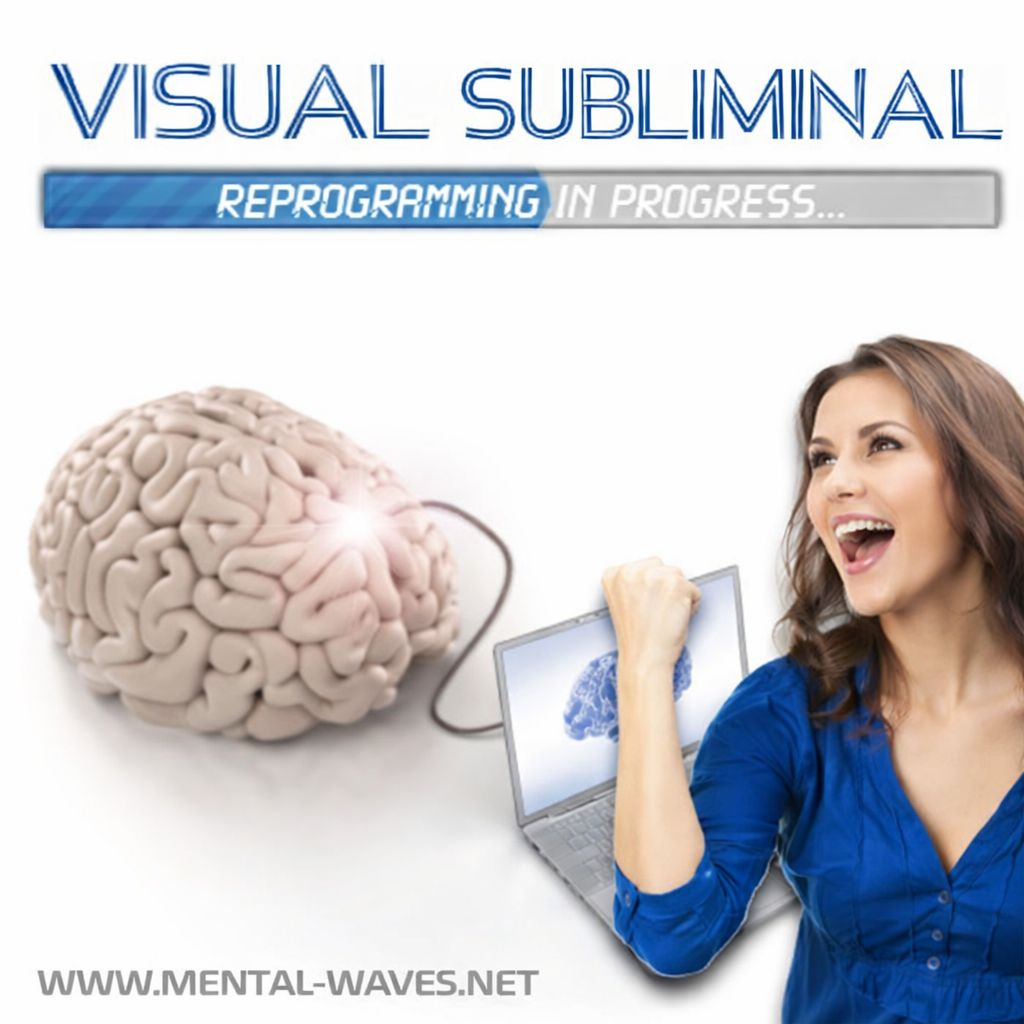
Thanks to modern neuroscience and the tools now used to observe how the brain processes information, it is increasingly clear that visual subliminal messages can be received by the brain, even when they do not reach conscious awareness. That idea can feel unsettling at first. It has also been clouded for decades by rumour, prejudice and media sensationalism, which have too often turned the subject into something either suspect or exaggerated.
In short: visual subliminal messages
Visual subliminal messages are often presented as reprogramming tools, but the useful question is how subtle cues, repetition and attention may influence perception.
Use this article as a practical map: keep what helps attention become steadier, question anything that sounds absolute, and connect the idea back to repeatable daily practice.
So it becomes essential to return to the facts with a calmer, more rigorous view. What exactly is meant by the subliminal? How can visual messages act below the threshold of conscious perception? Why is this approach often associated with inner change, and why does it not deserve the fears so often attached to it? To answer those questions properly, we need to look at the subject as it is: with historical perspective, scientific caution and a clear understanding of how the conscious and unconscious dimensions of the mind may interact.
Where Visual Subliminal Work May Offer Support
The kinds of difficulties people often want to work on
Visual subliminal work is often sought by people who feel held back in everyday life by patterns they struggle to shift on their own. It may help support change in a wide range of areas, including repeated self-sabotage, persistent anxiety, different forms of inhibition, low self-confidence, emotional fragility and a sense of inner instability. It is also sometimes used by people facing eating difficulties such as bulimia or anorexia, by those who long for greater success or recognition, and by those who notice recurring personal or professional setbacks.
The same approach is also commonly associated with issues such as affective loneliness, a more general sense of unease, and fears, phobias or addictions, whether that involves vertigo, smoking or alcohol dependence. Some people turn to it not because they feel unwell, but because they want to strengthen capacities they feel are underused: learning more easily, communicating better with others, concentrating for longer, becoming more creative, or asserting themselves more clearly. In that sense, its field of action is broad: it is not limited to crisis or distress, but can also be used in the search for greater balance, confidence and personal development.
- Repeated self-sabotage, anxiety and inhibition
- Low confidence, emotional fragility and recurring setbacks
- Phobias, addictions and eating-related difficulties
- Focus, communication, creativity and self-assertion
Why the work is aimed at the psyche rather than symptoms alone
The underlying idea is that many of these difficulties do not begin only in outward behaviour, but in the psyche as a kind of control centre. It influences decisions, reactions, emotions, perceptions and habits, often long before we are fully aware of what is happening. When this inner system is burdened by psychological blocks, limiting conditioning or deeply rooted brakes, it can interfere with a person’s ability to move forward, fulfil their potential or reach meaningful goals. Over time, this may feed negative self-judgements, discouragement, bitterness and frustration, which in turn can reinforce the original difficulty.
From that perspective, the aim is not simply to suppress a visible symptom, but to act at the level where the pattern is being maintained. This is where visual subliminal methods are presented as useful: they are intended to help the psyche accept and anchor more constructive inner responses. Put simply, the goal is to reprogramme unhelpful patterns so that desired changes can settle more naturally over time. The promise is therefore not instant transformation, but a gradual shift in the inner mechanisms that shape behaviour, emotional life and day-to-day experience.
Why the Psyche Matters in Lasting Change
The psyche as the system that shapes daily life
In many cases, the roots of recurring difficulties are found less in the visible symptom than in the psyche itself. It acts as a kind of control centre, influencing behaviour, decisions, feelings, emotions, actions and reactions. When this inner system is held back by psychological blocks, limiting conditioning or deeply ingrained brakes, it can interfere with a person’s ability to move forward, fulfil their potential and reach the goals they genuinely want to achieve.
That is often how a difficult cycle becomes established. Obstacles within the psyche can gradually feed negative and inaccurate self-judgements, then discouragement, bitterness and frustration, which in turn tend to reinforce the original problem. Seen in that light, the issue is not only what someone does on the surface, but what continues to organise their responses underneath. If the source of the difficulty lies at that level, it makes sense to work there too, by helping to loosen the factors that prevent a fuller and more satisfying way of living.
How visual subliminal work aims to support reprogramming
This is where visual subliminal work is presented as a useful tool. Its purpose is not to force change from the outside, but to help the psyche accept and integrate what needs to change. Put simply, it seeks to “persuade” the deeper mind to revise patterns that are no longer helpful. In that sense, the idea of reprogramming does not mean becoming someone else; it means replacing unhelpful inner habits with responses that are more constructive, more stable and better aligned with the life a person wants to build.
Used in this way, visual subliminal material is intended to support the arrival and gradual anchoring of desired changes within the psyche first, so that they may then be reflected more naturally in behaviour and everyday life. The underlying logic of the method is straightforward: when the internal programme changes, external reactions may begin to change as well. That is why this approach is often sought not simply to manage a difficulty for a moment, but to encourage a deeper shift in the patterns that keep it in place.
- working at the level of inner conditioning
- reducing the hold of limiting psychological patterns
- supporting more durable behavioural change
When Conscious Intention and the Unconscious Work Together
The distinct role of the conscious mind
The conscious mind is the part that observes, compares and reasons. It can notice what is missing, recognise recurring difficulties, decide that a change is needed and define a direction: more confidence, less anxiety, better concentration, clearer goals or a more stable emotional life. It is also the conscious mind that sets intentions, chooses methods and gives a timeframe to the effort. In that sense, it plays an essential guiding role.
Yet conscious will is not always enough on its own. A person may understand perfectly well what should change and still feel held back in daily life. That is because many automatisms, reactions and deeply rooted patterns do not operate at the level of deliberate thought. If lasting change is the aim, it often makes sense to work not only with conscious reflection, but also with the deeper level where habits, emotional responses and internal conditioning are more firmly anchored.
- identifying what is not working
- deciding what needs to change
- setting goals and direction
Why the unconscious is central to change
In this approach, the unconscious is understood as a kind of control centre for many everyday responses. It may help loosen inner blocks, support motivation, strengthen existing capacities and allow new resources to emerge. This is why visual subliminal work is presented as a valuable route towards change: it aims to communicate with the unconscious more directly than ordinary mental effort can. The goal is not to oppose the conscious mind, but to help the two levels work in the same direction.
When that alignment is present, change tends to become more coherent and more sustainable. The conscious mind identifies the need, chooses the objective and engages with the process; the unconscious, in turn, is the level that may help translate that intention into concrete shifts in behaviour, reactions and daily functioning. In other words, each has its task. The conscious mind understands and chooses; the unconscious is the level through which those changes can begin to take shape in lived experience.
How Visual Subliminal Work Creates a Practical Route to Change
A direct way of addressing the unconscious
Once the conscious mind has recognised that a change is needed, the real question becomes: how can that intention be transmitted to the unconscious, where many automatic patterns are actually organised? In this perspective, visual subliminal work is presented as one of the most effective ways of reaching that deeper level of the psyche. Its purpose is not to replace conscious reflection, but to give it a more direct route towards the part of the mind that governs many everyday reactions, habits and internal responses.

This is why the method is often described as a practical bridge between what we understand intellectually and what we are truly able to embody in daily life. The conscious mind may decide, analyse and set a direction, but lasting change tends to depend on whether the unconscious accepts and implements that direction. Visual subliminal work is therefore used to help that message pass through more smoothly, so that inner change is not left at the level of intention alone.
When conscious intention and daily behaviour begin to align
The underlying idea is simple: results are more likely to emerge when the conscious and the unconscious work in harmony rather than in opposition. Each has its own role. The conscious mind identifies what is lacking, understands what needs to change and actively looks for suitable tools. The unconscious, by contrast, is the level that can translate those orientations into concrete shifts in behaviour, emotional responses and repeated patterns.
In that sense, each part has its task to fulfil. Once the conscious mind has understood that a change is necessary, it must seek out the right means and present that change clearly to the unconscious. The unconscious, in turn, is the part that can make those adjustments real in ordinary life. This is precisely where visual subliminal work is meant to help: not by forcing change, but by supporting a better alignment between deliberate intention and the deeper mechanisms that shape everyday experience.
- The conscious mind identifies the need for change.
- It chooses the method and sets the direction.
- The unconscious helps turn that direction into lived reality.
What Visual Subliminal Actually Means
From liminal perception to visual subliminal messages
The idea of the subliminal has been discussed since the early 1960s, but the term itself is often used loosely. Liminal refers to what sits at the threshold of perception for one of the senses, whether visual, auditory or otherwise. Subliminal, by contrast, refers to what falls below the threshold of conscious perception. In other words, the stimulus is present, but not clearly accessible to the conscious mind in the ordinary way.
In the specific case of visual subliminal material, this usually means words or images inserted into a film so briefly, or layered with such transparency, that they cannot be consciously read. The conscious mind does not have time to identify them in the usual deliberate way. Yet the underlying principle of subliminal messaging is that these signals, although not consciously seen, may still be received at another level of mental processing.
- Liminal: at the threshold of perception
- Subliminal: below the threshold of conscious perception
- Visual subliminal: words or images presented too quickly or too faintly to be consciously read
Why these messages are thought to reach the unconscious
The theory behind subliminal messages is straightforward: a stimulus presented below the threshold of conscious perception may escape the usual filtering of the conscious mind while still being registered by the unconscious. In this model, the message is not processed through the familiar inner commentary that tends to analyse, criticise, doubt or reject what it receives. That is precisely why visual subliminal methods are often described as a practical route towards the unconscious.
Put simply, the conscious mind does not read the message, but the unconscious may still receive and integrate it. This is what gives the method its particular interest in the context of inner change and reprogramming. The aim is not to force the mind, but to present carefully constructed cues in a form that can be taken in without the usual conscious resistance. That is the central logic of visual subliminal work, and the foundation on which the rest of the method is built.
How Visual Subliminal Messages Are Thought to Influence Change
The basic principle behind the method
Beyond the familiar divide of “I believe in it” or “I do not”, the principle of subliminal work rests on a clear idea: to introduce positive messages, constructive convictions and supportive beliefs at a level that does not pass through ordinary conscious reading. In this model, visual subliminal material is designed to help in many areas of life by addressing the unconscious directly, rather than relying only on conscious effort, willpower or mental self-talk.

The underlying theory is that, once these messages are received and integrated within the psyche, the desired changes may begin to unfold more naturally. The aim is not to force transformation in a dramatic or magical way, but to support the unconscious in organising change from within. In that sense, the method is presented as a way of helping the inner system adopt what is beneficial, so that progress can emerge with less inner resistance and fewer repeated setbacks.
Why repetition and speed are considered important
To produce this effect, subliminal messages are typically presented as words or images specially prepared to reach the unconscious without being stopped by the conscious mind. Their display is too rapid, or too discreet, for the conscious mind to read them in the usual way. As a result, the conscious filter cannot easily analyse, criticise, judge or reject them through its usual stream of mental commentary. In the language of the original theory, the unconscious can then perceive them, almost as if it were taking a rapid internal snapshot.
With repeated exposure, these messages are thought to settle progressively into the psyche, where they may begin to function like new inner rules, habits or reference points, gradually replacing older patterns seen as unhelpful or limiting. According to this view, the first shifts occur internally, in the structure of the psyche itself, and only afterwards become visible in behaviour, reactions and everyday life. In other words, the change is expected to begin beneath awareness before it becomes concrete in daily experience.
- Messages are presented below ordinary conscious reading speed.
- This is intended to reduce conscious resistance and over-analysis.
- Repetition helps the new material become more familiar and stable.
- Visible change is expected to appear first inwardly, then in daily behaviour.
What Research Really Shows About Visual Subliminal Perception
From early hypotheses to measurable brain responses
Scientific interest in visual subliminal messages did not begin yesterday. Studies carried out in the 1970s and 1980s formed the early groundwork for this field. Those first experiments were not yet fully conclusive, and their findings often relied more on subjective observations than on robust objective measures. Even so, they already pointed towards the possibility that visual subliminal stimuli were producing a genuine effect rather than being a simple fantasy or media myth.

Related offer
18 States of Consciousness - Integral Infinity Pack
Integral Infinity - The 18 States of Consciousness A unique sound box designed to explore all the...
View productIt was mainly from the late 1990s, and especially throughout the 2000s, that the picture became clearer. With more advanced neuroscience tools, researchers were finally able to observe more precisely what happens in the brain when information is presented below the threshold of conscious perception. Work carried out at the Department of Cognitive Science at UCL in London, published in Current Biology, together with research conducted in France at Inserm U562 in Cognitive Neuroimaging, including publications in Nature Neuroscience, showed that an image or written word can reach the retina without being consciously seen and still trigger specific activity in certain brain regions associated with unconscious processing.
Functional MRI made this activity observable, providing objective evidence that the brain does respond to visual subliminal images and messages.
- Early studies suggested an effect, but lacked strong objective tools.
- Later neuroscience research made unconscious visual processing measurable.
- Functional MRI revealed specific brain activity in response to unseen stimuli.
Why attention still matters
These findings also introduced an important nuance: subliminal perception is not the same as passive absorption in any condition whatsoever. The studies indicate that if the subject’s concentration drops too far, the brain no longer responds in the same way to these stimuli. In other words, for visual subliminal material to be effectively received, a sufficient level of attention is still required. This is often described as a state of relaxed attention: not mental strain, but not total distraction either.
That distinction matters because it helps place the method on more credible ground. The research supports two key points: first, visual subliminal material does appear to involve unconscious processing; second, it can produce an observable cerebral response under the right attentional conditions. This does not mean a magical or automatic effect in every circumstance, but it does mean the method rests on something more solid than belief alone. Put simply, the brain can register what the conscious mind does not clearly notice, and that is the scientific basis on which visual subliminal work is generally understood to operate.
Clearing Up the Main Fears Around Visual Subliminals
No, visual subliminals are not designed to create mental confusion
One of the most common misconceptions is that visual subliminal messages somehow overload the mind and leave a person confused. The idea sounds plausible at first, but it does not really fit the way the psyche is usually described in this approach. The conscious mind can certainly become tired, saturated or scattered when it is faced with too much information at once. By contrast, subliminal visual material is generally built from simple word-concepts and short, clear phrases, repeated over time rather than delivered as a chaotic flood of content. In that sense, it is not intended to burden the mind, but to present a small number of consistent cues below the threshold of conscious reading.
The underlying claim is therefore not that the mind is being forced into confusion, but that the unconscious can register these brief signals without the usual conscious commentary, doubt or over-analysis. In practical terms, that is why this method is presented as structured rather than mentally disruptive. It is also why fears of the mind becoming scrambled by subliminal films are often overstated. Used properly, the aim is not to create inner noise, but to support a more stable and constructive mental orientation.
- The conscious mind may feel overloaded by excess information
- Subliminal content is usually based on short, repeated and simple messages
- The intended effect is gradual integration, not mental confusion
No, they cannot simply make you do something against your will
Another persistent fear is that subliminal material could compel someone to act against their wishes. Here again, the original reasoning is more nuanced than that. Even if subliminal messages are thought to bypass part of the conscious filter, that does not mean all inner safeguards disappear. In this model, the unconscious is not a passive container that accepts anything placed before it. It acts more like a protective gatekeeper, sorting what is compatible with the person’s deeper aims and rejecting what is experienced as unacceptable. The text even compares this protective function to the way the psyche can defend itself too strongly in certain situations, as in selective amnesia after severe psychological shock.
From that perspective, the unconscious is understood to recognise intention, desire and the wish to reach a given result, then to assess whether the messages being received are consistent with that direction. Even if it is not described as a “master of language”, the simplicity and clarity of subliminal wording are considered sufficient for this kind of sorting to occur. That is why only constructive, positive and acceptable messages are thought to have a chance of being integrated, whereas messages based on coercion or unacceptable ideas would not be.
In other words, visual subliminals are presented not as a tool of domination, but as a method that may support change when it aligns with what the person genuinely wants.
- Bypassing conscious reading is not the same as removing all inner protection
- The unconscious is presented as filtering what is compatible or not
- Coercive or unacceptable messages are not considered likely to be integrated
What to Expect in Practice From Visual Subliminal Work
Change is usually progressive, not instant
Another common misconception is that visual subliminal work either takes far too long to do anything, or else should produce immediate, dramatic effects. In reality, neither view is especially accurate. This approach is often considered relatively quick, but it is not a magical shortcut. It generally needs to be used regularly over a period of time, because the process is based on gradual mental imprinting rather than a sudden jolt of change.
In that sense, a visual subliminal is not a ‘hit’ that transforms behaviour overnight. The idea is that repeated exposure may progressively help the unconscious register the usefulness of change and the benefits associated with it. As these messages settle in, older unhelpful patterns may begin to loosen. In practice, visible effects are often said to appear after around six weeks, although the rhythm can vary from one person to another.
Why the brain is not ‘immune’ to subliminal input, and what about children
It is also misleading to claim that some people are completely impervious to subliminal perception. From birth onwards, all of us are constantly exposed to sensory information that does not fully enter conscious awareness. Not everything that passes through our visual field, or that we hear, touch, smell or taste, is consciously registered. A familiar smell can fade into the background until it seems odourless, and the regular sound of a tram in the street may no longer be noticed at all. In that sense, subliminal processing is not an exotic exception but part of ordinary perception.
Human consciousness can only hold a limited number of elements at once — often described as around five to nine in ordinary waking states, and fewer than five in non-ordinary states of consciousness.
The same logic also helps explain why it is inaccurate to say that children cannot use subliminal films. A visual subliminal created properly is generally presented as safe for children, and may even be designed specifically for issues such as fears, eating difficulties or behaviour patterns including shyness and aggression. From around the age of 12, children may use the same visual subliminal material as adults. In all cases, though, a few basic conditions matter: the child should be able to read, have sufficient vocabulary, and be calm enough while watching for the material to be meaningfully received.
- Not all sensory input reaches conscious awareness.
- Ordinary attention is naturally limited.
- Children can use suitable subliminal films if the material is age-appropriate.
Using Visual Subliminals Responsibly and Exploring the Research
What this can look like in practice, including for children
When visual subliminal films are created properly, they are generally presented as a gentle tool rather than something intrusive or forceful. There are even subliminal videos designed specifically for children, especially around fears, eating-related difficulties or behavioural patterns such as shyness or aggression. From around the age of 12, the same type of visual subliminal material used by adults may also be considered appropriate.
That said, a few practical conditions still matter. The child needs to be able to read, to have a sufficient basic vocabulary, and to be calm enough while watching for the messages to be processed in a useful way. More broadly, the underlying idea remains the same for adults as well: change begins with intention. Visual subliminal work is presented here as a way of supporting that inner reprogramming process, helping a person move towards the changes they genuinely want to anchor in daily life.
- Specially designed videos may be used for fears, eating issues or behaviour
- From about age 12, adult visual subliminals may also be suitable
- The child should be able to read and remain reasonably settled while watching
Further reading on the scientific literature
For readers who want to go beyond general explanations, the subject has also been explored through a number of scientific papers, theses and research summaries. These references do not remove the need for nuance, but they do show that subliminal perception has been examined seriously within cognitive neuroscience, particularly in relation to unconscious processing, masked words, emotional responses and functional brain imaging.
Among the examples cited in the original literature list are work by Stanislas Dehaene, including Cerebral mechanisms of word masking and unconscious repetition priming (Nature Neuroscience, vol. 4, 2001); Lionel Naccache, La perception subliminale des nombres: propriétés psychologiques et imagerie cérébrale fonctionnelle de processus cognitifs inconscients (Doctoral thesis in Neuroscience, Paris VI, 2002); Naccache L. and Dehaene S., La perception subliminale : un aperçu sur l’inconscient (Pour la Science, no. 302, 2002); Gaillard, R., Naccache L., Amygdala recording of emotions evoked by subliminal words (Medecine Science, no. 10, 2005); Dehaene, S., Imaging conscious and subliminal word processing in Developping individuality in the human brain: a tribute to M.

Related offer
Beyond being
«Au-delà de l'Etre» is a 3-track, 1-hour music compilation based on...
View productPosner (American Psychological Association, 2005); and Dehaene, Changeux, Naccache, Sackur, Sergent, Conscious, preconscious and subliminal processing: a testable taxonomy.
- Nature Neuroscience, 2001
- Paris VI doctoral thesis, 2002
- Pour la Science, 2002
- Further work on masked processing, emotion and conscious/preconscious/subliminal taxonomy
Further Reading for Those Who Want to Go Deeper
A few key references from the scientific literature
For readers who would like to explore the subject in more depth, several publications are often cited in discussions of visual subliminal perception and unconscious processing. Among them is the work of Dehaene, Changeux, Naccache, Sackur and Sergent, Conscious, preconscious and subliminal processing: a testable taxonomy, published in Trends in Cognitive Sciences, no. 10, 2006. This paper is frequently referenced for the way it helps clarify different levels of processing in the brain, rather than reducing everything to a simple opposition between conscious and unconscious perception.
Other useful references include Arnaud Petre’s work at the Faculté des Sciences Économiques et Sociales de Louvain, Mémorisation non consciente des publicités: apport d’une mesure implicite dans une application au netvertising, published by Andreani in 2003, and Émilie Ting Qiao’s Bases cérébrales de la lecture des mots manuscrits. Étude comportementale et en IRM fonctionnelle, a Master 2 dissertation in Cognitive Science at Paris V, 2007. While these texts do not all address visual subliminal films in exactly the same way, they contribute to the broader scientific picture of non-conscious perception, implicit memorisation and measurable brain activity.
- Dehaene, Changeux, Naccache, Sackur, Sergent — Trends in Cognitive Sciences, 2006
- Arnaud Petre — Andreani, 2003
- Émilie Ting Qiao — Paris V, 2007
Research linking invisible stimuli, attention and brain response
Another frequently mentioned study is by Bahador Bahrami, Nilli Lavie and Geraint Rees of University College London: Attentional load modulate responses of human primary visual cortex to invisible stimuli, published in Current Biology, vol. 17, issue 6, 2007. This line of research is especially relevant because it connects an important practical point raised throughout the article: even when a stimulus is not consciously seen, the brain’s response still depends on the subject’s attentional state. In other words, subliminal perception is not presented as a magical mechanism operating independently of context, but as a process associated with perception, attention and the brain’s ongoing regulation of incoming information.
Taken together, these references offer a more serious and nuanced basis for anyone wishing to move beyond rumours or sensational claims. They suggest that non-conscious visual processing can be studied in a rigorous way, using behavioural observation and tools such as functional MRI, while also reminding us to stay measured in our conclusions. That is ultimately the most useful approach: neither dismissing the subject outright nor exaggerating what the research can prove.
- Bahador Bahrami, Nilli Lavie and Geraint Rees — Current Biology, 2007
- Focus: invisible stimuli, attentional load and visual cortex response
The Mental Waves Subliminal Discernment Framework
The Mental Waves frame is to keep subliminal influence modest and observable. Subtle cues can shape attention, but they do not replace conscious choices, repetition or real-world behaviour.
A grounded approach asks what message is repeated, what state it creates, what action it supports, and whether the effect remains useful outside the screen.
If you want to prepare the mind before suggestion work, begin with the free Mental Reset session and then return to one clear intention.
Editorial note from Mental Waves
This article is educational. It discusses subliminal cues and subconscious perception without promising automatic reprogramming, certain results or therapeutic outcomes.
Conclusion
Visual subliminal work sits in a space that deserves both openness and restraint. The article’s central point is not that hidden images are magical, nor that the mind can be forced against its own deeper orientation, but that perception does not begin and end with conscious awareness. Research discussed here suggests that stimuli presented below conscious threshold can still be registered by the brain, while lived practice points to something equally important: change tends to be gradual, attention-dependent and shaped by repetition rather than instant transformation.
Seen in that light, visual subliminals are best understood as a method that may help align conscious intention with deeper psychological patterns, especially when someone is trying to loosen entrenched habits, fears or self-defeating responses. That makes the subject less mysterious and, perhaps, less alarming: not a tool of mental control, but a careful attempt to work with the mind’s less visible layers in a more constructive way. Used responsibly, with realistic expectations, it is less about being overpowered by hidden messages than about learning how change can take root where words alone do not always reach.
Sometimes the quietest signals are the ones that begin to shift a life.
Frequently Asked Questions About Visual Subliminal Reprogramming
What is meant by visual subliminal messaging?
Visual subliminal messaging refers to words or images shown so quickly, or with such transparency, that the conscious mind cannot properly read them. Even so, they are understood to be received at an unconscious level, which is why this method is used to support inner change without relying only on conscious effort.
How is visual subliminal work supposed to help someone reprogramme themselves?
It works by introducing positive, constructive messages into the unconscious, where many habits, reactions and inner patterns are thought to be organised. With repetition, these messages are meant to settle gradually into the psyche, replacing older limiting patterns and allowing changes to appear first internally, then in behaviour and daily life.
Why is the unconscious seen as more important than the conscious mind in this method?
The unconscious is treated as a kind of control centre for many automatic responses, emotions and behaviours. The conscious mind can identify a problem and decide that change is needed, but the unconscious is seen as the level that can actually loosen blocks, support new responses and make those changes more concrete in everyday life.
What kinds of difficulties is visual subliminal work used for?
It is used for a broad range of issues, including repeated self-sabotage, anxiety, inhibition, low self-confidence, emotional fragility, eating difficulties, fears, phobias and addictions such as smoking or alcohol dependence. It is also used by people who want to improve concentration, communication, creativity, learning or self-assertion.
Is there scientific evidence that the brain responds to visual subliminal messages?
Yes, research cited from UCL in London and Inserm U562 in France found that images or words reaching the retina without conscious awareness can still trigger specific brain activity. Functional MRI was used to observe these responses, which supports the idea that unseen visual stimuli can be processed by the brain.
Does visual subliminal work require attention to be effective?
Yes, a sufficient level of attention is needed. The research mentioned shows that when concentration drops too far, the brain no longer reacts in the same way to subliminal stimuli. The useful state is described as relaxed attention, meaning calm focus rather than mental strain or complete distraction.
Can visual subliminal messages force someone to do something against their will?
No, they are not presented as a way to override a person’s will. The unconscious is described as a protective filter rather than a passive container, able to sort what is acceptable from what is not. Only messages experienced as constructive and compatible are considered likely to be integrated.
Do visual subliminals create confusion or overload the mind?
No, the method is described as using simple word-concepts and short, clear phrases repeated over time. The conscious mind can become overloaded by too much information, but that is not how subliminal material is meant to operate. The aim is gradual integration, not mental saturation or confusion.
How long does it usually take before visual subliminal work starts to show effects?
It is described as relatively quick, but not instant or magical. The process depends on regular use because the imprinting is progressive rather than sudden. Visible effects are said to appear most often after about six weeks, as the unconscious gradually accepts and anchors the new messages.