en
enVotre panier est vide.



A change of job, redundancy, divorce or the death of someone close can unsettle even a previously steady life. In moments like these, stress, anxiety and anguish are not signs of weakness, but normal responses of the body and mind when equilibrium is disrupted. Even so, when these states take hold or begin to repeat, they can weigh heavily on daily life and, if left unmanaged, may contribute to deeper psychological distress.
In short: stress anxiety panic
Stress, anxiety and panic become easier to approach when the first goal is regulation, not total control or instant elimination.
Use this article as a practical map: keep what helps attention become steadier, question anything that sounds absolute, and connect the idea back to repeatable daily practice.
That is why it matters to understand them clearly rather than dismiss them as passing nerves. Stress and anxiety are rooted in real physiological and mental processes linked to vigilance, perception and the feeling of threat; yet when they become chronic, they may gradually erode sleep, concentration, energy and emotional stability. The aim is not to promise a miracle promise, but to explore practical ways of regulating these states more effectively before they become harder to contain.
It is also useful to distinguish between a temporary reaction to pressure and a more persistent pattern of dysregulation. A demanding week, a conflict, financial uncertainty or prolonged emotional strain may all activate the same alert systems, but the consequences differ depending on intensity, duration and recovery. What often causes difficulty is not the existence of stress itself, but the fact that the nervous system no longer seems able to switch off fully once the immediate challenge has passed.
Understanding How Stress, Anxiety and Panic Take Hold
When the body shifts into alert mode
A change of job, redundancy, divorce or the death of someone close can all disrupt a previously stable life and trigger stress, anxiety or panic. In themselves, these reactions are not abnormal. They are part of the body’s natural response to what it perceives as an urgent or threatening situation. Stress, in particular, is associated with a surge of adrenaline that heightens vigilance and helps the body adapt quickly. This state of mobilisation is often felt very physically: muscular tension builds, attention narrows, and once the peak has passed, it is common to be left with marked fatigue.
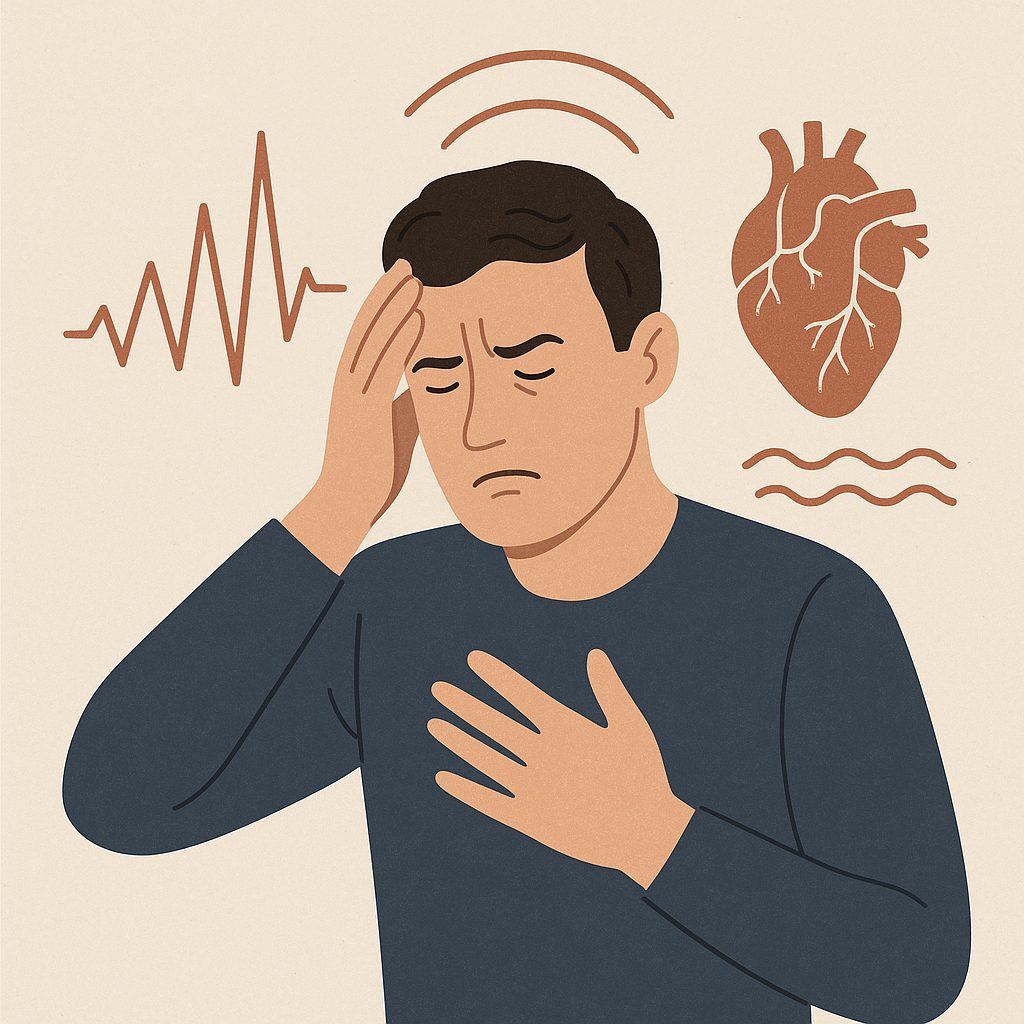
This is one reason why stress is so often experienced at work, where pressure, uncertainty and repeated demands can keep the nervous system in a near-constant state of activation. When this pattern becomes part of daily life, the body may struggle to return fully to a calmer baseline, and the effects can begin to accumulate over time.
- heightened vigilance
- muscular tension
- adrenaline peaks followed by exhaustion
From a cognitive point of view, stress tends to narrow attention around what appears urgent. This can be useful in the short term, because it prioritises rapid response over reflection. However, when this mode persists for too long, it may reduce mental flexibility, increase irritability and make even minor demands feel disproportionately difficult. People often describe this as being constantly “on edge”, unable to rest properly even when there is no immediate danger.
In biological terms, this pattern involves more than adrenaline alone. Stress responses are also associated with broader changes in autonomic regulation, breathing rhythm, muscle tone and sleep architecture. That helps explain why prolonged stress is rarely confined to the mind: it is often experienced simultaneously in the chest, stomach, jaw, shoulders and patterns of thought. The body and mind are not producing separate problems here, but different expressions of the same state of overactivation.
From inner tension to more serious warning signs
Anxiety tends to be experienced differently. Rather than preparing a person for immediate action, it often appears as an inner tension, accompanied by the feeling that something bad is about to happen. That sense of imminent danger can inhibit action rather than support it. A knot in the stomach, palpitations and trembling are all classic signs of anxiety that is becoming difficult to regulate. When everyday stress persists and anxiety becomes chronic, this state may intensify into panic attacks that feel sudden, overwhelming and irrational to the person experiencing them.
The warning signs do not always arrive all at once. They often develop gradually: fatigue, sleep disturbance, migraines, difficulty concentrating and memory lapses can all signal that the system is under strain. These early symptoms should not be dismissed, because they may precede more serious health problems, including depression and cardiovascular disease, and are sometimes also discussed in connection with other major illnesses. Recognising these signals early is therefore an important first step in preventing stress, anxiety and panic from becoming more deeply entrenched.
- fatigue
- sleep problems
- migraines
- concentration and memory difficulties
Anxiety also has a strong anticipatory dimension. Whereas stress is often tied to an identifiable pressure in the present, anxiety may continue even when no immediate event is occurring, because the mind remains oriented towards possible threat. Attention becomes biased towards uncertainty, bodily sensations may be interpreted more alarmingly, and ordinary fluctuations in mood or energy can begin to feel ominous. This is one reason anxiety can become self-reinforcing: the person is not only distressed by the original problem, but by the fear of what their own internal state might mean.
Panic attacks can be especially destabilising because they create the impression that control has suddenly collapsed. Rapid heartbeat, dizziness, shortness of breath, trembling or a sense of unreality may be interpreted as signs of catastrophe, which can intensify the episode further. Although panic is not in itself proof of physical danger, the experience is often profoundly convincing in the moment. For that reason, compassionate understanding matters as much as explanation: people are not exaggerating when they say panic feels overwhelming.
It is equally important to note that persistent anxiety should not simply be normalised. If symptoms are frequent, severe or increasingly disruptive, professional assessment may be appropriate. Sound-based relaxation tools can be supportive, but they are best understood as part of a wider approach to regulation, not as a substitute for medical or psychological care when distress becomes significant.
Practical Ways to Ease Stress, Anxiety and Panic
Building a calmer baseline through relaxation and meditation
There is no miracle promise for stress, anxiety or panic attacks, but a healthier daily routine can make a real difference. Learning to relax is an essential first step, because it helps the body let go of accumulated tension from head to toe and creates a more stable internal state. In practice, this may involve setting aside regular moments to slow your breathing, reduce sensory overload and give your nervous system a chance to come out of constant alert mode.
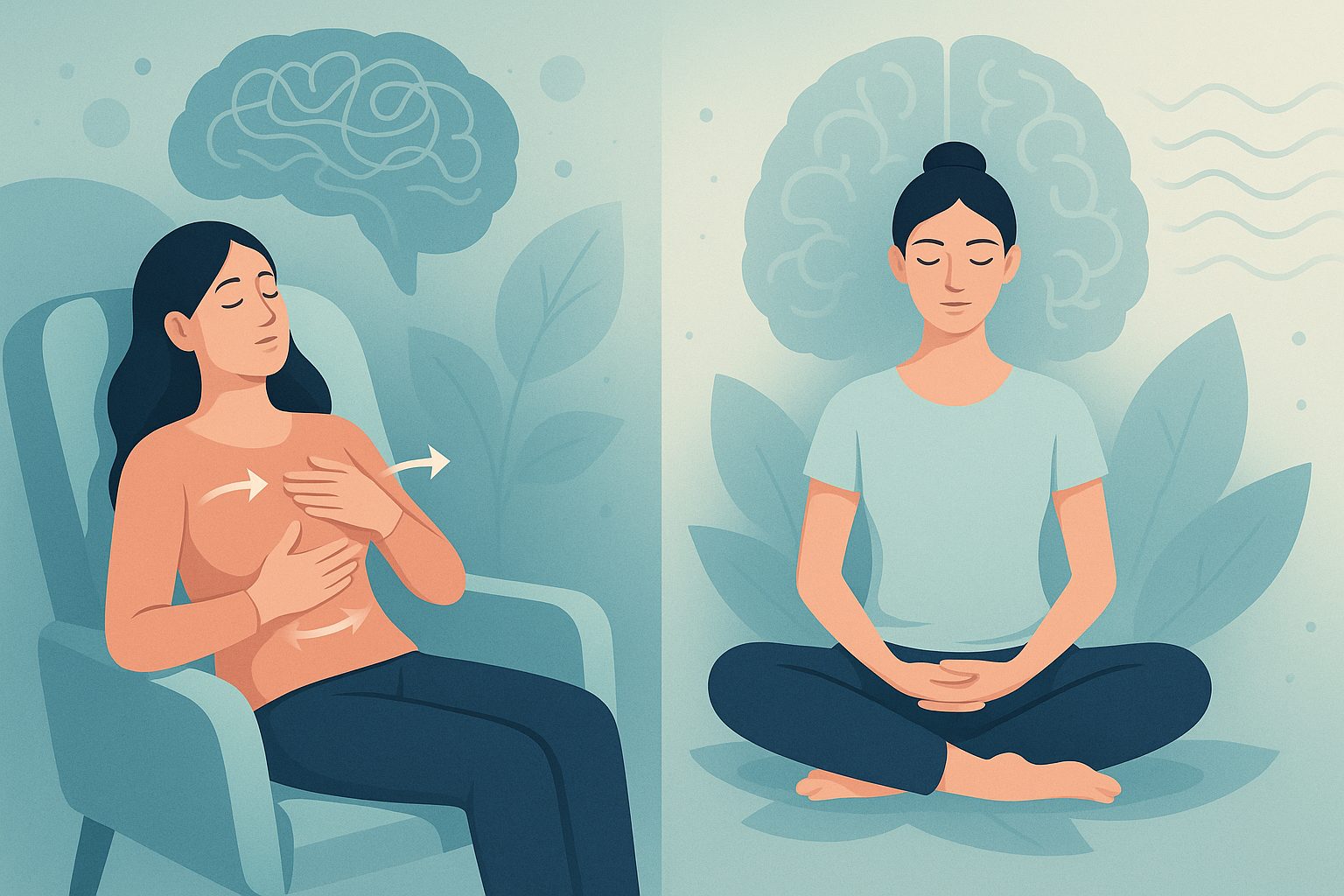
Relaxation, however, often brings short-term relief rather than lasting change. Meditation goes further by helping to quiet mental agitation, steady attention and gradually improve emotional regulation over time. In that sense, it is often sought not only to soothe immediate discomfort, but also to help people regain a sense of control when stress, anxiety and panic begin to take up too much space in everyday life.
- Relaxation helps release physical tension.
- Meditation may support longer-term mental regulation.
- Both are most useful when practised regularly.
Regularity matters because the nervous system tends to learn through repetition. A single session of relaxation may bring relief for an evening, but repeated practice can gradually make calm states more familiar and more accessible. This is particularly relevant for people whose attention has become habitually captured by threat, urgency or rumination. Over time, simple practices such as diaphragmatic breathing, body scanning or quiet seated meditation may help restore a more flexible relationship to thoughts and sensations.
There is also a meaningful difference between suppressing distress and regulating it. Many people try to cope by pushing through, distracting themselves constantly or waiting for the feeling to disappear on its own. While understandable, these strategies do not always help the underlying activation settle. Relaxation and meditation work differently: they create conditions in which arousal may decrease, perception may become less reactive, and the mind may stop amplifying every internal signal as a sign of danger.
Good daily hygiene remains important alongside any formal practice. Sleep quality, caffeine intake, alcohol use, physical movement, workload and exposure to screens late in the evening can all influence baseline arousal. None of these factors explains anxiety on its own, but together they can either support recovery or make regulation more difficult. A premium approach to wellbeing is rarely based on one technique alone; it usually depends on a coherent set of habits that reduce unnecessary strain on the system.
Related offer
Anxiety reducer
This session uses Alpha and Beta wave stimulation to relax, alleviate...
View productHow binaural and isochronic audio may support the meditative state
You do not need to be an expert in meditation, or to master every yoga posture, to begin working with your mental state in a more deliberate way. One accessible approach is the use of binaural beats and isochronic tones, which are designed to support shifts in brain activity associated with relaxation and meditation. In the case of binaural audio, slightly different tonal pulses are delivered to each ear and are generally layered beneath ambient music, creating a listening experience intended to encourage a change in state of consciousness.
This technology remains relatively unfamiliar to many people, yet it is often used as a practical way to access some of the benefits commonly associated with meditation without requiring long hours of prior training. Used sensibly, it may help create conditions that are more favourable to calm, inward attention and a reduction in mental overload. Rather than replacing a broader approach to wellbeing, it can be understood as a supportive tool for people looking for a simple, structured way to ease stress, anxiety and panic.
The underlying idea is not that sound “remedies” distress in a mechanical way, but that rhythmic auditory stimulation may influence the conditions in which attention settles. Some users find that these programmes make it easier to disengage from intrusive thought loops, reduce cognitive agitation and remain present for longer without effort. In that sense, the value of the method may lie less in dramatic effects than in its ability to make meditative entry more accessible for people who struggle to quiet the mind unaided.
It is worth keeping expectations realistic. Research on auditory entrainment, brain rhythms and subjective relaxation is promising in some areas, but it does not justify simplistic claims of promised transformation. Individual responses vary according to sensitivity, context, fatigue, prior meditation experience and the nature of the distress involved. A careful formulation is therefore more credible: binaural and isochronic audio may support relaxation and meditative depth for some listeners, especially when used consistently and in suitable conditions.
For people interested in consciousness and mental states, these tools can also be understood as aids to attentional training. By providing a stable auditory frame, they may reduce the effort required to maintain focus and may help the listener notice subtle shifts in arousal, imagery and inner quiet. This does not replace the human skills of observation, patience and self-regulation, but it can make those skills easier to cultivate.
What a Session Looks Like in Practice
A simple format that fits into everyday life
Audio programmes based on binaural or isochronic tones are available as downloadable MP3 files, which makes them easy to use whenever the first signs of stress, anxiety or panic begin to build. A meditation session can therefore be done almost anywhere, with a simple MP3 player or phone and a pair of earphones. At home, in the office or while travelling, the format is designed to make a calming practice more accessible at the very moment it may be most needed.
In practical terms, a session generally lasts between 30 and 60 minutes and is often sought for its ability to reduce the felt effects of stress, anxiety and panic. Using headphones is not strictly essential, but it is recommended for a more precise listening experience and, in many cases, better results. The aim is not to create a complicated ritual, but to offer a structured moment of withdrawal from mental overload, so that attention can settle and the body can begin to release some of its accumulated tension.
- Download the audio programme in MP3 format
- Listen with earphones or, ideally, headphones
- Use it at home, at work or while travelling
- Allow 30 to 60 minutes for the session
To get the most from a session, it helps to create a setting with as little interruption as possible. A comfortable seated or reclined position, reduced notifications, dimmer light and a willingness not to “perform” relaxation can all make the experience more effective. Many people benefit from approaching the session with a simple intention: not to force calm, but to allow the body and mind to slow down without pressure.
Timing can also matter. Some listeners prefer to use these programmes at the first signs of overload, before stress has escalated into full agitation. Others find them most useful in the evening, when the day’s stimulation has accumulated and the mind struggles to disengage. There is no single ideal moment, but consistency often matters more than perfection. A practice that fits realistically into daily life is usually more valuable than one reserved for rare moments of ideal calm.
How the listening experience may support a calmer mental state
After several minutes of listening, many people report a noticeable shift in their internal state. In the language often used to describe these sessions, isochronic tones may help guide the brain from beta waves, associated with active thinking and sustained alertness, towards alpha waves, more closely linked with relaxation, and sometimes towards theta waves, which are commonly associated with deeper meditative states. This does not mean that stress, anxiety or panic vanish with certainty or instantly in every case, but this kind of auditory support may help create conditions that are more favourable to mental regulation and inner calm.
That is also why these programmes are used not only by beginners, but appreciated by long-term meditators as well. If you feel that your level of stress, anxiety or panic is moving beyond what feels manageable, you can explore the available programmes on our shop and begin a session when you need it most. And if you would like to understand the principles behind this approach in more depth, you can visit our page dedicated to the foundations of our sound technology.
From a subjective perspective, the transition is often experienced less as a dramatic event than as a gradual reduction in internal noise. Breathing may become slower, muscular holding may soften, and thoughts may lose some of their urgency. For people who live with chronic tension, this shift can be valuable precisely because it reintroduces contrast: it reminds the system what a less defended state feels like. That recognition alone may support better self-regulation over time.
The language of brain waves should also be handled with care. Alpha, beta and theta are useful descriptive categories in EEG research, but lived experience is always richer than a single label. A person may feel calmer without entering a deep meditative state, and that still matters. The practical question is not whether every session produces a textbook pattern, but whether the listening experience helps reduce overload, improve recovery and make emotional balance easier to regain.
Related offer
Meditation - Relaxation set
All the Mental Waves® know-how in a single pack for quick and easy access to meditation and...
View productFor some users, the most meaningful benefit is not immediate relief but improved continuity of practice. Traditional meditation can feel inaccessible when the mind is restless, tired or highly reactive. Structured audio may lower that threshold by giving attention something stable to follow. In this way, the session becomes not merely a passive listening exercise, but a bridge towards a more trainable, more resilient inner state.
The Mental Waves Anxiety Regulation Framework
The Mental Waves frame is to reduce alarm before trying to solve everything. When panic rises, the body needs safety cues: slower breathing, orientation, less stimulation and one next step.
Relief is usually built through repetition. Practise regulation when symptoms are mild, seek help when they are severe, and avoid treating panic as a personal failure.
When stress or anxiety makes the mind feel crowded, try the free Mental Reset session as a short non-medical reset before choosing the next step.
Editorial note from Mental Waves
This article offers general regulation ideas and is not medical advice. Severe anxiety, repeated panic attacks, suicidal thoughts or symptoms that feel unsafe require prompt professional or emergency support.
Conclusion
Stress, anxiety and panic are not identical states, yet they often unfold along the same continuum: the body moves into alert, attention narrows, and recovery becomes harder if that activation is repeated day after day. That is why the aim is not to promise a total erasure of difficult feelings, but to restore a form of regulation before exhaustion, sleep disruption and cognitive strain become more deeply established. What matters most is recognising the early signals and responding with methods that support the nervous system rather than simply trying to push through.
In that sense, relaxation and meditation are less a quick fix than a way of changing one’s relationship to inner tension over time. Audio approaches such as binaural or isochronic stimulation may help some people access a calmer mental state more easily, particularly when regular meditation still feels difficult or inaccessible. Used with realism and consistency, they can become part of a broader hygiene of attention, rest and emotional balance. Sometimes, relief begins not with control, but with a quieter form of listening.
None of this removes the importance of discernment. If distress is severe, recurrent or accompanied by major functional impairment, professional support remains essential. Yet for many people, meaningful improvement begins with small but repeated acts of regulation: noticing the first signs of overload, creating space for recovery, and using reliable tools that help the mind and body return to a more settled rhythm. In that process, sound-based meditation may serve not as a miracle, but as a practical and credible ally.
Frequently Asked Questions About Stress, Anxiety and Panic
What is the difference between stress, anxiety and panic?
Stress is usually the body’s immediate alert response to pressure or urgency, often driven by adrenaline and felt through tension and later exhaustion. Anxiety is more of an inner state of unease, with a sense that something bad is about to happen. Panic can emerge when stress and chronic anxiety intensify into sudden, overwhelming episodes.
Can major life events trigger stress, anxiety or panic?
Yes, events such as changing jobs, redundancy, divorce or the death of someone close can disrupt a previously stable life and trigger these reactions. They are not unusual responses in themselves, but they can become harder to manage when the strain continues or starts affecting everyday functioning.
What physical signs can show that anxiety is becoming difficult to manage?
A knot in the stomach, palpitations and trembling are common signs that anxiety is becoming more intense. Anxiety can also create a strong feeling of imminent danger that makes action harder rather than easier, leaving a person tense, unsettled and mentally stuck.
Which early warning signs should not be ignored?
Fatigue, sleep problems, migraines, poor concentration and memory lapses are important warning signs. These symptoms often appear gradually and can show that the nervous system is under sustained strain. Taking them seriously matters, because they may come before more serious difficulties such as depression or cardiovascular problems.
Is there a miracle promise for stress, anxiety or panic attacks?
No, there is no miracle promise. A healthier daily routine can still make a meaningful difference, especially when it includes regular relaxation and meditation. The aim is not instant erasure of difficult feelings, but better regulation so that tension does not keep building unchecked.
How do relaxation and meditation help in different ways?
Relaxation mainly helps release physical tension and can bring short-term relief when the body feels overloaded. Meditation goes further by helping to calm mental agitation, steady attention and improve emotional regulation over time. Used regularly, the two approaches can complement each other rather than compete.
What are binaural beats and isochronic tones used for?
Binaural beats and isochronic tones are used to support a meditative or deeply relaxed state. They work through structured sound pulses, often layered with ambient music, to encourage shifts in brain activity linked with calm and inward attention. They can be a practical option for people who find traditional meditation difficult to access.
How does a typical listening session work?
A session usually involves listening to a downloadable MP3 programme for 30 to 60 minutes. It can be done at home, at work or while travelling, using earphones or ideally headphones. The format is designed to be simple enough to use as soon as the first signs of stress, anxiety or panic begin to appear.
Why are headphones recommended for these audio sessions?
Headphones are recommended because they provide a more precise listening experience, which can improve how the sound programme is perceived. They are not absolutely essential, but they help deliver the tonal differences more clearly, especially when the session relies on separate audio input to each ear.