en
enVotre panier est vide.


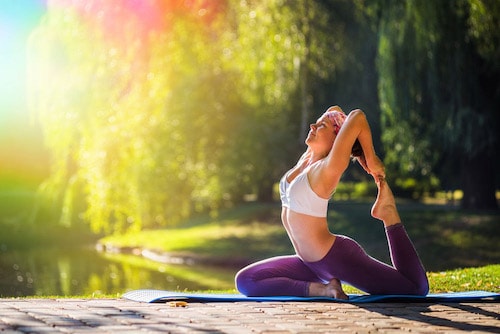
Stress is one of the hardest things to keep in check day after day. Yet some of the most effective ways to ease it do not come from forcing the mind into calm, but from working with the body’s own natural responses. Practices such as yoga, visualisation, breathing exercises and muscular relaxation draw on those built-in resources to help reduce stress and anxiety. With regular practice, they can do more than take the edge off a difficult moment: they can gradually restore a deeper sense of steadiness and calm.
That matters because stress is not just a feeling; it sets off a very real physical reaction. Heart rate rises, muscles tighten, breathing becomes quicker, and over time the strain can weigh on both body and mind. In urgent situations, that response has its place. Lived constantly, however, it becomes draining. The encouraging point is that while stress may be unavoidable, it is possible to learn how to trigger an opposing state of relaxation — one that helps the nervous system settle, the breath slow, and the body loosen its grip.
Many people notice this only when they finally stop for a moment. They sit down, try to rest, and realise how much tension they have been carrying in the jaw, shoulders, stomach or chest without quite knowing it. That is often the first useful shift: recognising that stress has a physical language, and that calm can be learned through the body just as surely as strain can.
In short: what relaxation techniques reduce stress?
Relaxation techniques that reduce stress usually combine slower breathing, body awareness, gentle movement and short mental resets. They work best when practiced regularly, not only during crisis moments.
- Breathing helps slow the stress rhythm.
- Body scans reveal tension before it becomes overwhelming.
- Gentle movement helps discharge physical pressure.
- Short resets make practice realistic during busy days.
For a guided reset, try the free Mental Reset Session. For a broader guide, read How to Free Yourself from Stress.
How the body shifts from stress to calm
What happens in the body under stress
When you go through a stressful situation, the body reacts automatically. Hormonal and chemical changes are set in motion without you choosing them, and the effects are often easy to notice: your heart beats faster, your muscles tighten, your breathing becomes quicker, and over time your immune defences may weaken. In an emergency, that stress response is useful. It helps you react quickly. But when it stays switched on day after day, it becomes harmful, creating a constant state of tension in both body and mind.
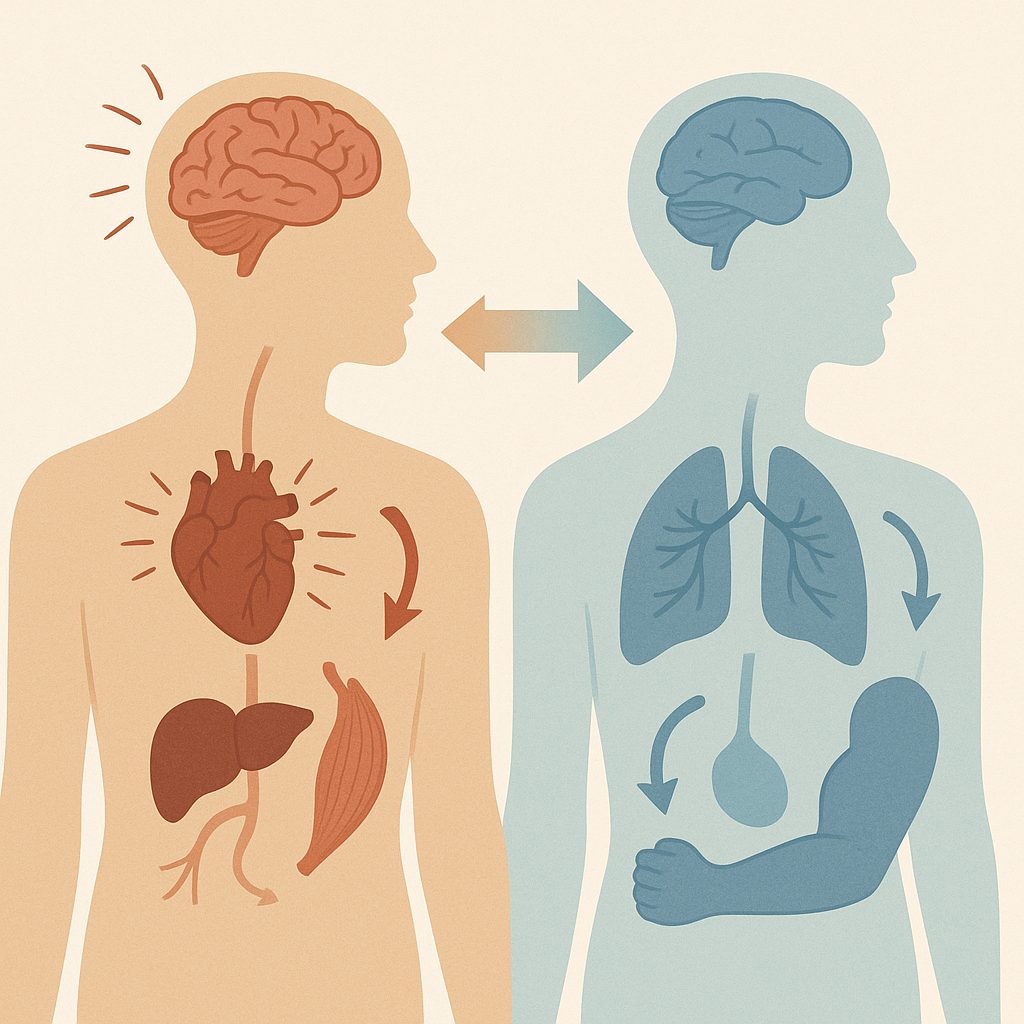
That is why the goal is not to eliminate stress altogether, which would be unrealistic, but to learn how to bring the body back to a calmer state. Everyone can develop that ability. With regular practice, it becomes possible to trigger a genuine relaxation response rather than remaining stuck in a cycle of nervous overactivation.
What makes chronic stress so exhausting is that it rarely feels dramatic all the time. More often, it settles into the background and starts to seem normal. You may simply feel impatient more quickly, sleep less deeply, struggle to concentrate, or move through the day with a low hum of agitation that never quite switches off. Seen that way, relaxation is not a luxury or a reward for when everything else is done; it is a way of interrupting a pattern that would otherwise keep feeding itself.
- faster heart rate
- muscle tension
- quicker breathing
- reduced immunity over time
Why the relaxation response matters
The relaxation response is a state of deep calm that works in direct contrast to stress. When it is activated, the nervous system becomes more balanced, stress hormones decrease, muscular activity slows, and blood flow to the brain improves. In very practical terms, it helps to steady the heartbeat, calm the breath, stabilise blood pressure and release physical tension. This is not simply a pleasant feeling in the moment; it is a real physiological shift.
Its benefits also extend beyond the session itself. People who practise relaxation regularly often feel more energetic, find it easier to concentrate, and cope better physically when everyday pressures build up. Over time, this calmer internal state can support better resistance to illness, while also helping you feel more productive and more motivated in daily life.
There is also something quietly reassuring about discovering that calm is not always dependent on external circumstances. Of course, difficult situations still exist, and some periods of life are genuinely demanding. But when the body becomes more familiar with relaxation, it often stops reacting quite so sharply to every pressure. You recover more quickly. You notice tension earlier. You are less likely to be carried away by the first surge of stress.
For many people, that is the real value of these practices. They do not create a perfect life; they create a little more space inside an imperfect one. And that space can make a surprising difference to how a day feels.
Choosing a Relaxation Method You Can Truly Keep Up
Different techniques, same calming effect
Relaxation techniques that trigger a genuine calming response come in many forms. Yoga, breathing exercises, visualisation and muscular relaxation do not all look the same, but they can lead to the same result: a body that gradually shifts out of tension and into a deeper state of calm. The basics are usually simple enough to learn, which is encouraging when stress already leaves you feeling overloaded.
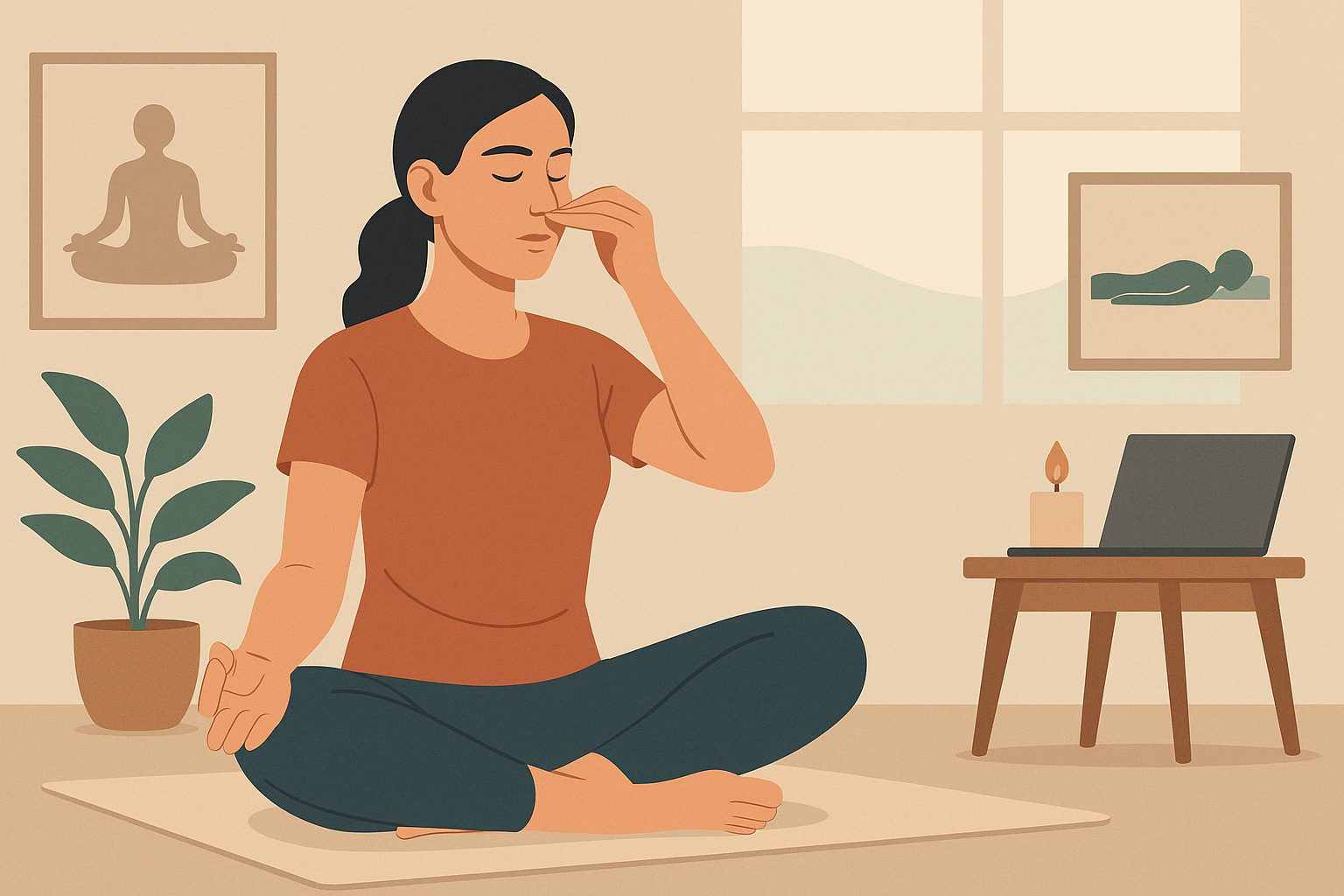
What matters most, however, is not chasing the “best” method in theory. In practice, these techniques are broadly equal in value. The real difference comes from how regularly you use them. Specialists generally recommend a daily session of 10 to 20 minutes to produce a solid relaxation response, and around half an hour if you want that effect to settle more fully. In other words, consistency tends to matter more than complexity.
It is worth taking that seriously, because people often abandon relaxation for the wrong reason. They assume a method has failed when in fact it was simply too ambitious, too complicated, or too disconnected from the rhythm of their actual life. A short breathing practice done every morning in a kitchen chair may help more than an elaborate routine that only happens once every ten days. The body responds to repetition. It learns through familiarity.
- Breathing-based relaxation
- Visualisation
- Yoga
- Progressive muscular relaxation
Build your practice around real life, not good intentions
The most effective approach is to choose one technique, or a small combination of techniques, that genuinely suits your body and your way of living. A method that feels natural and realistic will always serve you better than one that sounds impressive but never quite fits into your day. To make relaxation work, it also helps to prepare yourself mentally before you begin, so that your body is not being asked to switch abruptly from agitation to stillness.
There is another point that is easy to overlook: relaxation is not the same as drifting off. The aim is to remain awake, present and engaged in the practice, while allowing tension to soften. That is why it is better to avoid sprawling on the sofa, dozing off or treating the session as a vague pause with no real attention behind it. Regular, alert practice is what allows the body to learn this calmer state and return to it more easily over time.
If you are unsure where to begin, it can help to match the method to the kind of stress you tend to carry. If your mind races, a simple breathing rhythm or repeated phrase may be grounding. If your stress sits heavily in the body, progressive muscular relaxation or gentle yoga may feel more immediate. If you are mentally tired but physically restless, visualisation can sometimes offer a softer route into calm. There is no need to be doctrinaire about it; the point is to notice what genuinely helps you settle.
It is also perfectly reasonable for your preferred method to change over time. What works during a busy working week may not be what helps during grief, exhaustion or a period of uncertainty. A mature practice is rarely rigid. It adapts, while keeping the same underlying intention: to help the body step out of strain and remember another way of being.
Related offer
Anxiety reducer
This session uses Alpha and Beta wave stimulation to relax, alleviate...
View product- Choose a method that fits your routine
- Prepare yourself mentally before starting
- Stay awake and attentive during the session
Making Relaxation Part of Everyday Life
Give your practice a real place in the day
If you want to reduce stress in a lasting way, relaxation has to become part of your routine rather than something you only try when you are already overwhelmed. The simplest approach is often the most effective: set aside a fixed time for it once or twice a day, and treat that moment as a genuine appointment with yourself. Many people find it helpful to do this before the day properly begins, so that they start their tasks from a calmer, steadier place instead of rushing straight into tension.
What matters most is regularity. A short daily pause, kept consistently, will usually do more for your stress levels than occasional long sessions that never quite fit into real life. By giving your relaxation method a clear place in the structure of the day, you make it far easier for the body to recognise that calm is not an accident, but a state it can return to deliberately.
That fixed place in the day matters for another reason too: it reduces negotiation. If every session depends on finding the perfect moment, it will often be postponed by something louder or more urgent. But when relaxation becomes part of the ordinary rhythm of the morning, lunch break or evening, it asks for less decision-making. It becomes less of a project and more of a habit, which is usually where the real benefits begin.
Some people prefer to practise early, before messages, noise and obligations start pulling at their attention. Others find that a short session in the late afternoon helps them avoid carrying the whole day’s tension into the evening. There is no universal ideal. The best time is the one that you can protect with reasonable consistency and without turning it into another source of pressure.
- Choose a fixed time once or twice a day
- If possible, practise before daily tasks begin
- Keep the routine simple enough to maintain
Create the right conditions for a calm response
For your relaxation response to settle in properly, choose a quiet place, whether at home or elsewhere, where you are unlikely to be interrupted. Then take up a comfortable position, but avoid lying down on the sofa or bed, as that can easily lead to sleep rather than conscious relaxation. The aim is to remain at ease while still awake and present.
It also helps to choose a clear point of focus for the session. That might be a word, a short phrase repeated silently, an object in front of you, or even a fixed point on the wall. Once you begin, try to adopt a passive attitude: let go of what is waiting for you, stop following every worry, and gently bring your attention back whenever it drifts. In other words, give yourself permission, for a few minutes, to focus fully on that single point of concentration and nothing else.
The word “passive” can sound misleading here. It does not mean absent, numb or indifferent. It means not wrestling with every thought that appears. Minds wander; that is what they do. The practice is simply to notice that wandering without irritation and return, again and again, to the breath, the phrase or the chosen point of focus. That gentle return is not failure. It is the practice itself.
Small details can help more than people expect. Loosen anything tight around the waist or shoulders. Let your hands rest somewhere easy. If the room feels harsh or overstimulating, soften the light if you can. None of this needs to become elaborate, but a few thoughtful adjustments can make it easier for the body to understand that it is safe enough, for these few minutes, to let go.
And if calm does not arrive immediately, that does not mean the session was pointless. Some days the mind remains busy and the body slow to soften. Even then, you are still practising a different response from the usual rush of stress. Often the change is subtle at first: a slightly deeper breath, a jaw unclenching, a little less urgency in the chest. Those modest shifts are worth respecting. They are often how steadiness begins.
- Find a calm place where you will not be disturbed
- Sit comfortably without lying down
- Use a word, phrase, object or visual point as your focus
- Return to that focus whenever the mind wanders
Four Practical Relaxation Techniques
The most useful techniques are not always the most impressive. They are the ones a person can use when stress is already rising. A practice that takes three minutes and actually happens is more valuable than a perfect routine saved for a calm day.
- Slow breathing: lengthen the exhale for a few cycles.
- Body scan: notice jaw, shoulders, hands and belly.
- Gentle movement: stretch or walk slowly to release tension.
- Mental reset: name one next action instead of the whole problem.
Each technique fits a slightly different moment. Slow breathing is useful when the body feels accelerated, the chest feels tight or the mind is moving too quickly. A body scan is useful when stress is hidden in posture, clenched muscles or a vague feeling of pressure. Gentle movement helps when sitting still makes tension louder. A mental reset helps when the problem feels too large to hold at once.
The key is to start before stress reaches its highest point. Many people wait until they are already overwhelmed, then conclude that relaxation does not work. In reality, a small practice often works best as an early interruption. The first signs may be shallow breathing, scrolling without attention, irritability, jaw tension or the urge to solve everything immediately.
Relaxation should not become another performance. If a technique makes someone feel more tense, they can simplify it. Shorten the practice, open the eyes, keep the feet on the floor or choose movement instead of stillness. The goal is not to create a perfect calm state on command. The goal is to give the body one clear signal that the stress loop can slow down.
Related offer
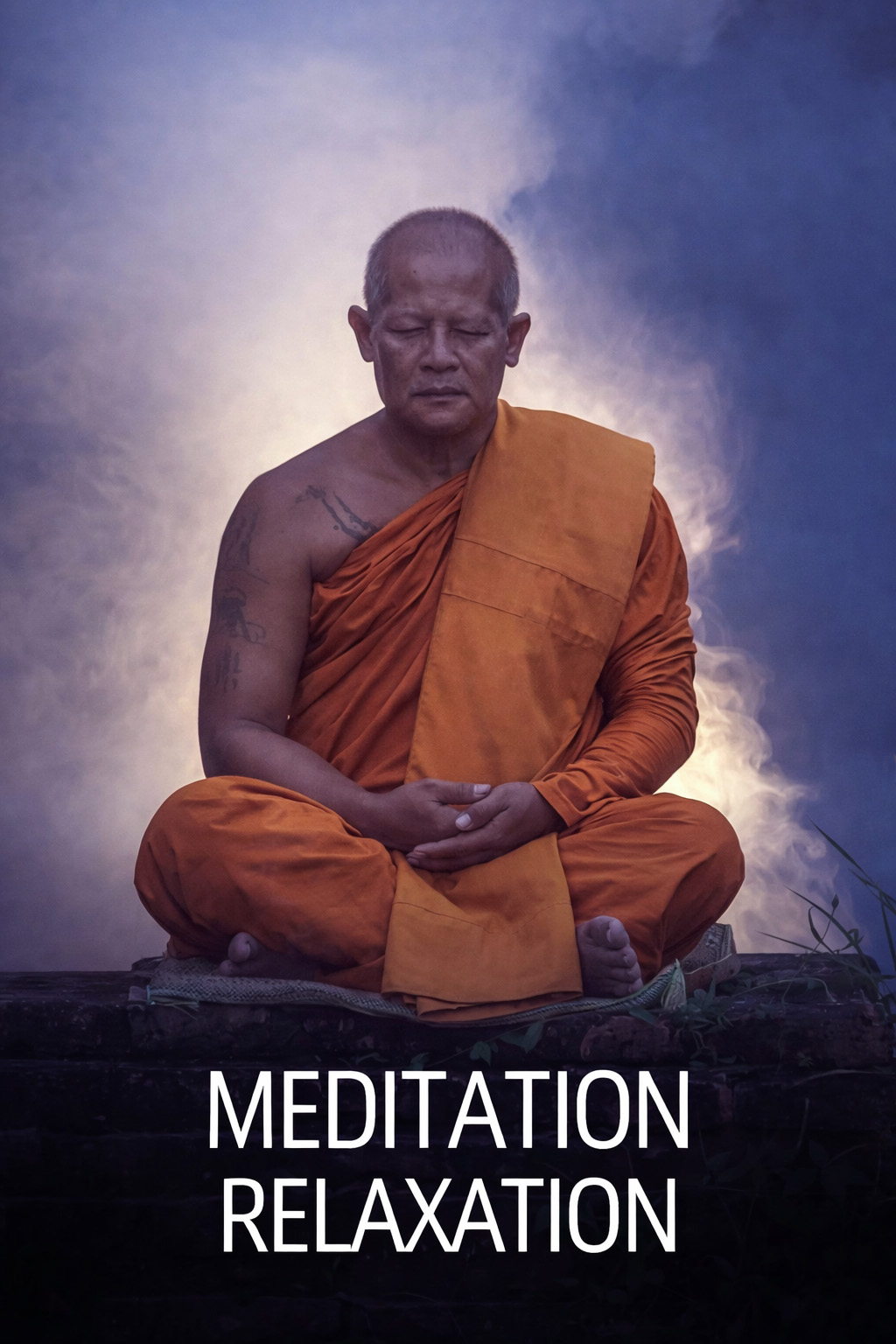
Meditation - Relaxation set
All the Mental Waves® know-how in a single pack for quick and easy access to meditation and...
View productA practical daily rhythm could be one minute of breathing before opening email, a short body scan at lunch and a walking reset after work. These small repetitions teach the nervous system that regulation belongs inside ordinary life, not only inside formal practice.
This is also what makes relaxation easier to remember when the next stressful moment arrives, even in an ordinary busy day, under pressure.
The Mental Waves Stress-Reduction Framework
The Mental Waves frame is to reduce stress through repeatable regulation. Relaxation is not escape; it is a way to return to the body and choose the next step more clearly.
- Pause: interrupt the stress loop.
- Breathe: slow the rhythm of the body.
- Release: move or soften the areas holding tension.
- Choose: return with one realistic action.
For breath-focused practice, continue with Breathing Techniques. For movement-based relaxation, read Dynamic Sophrology Exercises.
Editorial note from Mental Waves
This article is educational. Relaxation can support daily stress regulation, but persistent anxiety, burnout symptoms, panic or severe distress require qualified support.
Conclusion
Stress may be unavoidable, but living in a constant state of tension is not. What matters here is less the search for a perfect method than the quiet discipline of returning, day after day, to a practice that helps the body remember how to settle. Breathwork, visualisation, yoga or muscular relaxation can all support that shift; the real difference comes from regularity, and from choosing an approach that fits your life rather than an idealised version of it.
That is the deeper balance running through all of this: relaxation is not withdrawal, laziness or escape, but a deliberate way of restoring steadiness when stress has become too familiar. A calm place, a simple point of focus, a posture that keeps you present, and a little consistency can gradually change the tone of a day. Sometimes, a few minutes of genuine calm are not a luxury at all, but a way back to yourself.
Perhaps that is why these techniques endure. They ask for very little in outward terms, yet they can alter the inner atmosphere of daily life in a lasting way. Not all at once, and not theatrically, but through repetition, patience and a growing sense of trust in the body’s ability to settle. When practised with that spirit, relaxation becomes less about escaping stress for a moment and more about living with greater composure inside a demanding world.
Frequently Asked Questions About Relaxation Techniques to Reduce Stress
What is the best relaxation technique for stress?
The best technique is the one that is simple, safe and realistic enough to repeat.
Does breathing reduce stress?
Slow breathing may help calm physical arousal and bring attention back to the present.
What is a body scan?
A body scan is a practice of noticing sensations and tension through the body without rushing to fix them.
Can movement be relaxing?
Yes. Gentle movement can help release physical tension and reset attention.
How long should relaxation take?
Even a few minutes can help when practiced regularly and with attention.
When should someone practice?
Practice before stress peaks, during transitions or whenever the body starts showing tension.
Can relaxation replace care?
No. It is a supportive habit and does not replace appropriate professional support.
Why do short resets help?
They interrupt the stress loop early and make regulation easier to repeat.
What is the main takeaway?
Relaxation works best when it is simple, repeatable and connected to daily life.