en
enVotre panier est vide.


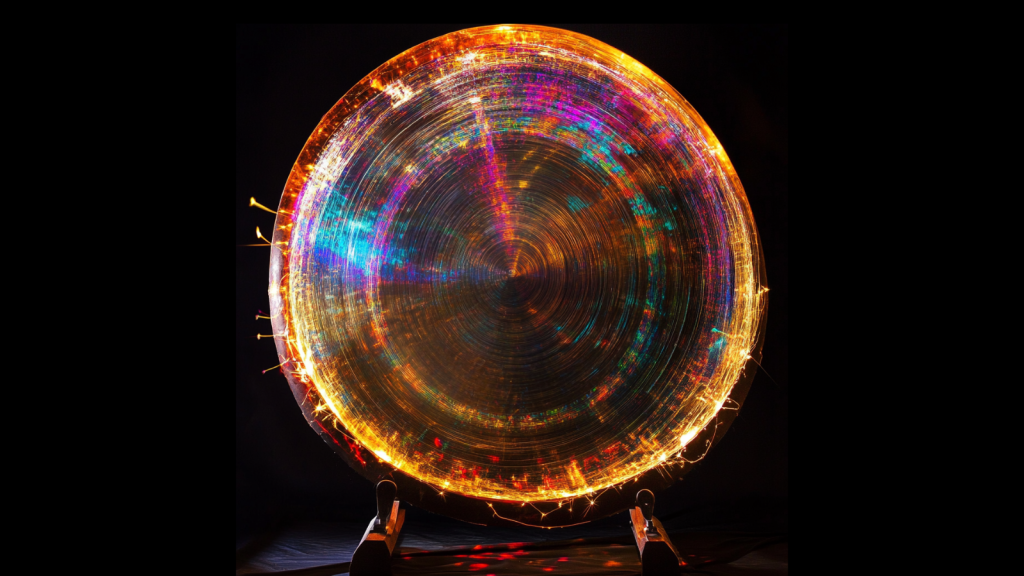
For thousands of years, human beings have turned to sound for far more than communication. Across many ancient civilisations and Indigenous traditions, it has been understood as a primordial force: a way of sensing the world, supporting healing and approaching spiritual life. That idea runs through sacred texts as well. In the New Testament, the line “In the beginning was the Word” (John 1:1) has often been read as an evocation of sound as a creative principle, while in Hindu tradition the sacred syllable AUM, more widely known as OM, symbolises the original vibration from which creation emerges.
What makes this subject so compelling today is that it sits at the meeting point of symbolic tradition and modern inquiry. Without collapsing one into the other, contemporary science has also drawn attention to a universe shaped by movement, vibration and waves. In that context, the therapeutic use of sound is often explored not as a miracle claim, but as a serious question: how might vibration interact with matter, perception and the body’s own regulatory rhythms? This perspective helps explain why sound therapy continues to attract interest, both as an ancient practice and as a field now being reconsidered with greater scientific care.
In short: what are the therapeutic benefits of sound?
The therapeutic benefits of sound are mainly linked to how sound can influence attention, emotion, rhythm, breath, perceived body tension and the feeling of inner coherence. Sound is not a universal remedy, but it can become a powerful support when used with intention, moderation and clear expectations.
- Sound gives attention a stable object to follow.
- Rhythm can support breath, movement and timing.
- Resonant tones may help people feel grounded and embodied.
- Music and sound rituals can support relaxation, mood and emotional processing.
- Evidence varies by context, so claims should remain careful.
For a direct Mental Waves entry point, begin with the 128 Hz sacred frequency guide or the free Sacred Frequency Session. For deeper product pathways, this article naturally connects with Sound Therapy with Tibetan Bowls, Magical Whale Song and Ancestral Sacred Songs.
The Mental Waves Sound-to-State Framework
Sound becomes useful when it moves a person from one state to another: scattered to attentive, tense to softer, emotionally overloaded to more spacious, spiritually disconnected to more present. The sound itself matters, but the listening frame matters just as much.
- Choose the state: grounding, release, meditation, sleep transition or sacred listening.
- Choose the sound: rhythm, drone, nature, voice, bowl, frequency or silence around sound.
- Reduce interference: lower volume, simplify the room and remove competing inputs.
- Listen through the body: notice breath, pressure, warmth, emotion and attention.
- Close the ritual: leave a quiet minute after the sound so the nervous system can integrate the shift.
This framework helps separate responsible sound practice from exaggerated promises. A sound session does not need to claim everything. It only needs to create a clearer passage into the state you are cultivating.
How Modern Science Helps Us Understand Sound and Matter
A universe shaped by movement and vibration
Recent scientific thinking has strengthened an idea that many ancient cultures intuited in their own way: the universe is not static, but made of particles in constant motion. At the atomic level, each atom consists of a nucleus surrounded by electrons in movement around it. That movement generates vibration and, by extension, waves. In this perspective, what we experience as matter can be understood through a simple sequence: where there is an impulse, there is a wave, and where there is a wave, there is a form. The language differs from spiritual traditions, but the underlying intuition is strikingly similar: movement gives rise to structure.
These wave frequencies are measured in Hertz (Hz), or cycles per second. If we imagine the proportional distance between an electron and the nucleus of its atom, it is often compared to the distance between the Earth and the Sun, around 150 million kilometres. The image is useful because it reminds us that what appears solid is, in reality, composed largely of space, crossed by particles and electromagnetic fields. Our senses interpret this dense energetic organisation as physical matter, even though its underlying behaviour is far more dynamic than it seems at first glance.
- Impulse sets a process in motion
- Wave carries that movement through space
- Form emerges from the organisation created by vibration
Beyond what the ear can hear
This also helps explain why sound is not limited to what the human ear can detect. In everyday life, we define sound by audible frequencies, yet many vibrations exist beyond our hearing range. From this broader viewpoint, every object may be said to emit vibratory information, even when that activity remains inaudible to us. That does not mean every object produces a sound we could hear in the ordinary sense, but rather that the material world is inseparable from patterns of oscillation, resonance and energetic exchange.
Seen in this light, modern science does not simply oppose older ways of thinking about sound. It offers another framework for understanding why vibration has long been associated with creation, perception and transformation. The idea is not that physics proves every traditional belief literally, but that it gives us a more concrete language for describing a world in motion. This is precisely what makes sound so compelling in therapeutic contexts: if living systems are sensitive to rhythm, frequency and resonance, then sound may help influence how the body and mind organise themselves, regulate attention and respond to their environment.
Cymatics: How Sound Makes Vibration Visible
When sound begins to shape matter
Cymatics is the study of how sound vibrations affect matter, and it offers one of the clearest ways to see that sound is not only heard but can also organise physical form. The field was popularised in the 1960s by the German researcher Dr Hans Jenny, who showed that materials such as sand and other fine powders, when placed on a vibrating surface, do not remain scattered at random. As sound waves pass through the surface, the particles shift, gather and settle into increasingly precise patterns.
These formations, often referred to as Chladni figures, make vibration visible. Rather than remaining an abstract idea, frequency becomes something the eye can follow. What appears is not accidental decoration, but a response to the structure of the sound itself: the vibration creates zones of movement and stillness, and the material arranges accordingly. In that sense, cymatics gives a striking illustration of a broader principle already explored in this article: vibration can influence form.

Harmony, dissonance and the geometry of sound
One of the most fascinating aspects of cymatics is the contrast between different kinds of sound. More harmonious tones tend to produce balanced, symmetrical shapes that can resemble mandalas or geometric rosettes. More dissonant sounds, by contrast, often generate patterns that look less ordered, more fragmented or more chaotic. Both are visually compelling, but the comparison helps us grasp that sound quality matters, not only sound intensity.
Not every pattern should be interpreted in a mystical or medical way. What cymatics does show, however, in a concrete and memorable form, is that vibration can organise matter differently depending on the frequencies involved. That insight helps explain why sound continues to attract interest well beyond music itself, including in therapeutic settings where rhythm, tone and resonance are often sought for their potential effects on perception, regulation and overall state.
- Harmonious sounds often create more symmetrical patterns
- Dissonant sounds can produce more irregular forms
- Visible geometry reflects the frequency being applied
How Sound Interacts with the Human Body
A body shaped by vibration
Like the wider universe, the human body is in constant motion. Every cell, tissue, organ and bodily fluid is associated with rhythmic activity and measurable forms of vibration. In the broader traditions that inform sound healing, this idea also extends to the body’s energy centres, or chakras, and to the electromagnetic field often described as the aura. From this perspective, physical and mental wellbeing depend on a certain degree of coherence between these different layers of activity, rather than on any single isolated process.
Not every claim about vibration should be taken literally or uncritically. It does, however, offer a useful framework for understanding why sound can feel so immediate in the body. We do not only hear sound through the ears: we also register it through pressure, rhythm and resonance. Because sound travels through air and interacts with matter, it can influence how the body is perceived and experienced, sometimes in subtle but noticeable ways.
- cells and tissues are never completely still
- the body responds to rhythm, pressure and resonance
- wellbeing is often linked to balance and coherence
Sympathetic resonance and the body’s response
The idea at the heart of many sound-based practices is sympathetic resonance: when one vibrating source encourages another object or system to vibrate in response. In the original cymatic experiments, sound visibly reorganised matter into patterns. Applied to the human body, the principle suggests that directed sound may help influence the body’s energetic fields and, by extension, aspects of physical experience. This is one reason sound is often explored in practices aimed at relaxation, regulation and a greater sense of internal alignment.
In practical terms, the body may respond to sound through breath, muscle tone, attention and overall state of arousal. A steady, harmonious tone may help support a calmer mental state, while more jarring or dissonant sounds can feel activating or unsettling. The central idea of the original section remains the same: when vibrations move through the air and meet the body, they do not simply stop at the ear. They can interact with the whole organism, which helps explain why sound is so often experienced as both physical and emotional.
How Sound Therapy Seeks to Restore Balance
The principle behind sound-based healing
Sound therapy is built around the idea of sympathetic resonance: when one vibrating source influences another, the second may begin to respond in tune with it. In therapeutic practice, this principle is used to support the body’s return to a more coherent state. Traditional approaches often describe each organ, tissue or energy centre as having its own optimal frequency, and suggest that when this balance is disturbed, physical or emotional discomfort may follow. From this perspective, carefully applied sound is used to encourage a form of reorganisation, helping the body and mind move back towards harmony rather than disorder.
Related offer
Ancestral Sacred Songs
Free your Senses and Vibrate to the Magical Rhythms of Sacred Harmonic Chants. Welcome to an extraordinary Spiritual Journey...
View productIt is important to approach this idea with both openness and nuance. Sound is not a miracle solution, yet it may help create conditions that support relaxation, regulation and a greater sense of internal alignment. Whether the language used is that of vibration, resonance or energetic balance, the central aim remains the same: to direct appropriate sound towards the affected area so that the whole system can settle into a more harmonious rhythm.
- sympathetic resonance as the core mechanism
- the search for a more coherent bodily state
- sound as a support for balance rather than a promised fix
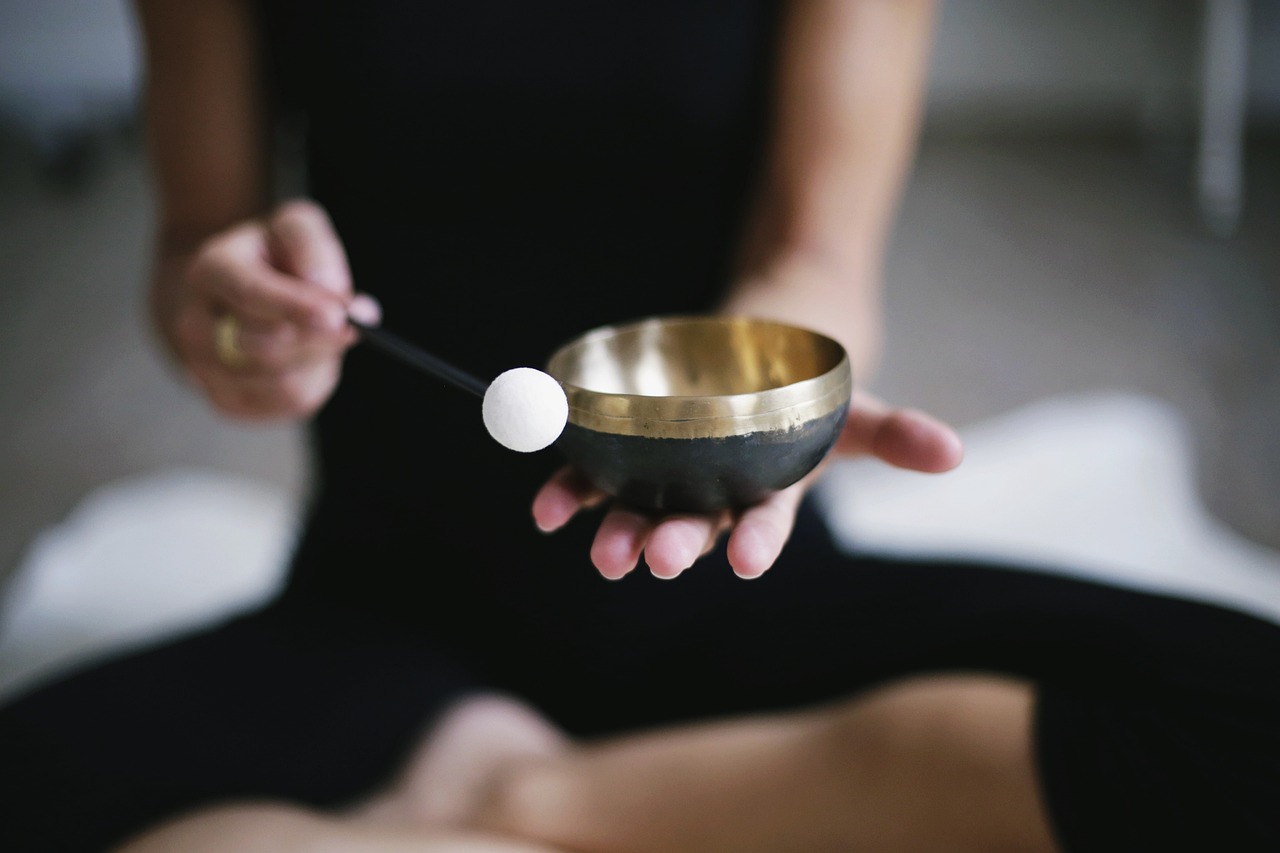
Voice, instruments and the role of intention
Practitioners use a range of tools in this work, including the human voice and instruments drawn from sacred traditions around the world. These sounds are not used only for their acoustic qualities, but also for the way they can shape attention, breathing and emotional state. In many sound-healing traditions, intention matters as much as technique: the sound is offered with a clear purpose, whether that is calming the nervous system, supporting emotional release or encouraging a deeper spiritual experience.
For many people, this is where sound therapy feels most tangible. A sustained tone, a chant or a resonant instrument may help quiet mental agitation and create a sense of grounded presence. In that sense, sound can contribute to change on several levels at once — physical, emotional and spiritual. By helping to readjust our vibratory state, it is often sought as a way to lift energy, strengthen inner stability and make us feel less affected by negative influences in our environment.
Why Sound Therapy Is Gaining Ground
An old intuition now viewed with fresh interest
In the 1930s, the visionary Edgar Cayce suggested that sound would become the medicine of the future. Today, that idea feels more relevant than it once did. As ancient practices are revisited through the lens of modern research, sound-based approaches are attracting growing interest as part of a broader, more integrative view of wellbeing.
Sound should not be treated as a miracle solution or as a replacement for medical care. Rather, it is increasingly recognised as a therapeutic tool that may support relaxation, emotional regulation and a greater sense of internal coherence. In that sense, the meeting point between traditional knowledge and contemporary observation opens up a promising field: one in which sound is explored not only as something we hear, but as something that may influence how we feel, recover and reconnect with ourselves.
Bringing sound into everyday care
The growing appeal of sound therapy also lies in its accessibility. When used thoughtfully in daily life, it can offer a simple way to create moments of calm, restore attention and support a more balanced mental state. This broader vision of care reflects the original idea behind the section: that sound may help harmonise the person as a whole, across physical, emotional and spiritual dimensions, without overstating what it can do.
Seen in this light, the future of sound therapy may rest precisely in this balance between experience and rigour. By combining inherited practices with a more careful scientific understanding, we may be moving towards a therapeutic culture in which the healing potential of sound is taken seriously, explored responsibly and integrated more naturally into everyday wellbeing.
- supporting relaxation and recovery
- creating grounding daily rituals
- complementing a wider approach to wellbeing
7 insightful effects of sound in practice
The therapeutic benefits of sound become easier to understand when they are translated into practical effects. These are not promises. They are common pathways through which sound may support a more regulated, attentive or meaningful state.
- Attention anchoring: a tone, rhythm or natural sound gives the mind something stable to follow when thoughts are scattered.
- Breath pacing: slow musical phrasing can encourage slower breathing, especially when the listener does not try to force the breath.
- Emotional permission: music can make sadness, tenderness, awe or release easier to feel without needing immediate explanation.
- Body awareness: vibration, resonance and sustained tones can draw attention back to pressure, warmth, posture and subtle tension.
- Ritual transition: repeating the same sound at the same time of day can mark a passage into meditation, prayer, rest or reflection.
- Social connection: singing, chanting or listening together can create shared timing and a sense of belonging.
- Sacred orientation: for some listeners, sound becomes a way to approach inner life, gratitude, prayer or symbolic meaning.
These effects can overlap. A Tibetan bowl session, for example, may anchor attention, slow the breath and create a ritual transition at the same time. A chant may support emotion, social connection and sacred orientation. The art is choosing the sound for the state you actually need.
How to choose the right sound for your intention
A useful sound ritual begins with the state you want to cultivate. Without that intention, it is easy to choose music only because it is beautiful, dramatic or familiar. Beauty matters, but the nervous system responds more directly to pacing, texture, volume and emotional tone.
| Intention | Sound direction | Listening note |
|---|---|---|
| Grounding | Low tones, slow rhythm, nature sound | Keep the body heavy and the breath unforced. |
| Meditation | Sustained bowls, drones or soft chants | Let attention return to one sound whenever thoughts wander. |
| Emotional release | Voice, spacious melody, gentle harmonic movement | Choose music that allows feeling without overwhelming it. |
| Sacred listening | Frequency ritual, mantra, chant or intentional silence | Begin with a clear inner dedication and close slowly. |
| Recovery after stress | Simple, predictable sound with few surprises | Avoid dramatic peaks when the body is already overloaded. |
This is also where volume matters. Louder sound is not necessarily deeper sound. A moderate level often allows the body to receive the vibration without bracing against it. If the sound feels intrusive, the practice has already lost its centre.
Related offer
Sound Therapy with Tibetan Bowls
Discover the ancestral power of Tibetan bowls. It's been proven that singing them helps regenerate and restore serenity and well-being...
View productA 10-minute sound ritual for daily use
Start by choosing one track or tone and using it repeatedly for a few days. Sit or lie down, lower the volume and let the first minute be only arrival. Do not evaluate the experience immediately. Let the body notice the room, the breath and the contact with the surface beneath you.
For the next seven minutes, listen through sensation rather than analysis. Notice whether the sound changes your breathing, jaw, shoulders, chest, abdomen or emotional tone. If thoughts appear, return to the most stable part of the sound. In the final two minutes, reduce effort and let the room become quiet again.
The ritual is simple, but repetition gives it strength. Over time, the same sound can become a reliable threshold between ordinary activity and intentional inner listening. This is where sound becomes practice rather than decoration, and where listening becomes a chosen inner posture. The value comes from coherence: same intention, same frame, same respectful return.
What modern sources add to the traditional view
NCCIH notes that listening to or making music affects brain structures involved in thinking, sensation, movement and emotion. It also describes a growing but uneven evidence base, which is exactly the tone this topic needs: serious curiosity without overstatement.
The same applies to relaxation. NCCIH describes the relaxation response as involving slower breathing, lower blood pressure and reduced heart rate. Sound can be one way to enter that response, especially when it is paired with breath, stillness and a simple listening ritual.
Sources and further reading
- Music and Health: What You Need To Know, NCCIH.
- Relaxation Techniques: What You Need To Know, NCCIH.
- Sacred Healing Frequency: 128 Hz, Mental Waves.
Editorial note from Mental Waves
This article presents sound as a wellness, contemplative and research-informed support. It does not turn symbolic language into clinical proof. For persistent pain, distress, trauma symptoms or health concerns, sound practice should complement appropriate professional care rather than replace it.
Conclusion
What emerges most clearly is not a simple opposition between ancient intuition and modern inquiry, but a more interesting convergence. Sound can be understood both as lived experience and as measurable vibration: something that shapes attention, influences perception and may support states of relaxation and regulation. That does not mean every claim should be taken at face value, but it does suggest that sound deserves serious attention as a therapeutic medium rather than being dismissed as merely symbolic or decorative.
In that sense, the value of sound therapy may lie precisely in its balance of subtlety and depth. Through resonance, rhythm, voice and carefully chosen instruments, it is often sought not as a miracle solution, but as a way of helping the body and mind return to greater coherence. When approached with curiosity, discernment and care, sound becomes more than something we hear. It becomes something we inhabit.
{
"@context": "https://schema.org",
"@type": "FAQPage",
"mainEntity": [
{
"@type": "Question",
"name": "What are the therapeutic benefits of sound?",
"acceptedAnswer": {
"@type": "Answer",
"text": "Sound may support relaxation, attention, mood, body awareness, breath regulation and emotional processing. The benefits depend on the person, the sound, the setting and the intention of the practice."
}
},
{
"@type": "Question",
"name": "Is sound therapy scientifically proven?",
"acceptedAnswer": {
"@type": "Answer",
"text": "Some music-based interventions have research support in specific contexts, while many sound-healing claims remain less established. A responsible article should distinguish evidence, experience and spiritual symbolism."
}
},
{
"@type": "Question",
"name": "How does sound affect the body?",
"acceptedAnswer": {
"@type": "Answer",
"text": "Sound affects the body through hearing, vibration, rhythm, attention and emotional response. It can influence breathing, movement, muscle tone and perceived state, even when the mechanism is not mystical."
}
},
{
"@type": "Question",
"name": "What is resonance in sound therapy?",
"acceptedAnswer": {
"@type": "Answer",
"text": "Resonance describes how one vibrating system can influence another. In wellness language, it often points to the felt sense that tones, rhythm or voice can help the body and mind settle into coherence."
}
},
{
"@type": "Question",
"name": "Are Tibetan bowls useful for relaxation?",
"acceptedAnswer": {
"@type": "Answer",
"text": "Many people find Tibetan bowls grounding because their sustained tones give attention a simple object and create a strong sense of atmosphere. They should be used at comfortable volume and with realistic expectations."
}
},
{
"@type": "Question",
"name": "What is sacred listening?",
"acceptedAnswer": {
"@type": "Answer",
"text": "Sacred listening means approaching sound as a ritual rather than background noise. It includes intention, stillness, respectful attention and a closing moment so the experience can settle."
}
},
{
"@type": "Question",
"name": "Can sound replace professional care?",
"acceptedAnswer": {
"@type": "Answer",
"text": "No. Sound can support wellbeing and contemplative practice, but it should not replace qualified care for persistent pain, psychological distress, trauma symptoms or significant health concerns."
}
},
{
"@type": "Question",
"name": "Which Mental Waves session is a good starting point?",
"acceptedAnswer": {
"@type": "Answer",
"text": "For a free entry point, start with the Sacred Frequency Session or the 128 Hz guide. For deeper practice, Tibetan bowls, whale song and ancestral chants each offer a different sound pathway."
}
},
{
"@type": "Question",
"name": "How often should I use sound rituals?",
"acceptedAnswer": {
"@type": "Answer",
"text": "Use them consistently but gently. A short daily ritual is often more useful than rare intense sessions. Stop or change the sound if it causes agitation, discomfort or emotional overload."
}
}
]
}
Frequently asked questions about the therapeutic benefits of sound
What are the therapeutic benefits of sound?
Sound may support relaxation, attention, mood, body awareness, breath regulation and emotional processing. The benefits depend on the person, the sound, the setting and the intention of the practice.
Is sound therapy scientifically proven?
Some music-based interventions have research support in specific contexts, while many sound-healing claims remain less established. A responsible article should distinguish evidence, experience and spiritual symbolism.
How does sound affect the body?
Sound affects the body through hearing, vibration, rhythm, attention and emotional response. It can influence breathing, movement, muscle tone and perceived state, even when the mechanism is not mystical. For a fuller evidence-aware explanation, explore how sound resonance affects the body.
What is resonance in sound therapy?
Resonance describes how one vibrating system can influence another. In wellness language, it often points to the felt sense that tones, rhythm or voice can help the body and mind settle into coherence.
Are Tibetan bowls useful for relaxation?
Many people find Tibetan bowls grounding because their sustained tones give attention a simple object and create a strong sense of atmosphere. They should be used at comfortable volume and with realistic expectations.
What is sacred listening?
Sacred listening means approaching sound as a ritual rather than background noise. It includes intention, stillness, respectful attention and a closing moment so the experience can settle.
Can sound replace professional care?
No. Sound can support wellbeing and contemplative practice, but it should not replace qualified care for persistent pain, psychological distress, trauma symptoms or significant health concerns.
Which Mental Waves session is a good starting point?
For a free entry point, start with the Sacred Frequency Session or the 128 Hz guide. For deeper practice, Tibetan bowls, whale song and ancestral chants each offer a different sound pathway.
How often should I use sound rituals?
Use them consistently but gently. A short daily ritual is often more useful than rare intense sessions. Stop or change the sound if it causes agitation, discomfort or emotional overload.