en
enVotre panier est vide.


Learning to listen closely to your body can change far more than a single moment of calm. When you begin to notice what it is telling you, with patience and without forcing anything, it often becomes easier to steady the mind and live more gently with what can otherwise take over the day: stress, anxiety, phobias or addictive patterns. This approach is simple, but it is not superficial. It rests on a familiar foundation in relaxation practice: lying comfortably on your back, settling the breath, and giving your full attention to what is already there.
In short: body listening relaxation
Body-listening relaxation is a calm method that uses physical sensations as anchors for attention, breathing and inner steadiness.
Use this article as a practical map: keep what helps attention become steadier, question anything that sounds absolute, and connect the idea back to repeatable daily practice.
From that quiet starting point, the exercise gradually narrows your focus. First, you move from the sounds around you to a clearer sense of your immediate surroundings, then to the body itself: its points of contact, its tensions, its sensations, and finally the more intimate signals that are so often drowned out. The method asks for very little, beyond comfort, regular practice and a willingness to slow down. Nothing happens instantly, but over time this kind of attentive listening can deepen your understanding of the messages your body is constantly sending.
What makes this practice so valuable is its sobriety. There is nothing theatrical about it, no need to perform calmness or chase a special state. You simply return, step by step, to the body you are already living in. For many people, that alone is quietly transformative, because so much daily tension comes from spending long stretches of time everywhere except in direct contact with oneself.
Settling the Body Before You Begin
Create the right conditions for the exercise
Learning to listen fully to your body can bring very real benefits to everyday life. The better you understand what is happening inside you, the easier it becomes to steady your mind and cope more calmly with difficulties such as stress, anxiety, addiction or phobias. This exercise is simple, but it works best when you give yourself the right conditions from the start: a quiet moment, a comfortable position and an unhurried rhythm.
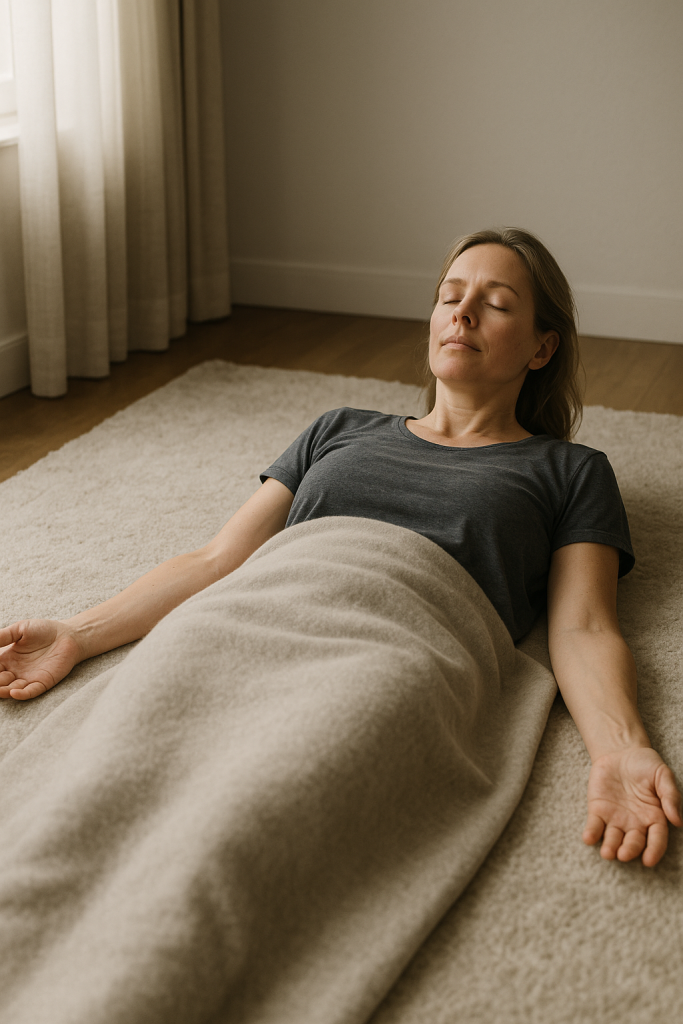
As with many relaxation methods, begin by lying on your back with your body flat and supported. Comfort matters here. A soft carpet or any pleasant surface will do, and because the body often cools down once it becomes still, it helps to cover yourself with a light blanket or throw. Let your arms and legs rest slightly apart, with the palms turned upwards. Then close your eyes and take five slow, deep breaths. There is no need to force anything. The aim is simply to let the body settle and signal to the mind that it can begin to slow down.
If possible, choose a time when you are unlikely to be interrupted. Even ten or fifteen undisturbed minutes can make a difference. Silence is helpful, but it is not essential; what matters more is that you do not feel hurried. The body rarely opens up under pressure. It responds better when it senses that, for a short while at least, nothing is being demanded of it.
It can also help to approach the exercise with a modest expectation. You are not trying to achieve a perfect session. Some days the body softens quickly; on others it remains restless, heavy or distracted. Both experiences are part of the practice. Listening to the body honestly includes noticing when it does not immediately cooperate.
- Lie flat on your back in a comfortable position
- Cover yourself lightly if you tend to feel cold
- Let your arms and legs fall open naturally, palms facing up
- Take five calm, deep breaths before moving on
Narrow your attention from the room to yourself
Once you are settled, start by listening to the sounds around you. First notice the most distant noises you can hear, then gradually draw your attention inwards until you are aware only of the sounds in the room where you are lying. From there, shift into a form of gentle visualisation. Picture the space around you: the floor, the walls, the ceiling, the window, the curtains, the lamp. Then, just as you did with sound, reduce the field of attention until you can picture only yourself, lying there with your arms and legs slightly apart. Try to see yourself as though you were a quiet observer, almost as if you had stepped outside your body for a moment.
Next, bring your awareness to your points of contact with the surface beneath you. Notice the weight of your head, your shoulder blades, your elbows, the backs of your hands, your buttocks, your thighs and your heels. Keep breathing slowly and deeply. This stage matters because it anchors you in physical sensation before the deeper body work begins. You are not trying to analyse anything. You are simply becoming present to the body as it is, so that the rest of the exercise can unfold with more ease and precision.
This gradual narrowing of attention is often more effective than trying to plunge straight into inner awareness. The mind usually needs a bridge. By moving from distant sounds to the room, and from the room to the body, you give attention a natural path to follow. Instead of wrestling with distraction, you gently lead it home.
If images do not come easily to you, there is no need to strain. Some people visualise clearly, while others sense space and position in a vaguer way. Either is perfectly fine. The point is not to create a vivid mental picture, but to reduce the field of attention until your own presence becomes the centre of it.
- Listen first to distant sounds, then only to those in the room
- Visualise the room before narrowing the image to your own body
- Notice each point where your body meets the surface beneath you
Scanning the Body to Release Tension
Move through the body slowly and methodically
Once your attention has settled, keep breathing calmly and deeply, then begin to scan the body in a deliberate order. The aim is not to analyse every sensation, but to soften each area little by little until the muscles let go. Start with the left hand. Simply notice it as it is. It may still feel slightly tense, and that is perfectly normal. Gently relax the fingers, then the hand, the wrist, and slowly work your way up towards the shoulder. Repeat the same process on the right side: fingers, hand, wrist, then up through the arm to the shoulder.
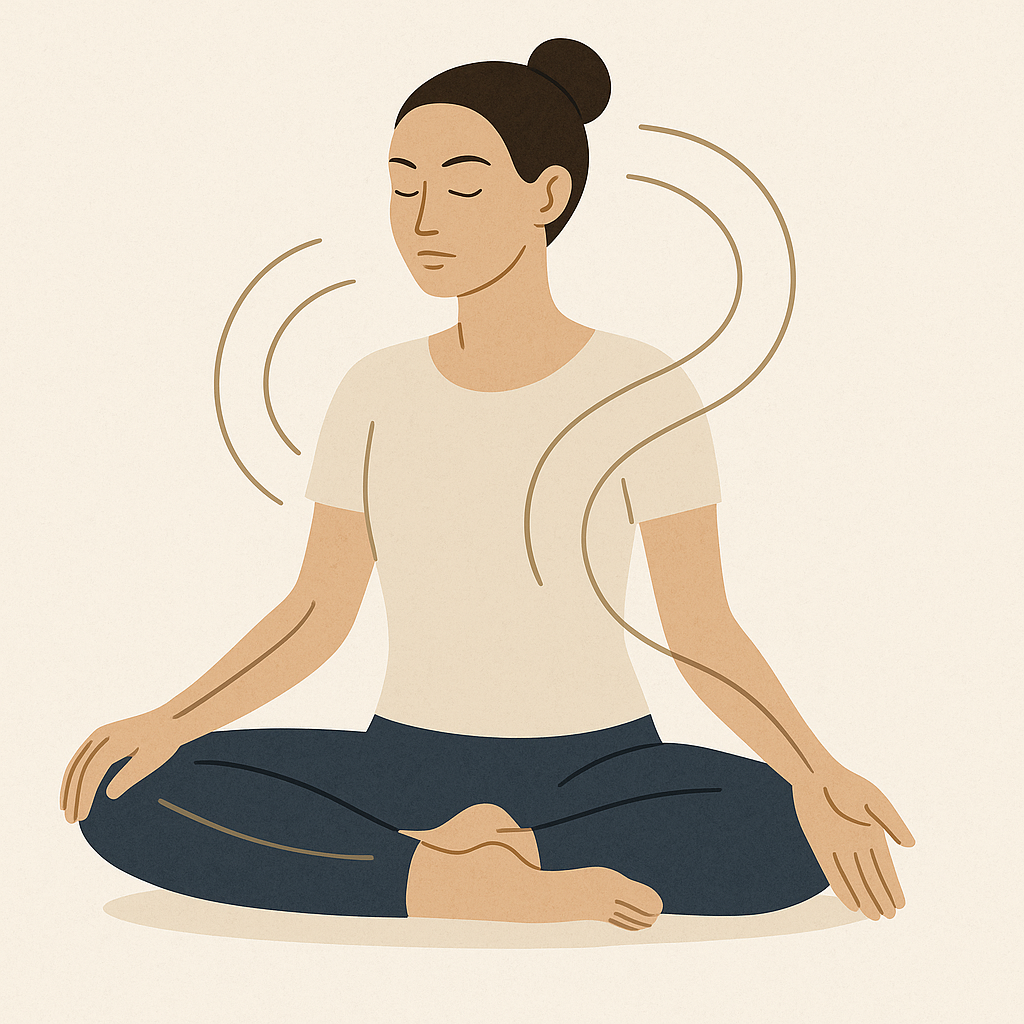
Before moving to the legs, release the central parts of the body. Let your attention pass over the head, the forehead, the nose, the jaw, the neck, the nape, the back, the chest, the abdomen, the belly and finally the pelvis. Then move down the left side of the lower body: thigh, knee, foot, right down to the tips of the toes. Do the same with the right leg, from thigh to knee, foot and toes. If you cannot relax everything completely yet, do not worry. That is not a failure; it is simply part of the practice. Keep going, and let the body learn the exercise through repetition.
It helps to move at a pace that is slightly slower than feels natural at first. Most of us are used to skimming over ourselves. Here, the invitation is to linger just long enough for each area to register. A hand is not merely a hand; it may feel warm, numb, clenched, heavy, absent or unexpectedly alive. The more honestly you notice what is there, the more likely it is that tension will begin to loosen on its own.
The jaw, shoulders, abdomen and hands often deserve special patience. These are places where strain accumulates almost unnoticed during the day. You may find that one exhalation softens them immediately, or that they resist and need repeated attention. Neither response is unusual. The body has its own timing, and this method works best when you respect it rather than trying to dominate it.
- Left hand and arm
- Right hand and arm
- Head, torso and pelvis
- Left leg, then right leg
Use contact and breath to deepen bodily awareness
When this full-body release begins to settle, bring your attention to the points of contact between your body, your clothes and the blanket. Notice what your skin is actually feeling, rather than what you think it should feel. With each calm, deep breath, you may become aware of the slight movement of fabric, the brush of a shirt against the chest or arms, or the faint friction of the blanket as the body rises and falls. This stage matters because it helps you feel less cut off from yourself. You are no longer just naming body parts; you are listening to the body as a living, breathing whole.
Related offer
Meditation - Relaxation set
All the Mental Waves® know-how in a single pack for quick and easy access to meditation and...
View productFrom there, the exercise becomes more focused. For the final stage, choose one or two parts of the body to listen to more intently. There is no right or wrong choice: follow what draws your attention naturally. Take a deep breath, hold it briefly, and during that pause listen as closely as you can to the chosen area. On different days, vary the focus. One time, listen to your heart and its beats; another time, to your lungs and their movement. Once the exercise has become familiar, you can even turn that attention towards your main organ: the brain. When the session is over, return to a normal breath, stretch gently and get up slowly.
Over time, this brief use of held breath can sharpen your inner listening and help you understand the signals your body is sending. As with any practice in meditation, relaxation or personal development, the effects do not appear instantly. They come with patience and regular training. If it helps, you can also pair the exercise with a specific Mental Waves audio programme recommended below the article.
There is something quietly profound in this shift from broad relaxation to precise listening. At first you are easing the body; then you are learning to hear it. That distinction matters. Relaxation is not only about reducing tension, but about becoming intimate with the subtle language of sensation: pressure, pulse, warmth, movement, flutter, stillness. The more familiar these signals become, the less likely you are to miss them in ordinary life.
If you use the held breath stage, keep it brief and comfortable. The aim is to intensify attention, not to create strain. A short pause is enough. If breath retention feels unpleasant, shorten it or return to normal breathing while keeping the same quality of listening. The method should remain supportive, never harsh.
- Notice the touch of clothing and blanket on the skin
- Choose one or two areas to listen to more closely
- Vary your focus over time: heart, lungs, then eventually the brain
Deepening Inner Awareness Through Focused Listening
Let the body’s surface become part of your attention
Once you feel more settled in your body, bring your attention to the points of contact between your skin, your clothes and the blanket. Stay with the small sensations created by each calm, deep breath: the fabric sliding slightly, the light brush of a shirt against the chest or arms, the faint friction of the covering as your body rises and falls. This stage matters because it keeps you anchored in something simple and real. Rather than drifting back into thought, you remain connected to what your body is actually feeling, breath after breath.
At this point, the aim is not to force anything. You are simply refining your awareness. After having relaxed the body part by part, you now listen to it in a quieter, more continuous way. That shift is subtle but important: instead of mentally naming each area, you begin to sense the body as a whole, through touch, temperature, movement and rhythm. In time, this makes it easier to notice the messages your body sends before stress, anxiety or tension take over.
Many people discover here that the surface of the body is far richer than they had realised. The skin is not a boundary in any cold, abstract sense; it is a place of exchange. It feels warmth and coolness, weight and lightness, stillness and motion. By attending to these small impressions, you cultivate a steadier, more embodied form of presence, one that does not depend on grand sensations to feel real.
This can be especially helpful if your mind tends to race. Surface sensations are humble, but they are reliable. They give attention something immediate to rest on. A blanket against the shin, a sleeve brushing the forearm, the slight expansion of the ribs beneath fabric: these details may seem minor, yet they often become the very things that keep you from being carried away by thought.
- Notice the contact with your clothes.
- Feel the blanket move with your breathing.
- Stay with the sensation rather than analysing it.
Use held breath to listen more intensely
For the final part of the exercise, slightly change the way you breathe. Instead of listening to the whole body at once, choose just one or two areas to focus on. There is no right or wrong choice: follow what draws your attention naturally. Take a deep breath, hold it for a moment, and during that brief pause listen as intently as you can to the part of the body you have chosen. Over the days, vary the focus. One session, you might listen to your heart and its beats; another time, to your lungs and the way they ventilate. When the exercise has become familiar, you can even turn your attention to your main organ: the brain.
When the session is over, return to a normal breathing pattern, stretch gently and get up slowly. The principle of holding the breath is what sharpens this inner listening and takes it a step further. Little by little, you become better at recognising what your body is telling you. As with any practice linked to meditation, relaxation or personal development, the effects do not appear instantly. It takes patience and regular practice. If you want to make the exercise more effective, you can also pair it with a specific Mental Waves audio programme and use the recommended recordings suggested below the article.
It is worth approaching this final stage with curiosity rather than ambition. You may not feel anything dramatic, and that is absolutely fine. Sometimes the most meaningful sessions are the quietest ones, where you notice only a pulse in the chest, a slight pressure behind the eyes, or the simple movement of air. The practice becomes deeper not because the sensations grow spectacular, but because your listening becomes more honest and more refined.
Over time, this kind of focused attention can subtly change the way you meet yourself outside the exercise as well. You may begin to notice earlier when fatigue is building, when anxiety is tightening the stomach, when emotion is rising into the throat, or when the body is asking for rest rather than more effort. That is where the method becomes more than a relaxation technique. It becomes a way of living with greater sensitivity and less inner neglect.
Related offer
Zen Creek
Calm, serene atmospheres where the song of water reminds us of the source of life. The birds...
View product- Choose one or two body areas only.
- Take a deep breath and hold it briefly.
- Listen intensely, then return to normal breathing.
- Change the focus from one session to the next.
The Mental Waves Body Listening Framework
The Mental Waves frame is to let the body become a quiet reference point. Instead of analysing every thought, return to sensation, breathing and posture as simple anchors for attention.
A useful session stays gentle: notice one area of the body, breathe without forcing, release unnecessary effort, then let the mind follow the body back toward a steadier rhythm.
If the mind feels too busy to listen inwardly, begin with the free Mental Reset session and then return to body sensations with less pressure.
Editorial note from Mental Waves
This article presents body listening as a relaxation and awareness practice. It is not a substitute for medical advice, physical diagnosis or psychological care when symptoms are persistent or intense.
Conclusion
What gives this practice its value is not any dramatic effect, but the way it patiently brings attention back to what is already there: breath, contact, tension, sensation, rhythm. By moving from the outside world towards the body, then from the body as a whole towards one precise area, you create a quieter, more reliable form of awareness. That is often where relaxation truly begins: not in forcing calm, but in learning to notice without rushing.
There is also a useful balance in the method itself. It is structured enough to guide the mind, yet open enough to let each session feel slightly different depending on your state, your fatigue or what your body is trying to tell you. With practice, this kind of listening can support a steadier relationship with stress, anxiety and inner agitation, not by making them vanish instantly, but by helping you respond with more clarity and less reflex. Small, regular attention changes more than intensity ever does.
In that sense, listening to the body is not a retreat from life, but a return to a more grounded way of inhabiting it. The body often knows long before the mind admits what is happening: when you are overextended, when you are bracing, when you need rest, when something in you is asking to be felt rather than pushed aside. To make space for that knowledge, even briefly, is already a form of care.
If you keep the practice simple and return to it regularly, it can become a quiet anchor in the middle of ordinary days. Not a miracle, not a performance, just a dependable way of coming back to yourself. And for many people, that is more than enough. It is often the beginning of a calmer, clearer relationship with both body and mind.
Frequently Asked Questions About Relaxation Through Listening to Your Body
What is the aim of this body-listening relaxation method?
Its aim is to help you understand your body more clearly so you can steady your mind more easily and live more calmly with difficulties such as stress, anxiety, addictive patterns or phobias. The method combines relaxation, breathing and focused attention rather than effort or force.
How should I position myself before starting the exercise?
Lie flat on your back in a comfortable position, with your arms and legs slightly apart and your palms facing upwards. Use a soft, pleasant surface if possible, and cover yourself with a light blanket or throw because the body can cool down once it becomes still.
What is the first thing to focus on once I am lying down?
Begin by closing your eyes and taking five slow, deep breaths. Then listen to the most distant sounds you can hear and gradually narrow your attention until you notice only the sounds in the room where you are resting.
Why does the exercise ask me to picture the room and then myself?
This visualisation helps draw your attention inwards step by step. First you picture the floor, walls, ceiling, window, curtains or lamp, then you reduce that mental image until you see only yourself lying there, almost as a quiet observer. It prepares the mind for deeper bodily awareness.
Which parts of the body should I relax first during the body scan?
Start with the left hand and move slowly through the fingers, hand, wrist and up to the shoulder. Then do the same on the right side. After that, relax the central areas such as the head, jaw, neck, back, chest, abdomen and pelvis before moving down each leg to the toes.
What should I do if I cannot relax every part of my body fully?
Keep going without worrying if some areas stay tense. The practice is not meant to produce instant results, and partial relaxation is not a failure. Patience and repetition matter here, because the body gradually learns the exercise over time.
Why focus on the feeling of clothes and the blanket on the skin?
Paying attention to the touch of fabric and the slight movement of the blanket keeps you anchored in real physical sensation. It shifts the exercise from simply naming body parts to sensing the body as a living whole, moving gently with each calm, deep breath.
How does the final breathing stage work?
Choose one or two parts of the body, take a deep breath, hold it briefly, and during that pause listen as intently as you can to the chosen area. You can vary the focus from one session to another, such as the heart, the lungs and, once familiar with the practice, the brain.
What should I do at the end of the session?
Return to a normal breathing rhythm, stretch gently and get up slowly. Ending the exercise this way helps you come back gradually rather than abruptly, while keeping the calmer, more attentive state you have built during the session.