en
enVotre panier est vide.


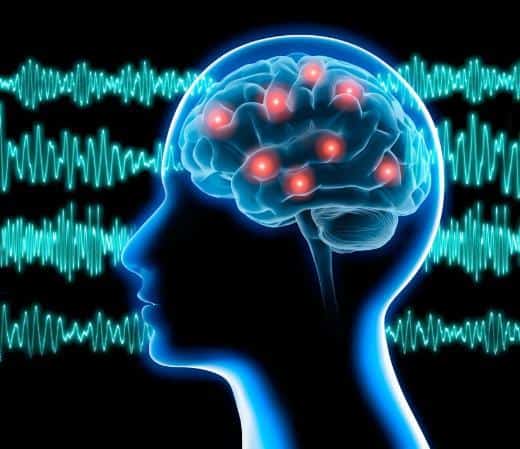
Brainwave entrainment, also known as brainwave synchronisation, describes a natural tendency for similar rhythms to fall into step. In this sense, entrainment is not an abstract wellness idea but a principle observed in physics and, more specifically here, in the way the brain responds to external sensory input. The brain’s electrical activity can be measured by EEG, and when it is exposed to a steady rhythmic stimulus, particularly sound, its own patterns of activity may begin to align with that rhythm. This is often referred to as the frequency-following response, and it helps explain why carefully structured audio is used to influence states linked with attention, relaxation or meditation.
In short: brainwave entrainment
Brainwave entrainment describes the tendency of rhythmic stimulation to guide brain activity toward related frequencies, with effects that should be interpreted carefully.
Before exploring entrainment, review the main types of brain waves and the limits of what each EEG frequency band can tell us.
Use this article as a practical map: keep what helps attention become steadier, question anything that sounds absolute, and connect the idea back to repeatable daily practice.
The idea itself sits within a much older and broader history of synchronisation. In 1656, the Dutch scientist Christiaan Huygens observed that two pendulum clocks placed side by side gradually synchronised with one another; a similar effect can be seen when one tuning fork sets another of the same frequency vibrating. Although the measurement of brainwaves is relatively modern, the practical use of rhythm to influence mental state is far older, from chanting and drumming to repetitive movement and dance.
Today, brainwave entrainment is often explored as a way to support rest, focus or calm by encouraging brain activity associated with states such as theta, beta or alpha, without suggesting that these effects should be treated as automatic or universal.
How Brainwave Entrainment Works
A natural synchronisation response in the brain
Brainwave synchronisation, also known as brainwave entrainment (brainwave entrainment), refers to a natural tendency for similar frequencies to fall into step with one another. In that sense, entrainment is not a mystical idea but a principle observed in physics. In the brain, electrical activity is constantly produced as neurons communicate, and this activity can be measured with electrodes placed on the scalp using an EEG. When the brain is exposed to an external sensory stimulus, especially a rhythmic sound, it does not simply hear it passively: it also responds to its timing and structure.
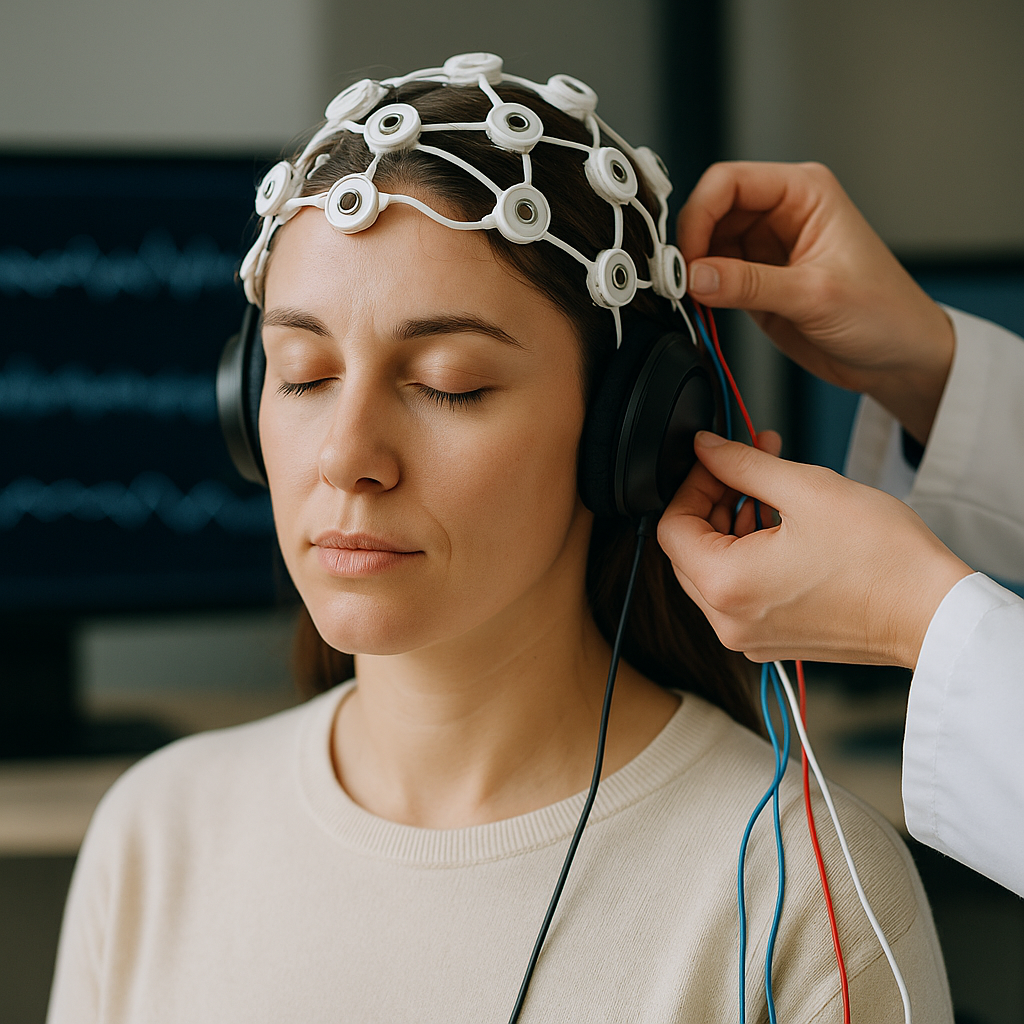
If that stimulus is auditory and repetitive, such as music containing isochronic tones, the rhythm can be reflected in the brain as patterned electrical impulses. When the rhythm is clear, coherent and fast enough, it begins to resemble the frequency ranges associated with natural brainwaves. The brain may then start to align part of its own activity with that external rhythm, including the frequencies carried by the tones and the music. This process is often described as the frequency following response (FFR). Comparable forms of frequency-based synchronisation are also recognised across other scientific fields, including chemistry, neurology, astronomy, pharmacology and biology.
It is useful to be precise about what this means. Entrainment does not imply that the whole brain is forced into a single state, nor that a given frequency produces one fixed psychological outcome in every listener. Rather, rhythmic stimulation may bias ongoing neural activity in a particular direction, especially when the listener is receptive, comfortable and paying at least some attention to the stimulus. The effect is therefore better understood as a modulation of brain dynamics than as a mechanical switch.
EEG research helps frame this point. Brainwaves are not isolated tones inside the head but broad patterns of synchronised neural firing observed across populations of neurons. These patterns fluctuate continuously according to task demands, fatigue, emotional state, sensory context and individual differences. Entrainment works within that moving system, which is why its effects are often described as supportive rather than absolute.
From pendulum clocks to mental states
A classic example of entrainment comes from 1656, when the Dutch scientist Christian Huygens, while working on pendulum clocks, noticed that two clocks placed side by side gradually synchronised with each other. Another familiar illustration is the tuning fork: if a 500 Hz tuning fork is struck and then brought close to another tuning fork tuned to the same 500 Hz frequency, the second fork will begin to vibrate as well. In other words, the first fork entrains the second. Although the scientific study of brainwaves is relatively recent, the broader principle of rhythmic entrainment has been part of human experience for thousands of years through tribal chanting, drum beats and dance.
Used intentionally, brainwave entrainment is often sought for its potential to support different mental states. For example, someone struggling with sleep may find that guiding the brain towards Theta activity helps encourage relaxation. People with attention deficit difficulties may benefit from stimulation associated with Beta activity. Likewise, meditation and deep relaxation are often associated with the Alpha state, which is also considered favourable for learning. When a person is hypnotised, they are also usually in an Alpha state. These associations should be understood with care, but they help explain why entrainment is used as a practical tool for regulating attention, calm and mental readiness.
The comparison with clocks and tuning forks is helpful, but the brain is far more complex than either example. A clock has a stable mechanical rhythm; the brain contains multiple interacting rhythms that vary across regions and functions. That is why mental states such as relaxation, concentration or drowsiness cannot be reduced to one number alone. Even so, the analogy remains valuable because it captures the central principle: under the right conditions, one rhythmic system can influence another.
This is also why context matters so much in practice. The same audio track may feel settling in a quiet evening setting yet ineffective during stress, multitasking or sensory overload. Factors such as volume, duration, expectation, fatigue and the listener’s baseline state can all shape the experience. In other words, entrainment is not separate from psychology; it operates through perception, attention and the brain’s ongoing responsiveness to sensory pattern.
- Theta: often associated with relaxation and the transition towards sleep
- Beta: commonly linked with alertness and focused attention
- Alpha: often sought for meditation, deep relaxation and learning
Why Brainwave Synchronisation May Support Different Mental States
Using entrainment to encourage relaxation, focus or learning
One reason brainwave entrainment attracts interest is that different patterns of brain activity are associated with different mental states. In practice, this means rhythmic stimulation may help guide the brain towards a state that is often sought for a particular purpose. For example, if someone struggles with sleep or finds it difficult to unwind, entraining the brain towards the Theta range may support relaxation. By the same logic, Alpha activity is commonly associated with meditation, deep calm and a more settled inner state, which is why it is often used by people looking to relax more quickly.

Related offer
8 States of Consciousness - Deep Infinity Pack
Deep Infinity - 8 States of Consciousness This rare audio pack invites you to plunge into the heart...
View product
Alpha is also considered favourable for learning, as it is linked with a calm but receptive state of attention. In a similar way, people with attention difficulties are sometimes interested in the Beta range, which is more closely associated with alertness and active mental engagement. The same broad principle appears in hypnosis too, where the subject is usually understood to be in an Alpha-dominant state. These associations should be approached with nuance rather than certainty, but they help explain why entrainment is often explored as a tool for relaxation, concentration and mental regulation.
Part of the appeal lies in the fact that these states are familiar in lived experience. Most people recognise the difference between a restless mind, a quietly attentive mind and a mind drifting towards sleep. Brainwave terminology offers a structured way of describing those shifts, even if the underlying reality is more layered than any simple chart suggests. Entrainment is therefore often used not to create an entirely new state, but to make an already possible state easier to access or sustain.
That distinction matters. A person who is highly anxious, overstimulated or sleep deprived may not move smoothly into calm simply because a track is labelled alpha or theta. Equally, someone who is already receptive to rest, meditation or focused work may find that rhythmic audio helps stabilise attention and reduce internal noise. The method is best seen as a supportive condition for regulation, not as a ensure of a specific outcome.
- Theta: often sought for relaxation and easing towards sleep
- Alpha: commonly associated with meditation, calm and learning
- Beta: more closely linked with alertness and focused attention
An ancient practice behind a modern method
Although the scientific observation of brainwaves is relatively recent, the underlying idea of influencing mental state through rhythm is much older. For thousands of years, human groups have used chanting, drumming and dance to alter attention, arousal and collective experience. These practices did not rely on EEG terminology, yet they point to the same intuitive insight: repeated sensory rhythms can affect how the mind and body feel.
Modern entrainment methods build on that ancient observation in a more targeted way, using carefully structured sound to encourage a particular response. This does not mean every effect is automatic or identical from one person to another, but it does help explain why rhythmic stimulation can feel so immediate and compelling. Seen in that light, brainwave entrainment sits at the meeting point of physics, perception and lived experience: a contemporary technique rooted in a very old human relationship with rhythm.
There is also an important difference between traditional rhythmic practices and contemporary audio-based entrainment. In communal settings, rhythm is often combined with movement, breathing, expectation, symbolism and social synchrony. These elements can intensify the subjective effect and shape meaning as much as physiology does. Modern listening methods isolate one part of that broader picture, which can make them more controlled, but sometimes less immersive.
For that reason, the most credible account of entrainment is neither dismissive nor exaggerated. It is reasonable to say that rhythmic stimulation may influence arousal, attention and subjective state, and that EEG-based concepts help describe part of this process. It is less reasonable to present every claimed benefit as settled fact. A serious understanding keeps both points in view: the phenomenon is plausible and often experientially meaningful, yet still dependent on method, context and individual variability.
The Mental Waves Brainwave Entrainment Framework
The Mental Waves frame is to treat entrainment as a listening support, not a magic switch. Sound can help structure attention and arousal, but the listener still matters: context, volume, fatigue and intention all shape the experience.

Related offer
10 States of Consciousness - Infinity Elementary Pack
Elementary Infinity - The 10 States of Consciousness A unique sound box designed to explore the 5 states of...
View productA responsible session is simple: comfortable headphones when needed, moderate volume, short duration, and a clear reason for listening. Notice the effect, then return to ordinary activity slowly.
For a gentle sound-based introduction, receive the free 128 Hz sacred frequency session and use it with modest expectations and comfortable volume.
Editorial note from Mental Waves
This article is educational and does not present brainwave entrainment as clinical care. People with epilepsy, neurological conditions or significant mental-health symptoms should seek professional advice before using intense auditory stimulation.
Conclusion
Brainwave entrainment is best understood as a measured interaction between rhythm and brain activity, not as a mysterious shortcut. The central idea is simple: under certain sensory conditions, the brain may begin to align aspects of its electrical activity with an external rhythmic stimulus. That helps explain why sound, repetition and tempo have long been linked with shifts in attention, relaxation and inward focus, even if the modern language of EEG and frequency-following gives us a more precise way to describe the process.
What matters, though, is keeping the balance right. Entrainment may support states such as calm, concentration or meditative depth, but it is not a universal fix and should not be treated as one. Its value lies in how it can gently influence regulation and mental state, in ways that are often subtle, individual and context-dependent. Used with that nuance in mind, it becomes less a promise of transformation than a practical tool for working with the brain’s natural responsiveness. Sometimes, that is precisely what makes it compelling.
For readers approaching the subject for the first time, that balanced view is often the most useful one. Brainwave entrainment does not need inflated claims to be interesting. It is already a meaningful example of how sensory rhythm, neural timing and subjective experience can intersect. When used thoughtfully, it may offer a structured way to support rest, focus or contemplative practice while remaining grounded in a realistic understanding of what the method can and cannot do.
{
"@context": "https://schema.org",
"@type": "FAQPage",
"mainEntity": [
{
"@type": "Question",
"name": "What is brainwave entrainment in simple terms?",
"acceptedAnswer": {
"@type": "Answer",
"text": "Brainwave entrainment is the natural tendency for the brain to align some of its electrical activity with an external rhythm. When a steady sensory stimulus, especially sound, is repeated clearly enough, the brain may begin to follow that timing. This is why it is described as a form of synchronisation rather than something mystical."
}
},
{
"@type": "Question",
"name": "How does the brain respond to rhythmic sound during entrainment?",
"acceptedAnswer": {
"@type": "Answer",
"text": "Rhythmic sound can trigger patterned electrical activity in the brain because neurons respond to sensory input. If the sound is regular and coherent, such as music with isochronic tones, the brain may start matching part of its own activity to that rhythm. This response is commonly called the frequency-following response, or FFR."
}
},
{
"@type": "Question",
"name": "What does EEG have to do with brainwave entrainment?",
"acceptedAnswer": {
"@type": "Answer",
"text": "EEG is used to measure the brain’s electrical activity through electrodes placed on the scalp. It helps show that the brain produces measurable patterns when responding to sensory stimulation. In the context of entrainment, EEG is relevant because it provides a way to observe how rhythmic input may influence brainwave activity."
}
},
{
"@type": "Question",
"name": "Why is brainwave entrainment described as a principle of physics?",
"acceptedAnswer": {
"@type": "Answer",
"text": "Entrainment is described this way because synchronisation between similar rhythms is a broader physical phenomenon, not something limited to the brain. The same basic principle appears when two pendulum clocks gradually fall into step or when one tuning fork causes another of the same frequency to vibrate. Brainwave entrainment applies that idea to neural activity."
}
},
{
"@type": "Question",
"name": "What did Christian Huygens discover that relates to entrainment?",
"acceptedAnswer": {
"@type": "Answer",
"text": "Christian Huygens observed in 1656 that two pendulum clocks placed side by side gradually synchronised with each other. That observation became a classic example of entrainment in action. It helps illustrate the wider principle that separate rhythmic systems can begin to match one another under the right conditions."
}
},
{
"@type": "Question",
"name": "How are Alpha, Beta and Theta states linked to brainwave entrainment?",
"acceptedAnswer": {
"@type": "Answer",
"text": "Theta is often associated with relaxation and the transition towards sleep, Alpha with meditation, deep relaxation and learning, and Beta with alertness and focused attention. Brainwave entrainment is used to encourage activity linked with these states through rhythmic stimulation. These links are useful, but they should be understood as associations rather than guarantees."
}
},
{
"@type": "Question",
"name": "Can brainwave entrainment help with sleep or relaxation?",
"acceptedAnswer": {
"@type": "Answer",
"text": "Theta activity is often used when the aim is to encourage relaxation or ease towards sleep. Alpha is also commonly associated with deep calm and meditative states. That said, the effects are not presented as automatic or universal, so it is better understood as a way of gently supporting a desired state rather than forcing one."
}
},
{
"@type": "Question",
"name": "Is brainwave entrainment a modern idea or an ancient practice?",
"acceptedAnswer": {
"@type": "Answer",
"text": "The scientific study of brainwaves is relatively modern, but the use of rhythm to influence mental state is much older. Chanting, drumming and dance have been used for thousands of years to affect attention, arousal and collective experience. Modern entrainment methods build on that same basic human response to repeated rhythm."
}
},
{
"@type": "Question",
"name": "Does brainwave entrainment work the same way for everyone?",
"acceptedAnswer": {
"@type": "Answer",
"text": "Its effects are presented as subtle, individual and dependent on context rather than identical for every person. Rhythmic stimulation may support calm, focus or meditation, but it is not a universal fix. A balanced view is to see it as a practical tool that can influence mental state without assuming the same outcome in every case."
}
}
]
}
Frequently Asked Questions About Brainwave Entrainment
What is brainwave entrainment in simple terms?
Brainwave entrainment is the natural tendency for the brain to align some of its electrical activity with an external rhythm. When a steady sensory stimulus, especially sound, is repeated clearly enough, the brain may begin to follow that timing. This is why it is described as a form of synchronisation rather than something mystical.
How does the brain respond to rhythmic sound during entrainment?
Rhythmic sound can trigger patterned electrical activity in the brain because neurons respond to sensory input. If the sound is regular and coherent, such as music with isochronic tones, the brain may start matching part of its own activity to that rhythm. This response is commonly called the frequency-following response, or FFR.
What does EEG have to do with brainwave entrainment?
EEG is used to measure the brain’s electrical activity through electrodes placed on the scalp. It helps show that the brain produces measurable patterns when responding to sensory stimulation. In the context of entrainment, EEG is relevant because it provides a way to observe how rhythmic input may influence brainwave activity.
Why is brainwave entrainment described as a principle of physics?
Entrainment is described this way because synchronisation between similar rhythms is a broader physical phenomenon, not something limited to the brain. The same basic principle appears when two pendulum clocks gradually fall into step or when one tuning fork causes another of the same frequency to vibrate. Brainwave entrainment applies that idea to neural activity.
What did Christian Huygens discover that relates to entrainment?
Christian Huygens observed in 1656 that two pendulum clocks placed side by side gradually synchronised with each other. That observation became a classic example of entrainment in action. It helps illustrate the wider principle that separate rhythmic systems can begin to match one another under the right conditions.
How are Alpha, Beta and Theta states linked to brainwave entrainment?
Theta is often associated with relaxation and the transition towards sleep, Alpha with meditation, deep relaxation and learning, and Beta with alertness and focused attention. Brainwave entrainment is used to encourage activity linked with these states through rhythmic stimulation. These links are useful, but they should be understood as associations rather than guarantees.
Can brainwave entrainment help with sleep or relaxation?
Theta activity is often used when the aim is to encourage relaxation or ease towards sleep. Alpha is also commonly associated with deep calm and meditative states. That said, the effects are not presented as automatic or universal, so it is better understood as a way of gently supporting a desired state rather than forcing one.
Is brainwave entrainment a modern idea or an ancient practice?
The scientific study of brainwaves is relatively modern, but the use of rhythm to influence mental state is much older. Chanting, drumming and dance have been used for thousands of years to affect attention, arousal and collective experience. Modern entrainment methods build on that same basic human response to repeated rhythm.
Does brainwave entrainment work the same way for everyone?
Its effects are presented as subtle, individual and dependent on context rather than identical for every person. Rhythmic stimulation may support calm, focus or meditation, but it is not a universal fix. A balanced view is to see it as a practical tool that can influence mental state without assuming the same outcome in every case.