en
enVotre panier est vide.


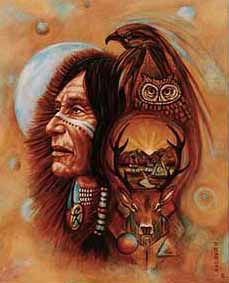
Shamanism remains one of the most elusive creations of the human mind. Depending on who is speaking, it has been described as a dual vision of the person and the world, a form of magic, a religious degeneration, sorcery, deception, or a wider magico-religious cultural system. That alone explains why the subject continues to unsettle anthropologists and intrigue neuroscientists: the word “shamanism” carries too many meanings at once, and each interpretation often says as much about the observer as it does about the reality being described.
So rather than pretending there is a single, settled truth, it makes more sense to follow Teilhard de Chardin’s insight that nothing is truly understood apart from its history. To grasp shamanism properly, we have to return to its earliest traces across a remarkably wide human landscape: among Mongol, Turkic and Magyar peoples, in Nepal, China, Korea and Japan, across Scandinavia, among Indigenous peoples of North and South America, in parts of Africa and Australia, and even in certain Celtic traditions. Only by going back to those first forms can we begin to move beyond confusion and approach the subject with the care it demands.
That historical breadth matters because shamanism was never born as a neat doctrine with a single founder, a central book or a universally agreed creed. It emerged, rather, from ways of living close to the land, to danger, to illness, to death and to the felt presence of forces that could not be reduced to ordinary explanation. When one keeps that in mind, the subject becomes less exotic and more recognisably human: a serious attempt to negotiate uncertainty, suffering, luck, fertility, weather, hunting, memory and the invisible bonds between the living and the dead.
In short: what is shamanism?
Shamanism is a family of spiritual traditions in which a practitioner enters altered states to seek guidance, healing meaning, protection or balance for the community. It is not one single religion, and it should not be reduced to modern self-development imagery.
- Shamanic traditions are linked with nature, ancestors and ritual.
- Altered states may be reached through rhythm, chanting, movement or ceremony.
- The subject needs cultural respect, not fantasy or appropriation.
- Modern readers should distinguish symbolism, tradition and personal experience.
For a broader foundation, read What Is Spirituality?. For a free contemplative sound cue, receive the Sacred Frequency Session.
Defining Shamanism Through History and Debate
A tradition that resists simple definitions
Shamanism, or shamanism, remains one of the great mysteries shaped by the human mind. Some writers, researchers and historians describe it as a worldview built on a bipolar or dualistic understanding of the person and the world. Others dismiss it as magic, a form of religious degeneration, witchcraft, imposture, or simply a magico-religious cultural complex. That alone explains why the word continues to trouble anthropologists and intrigue neuroscientists. It is not easy to find one’s way through this confusion, because each definition often reflects the theories and assumptions of the person putting it forward.
Since no one holds the whole truth — and even a stopped clock is right twice a day — it makes sense to follow Father Teilhard de Chardin’s advice: “Nothing is understandable except through its history.” From that perspective, it is better to go back to shamanism’s earliest traces, found among many peoples: Mongols, Turks, Magyars, Nepalese, Chinese, Koreans, Japanese, Scandinavians, Native Americans of North and South America, Africans, Australians and Celts, including orthodox druidism.
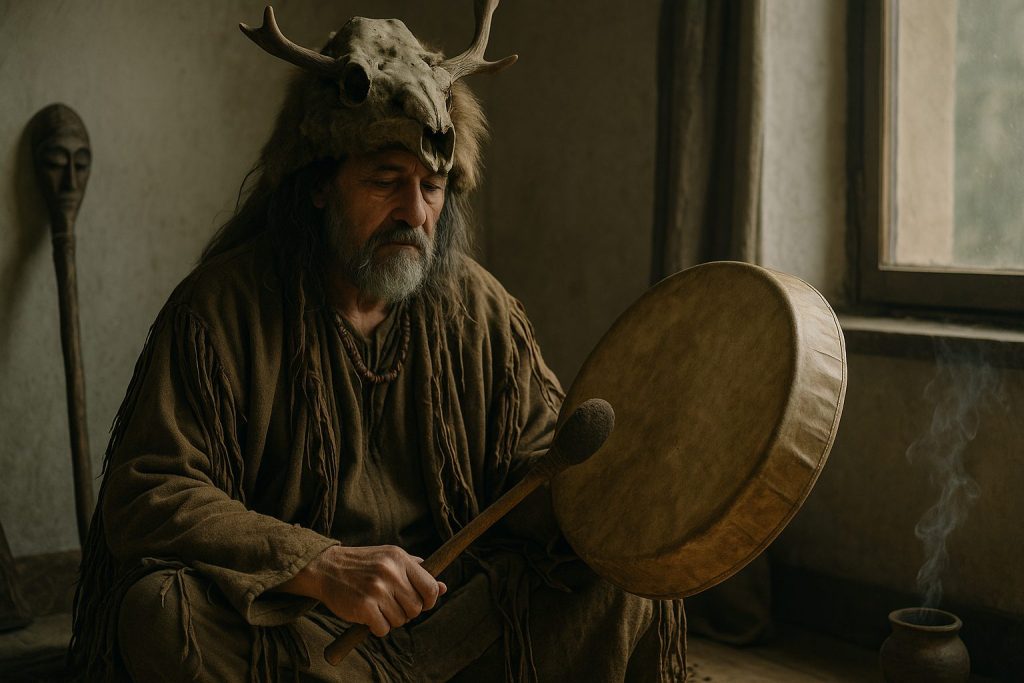
That is also why any definition that sounds too tidy should be treated with caution. The closer one looks, the more one sees not a single block of belief but a family of practices, symbols and ritual attitudes that differ according to landscape, language, economy and inherited cosmology. A reindeer people, a forest people and an Amazonian people do not imagine the unseen in exactly the same way, even when outside observers are tempted to place them all under one label. The term can be useful, but only if it remains flexible enough to respect those differences.
So what is shamanism, exactly? The Larousse dictionary defines it as a set of practices involving a trance state, characteristic of certain societies in Central Asia and the Arctic. Wikipedia presents it more broadly as a practice centred on mediation between human beings and the spirits of nature, the souls of game animals, the clan’s dead, unborn children, the souls of the sick to be brought back to life, and communication with divinities. One recurring axis is the imitation of animal species prized in hunting cultures, especially cervids — such as deer, roe deer, reindeer, fallow deer and pudús — and gallinaceous birds, including turkeys, hens, guinea fowl, quail and pheasants.
Many sources linked to shamanism therefore describe it less as a fixed religion than as a way of acting: a practical, adaptable technique embedded in the life of the whole community. In hunting societies, its essential features are often said to include alliance with supernatural spirits, the journey of the soul, and the management of uncertainty through the relationship between the shaman and the spirit world. Above all, it remains fluid rather than rigid, which is one reason it has proved so difficult to pin down once and for all.
Even the word trance, often used too casually, deserves a little care. In many traditional settings it does not simply mean spectacle, frenzy or loss of control. It may refer to a disciplined alteration of consciousness, entered for a purpose and held within ritual form: to diagnose, to heal, to seek guidance, to restore balance, to accompany a soul, or to negotiate with powers believed to affect communal life. Seen in that light, shamanism is not merely about unusual states, but about what a society believes those states are for.
- trance and altered states
- mediation between humans and spirits
- soul journeys and ritual action
- a flexible practice rooted in community life
What gives the whole tradition its staying power is precisely this union of meaning and usefulness. Shamanic practice is rarely presented, in its original settings, as private self-expression. It is usually tied to need. Someone is ill. A hunt has failed. A child must be named. A death has unsettled the group. Weather threatens survival. Misfortune seems to have a cause beyond the visible. The ritual response belongs, then, not only to belief but to social cohesion.
What the word “shaman” originally meant
The word shaman comes etymologically from the Tungusic language spoken by peoples who, in the seventeenth century, occupied much of eastern Siberia, the Russian Far East and Manchuria. From there, shamanic thought appears to have spread from the Baltic to the Far East, and very likely crossed the Bering Strait with the first Native Americans. In this sense, the shaman is understood as a bridge between humanity and the spirits of nature. He or she inhabits a holistic vision of the world, in the sense defined by Jan Christiaan Smuts: a tendency in nature to form wholes greater than the sum of their parts through creative evolution.
That idea matters, because it helps explain why the shaman is not simply a ritual specialist, but someone whose role is tied to an entire way of perceiving life, nature and the unseen.
There is something revealing in that image of the bridge. A bridge does not belong entirely to one side or the other; it exists to connect realms that would otherwise remain separate. In many traditional understandings, the shaman stands precisely in that difficult place: between the ordinary and the invisible, between the village and the wilderness, between the living and the dead, between fear and meaning. It is a role that carries prestige, certainly, but also burden. To mediate is never the same thing as to dominate.
Within that framework, the shaman is often seen as an initiated wise figure: at once seer, therapist, counsellor, healer, guardian and keeper of beliefs, culture and their hidden knowledge. The French anthropologist Roberte Hamayon, emeritus director of studies at the École pratique des hautes études and former head of the Laboratory of Ethnology and Comparative Sociology at Paris Ouest Nanterre La Défense, notes that the shaman may be understood either as “the one who knows” or as the one who “leaps, stirs, dances”. Those two meanings are revealing. They suggest both knowledge and movement, insight and embodied ritual action. It is also worth noting that modern European vocabulary for these traditions is relatively recent.
That pairing of knowledge and movement is especially striking. In many spiritual traditions, wisdom is imagined as stillness. Here, wisdom may also dance, tremble, chant, imitate, travel and enact. The body is not incidental to the rite; it is one of its instruments. Drum, breath, costume, rhythm, posture and voice may all become part of a language through which the invisible is approached. To forget that embodied dimension is to misunderstand something essential in the figure of the shaman.
It is equally worth remembering that the modern use of the word has often flattened local distinctions. Many peoples had, and still have, their own names for ritual specialists, healers, mediums or spirit-workers, each with nuances that the broad term shaman cannot fully capture. The convenience of the label should not make us careless. It helps us speak across cultures, but it can also blur the very differences that give those cultures their depth.
The Shaman’s Place in Traditional Life and the Risks of Modern Reinvention
A figure of knowledge, ritual and responsibility
The shaman is traditionally understood as an initiated wise figure: at once seer, therapist, adviser, healer, guardian and keeper of a people’s beliefs, culture and hidden knowledge. As the French anthropologist Roberte Hamayon has suggested, the shaman may be understood either as “the one who knows” or as the one who “leaps, stirs, dances” — two expressions that capture both knowledge and embodied ritual action. It is also worth noting that modern European vocabulary for these traditions has its own history, a reminder that even the vocabulary used to describe these traditions has its own history.
Related offer
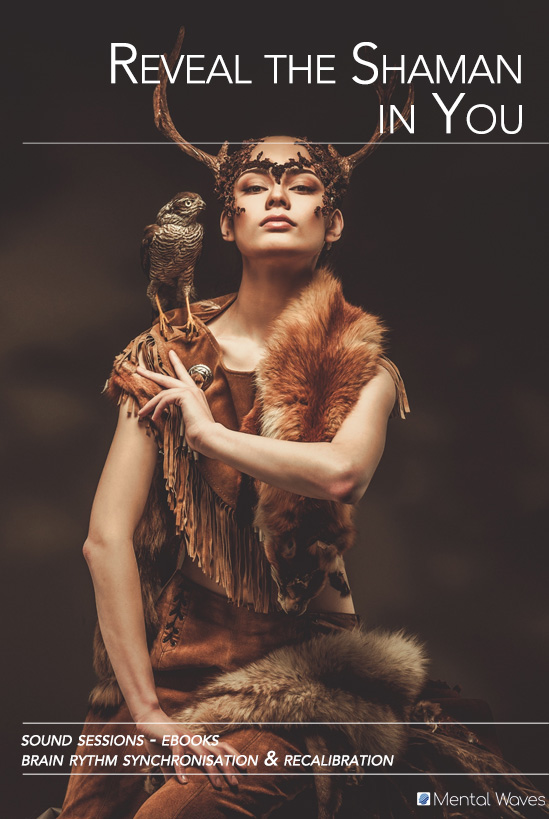
Reveal your inner Shaman
Find physical and spiritual balance... Meet your totem animal and its powers... Travel through...
View productIn traditional societies, the shaman’s role is important and often deeply respected, yet it is never identical everywhere. It changes from one continent to another, from one region to the next, and above all from one period to another. The Chinese saying, “10,000 monks, 10,000 religions”, applies just as well here: shamans are far from interchangeable. Whether male or female, a shaman may be associated with a wide range of supposed abilities, sometimes including extrasensory perception, vision, telepathy, divination, the preparation of rituals, healing through plants, communication with the spirits of nature, the treatment of certain illnesses, naming a child, teaching, giving counsel, harming an enemy, bringing rain, or accompanying the souls of the dead.
What matters is that, whatever the continent, each intervention takes place within a precise ritual framework, not as an improvised display of power.
That ritual framework is one of the clearest signs that we are dealing with something more serious than folklore or theatrical performance. A rite has timing, sequence, prohibitions, symbols, witnesses and inherited forms. It belongs to a chain of transmission. In many communities, the shaman does not simply decide to act because he or she feels inspired; the action is authorised by custom, by apprenticeship, by ordeal, by recognition from elders, or by a calling interpreted through the culture’s own categories. However mysterious the experience may appear from outside, it is rarely without structure from within.
Another point often overlooked is that the shaman’s role is not always comfortable or enviable. In a number of traditions, the calling is linked to crisis: illness, visions, psychological upheaval, symbolic death, isolation or a period of disorientation that must be survived and interpreted. The future shaman is not merely someone who wants power, but someone who has been marked, tested or claimed by forces the community recognises. Whether one reads that literally, spiritually or psychologically, the underlying idea is the same: authority is not supposed to be cheap.
Nor is the shaman only a healer in the narrow medical sense. He or she may also serve as a keeper of memory, a reader of signs, a mediator in conflict, a guardian of taboo, a guide in moments of transition and a stabilising presence when ordinary explanations fail. In that respect, the role touches the emotional and symbolic life of the group as much as its physical survival. A society does not turn to such a figure merely for answers, but for orientation.
- healing and plant knowledge
- ritual guidance and divination
- counsel, teaching and social mediation
- relations with spirits, weather or the dead
Seen this way, the shaman’s place in traditional life is inseparable from responsibility. The gifts attributed to such a figure are never meant to float free of ethics, kinship and consequence. A ritual specialist who serves only himself would, in many ancestral settings, be regarded not as accomplished but as dangerous. That distinction matters today, when the language of personal empowerment can easily detach spiritual practice from duty.
Modern fascination, commercial drift and necessary caution
Shamanism returned to public attention through television documentaries, specialist books, scientific research, the New Age search for mystical experience, and the influence of writers such as Carlos Castaneda. That renewed interest has made these traditions more visible, but it has also opened the door to confusion. One of the oldest spiritual paths known to humanity now attracts its share of charlatans, eager to profit from its aura. For that reason, caution is essential. It is unwise to throw oneself blindly into so-called shamanic initiations based on harmful psychotropic substances, especially when these practices are far removed from the original Tungusic model.
The modern appetite for intensity can be part of the problem. Many people, weary of abstraction and hungry for direct experience, are drawn to what appears raw, ancient and transformative. That longing is understandable. Yet longing alone does not protect anyone from manipulation. Once a tradition is uprooted from its language, its elders, its cosmology and its communal checks, it can be repackaged with alarming ease. What remains may still borrow the costume of authenticity while losing the discipline that once gave it meaning.
There is also a moral question here, not only a practical one. To borrow fragments of sacred practice without understanding the people who carried them can become a form of consumption rather than reverence. The issue is not that traditions must be frozen or hidden away, but that they deserve context, honesty and respect. A ritual that once belonged to a web of obligations cannot simply be turned into a weekend product without something essential being diminished.
The controversies are still very much alive, particularly around ayahuasca (or yagé) and iboga, a small shrub from the apocynaceae family. In France, iboga is officially listed as a narcotic substance; on public health grounds, that classification was confirmed by the Conseil d'État on 20 March 2009 (no. 305953). It is also banned by the IOC and by various sports federations in several countries, including France, Belgium, Poland, Switzerland and the United States, where it is likewise treated as a narcotic.
Ayahuasca — a vine-based brew traditionally consumed by shamans in Amazonian Indigenous tribes — has also been listed as illegal in France since 2005 (Official Journal of 3 May 2005, publication of the decree of 20 April amending the decree of 22 February 1990). In that sense, shamanism resembles the martial arts: not a fashionable shortcut, but a demanding path that requires honesty with oneself and with others. To become a shaman, in this view, is to keep learning how to become, to accept that Being has a purpose beyond the individual, to live without false certainty or rigid preconceptions, and ultimately to cease being enslaved by anything at all — to become one with universality.
Even where psychoactive substances have had a traditional place, they were not historically detached from preparation, guidance, taboo, cosmology and communal interpretation. Modern imitation often strips away precisely those safeguards. What is left can be physically risky, psychologically destabilising and spiritually confused. The romantic idea that intensity automatically equals truth has led more than one seeker into dependency, delusion or exploitation.
A more mature approach begins with humility. Not every altered state is insight. Not every guide is trustworthy. Not every ancient practice is meant to be transplanted wholesale into modern life. Sometimes the most respectful response to a tradition is not to imitate it hastily, but to study it carefully, to recognise its depth, and to admit that some forms of knowledge cannot be separated from the world that formed them.
Related offer
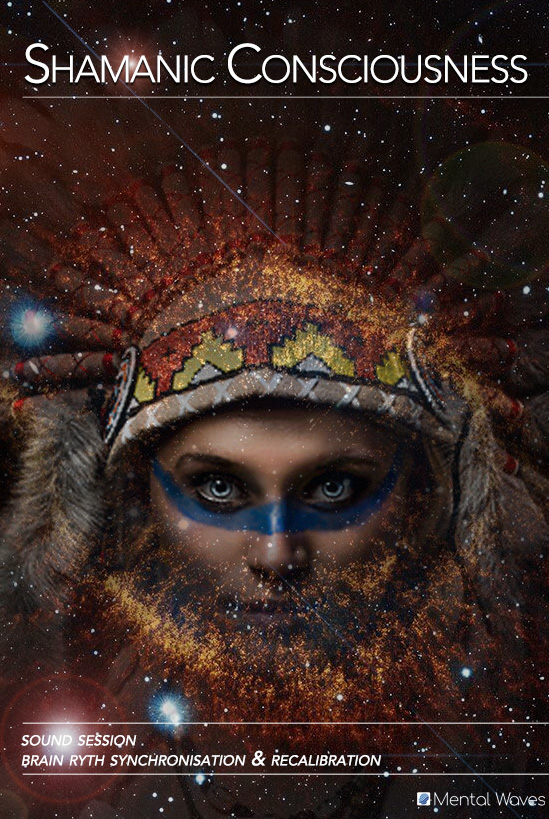
Shamanic trance
Based on studies and research into the shamanic state of consciousness, this music contains the frequencies of the waves...
View productHow to Approach Shamanism With Respect
Modern interest in shamanism can be sincere, but sincerity is not enough. These traditions are connected to specific peoples, lands, lineages and rituals. A respectful approach starts by avoiding easy claims, exotic imagery and the idea that one workshop can replace a living tradition.
It is more useful to ask what shamanism reveals about human relationship with nature, symbol, rhythm, community and the unseen dimensions of experience. That question leaves room for learning without pretending to own the tradition.
The Mental Waves Shamanic Discernment Framework
The Mental Waves frame is to approach shamanic themes through humility, symbolic intelligence and grounding. Curiosity is welcome; certainty should come slowly.
- Respect: remember that shamanic practices come from living cultures.
- Discern: separate tradition, personal imagery and commercial simplification.
- Ground: keep altered-state curiosity connected to ordinary life.
- Integrate: turn insight into more respectful action toward self, others and nature.
For animal symbolism, continue with Totem Animal Meaning. For another altered-state topic, read Astral Travel and Decorporation.
Editorial note from Mental Waves
This article is educational and reflective. Shamanic traditions should be approached with cultural respect, psychological grounding and without claiming authority over traditions one has not inherited or studied deeply.
Conclusion
What emerges, in the end, is that shamanism resists any tidy definition because it has never been one single, fixed system. It belongs to history, ritual, place and transmission, and its meaning shifts with the people who live it. That is precisely why it should be approached with both curiosity and restraint: neither reduced to superstition nor romanticised as a ready-made answer to modern spiritual hunger.
The figure of the shaman, as the article suggests, cannot be separated from responsibility, community and a precise ritual framework. Once lifted out of that context, the risk of confusion grows quickly, and so does the space for projection, fantasy and exploitation. To keep the subject honest is not to strip it of mystery, but to recognise that some paths ask for humility before they ask for belief. Some traditions are not there to be consumed, but to be respected.
If there is a final lesson here, it may be this: shamanism endures not because it offers easy certainty, but because it speaks to enduring human thresholds — illness, fear, death, chance, nature, meaning and the need to feel that visible life is not the whole of life. That does not oblige us to accept every claim made in its name. It does, however, invite a more careful kind of attention, one capable of holding scepticism and reverence in the same hand.
Frequently Asked Questions About Shamanism
What is shamanism?
Shamanism refers to spiritual traditions involving ritual, altered states, nature, community and symbolic guidance.
Is shamanism a religion?
It can be part of religious or spiritual systems, but it is not one single centralized religion.
What does a shaman do?
In many traditions, a shaman acts as a ritual mediator for guidance, protection, meaning and community balance.
Why are drums often associated with shamanism?
Rhythm can support trance, attention and ritual focus in many shamanic contexts.
Are spirit animals part of shamanism?
Animal symbolism appears in some traditions, but meanings depend on culture and context.
Is modern shamanism the same as traditional shamanism?
No. Modern adaptations can be very different from living Indigenous or ancestral traditions.
Why does cultural respect matter?
Because shamanic practices belong to real communities and should not be treated as decorative symbols.
Can shamanic symbols still be meaningful?
They can invite reflection when approached humbly and without claiming ownership of another tradition.
What is the main takeaway?
Shamanism should be approached with curiosity, respect, grounding and awareness of its living cultural roots.