en
enVotre panier est vide.



Many spiritual traditions hold that each of us carries the memory of earlier incarnations within us. Most of the time, those memories remain dormant, and perhaps that is just as well: to move through ordinary life while constantly flooded by fragments of a distant past would be deeply unsettling. It would mean living not only with the echoes of other times, but also with the weight of former identities, unresolved emotions and, in some cases, acts we might struggle to forgive.
In short: past life regression
Past-life regression is best approached as a symbolic and reflective experience, whether or not one interprets the memories literally.
Use this article as a practical map: keep what helps attention become steadier, question anything that sounds absolute, and connect the idea back to repeatable daily practice.
There is something quietly merciful in that veil. Most people already find their present life demanding enough; to add the unfinished grief, loyalties and inner conflicts of other lifetimes could easily become too much. A hidden memory is not necessarily a lost memory. Sometimes it is simply a memory waiting for the right moment, the right maturity and the right inner conditions to be approached without harm.
And yet, being cut off entirely from that deeper history would be a loss of another kind. If the thread of our soul’s journey can be approached with care, it may help explain why we are as we are today — our sensitivities, our patterns, even certain fears or attachments that seem to have no obvious source. The central idea is not to remain permanently immersed in past lives, but to gain measured access to them, in a way that can illuminate the present rather than overwhelm it.
For many people, that is where the real value lies. The point is not to collect extraordinary stories or to flatter the imagination, but to recognise that some parts of us can feel older than our current biography. A strong aversion, an inexplicable familiarity, a recurring emotional knot, a bond that feels immediate and disproportionate: these are often the kinds of experiences that lead people to wonder whether the present is carrying more than the present alone.
Accessing Past-Life Memories Through Regression
A protected memory that can still be reached
Each of us carries, at least in latent form, the memory of our different incarnations. If those memories remain veiled most of the time, that is not without reason: living day to day with constant references to a distant past would be deeply unsettling. It would mean trying to navigate the many personalities we may once have embodied, while perhaps continuing to carry the burden of old guilt or painful events. In that sense, permanent access to past lives would be difficult to manage.
And yet cutting ourselves off entirely from that deeper history would also be a loss, because the full journey of the soul is rich in experiences, lessons and turning points that can shed light on why we are who we are today.
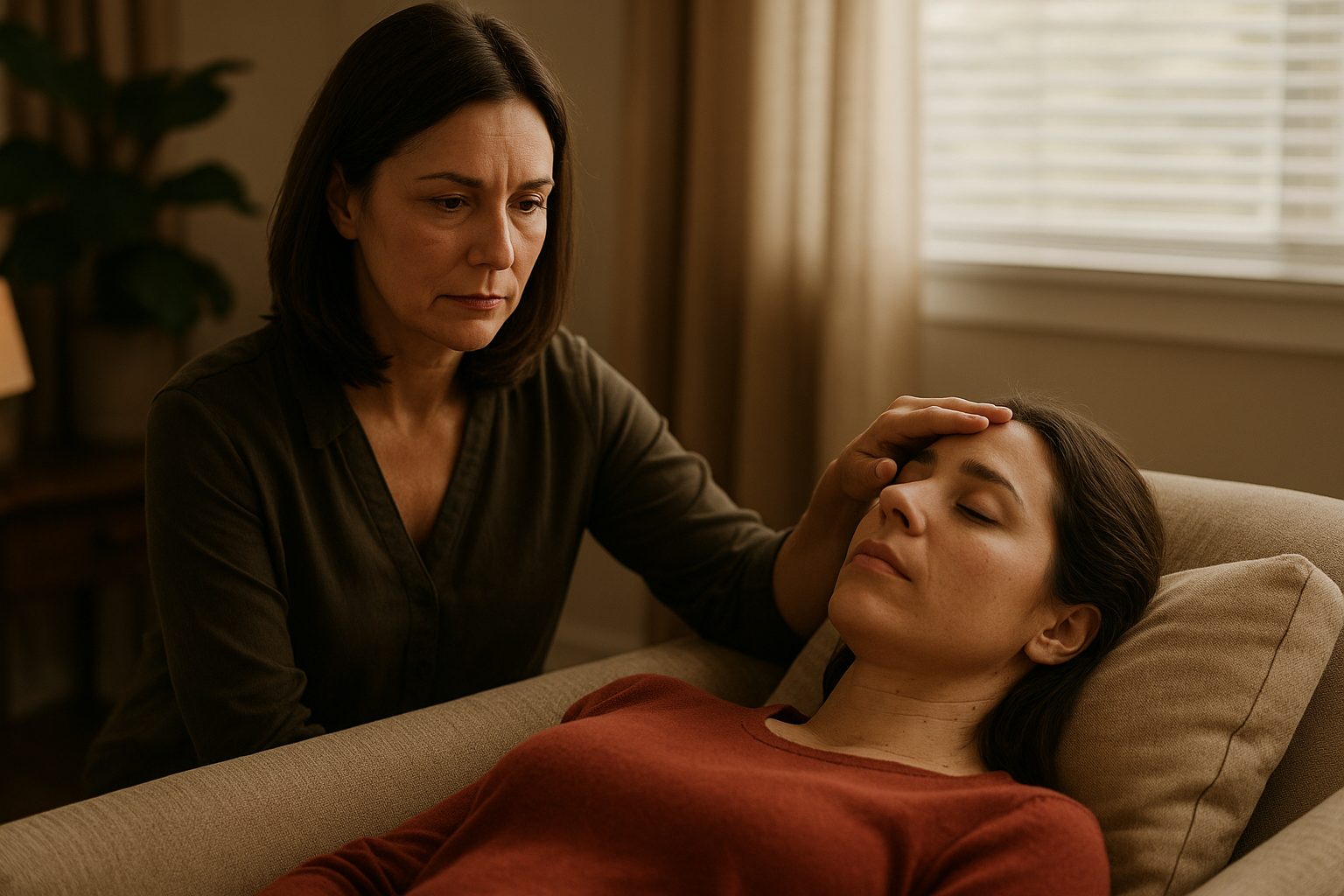
That idea of a “protected” memory is worth lingering on. In many inner traditions, forgetting is not seen as failure but as a form of protection built into incarnation itself. We come into a new life to live it fully, not to remain entangled in every previous chapter. But protection is not the same as prohibition. When a person is ready, and when the intention is sincere, certain memories may begin to rise in fragments, sensations, images or emotional certainties that feel strangely familiar.
Regression is presented as one of the most direct ways of approaching that hidden reservoir of memory. Several regressive techniques exist, but they generally resemble a state of deep relaxation in which consciousness shifts enough to open the door to past-life material. From there, a person may move from one life to another, or focus on a single event with unusual clarity. This inner journey is most often guided by a practitioner, though it can also be undertaken safely through specific audio programmes designed to induce the right state.
What makes regression distinctive is not force, but receptivity. One does not wrench open the unconscious; one becomes quiet enough for something buried to show itself. In practice, people often describe a gradual loosening of ordinary mental control. The analytical mind softens, the body settles, and what emerges may come less like a film and more like a sequence of impressions: a place, a body, a relationship, a moment of danger, a feeling of loss, or a powerful sense of recognition.
Not everyone experiences regression in the same way. Some see vivid inner scenes, almost cinematic in quality. Others receive only brief flashes, bodily sensations or an unshakeable emotional knowing. None of these forms is necessarily more valid than another. What matters is the coherence of what arises and the effect it has afterwards. A memory that arrives quietly but changes the way a person understands a lifelong fear can be more meaningful than a dramatic vision that leaves no real trace.
- deep relaxation
- a modified state of consciousness
- access to one life or one precise event
These elements may sound simple, but together they create a very particular inner climate. Deep relaxation helps reduce the noise of everyday thought. The modified state of consciousness allows attention to move away from surface concerns. And the possibility of focusing on one life or one precise event gives the experience a useful frame, especially for those seeking clarity around a recurring issue rather than a vague spiritual experience.
Why guidance and preparation matter
In a session led by a serious practitioner, autosuggestion, hypnosis or related methods are typically used to bring the person into a modified state of consciousness that is favourable to the discovery of past lives. It is not a trivial experience, and it rarely leaves anyone untouched. For that reason, it is often advisable to have some prior experience of deep meditation or even hypnosis, simply so that what emerges can be received with a little more steadiness and perspective.
Good guidance matters because the experience can be subtle at first. Many people dismiss what arises because it does not look the way they expected. They may think, “I’m only imagining this,” when in fact the material is arriving in the symbolic, emotional language through which the unconscious often speaks. A competent practitioner does not impose a story or push for spectacle. They help the person stay present, observe carefully and distinguish between fantasy, suggestion and something that carries a deeper inner truth.
Preparation also has an ethical dimension. Entering altered states should never be treated casually, especially by someone who is emotionally fragile, exhausted or in the middle of acute psychological distress. A grounded approach asks for discernment. It helps to come with a clear intention, a stable environment and enough inner resilience to meet whatever may surface. In that sense, regression is less like entertainment and more like meaningful inner work.
This matters because regression can bring back episodes that are not always pleasant, and with them the emotions directly linked to those experiences. What surfaces may feel vivid, intimate and sometimes unsettling. Even so, that emotional intensity is also part of what gives the process its value: it is not just about seeing images, but about reconnecting with memories that may help make sense of present-day patterns, reactions or inner tensions. Approached with care, regression becomes less a curiosity and more a meaningful way of tracing the thread of one’s deeper story.
People are often surprised by how immediate the emotional body can be during such work. A scene that appears distant in time may be felt with startling freshness: grief in the chest, fear in the stomach, relief in the breath, tenderness in the heart. This is one reason integration afterwards is so important. The session itself is only part of the process. What follows — rest, reflection, journalling, quiet observation of one’s reactions — often determines whether the experience becomes genuinely useful.
It is also wise not to demand too much too quickly. Some memories seem to arrive in layers. A first session may reveal only a fragment, enough to open a door but not enough to explain everything. That can be frustrating for the impatient mind, yet it is often the wiser rhythm. The psyche tends to reveal what can be metabolised, not everything at once. Respecting that pace is part of working safely and intelligently.
How Regression Can Shed Light on Present-Day Difficulties
Why some therapists take past-life memories seriously
Many therapists have looked closely at the question of past lives and the traces they may leave behind. In their view, repeated regression work has helped move the subject beyond pure belief by pointing to something more concrete: memories that appear with striking precision, sometimes reaching back to very distant periods. When these recollections are compared with historical data, some practitioners believe they reveal that human beings can retain the imprint of lives, events and contexts that may have unfolded centuries ago.
Related offer
Past life regression
Explorez vos vies antérieures grâce à un enregistrement audio de 30 minutes, conçu pour favoriser la réceptivité et…
View product
What tends to persuade these practitioners is not merely the unusual nature of the memories, but their consistency. Across many sessions and many individuals, similar patterns are said to emerge: details unknown to the person beforehand, emotional responses that feel disproportionate until placed in a wider narrative, and recurring themes that continue to make sense long after the session has ended. For those who work in this field, such repetitions suggest that something more than random fantasy may be involved.
Of course, not everyone interprets these experiences in the same way. Some see them as literal memories of former incarnations. Others regard them as symbolic productions of the unconscious that nonetheless carry therapeutic truth. In practice, the distinction is not always the most important point. What often matters more is whether the material helps the person understand themselves more deeply, loosen a persistent suffering or restore a sense of inner coherence that had previously been missing.
From that perspective, revisiting past lives is not simply a mystical curiosity or a passing “new age” trend. It is often presented as a structured approach based on altered states of consciousness, notably through the activation of Alpha and Theta brainwaves, which are thought to help stimulate the unconscious and bring deeply buried memory to the surface. Whether explored with a practitioner or through a dedicated recording, the aim remains the same: to enter a state in which these latent memories can emerge more clearly.
Alpha and Theta states are often associated with the threshold between waking awareness and deeper inner material. Many people know these states indirectly: the drifting edge before sleep, the depth reached in meditation, the suspended quality of a moment when the mind is quiet but awareness remains present. Regression work seeks to use that threshold deliberately. In such states, memory may become less linear and more associative, allowing buried content to rise with less interference from ordinary mental habits.
- memories described as unusually vivid
- comparisons made with historical elements
- access through Alpha and Theta states
These three points are often cited together because they form the practical backbone of the argument. Vividness alone proves little, since imagination can also be vivid. Historical comparison adds another layer, especially when details appear that the person could not easily have known. And the use of Alpha and Theta states offers a framework for understanding how such material might become accessible without requiring ordinary conscious recall.
How revisiting the past may help in the present
The therapeutic interest does not stop at the memories themselves. According to practitioners who use regression, many present-day difficulties can sometimes be linked to painful karmic experiences carried over from another existence. Emotional, relational or behavioural problems, as well as certain phobias and persistent anxieties, are often interpreted in this light. The idea is not to dramatise every struggle, but to recognise that some patterns may have roots deeper than our current biography seems to explain.
This can be especially meaningful when a difficulty has resisted more conventional forms of understanding. A person may know perfectly well that their fear is irrational and still be unable to shift it. They may repeat the same relational pattern despite insight, effort and good intentions. In such cases, the hypothesis of a deeper memory can offer a different doorway. It does not replace personal responsibility, but it can widen the frame enough for something previously locked to begin moving.
Some people, for instance, report a lifelong fear of water, confinement, fire or abandonment with no obvious origin in childhood experience. Others feel an immediate and inexplicable bond or aversion in certain relationships, as though the emotional charge predates the present encounter. Within a past-life framework, these reactions are sometimes understood as residues of unfinished experiences. Whether one takes that literally or symbolically, the effect of tracing them back can be profoundly relieving.
In that context, reliving a troubling scene can help identify a possible source of distress. Once that cause is brought into awareness, some people feel a lasting release, as though a knot has finally been untied. That is why these techniques, now more widely known and accessible, are often seen as a way not only to enrich the present life but, in some cases, to help heal it. This reservoir of experiences and emotions can become a genuine source of insight and growth. For those who want to explore this gently, the recording Past life regression was designed to help induce a suitable state quickly.
The release people describe is not always dramatic. Sometimes it is subtle but unmistakable: a fear loses its grip, a recurring dream stops, a relationship becomes less charged, or a long-standing sadness finally feels named. There can be a sense that something has been recognised at last, and that recognition itself begins to dissolve the tension. Healing, in this context, often comes not from forcing change but from seeing more truthfully what has been carried for too long.
It is also worth saying that regression should not be used to explain everything. Not every wound comes from another life, and not every difficulty requires a karmic interpretation. A mature approach keeps both feet on the ground. Present-life history, nervous system patterns, family dynamics and ordinary human vulnerability all matter. Past-life work is most helpful when it complements rather than replaces other forms of self-understanding.
Used in that balanced way, regression can become a surprisingly dignified practice. It invites humility as much as wonder. One may come seeking answers and leave instead with a gentler relationship to one’s own mystery. And sometimes that is already a great deal: to feel that one’s life is not random, that certain burdens have a history, and that what once seemed senseless may belong to a longer arc of learning and repair.

Related offer
Beyond being
«Au-delà de l'Etre» is a 3-track, 1-hour music compilation based on...
View productThe Mental Waves Regression Reflection Framework
The Mental Waves frame is to treat regression experiences as material for reflection rather than proof to defend. Images, emotions and stories can reveal useful inner themes even when their literal origin remains uncertain.
A careful practice keeps the nervous system steady: enter gently, observe what appears, avoid forcing memories, and return to the present before drawing meaning from the experience.
For a softer sound-based entry into inner reflection, receive the free 128 Hz sacred frequency session and use it without forcing any imagery.
Editorial note from Mental Waves
This article does not present past-life memories as scientifically established facts or as therapy for trauma. Intense emotional material should be explored with appropriate professional support.
Conclusion
If one accepts the premise of past lives, the real value of regression is not in collecting extraordinary stories for their own sake, but in approaching a deeper personal history with a little more clarity and care. The article holds that these memories are not absent so much as veiled, and that this distance may be protective as much as frustrating. Remembering, in that sense, is less about curiosity than about meaning: understanding certain emotional patterns, fears or inner impressions that seem older than the present moment.
There is something deeply reassuring in that perspective. It suggests that what troubles us is not always arbitrary, and that some of our most persistent inner experiences may belong to a longer continuity of the soul. Even when the details remain uncertain, the simple act of approaching oneself with that degree of depth can already be transformative. It replaces self-judgement with inquiry, and confusion with a more patient form of listening.
That is also why the process is presented with a degree of seriousness. A regression is not meant to be trivial entertainment, but an inward experience that can stir genuine feeling and, for some, offer a form of release. Whether one sees it as spiritual memory, therapeutic material or a meeting point between the two, the underlying idea remains balanced: what matters is not proving everything at once, but recognising that revisiting what feels deeply buried may sometimes help us live more freely now. Sometimes, what returns from the past does not weigh us down; it quietly puts something back in its rightful place.
Perhaps that is the most compelling aspect of all. Remembering past lives, when approached with care, is not really about escaping the present. It is about inhabiting it more fully. If a forgotten thread can help explain a fear, soften an old pain or restore meaning to a pattern that has long felt obscure, then the past has served the present in the best possible way. Not by overwhelming it, but by helping it become more whole.
Frequently Asked Questions About Remembering Past Lives
Why are past-life memories usually hidden from everyday awareness?
Past-life memories are presented as being kept behind a kind of protective barrier. Constant access to former identities, distant events or unresolved guilt would be difficult to manage in ordinary life. Keeping those memories latent helps prevent confusion and emotional overload, while still leaving open the possibility of accessing them in a more measured way.
What is regression and how is it meant to work?
Regression is described as a deep relaxation process that shifts consciousness into a modified state. In that state, a person may access memories linked to earlier incarnations, move through different lives or focus on one precise event. The aim is not permanent immersion in the past, but temporary access to material that may clarify present-day patterns.
Is past-life regression always done with a practitioner?
Regression is generally guided by a practitioner, especially when methods such as autosuggestion or hypnosis are used. It can also be done through specific audio programmes designed to induce a suitable state safely. In both cases, the goal is to create the right conditions for buried memories to emerge without becoming overwhelming.
Why is some preparation recommended before trying regression?
Preparation matters because regression can stir strong emotions linked to difficult or unsettling scenes. Prior experience with deep meditation or hypnosis is considered helpful, as it may make it easier to stay steady and process what comes up. This is treated as a serious inner experience rather than a casual exercise.
What kinds of present-day problems are linked to past lives in this approach?
Emotional, relational and behavioural difficulties are all mentioned, along with certain phobias and anxieties. The idea is that some of these troubles may be rooted in painful karmic experiences or traumatic events from another existence. Revisiting those memories is seen as one way of identifying a possible source that current life alone does not fully explain.
Can reliving a past-life event actually bring relief?
Reliving a troubling event is presented as a way of identifying a hidden cause behind a present difficulty. Once that cause is recognised, some people are said to experience a lasting sense of release. The process is valued less for dramatic visions than for the possibility of loosening emotional knots that still affect life now.
How do therapists try to support the reality of past-life memories?
Some therapists compare memories recovered in regression with historical data. Through that cross-checking, they believe people may retain traces of lives or events from centuries ago. This is used to argue that regression is more than a matter of belief alone, and that the memories can sometimes appear with striking detail and consistency.
Why is regression described as more than a 'new age' idea?
Regression is presented as relying on altered states of consciousness linked to Alpha and Theta brainwaves. These states are thought to stimulate the unconscious and bring deeply buried memories to the surface. In that sense, it is framed as a structured approach rather than a passing spiritual fashion or a purely vague belief.
What is the main benefit of remembering past lives in a careful way?
The main benefit is greater understanding of why certain fears, attachments, sensitivities or recurring patterns exist in the present. Accessing this deeper history is meant to illuminate the current life rather than replace it. When approached carefully, it can enrich self-knowledge and, in some cases, support a sense of healing or inner coherence.