en
enVotre panier est vide.


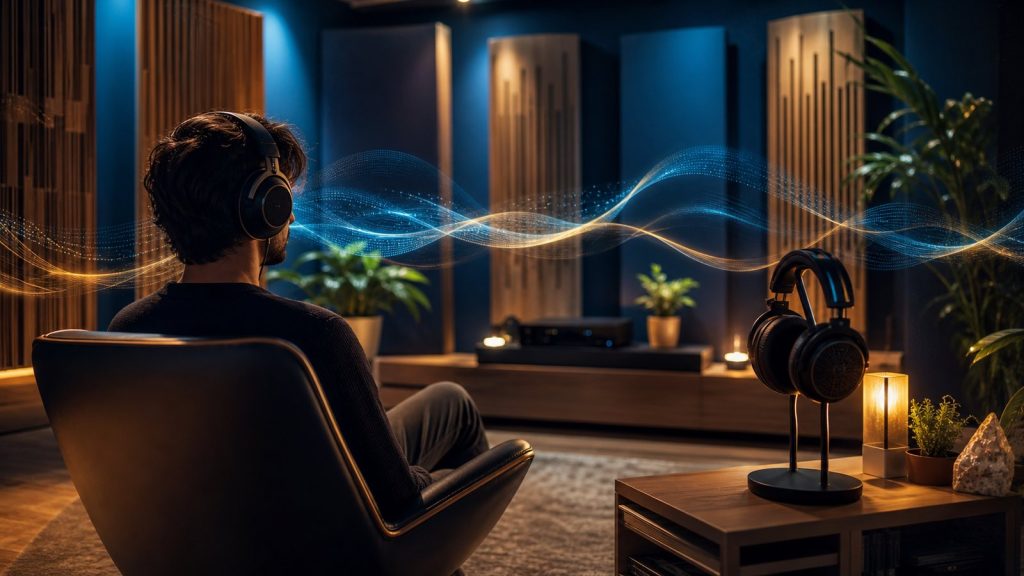
The Hipérion method sits in the lineage of the Tomatis and Bérard approaches, but its focus is distinctly its own: a form of receptive music therapy centred on listening. Rather than treating music as simple background or relaxation, it works from the idea that the way we hear can become distorted, and that this in turn may affect far more than the ear alone. Attention, concentration, language, reading and even singing are all presented here as functions closely tied to the quality of listening.
That is what gives the method its particular interest. Hipérion begins from the belief that sound is not a passive experience but an interactive one, involving the brain, the body and the psycho-affective state of the person listening. From there, the question is not only what this approach consists of, but what its benefits may be, how it is applied in practice, and how far its claimed effects on wellbeing, learning and inner balance can genuinely be taken.
For many people, that starting point already rings true at an intuitive level. We all know, in one way or another, that the same piece of music can soothe one person, unsettle another, and leave a third almost untouched. Hipérion takes that everyday observation seriously and turns it into a therapeutic hypothesis: if listening can become strained, defensive or poorly integrated, then perhaps it can also be gently retrained.
In short: what is receptive music therapy?
Receptive music therapy is a listening-based approach where music is received rather than actively performed. The Hiperion method adds a structured view of listening, assessment and personalised sound work to support attention, emotional balance and learning.
- The listener receives music as the central experience.
- Listening quality is treated as more than hearing ability.
- Assessment may guide personalised audio choices.
- The method should be framed as support, not a promised fix.
For more on sound-based wellbeing, read Sound, Frequency and Vibration. For a contemplative listening cue, receive the free Sacred Frequency Session.
What the Hiperion Method Is Really Designed to Do
A receptive music therapy centred on listening
The Hipérion method follows in the wake of the Tomatis and Bérard approaches. It is a form of receptive music therapy based not on making music, but on listening to it in a very specific way. More precisely, it uses reprocessed pieces of music as a form of psychosensory stimulation, with the aim of re-educating listening when it has become distorted in some way.
Its purpose is therefore to support a restoration of listening. Behind that idea lies a simple but important point: hearing is not treated here as a purely mechanical function. In the Hipérion approach, the way we receive sound is closely linked to how we relate to the world, and to the quality of our inner balance.
That distinction matters. Listening, in this sense, is not merely the ear detecting vibrations; it is the whole person organising, selecting and giving meaning to what arrives through sound. When that process is fluid, the world can feel more manageable. When it is strained, overloaded or uneven, difficulties may appear in places that do not immediately seem auditory at all.
This is why receptive music therapy can feel deceptively simple from the outside. A person may appear merely to be listening through headphones, yet the intention is far more precise than ordinary music appreciation. The music has been prepared to stimulate particular responses, and the listening itself is framed as active work, even when the body is still and the experience seems quiet.
Why listening matters far beyond the ear
This perspective also underlines just how much depends on hearing. According to the method, many higher functions rely on it, including attention, concentration, language, reading and singing. Listening is not reduced to the ear alone; it is understood as part of a wider process involving the brain and the body as a whole.
That is why sound is seen as a genuinely interactive phenomenon within the body. The brain responds to it, the nervous system reacts to it, and our overall state can be shaped by it more than we often realise. In that sense, the Hipérion method is built on a broad view of listening: not simply hearing sounds, but using sound as a way to support cognitive, sensory and emotional regulation.
Anyone who has struggled to concentrate in a harsh acoustic environment will recognise part of this immediately. Some spaces seem to scatter attention; others gather it. Some voices are easy to follow, while others feel oddly effortful even when the words are clear enough. Hipérion works from the premise that these differences are not trivial. They may reveal something about the way the auditory system is supporting, or failing to support, the person’s wider functioning.
There is also something quietly profound in the method’s insistence on listening rather than noise exposure in the abstract. To listen well is, in a sense, to be available: to receive, sort, orient and respond without becoming flooded. That capacity has obvious implications for learning, communication and emotional steadiness, which is why the method places such weight on it.
- attention and concentration
- language and reading
- singing and vocal expression
How the Hipérion Method Assesses Listening
The listening assessment at the heart of the method
The Hipérion method is built around a listening assessment, a test made up of five very specific stages. Rather than looking at hearing in a purely mechanical way, it uses the ear as a source of information about a person’s psycho-emotional state. In practice, this assessment acts as the starting point for the whole process: it helps the practitioner understand how the person receives sound and gives the treatment a clearer, more individual direction.
Its value lies in the detail it brings to light. It can show, for example, that one person is highly responsive to certain musical frequencies while others leave them almost unmoved. It may also reveal difficulty in perceiving the subtle tonal variations between different sounds. In that sense, the assessment is not just a preliminary test; it is a way of identifying the particular distortions or imbalances in listening that the method then aims to work on.
That individual dimension is essential. Two people may arrive with similar complaints — poor concentration, fatigue, tension, learning difficulties — and yet present very different listening profiles. One may be over-reactive to certain frequencies, another may seem under-responsive, and another may show a more uneven pattern that only becomes visible through careful testing. The assessment is meant to prevent the treatment from becoming generic.
It also gives the process a certain seriousness. Rather than assuming that more music is automatically beneficial, Hipérion begins by asking how this particular person hears, where the listening seems open or defended, and what kind of auditory stimulation might actually be useful. That is a more nuanced starting point than simple relaxation-based listening programmes.
What the test can reveal about auditory balance
The assessment also highlights differences in auditory balance. Some people show a listening orientation that is more right-sided, while others are more left-sided. These distinctions matter within the Hipérion approach because they help shape the interpretation of how sound is processed, and therefore how the treatment should be adapted.
It also underlines something many people recognise instinctively: we do not all react to sound in the same way. Some individuals can tolerate, and even enjoy, hard music or noisy environments, while others find them difficult to bear despite having perfectly good listening abilities. Seen in this light, the method does not reduce listening to whether someone hears well or badly. It approaches listening as something more nuanced, more personal and more closely tied to the way each individual experiences the world through sound.

Related offer
Magical whale song - therapeutic frequencies
Scientists as a whole report that auditory «contact» with whale song induces a...
View productThat point is worth lingering over, because it shifts the conversation away from crude categories. A person may pass a conventional hearing test and still feel overwhelmed by certain soundscapes, unable to pick out a voice in a busy room, or exhausted after sustained listening. Hipérion is interested in those subtler realities: not simply whether sound enters the ear, but how it is organised, tolerated and used.
In practice, this can help explain why some people feel immediately at ease with rich, complex music while others need gentler auditory environments before they can settle. It can also illuminate why noise is invigorating for one person and depleting for another. The method reads these differences not as quirks to be dismissed, but as clues.
- response to particular frequencies
- perception of tonal nuances
- right- or left-sided auditory balance
- tolerance for loud or harsh sounds
How the Body and Mind Respond to the Hipérion Method
Why the ear is treated as a gateway to the whole person
In the Hipérion method, the body is not seen as a passive receiver of sound. It takes in sensory information, then processes it, filters it and transforms it. From that perspective, a person’s psychosomatic state can be reflected in different parts of the body, including the ear itself. Hearing is therefore treated as more than a mechanical function: it becomes a source of information about the way someone is functioning emotionally, physically and behaviourally.
The method also works with the idea that auditory frequencies correspond to specific psychological and behavioural dynamics, as well as to different areas of the body. Lower frequencies are associated with the feet, while the highest are linked to the head. In that sense, the ear is approached as a kind of gateway, one that offers access to deeper inner imbalances and helps guide the work of restoring listening.
Whether one takes these correspondences in a strictly literal way or as part of a broader therapeutic map, the underlying intuition is clear enough: sound is felt as well as heard. Deep frequencies can ground or unsettle; sharper ones can alert, irritate or sharpen attention. The body often responds before the intellect has had time to form an opinion. That immediacy is part of what makes auditory work so distinctive.
There is also a reason the image of the ear as a gateway has endured in approaches of this kind. Listening reaches us without the distance that vision sometimes allows. We can close our eyes, but we cannot close the ear in quite the same way. Sound enters, touches the nervous system, and can stir memory, vigilance, comfort or resistance with remarkable speed. Hipérion builds on that intimate route.
- The body receives and filters sensory information
- The ear may reflect a person’s psychosomatic state
- Different sound frequencies are linked to distinct bodily and psychological responses

What the personalised listening treatment is meant to improve
When the listening assessment identifies distortions in the way a person hears, the Hipérion method proposes a personalised treatment. This usually takes the form of listening sessions through headphones using reprocessed music, with the aim of restoring listening. According to the approach, this work can help release areas of anxiety, ease pain and reduce feelings of bodily tension. As the sessions progress, the body is expected to relax and the person may feel that energy begins to return.
The method is also presented as a way of loosening deeper obstacles, including difficulties linked to dyslexia, anxiety and depression, while also relieving various forms of discomfort or tension. Beyond symptom relief, it is described as supporting learning, memory, concentration and creativity. For that reason, Hipérion is sometimes seen as a valuable psychopedagogical tool, not only for children or people in difficulty, but more broadly for learners of all ages, including those trying to learn foreign languages.
What often appeals here is the combination of gentleness and precision. The treatment does not ask the person to perform, explain or analyse at every moment. Instead, it relies on repeated, tailored listening experiences that are meant to help the nervous system reorganise itself more efficiently. For some, that can make the work feel less confrontational than other forms of support, while still being deeply involving.
At the same time, it is sensible to approach such claims with both openness and discernment. Benefits may vary from one person to another, and no serious practitioner should present a listening method as a instant solution. Even so, the broader therapeutic intention remains coherent: if listening patterns are contributing to strain, then improving those patterns may have effects that ripple outward into mood, learning and bodily ease.
In educational settings, this is one reason the method attracts attention. A child who struggles to remain available in the classroom, a teenager who tires quickly when reading, or an adult who finds language learning unexpectedly effortful may not simply lack motivation. Sometimes the difficulty lies further upstream, in the way auditory information is being received and integrated. Hipérion proposes one possible route into that difficulty.

Related offer
Sound Therapy with Tibetan Bowls
Discover the ancestral power of Tibetan bowls. It's been proven that singing them helps regenerate and restore serenity and well-being...
View product- Listening sessions use headphones and reprocessed music
- The treatment is tailored to the listening profile revealed by the assessment
- It is intended to support both wellbeing and learning capacities
Why Listening Quality Matters
The Hiperion method places listening at the centre because listening is not only the mechanical fact of hearing a sound. It also involves attention, interpretation, bodily response and emotional availability.
This is why receptive music therapy can be interesting even when no instrument is played. The listener is still active internally. The body receives rhythm, the mind follows patterns and emotion may reorganise around the experience.
- Listening can reveal tension or sensitivity.
- Sound can support orientation and emotional regulation.
- Personalisation may make the experience more relevant.
- Clear limits protect the practice from exaggerated claims.
The Mental Waves Therapeutic Listening Framework
The Mental Waves frame is to approach therapeutic listening with both openness and precision. Sound can be meaningful, but the practice works best when expectations remain grounded.
- Receive: allow music to be heard without forcing analysis.
- Observe: notice body, mood and attention responses.
- Adjust: choose sound environments that support regulation.
- Integrate: carry the calmer state into daily action.
For the symbolic side of vibration, continue with Sound, Frequency and Vibration. For a related frequency debate, read 432 Hz Tuning.
Editorial note from Mental Waves
This article is educational. Receptive music therapy and listening methods may support wellbeing, but they should not be presented as instant fixes or substitutes for qualified therapeutic or medical care.
Conclusion
The Hipérion method rests on a simple but far-reaching idea: listening is not just a mechanical function. In this approach, the ear is treated as a meeting point between sensory perception, emotional life and cognitive abilities, which is why the work begins with careful assessment rather than a one-size-fits-all protocol. That is also where its nuance lies. The method is presented not merely as a way of hearing sounds differently, but as an attempt to restore a more balanced relationship with attention, language, tension and learning through tailored listening sessions.
What makes Hipérion distinctive, then, is this personalised view of the person behind the symptoms. The claimed benefits extend from relaxation and relief of certain tensions to support with concentration, memory, creativity and some learning difficulties, but always through the lens of altered listening patterns identified beforehand. Its promise is less about spectacle than recalibration: helping the body and mind recover a form of internal availability that everyday strain can disturb. Sometimes, that quieter kind of change is the one that reaches furthest.
Perhaps that is the most compelling way to understand the method. It does not begin by forcing meaning onto symptoms, nor by treating music as a decorative extra. It begins with the possibility that the way a person listens may tell a deeper story about fatigue, vigilance, learning and emotional tone. If that story can be heard more clearly, then the work of change may become more precise, and often more humane as well.
Frequently Asked Questions About Receptive Music Therapy
What is receptive music therapy?
It is a music therapy approach based mainly on listening rather than playing an instrument.
What is the Hiperion method?
It is presented as a structured listening method using assessment and tailored sound work.
How is it different from relaxing music?
It is more structured, with attention to listening patterns, response and personalised support.
Why is listening important?
Listening involves attention, emotion and bodily response, not only hearing sounds.
What does the assessment do?
It is intended to understand listening balance and guide a more personalised sound approach.
Can it support learning or attention?
It may support attention and learning for some people, but claims should remain careful and individual.
Does it cure difficulties?
No. It should be understood as a supportive method, not a promised fix.
Who can use receptive music therapy?
It may interest adults or children, but appropriate guidance depends on the person and the context.
What is the main takeaway?
Receptive music therapy approaches listening as an active doorway into attention, emotion and regulation.