en
enVotre panier est vide.


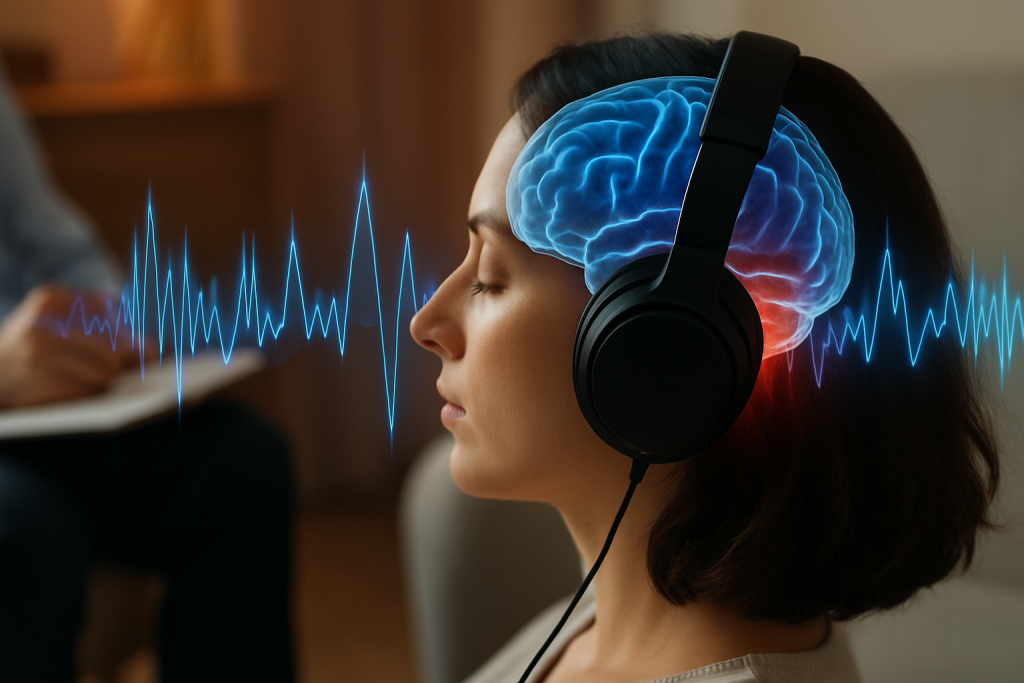
The number seven has long held a curious place in music: seven notes in the diatonic scale, seven principal modes and tonalities, even the old image of the lyre with its seven strings. It is one of those numbers that seems to gather symbolism wherever it appears. That wider story can wait for another time. Here, the more grounded question is whether music offers genuine psychological benefits — not simply as a pleasant backdrop, but as something that can shape mood, sharpen certain mental processes and influence the way we relate to others.
The idea is not new, yet it is far from vague folklore. Psychologist Thomas Schäfer has suggested that music serves a remarkable range of functions, with mood regulation, self-understanding and social connection among the most important. Research cited here also points in a more practical direction: upbeat music may support creative thinking, sadder music may help narrow attention on a specific problem, and different kinds of sound appear to affect generosity, pain perception, memory and emotional development across the lifespan. Taken together, these findings invite a more serious view of music — as a subtle but real force in everyday psychological life.
Most people know this instinctively before they ever read a study. We reach for certain songs when we need steadiness, others when we need release, and sometimes a piece of music seems to understand our inner weather before we have found words for it ourselves. That intimate usefulness is part of what makes the psychology of music so compelling: it lives not only in laboratories, but in kitchens, cars, waiting rooms, classrooms and sleepless nights.
In short: what are the psychological benefits of music?
The psychological benefits of music include mood regulation, stress relief, attention support, memory activation and a stronger sense of connection. These effects depend on the person, the context and the way the music is used.
- Rhythm can organize attention and movement.
- Melody can evoke emotion and autobiographical memory.
- Familiar music can create comfort and continuity.
- Intentional listening can turn music into a daily regulation tool.
For a free contemplative sound cue, receive the Sacred Frequency Session. For nervous-system context, read Brainwave Frequencies and Meditation.
How Music Shapes Mood, Creativity and Social Behaviour
Why music does far more than simply entertain us
The number seven has long had a special place in music: the lyre’s seven strings, the seven notes of the diatonic scale, the seven principal modes and keys, even major seventh chords. It is a number that also appears across myths, religions, science, literature and the arts, and while that symbolism is a subject in its own right, the more immediate point here is simpler: music has a surprisingly wide reach in human life. According to the psychologist Thomas Schäfer, it serves no fewer than 129 functions, with three standing out in particular: stabilising mood, deepening self-understanding and strengthening social bonds.
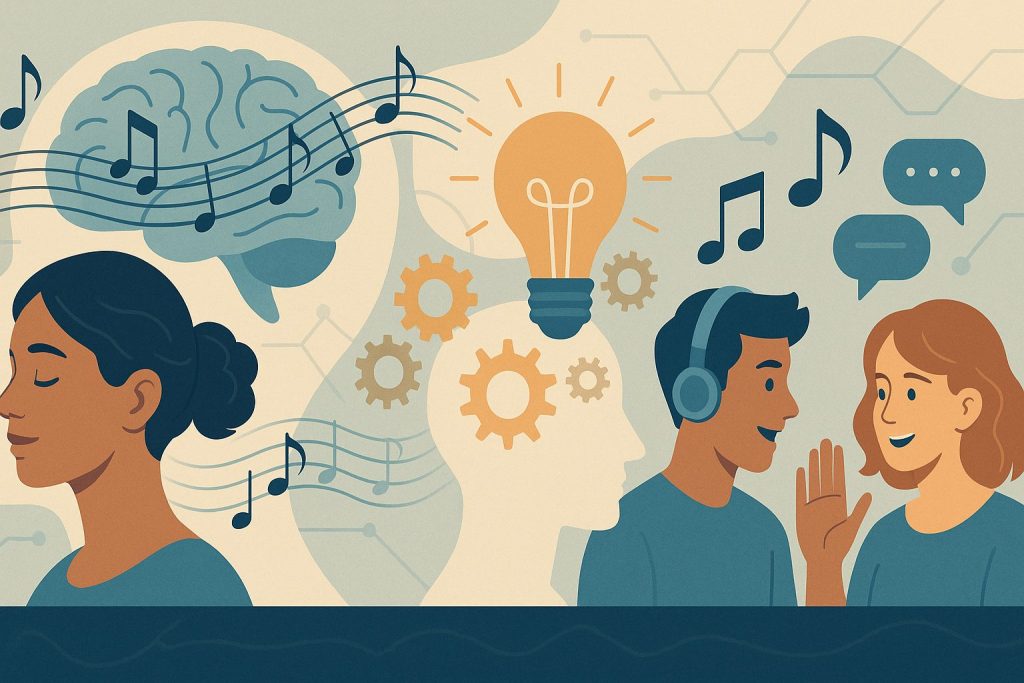
That broad influence is not just poetic intuition. Around eleven years ago, Gillian Rowe, from the Clinical Neuropsychology and Cognitive Health Department of Psychology at the University of Toronto, studied the effects of music on certain cognitive abilities. Her team found that cheerful, light-hearted rhythms tended to improve performance on creative and inventive tasks, especially when people needed to come up with new or unexpected ideas. By contrast, sadder music appeared to narrow attention in a useful way, helping people focus on a single objective and work towards the solution to a specific problem. In other words, music does not influence the mind in one fixed direction; different tones can support different kinds of thinking.
That distinction matters more than it may first seem. People often speak about music as though it were either “good for the brain” or not, but the reality is subtler. A bright, buoyant rhythm may loosen thought and make the mind more associative, which is often exactly what creative work needs. A more sombre piece, on the other hand, may reduce mental scattering and help someone stay with a difficult question for longer. The benefit lies not in permanent uplift, but in the fit between the sound and the task.
- Cheerful music may encourage originality and fresh ideas.
- Sadder music may support sustained focus on a precise task.
- Across both, mood and cognition remain closely linked.
How sound can influence generosity and social behaviour
Music’s effects do not stop at concentration or creativity. Danielle Choquette, writing in the Journal de Montréal in her survey of music’s seven benefits, also highlights its impact on generosity. She refers to a 1979 study by the American psychologists Rona Fried and Leonard Berkowitz of New York University, who asked a deceptively simple question: can music alter mood in a way that changes how willing we are to help others? In a university cafeteria, 80 participants listened for seven minutes either to soothing music, stimulating music, aversive music or silence. Once the supposed experiment had ended, an assistant approached them and asked for help, presenting it as a personal favour.
The differences were striking. Those who had listened to soothing music were by far the most willing to help. Participants in the silence group and the stimulating music group were helpful too, but to a lesser extent. The least cooperative were those exposed to the “aversive” selection, described here as free jazz heard rather reluctantly, who were noticeably slower and less inclined to lend a hand. The lesson is not that one genre is morally superior to another, but that what we hear can subtly colour our emotional state and, with it, our behaviour towards other people. That helps explain why music is so often tied to atmosphere, connection and the feeling of being more open to others.
Anyone who has walked into a room and immediately felt its emotional temperature shift because of the music playing will recognise this. Sound can soften a social space or make it feel jagged; it can invite conversation or quietly shut it down. In that sense, music does not merely accompany human interaction. It often prepares the ground for it, shaping whether we feel defended, energised, receptive or at ease.
- Soothing music was linked to the highest level of helping behaviour.
- Silence and stimulating music produced more moderate responses.
- Aversive music was associated with the lowest willingness to help.
Music as a Source of Comfort, Memory and Emotional Development
When music eases discomfort and helps memory hold on
Beyond mood and social behaviour, music also seems to offer a more intimate kind of support: it can soften discomfort and create a calmer mental state. Nicolas Guéguen, professor of social psychology and cognitive science at the University of Southern Brittany, notes, like many musicologists, that certain melodies may lessen our perception of pain. That idea has been observed in medical settings too. In Hong Kong, a researcher looking at colonoscopies found that patients who underwent the procedure with music reported it as less painful than those who experienced it in silence.
The effect is not especially mysterious: gentle sounds may help the mind settle, giving the psyche a little breathing space at moments when stress and physical discomfort would otherwise take over.

The same soothing quality may also support memory. Researchers in Pennsylvania followed sixty patients with Alzheimer’s disease over six months. Twenty took part in music workshops, twenty joined puzzle-based leisure sessions, and the remaining twenty followed painting and drawing activities. The group involved in music stood out: they were more cheerful, more engaged with life, and, crucially, showed better memory. Music does not simply distract; in some contexts, it appears to help people feel more present, more connected and mentally steadier.
There is something deeply human in that. Memory is not only a technical function of recall; it is bound up with identity, continuity and the feeling of still belonging to one’s own life. Music often reaches places that ordinary conversation cannot. A melody can stir recognition when names fail, or bring a flicker of orientation to someone who has become increasingly cut off from the thread of the day. Even when it does not restore memory in any dramatic sense, it may still restore contact, and that is no small thing.
- It may reduce the felt intensity of pain
- It can create a calmer psychological state during stressful moments
- It may support mood and memory in older adults
From babies to children: music as an emotional and cognitive guide
These effects are not limited to older adults. Music seems to matter just as much at the very beginning of life. Danielle Choquette recounts findings from Mariève Corbeil, Sandra E. Trehub and Professor Isabelle Peretz, co-director of the International Laboratory for Brain, Music and Sound Research, BRAMS. In one study, thirty babies aged 6 to 9 months remained calm for an average of four minutes when listening to adult speech, four minutes with so-called baby talk, but nine minutes when hearing a Turkish children’s song, even though it was unfamiliar to them. The conclusion is striking: songs appear to be more effective than baby talk when it comes to attachment between a baby and mother.
Nursery songs, whether something like Il était un petit navire or Henry Salvador’s Une chanson douce, may therefore be a valuable tool for learning emotional regulation.
The benefits seem to continue as children grow. In California, children aged 3 and 4 were divided into three groups: one attended music workshops involving singing and piano, another followed computer-based activities, and a third had no classes at all. The children who took part in the music sessions proved more capable with puzzles and with language learning. A further experiment in London with children aged 10 and 11 found something equally intriguing: those asked to solve maths problems while listening to music completed nine more exercises than classmates working in silence over the same period. It is easy to see why some people wonder whether Mozart might help concentration, or Bach support mathematical thinking.

Related offer
Mental Dynamism and Good Mood
The action of our audio recording affects the limbic system, where our emotional keyboard is located. The...
View productAt the very least, these findings make a strong case for taking music education seriously, not only as culture or recreation, but as a source of sharing, cohesion and everyday cognitive support.
What is especially striking in early life is that music seems to organise feeling before it organises thought. A lullaby does more than fill silence; it regulates pace, breath, expectation and reassurance. Later, songs help children anticipate patterns, remember words, tolerate frustration and join in with others. Long before music becomes a subject to be studied, it is already acting as a structure for attention, comfort and relationship.
What Music Could Mean for Learning and Everyday Wellbeing
Could music have a place in the classroom?
The effects of music do not stop with mood or memory. They also seem to reach into learning itself. In California, children aged 3 and 4 were divided into three distinct groups: one took part in music sessions involving singing and piano, another followed computer-based activities, and the third had no classes at all. The children who joined the music workshops were later found to be better at puzzle-based tasks and language learning. That does not mean music is a miracle shortcut, but it does suggest that regular musical activity may support the kind of mental flexibility children need when they are learning to think, speak and solve problems.
A similar idea appeared in a London experiment involving children aged 10 and 11. They were asked to solve maths problems either while listening to music or in silence. According to Danielle Choquette, the pupils who worked with music completed nine more exercises than those left in silence during the same amount of time. It is hard not to wonder, then, whether schools should take music more seriously, not only as an art form but as a practical support for attention and performance.
The old belief that Mozart may help concentration, while Bach may support mathematical thinking, remains open to debate in its strongest form, but the broader question still stands: if music can help some children engage more fully, why not test that possibility with care rather than dismiss it out of hand?
There is also a quieter educational value that statistics do not always capture. Music teaches timing, listening, patience, repetition and shared attention. It asks children to notice nuance, to coordinate with others and to tolerate the imperfect stages of learning. Even where the cognitive gains are modest or uneven, those habits of mind are valuable in themselves.
- Music workshops were linked with stronger puzzle-solving skills.
- They were also associated with better language learning.
- In one London trial, pupils working with music completed nine more maths exercises.
A simple resource for cohesion, relief and daily balance
That question feels especially relevant when educational systems are under pressure. In the light of poor European OECD rankings for France, the idea of strengthening music teaching does not sound frivolous at all. Music lessons are often moments of sharing, exchange and cohesion as much as technical training, and that social dimension matters too. More broadly, the seven benefits discussed throughout this piece, all presented as supported by scientific research, echo what musicologists and music lovers have long felt from experience: music can steady us, connect us and, in some cases, genuinely help us cope better.
The article also closes on a more cautionary note, and it is worth keeping. Alongside the views of researchers and musicians, older traditions and the writings of the American medium and healer Edgar Cayce held that many illnesses could be relieved, and sometimes even healed, through music. At the same time, they warned that certain kinds of music might have the opposite effect and leave listeners feeling unwell. Whether one shares that belief fully or not, the underlying point is sensible enough: music is not neutral for everyone, in every context. Its effects can be beneficial, but they also depend on the listener, the setting and the kind of sound involved.
That is perhaps the most balanced way to think about it. Music is neither magic nor mere decoration. It is a resource — simple, accessible and often underestimated — that can help regulate daily life when used with some sensitivity. The right piece at the right moment can calm a crowded mind, make loneliness feel less absolute, or give shape to emotions that would otherwise remain diffuse and exhausting. Its power is often modest rather than dramatic, but modest forms of relief are still forms of relief.
How to Use Music More Intentionally
Music becomes more useful when listening is matched to the moment. A track that helps concentration may not be the best choice for emotional release, and a song that brings comfort may not support sleep if it is too stimulating. The question is not only what music is good, but what this listener needs now.
A practical approach is to build small listening contexts: one playlist for transition, one for focused work, one for emotional processing and one for quiet recovery. Over time, the brain starts associating each sound environment with a state. That consistency can make listening feel less random and more supportive.
It also helps to notice what happens after the music stops. A useful track may leave the listener clearer, softer, more focused or more able to act. Another track may feel pleasant during listening but leave agitation behind. The after-effect is often the best guide for choosing music consciously.

Related offer
Meditation - Relaxation set
All the Mental Waves® know-how in a single pack for quick and easy access to meditation and...
View productLyrics deserve special attention. Words can comfort, validate or intensify emotion. Instrumental music may be better for concentration, while familiar songs may be better for memory and emotional expression. There is no universal rule, only a need to match sound with context.
Volume and timing matter too. Music that is supportive in the afternoon can become too stimulating late at night. A few minutes of intentional listening can be more effective than hours of sound used to avoid every silence or uncomfortable feeling completely.
The Mental Waves Music Listening Framework
The Mental Waves frame is to use music as a conscious environment for attention and emotion. Music does not need to be dramatic to be effective; it needs to fit the state you want to encourage.
- Choose: select music for a clear purpose.
- Listen: give the sound enough attention to shape the state.
- Notice: observe mood, energy, focus and body response.
- Adjust: change tempo, texture or volume when the effect is wrong.
For a clinical recovery angle, continue with Music After Stroke Recovery. If stress is the main concern, read How to Free Yourself from Stress.
Editorial note from Mental Waves
This article is educational. Music can support wellbeing and self-regulation, but persistent distress, trauma, depression or neurological symptoms deserve qualified care.
Conclusion
What emerges most clearly is that music is not a decorative extra in human life. It can steady a mood, open up creativity, support concentration, soften discomfort and, at times, make social connection feel a little easier. Its psychological value seems to lie not in one single effect, but in its remarkable flexibility: an uplifting piece may energise and broaden thought, while a quieter or sadder one may help us focus more narrowly and stay with what needs solving.
That said, the article also leaves room for an important nuance. Music is not a universal remedy, and its effects are shaped by context, sensitivity and the kind of sound we are exposed to. Still, across childhood, adulthood and later life, the same thread keeps returning: music can help us regulate, remember, learn and relate. Used with care, it is less a miracle than a subtle companion to mental life — and that may be precisely why it matters so much.
Perhaps that is why people return to music so faithfully in moments of strain, transition or hope. We do not only listen for pleasure. We listen to settle ourselves, to feel accompanied, to recover perspective, or simply to make inner experience more bearable and more intelligible. For something so ordinary, music remains one of the most refined psychological tools we have ever woven into daily life.
Frequently Asked Questions About the Psychological Benefits of Music
How can music affect mood?
Music can influence emotion through rhythm, memory, expectation and personal association.
Can music help with stress?
Calm and familiar music may help some people settle attention and reduce tension during stressful moments.
Can music support focus?
It can, especially when the music is predictable, not too intrusive and matched to the task.
Why does music awaken memories?
Music is strongly linked with emotion and autobiographical memory, which can make songs feel personally vivid.
Is active listening different from background music?
Yes. Active listening uses attention intentionally, while background music shapes the environment more subtly.
What type of music is best?
The best choice depends on the person, the goal, the context and the emotional association with the music.
Can music be overstimulating?
Yes. Volume, tempo, lyrics or emotional intensity can become too much in some moments.
How should someone build a helpful playlist?
Create separate playlists for focus, calm, transition, movement and emotional release.
What is the main takeaway?
Music is most useful when it is chosen intentionally and adapted to the state you want to support.