en
enVotre panier est vide.



The relationship between mind and brain has long sat at the fault line between neuroscience, philosophy and physics. Are mental processes simply produced by brain tissue, or could consciousness be linked to the brain in a more complex way? An article published in NeuroQuantology revisits that question through the work of Dr Dirk K.F. Meijer, who proposes that consciousness may be connected to the brain without being entirely confined within it.
In short: mind and brain connection
The mind and brain connection raises a deep question: how do neural processes, subjective experience and attention influence one another?
Use this article as a practical map: keep what helps attention become steadier, question anything that sounds absolute, and connect the idea back to repeatable daily practice.
His model draws on both neuroscience and quantum physics to suggest that the mind operates as a surrounding mental field, interacting with the brain and potentially helping to explain the remarkable speed with which conscious and subconscious information appears to be integrated. It is a bold and highly speculative framework, but it sits within a longer scientific effort to understand how a material brain gives rise to subjective experience — and why the brain can feel like a unified awareness despite the immense complexity of its neural activity.
Dirk K.F. Meijer’s model of a mind beyond the brain
A mental field linked to the brain
NeuroQuantology is a journal that brings together work from both neuroscience and quantum physics, and it regularly publishes papers exploring possible links between mind and brain. In September, it published a review article drawing on recent theories at the crossroads of these two fields. In that paper, Dr Dirk K.F. Meijer, a professor at the University of Groningen in the Netherlands, sets out a striking hypothesis: consciousness may not be located solely inside the brain, but in a field surrounding it.
According to Meijer, this field exists in another dimension and remains connected to the brain through quantum entanglement. He suggests that it may store information coming from the Earth’s magnetic field and even from dark energy, before passing that information on to brain tissue. The brain would then process these conscious and subconscious signals at very high speed. In his model, this surrounding field is effectively the mind: something that exists around the brain, receives information from beyond it, and transmits that information as rapidly as possible.
- The mind is described as a field surrounding the brain
- This field is said to exist in another dimension
- Its role is to receive and relay information to brain tissue
Quantum principles, the black hole analogy and the torus shape
Meijer refers to this mind as a mental field that interacts with the brain and may help explain the remarkable speed of mental processing. He frames this relationship through ideas borrowed from quantum physics, where electrons and photons can be understood as both waves and particles. By analogy, the mind would be both linked to the brain and yet immaterial. In that sense, it would depend on the brain’s physiology without being entirely confined to it. Meijer therefore proposes a connection between mind and brain in which the two interact closely without being physically fused.
He places the mind in a derived fourth spatial dimension, not time itself, but a form of space-time that we cannot directly perceive.
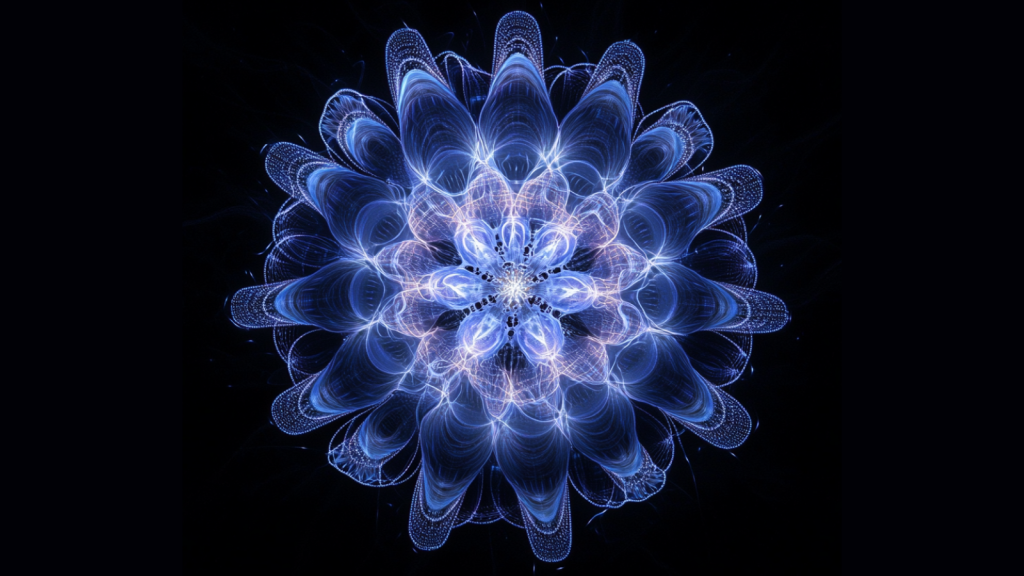
He extends the model further with two images drawn from physics. First, he compares the mind to a black hole, with a boundary similar to an event horizon separating inner reality from the outside world while still remaining connected to the brain and helping to assemble information internally. Second, he suggests that the mental field has a structure resembling a torus — a surface generated by rotating a circle around a line in its plane that does not pass through its centre. Meijer links this idea to his observations of electrical activity in the brain, where he describes multidimensional toroidal movements.
In this framework, the torus becomes a concrete model for understanding how information might enter both the mind and the brain.
How Consciousness Fits Into the Brain Debate
Meijer’s response to a central philosophical question
In this part of his argument, Dr Dirk K.F. Meijer is effectively responding to a question made famous by the cognitive scientist and philosopher David Chalmers: how can self-awareness, if it is truly immaterial, arise from a brain that is entirely physical? This is one of the most persistent questions in the study of consciousness, because it touches the apparent gap between measurable brain activity and the felt inner experience of being aware. Meijer’s broader model is presented as an attempt to bridge that gap, by suggesting that consciousness may not be confined to brain tissue alone, even though it remains closely linked to it.
Consciousness as a basic feature of reality
The section also echoes Chalmers’ own position that consciousness may be one of the fundamental components of nature, rather than a simple by-product of neural machinery. In that view, consciousness would be present at different levels in the fabric of reality itself, which helps explain why some researchers do not see the mind–brain relationship as a purely mechanical problem. Within the logic of Meijer’s theory, this idea supports the possibility that conscious experience depends on the brain while not being fully reducible to it. The brain would still play a decisive role in processing and organising experience, but consciousness itself would belong to a wider level of reality.
- the brain as a material processing system
- consciousness as an immaterial or fundamental aspect of nature
- the mind–brain link as a relationship rather than a strict identity
Other Scientific Perspectives on Consciousness and the Brain
Penrose and Hameroff’s quantum hypothesis
Dr Meijer is not the only researcher to have explored a possible link between consciousness and quantum processes. The physicist Sir Roger Penrose and the anaesthetist Dr Stuart Hameroff have also examined this question in depth, each from a different scientific background. Their work is often cited in discussions about how a fully material brain could give rise to subjective awareness.
Together, they developed the theory known as orchestrated objective reduction. In this model, consciousness would arise from quantum vibrations occurring within protein polymers inside brain neurons. More specifically, their hypothesis places these processes in the microtubules found within the brain’s nerve cells, suggesting that the roots of conscious experience may lie in structures far smaller than the neuron as a whole.
A different route to the same question
This perspective differs from Dr Meijer’s proposal, yet it addresses a closely related problem: where consciousness begins and how it connects to brain activity. Rather than locating the mind in a field surrounding the brain, Penrose and Hameroff place the origin of consciousness within the brain itself, at the level of microscopic cellular structures.

Related offer
10 States of Consciousness - Infinity Elementary Pack
Elementary Infinity - The 10 States of Consciousness A unique sound box designed to explore the 5 states of...
View productThat does not mean their theory settles the debate. It does, however, show that several scientists have tried to explain consciousness by looking beyond classical neuroscience alone. In that sense, their work broadens the discussion and reinforces the idea that the relationship between the brain, perception and conscious awareness remains one of the most challenging questions in modern science.
- Penrose approaches the issue as a physicist.
- Hameroff explores it from the perspective of anaesthesia and brain function.
- Their shared theory focuses on quantum activity in neuronal microtubules.
What Meijer Clarified After Publication
A more precise explanation of his model
After publishing his article on the relationship between the brain and the mind, Dr Dirk K.F. Meijer later issued an update, shared with The Epoch Times, to clarify several points in his original argument. This follow-up did not abandon his broader hypothesis. Instead, it refined the way he described the possible link between the brain and what he calls the mental field, with the aim of making the model more precise and easier to interpret.
Why quantum correlation is not the same as data transfer
In that update, Meijer explained that quantum tunnelling and entanglement should not be treated as the most likely mechanisms for transferring data between mind and brain. In his view, these phenomena are better understood as ways of creating a correlation between particles rather than as direct channels through which information is transmitted.
This distinction matters because it slightly shifts the interpretation of his theory. Entanglement may describe a form of connection across distance, and tunnelling may suggest that classical physical limits are not always sufficient to explain what happens at very small scales. But, as Meijer clarified, neither process should automatically be read as a literal pathway for mental content moving from one domain to another. His update therefore makes his position more cautious: the proposed relationship between brain and mind remains central, but the exact mechanism of exchange is left more open.
- Entanglement would correlate particles rather than carry messages.
- Quantum tunnelling would not, on its own, explain a transfer of mental data.
- The mind-brain link is still proposed, but with a more careful account of how it may operate.
Why the Brain Can Process Information So Quickly
The unresolved puzzle behind unified awareness
One of the most striking features of the brain is its ability to process information at remarkable speed. Different groups of neurons are constantly handling different tasks, yet our experience does not usually feel fragmented. On the contrary, perception tends to appear as a single, coherent whole. This contrast between highly specialised neural activity and a seemingly unified conscious experience is what neuroscience often refers to as the binding problem.
In practical terms, the question is simple but profound: how does the brain bring together signals that are processed in different places and on different timescales, then make them feel immediate and integrated? Researchers still do not have a definitive answer. What remains difficult to explain is the mechanism by which these separate neural processes seem to coordinate so efficiently, share information so rapidly and produce the impression of one continuous state of awareness rather than a collection of disconnected operations.
- Different neurons appear to perform different functions
- Yet conscious experience often feels unified
- The exact link between these two levels remains unclear

Meijer’s quantum hypothesis for rapid mental processing
For Dr Dirk K.F. Meijer, this unusual speed may be linked to principles drawn from quantum physics. In his view, quantum entanglement could help account for the rapid coordination observed in mental processing, because it describes a connection between particles across large distances: when one changes, the effect is reflected in the others. He also refers to quantum tunnelling, in which a particle can pass through a boundary that would appear impassable under classical physics.
Within Meijer’s model, these phenomena may help explain why information processing seems to occur so quickly that classical explanations struggle to keep pace. The idea is not simply that neurons fire fast, but that the relationship between mind and brain may involve forms of connection that standard physical models do not fully capture. This remains a theoretical proposal rather than an established conclusion, but it is central to Meijer’s attempt to explain how conscious and subconscious information could be coordinated with such speed.

Related offer
8 States of Consciousness - Deep Infinity Pack
Deep Infinity - 8 States of Consciousness This rare audio pack invites you to plunge into the heart...
View productThe Mental Waves Mind-Brain Awareness Framework
The Mental Waves frame is to avoid reducing human experience to either pure chemistry or pure belief. Brain rhythms, emotion, attention and meaning interact in ways that still invite careful inquiry.
Sound-based practice offers one practical doorway: listen, observe the body, notice attention shifting, and keep the interpretation modest. Experience matters, but it benefits from humility.
To explore state awareness through sound, receive the free 128 Hz sacred frequency session and notice how attention and body sensations respond.
Editorial note from Mental Waves
This article is philosophical and educational. It does not claim to solve consciousness, diagnose brain function or replace neuroscience, medicine or mental-health care.
Conclusion
What emerges here is not a settled scientific verdict, but a serious attempt to think more carefully about a question that still resists simple explanation: how subjective experience relates to the physical brain. Dr Meijer’s model places consciousness in a field linked to, but not reducible to, neural tissue, while other researchers locate the answer within the brain’s own microscopic structures. The nuance matters. These are not identical theories, yet they converge on the same difficulty: explaining how a material organ gives rise to a unified inner life, and how it does so with such remarkable speed.
That is why this debate remains compelling. It sits at the meeting point of neuroscience, physics and philosophy, where observation can take us far, but not all the way. For now, the most balanced reading is perhaps this: the brain is clearly central, yet the full nature of mind and consciousness may still exceed our current models. The mystery has narrowed, but it has not disappeared.
Frequently asked questions about the link between mind and brain
What is Dr Dirk K.F. Meijer’s main idea about the mind and the brain?
Dr Dirk K.F. Meijer proposes that consciousness is not confined entirely within brain tissue. In his model, the mind exists as a surrounding mental field linked to the brain, interacting with it closely while remaining distinct from it. The brain still processes information, but consciousness would extend beyond the organ itself.
Where does Meijer place consciousness in his model?
He places consciousness in a field surrounding the brain rather than solely inside it. This field is described as existing in another spatial dimension and remaining connected to the brain. The idea is that the mind can receive information beyond the brain and relay it rapidly to brain tissue for processing.
How does quantum physics fit into Meijer’s theory?
Quantum physics is used as the framework for explaining how mind and brain could be linked without being physically fused. Meijer draws on ideas such as wave-particle duality, quantum entanglement and quantum tunnelling to suggest that mental processes may involve forms of connection and coordination that classical physics struggles to describe.
Does Meijer say quantum entanglement directly transfers information between mind and brain?
No. In a later clarification, he said that quantum entanglement and quantum tunnelling are not the most likely mechanisms for transferring data between mind and brain. He treated them more as ways of correlating particles than as direct channels through which mental information is literally sent.
Why does Meijer compare the mind to a black hole?
He uses the black hole comparison to describe a boundary between inner experience and the outside world. This boundary is likened to an event horizon, which gathers external information while remaining linked to what lies within. In his model, that helps illustrate how the mind could separate internal reality from external events while still connecting with the brain.
What does the torus shape mean in this theory?
The torus is presented as a possible structure for the mental field. Meijer links this idea to multidimensional toroidal movements he associates with electrical activity in the brain. In practical terms, the torus serves as a model for how information might enter both the mind and the brain rather than as a simple decorative metaphor.
How does this theory relate to David Chalmers’ question about consciousness?
It addresses the problem of how an immaterial sense of self-awareness could arise from a fully material brain. Meijer’s answer is that consciousness may depend on the brain without being reducible to brain tissue alone. That allows him to treat the mind-brain relationship as a close interaction rather than a strict identity.
How is Meijer’s view different from the theory of Penrose and Hameroff?
Penrose and Hameroff place the roots of consciousness inside the brain, specifically in quantum vibrations within microtubules in neurons. Meijer, by contrast, places the mind in a field surrounding the brain. Both approaches use quantum ideas, but they differ on whether consciousness begins within brain structures or in a field linked to them.
What is the binding problem, and why is it important here?
The binding problem is the unresolved question of how different groups of neurons, each handling separate tasks, produce a single unified conscious experience. It matters here because Meijer uses it to argue that ordinary neural explanations may be incomplete. His model suggests that quantum-style connections could help explain the speed and unity of mental processing.