en
enVotre panier est vide.


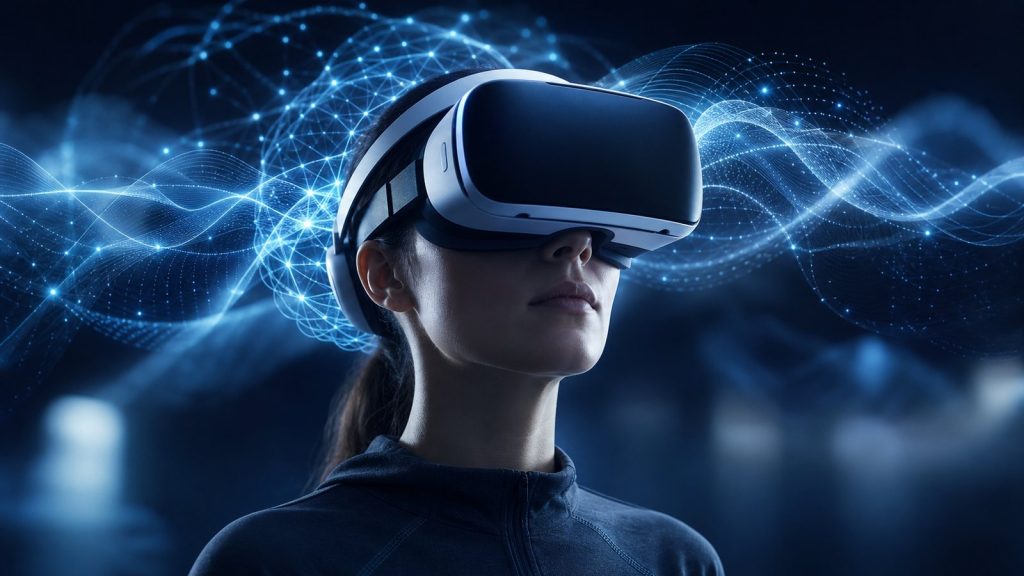
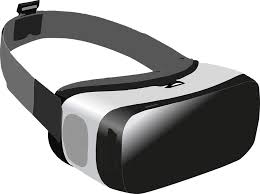
LooxidVR brings together two fields that rarely meet so directly: immersive virtual reality and the measurement of brain activity. Developed by Looxid Labs, this smartphone-compatible headset combines eye-tracking cameras with EEG sensors, allowing a user to watch 360° content or interact with VR experiences while the device analyses their responses in real time. The idea is not simply to make virtual reality more impressive, but to understand more precisely what happens in the brain during immersion.
That is where its medical and research potential becomes especially interesting. Virtual reality is already used in some care settings, including exposure-based approaches, because it can influence attention, perception and mental state in measurable ways. Yet its effects are not always observed with much precision. In that context, LooxidVR may offer a more concrete way to study how patients respond during VR sessions, and in time help demonstrate the value of these practices more clearly. The headset is not yet on sale, and its impact in healthcare remains to be seen, but interest from both the medical world and industry suggests that this is a technology being watched closely.
In short: what is the LooxidVR brain wave VR headset?
The LooxidVR brain wave VR headset is an early virtual reality concept that combines VR display, eye tracking and EEG sensors to observe how attention and brain activity change during immersive experiences. Its promise is less about mind reading and more about richer feedback.
- VR creates an immersive visual environment.
- Eye tracking follows gaze and attention direction.
- EEG sensors estimate brainwave activity in real time.
- The result could help research, training, gaming or therapeutic design.
For background on brain rhythms, read The Different Brain Waves. For a free contemplative listening cue, receive the Sacred Frequency Session.
What makes this proposition notable is the attempt to connect subjective experience with physiological data. In many immersive environments, users can describe feeling calmer, more alert, more overwhelmed or more engaged, but those reports remain partly interpretative. A headset that combines gaze tracking with EEG does not remove that subjectivity, yet it may help researchers compare what a person says they experienced with observable patterns linked to attention, arousal or cognitive load.
That distinction matters because brain monitoring in consumer technology is often discussed in simplistic terms. EEG does not reveal thoughts in a literal sense, nor does it provide a complete map of consciousness. What it can do, under the right conditions, is detect broad changes in electrical activity associated with different mental states. In the context of virtual reality, that may be enough to make immersive sessions easier to study with greater nuance than behavioural observation alone.
How LooxidVR Combines Virtual Reality with Brain Monitoring
A smartphone VR headset designed to read more than movement
LooxidVR is a virtual reality headset developed by the start-up Looxid Labs, and it stands out because it does more than simply display immersive content. The device is designed to work with a smartphone, which is inserted into the dedicated slot in the headset to access apps, games and 360° videos. Alongside this familiar VR format, LooxidVR also integrates tools intended to observe the user’s responses while the experience is taking place.
More precisely, the headset includes two eye-tracking cameras and six EEG sensors that record brainwave activity. This means the person wearing the headset can watch videos or play in virtual reality while the device analyses aspects of their brain activity in real time. In practical terms, LooxidVR is presented not just as a viewing device, but as a system that links immersion, attention and physiological observation within the same experience.
This combination is important because eye movements and brain signals do not describe the same thing. Eye-tracking may indicate where visual attention is directed, how long a user fixates on a stimulus, or whether their gaze becomes scattered under stress or overload. EEG, by contrast, captures electrical activity from the scalp and may reflect broader shifts in alertness, engagement or mental effort. Used together, these streams of data can offer a more layered picture of how a person is responding inside a virtual environment.
There are, of course, technical limits. EEG signals collected from a wearable headset are more constrained than those obtained in tightly controlled laboratory conditions, and movement can introduce noise into the recording. Even so, the value of a device like LooxidVR lies less in perfect diagnostic precision than in the possibility of observing patterns during naturalistic immersive use. For research on attention, stress regulation or user experience, that may still be highly useful.
- Smartphone-compatible VR headset
- Two cameras for eye-tracking
- Six EEG sensors for brainwave monitoring
From more reactive games to thought-controlled experiences
One of the most immediate possibilities raised by LooxidVR concerns gaming. Because the headset can monitor the user’s reactions as they unfold, it could be used to make video games feel more responsive and more realistic. A game might, for example, adapt to the player’s level of stress or adrenaline, increasing intensity when the experience becomes more engaging. That said, this would depend on the development of games specifically designed to work with these features.
Beyond entertainment, the concept also points towards more unusual forms of interaction. By combining VR immersion with EEG-based monitoring, LooxidVR could help open the way to experiences that are, at least in part, controlled by thought. This does not mean the headset can read the mind in any simplistic sense, but it does suggest a more direct relationship between mental state and digital environment. That prospect is precisely what makes the device so distinctive: it may turn virtual reality into a space that not only reacts to movement, but also responds to the brain’s activity itself.
In practice, this could take several forms. A training simulation might slow down if signs of overload become more pronounced, or a meditation-oriented environment might change its visual or auditory qualities when the user appears to settle into a calmer state. In gaming, a horror sequence could become more intense when the system detects sustained engagement, or ease slightly if the user’s responses suggest excessive strain. These are not magical applications, but examples of adaptive design informed by measurable signals.
The phrase “thought-controlled” therefore needs careful handling. Most brain-computer interfaces do not decode complex intentions directly; they rely on repeated patterns, simplified commands or probabilistic interpretation. LooxidVR is better understood as part of that broader movement towards interfaces that respond to mental state, rather than as a device that grants effortless control through pure thought. Even so, that shift from manual input alone to state-sensitive interaction is significant in itself.
It also raises questions about design ethics. If a system can detect signs of stress, fatigue or heightened attention, developers may need to decide whether to use that information to support the user, challenge them further or simply measure engagement for commercial purposes. As with many neurotechnology tools, the technical novelty is only one part of the story; the intentions behind its use matter just as much.
Why LooxidVR Could Matter in Healthcare Research
A virtual reality tool designed to observe mental states more closely
Looxid Labs developed LooxidVR with healthcare research in mind, not simply as another consumer headset. In that sense, it could join the growing set of virtual reality tools already used in medicine, particularly in VR exposure therapy. One of VR’s most interesting qualities is its ability to place a person in a carefully designed sensory environment that may influence attention, perception and overall mental state. A well-known example is that of a severely burned patient who is immersed in a snowy virtual landscape and may feel less pain during treatment. Experiences like this help explain why VR is already being explored in clinical settings.
Even so, many medical institutions use virtual reality without being able to measure its effects with real precision. That is where LooxidVR becomes especially relevant. By recording each patient’s brain activity while they are exposed to a virtual environment, the headset could offer a more concrete way to observe how a session is affecting them in real time. This would not, on its own, prove every benefit of VR therapy, but it could help researchers better document its effects and understand more clearly when and how this kind of intervention may be useful.

Related offer
18 States of Consciousness - Integral Infinity Pack
Integral Infinity - The 18 States of Consciousness A unique sound box designed to explore all the...
View productIn exposure-based work, for instance, clinicians are often interested in how a person’s arousal changes over time. Does anxiety rise sharply and then settle? Does attention remain fixed on a feared stimulus, or does the patient avoid looking at it? Does repeated exposure appear to reduce reactivity across sessions? A system that combines gaze data with EEG may help answer such questions with more granularity, especially when paired with self-report and behavioural observation.
This is particularly relevant because therapeutic progress is rarely captured by a single measure. A patient may report feeling calmer while still showing signs of vigilance, or may appear outwardly composed while experiencing strong internal strain. Physiological data cannot replace clinical judgement, but it may add another layer of evidence. In that sense, LooxidVR could support a more careful understanding of regulation, adaptation and tolerance within immersive therapeutic settings.
- VR exposure therapy is already used in some medical contexts.
- LooxidVR adds EEG-based brainwave monitoring during the experience.
- This may help make the impact of VR sessions easier to observe and compare.
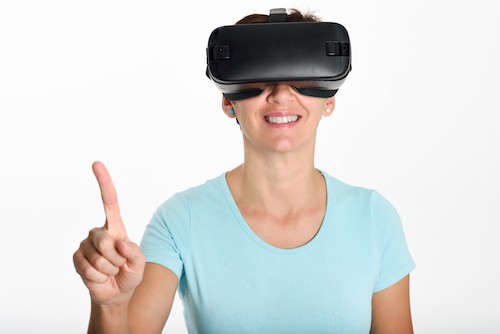
Beyond exposure therapy, the same logic may be relevant in pain management, cognitive training, rehabilitation and stress-reduction protocols. Virtual reality is often attractive in these areas because it can shape sensory input and direct attention in a controlled way. If LooxidVR can reliably capture how users respond during those experiences, it may help researchers distinguish between what merely feels innovative and what appears to produce consistent, measurable effects.
There is also a methodological advantage in being able to collect data during the experience itself rather than only before and after it. Mental states can shift rapidly in immersive environments. A person may begin a session tense, become absorbed after a few minutes, then show signs of fatigue or discomfort later on. Real-time monitoring may therefore reveal temporal patterns that would otherwise be missed in retrospective reporting alone.
A promising device, but still at an early stage
That promise should still be viewed with caution. LooxidVR is not yet on sale, and it will likely take months before its practical effects in healthcare can be assessed properly. In other words, the headset points towards an interesting direction for medicine and care, but it is still too early to speak of established clinical results. Its value will depend not only on the technology itself, but also on how reliably it can be integrated into real research and therapeutic settings.
Interest in the device already extends beyond healthcare alone. A number of industries are watching its development closely, which suggests that its applications may be broader than medicine. HTC, for instance, supported Looxid Labs through the Vive X accelerator as part of the headset’s development. The startup’s ambition is therefore twofold: to bring this new technology into the medical sector, while also appealing to industry through its wider capabilities and range of possible uses.
Several practical questions remain open. Sensor quality, comfort during longer sessions, calibration requirements and data interpretation will all influence whether the headset becomes genuinely useful outside demonstrations. In healthcare research especially, a promising concept must also prove that it can produce stable, interpretable data across different users and contexts. Without that reliability, even an elegant idea may struggle to move beyond curiosity.
There are also ethical and regulatory considerations. Brain-related data is sensitive, and any technology that records it in real time raises questions about consent, storage, access and secondary use. In clinical or quasi-clinical settings, those questions become even more important. If LooxidVR is to contribute meaningfully to care or research, its development will need to be accompanied by clear standards around privacy, transparency and responsible interpretation.
Even with those reservations, the broader direction remains compelling. Virtual reality has already shown that it can alter perception, attention and emotional response in ways that matter for both entertainment and care. A headset capable of tracking some of those changes as they happen may help bridge the gap between immersive design and cognitive science. That does not ensure a revolution, but it does suggest a more mature phase in which VR is studied not only for what it shows, but for how the mind and brain respond to it.
Why This Kind of Device Still Needs Careful Framing
The LooxidVR idea is exciting because it brings several data streams together: what the user sees, where the eyes move and how brain rhythms appear to shift. That could help designers understand immersion more precisely.

Related offer
8 States of Consciousness - Deep Infinity Pack
Deep Infinity - 8 States of Consciousness This rare audio pack invites you to plunge into the heart...
View productBut brainwave data is delicate. EEG from a consumer-style headset is not the same as a full clinical assessment, and virtual reality can affect people differently depending on stress, motion sensitivity, attention, trauma history or fatigue.
- Use brain data as feedback, not as a final truth about a person.
- Separate research potential from proven medical benefit.
- Protect privacy when mental-state data is collected.
- Remember that immersion can calm, stimulate or overwhelm.
The Mental Waves Immersive Brain Data Framework
The Mental Waves frame is to keep immersive technology human-centred. A headset that reads attention should help people understand states more gently, not reduce the person to metrics.
- Measure: collect only data that serves a clear purpose.
- Contextualise: interpret brainwaves with behaviour and experience.
- Regulate: design VR sessions that respect the nervous system.
- Integrate: use feedback to support learning, calm or self-awareness.
For the audio side of state design, read Mental Waves Sound Technology. For the body response to sound and vibration, continue with Body Resonance of Sound.
Editorial note from Mental Waves
This article is educational and technology-focused. LooxidVR and similar devices should be understood as promising tools for exploration and research, not as proven clinical solutions on their own.
Conclusion
What makes LooxidVR interesting is not simply that it brings EEG sensors into a virtual reality headset, but that it links immersive experience with measurable brain activity. That combination opens a more precise way of observing attention, stress and other mental states in real time, whether the aim is to deepen interactivity in VR or to better understand how a person responds to a controlled environment.
Its most meaningful promise, however, seems to lie in research and care rather than novelty alone. In medical settings where virtual reality is already used to support pain management or exposure-based approaches, a tool like this may help clinicians and researchers move from impression to observation, without pretending to settle every question at once. LooxidVR remains an early technology, but it points towards something important: a more nuanced meeting point between perception, regulation and care.
If that promise is fulfilled, the significance of LooxidVR will not lie in spectacle, but in measurement used with restraint and intelligence. Technologies that engage the brain often attract exaggerated claims, yet their real value usually emerges through careful validation, modest interpretation and thoughtful application. In that respect, LooxidVR is best seen as a serious experimental step: a device that may help make immersive experience more observable, and therefore more useful, across both scientific and practical domains.
Frequently Asked Questions About LooxidVR
What is LooxidVR?
LooxidVR is a virtual reality headset concept that combines VR, eye tracking and EEG-style brainwave sensing.
What makes it different from a standard VR headset?
It aims to observe gaze and brain activity, not only head movement or visual immersion.
Does LooxidVR read thoughts?
No. EEG can estimate patterns of electrical activity, but it does not read private thoughts in a simple way.
Why does eye tracking matter?
Eye tracking can show where attention is directed during an immersive experience.
Why does EEG matter?
EEG can give researchers clues about attention, workload, relaxation or arousal during VR use.
Could it help healthcare research?
It may help researchers study responses to immersive environments, but clinical claims need evidence and careful testing.
Could it help gaming?
It could make games more adaptive by responding to attention, stress or engagement signals.
What are the risks?
Risks include overinterpreting brain data, privacy concerns and uncomfortable reactions to VR for some users.
What is the main takeaway?
LooxidVR is interesting because it points toward richer feedback in VR, but its claims should stay grounded and evidence-based.