en
enVotre panier est vide.


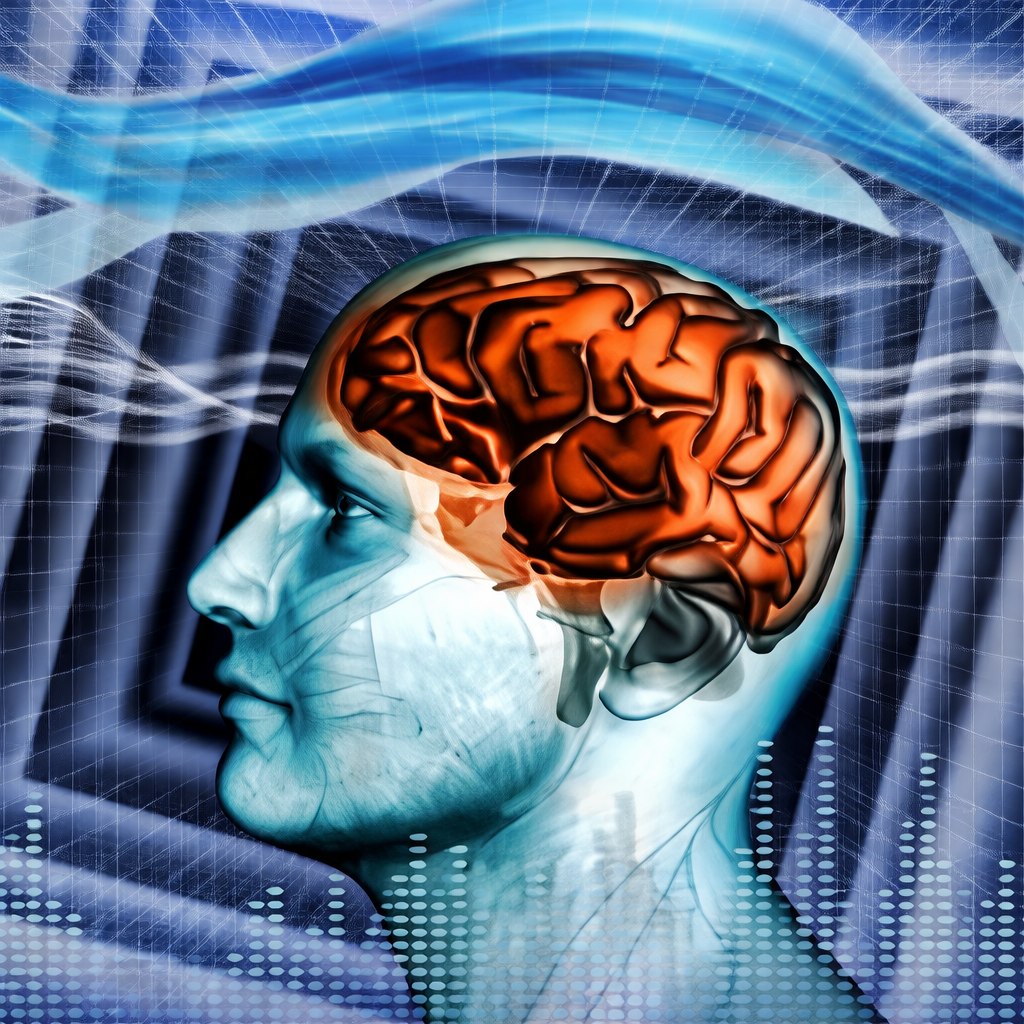
A high-performing mind is not simply a busy or disciplined one. It is a mind able, at least to some degree, to enter the state of consciousness best suited to the moment: clear when clarity is needed, calm under pressure, receptive when imagination or insight matters most. What was once the preserve of a relatively small circle of seekers gradually moved into the Western mainstream in the closing decades of the twentieth century, as practices drawn from different cultures and traditions began to be used in the pursuit of creativity, mental clarity, stress regulation, emotional balance, physical wellbeing and personal spiritual life.
In short: brainwaves and states of mind
Brainwaves offer a useful language for states of mind, as long as they are treated as flexible patterns rather than fixed labels.
For a clear scientific overview of Delta, Theta, Alpha, Beta and Gamma, begin with our guide to the five main types of brain waves.
Use this article as a practical map: keep what helps attention become steadier, question anything that sounds absolute, and connect the idea back to repeatable daily practice.
Within that wider movement, Anna Wise and her mentor Max Cade proposed something more specific: a way of linking meditation with the measurable activity of the brain through EEG. The central idea is not that consciousness must remain mysterious or beyond reach, nor that meaningful self-regulation is reserved for people willing to spend years in retreat. Rather, this approach suggests that by understanding brainwave patterns and learning how they are associated with different mental states, it may be possible to cultivate forms of awareness that are more flexible, more intentional and, ultimately, more useful in everyday life.
Training the Mind Towards a More Awake State
Why an ‘awake mind’ matters
An effective mind is not simply a busy one. It is a mind that can enter, with some degree of intention, the state of consciousness that is most useful for the situation at hand. What was once the pursuit of a relatively small number of dedicated practitioners gradually spread across the West in the late twentieth century, as mental, emotional and spiritual development drew on methods from many cultures, belief systems and schools of thought. These approaches were often sought for creativity, mental clarity, stress regulation, emotional and physical wellbeing, and a more personal form of spiritual exploration.
In that context, the methods presented here aim to take the cultivation of the mind a step further by linking meditative practice with a more precise understanding of brainwave activity.
Working with my late mentor, Max Cade, I helped develop an approach that combines the science of measuring brainwaves with practical tools drawn from meditation. The purpose is not to impose one ideal state on everyone, but to help each reader recognise and develop the brainwave patterns that may be most beneficial for them. Many people long for greater self-mastery, yet assume that conscious influence over their inner state is reserved for those willing to spend years in training or long hours each day in contemplation.
This book starts from a different premise: that the meeting point between meditation and technology may help ordinary people learn, more directly, how to work with their own states of consciousness for specific purposes.
- greater creativity and clarity
- better stress regulation and relaxation
- deeper self-understanding and emotional insight
- a more grounded sense of spiritual development
What this practice may help you develop
The theories, exercises and techniques in this book are designed as a progression. They move from calming unruly thought patterns to exploring vivid sensory imagery, and then further inward towards deeper layers of the mind. Once readers begin to recognise and cultivate their own optimal brainwave patterns, the later stages show how this mental training may be applied in everyday life: to support creativity, encourage self-healing processes, improve general wellbeing, ease stress, work through emotional difficulties, increase effectiveness at work, deepen relationships, strengthen self-knowledge and even help adults better understand the inner world of their children.
The broader aim is practical as much as reflective: to help readers understand their own states of consciousness and learn how to alter them more intentionally.
With sustained practice, these methods may gradually support the development of the brainwave pattern described as the awake mind. This state is presented as clearer, sharper, livelier and more flexible than ordinary consciousness. Thinking becomes more fluid rather than rigid. Emotions may feel more accessible and easier to understand, work with and transform. Information appears to move more freely between conscious, subconscious and unconscious levels. Intuition, inspiration and empathy may become stronger and more integrated into everyday awareness. In this state, visualising and imagining can feel easier, and that expanded imagination may feed directly into creative work across many areas of life.
The overall effect is often described as a greater sense of choice, inner freedom and spiritual awareness.
How Brainwaves Shape Your State of Mind
The basic language of brain activity
To begin this journey, it helps to understand the basic elements we are working with. Your brain is constantly producing electrical impulses, and these currents, or brainwaves, can be measured in two main ways: amplitude and frequency. Amplitude refers to the strength of the electrical impulse, measured in microvolts. Frequency refers to the speed of the wave pattern, measured in cycles per second, or hertz. It is frequency that places brain activity into the broad categories of beta, alpha, theta and delta. At any given moment, your state of consciousness is associated not with one isolated wave, but with the particular combination of these categories.
Each experience you have involves a kind of brainwave symphony, with every frequency contributing its own characteristic part. From these intricate patterns come very different forms of human expression and insight: the art of Picasso, the dance of Martha Graham, the architecture of Frank Lloyd Wright and the theories of Einstein. This finely woven interplay of frequencies helps shape the quality of attention, perception and awareness you experience. Because the brain rarely produces only one type of wave at a time, it is useful to become familiar with each category separately before looking at how they work together. In the next sections, each familiar mental state will be linked to the brainwave pattern most closely associated with it.
- Amplitude: the strength of the electrical signal
- Frequency: the speed of the signal, measured in hertz
- Main categories: beta, alpha, theta and delta
Why individual wave patterns are worth recognising
Although brain states are always mixed and dynamic, each broad category has its own qualities and characteristics. Learning to recognise them one by one may help make the wider picture clearer later on. This is not about reducing the mind to a mechanical formula. It is about developing a more precise language for states that people already know from experience: alert concentration, drifting imagery, deeper inner material and other shifts in awareness. Seen in this way, brainwave training is less about chasing a single ideal state and more about understanding which patterns may be most useful in a given moment.
This matters because mental self-regulation often begins with observation. If you can distinguish the building blocks, you are better placed to understand their combinations. That is the foundation for the sections that follow, starting with beta waves and the familiar movement from ordinary waking thought towards mental overload or panic. By first learning the language of brainwaves, the later discussion of specific states becomes more concrete, more coherent and easier to apply in practice.
Beta Waves and the Pressure of Everyday Thinking
When alert thinking turns into mental overload
At times, thoughts seem to collide in the mind one after another. You cannot stop them, and you cannot slow them down enough to focus properly on just one. Your heart races, your temples pound, your breathing becomes shallow and quick, and clear reasoning starts to slip away. In moments like these, the mind can feel as though it is no longer under your control, as if beta activity has tipped from ordinary alertness into inner turmoil.
The brain normally produces beta waves during waking consciousness, and in balanced amounts they are closely associated with logical thinking, practical problem-solving and active attention directed towards the outside world. In that sense, beta waves are not the problem at all: they help us function, decide, analyse and respond. The difficulty arises when beta becomes excessive, because that heightened state may be accompanied by marked psychological discomfort, agitation or a sense of being mentally trapped in overdrive.
- focused attention on the external world
- logical and concrete thinking
- decision-making and active mental processing
Why beta matters — and why regulation matters too
C. Maxwell Cade, often described as the grandfather of EEG biofeedback in Great Britain, defined beta as “the normal waking rhythm of the brain associated with active thinking or active attention, focusing on the outside world or solving concrete problems. The signal strength is increased by anxiety and reduced by muscular activity.” His description is useful because it captures both sides of beta: it is the rhythm of ordinary mental engagement, yet it can also intensify under strain.
Beta is also associated with increased blood circulation and a rise in metabolic activity. It is, in other words, an active state marked by high levels of cognitive processing, complex thought and decision-making. That is precisely why learning to regulate it matters. The aim is not to eliminate beta, but to become less at its mercy — to use this state deliberately when concentration and action are needed, without letting it escalate into panic, mental noise or loss of perspective.
Alpha Waves and the Bridge Between Relaxation and Awareness
When the mind drifts into imagery
Alpha waves are often associated with those moments when you slip into reverie and quietly lose yourself in your own inner world. Your eyes may be closed. Uninvited images can begin to flicker across the mind’s visual field with surprising vividness, sometimes feeling almost as real as direct experience. Attention may move freely from one scene to another, settling briefly before shifting again for no obvious reason. The flow of images, sensations and impressions does not need to follow a logical sequence. As the outer world recedes, the mind becomes absorbed in imagination, visualisation and daydreaming.
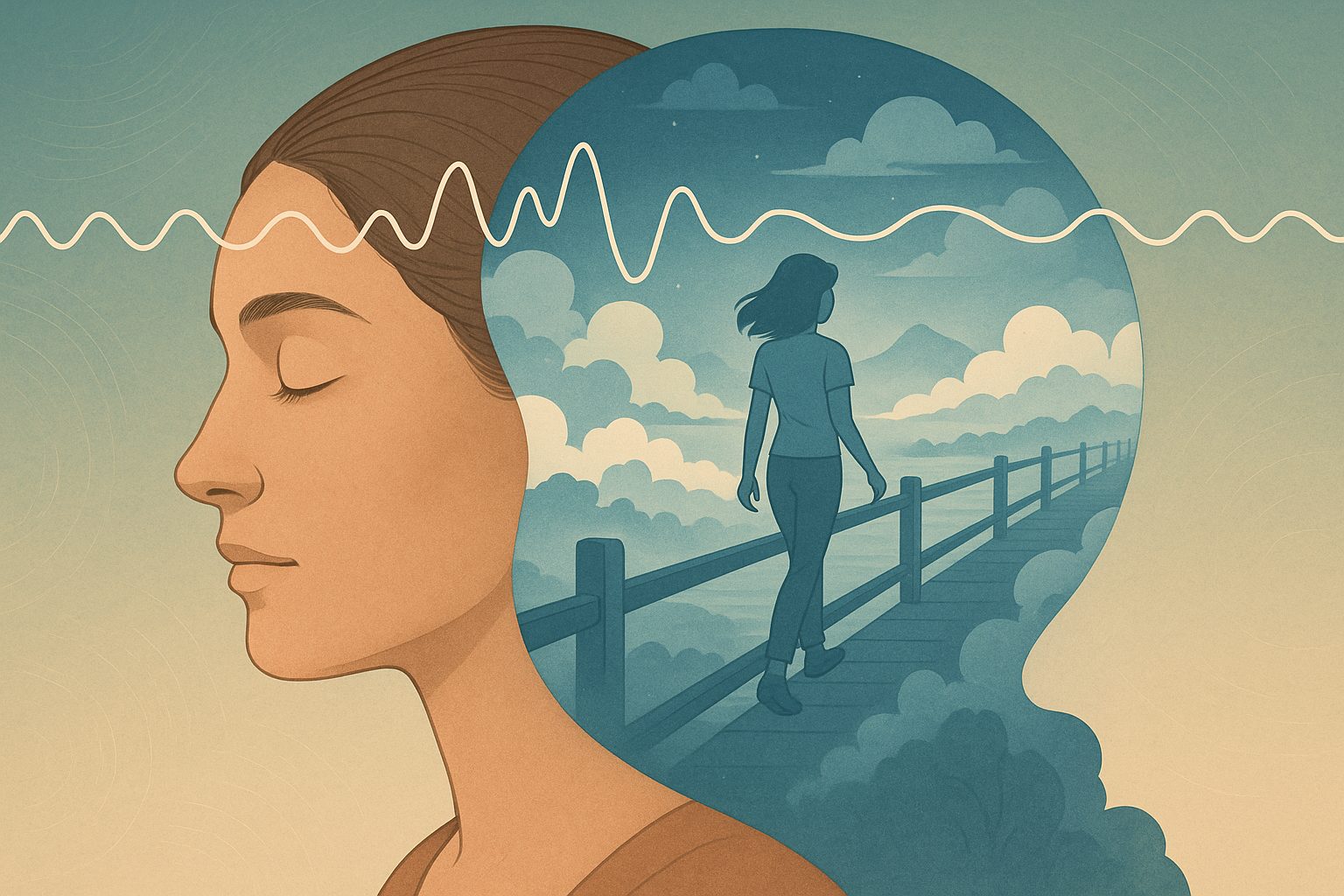
This state is also linked with a more relaxed, detached and receptive form of awareness. In that sense, alpha is not simply about switching off; it is often part of a mental state in which attention softens and perception becomes more open. Some people may produce a great deal of this mid-range activity and spend long periods in a haze of fantasy or inward drifting, sometimes even preferring that refuge to the demands of ordinary reality.
- daydreaming and reverie
- imagination and visualisation
- a relaxed, receptive state of mind
Why alpha matters more than its reputation suggests
The more common difficulty, however, may be having too little alpha in relation to other brainwave activity. In Anna Wise’s account, alpha acts as a bridge between the conscious and the subconscious mind. Without enough of it, a person may enter a deep meditative state and still struggle to remember what was experienced there, even if the session felt meaningful or revealing at the time. When alpha is lacking, that link with the subconscious is weakened, and material that might otherwise become available to awareness can remain out of reach.
C. Maxwell Cade described alpha as the brain rhythm with the “least apparent meaning unless the associated [brainwave] rhythms are also observed”. That point is important. Alpha has often been treated as if it were a special end point in itself, when in practice its significance depends greatly on the wider pattern in which it appears. It may support access, integration and recall, but it does not work in isolation. Seen in that light, alpha is less a magical state than a functional connector within the broader organisation of consciousness.
How Alpha Training Shaped Early EEG Biofeedback
Why alpha became the first trainable brainwave
For a time, alpha was the only brainwave pattern people could reliably identify and learn to influence. That mattered enormously. In pioneering work at the University of Chicago in the late 1950s, Joe Kamiya — often described as the grandfather of EEG research in the United States — found that individuals could be trained to recognise whether alpha activity was present or absent. This was a major shift: brain activity was no longer seen only as something to be measured from the outside, but as something a person might gradually learn to notice and regulate.
Kamiya later continued this research at the University of California, where he trained participants to speed up or slow down their alpha waves using low- or high-pitched sounds as auditory cues. In effect, this helped launch EEG biofeedback. Simple as it may now sound, this was a decisive step. It opened the way for more sophisticated work by C. Maxwell Cade, whose own investigations into brainwave biofeedback explored how such training might support the development of more integrated and elevated states of consciousness.
- Alpha could be detected and recognised
- Auditory cues helped people adjust it
- This became an early form of EEG biofeedback
The problem with turning alpha into an ‘ultimate’ state
Kamiya’s work was rightly seen as revolutionary in the 1960s. The difficulty came later, when popular culture began to treat alpha as if it were the supreme goal of brainwave training. That shift distorted the field. Alpha was increasingly presented as the brainwave to aim for above all others, as though producing it automatically meant reaching a higher meditative, creative or altered state. The broader promise of brainwave training — learning how different patterns relate to different states of mind — was narrowed into a much simpler and far less accurate message.
Many neurophysiologists, EEG technicians and clinicians soon noticed the problem. Some people could produce alpha quite easily, sometimes simply by closing their eyes or even while watching television, while others found it much harder. That made the grander claims about alpha difficult to sustain. The result, unfortunately, was that EEG feedback for consciousness training was often undervalued or dismissed altogether. What had begun as a promising scientific and practical tool lost credibility for a time, largely because one useful rhythm had been turned into a misleading ideal.
Theta Waves and the Hidden Layer of the Mind
Why theta regained importance
As enthusiasm for alpha waves became exaggerated, many researchers and clinicians began to doubt the more extravagant claims being made about them. Some observed that certain people could produce alpha quite easily, sometimes simply by closing their eyes or even while watching television, while others could not. From that, they concluded that the remarkable powers attributed to alpha could not be taken at face value.

Related offer
Alpha states of consciousness
Easily reach the state of Alpha Brain Rhythm to reduce anxiety and stress, soothe pain, enter...
View productThe unfortunate result was that EEG control and feedback as tools for exploring consciousness were, for a time, undervalued and neglected. It took years for brainwave research to recover its proper standing as an important mirror of a person’s state of mind. That broader perspective matters here, because it opens the way to a more nuanced understanding of theta waves rather than treating any single rhythm as a final answer.
When something seems to rise from below awareness
“It just came to me.” Theta waves are often associated with that strange, hard-to-name feeling that something is stirring at the edge of awareness. It may begin as a persistent but indistinct sense that something is not right, even though you cannot yet explain why. At other times, it feels as though a piece of knowledge is pressing upwards from within, wanting to emerge but still buried deep in the folds of the psyche. Some people experience this as a sudden creative insight, a powerful spiritual opening, an intense emotional surge, or the first glimmer of something long hidden in the mind.
In this framework, theta can be understood as relating to the subconscious — the layer between conscious awareness and the deeper unconscious. Theta states may hold a rich store of memories, sensations and emotions. Even when these experiences are not directly accessible to the conscious mind, they can still shape attitudes, hopes, beliefs and behaviour. In other words, what remains outside awareness may still influence how a person feels, interprets events and responds to life.
- subtle inner unease without a clear explanation
- creative or spiritual insight that seems to appear suddenly
- memories, sensations or emotions operating below conscious awareness
Delta Waves, Deep Intuition and the Limits of Awareness
When theta carries buried material and creative force
An adult who cannot consciously remember abuse suffered in childhood may still find themselves repeatedly drawn towards abusive people, as though some hidden part of the mind were trying to bring a deeply buried secret into awareness. In Anna Wise’s framework, this is one way of understanding theta activity: a layer of mind that can hold memories, sensations and emotional material outside ordinary conscious recall, while still influencing attitudes, expectations, beliefs and behaviour.
Theta may also serve as a reservoir for repressed inspiration and creativity. It is active during REM sleep, in dreaming and in deep meditation, and is often associated with peak experiences, spiritual insight and highly creative or high-functioning mental states. Even so, theta on its own is not enough. While it may be linked with creative activity, other brain rhythms are needed to bring that material fully into conscious awareness. To make use of theta’s deeper potential, the mind needs a broader combination of frequencies working together.
Delta as a kind of inner radar
“I feel as though I’m reading people’s minds. I know what they’re about to say.” That description introduces the territory Anna Wise associates with delta waves. You may sense the telephone is about to ring before it does. You may feel what a friend, lover, spouse or child is feeling so directly that it seems to happen inside you as well. At times, the experience can become confusing: you may no longer be sure whether the feelings moving through you are your own or belong to someone else. You may even be trying intensely to reach someone, hesitate to make contact, and then find that the person gets in touch first.
Wise describes delta here as a kind of personal radar, sending and receiving signals below the level of ordinary awareness. The language is vivid, but the underlying point is clear: some people seem highly receptive to subtle emotional and interpersonal cues, and may experience this as intuition, anticipation or deep empathy. In that sense, delta is presented not simply as a sleep rhythm, but as part of a wider unconscious sensitivity that can shape how we register other people and the world around us.
- anticipation before an event occurs
- strong emotional attunement to others
- difficulty separating your own feelings from someone else’s
Delta Waves, Deep Sensitivity and Inner Boundaries
What delta may reflect beneath ordinary awareness
Delta waves are presented here as the activity of the unconscious mind. They are most clearly associated with deep sleep, when other brainwave patterns have largely quietened and the brain remains engaged in its most restorative rhythms. In that sense, delta is linked with the rebuilding stages of sleep, but it may also appear during waking life in combination with other frequencies. Rather than treating delta as something relevant only when we are asleep, it can be useful to see it as part of a wider pattern of brain activity that may still influence perception, feeling and instinctive responses while we are awake.
Anna Wise describes delta as a kind of inner radar, searching for and receiving information at an instinctive level. In lived experience, this may feel like knowing the phone is about to ring, sensing what a partner, child or friend is feeling before they say it, or picking up a strong impression that seems to arrive from nowhere. People with high-amplitude delta are often described as highly intuitive and may, through trial and error, learn to trust that “sixth sense” because it proves accurate often enough to matter. This same pattern is also associated with deep empathy, which may help explain why it is so often noted in psychotherapists, healers, counsellors and others in helping professions.
- deep sleep and restoration
- instinctive perception
- heightened intuition
- strong empathic sensitivity
When receptivity becomes too much
Yet access to delta is not always experienced as a gift. For some people, especially those who do not understand what is happening, a high degree of delta activity can feel less like a strength and more like a burden. They may become overwhelmed by how strongly they register other people’s feelings, needs or even unspoken mental states. What is described as empathy can then become confusion: it may no longer be clear whether the emotion being felt is truly their own or has been absorbed from someone else. In this sense, heightened receptivity may support insight, but without regulation it can also become exhausting.
That is why this kind of sensitivity needs more than admiration; it needs structure. People who seem to gather a continual flow of information at an unconscious level may need to learn how to protect themselves, develop healthier boundaries and distinguish more clearly between their own internal state and that of others. This does not mean shutting down intuition. It means giving it a workable frame, so that empathic awareness remains useful rather than destabilising. In practical terms, the aim is not simply to access delta, but to relate to it with enough clarity and balance that it can contribute to awareness without taking it over.
How Brainwaves Work Together in Real Experience
No single brainwave state explains the whole mind
We have now looked at the four main components of a brainwave pattern: beta, alpha, theta and delta. At any given moment, your state of consciousness is not produced by just one of them in isolation, but by the way these categories combine and interact. Looking at that interplay can tell us a great deal about what may be happening in the mind, and why certain mental, emotional or spiritual experiences arise when they do.
This matters because popular culture has repeatedly tried to turn one brainwave band into the answer to everything. In the 1970s, alpha was often treated as the key to higher consciousness. By the 1990s, theta and delta had attracted similar attention in New Age circles, and some meditation-device makers began claiming that these slower rhythms were more important than beta or alpha, if not the true route to elevated states. Others proposed a neat hierarchy running from beta to alpha to theta to delta, while some dismissed delta altogether as irrelevant or impossible to measure. The more grounded view is simpler: no category is inherently superior.
Each has its own role, and our lived experience emerges from their changing combinations rather than from one supposedly ultimate frequency.
- Beta supports active thinking and engagement with the outer world.
- Alpha is often associated with relaxed awareness and access to imagery.
- Theta and delta may contribute depth, intuition and material below ordinary awareness.
A personal pattern, more like a symphony than a switch
Within the broad labels of beta, alpha, theta and delta, there is in fact a range of frequencies rather than a single fixed signal. These patterns vary from one person to another, and each individual tends to have a recognisable signature that remains broadly their own even as their state shifts from alertness to reverie, stress, meditation or sleep. That is one reason brain activity is better understood as a dynamic pattern than as a simple on-off switch.
A useful way to picture this is as a musical score. Different frequencies act like notes in a symphony: sometimes the arrangement is smooth, coherent and flowing; at other times it becomes strained, uneven or almost cacophonous. The aim, then, is not to eliminate certain notes, but to learn how they can be brought into a more ordered and effective relationship. As in music, mastery comes both from recognising the individual notes and from learning how to combine them in ways that serve a clear purpose. In that sense, the goal is to cultivate a brainwave pattern that is dense, powerful and harmonious, rather than chasing one isolated state as if it were the whole answer.
Beyond the Left-Brain/Right-Brain Myth
Why the brain does not work as two separate selves
Popular culture often reduces the brain to a simple contrast: the left hemisphere as logical and analytical, the right as creative and artistic, as though most of us mainly live from one side or the other. In practice, that picture is far too crude. The brain works as an integrated whole, and ordinary thinking as well as creative work usually depend on ongoing cooperation between both hemispheres rather than a handover from one to the other.
Broadly speaking, the left hemisphere is more linear and detail-oriented, while the right is more spatial and attuned to the wider pattern. Both are necessary if you want to function well in the world. You need detail and overview, sequence and context, analysis and synthesis. Ideally, the two hemispheres operate in a balanced, symmetrical way, although asymmetrical patterns are common. In this framework, meditation and brainwave training may help support a better functional balance between the two sides.
- Left hemisphere: more linear and detail-focused
- Right hemisphere: more spatial and big-picture oriented
- Effective mental functioning depends on both working together
A more useful model: expanding the whole brain state
This also means that moving into a more intense, creative or insightful state is not best understood as a shift from the left hemisphere to the right. You do not stop thinking with one side in order to become imaginative with the other. Rather, you think with both hemispheres and create with both hemispheres. The change is better described as a broadening of the overall state of consciousness.

Related offer
10 States of Consciousness - Infinity Elementary Pack
Elementary Infinity - The 10 States of Consciousness A unique sound box designed to explore the 5 states of...
View productAnna Wise suggests imagining this not as a left-to-right movement, but as an expansion from top to bottom: beginning with the fast, active thought patterns associated with beta activity, then bringing in the more receptive and creative qualities linked with alpha, theta and delta across both hemispheres at the same time. In other words, a richer state of mind does not come from choosing one side of the brain over the other, but from allowing multiple layers of brain activity to work together in a more coherent way.
When the Mind Feels Suddenly Clear
The lived experience of an ‘awake mind’
“Ah, I see. Everything makes sense now. For a few moments, I understood completely. Why can’t I be like this all the time?” That flash of recognition captures what Anna Wise describes as the awake mind: a state in which understanding feels immediate, vivid and whole. There can be a sense of euphoria, not simply because something pleasant has happened, but because the mind seems to organise itself all at once. Old problems may suddenly look manageable, or even strangely simple.
You may find yourself thinking, “Why didn’t I see it before?” or “It’s so obvious now.” In some cases, this shift may support unusually creative thought or action, as if insight and expression have briefly come into alignment.
For others, the experience may be felt less as problem-solving and more as a heightened form of awareness. It can take on a spiritual tone: a sense of deeper connection, a stronger perception of meaning, or even the impression of being surrounded by light. The important point in Wise’s description is not that this state is mystical in a vague sense, but that it feels more lucid, more integrated and more alive than ordinary consciousness. In her terms, this is what it means to experience the awake mind.
A whole-brain pattern rather than a single wave
According to Wise, the brainwave pattern associated with the awake mind is not based on one privileged frequency. It is a simultaneous combination of beta, alpha, theta and delta, working together in the right proportion and relationship. In that sense, the awake mind is the culmination of the broader argument developed throughout the book: no single category of brainwave is the final answer on its own. What matters is the quality of the overall pattern, and the way different forms of brain activity may contribute to a more coherent state of consciousness.
When these four frequencies are present together in a balanced way, Wise suggests that several capacities can become available at once: the intuitive, empathic “radar” associated with delta; the creative inspiration, personal insight and spiritual awareness linked with theta; the bridging function of alpha, which helps connect deeper material with conscious awareness while supporting a relaxed, receptive state; and the conscious processing power of beta, which allows thought to be handled clearly and deliberately. The result is not a loss of control, but a state in which intuition, imagination, feeling and clear thinking may operate together. Copyright © 1995 Anna Wise. Website: http://www.annawise.com/. Book: Awakening the Mind. French translation by Jean Carfantan.
- Beta: conscious thought and active mental processing
- Alpha: relaxed awareness and a bridge to deeper material
- Theta: creativity, insight and inner meaning
- Delta: intuition, empathy and deep unconscious sensitivity
The Mental Waves State Awareness Framework
The Mental Waves frame is to use brainwave language as a practical map of attention, rest and activation. A state is not a personality type; it is a changing relationship between body, environment and focus.
When listening to frequency-based audio, observe the whole experience: breathing, tension, mental clarity, fatigue and recovery. That is more useful than chasing a single perfect wave band.
For a gentle introduction to frequency-based listening, receive the free 128 Hz sacred frequency session and notice your state without forcing it.
Editorial note from Mental Waves
This article is educational. Brainwave categories do not diagnose health, replace EEG interpretation or substitute for professional care when symptoms are present.
Conclusion
What emerges from all this is a view of the mind that is both more practical and more subtle than the usual clichés. Brain activity is not presented here as a ladder with one “higher” wave at the top, but as a changing pattern in which alert thought, relaxed receptivity, deeper imagery and instinctive sensitivity each have their place. The point is not to chase a single ideal state, but to recognise how different modes of attention and awareness may work together more harmoniously, and how that balance can shape clarity, creativity, emotional regulation and self-understanding.
That is also why the idea of an “awake mind” remains compelling without needing to become mystical. In this account, it describes a state in which conscious thought is not cut off from intuition, feeling or deeper layers of perception, but informed by them. EEG language offers one way of observing that process; practice may help a person become more familiar with it. What matters most is the underlying invitation: to relate to your own mental states with more precision, more steadiness and perhaps a little more freedom. Sometimes a clearer mind is not a louder one, but a better-tuned one.
{
"@context": "https://schema.org",
"@type": "FAQPage",
"mainEntity": [
{
"@type": "Question",
"name": "What does an 'awake mind' mean in this context?",
"acceptedAnswer": {
"@type": "Answer",
"text": "An awake mind is a state of consciousness described as clearer, sharper, livelier and more flexible than ordinary awareness. In this state, thinking becomes less rigid, emotions are easier to understand and work with, and intuition, inspiration and empathy are more fully integrated into everyday consciousness."
}
},
{
"@type": "Question",
"name": "How are brainwaves said to influence your state of mind?",
"acceptedAnswer": {
"@type": "Answer",
"text": "Brainwaves are the brain’s electrical impulses, measured by amplitude and frequency, and their combination shapes your state of consciousness at any given moment. Rather than producing one wave alone, the brain creates a changing pattern of beta, alpha, theta and delta activity, each contributing different qualities to experience."
}
},
{
"@type": "Question",
"name": "What are beta waves associated with?",
"acceptedAnswer": {
"@type": "Answer",
"text": "Beta waves are linked with normal waking consciousness, logical thinking, practical problem-solving and active attention to the outside world. They are useful for decision-making and mental processing, but when beta activity becomes excessive it can be accompanied by agitation, anxiety and a sense of mental overload."
}
},
{
"@type": "Question",
"name": "Why are alpha waves described as a bridge between conscious and subconscious awareness?",
"acceptedAnswer": {
"@type": "Answer",
"text": "Alpha waves are associated with daydreaming, imagination, visualisation and a relaxed, receptive state of mind. They are described as a bridge because they help connect conscious awareness with subconscious material; when alpha is lacking, deeper meditative or inner experiences may be harder to recall or integrate."
}
},
{
"@type": "Question",
"name": "Why was alpha once treated as especially important in EEG training?",
"acceptedAnswer": {
"@type": "Answer",
"text": "Alpha gained special attention because it was the first brainwave pattern people were able to identify and learn to influence reliably. Joe Kamiya’s early EEG work showed that people could detect the presence or absence of alpha and even learn to speed it up or slow it down using auditory feedback, which helped launch EEG biofeedback."
}
},
{
"@type": "Question",
"name": "What do theta waves represent in this model of the mind?",
"acceptedAnswer": {
"@type": "Answer",
"text": "Theta waves are linked with the subconscious, where memories, sensations and emotions may remain outside ordinary awareness while still shaping behaviour and beliefs. They are also associated with dreaming, deep meditation, creative inspiration, spiritual insight and the feeling that something important is rising from below conscious thought."
}
},
{
"@type": "Question",
"name": "How are delta waves described beyond deep sleep?",
"acceptedAnswer": {
"@type": "Answer",
"text": "Delta waves are linked with the unconscious and with the restorative stages of deep sleep, but they are also described as active in waking life when combined with other rhythms. In that setting, they are associated with instinctive perception, strong empathy and a kind of intuitive 'radar' for picking up subtle information about other people."
}
},
{
"@type": "Question",
"name": "Is one type of brainwave meant to be better than the others?",
"acceptedAnswer": {
"@type": "Answer",
"text": "No single brainwave category is presented as superior. Beta, alpha, theta and delta each have their own role, and mental, emotional and spiritual states arise from the way these rhythms combine rather than from one supposedly ultimate frequency. The aim is a balanced, harmonious pattern rather than dominance by one wave alone."
}
},
{
"@type": "Question",
"name": "Does this approach support the idea that people are either left-brained or right-brained?",
"acceptedAnswer": {
"@type": "Answer",
"text": "The mind is presented as an integrated whole rather than a split between a logical left side and a creative right side. The left hemisphere is described as more linear and detail-focused, while the right is more spatial and oriented towards the bigger picture, but effective thinking and creativity depend on both working together."
}
}
]
}
Frequently Asked Questions About Brainwaves and the Awake Mind
What does an 'awake mind' mean in this context?
An awake mind is a state of consciousness described as clearer, sharper, livelier and more flexible than ordinary awareness. In this state, thinking becomes less rigid, emotions are easier to understand and work with, and intuition, inspiration and empathy are more fully integrated into everyday consciousness.
How are brainwaves said to influence your state of mind?
Brainwaves are the brain’s electrical impulses, measured by amplitude and frequency, and their combination shapes your state of consciousness at any given moment. Rather than producing one wave alone, the brain creates a changing pattern of beta, alpha, theta and delta activity, each contributing different qualities to experience.
What are beta waves associated with?
Beta waves are linked with normal waking consciousness, logical thinking, practical problem-solving and active attention to the outside world. They are useful for decision-making and mental processing, but when beta activity becomes excessive it can be accompanied by agitation, anxiety and a sense of mental overload.
Why are alpha waves described as a bridge between conscious and subconscious awareness?
Alpha waves are associated with daydreaming, imagination, visualisation and a relaxed, receptive state of mind. They are described as a bridge because they help connect conscious awareness with subconscious material; when alpha is lacking, deeper meditative or inner experiences may be harder to recall or integrate.
Why was alpha once treated as especially important in EEG training?
Alpha gained special attention because it was the first brainwave pattern people were able to identify and learn to influence reliably. Joe Kamiya’s early EEG work showed that people could detect the presence or absence of alpha and even learn to speed it up or slow it down using auditory feedback, which helped launch EEG biofeedback.
What do theta waves represent in this model of the mind?
Theta waves are linked with the subconscious, where memories, sensations and emotions may remain outside ordinary awareness while still shaping behaviour and beliefs. They are also associated with dreaming, deep meditation, creative inspiration, spiritual insight and the feeling that something important is rising from below conscious thought.
How are delta waves described beyond deep sleep?
Delta waves are linked with the unconscious and with the restorative stages of deep sleep, but they are also described as active in waking life when combined with other rhythms. In that setting, they are associated with instinctive perception, strong empathy and a kind of intuitive 'radar' for picking up subtle information about other people.
Is one type of brainwave meant to be better than the others?
No single brainwave category is presented as superior. Beta, alpha, theta and delta each have their own role, and mental, emotional and spiritual states arise from the way these rhythms combine rather than from one supposedly ultimate frequency. The aim is a balanced, harmonious pattern rather than dominance by one wave alone.
Does this approach support the idea that people are either left-brained or right-brained?
The mind is presented as an integrated whole rather than a split between a logical left side and a creative right side. The left hemisphere is described as more linear and detail-focused, while the right is more spatial and oriented towards the bigger picture, but effective thinking and creativity depend on both working together.