en
enVotre panier est vide.



What happens in the moments immediately after death remains one of the most unsettling questions we can ask. Yet some research has suggested that the boundary is less abrupt than it appears. Work from the Stony Brook University School of Medicine in New York points to a striking possibility: certain forms of brain activity may persist briefly even after the heart has stopped, raising difficult but important questions about consciousness at the very end of life.
This does not mean science has proved that awareness simply carries on after death, and the distinction matters. What these findings do suggest is that the brain and body do not shut down in one single instant. Observations from animal research, alongside studies of cardiac arrest survivors led by Dr Sam Parnia, have fuelled a serious debate about what people may still perceive in those final minutes, and how near-death experience differs from irreversible death itself.
For that reason, the subject deserves both curiosity and restraint. The most credible interpretation is not that medicine has solved the mystery of death, but that it has identified a short and biologically meaningful transition period in which residual neural processes may still be measurable. That possibility is scientifically important because it affects how we think about awareness, perception and the timing of irreversible brain failure.
In short: what may research reveal about consciousness at death?
Research into consciousness at death may reveal how perception, memory and brain activity behave around the end of life, but it cannot reduce the mystery to a simple answer. Near-death reports, clinical observations and neuroscience each give part of the picture.
- Some people report vivid experiences during life-threatening events.
- Researchers study timing, memory, brain activity and subjective reports.
- Spiritual interpretations can be meaningful, but they need humility.
- The healthiest posture is open, careful and respectful of grief.
For the brain-state context, read Brainwave Frequencies and Meditation. For a contemplative sound cue, receive the Sacred Frequency Session.
What the research really suggests about awareness after cardiac arrest
What the Stony Brook findings observed
The study from the Stony Brook University School of Medicine drew attention because it challenged a deeply rooted assumption: that all brain-related activity stops the instant the body dies. In laboratory experiments carried out on rats, researchers observed that brain waves could remain briefly active even after the heart had stopped beating. That does not mean the brain continues to function in the same way as it does during ordinary life, nor does it prove in any absolute sense that consciousness carries on unchanged. But it does suggest that the transition between life and death may be more gradual, and more biologically complex, than many people imagine.
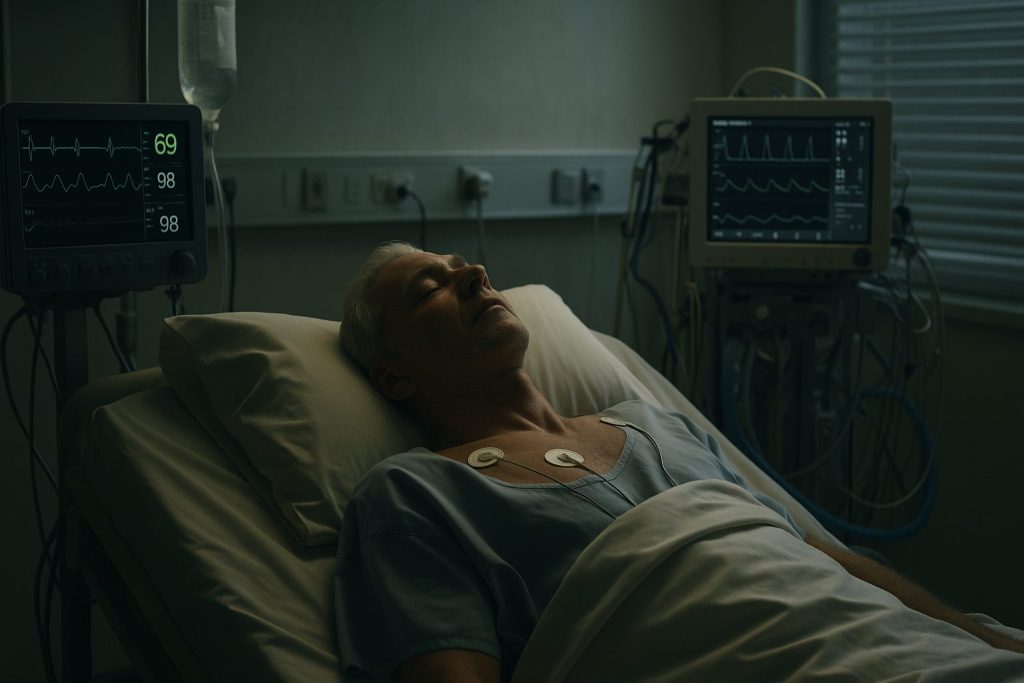
This is the point that made the study so striking. Rather than presenting death as a single, clean-cut moment, the findings imply that some forms of neural activity may persist for a short time after cardiac arrest. In that sense, the research opened up an important question about whether awareness disappears immediately, or whether certain processes linked to perception and consciousness may continue for a brief window even after the body has entered clinical death.
It is also worth being precise about what was measured. In this kind of research, scientists are typically observing electrical patterns associated with brain activity, not directly reading subjective experience itself. Brain waves, EEG changes and bursts of organised neural firing can indicate that the brain has not yet become entirely silent, but they do not by themselves tell us exactly what, if anything, the organism is consciously experiencing.
That distinction is central to a rigorous reading of the evidence. Residual activity may reflect a stressed brain moving through a final cascade of metabolic and electrical changes, rather than a stable state of awareness comparable to waking consciousness. Even so, the fact that measurable activity can outlast the heartbeat by a short interval is enough to challenge simplistic assumptions about the exact moment at which all perception must end.
- Heart activity had stopped
- Brain-wave activity was still detected for a short period
- The phenomenon was observed in laboratory rats
Why the brain may stay active for a short time
Researchers have tried to explain this residual activity in physiological terms. As Dr Sam Parnia told Live Science, even when overall brain activity is no longer detectable after death, some human brain cells may remain active for several hours. One proposed explanation is linked to oxygen deprivation. Once the heart stops, oxygen no longer reaches brain cells in the usual way. This lack of oxygen may allow calcium to flood into the cells, triggering a reaction that researchers were able to record. That mechanism may help explain why some activity can still appear in the brain during the early phase after death, even though the person is no longer alive in the ordinary clinical sense.
These findings are often discussed alongside reports from people who have had near-death experiences. Some individuals later say they could hear conversations around them, including exchanges between doctors and nurses, even though they were believed to be dead at the time. A further study led by Dr Sam Parnia and published in Resuscitation adds weight to that discussion. Begun in 2008 and reported in 2014, it involved more than 2,000 patients with cardiac arrest across 15 hospitals in the United States, Austria and the United Kingdom, including the University of Southampton. Of the 2,060 patients, 330 survived, and 140 described moments of awareness before resuscitation.
One man in his fifties, clinically dead for three minutes, was even able to describe machine sounds and the actions of staff during his resuscitation. These accounts do not settle the question once and for all, but they do suggest that conscious perception may not vanish as instantly as once assumed.
From a neurophysiological point of view, this remains plausible without requiring extraordinary claims. A brain deprived of oxygen does not necessarily become electrically silent at once; instead, it may pass through a short period of disorganised but still detectable activity. In some cases, that transitional state may support fragments of perception, memory encoding or internally generated imagery, although the exact balance between these processes is still uncertain.
It is equally important to remember that retrospective reports are difficult to interpret. Memories formed around resuscitation may be influenced by sedation, stress, fragmented sensory input and the brain’s attempt to organise extreme experience into a coherent narrative afterwards. That does not make such reports meaningless, but it does mean they should be approached as valuable yet limited evidence, especially when researchers are trying to distinguish genuine perception from reconstruction after recovery.
In other words, the most careful conclusion is not that the dying brain remains fully conscious, but that the shutdown of consciousness may be a process rather than a single switch being flipped. That is a subtler claim, but also a more defensible one.
What the Body and Mind May Still Do Shortly After Death
The body does not stop changing all at once
In the minutes that follow death, the body does not become completely inert in a single instant. The brain is often described as one of the last organs to remain briefly active, even if that activity is only temporary and far weaker than it is during life. At the same time, other physical changes can continue to unfold. Some people may still empty their bowels after death, particularly if the intestines were full beforehand. This is generally linked to the relaxation of the body’s muscles once life has ended, as the organism is no longer able to maintain the energy-dependent tension that normally keeps these functions under control.
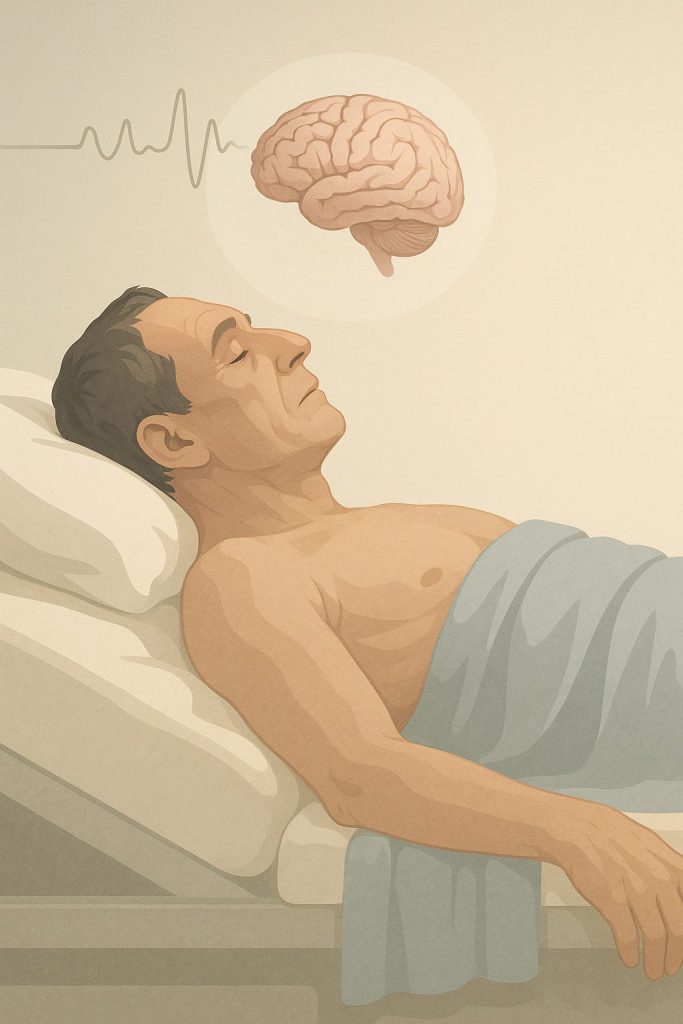
Another visible change is the gradual paling of the body. After the heart stops, blood no longer circulates as it did before, and within roughly fifteen to thirty minutes it begins to settle in the lower parts of the body. That loss of active circulation helps explain why the skin can appear paler after death. In other words, even though life has ended, the body still passes through a series of recognisable physiological stages rather than switching off all at once.
This broader post-mortem sequence is well known in medicine and forensic science. Early changes after death include loss of muscle tone, cooling of the body, and the redistribution of blood under gravity. These processes do not imply ongoing life, but they do show that death is followed by a cascade of physical events rather than an immediate and total stillness in every tissue at the same moment.

Related offer
18 States of Consciousness - Integral Infinity Pack
Integral Infinity - The 18 States of Consciousness A unique sound box designed to explore all the...
View productThat is one reason the language used around death matters. In clinical settings, terms such as cardiac arrest, clinical death, brain death and irreversible death do not all mean exactly the same thing. The heart may stop before every cell in the body has ceased functioning, and some tissues can remain metabolically active for a limited period. Understanding that sequence helps place the discussion of residual brain activity in a more realistic biological context.
- Brief residual brain activity may still be observed
- Muscle relaxation can lead to post-mortem evacuation
- Blood settling contributes to the body’s paler appearance
Near-death reports remain striking, even if science stays cautious
Alongside these physical changes, there are also the experiences reported by people who have gone through a near-death experience (NDE). Some describe the well-known impression of a white light at the end of a tunnel, while others speak of a deep sense of calm or the feeling of encountering spirits or familiar figures. According to the figures cited by researchers, the most commonly reported phenomena include a feeling of tranquillity (80%), seeing a white light (69%) and encounters with beings or people (64%). Faster thoughts (5%) and precognitive visions (4%) appear to be much less common.
These accounts continue to fascinate because they sit at the meeting point between lived experience and scientific observation. They do not necessarily prove what happens after death in any absolute sense, but they may help explain why this subject remains so compelling. For people who have come close to death, these perceptions can feel intensely real. From a scientific point of view, they are often approached as experiences associated with extreme physiological and mental states occurring around the threshold between life and death.
Several mechanisms have been proposed to account for these reports without dismissing their emotional force. Altered oxygen and carbon dioxide levels, changes in temporal lobe activity, stress-related neurochemistry, disrupted sensory integration and shifts in attention may all contribute to unusual perceptions. A tunnel-like visual effect, for instance, may be linked to the way the visual system behaves under severe physiological strain, while a profound sense of peace may reflect changes in arousal, pain processing or emotional regulation during extreme crisis.
None of this means the experiences are trivial or merely imaginary. On the contrary, near-death reports often leave a lasting psychological impression and can reshape a person’s beliefs, priorities and sense of self. Science can examine the conditions under which such experiences arise, but that does not cancel the fact that, for the person who lived through them, they may feel among the most vivid and meaningful moments of a lifetime.
- Feeling of tranquillity: 80%
- White light: 69%
- Encounters with spirits or people: 64%
- Accelerated thoughts or precognitive visions: rarer reports
Why Near-Death Experience Is Not the Same as Death Itself
An important distinction in the debate
Dr Sam Parnia’s work is often presented as one of the most significant research programmes on near-death experiences. It has helped bring serious attention to reports of awareness, perception and memory during cardiac arrest. Even so, its conclusions are not accepted without debate. Dr Patrick Reynier, from the cardiology anaesthesia and intensive care department at Bordeaux University Hospital, has challenged the way these experiences are sometimes interpreted.
His main point is straightforward: a near-death state does not automatically mean definitive death. In his view, these experiences are not fully convincing as proof of what happens after death itself, because they concern people who came close to dying without remaining dead. In other words, they describe a border zone between life and death, not necessarily what follows irreversible death.
This criticism is not a minor technicality; it goes to the heart of the debate. A person in cardiac arrest may have no detectable pulse and may require urgent resuscitation, yet still remain within a window in which circulation can be restored and some brain function preserved. That is very different from demonstrating awareness after irreversible destruction of the systems required for consciousness.
- Near-death experience: the person may still be revived.
- Effective death: the death is definitive and irreversible.
What these studies can and cannot tell us
This distinction matters because it changes how the findings should be read. The cases studied by Dr Sam Parnia relate to clinical emergency and possible resuscitation, not to confirmed, permanent death. That does not make the research meaningless; far from it. It simply means the studies may tell us something valuable about residual brain activity, consciousness and perception in the final moments around cardiac arrest, rather than offering definitive proof about life after death.
Seen in that light, the work led by Dr Parnia, together with the observations from Stony Brook University, still brings useful insight to one of humanity’s oldest questions. These studies do not settle the mystery once and for all, but they do suggest that the boundary between life and death may be more complex than it first appears. For anyone trying to understand what the brain, the body and consciousness may still do at the edge of death, that is already a meaningful contribution.
They also highlight a broader scientific challenge: consciousness is difficult to measure even in healthy, living people. Researchers often rely on indirect markers such as responsiveness, EEG patterns, memory reports and behavioural evidence. In emergency medicine, where events unfold rapidly and under extreme physiological stress, those measurements become even harder to interpret. That is why caution is not a weakness here but a sign of methodological seriousness.
So the most balanced conclusion is a modest one. Current evidence may support the idea that awareness does not always disappear at the exact instant the heart stops, and that some patients may retain or recover fragments of perception during resuscitation. But this is not the same as demonstrating a mind that exists independently of the brain after irreversible death. The science is intriguing precisely because it narrows the question without pretending to answer more than it can.

Related offer
10 States of Consciousness - Infinity Elementary Pack
Elementary Infinity - The 10 States of Consciousness A unique sound box designed to explore the 5 states of...
View productHow to Read Death-Related Research Without Forcing Certainty
The subject of consciousness at death attracts strong claims because it touches fear, hope, grief and the deepest questions of identity. That is why the wording matters. A testimony can be sincere without becoming universal proof. A brain measurement can be valuable without answering every spiritual question.
A balanced reading separates several layers: what a person reports, what the body was going through, what researchers can measure and what meaning the experience holds afterward. Confusing these layers creates either blind belief or premature dismissal. Keeping them distinct allows the question to stay alive without becoming vague, especially when the topic touches grief, fear or hope in real families.
The Mental Waves Consciousness-at-Death Framework
The Mental Waves frame is to approach consciousness at death with respect for science, inner experience and human vulnerability. The goal is not to win an argument, but to think clearly about an experience that often changes the way people live.
- Observe: distinguish reports, measurements and interpretations.
- Ground: remember the body, stress, medication, sleep and context.
- Respect: hold grief, meaning and spiritual belief with care.
- Integrate: ask whether the reflection makes life more present and compassionate.
For a broader spiritual foundation, continue with What Is Spirituality?. For research on contemplative practice and the brain, read Meditation and the Brain.
Editorial note from Mental Waves
This article is educational and reflective. Questions around death, grief and consciousness can be emotionally intense; professional, medical or bereavement support should be used when needed.
Conclusion
What emerges here is not proof of a consciousness that simply carries on unchanged, but a more precise and unsettling idea: the boundary between life and death may be less instantaneous than we tend to imagine. Brief residual brain activity, altered perception and reports from near-death experiences all suggest that awareness may not switch off at the exact moment the heart stops. At the same time, these observations remain tied to extreme physiological states, not to a settled account of what happens after death in any final sense.
That distinction matters. The most compelling studies in this area help us think more clearly about cardiac arrest, brain activity and subjective experience, but they do not erase the difference between near-death and irreversible death. In that space between measurable biology and lived testimony, science can illuminate part of the picture without claiming the whole of it. Perhaps that is what makes the subject so enduring: it invites both rigour and humility.
For readers, the real value of this research may lie less in offering certainty than in refining the question itself. It suggests that dying is not always a single instant but may involve a short and complex transition in which physiology, perception and consciousness become difficult to separate cleanly. That is a sobering idea, but also an intellectually important one, because it encourages a more careful understanding of what medicine can observe at the threshold of death.
Frequently Asked Questions About Consciousness at Death
What does consciousness at death mean?
It refers to questions about awareness, perception and memory around the end of life or life-threatening states.
Can research prove an afterlife?
Current research can study reports and brain activity, but it does not settle every spiritual or metaphysical question.
What are near-death experiences?
They are vivid experiences reported by some people during severe danger, cardiac arrest or other extreme events.
Why does brain activity matter?
Brain activity helps researchers understand perception, memory and altered states during extreme physiological conditions.
Are all death-related reports the same?
No. Reports vary by person, culture, circumstances and the way memories are formed afterward.
Can the experience be interpreted spiritually?
Yes. Many people find spiritual meaning in these reports, provided interpretation stays humble and personal.
Why avoid absolute certainty?
Because the subject combines subjective reports, medical context, research limits and deep personal meaning.
Can reflecting on death change daily life?
It can help some people clarify values, relationships and presence in ordinary life.
What is the main takeaway?
Consciousness at death should be approached with curiosity, scientific caution and respect for human experience.