en
enVotre panier est vide.


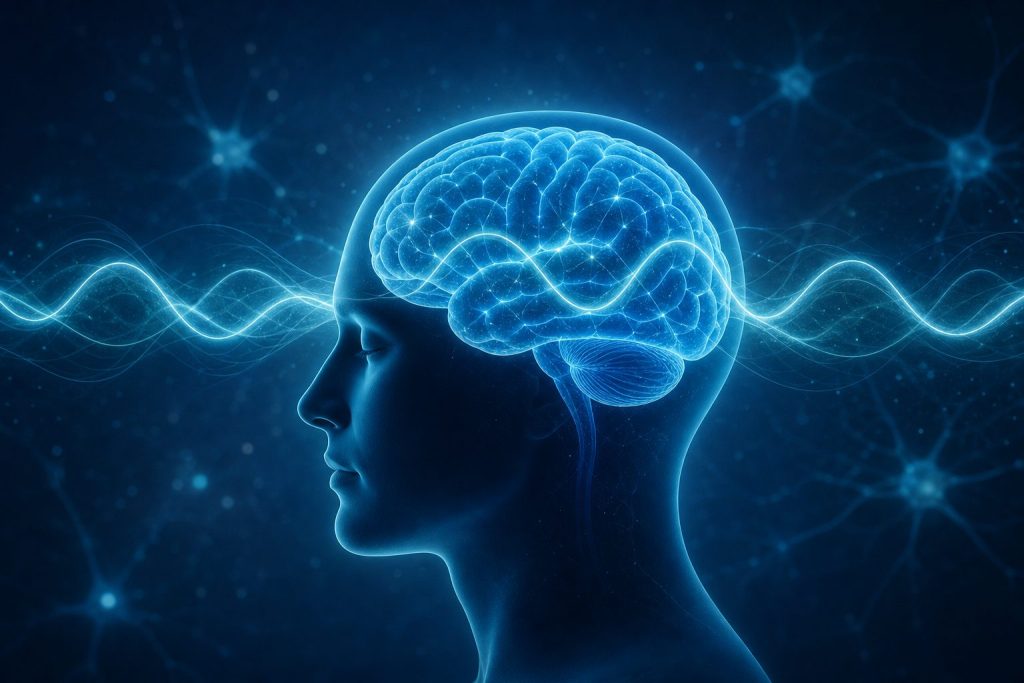
Our brain does not operate at a single, fixed pace. Its electrical activity shifts constantly according to our level of wakefulness, attention and relaxation, and these variations can be observed on an EEG as different brainwave rhythms. In everyday life, we move from a state of full alertness to calmer, slower states without necessarily noticing it, and these changes are closely associated with the way we think, feel and recover.
In short: brain waves alpha rhythm
Brain waves describe changing patterns of electrical activity, and alpha is often linked with relaxed attention rather than sleep or effort.
For a complete comparison of Delta, Theta, Alpha, Beta and Gamma, see our foundational guide to the main brainwave types.
Use this article as a practical map: keep what helps attention become steadier, question anything that sounds absolute, and connect the idea back to repeatable daily practice.
To understand the brainwaves emitted by the brain, it helps to begin with this simple progression: beta is linked with active waking life, alpha with a more relaxed but still conscious state, theta with light sleep, and delta with very deep sleep. Within this framework, alpha holds a particular place. It is often described as a threshold state in which mental activity eases, the body relaxes, and perception may become broader and less dominated by constant analysis. That is why this rhythm is so often explored when the aim is to support concentration, emotional regulation and a more settled inner state, while remaining fully cautious about what such practices can and cannot promise.
Understanding the Brain’s Main Rhythms
Beta: the rhythm of active wakefulness
Beta rhythm is the pattern most closely associated with full wakefulness. It is the state in which we usually operate when our eyes are open, when we are engaged in action, thinking, studying or learning. In practical terms, it corresponds to a brain that is highly mobilised, with EEG activity generally observed at around 14 to 21 cycles per second.
Within that range, the level can vary according to our state of activation. During periods of marked mental agitation or hyperactivity, brain activity tends to move closer to 21 cycles per second than to 14. In other words, Beta is linked to sustained attention and cognitive effort, but when it becomes too intense it may also reflect a more overloaded or over-stimulated mental state.
- Eyes open and attention directed outwards
- Associated with action, reflection, study and learning
- Typically observed between 14 and 21 cycles per second
From alert thinking to a more activated mental state
This waking rhythm is therefore not a fixed point but a spectrum. At the lower end, it may accompany ordinary concentration and day-to-day mental activity. At the upper end, it is more often associated with a brain working at high intensity, as though it were running at full speed. That distinction matters, because it helps explain why not all wakeful states feel the same: calm attention, effortful analysis and inner overactivity do not place exactly the same demands on the brain.
Seen in that light, Beta is not a problem in itself; it is a necessary rhythm of conscious life. It supports the forms of attention we rely on to understand, decide and act. But the original observation remains important: when the brain is in a highly activated state, its rhythm tends to rise within this band, which gives us a useful first reference point before looking at slower brain-wave patterns such as Alpha, Theta and Delta.
Alpha Waves and the Shift into Calm Awareness
What the alpha rhythm corresponds to
The alpha rhythm is generally associated with a quieter but still wakeful state. As soon as we close our eyes and settle into a comfortable position — lying on a bed, for example — the EEG typically shows a slowing of brain activity, with waves moving into a range of around 7 to 14 cycles per second. In practical terms, this is the transition from active outward engagement to a more relaxed form of awareness.

This state is often described as a threshold between full alertness and deeper relaxation. We are not asleep, but the mind is no longer working at the same pace as it does in a more activated beta state. That simple shift helps explain why alpha is so often sought in practices linked to rest, attention and mental regulation.
- Eyes closed
- Body at rest
- Brain activity slowing into the alpha range
A more balanced mode of mental functioning
At this rhythm, the two hemispheres of the brain are traditionally described as working together in a more harmonious way. By contrast, in the beta state we often rely more heavily on a dominant hemisphere — most often the left — which tends to favour analysis, reasoning and deliberate thought. That mode is useful, of course, but it can also narrow perception by giving less space to the more intuitive, creative and global forms of processing commonly associated with the right hemisphere.
Seen in that light, alpha is important not simply because it is slower, but because it may support a broader quality of perception. Rather than being locked into effortful thinking alone, the mind can become more receptive, more fluid and less mentally crowded. We will return later to the specific advantages often linked to the alpha state, but this first distinction already shows why it occupies such a central place in discussions of brain waves.
Theta Waves and the Threshold of Sleep
When brain activity slows into the theta range
When brain activity slows further and settles into a range of around 4 to 7 cycles per second, it is generally described as the theta rhythm. This state is commonly associated with the first stages of sleep: a zone of light sleep in which waking awareness begins to recede, and in which the mind gradually moves away from active thought and deliberate attention.
The deeper we move within this rhythm, the more sleep tends to deepen. In practical terms, theta marks a transitional territory between relaxed awareness and more profound disengagement from the outside world. It is therefore often presented as a threshold state, one that sits between conscious mental activity and the more deeply internal states that follow.
A state linked with hypnotic sleep and reduced pain perception
In the original description of brain rhythms, the theta range is also linked with what is sometimes called hypnotic sleep, as well as with states in which sensitivity to pain may be reduced. These associations should be understood with care, but they help to illustrate the particular nature of theta: it is not simply rest, but a mental state in which ordinary conscious control becomes less dominant.
That is precisely what makes theta such an important rhythm in the overall progression of brain states. After beta and alpha, it represents a further slowing of EEG activity and a clearer shift towards sleep. In other words, theta is the stage at which the brain is no longer merely relaxing: it is beginning to enter a deeper, less conscious mode of functioning.
- EEG activity typically slows to 4 to 7 cycles per second
- It is associated with light sleep and the transition into deeper sleep
- It is also linked, in this framework, with hypnotic sleep and reduced pain sensitivity
Delta Waves and the Depths of Unconscious Sleep
The slowest rhythm of brain activity
Delta is the slowest of the four main brain-wave rhythms described here. On an EEG, it corresponds to activity below around 4 cycles per second, and it is associated with states of very deep sleep and a profound reduction in conscious awareness. In this phase, we are no longer in ordinary wakefulness, nor even in the lighter threshold states linked with alpha or theta. We are in a much deeper level of disengagement from the outside world.

Related offer
Theta states of consciousness
Easily reach the state of Theta brain rhythm to communicate with your unconscious, improve your body's regeneration,...
View product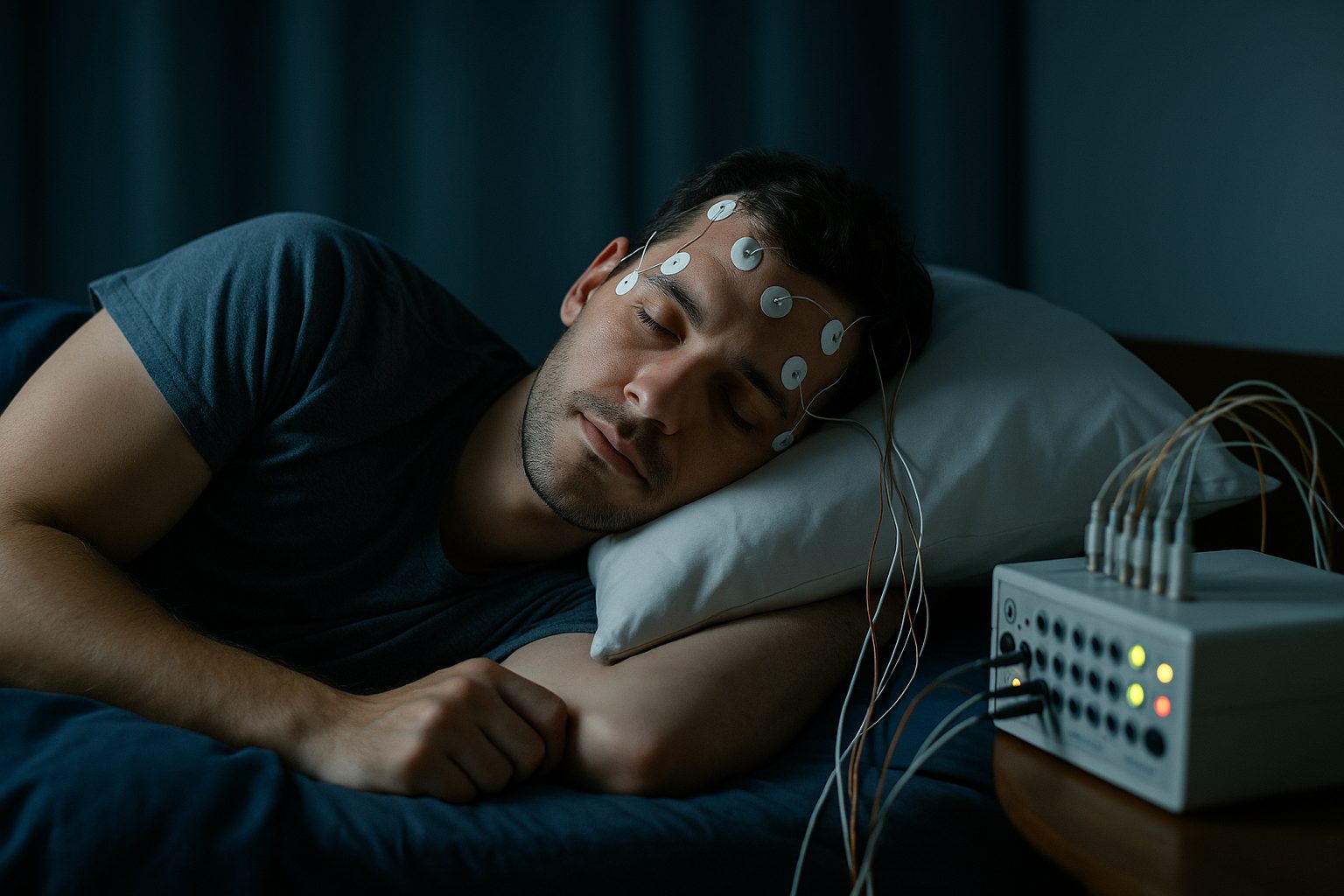
In the original framework presented in this article, delta is described as the true zone of the unconscious. The deeper brain activity slows within this range, the more the body appears to move away from conscious mental life and towards a state in which only the most essential functions remain active. Put simply, this is the rhythm linked with the deepest forms of sleep, where awareness is at its lowest and the brain is no longer occupied with thought, analysis or voluntary attention.
What remains active in the delta state
Within the delta range, the brain is presented as maintaining above all the body’s vital functions. This helps explain why the state is described in such stark terms: as brain activity drops further and further, it approaches a threshold where conscious life is no longer perceptible. The source text even draws a line between these extremely slowed states and conditions that come close to physical death, underlining just how far delta sits from the active rhythms of waking life.
This also clarifies the reference to a flat EEG trace. When an encephalogram shows no measurable brain activity, this is understood as brain death; without cerebral activity, the individual is considered physically dead. That point marks the absolute limit of the progression described across the brain’s rhythms: from alert wakefulness, through relaxation and sleep, down to the deepest unconscious states, and finally to the complete absence of detectable brain activity.
- Beta: active wakefulness
- Alpha and theta: progressive slowing and withdrawal from alert consciousness
- Delta: very deep unconscious sleep, below 4 cycles per second
Why the Alpha State Matters in Everyday Mental Functioning
A rhythm the brain returns to naturally
Alpha is often presented as a particularly important brain rhythm because it sits at the meeting point between full alertness and deep relaxation. Even when we are fully awake and operating in a beta state, the brain does not remain there in a rigid, uninterrupted way. According to the original view presented here, it drops very briefly into alpha many times each minute, almost without our noticing, as if to prevent a form of mental overload. In that sense, alpha is not an exotic state reserved for meditation or special practice; it is already part of our natural regulation.
When brain activity is associated with the alpha range, the two hemispheres are described as working in a more harmonious way. Rather than being dominated by the analytical mode so often linked with ordinary wakeful thinking, the mind may become more globally perceptive, calmer and less fragmented. This state is often sought because it can support clearer attention, steadier memory, better management of stress and emotional reactions, and a more conscious relationship with bodily responses. It is also presented as a favourable state for working on habits, especially those one wants to change, and for installing healthier, more constructive patterns over time.
- more stable concentration
- better memory
- greater emotional regulation
- support for changing habits
A quieter mind and a more intuitive form of perception
Another reason alpha is valued is that perception itself may feel different there. The senses can seem clearer, and many people report being more receptive to subtle impressions that are usually drowned out by mental noise. In the language of the original text, the mind is placed on a kind of standby: it interferes less, comments less, and leaves more room for a response that feels immediate and appropriate. This is where the article links alpha with intuition — not as something mystical, but as a way of accessing information that seems to lie outside our usual field of conscious perception.
Seen in this light, alpha is less about passivity than about a different quality of awareness. It may help us step back from constant inner commentary and regain a broader sense of what is happening, both within us and around us. That is why this rhythm is often associated with more accurate choices, a more balanced inner state and a feeling of knowing what to do at the right moment. Whether one approaches it through rest, relaxation or structured practice, the alpha state is presented here as a valuable doorway into a more coherent and responsive mode of functioning.
Training the Mind to Stay in the Alpha State
The four levels of alpha and the point just before sleep
The alpha rhythm can also be described in four progressive levels. Level 4 is the one closest to ordinary wakefulness. It tends to appear quite naturally as soon as you settle into a relaxed position, whether in an armchair or lying on a bed, and simply close your eyes. At that point, brain activity begins to slow. If you remain there for a little longer, the body starts to loosen and soften more noticeably: this is level 3 of the alpha rhythm. At that stage, the mind is often still busy. You may still find yourself thinking about countless concerns, plans or unfinished tasks, even though physical relaxation is already setting in.
Then comes a more diffuse and pleasant phase, described here as level 2, in which you may feel as though you are drifting or floating. The sense of wellbeing becomes more marked, and it may already be difficult to say exactly what you were thinking about a moment earlier. Just after that comes level 1, the deepest point of the alpha state. From there, it is very easy to slip further down into sleep without noticing, and brain activity moves into the theta range.
In the original logic of this method, that brief threshold matters because level 1 is seen as the moment when the door to the subconscious is most accessible, making it possible to give it clear directions so that it supports us rather than working against us through ingrained patterns.
- Level 4: relaxed wakefulness, very close to the ordinary alert state
- Level 3: deeper bodily relaxation, with a mind that may still remain active
- Level 2: a floating, pleasant state in which thoughts become less defined
- Level 1: the deepest alpha threshold, just before the mind drops into theta and sleep
Why practice matters if you want to use alpha consciously
This is why alpha-based exercises and mental training methods, including Mental Waves recordings, are presented as a way of learning to reach level 1 deliberately, to remain there with awareness, and to avoid dropping straight into sleep. In that sense, the comparison with sport is quite apt. The effort is not physical but cerebral: the more regularly you practise, the easier it may become to recognise the state, stabilise it and work within it consciously. As with any form of training, results are linked to repetition, familiarity and the quality of attention you bring to the exercise.

Related offer
Alpha states of consciousness
Easily reach the state of Alpha Brain Rhythm to reduce anxiety and stress, soothe pain, enter...
View productAccording to the perspective developed throughout this section, learning to work consciously in the alpha state may support many areas of life. It is often sought for improving general wellbeing, clarifying professional goals, strengthening self-confidence, supporting memory, and helping with habit change, including aims such as stopping smoking or losing weight. It would be excessive to treat alpha as a miracle solution, but the underlying idea remains clear: the more easily you can enter this state without losing consciousness, the more you may be able to use it as a practical tool for regulation, focus and inner reorientation. In that sense, the field of application is presented as remarkably broad.
- to support health and general wellbeing
- to define goals and work towards them more clearly
- to strengthen confidence and memory
- to help reshape habits such as smoking or overeating
The Mental Waves Alpha Rhythm Framework
The Mental Waves frame is to treat alpha as a state to understand, not a trophy to chase. Relaxed attention usually appears when body, breath and environment become less demanding.
A useful practice is simple: reduce noise, listen at a comfortable level, let attention soften, and notice whether the body follows without forcing the experience.
For a gentle sound-based entry point, receive the free 128 Hz sacred frequency session and use it as a quiet support for relaxed attention.
Editorial note from Mental Waves
This article is educational. Brain-wave language here is not an EEG diagnosis, a medical interpretation or a replacement for professional care.
Conclusion
Seen as a whole, these brain rhythms describe less a rigid hierarchy than a continuum of mental states: from active wakefulness, to relaxed awareness, to light sleep and deep unconscious rest. What matters most here is not simply naming Beta, Alpha, Theta and Delta, but recognising that shifts in attention, perception and physiological regulation are part of ordinary brain function. In that sense, alpha stands out not as something mystical, but as a transitional state often associated with calm, reduced mental interference and a broader quality of awareness.
This is also why the alpha rhythm is so often sought in practice. It may help create conditions that support concentration, emotional regulation and a more settled relationship with one’s own habits, while remaining distinct from sleep itself. The nuance is important: these states should not be treated as magical shortcuts or medical guarantees, but as observable modes of brain activity that can be approached with patience, training and discernment. Sometimes, the most meaningful shift begins when the mind becomes just quiet enough to listen.
{
"@context": "https://schema.org",
"@type": "FAQPage",
"mainEntity": [
{
"@type": "Question",
"name": "What are the main brainwave rhythms described here?",
"acceptedAnswer": {
"@type": "Answer",
"text": "The four main rhythms are Beta, Alpha, Theta and Delta. Beta is linked with full wakefulness and active thinking, Alpha with relaxed but conscious awareness, Theta with light sleep, and Delta with very deep sleep. They form a progression from alert mental activity to increasingly slowed and less conscious states."
}
},
{
"@type": "Question",
"name": "What does the Beta rhythm correspond to in everyday life?",
"acceptedAnswer": {
"@type": "Answer",
"text": "Beta corresponds to ordinary waking life when your eyes are open and you are acting, thinking, studying or learning. It is described as ranging from about 14 to 21 cycles per second. In more hyperactive states, brain activity is said to move closer to the upper end of that range."
}
},
{
"@type": "Question",
"name": "When does the brain move into the Alpha rhythm?",
"acceptedAnswer": {
"@type": "Answer",
"text": "Alpha appears when you close your eyes and settle into a comfortable, relaxed position, such as lying on a bed or sitting back in a chair. In this state, brain activity slows to roughly 7 to 14 cycles per second. You remain awake, but the mind becomes calmer and less outwardly engaged."
}
},
{
"@type": "Question",
"name": "Why is the Alpha state considered so important?",
"acceptedAnswer": {
"@type": "Answer",
"text": "Alpha is presented as important because it allows the two hemispheres of the brain to work in greater harmony. This state is linked with a broader, less purely analytical way of functioning, and with benefits such as better concentration, improved memory, steadier emotional management and greater awareness of intuition."
}
},
{
"@type": "Question",
"name": "Does the brain enter Alpha naturally during the day?",
"acceptedAnswer": {
"@type": "Answer",
"text": "Yes, the brain is described as dropping very briefly into Alpha even during normal waking life in Beta. These shifts are said to happen around 30 times a minute for a few microseconds, without conscious awareness. In this view, Alpha is part of the brain’s natural regulation rather than a rare or unusual state."
}
},
{
"@type": "Question",
"name": "What happens in the Theta rhythm?",
"acceptedAnswer": {
"@type": "Answer",
"text": "Theta begins when brain activity slows further to around 4 to 7 cycles per second. It corresponds to light sleep, and the deeper you move into it, the deeper sleep becomes. This range is also associated here with hypnotic sleep and with a zone of reduced sensitivity to pain."
}
},
{
"@type": "Question",
"name": "What is the Delta rhythm associated with?",
"acceptedAnswer": {
"@type": "Answer",
"text": "Delta is the slowest rhythm, below about 4 cycles per second, and it is linked with very deep sleep and unconsciousness. In this state, only vital functions are said to remain active. A flat EEG trace is presented as the point at which there is no measurable brain activity, indicating brain death."
}
},
{
"@type": "Question",
"name": "What are the four levels of the Alpha state?",
"acceptedAnswer": {
"@type": "Answer",
"text": "Alpha is divided into four levels. Level 4 is close to ordinary wakefulness and begins with simple relaxation and closed eyes. Level 3 brings deeper bodily relaxation while the mind may still be busy. Level 2 feels more floating and pleasant, and Level 1 is the deepest Alpha point just before slipping into Theta and sleep."
}
},
{
"@type": "Question",
"name": "Why is Level 1 of Alpha treated as a special threshold?",
"acceptedAnswer": {
"@type": "Answer",
"text": "Level 1 is described as the key point just before the brain drops into Theta. It is seen as a moment when the subconscious becomes more accessible while awareness can still be maintained. The aim of Alpha training is to reach that level consciously, stay there without falling asleep, and use it to work on habits or inner responses."
}
}
]
}
Frequently Asked Questions About Brain Waves
What are the main brainwave rhythms described here?
The four main rhythms are Beta, Alpha, Theta and Delta. Beta is linked with full wakefulness and active thinking, Alpha with relaxed but conscious awareness, Theta with light sleep, and Delta with very deep sleep. They form a progression from alert mental activity to increasingly slowed and less conscious states.
What does the Beta rhythm correspond to in everyday life?
Beta corresponds to ordinary waking life when your eyes are open and you are acting, thinking, studying or learning. It is described as ranging from about 14 to 21 cycles per second. In more hyperactive states, brain activity is said to move closer to the upper end of that range.
When does the brain move into the Alpha rhythm?
Alpha appears when you close your eyes and settle into a comfortable, relaxed position, such as lying on a bed or sitting back in a chair. In this state, brain activity slows to roughly 7 to 14 cycles per second. You remain awake, but the mind becomes calmer and less outwardly engaged.
Why is the Alpha state considered so important?
Alpha is presented as important because it allows the two hemispheres of the brain to work in greater harmony. This state is linked with a broader, less purely analytical way of functioning, and with benefits such as better concentration, improved memory, steadier emotional management and greater awareness of intuition.
Does the brain enter Alpha naturally during the day?
Yes, the brain is described as dropping very briefly into Alpha even during normal waking life in Beta. These shifts are said to happen around 30 times a minute for a few microseconds, without conscious awareness. In this view, Alpha is part of the brain’s natural regulation rather than a rare or unusual state.
What happens in the Theta rhythm?
Theta begins when brain activity slows further to around 4 to 7 cycles per second. It corresponds to light sleep, and the deeper you move into it, the deeper sleep becomes. This range is also associated here with hypnotic sleep and with a zone of reduced sensitivity to pain.
What is the Delta rhythm associated with?
Delta is the slowest rhythm, below about 4 cycles per second, and it is linked with very deep sleep and unconsciousness. In this state, only vital functions are said to remain active. A flat EEG trace is presented as the point at which there is no measurable brain activity, indicating brain death.
What are the four levels of the Alpha state?
Alpha is divided into four levels. Level 4 is close to ordinary wakefulness and begins with simple relaxation and closed eyes. Level 3 brings deeper bodily relaxation while the mind may still be busy. Level 2 feels more floating and pleasant, and Level 1 is the deepest Alpha point just before slipping into Theta and sleep.
Why is Level 1 of Alpha treated as a special threshold?
Level 1 is described as the key point just before the brain drops into Theta. It is seen as a moment when the subconscious becomes more accessible while awareness can still be maintained. The aim of Alpha training is to reach that level consciously, stay there without falling asleep, and use it to work on habits or inner responses.