en
enVotre panier est vide.


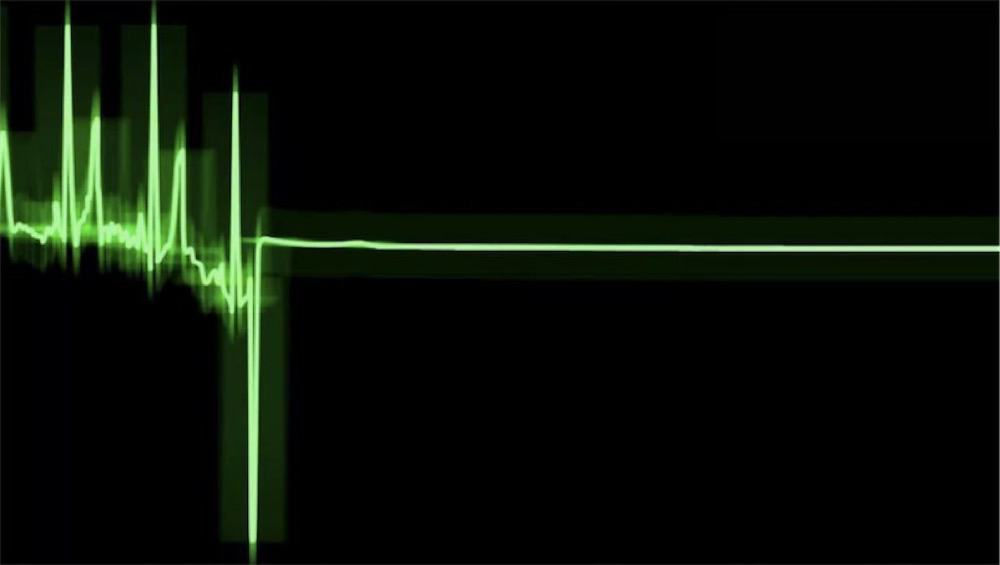
When the heart stops, brain activity is generally thought to fade very quickly, often within a matter of minutes. That is why one case reported by researchers at the University of Western Ontario drew such attention: in a 67-year-old man, an EEG appeared to record electrical brain activity for 10 minutes and 38 seconds after cardiac arrest. On the face of it, the finding seems to challenge what is usually expected at the end of life.
Yet this is precisely where caution matters. The observation came from a very small study involving four patients, and the three others showed no comparable anomaly. Even the researchers themselves, along with neuroscientist Benjamin Rohaut of Columbia University, raised the possibility that the signal may have been an artefact rather than evidence of sustained post-mortem brain function. The case remains striking, not because it settles anything, but because it opens a difficult scientific and ethical question about how we interpret EEG recordings, dying brain states and the narrow boundary between observation and overstatement.
In short: what did the brain activity after cardiac arrest case show?
The case suggested that an unusual EEG signal was recorded after cardiac arrest, but it did not prove that the brain remained fully conscious for ten minutes after death. The finding is intriguing because it touches consciousness research, yet it remains preliminary and difficult to interpret.
- It came from a limited clinical observation.
- EEG signals can be affected by artefacts and context.
- The result invites research, not sensational certainty.
- Ethical caution matters when discussing death and consciousness.
For a related reflection, read Consciousness at Death. For a free contemplative sound cue, receive the Sacred Frequency Session.
A striking case that immediately raised questions
What the Canadian team reported
The case was reported in the Canadian Journal of Neurological Sciences by researchers at the University of Western Ontario in Canada. Their work focused on brain activity recorded in four patients, using EEG monitoring to observe electrical signals around the end of life.
Among those four cases, one stood out sharply: a 67-year-old man showed electrical activity in the brain for 10 minutes and 38 seconds after his heart had stopped beating. That finding drew immediate attention because brain activity is generally expected to cease within around two minutes of death, making such a prolonged signal appear deeply unusual.
- Journal: Canadian Journal of Neurological Sciences
- Research team: University of Western Ontario, Canada
- Most striking observation: EEG activity 10 minutes and 38 seconds after cardiac arrest
Why the result was met with caution
Unsurprisingly, the study quickly generated media interest in North America. Yet the result was also challenged almost at once. Speaking to Sciences et Avenir, Benjamin Rohaut, a neuroscientist and physician at Columbia University in the United States, argued that the recording should not be treated as proof that meaningful brain activity truly persisted after death.
His interpretation was more restrained: the signal may simply have been a false reading rather than evidence of an active brain state. In other words, what looked extraordinary on the EEG may not reflect ongoing neural function at all, but a technical artefact or another recording issue. That tension between a remarkable observation and the need for scientific caution is what makes this first report so compelling.
Why the finding remains highly preliminary
A result drawn from a very small sample
Benjamin Rohaut, a neuroscientist and physician at Columbia University, has been clear about the limits of this study. In his view, it certainly raises interesting questions, but it does not go beyond a very early stage of investigation. The main reason is simple: the research involved only four patients, each with different medical conditions. That makes the sample far too small, and too varied, to support conclusions that could be treated as robust or widely applicable.
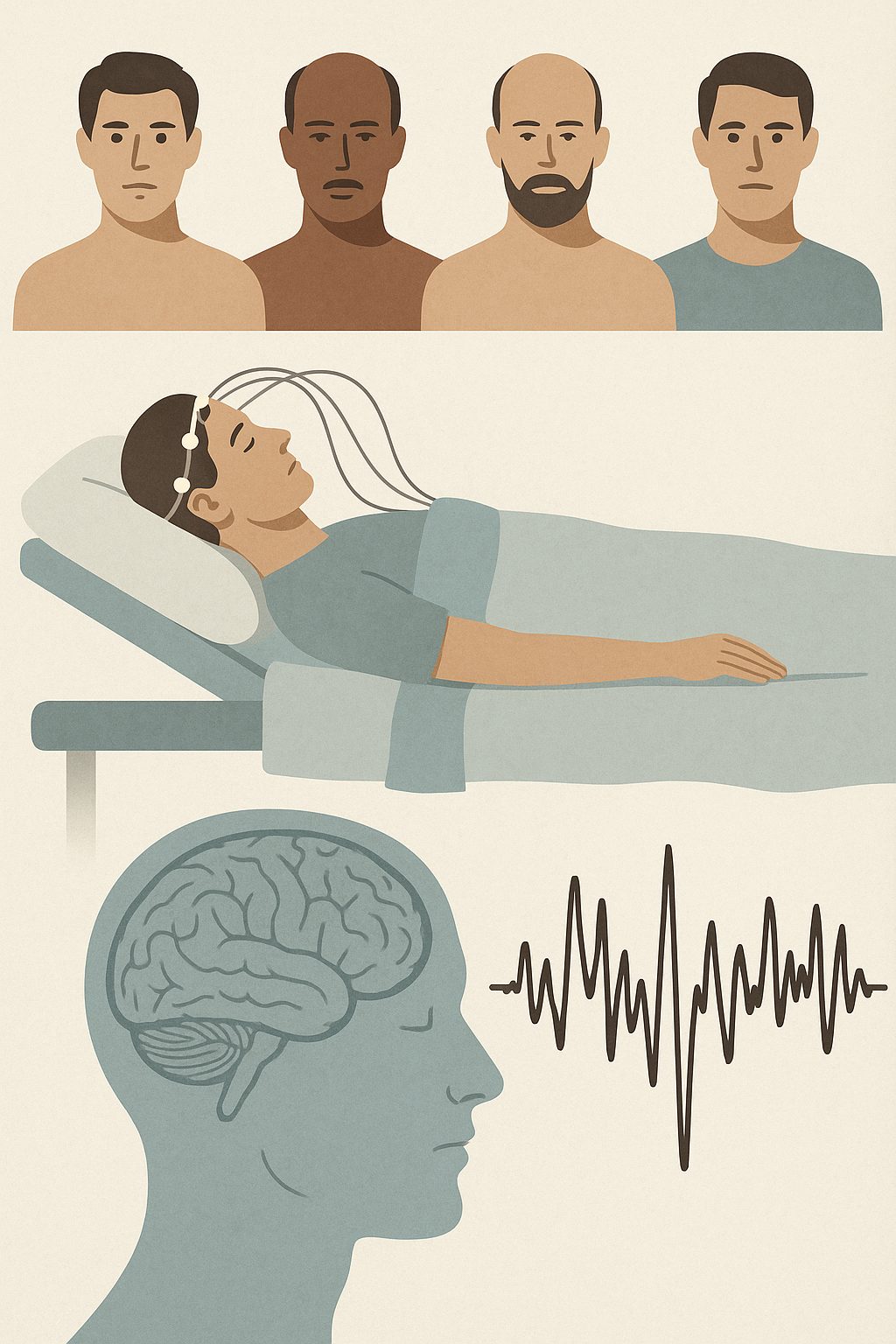
This matters all the more because the headline result appeared in just one case. The other three participants showed no comparable irregularity at all. In other words, the study did not reveal a consistent post-mortem pattern of brain activity across the group, but rather a single unusual recording that now needs to be interpreted with great care.
- Only four patients were studied
- Their medical profiles were different
- Only one recording appeared unusual
What the researchers actually measured
The volunteers had, during their lifetime, agreed to donate their bodies to science after death. Their brain waves were then monitored using an electroencephalography cap, or EEG, which records electrical activity from the scalp. That detail is important, because EEG can offer valuable insight into brain activity, but it also requires cautious interpretation, especially in bedside conditions and in such an unusual clinical context.
Within that framework, the Canadian team observed that the three other participants did not display any comparable “anomaly”. That does not make the 67-year-old man’s recording unimportant, but it does place it in perspective. At this stage, the study is best understood not as proof of a new rule about the dying brain, but as an intriguing observation that may justify more rigorous and better-powered research.
Why the signal may not mean the brain stayed fully active
A result the researchers themselves treated with caution
As striking as this observation appears, it was not accepted at face value even by the Canadian team who reported it. Benjamin Rohaut, a neuroscientist and physician at Columbia University, also urged caution. In his view, the electrical activity recorded in the 67-year-old patient for 10 minutes and 38 seconds after the heart stopped does not necessarily show that the brain remained meaningfully active. Both he and the study’s authors raised the same possibility: that the recording may have captured an artefact, in other words a false signal rather than genuine post-mortem brain activity.
That interpretation matters because artefacts are not unusual in bedside EEG recordings. In this kind of setting, the signal can be disturbed by technical interference, movement, or other sources of noise that may resemble real cerebral activity. Rohaut also pointed out that the three other patients in the study showed a more expected pattern, with electrical brain activity stopping normally. Seen in that context, the single unusual trace becomes harder to interpret as proof of an entirely new phenomenon.
- The unusual signal appeared in one patient only
- The other three patients showed no comparable anomaly
- The authors themselves considered the possibility of a false signal
A prolonged dying process may be a simpler explanation
Rohaut’s criticism goes a little further than simple scepticism. He suggested that the Canadian researchers may not have explored enough ordinary explanations for what they observed. Rather than indicating a brain that remained globally active after death, the delayed signal could reflect a more gradual shutdown in certain brain regions. In other words, what was recorded may have been linked to a prolonged agonal process in parts of the brain, rather than to a coherent or conscious form of activity.
This distinction is essential. An EEG can register electrical patterns without telling us, on its own, what kind of mental state they correspond to. A residual signal is not automatically evidence of awareness, perception or a preserved state of consciousness. That is why this case remains intriguing but highly uncertain: the recording may point to a technical artefact, or to the lingering decline of some neural tissue, without overturning the broader understanding that brain activity usually fades rapidly after cardiac arrest.
Why Better Research Matters in Such a Sensitive Area
A question that deserves stronger evidence
For Benjamin Rohaut, findings of this kind clearly deserve attention, but they also call for more robust and better designed research. The subject is compelling not only for neuroscientists, but also for the wider public, because it touches directly on how we understand the final moments of brain activity after the heart stops. That is precisely why caution matters: a striking signal on an EEG may raise important questions, yet it does not, on its own, settle what was happening in the brain or in consciousness.
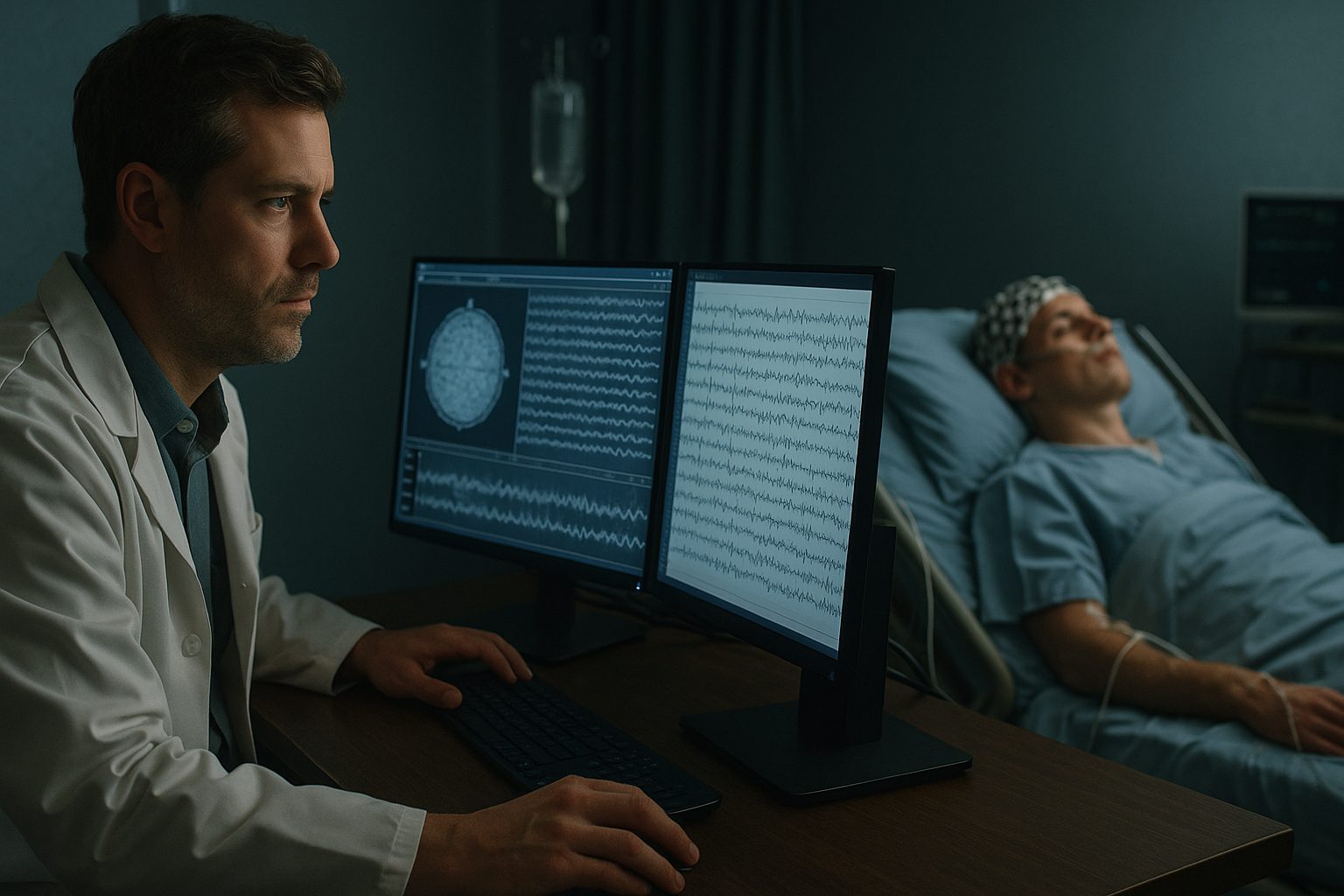
The Canadian researchers themselves also point to a broader problem: there are still too few studies of this kind. Post-mortem brain recordings remain rare, difficult to organise and methodologically delicate. As a result, each unusual case can attract intense attention, while the overall evidence base remains thin. In practice, that means these observations may help open a line of inquiry, but they are not yet enough to support firm conclusions.
- the rarity of post-mortem EEG recordings
- the need for larger and better characterised samples
- the importance of interpreting unusual signals with care
Scientific interest and ethical consequences
Rohaut also stresses that this is not only an abstract scientific debate. Research into brain activity after the withdrawal of life-sustaining treatment in intensive care can raise very concrete ethical questions, including those linked to organ donation after an “arrest of active therapeutic measures” in resuscitation settings. In other words, when supports such as artificial ventilation are stopped, understanding as precisely as possible what happens in the brain is not merely intellectually interesting; it may also matter for medical practice and public trust.

Related offer
Developing extrasensory perception
Develop your extrasensory perceptions with our powerful method based on synchronization and rhythm training...
View productThat is why qualitative, carefully conducted studies are so important here. They may help distinguish between a meaningful physiological phenomenon, a prolonged dying process in certain brain regions, or a simple recording artefact. In a field where the human stakes are high and the data remain limited, the priority is not dramatic interpretation, but patient, rigorous investigation.
What Near-Death Experience Research May Tell Us About the Dying Brain
Post-mortem brain activity is often studied through the lens of near-death experiences
Research into brain activity after death is largely explored through studies on near-death experiences, often abbreviated to NDEs. The central question is whether some of the vivid perceptions reported in these states could be linked to brief bursts of organised brain activity occurring just after the heart stops. In August 2013, for instance, a study published in PNAS reported unusually high levels of brain activity in rats in the seconds following cardiac arrest. According to Le Figaro, the work was led by Jimo Borjigin at the University of Michigan.
In that experiment, the researchers observed nine rats undergoing a slow death process, and their EEG recordings suggested that electrical brain activity remained present for around thirty seconds after the heart had ceased to function. That does not prove what a human being experiences in such a moment, but it does suggest that the brain may not switch off in a perfectly immediate or uniform way. This is precisely why such findings continue to attract attention in both neuroscience and the wider public conversation.
Gamma oscillations raised a possible, but still cautious, explanation
The same study also highlighted intense and irregular gamma oscillations in the rats’ brains. These patterns were described as resembling activity seen in states of deep prayer or meditation, such as those observed in nuns at prayer or Buddhist monks while meditating. Gamma waves are also associated with moments of heightened clarity and focused awareness, which led the researchers to suggest that this kind of activity could, at least in part, help explain the mechanisms behind NDEs.
Even so, this remains a hypothesis rather than a settled conclusion. Animal studies can offer valuable clues about perception, consciousness and the final stages of brain regulation, but they do not allow a direct leap to human subjective experience. What they do show is that the dying brain may pass through a short and complex phase of electrical activity, and that this phase may be relevant when scientists try to understand why some people report striking mental experiences close to death.
- Study published in PNAS in August 2013
- Led by Jimo Borjigin at the University of Michigan
- Nine rats showed brain activity for roughly thirty seconds after cardiac arrest
Earlier Cases That Keep the Question Open
A 2014 report that echoed the same uncertainty
A similar case had already attracted attention in 2014, when Sciences et Avenir reported that a man in his fifties showed signs of brain activity three minutes after his heart had stopped. That finding came from a much broader investigation launched in 2008, involving 2,060 patients across 15 hospitals in the UK, the United States and Australia. The scale of that work gave it a different weight from isolated case reports, even if it did not settle the question of what consciousness or perception may look like during cardiac arrest.
Among the many patients who survived a cardiac arrest and later described fragments of memory from that period, one 57-year-old man stood out. While in a state of clinical death for three minutes, he later recalled the actions of the nurses and the sounds made by the machines in his room. Accounts of this kind do not prove that the brain remains fully active in any simple sense, but they do show why the subject continues to draw both scientific and public interest.
- Investigation begun in 2008
- 2,060 patients studied
- 15 hospitals across three countries
Why animal studies do not fully explain the Canadian case
In discussing the 67-year-old patient, the Canadian researchers also referred to a Dutch experiment carried out on mice in 2011. In that study, electrical brain activity was still observed for around one minute after death, despite the extreme conditions of the experiment. The comparison matters because it suggests that some residual electrical patterns can persist briefly after circulation has ceased, at least in certain biological settings.
Even so, the researchers were careful not to treat the two situations as equivalent. The so-called death waves seen in those mice did not match the pattern recorded in the Canadian patient. In other words, the comparison offers a point of reference rather than a clear explanation. That leaves the central issue unresolved: whether the unusual EEG signal reflected a genuine late brain process, a prolonged dying phase in some regions of the brain, or simply an artefact that current data cannot fully rule out.
How to Read This Kind of Consciousness Research
Cases like this attract attention because they sit at the boundary between neuroscience, medicine and profound human questions. That is exactly why they need careful reading. A striking signal is not the same as a settled explanation.
The most responsible interpretation is layered. First, ask what was actually measured. Second, ask whether the signal could have technical or physiological explanations. Third, separate what the case suggests from what it cannot show on its own.
This distinction protects both science and meaning. People are right to wonder about consciousness near death, but vulnerable subjects deserve language that stays precise, humble and humane.

Related offer
18 States of Consciousness - Integral Infinity Pack
Integral Infinity - The 18 States of Consciousness A unique sound box designed to explore all the...
View productWhat This Case Does Not Prove
This case does not prove that consciousness survives death, that every person has similar brain activity after cardiac arrest or that EEG signals can be interpreted without clinical context. It also does not settle debates around near-death experiences. At most, it adds one unusual observation to a field that still needs careful replication and better data.
That limitation does not make the case meaningless. It simply places it where it belongs: as a prompt for further research rather than a final answer. The difference matters because dramatic claims can travel faster than careful findings, especially when the topic touches grief, fear and hope.
A balanced reading can hold two truths at once. The dying brain may still hold surprises, and a single clinical case cannot carry more meaning than the evidence allows.
The Mental Waves Consciousness Evidence Framework
The Mental Waves frame is to keep curiosity and evidence together when discussing brain activity after cardiac arrest.
- Observe: identify the reported signal without exaggerating it.
- Contextualize: consider clinical, technical and timing factors.
- Compare: relate the case to coma, EEG and near-death research.
- Stay humble: leave room for mystery without replacing evidence.
For a nearby clinical topic, continue with Coma and Consciousness Markers. For EEG background, read Brainwave Frequencies and Meditation.
Editorial note from Mental Waves
This article is educational and reflective. It does not provide medical advice and should not be used to draw clinical conclusions about cardiac arrest, death, coma or individual prognosis.
Conclusion
The Canadian case is compelling precisely because it sits at the edge of what current knowledge expects. An EEG signal recorded more than ten minutes after cardiac arrest naturally draws attention, but attention is not the same as proof. With only four patients, no similar pattern in the other recordings, and the real possibility of an artefact or a prolonged dying process in limited brain regions, the finding remains a question rather than a conclusion.
That is what gives the subject its weight. Research into post-mortem brain activity may help refine how we think about consciousness, perception and the final stages of brain regulation, but it also touches ethical decisions that demand strong evidence and careful interpretation. Earlier human reports and animal studies suggest that the dying brain may not always fall silent in a simple, uniform way, yet they do not settle what this particular signal meant. For now, the most honest position is a balanced one: scientific curiosity, yes, but without turning uncertainty into certainty.
Frequently Asked Questions About Brain Activity After Cardiac Arrest
What did the cardiac arrest EEG case show?
It reported an unusual EEG signal after cardiac arrest, but the interpretation remains preliminary.
Did it prove the brain stayed conscious?
No. The case did not prove sustained consciousness after death.
Why are scientists cautious?
EEG signals can be difficult to interpret, especially in complex clinical conditions.
What is an EEG artefact?
An artefact is a signal that may come from technical, movement or environmental factors rather than brain activity itself.
How does this relate to near-death experiences?
It raises related questions, but one EEG case cannot explain near-death experiences on its own.
Why does this research matter?
It may help scientists understand dying brain processes, consciousness and ethical questions in care.
Can this case guide medical care?
No. Individual care decisions require qualified clinical assessment and broader evidence.
What should readers explore next?
Readers can look at coma research, EEG studies and cautious work on consciousness near death.
What is the main takeaway?
The case is fascinating, but it should be read as an open scientific question rather than proof of a dramatic claim.